Month: March 2012

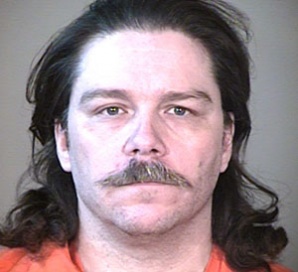
BARTOW – Jury votes in favor of death penalty for convicted McCloud


Jury recommends death for McCloud in home invasion

Robert “Bam” McCloud sat down in a chair.

He shook his head slightly as 12 jurors revealed Friday that a majority, 8-4, thought he should die. He wiped away a tear then let out a deep breath.

At trial, McCloud testified that he didn’t go along with the robbery crew and was later pressured by investigators to say he was present.

She mentioned that three accomplices took plea deals for punishments ranging from 10 years to 15 years in prison.

Meeks suggested one of the other men was the killer.

“The state wants you to recommend the death penalty for Bob McCloud,” she said. “That’s not justice. That’s not fair and impartial justice.”

Jurors spent about 2 1/2 hours deliberating before reaching a decision.

Earlier this week, the 30-year-old Apopka man was found guilty of participating in a 2009 home invasion robbery in Poinciana where two bystanders were fatally shot, execution-style, in the back of the head.

The same jury was asked to recommend an appropriate punishment: life imprisonment or execution.

Circuit Judge Donald Jacobsen must give their recommendation great weight.

The judge will review additional evidence and listen to more arguments at another hearing, which has not yet been scheduled.

Outside the courtroom, McCloud’s wife, Shawana, and his mother-in-law, Dora Norman, didn’t wish to comment and left the courthouse in tears.

Read more : News chief 


BOOKS : Death Row’s memoir and experiences – part I


Author Thomas Cahill has written a new book, “A Saint on Death Row: The Story of Dominique Green,” about his encounter and gradual understanding of the life of a Texas death row inmate named Dominique Green.  Green, who was only 18 at the time of his arrest, was executed in 2004.  Cahill’s story of Green’s life highlights issues of race, poverty, and abuse, tracing details of his childhood through his years on death row.  Thomas Cahill is probably best known for his New York Times bestseller “How the Irish Saved Civilization.” This newest book will be published by Doubleday and will be released in March 2009.

“A Saint on Death Row: The Story of Dominique Green,” Doubleday Publishing, 2009)

Lethal Rejection: Stories on Crime and Punishment, edited and written in part by American University criminologist Robert Johnson and student Sonia Tabriz, features an array of fiction and poetry on crime and punishment written by prisoners, academics, and students of criminology.  The book includes a number of stories about capital punishment.  Jocelyn Pollock, Professor of Criminal Justice at Texas State University, writes in the preface, “[H]umans have always used fiction to instruct, enlighten and communicate.  Stories take us to places we haven’t been; they help us to understand people who are not like us. In this book, the authors use fiction to convey the reality of prison.”  She describes the book’s poetry, prose and plays as methods to “take the reader into the ‘reality’ of prison and the justice system–not through facts and figures, but through the tears and screams, blood and pain of the people chewed up by it.”  Todd Clear, a Professor of Criminal Justice at the John Jay College of Criminal Justice, writes, “The book makes us encounter the lives of the confined in a way I have not experienced in any other book about prison life.”

“That Bird Has My Wings” is a new book by Jarvis Jay Masters, an inmate on San Quentin’s death row in California. In this memoir, Masters tells his story from an early life with his heron-addicted mother to an abusive foster home. He describes his escape to the illusory freedom of the streets and through lonely nights spent in bus stations and juvenile homes, and finally to life inside the walls of San Quentin Prison. Using the nub and filler from a ballpoint pen (the only writing instrument allowed him in solitary confinement), Masters chronicles the story of a bright boy who turned to a life of crime, and of a penitent man who embraces Buddhism to find hope.  Masters has written this story as a cautionary tale for anyone who might be tempted to follow in his footsteps, and as a plea for understanding about the forgotten members of society. (From publisher’s description).

Renowned death penalty defense attorney Andrea Lyon‘s forthcoming book, Angel of Death Row: My Life as a Death Penalty Defense Lawyer, chronicles her 30 years of experience representing clients in capital murder cases.  In all of the 19 cases where she represented defendants who were found guilty of capital murder, jurors spared her clients’ lives.   Lyon, who was featured in the PBS documentary Race to Execution and was called the “angel of death row” by the Chicago Tribune, gives readers an inside look at what motivates her during these difficult cases and offers behind-the-scene glimpses into many dramatic courtroom battles. Lyon is the founder of the Center for Justice in Capital Cases based in Illinois and a professor of law at DePaul University College of Law.  The book includes a foreword by Alan Dershowitz, who calls Lyon “a storyteller par excellence.”

I Shall Not Die by Billy Neal Moore

In his memoir, former death row inmate Billy Neal Moore describes his time on death row, leading up to the 7 hours before his scheduled execution. Admittedly guilty of murder, Moore spent over 16 years on death row before his death sentence was overturned. He was subsequently freed because of his exemplary behavior. Moore’s account details how he asked for and received forgiveness from the victim’s family. His story is also described in the film “Execution.

Last Words from Death Row: The Wall Unit by Norma Herrera

In Last Words From Death Row: The Walls Unit, Norma Herrera recounts the tribulations she and her family suffered as they worked to free her brother, Leonel, from death row in Texas. The book documents court events and press coverage of the case and captures the family’s efforts to assist Leonel prior to his execution in 1993, four months after the U.S. Supreme Court held in Herrera v. Collins that, in the absence of other constitutional violations, new evidence of innocence is no reason for federal courts to order a new trial. Last Words from Death Row reveals that Leonel was a decorated war veteran with post-traumatic stress disorder when he was sentenced to death for the murder of two police officers. He was nearly beaten to death after his arrest for the crime. He was quickly sentenced to death by a jury that largely consisted of local police department employees or those closely associated with them. As they fought to prove their client’s innocence, Leonel’s appellate attorneys introduced eyewitness evidence that Leonel’s brother had actually committed the crime and that local police officials were part of an effort to hide the truth. One of Leonel’s attorneys, Robert McGlasson, noted, “Indeed, never in my almost ten years of death penalty practice had I seen such extraordinary evidence demonstrating not just my client’s innocence, but the extreme degree of government involvement in deceit and criminal involvement.” In her book, Norma Herrera fulfills her brother’s final wish before his execution. He asked her to tell his story. He later proclaimed to the witnesses at his execution: “I am innocent, innocent, innocent. I am an innocent man, and something very wrong is taking place tonight.” (Nightengale Press, 2007).

Charles D. Flores details his personal experience as an inmate on Texas’ death row. The book, Warrior Within: Inside Report on Texas Death Row, provides a first-hand account of Flores’ death penalty trial and his experiences awaiting execution. It explores his quest to learn more about the law as he fights to prove his innocence and win his freedom. In the book, Flores writes, “I started to comprehend what it meant to be on death row. I was beginning to understand it was a race against the clock, the most important race, I’d ever run. That understanding came at a terrible price, a price I pay daily. It’s paid in the form of the anxiety attacks that come from nowhere that I have today. It’s paid in nightmares that wake me up in a cold sweat, shaking my head trying to knock the haunting images out of it, nightmares of living my last day on death row, being taken to Huntsville and being put in the holding cell next to the death chamber, drowning on fear, choking on terror, as I wait for them to execute me.”

Blue Rage, Black Redemption: A Memoir by Stanley Tookie Williams

A first-hand account of Williams’ personal journey from co-founding the notorious Crips gang to becoming a reformed prisoner and activist for youth from behind bars on California’s death row. The book, which has an epilogue by Barbara Becnel and a foreward by Tavis Smiley, details how Williams became a powerful anti-gang activist during the two decades he spent on death row prior to his December 2005 execution. Williams’ book openly discusses the life of drugs and violence that led to the formation of the Crips, and then offers an inside look into his personal transformation: “Black Redemption depicts the stages of my redemptive awakening during my more than twenty-three years of imprisonment. . . . I hope it will connect the reader to a deeper awareness of a social epidemic,” Williams wrote after finishing the book. (Touchstone Books, 2007).

by American University Criminology Professor Robert Johnson, including one book of satire and a second book of short stories co-authored with prisoner Victor Hassine and criminologist Ania Dobrzanska, address life in prison and on death row in the United States. Johnson’s first book of satire,Justice Follies, offers a collection of parodies that seek to highlight a host of problems within the American prison system. “This book made me laugh out loud. It is outrageous… and the most outrageous thing about it is its ring of truth,” notes Todd Clear, a Professor at John Jay College of Criminal Justice at the City University in New York. (Willo Trees Press, 2005). The Crying Wall, a work by Johnson, Hassine and Dobrzanska, is a collection of short stories that offer readers a look inside the workings of correctional facilities and the realities of day-to-day living in prison. The book’s fifteen fictional pieces capture the emotions of those who are incarcerated.

more coming.. thx

US – Wrongful convictions should bring maximum compensation, judge rules


Wrongful convictions should bring maximum compensation, judge rules.

Three men who were wrongfully convicted of murdering an alleged crack dealer near Westwego in 1992 are entitled to the maximum $250,000 in compensation allowed by law for the years they spent in prison, a state judge ruled Thursday. Glenn Davis of Marrero, Larry Delmore Jr. of New Orleans and Terrence Meyers of Avondale, all about 40 years old, spent up to almost 16 years in prison for their second-degree murder convictions in the Aug. 3, 1992, death of Samuel George, 34, who was gunned down while standing at Cabildo Lane and East Claiborne Parkway.

Davis would be entitled to $344,792 for the 13 years and 9 1/2 months he spent in prison, Murphy found. Delmore and Meyers were imprisoned 15 years and two months, for a total of $379,167, Murphy ruled.

I ask you: does 250’00 dollars can they make up 13 years of life lost? I do not think money can give 13 years of a life, you can not buy a ”miscarriage of justice”. They can not redeem the pain of being an innocent man in prison, and scars inside that person will keep forever

Review: Werner Herzog’s ‘On Death Row’ on the cable tv


Werner Herzog’s ‘On Death Row,’ an Investigation Discovery companion series to his film ‘Into the Abyss,’ is thought-provoking.

Unlike many a modern filmmaker, compelled to excavate the intimate and even mundane for life’s meaning, German director Werner Herzog believes in extremes. During his impressively prolific career, he has consistently sought out the outcasts and the heroes, the misfits and prophets, the dreamers of fevered and spectacular dreams. The subjects of his 25 feature-length documentaries include a deaf and blind woman, a freestyle mountain climber, the lone survivor of an airplane crash and a man who lived with grizzlies. Indeed, within Herzog’s remarkable canon, a multi-platform documentary about death row inmates seems almost mainstream.

During the interviews, Barnes is well-spoken yet strangely detached, acknowledging his actions and his subsequent remorse in tones that suggest they were the experiences of another person. Even the news that Herzog has managed to contact Barnes’ long-estranged father is greeted with a disturbingly placid mien.

When: 7 and 10 p.m. Friday

Rating: TV-14 (may be unsuitable for children under the age of 14)

source : Los Angeles Times

Innocence – Exonerations


Since 1973, 140 people have been released from death row due to evidence of their innocence. Some of these exonerees came within hours of their execution before it was stayed. There is no way to tell how many of the over 1000 people executed since 1976 may have been innocent, as courts do not generally entertain claims of innocence once the defendant is dead.

Joe d’ambrosio Convicted: 1989, Charges dismissed: 2012

On January 23, the U.S. Supreme Court declined to hear an appeal by the state of Ohio challenging the unconditional writ of habeas corpus and bar to the re-prosecution of Joe D’Ambrosio, thus ending the capital case. He has now been freed from death row with all charges dismissed. A federal District Court had first overturned D’Ambrosio’s conviction in 2006 because the state had withheld key evidence from the defense. The federal court originally allowed the state to re-prosecute him, but just before trial the state revealed the existence of even more important evidence and requested further delay. Also the state did not divulge in a timely manner that the key witness against D’Ambrosio had died. In 2010, the District Court barred D’Ambrosio’s re-prosecution because of the prosecutors’ misconduct. The court concluded that these developments biased D’Ambrosio’s chances for a fair trial, and hence the state was barred from retrying him. District Court Judge Kathleen O’Malley wrote: “For 20 years, the State held D’Ambrosio on death row, despite wrongfully withholding evidence that ‘would have substantially increased a reasonable juror’s doubt of D’Ambrosio’s guilt.’ Despite being ordered to do so by this Court … the State still failed to turn over all relevant and material evidence relating to the crime of which D’Ambrosio was convicted. Then, once it was ordered to provide D’Ambrosio a constitutional trial or release him within 180 days, the State did neither. During those 180 days, the State engaged in substantial inequitable conduct, wrongfully retaining and delaying the production of yet more potentially exculpatory evidence… To fail to bar retrial in such extraordinary circumstances surely would fail to serve the interests of justice.”

In 2011, the U.S. Court of Appeals for the Sixth Circuit upheld the bar to re-prosecution. (D’Ambrosio v. Bagley, No. 10-3247, Aug. 29, 2011). Even the dissent referred to the state’s “remarkable inability to competently prosecute D’Ambrosio.” The state appealed this decision to the U.S. Supreme Court mainly on jurisdictional grounds, but was denied certiorari on Jan. 23. (Bagley v. D’Ambrosio, No. 11-672, denying cert.).

Gussie Vann Convicted: 1994, Charges dismissed: 2011

Vann was originally convicted and sentenced to death in 1994 for a sexual assault and murder of his own daughter, Necia Vann, in 1992. However, in 2008 following state post-conviction review, Circuit Court Senior Judge Donald P. Harris held that Vann was entitled to a new trial because his defense attorneys failed to hire forensic experts to challenge the state’s allegations of sexual abuse. (Vann v. State, Order, Post-conviction No. 99-312, 10th Judicial Dist., McMinn Cty., May 28, 2008). Judge Harris wrote that this failure led to Vann being convicted on “inaccurate, exaggerated and speculative medical testimony.” (Id. Memorandum, at 23). At the post-conviction hearing, forensic experts contradicted the state’s earlier testimony and said there were no signs of recent sexual abuse on the victim. Judge Harris described the failings of Vann’s original attorneys as “not only prejudicial, but disastrous.” (Id.) The state elected not to appeal this ruling, though it did try to find grounds for a conviction on a lesser offense. Ultimately all charges were dropped by the state on September 22, 2011.

US – Execution scheduled march 2012


Dates are subject to change due to stays and appeals

March

ARIZONA – Robert Towery was executed


12 news HD live http://c.brightcove.com/services/viewer/federated_f9?isVid=1

Towery, 38, was pronounced dead at 11:26 a.m., nine minutes after the lethal-injection procedure began at the Arizona State Prison Complex-Florence.

Towery’s execution came just eight days after Arizona executed another inmate, Robert Moormann, for killing and dismembering his mother 28 years ago.

Wednesday night, Towery was served a last meal of porterhouse steak, baked potato with sour cream, asparagus, mushrooms, clam chowder, milk, Pepsi and apple pie a la mode.

The execution began at 11:17 a.m. Towery looked to his family and attorneys. In his last words, he apologized to his family and to the victims. He talked about bad choices he had made. Then he said, as he appeared to be crying, “I love my family. Potato, potato, potato.”

Read more: http://www.azcentral.com/arizonarepublic/local/articles/2012/03/08/20120308arizona-execution-robert-charles-towery.html#ixzz1ocPWqmXU

Last Meal Request

  •  Porterhouse steak
  • Sauteed mushrooms
  • Baked potato with butter and sour cream
  • Steamed asparagus
  • Clam chowder
  • Pepsi
  • Milk
  • Apple pie with vanilla ice cream

Supreme Court of United states

No. 11-9089      *** CAPITAL CASE ***
Title:
Robert Charles Towery, Petitioner
v.
Charles L. Ryan, Director, Arizona Department of Corrections, et al.
Docketed: March 6, 2012
Linked with 11A840
Lower Ct: United States Court of Appeals for the Ninth Circuit
  Case Nos.: (12-15071)
  Decision Date: February 27, 2012
  Rehearing Denied: February 29, 2012
Discretionary Court
  Decision Date: January 10, 2012
~~~Date~~~ ~~~~~~~Proceedings  and  Orders~~~~~~~~~~~~~~~~~~~~~
Mar 6 2012 Petition for a writ of certiorari and motion for leave to proceed in forma pauperis filed. (Response due April 5, 2012)
Mar 6 2012 Application (11A840) for a stay of execution of sentence of death, submitted to Justice Kennedy.
Mar 6 2012 Brief of respondent Charles L. Ryan, Director, Arizona Department of Corrections, et al. in opposition filed.
Mar 6 2012 Response to application from respondent Charles L. Ryan, Director, Arizona Department of Corrections, et al. filed.
Mar 7 2012 Reply of petitioner Robert Charles Towery filed.
Mar 7 2012 Application (11A840) referred to the Court.
Mar 7 2012 Application (11A840) denied by the Court.
Mar 7 2012 Petition DENIED.

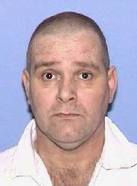
Texas – Keith Thurmond declared, “I didn’t kill my wife. … I swear to God I didn’t kill her.”


His execution for the 2001 slayings near Houston came about an hour after the U.S. Supreme Court rejected arguments to halt the capital punishment, the third this year in Texas.

The 52-year-old Thurmond was pronounced dead at 6:22 p.m. — 11 minutes after lethal drugs began flowing into his arms.

With his death nearing Wednesday, Thurmond blamed the shooting deaths on another man before telling prison officials, “Go ahead and finish it off.”

As the drugs began flowing, he said, “You can taste it.” He wheezed and snored before losing consciousness.

Last Statement:

All I want to say is I’m innocent, I didn’t kill my wife. Jack Leary shot my wife then her dope dealer Guy Fernandez. Don’t hold it against me, Bill. I swear to God I didn’t kill her. Go ahead and finish it off. You can taste it.

TEXAS – Keith Thurmond – EXECUTED


keith Steven Thurmond was pronounced dead at 6:22 PM CST at Huntsville, Texas, executed for murdering his estranged wife, Sharon, and her boyfriend, Guy Fernandez. Strapped on the Gurney in the execution chamber, Thurmond denied killing his wife, although he murdered her in the presence of the couple’s 8-year-old son

If his loved ones are typical, they are re now rushing to the funeral parlor where his body has been sent so they may touch it while it is still warm. The custom stems from the fact that, once a prisoner enters death row, he is permitted no physical contact with is family. In Thurmond’s case, that was about a decade ago.

Suprem court of United States 

No. 11-9083      *** CAPITAL CASE ***
Title:
Keith Thurmond, Petitioner
v.
Texas
Docketed: March 5, 2012
Linked with 11A839
Lower Ct: Court of Criminal Appeals of Texas
  Case Nos.: (WR-62,425-01, and WR-62,425-02)
  Decision Date: February 29, 2012
~~~Date~~~ ~~~~~~~Proceedings  and  Orders~~~~~~~~~~~~~~~~~~~~~
Mar 5 2012 Petition for a writ of certiorari and motion for leave to proceed in forma pauperis filed. (Response due April 4, 2012)
Mar 5 2012 Application (11A839) for a stay of execution of sentence of death, submitted to Justice Scalia.
Mar 6 2012 Brief of respondent in opposition filed.
Mar 6 2012 Reply of petitioner Keith Thurmond filed.
Mar 7 2012 Application (11A839) referred to the Court.
Mar 7 2012 Petition DENIED.
Mar 7 2012 Application (11A839) denied by the Court.

Last News from execution watch : NO WORD FROM HIGH COURT ON THURMOND STAY

I just fielded a news call on whether the Supreme Court has ruled on Keith Thurmond’s request for a stay of tonight’s execution. I had to tell them, “No news yet.”

———————————————————————————————————————————————————————————————————-

The U.S. Supreme Court is considering an emergency request from Keith Thurmond to stop the State of Texas from executing him tonight.

Last-minute requests like this from Texas are routinely considered by Justice Antonin Scalia, though he has the option to poll the full court.

Thurmond, who was denied any federal appeals because his lawyer missed a deadline, is slated to be executed by lethal injection at 6 p.m. in the shooting deaths of his estranged wife and her new boyfriend a decade ago.

If the execution goes through as planned, Execution Watch will provide live coverage and commentary to inform listeners of the realities, versus the cliches, of the Texas death penalty.

The broadcast will be at 6 p.m. Central Time on nonprofit FM station KPFT 90.1 in Houston and online at http://executionwatch.org/ > Listen.

The execution will be the 480th in Texas since 1982 and the 241st since Rick Perry became governor. Perry has already presided over more than 50 percent of all Texas executions in the modern era.

source : execution watch.org

Ray Krone – off death row, man shares experiences


A York County, Pa., man who was wrongly convicted of murder is now off death row and Monday night he talked about his experience with the students of Albright College.

Ray Krone spent a decade in prison and when he was released he said maybe it’s not about the 10 years he lost but what he does with the next 10 years.

“I’m just thankful they didn’t execute me before I had a chance and my family had a chance to bring me home again,” said Krone.

Ray Krone said prior to being convicted in 1992 for murdering a bar manager in Phoenix, Ariz., he didn’t have a criminal record and never questioned the criminal justice system.

Read more : wfmz.com