Month: March 2012

ARIZONA – Thomas Arnold Kemp – execution – april 25


Inmate #099144

Summary of Offense:

On July 11, 1992, Kemp and Jeffrey Logan kidnapped Hector Juarez, 25. Kemp used the Juarez’s ATM card to withdraw $200. Kemp and Logan then drove Juarez to Silverbell mine northwest of Tucson, and either Kemp or Logan shot the him one or more times in the head.
Several days before this offense, Kemp had purchased a .380 semi-automatic handgun and told Logan that he needed money to pay bills, and was going to look for someone with money.

Case from court

On July 11, 1992, at approximately 11:15 p.m., Hector Juarez awoke when his fiancee, Jamie, returned from work to their residence at the Promontory Apartments in Tucson. A short time later, Juarez left to get something to eat. Jamie assumed he went to a nearby fast food restaurant. At around midnight, Jamie became concerned that Juarez had not come home and began to look forhim. She found both her car and his car in the parking lot. Her car, which Juarez had been driving, was unlocked and smelled of fast food; the insurance papers had been placed on the vehicle’s roof. After checking with Juarez’s brother and a friend, Jamie called the police. Two or three days before Juarez was abducted, Jeffery Logan, an escapee from a California honor farm, arrived in Tucson and met with Petitioner. On Friday, July 10, Logan went with Petitioner to a pawn shop and helped him buy a .380 semi-automatic handgun.Petitioner and Logan spent the next night driving around Tucson. At some time between 11:15 p.m. and midnight, Petitioner and Logan abducted Juarez from the parking area of his apartment complex

At midnight, Petitioner used Juarez’s ATM card and withdrew approximately $200. He then drove Juarez out to the Silverbell Mine area near Marana. Petitioner walked Juarez fifty to seventy feet from the truck, forced him to disrobe, and shot him in the
head twice.Petitioner then made two unsuccessful attempts to use Juarez’s ATM card in Tucson. The machine kept the card after the second attempt. Petitioner and Logan repainted Petitioner’s truck, drove to Flagstaff, and sold it. They bought another .380 semiautomatic handgun with the proceeds. While in Flagstaff, Petitioner and Logan met a man and woman who were traveling from California to Kansas. They abducted the couple and made them drive to Durango, Colorado; in a motel room there,Petitioner forced the man to disrobe and sexually assaulted him. Later, Petitioner, Logan, and the couple drove to Denver, where the couple escaped. Logan and Petitioner separated. Logan subsequently contacted the Tucson police about the murder of Juarez. He was arrested in Denver.With Logan’s help, the police located Juarez’s body.Later that day, the police arrested Petitioner at homeless shelter in Tucson. He was carrying the handgun purchased in Flagstaff and a pair of handcuffs. After having been read his Miranda rights,
Petitioner answered some questions before asking for a lawyer. He admitted that he purchased a handgun with Logan on July 10. He said that on the day of the abduction and homicide he was “cruising” through apartment complexes, possibly including the
Promontory Apartments. When confronted with the ATM photographs, he initially denied being the individual in the picture. After having been told that Logan was in custody and again having been shownthe photographs, Petitioner said, “I guess my life is over now.”

read more click here

april 9, 2012 source :http://www.abc15.com

PHOENIX – An Arizona inmate set to be executed this month for killing a Tucson college student after robbing him in 1992 has declined to seek mercy from the state’s clemency board.

Thomas Arnold Kemp, 63, is set to be executed by lethal injection at the state prison in Florence on April 25.

Daisy Kirkpatrick, an administrative assistant at the Arizona Board of Executive Clemency, told The Associated Press on Monday that Kemp recently declined to petition the board for a lighter sentence.

Kemp’s Tucson attorney, Tim Gabrielsen, did not immediately return a call for comment.

Every inmate executed in Arizona has the right to petition the Arizona Board of Executive Clemency to either reduce their sentence to life in prison or delay their execution for more legal wrangling.

No inmates in recent history have declined to seek mercy from the board.

This is not the first time Kemp has refused to argue for leniency for himself.

During his sentencing trial two decades ago, Kemp was supposed to explain to the court why he didn’t deserve the death penalty. Instead, he expressed his contempt for his victims, reporters who wrote about the story and the prosecutors on his case.

“I don’t show any mercy, and I am certainly not here to plead for mercy,” he said. “I spit on the law and all those who serve it.”

Kemp was sentenced to death for kidnapping 25-year-old Hector Soto Juarez from outside his Tucson apartment on July 11, 1992, and robbing him before taking him into a desert area, forcing him to undress and shooting him twice in the head.

Juarez had just left his apartment and fiancee to get food when Kemp and Jeffery Logan spotted him. They held him at gunpoint and used his debit card to withdraw $200 before driving him to the Silverbell Mine area near Marana, where Kemp killed Juarez.

The two men then went to Flagstaff, where they kidnapped a married couple traveling from California to Kansas and made them drive to Durango, Colo., where Kemp raped the man in a hotel room. Later, Kemp and Logan forced the couple to drive to Denver, where they escaped. Logan soon after separated from Kemp and called police about Juarez’s murder.

Logan led police to Juarez’s body, and Kemp was arrested.

Kemp has argued that his conviction was unfair because then-prosecutor Kenneth Peasley repeatedly told jurors that Kemp’s homosexuality was behind Juarez’s kidnapping and murder, and that the jury hadn’t been properly vetted for their feelings about gay men.

Kemp told the judge just before he was sentenced that he should have killed Logan when he had the chance and that he had no regrets.

“The so-called victim was not an American citizen and, therefore, was beneath my contempt,” he said and then referred to Juarez using a racial slur for Mexicans. “If more of them ended up dead, the rest of them would soon learn to stay in Mexico where they belong.”

Mississippi – Joseph Patrick Brown loses post-conviction claims


march 23,2012  source : http://www.hattiesburgamerican.com

The Mississippi Supreme Court has sided with an Adams County judge who ruled death row inmate Joseph Patrick Brown was not unfairly treated when his attorneys decided against pursuing a mental evaluation of their client.

The Supreme Court, in a 5-4 decision Thursday, agreed with Circuit Judge Isadore W. Patrick that Brown’s attorneys “had not acted deficiently so as to satisfy a claim of ineffective assistance.”

In 2009, Brown‘s case was among nine death row post-conviction appeals in which the Supreme Court asked trial judges why they had not ruled – or scheduled hearings.

Brown’s claims of ineffective counsel were heard in Adams County Circuit Court in 2004. But no ruling was issued. Patrick, who was appointed to the case by the Supreme Court, issued a ruling denying the petition in 2010.

In a post-conviction petition, an inmate argues he has found new evidence – or a possible constitutional issue – that could persuade a court to order a new trial.

The Supreme Court asked Patrick to determine if there was merit to Brown’s complaint about his attorneys’ failure to ask questions about a state mental examination or to pursue an examination themselves.

Chief Justice Bill Waller Jr., writing for the court’s majority, said Thursday that Brown’s attorneys, after talking with doctors from the state mental hospital where Brown was examined, decided “not to have the doctors produce a report after determining that such report would be more harmful than helpful.”

Waller said that decision was courtroom strategy; a case, he said, “where a conscious decision was made to go forward with certain witnesses but not others.”

Four dissenting justices said it appeared Brown was not given all the material and records he needed to support his claims.

Brown was convicted and sentenced to death in Adams County in 1994 for the killing of a convenience store clerk in Natchez.

Prosecutors said Brown and his girlfriend were driving around Natchez on Aug. 8, 1992, looking for drugs when they pulled into the Charter Food Store where Martha Day worked.

Brown’s girlfriend testified that she saw Day grab her chest and fall after Brown approached the counter. The woman said Brown returned to the car with a cash register and other items.

Police said Day was shot four times and died at the scene.

Mississippi Supreme Court opinion read here

Iowa – Angela Johnson spared from death row


march, 24  source : http://www.omaha.com

IOWA CITY (AP) — A judge removed one of two women from federal death row on Friday, saying lawyers for the Iowa woman convicted in the 1993 execution-style murders of five people failed to present evidence about her troubled mental state that could have spared her from execution.

In a 448-page ruling, U.S. District Judge Mark Bennett threw out Angela Johnson’s death sentence, saying her defense lawyers were “alarmingly dysfunctional” during the 2005 trial that made her the first woman to be sentenced to death in the federal system since the U.S. Supreme Court reinstated the punishment in 1976.

Attorney General Eric Holder and aides must determine within 60 days whether to appeal or continue seeking the death penalty for Johnson, said Assistant U.S. Attorney C.J. Williams, who prosecuted the case.

If they do not appeal, there will be a trial to determine whether Johnson, 48, will be sentenced to death. In that trial, her lawyers would be allowed to present evidence about her mental health that was omitted in 2005. If they decline to seek the death penalty, Bennett could sentence Johnson to life in prison without parole.

Bennett’s ruling doesn’t throw out her convictions; he said evidence of her guilt was overwhelming. Johnson and boyfriend Dustin Honken committed the murders to thwart a federal investigation that threatened to end Honken’s reign as one of the Midwest’s largest methamphetamine kingpins, and buried the bodies to cover them up.

After separate trials, jurors sentenced Honken to death for the murders of two children while Johnson was sentenced to death on four counts. Both were to die by lethal injection.

The bodies of the victims — drug dealers-turned-government witnesses Terry DeGeus and Greg Nicholson; Nicholson’s girlfriend, Lori Duncan; and Duncan’s daughters, Kandi, 10, and Amber, 6 — were found in shallow graves near Mason City in 2000. They were discovered after Johnson, serving time on drug charges, sketched out a locator map to a jailhouse informant.

Prosecutors said Johnson posed as a saleswoman to gain access to Duncan’s home in 1993, days before Honken was to plead guilty to drug charges. Honken and Johnson forced Nicholson to make a videotaped statement exonerating Honken. Afterward, they took him, Duncan and her children to a field and shot each of them in the back of the head at close range.

A month later, Johnson lured DeGeus, a former boyfriend, to a secluded location where Honken shot him several times and beat him with a baseball bat.

Bennett said that he understands his ruling will upset victims’ families, but Johnson’s defense was so riddled with missteps that her rights were violated.

“I believe that I have done my duty, in light of what is required by the Constitution — the foundational document of our nation’s enduring freedoms, including the right not to be put to death when trial counsel’s performance was so grossly constitutionally inadequate,” he wrote.

During the penalty phase of Johnson’s trial, Bennett said defense lawyers failed to present expert testimony about her mental health at the time of the murders that could have helped explain her involvement to jurors. He said they should have presented evidence about the impact of serious brain impairments, personality disorders and her prior methamphetamine use.

Bennett said defense lawyers also failed to present evidence that could have undercut the prosecution’s claim that she participated in DeGeus’ killing out of revenge, because of their prior relationship’s abusive nature. He said they should have had experts argue she was suffering from battered woman’s syndrome and wouldn’t have wanted him dead.

At trial, her attorneys argued the government’s case was built entirely on circumstantial evidence and that Johnson was ignorant of Honken’s intent to kill. They urged jurors to sentence her to life in prison, not death.

Iowa does not have the death penalty, and Bennett said few lawyers in the state had expertise in capital punishment. He said he tried to assemble a “dream team” of lawyers for Johnson — including Alfred Willett of Cedar Rapids; Patrick Berrigan of Kansas City, Mo.; and Dean Stowers of Des Moines — but they performed poorly.

Willett and Berrigan didn’t return messages Friday. Stowers agreed the defense team was dysfunctional.

“I’m happy she’s going to get a new shot at things because she deserves it,” he said.

Bennett, appointed to the bench by President Bill Clinton, has acknowledged his personal opposition to the death penalty. In a 2006 speech about the two capital murder cases, he said he set aside his personal beliefs in the interest of fairness. But he added he had “grave concerns” that the death penalty could be applied unfairly.

Texas – Beunka Adams – execution – april 26 – EXECUTED


 Beunka Adams official website click here

Case from his official website

Beunka Adams is 29 years old today and is awaiting his execution at the Polunsky Unit, Livingston,Texas.

He has three children that he loves deeply.

Beunka Adams spends his days writing poetry or letters to his friend, creating artwork, working out and reading.

Beunka Adams also published a poetry book, named Delirium – A mind at death row.

In the beginning of October 2011 Beunka Adams’ final appeal was rejected by the US Supreme Court, even though there are obvious flaws in Mr. Adams’ legal procedure, doubts about the fairness of his trial and also doubts about what really happened that unfortunate day of a robbery back in 2002 in Rusk, Texas, USA.

Beunka Adams has repeatedly expressed his deepest regrets for taking part in the robbery. Mr. Adams is the father of three children and a healthy young man that can be a great asset to society in the future.

Resume of the events:

Richard Cobb and Beunka Adams robbed a store and took three hostages, two women and one man. They drove the hostages to a field where one woman and one man were shot. The man tragically died from his injuries. The women survived.

Beunka Adams has never denied his involvement in the robbery which led to the murder of a man by his accomplice.

The crime: Beunka Adams tells his story 

It was an extremely transitional point in my life (more than I knew) at the time when thismost unfortunate incident occurred. Not long before I had been kicked out of Job Corps and lost every stitch of clothing I owned. I had reunited with my children’s mother after a
little over a month separation and was preparing what would have been our third homesince I was 14 or 15 years old. I was out of work and in the coming two weeks were my step-son and my daughters birthdays… (I tell you this not to trivialize the events that
followed but to show you what motivated me to involve myself in this situation.)So when my friend/co-defendant showed up while I was working on the house and asked me to help him rob a store – I agreed.

It was not planned but I didn’t assume there would be any real physical violence. I didnot even carry my own gun. I was suppose to just follow his lead and be a pair of eyes, but shit went bad from the moment we entered the store and it became obvious my friend had
not planned anything out. He mostly stopped talking and nearly froze at the register.It was noticed there was a customer in the store and my friend whispered that one of the cashiers was his neighbor and he believed she recognized him…At that point I knew we were caught and really my only concern was getting the money where it needed to be. My friend was not talking and I had no idea what to do, so it was decided to take everyone from the store to buy some time to think. Now this is when some of the first lies start to occur. At trial one of the victims said she told me: “I know you, don’t I?” and I said: “yes” and took of my mask. This is not exactly true. She said: “I know you, don’t I? Your girlfriend used to work at Brookshines.”. At the time I had long hair and realized she was mistaken me for a friend of mine, but we did know each other and well, so to calm the situation a bit I took off my mask. The other girlknew my co-defendant so we where caught anyway. I was not known to hurt people for no reason, Nicky and Kenneth knew that.
If you read the transcripts it is said that there was laughter and conversation in the car though Nicky contends she was laughing to keep herself from crying. “Fast forward time” we wound up in an open field outside town. I really did not know what to do next because my friend was not really talking to me and acting weird. First idea was to put all three into the trunk and leave the car in a parking lot to be found in a few hours but all three of them would not fit. Two got in and I along with Nicky left walking (with no weapon). Now it has never been revealed what we spoke about by her nor me and I will not do so in this missive… We wound up having sex. I admit when I later gave a statement I conceded to rape but it was because I knew Nicky was engaged to be married and she would say that and if I did not, those officers would not believe one word that came out my mouth! I will be more than willing to take a lie detector test on the fact I never threatened or forced her to have sex with me, that or any other facts I present.
The others were let back out and it was decided they would take off in one direction and we would go the other. I stopped them because the direction they were headed led deep into the woods and they’d never come to a house, road or anything. It is decided they stay put. I turned and started walking towards the car assuming my friend was doing the same but after a few steps I heard the first blast!

read the whole story (download pdf) click here

Legal documents  click here

Take Action

1. [sign petition]

Sign our petition to show your support for Beunka Adams and others wrongfully convicted. Read more.

2. [write officials]

Send e-mails and letters to those in power. Let them know what you think. Read more.

Governor Rick Perry: Stop Beunka Adams’ execution!

sign the petition click here

HUNTSVILLE (April 23, 2012)—Death row inmate Beunka Adams, 29, who was scheduled to receive a lethal injection this week for killing an East Texas man after robbing a convenience store, won a reprieve Monday from a federal judge.

april 13, 2012

Petitioner: Beunka Adams
Respondent: Rick Thaler, Director TDCJ-CID
Case Number: 5:2012cv00036
Filed: April 13, 2012
Court: Texas Eastern District Court
Office: Texarkana         Office
County: Cherokee
Nature of Suit: P. Petitions – Death Penalty
Cause: 28:2254
Jurisdiction: Federal Question
Jury Demanded By: None

december 2010, source: various

Beunka Adams is imprisoned on the Polunsky Unit of Texas death row for a crime that another man confessed to committing. He was convicted and sentenced to death at the age of 21. Beunka was involved in a robbery in which store employee, Kenneth Vandever, was shot and killed.

Beunka’s co-defendant, Richard Cobb, admitted to the killing in his trial. This information was suppressed at Beunka’s trial. His jury were told that he was the gunman and he was given the death penalty.

Beunka does not deny his guilt in participating in the robbery and he suffers huge remorse for what happened that night, but he is not a murderer and does not deserve to die for his crime!

His supporters say; “Beunka is indigent – he has no money to pay for a defence and his state-appointed defence attorney is overworked and unable to help him. We need to raise $150,000 to pay for a private lawyer and investigator to help save Beunka’s life”.

In 2007 Beunka’s attorney at appeal, Stephen Evans, presented ten points of error in his client’s criminal case. The court voted 9 to 0 that the objections held no merit. The court affirmed both the trial court’s judgment and the sentence of death.

Evidence presented in the court hearings alledged that on the night of the murder the men entered BDJ’s convenience store wearing masks and demanding money. One of them was armed with a shotgun.

Prosecutors say that after taking the money from the cash register it was said that they demanded the keys to a Cadillac parked outside. Two women employees of the store and Kenneth Vandever were forced the three into the car. After arriving at the secluded field, one female and Mr. Vandever were told to get into the trunk of the car. The prosecution says that the other female was taken away and sexually assaulted. Both women were wounded.

A supporter of Beunka Adams said; “criminals are punished in the name of justice. This sense of justice seems to have abandoned the scene of capital punishment. Even in the USA people who committed murder as a minor are put on death row, those without money cannot afford decent legal aid which almost immediately condemns them, and prisoners spend years and years on death row sometimes getting their execution postponed several times.

“People on death row go through years of isolation and uncertainty. This is when justice becomes torture”.

12/05/2007 source :http://www.tdcaa.com

An East Texas man condemned for a fatal shooting during an abduction and robbery at a convenience store lost an appeal Wednesday at the Texas Court of Criminal Appeals.

Richard Aaron Cobb was 18 when he was arrested along with a companion for the slaying of Kenneth Vandever in 2004. Vandever and two women were abducted from a store in Rusk. The three were taken to a field about 10 miles away near Alto, where one of the women was raped and all three were shot with a 20-gauge shotgun.

Vandever, 37, died of his injuries but the two women survived and testified against Cobb and his partner, Beunka Adams.

Both Cobb and Adams were convicted and sentenced to die. Records showed Cobb was on probation at the time for auto theft.

Vandever was described as mentally challenged after injuries in an auto accident left him with the mental capacity of a child.

Cobb’s conviction and sentence were upheld in January by the Court of Criminal Appeals. A subsequent appeal reviewed by the Austin-based court was rejected Wednesday.

The brief five-paragraph ruling from the appeals court upheld the recommendation of the trial court in Cherokee County, where a judge denied Cobb any legal relief after an evidentiary hearing.

Testimony showed Cobb fired the shot that killed Vandever, who frequented the store and would do things like take out the trash. Adams, then 20, was accused of shooting the two women who worked at the store. Adams’ conviction and sentence were affirmed by the court in June.

The men left the scene after believing the two women were dead, but the women were able to get up and run to houses nearby to get help. Adams and Cobb were arrested a few hours later in Jacksonville, about 25 miles to the north.

Both men still have appeals to pursue in the federal courts, and neither has an execution date.

Defense lawyers had argued at his trial that Cobb suffered abuse as a child and from fetal alcohol syndrome, the result of his mother drinking liquor while she was pregnant with him. Prosecutors presented witnesses who testified Cobb was able to tell the difference between right and wrong.

Executions in Texas, the nation’s most active death penalty state, and other states with capital punishment are on hold pending the outcome of a U.S. Supreme Court review of lethal injection procedures. Arguments in that case, initiated by two death row inmates in Kentucky, are set for early next year and a decision is expected before summer.

No. 11-9359

Beunka Adams v. Texas

from the Court of Criminal Appeals of Texas

Docket Entries

on March 13, 2012

Petition for a writ of certiorari and motion for leave to proceed in forma pauperis filed. (Response due April 18, 2012)

Parties

Beunka Adams, Petitioner, represented byThomas Scott Smith


Alabama Death Row inmate Thomas Arthur wins execution stay from federal appeals court


March 23, 2012 source : log.al.com

MONTGOMERY, Alabama — A federal appeals court has granted a stayof execution for an Alabama man who was set to die next week in a 1982 murder-for-hire case.

The 11th U.S. Circuit Court of Appeals on Friday postponed the execution of Thomas Douglas Arthur until further action of the court.

Earlier in the week the court had reversed a judge’s decision to dismiss Arthur’s appeal, which contended that Alabama’s decision to use a new sedative called pentobarbital as part of a three-drug execution combination could be cruel and unusual punishment.

Arthur’s attorneys on Thursday had sought a stay while the state asks the entire 11th Circuit to reconsider the court’s decision.

Arthur was set to be executed on March 29 for the 1982 murder-for-hire killing of Muscle Shoals businessman Troy Wicker.

Delaware – Shannon M. Johnson execution – april 20, 2012 – EXECUTED


Shannon M. Johnson Mug Shot

Shannon M. Johnson
DOB: 11/18/1983
Race: Black Gender: Male
Offense: Murder 1st
Sentenced to Death: 09/05/2008
Date of Offense: 09/24/2006

Update april 17, sourcehttp://www.wboc.com

WILMINGTON,  The attorney for a Delaware death row inmate facing execution this week is asking a federal judge to reject an attempt by the convicted killer’s estranged sister to stop the execution.

Shannon M. Johnson has waived his right to further appeals of his conviction and death sentence and faces death by lethal injection early Friday.

But federal public defenders are trying for the second time to intervene in the case without Johnson’s consent.

They are arguing on behalf of Johnson’s sister that he is mentally incompetent and should not be executed.

But Johnson’s lawyer says in a letter to the court that she spoke with Johnson on Monday, and that he remains committed to proceeding with his execution.

Johnson was sentenced to death in 2008 for the September 2006 murder of a man who he found sitting in a car with Johnson’s former girlfriend. Johnson later shot the former girlfriend, but she survived.

march 14, 2012  sourcehttp://www.necn.com

Superior Court Judge M. Jane Brady ordered the April execution of Shannon Johnson after Johnson waived his right to a requirement that an execution be held no sooner than 90 days from the sentencing date.

Johnson was sentenced to death for the 2006 murder of Cameron Hamlin, 25, who was shot after Johnson found him sitting in a car with Johnson’s ex-girlfriend near downtown Wilmington. Johnson later shot the former girlfriend, but she survived.

After the state Supreme Court upheld his conviction and death sentence in 2009, Johnson said he did not want to pursue any further appeals.

“The court system has prevailed here and we can start having closure here in the Hamlin family,” Vandrick Hamlin, the victim’s father, said after Wednesday’s brief sentencing hearing.

“I think the judge sent a message out to the thugs and killers that you will not get away with murder here in the city of Wilmington.”

After Johnson sought to waive all further appeals following the state Supreme Court’s decision, federal public defenders tried to intervene in his case without his consent, arguing that Johnson was incompetent because he was mentally disabled. After Brady refused to allow them to participate in a state court competency hearing, they defied her order to turn over their files on Johnson to state prosecutors and Johnson’s state court attorneys.

Chief U.S. District Court Judge Gregory Sleet last year ordered the federal public defenders to turn over their files to state prosecutors and defense attorneys. He also voided their appointments to represent Johnson, declaring that they had misled the federal court into believing that they were acting with his knowledge and consent.

In a ruling last month in which she cited reports from several mental health experts, Brady declared that Johnson was not mentally disabled, was mentally competent to waive his right to further appeals, and that he understood the legal consequences of that decision.

Johnson’s defense attorney, Jennifer-Kate Aaronson, said after Wednesday’s hearing that he has been “steadfast” in his opposition to all further appeals.

“He fervently hopes no zealot files state or federal proceedings to override his competent decision,” she said.

The Facts  source : sentencing decision court (pdf)

Shannon Johnson, had a relationship with Lakeisha Truitt, from which was born a son. Ms. Truitt attempted to end the relationship on multiple occasions, because the Defendant was violent and unfaithful, and testified that she had not had a steady relationship with the Defendant for several years preceding the events that give rise to the charges in this matter. She did, however, continue to see the Defendant on some basis, including, but not limited to, effecting visitation with his son. From all appearances, Ms. Truitt had tried to move on with her life. She was a single mom, was employed, had purchased a home, and just prior to the initial incident in this case, began seeing another young man, Cameron Hamlin. By all accounts, Mr. Hamlin was a solid and sober individual, who had an interest in music, and was caring and thoughtful of his family. On September 24, 2006, Mr. Hamlin spent the night at Ms. Truitt’s home, and in the morning, was in the process of taking Ms. Truitt to her grandmother’s, where her son spent the night, and then was going to take his mother to church. The Defendant accosted the couple at a stop sign in his vehicle, and after some words were spoken, took out a gun and fired into Mr. Hamlin’s vehicle, killing him. Truitt was not injured in this incident. She ran to her grandmother’s, where she called the police, and reported the incident. Due to concern for her safety, she was advised not to go to her home until the Defendant was apprehended, but on November 10, 2006, she decided to go to her home and retrieve clothes for her son. On the way, she encountered one Rima Stewart, and had a brief conversation with her. As she was leaving her home, after having been there only a short time, the Defendant ran toward her car, brandishing a firearm, and fired several times, striking Ms. Truitt. To this day, a portion of one bullet remains lodged in her chest. The Defendant was later apprehended, and has been incarcerated since his arrest.

Statutory Aggravating Circumstance


The State alleged that the Defendant was previously convicted of a felony involving the use of, or threat of, force or violence upon another person, in this case, Rape in the Fourth Degree. To prove the Defendant’s prior conviction of the offense of Rape in the Fourth Degree, the State called the victim of that offense, Quana Thomas.Ms. Thomas testified that she had known the Defendant since she was of elementary school age, and that she saw him one day in the neighborhood and began talking with him regarding an incident involving a mutual friend, entering the Defendant’s car at some point in the conversation. During the conversation, the Defendant started the car, locked the doors and began to drive away. Ms. Thomas asked him where he was going, and asked to be let out of the car. The Defendant told her he had to take care of something and it would not take that long. He drove to an area near the Wilmington Hospital, at which time he stopped the car and began trying to kiss Ms. Thomas, who pushed him off her. She was 18, and seven to eight months pregnant at the time. Eventually he was able to pull her pants down and engage in vaginal intercourse with her. He told her the baby she was carrying should have been his. He then took her back to the neighborhood, and left her there. The Defendant was charged with Rape in the Second Degree and later entered a plea of guilty to a charge of Rape in the Fourth Degree. A certified copy of the
plea agreement was introduced as an exhibit.

September 5, 2008 Sentenced to death  read here

Convicted Killer Shannon Johnson Sentenced to Death Wilmington, DE – Today, Attorney General Beau Biden announced that Shannon M. Johnson, age 24 of Wilmington, was sentenced today by Judge M. Jane Brady to death by lethal injection plus 95 years
in prison.“Shannon Johnson is a threat to society. His conviction and today’s sentence ensures that justice will be served,” stated Attorney General Joseph R. Biden, III. “Victim and witness testimony was critically important to securing this conviction and I want to thank them for having the courage to come forward. Without their testimony a very dangerous person could be on the street.”
On September 24, 2006, Johnson shot and killed Cameron Hamlin in the City of Wilmington. On November 10, 2006, Johnson approached a car in Wilmington, driven by Lakeisha Truitt. He fired a gun at the car, smashed the driver’s side window, dragged her from the car, shot her, and fled the scene. Truitt was taken to the hospital, where she recovered. Johnson was arrested by Wilmington
Police on November 15, 2006. Johnson was convicted in New Castle County Superior Cour.

Feb 26, 2010 source : http://www.delawareonline.com/article/20100226/NEWS01/2260348

WILMINGTON — Death row inmate Shannon M. Johnson appeared in court Thursday to demand an end to all his appeals to speed his execution date.

This follows a pattern that Johnson, 26, set after his 2008 trial when he told the judge, after he was convicted of the murder of
Cameron Hamlin, that he was not seeking mercy and wanted to be sentenced immediately — without a penalty hearing — even if that
meant the death penalty.Dressed in an orange prison jumpsuit Thursday, Johnson told Superior Court Judge M. Jane Brady in a calm and cool tone that he wanted to waive any further appeals. He also wanted Brady to instruct the Delaware Federal Public Defender’s Office to drop the appeals it filed on his behalf in U.S. District Court and with the U.S. Supreme Court.

Johnson said attorneys with that office ignored his explicit instructions against filing appeals and asked Brady to prevent attorneys from that office from contacting him again.

Johnson said he told federal defenders, “I’d rather not waste your time” and that they should instead work on other cases. But he said
the attorney “then did everything I asked her not to do.”

Julie Brain, Johnson’s federal defender, declined to comment Thursday.
Johnson was not asked and did not explain why he was ending his appeals.

His attorney, Jennifer-Kate Aaronson, declined to comment on Johnson’s reasons, stating that to do so would violate attorney-
client privilege.

At that same hearing, Johnson’s other appellate attorney, James J. Haley Jr., asked Brady for permission to withdraw from the case,
stating in a motion that Johnson’s desire “to be executed as soon as possible” conflicted with his beliefs as a practicing Catholic.

Johnson said he did not object to Haley’s departure, and Brady dismissed him from the case.

Johnson, however, said he wanted Aaronson to continue to represent him, although he acknowledged that Aaronson too had advised him against ending his appeals.

Brady told Johnson that before she can accept his waiver, she must have him evaluated by a psychologist to make sure he is competent and that he fully understands the ramifications of his decision.

She said it will take about 60 days for a doctor to perform the evaluation and file a report, followed by an additional 30 days for
state prosecutors to respond to that report.

While this process could speed up Johnson’s execution by as much as a decade, Brady told Johnson the court would not act hastily.

“This will not be a fast process,” she said, and will not result in an execution being set next week or next month. “This is to make sure
you have time to reflect and that you are certain about your decision.”

Johnson was convicted two years ago of the Sept. 24, 2006, slaying of Cameron Hamlin. According to police and testimony, Johnson shot Hamlin after he found him sitting in a car in Wilmington with Johnson’s ex-girlfriend, who was also the mother of a child with
Johnson.

The ex-girlfriend escaped and was the only witness against Johnson in the homicide. Several weeks later, in November, Johnson tried to kill her by shooting her as she was getting into a car. She survived, and Johnson also was convicted of that shooting.

After the jury returned guilty verdicts, Johnson told the judge he wanted to be sentenced immediately, didn’t want to go through a
penalty hearing and would no longer cooperate with his attorneys. “I don’t need your mercy, the court’s mercy, none of that,” he told
Brady in March 2008. “If you want to sentence me to death … then let that be the case. All that other stuff, like, all that’s irrelevant.”

Deputy Attorney General Paul Wallace said after Thursday’s hearing that this is not the first time a death row inmate has waived his
appeals to hasten his date with the executioner.

No. 09-8949      *** CAPITAL CASE ***
Title:
Shannon Johnson, Petitioner
v.
Delaware
Docketed: February 4, 2010
Lower Ct: Supreme Court of Delaware
  Case Nos.: (434, 2008; 489, 2008)
  Decision Date: November 4, 2009
~~~Date~~~ ~~~~~~~Proceedings  and  Orders~~~~~~~~~~~~~~~~~~~~~
Feb 2 2010 Petition for a writ of certiorari and motion for leave to proceed in forma pauperis filed. (Response due March 8, 2010)
Mar 10 2010 Order extending time to file response to petition to and including June 7, 2010.
Apr 23 2010 Brief of respondent Delaware in opposition filed.
May 3 2010 Reply of petitioner Shannon Johnson filed.
May 5 2010 DISTRIBUTED for Conference of May 20, 2010.
May 24 2010 Petition DENIED.

~~Name~~~~~~~~~~~~~~~~~~~~~ ~~~~~~~Address~~~~~~~~~~~~~~~~~~ ~~Phone~~~
Attorneys for Petitioner:
Julie Brain Chief, Capital Habeas Unit (302) 442-6545
Delaware Federal Public Defender
800 King Street
Suite 200
Wilmington, DE  19801
Julie Brain @fd.org
Party name: Shannon Johnson
Attorneys for Respondent:
Paul R. Wallace Chief of Appeals (302) 577-8500
    Counsel of Record Criminal Division
Delaware Department of Justice
820 N. French Street, 7th Floor
Wilmington, DE  19801
Paul.Wallace@state.de.us
Party name: Delaware

“60 Minutes” to Feature Michael Morton on Sunday


In a long-awaited segment, the CBS news program 60 Minutes will air its story this Sunday on the wrongful conviction of Michael Morton

The former grocery store manager was convicted in 1987 of murdering his wife, Christine Morton. Morton was sentenced to life in prison and served 25 years before DNA tests last year proved his innocence and connected another man to the brutal crime. Morton was freed in October and officially exonerated in December.

The man whose DNA was connected to Christine Morton’s murder was also found at the scene of another Austin murder in 1988. Mark Norwood, a 57-year-old Bastrop dishwasher, has been indicted for Christine Morton’s murder and is considered a suspect in the death of Debra Masters Baker.

Following Morton’s exoneration, Bexar County State District Judge Sid Harle authorized a court of inquiry to examine whether the prosecutor who oversaw Morton’s conviction commtited criminal misconduct in his handling of the case. Morton’s lawyers argue that former district attorney Ken Anderson, who is now a state district judge, deliberately hid evidence that pointed to his innocence during the original trial. That evidence includes a transcript of a phone conversation between a sheriff’s investigator and Morton’s mother-in-law in which she tells the officer that the couple’s 3-year-old son described watching a “monster” — who was not his father — beat his mother. The judge and jury also never saw police reports in which neighbors reported that they saw a man in a green van who appeared to be casing the home. They also didn’t see reports from a store owner in San Antonio who said someone tried to fraudulently use Christine Morton’s credit card after she died.

Anderson, who was appointed to the bench by Gov. Rick Perry, has vociferously denied that he did anything wrong in the prosecution, and he has said that he regrets that the justice system failed Morton. His lawyers have said that Anderson is looking forward to the court of inquiry as an opportunity to clear his name.

Tarrant County Judge Luis Sturns has been appointed to oversee the unusual process of investigating allegations of misconduct against a sitting official. And last week, Sturns appointedhigh-profile Houston defense lawyer Rusty Hardin to act as special prosecutor in the case.

Click here to watch a preview of the 60 Minutes episode.

Gore’s attorneys file appeal with state Supreme Court


update april 6, source : http://news.smh.com.au

Serial killer’s letters speed up execution

Serial killer David Alan Gore is set to be executed sooner than he expected, in part because he could not stop bragging about raping and murdering four teenagers and two women in Florida three decades ago.

An author published the inmate’s grotesque letters, and a newspaper columnist and editorial board brought the case to the attention of Florida Governor Rick Scott. The Republican promptly signed the death warrant, even though more than 40 other men have been on death row longer.

Gore is set to die on April 12.

“Those letters are so disturbing and so insightful into who this person is,” said Pete Earley, who recently published some of the letters in his book Serial Killer Whisperer. “Gore, actually, he talked his way into the death chamber.”

Tony Ciaglia wrote to Gore and other serial killers on a whim after suffering a severe head injury as teenager, in an effort to better understand them.

He began exchanging letters with Gore about five years ago and received about 200 pages in all. Most in the book are too graphic to quote. In one, Gore described step-by-step how he and his cousin abducted two 14-year-old friends and sexually assaulted them.

“I drug both bodies into the woods where I disposed of them. Oh and you can believe, I collected hair. It took a couple days to recover from that. It was a perfect experience,” Gore wrote.

In another letter, Gore described his uncontrollable desire to kill.

“It’s sort of along the lines as being horny. You start getting horny and it just keeps building until you have to get some relief,” Gore wrote. “That is the same with the URGE to kill. It usually starts out slow and builds and you will take whatever chances necessary to satisfy it. And believe me, you constantly think about getting caught, but the rush is worth the risk.”

Scripps Treasure Coast Newspapers columnist Russ Lemmon, who has written about the Gore case, published a column for a few Florida newspapers on the day the editorial board had an interview with the governor. They talked about the book.

The board asked Scott if he had considered signing Gore’s death warrant. The governor promised to look into it.

Meanwhile, letters poured into Scott’s office, many of them mentioning the prison correspondence.

“Pete Earley provides compelling evidence that David Gore relishes every detail of his heinous murders,” wrote Ralph Sexton, whose nephew was married to one of the women killed.

About a month after the editorial board meeting, Scott signed Gore’s death warrant.

Gore’s lawyers are now appealing, arguing in part that the governor’s decision to sign the warrant was unfairly influenced by the editorial board.

A spokeswoman for Scott said he had not read the book.

Ciaglia said Gore blamed him after the death warrant was signed. Ciaglia said he is opposed to the death penalty.

“I told him that I did not actively pursue it. That there’s a lot of people – because you did some really, really bad things – there’s a lot of people that hate you and they want to see you executed and they used these letters to get people’s attention as to the horrible crimes that you committed,” Ciaglia said.

“The only person you can blame is Gore himself,” Earley said. “His candour and his lack of compassion, empathy and remorse is stomach-churning.”

Update april 5, source : http://www.wptv.com

wptv_DAVID_ALLAN_GORE_20120228133951_JPG
If all goes as planned, Carl Elliott  and his extended family next Thursday will make a trip that has eluded them for nearly 30 years.

At 6 p.m., the 81-year-old plans to be sitting next to loved ones in a viewing area at Florida State Prison when a lethal cocktail is administered to the now 58-year-old serial killer who raped and killed Elliott’s 17-year-old daughter, Lynn, in Vero Beach in 1983. David Alan Gore, who picked up Lynn Elliott and a 14-year-old friend who were hitchhiking to the beach, later confessed to murdering five other women and received five life sentences.

“We’ve been patiently waiting for this after all these years. We miss her everyday,” Elliott said. “We’re ready to go up there and see it done.”

Whether Elliott and his family will finally see Gore die for murdering the teen now rests with the Florida Supreme Court.

And, thanks to a two-week-old U.S. Supreme Court decision, the options facing the state’s high court aren’t clear-cut. In arguments Wednesday, an attorney representing Gore urged justices not to make a snap judgment in his case.

“It effects not just Mr. Gore and not just Death Row inmates,” attorney Martin McClain said of the high court’s recent decision. It will impact hundreds of inmates who were convicted of far lesser crimes than murder, he said.

He urged the justices to stay Gore’s planned execution to give attorneys throughout the state the chance to weigh in on what one justice called a “troubling” ruling that allows inmates to return to court after their initial appeals to argue that their attorneys did a bad job. Since claims of ineffective assistance of counsel aren’t allowed until after a case goes through standard appeals, some claim the ruling could pave the way for court-appointed attorneys to represent prisoners after their initial appeals have been exhausted.

In Gore’s case, McClain argued, he had not just one bad attorney but two. Stuart attorney Robert Udell, who gained fame in Palm Beach County when he represented teacher-killer Nathaniel Brazill in 2001 and was subsequently disbarred for financial misdeeds, made numerous errors when he represented Gore in a 1992 resentencing hearing, McClain said. For instance, he failed to tell the jury about Gore’s alcohol, drug abuse and mental health problems or that chances were slim that he would ever be released if he received life in prison.

Another attorney, Andrew Graham, in 1999 argued that Udell’s incompetence caused a second jury to recommend Gore receive the death penalty instead of a life sentence. But Udell denied he was at fault. Udell blamed another attorney, Jerome Nickerson, who he claimed was the lead attorney during Gore’s resentencing. However, Graham never found Nickerson, who had moved out of state, which gave him little ammunition in the appeal that was rejected by the Florida Supreme Court in 2007.

As evidence of Graham’s incompetence, McClain said he was able to find Nickerson with a quick Google search. The discovery of Nickerson is new evidence that should, as a result of the U.S. Supreme Court decision, give Gore another basis for appeal, he said.

Justices appeared less than enamored with McClain’s efforts to use the recent decision to spare Gore.

Justice Barbara Pariente said the U.S. Supreme Court’s decision in the Arizona case involving convicted sex offender Luis Mariano Martinez is aimed at federal courts.

“It has everything to do with the nightmare that’s going to be created in the federal system,” she said of the opportunity for inmates to flood courts with appeals. “It has nothing to do with what states are forced to look at.”

Further, she said, McClain has had years to find Nickerson and lodge an appeal. McClain countered that, until the Martinez decision, he had no way to challenge Graham’s incompetence.

Justice Peggy Quince said “the language of Martinez is really troubling” and it appears the ruling is far-reaching.

Assistant Florida attorney general Celia Terenzio said there is no reason to delay Gore’s execution. Even if Udell or Graham didn’t represent Gore well, the Florida Supreme Court in 2007 said their actions didn’t spur the jury to recommend that he be sentenced to death. “There was no prejudice,” she said.

Further, she said, the Martinez decision is very narrow, applying to people whose appeals were blocked on procedural grounds. Gore has had numerous appeals since he was first sent to Death Row in 1984, including one for ineffective assistance of counsel, which was rejected. Also, she said, the high court didn’t say people have a constitutional right to be represented by an attorney in post-conviction appeals, only that in certain cases it may be necessary.

In death penalty cases, Florida always provides inmates with appellate lawyers for post-conviction appeals, she said.

Court-watchers said the decision facing the Florida Supreme Court’s is difficult.

“The Florida Supreme Court is going to have to look at this as a new ruling without any guidance for how it’s going

to be interpreted,” said attorney Michael Minerva, CEO of the Innocence Project of Florida. “The prudent thing to do would be to get additional time to figure out how it applies to Florida courts.”

Richard Dieter, executive director of the Washington, D.C.-based Death Penalty Information Center, agreed. “It wouldn’t be the first time an execution has been stayed because the Supreme Court surprises people with a decision.

Read more: click here

Update march 29  source :http://www.tcpalm.com

The state Supreme Court on Thursday granted a request by David Alan Gore to hold oral arguments Wednesday at 9 a.m. in the condemned man’s appeal of a court ruling that recently denied him a hearing.

Gore’s lawyers on Monday appealed to the Florida Supreme Court an order issued by Circuit Judge Dan L. Vaughn that denied the serial killer’s request for a hearing to present evidence related to legal claims raised in an effort to stop his April 12 execution.

Gore, 58, is under a death warrant Gov. Rick Scott signed Feb. 28 for the July 16, 1983, first-degree murder of Lynn Elliott, 17, of Vero Beach.

Gore’s legal claims center on allegations of having inadequate legal counsel during his post-conviction relief proceedings. He’s further claimed his execution should be stopped in part because the clemency process in his case was applied in an arbitrary and capricious manner in violation of his U.S. constitutional rights. Another claim alleged that because of the 28 years Gore has spent on death row, adding his execution to that punishment would constitute cruel and unusual punishment

Update march 28, source : http://www.tcpalm.c 

As gores’s execution nears, family of victim reflects on loss, changes

Mike and Nancy Byer left Florida in 1988 in search of a fresh start.

“I wanted to go where nobody knew me, and I didn’t know anybody,” Mike said.

Who could blame them?

Just five years earlier, their 14-year-old daughter, Barbara Ann, was killed by Fred Waterfield and David Alan Gore. Her friend, Angel LaVallee, also was killed.

Mike was the last person to see Barbie alive. She was standing outside a 7-Eleven in Orlando. (Mike was driving a service vehicle for his truck-repair business when he passed by the convenience store.)

Later, on the streets of Orlando, the teenage girls — who met while attending Howard Junior High School — would cross paths with Indian River County’s infamous serial killers.

“Gore and Waterfield were hunters,” Nancy said. “They went out for prey.”

Update march 21 source :http://www.tcpalm.com

Attorneys representing David Alan Gore on Wednesday filed papers with the state Supreme Court appealing a judge’s ruling denying the condemned serial killer a chance to present evidence in court in an effort to stop his execution April 12 at Florida State Prison.

Gore was condemned to death for the July 1983 shooting death of Vero Beach teenagerLynn Elliott. He also pleaded guilty in the murder of five other women in Indian River County between 1981 and 1983.

Appeal papers filed by defense attorneys John Abatecola and Linda McDermott ask the Florida Supreme Court to review Circuit Judge Dan L. Vaughn’s March 15 rulings, which rejected Gore’s request to hold an evidentiary hearing, and refused to set aside his sentence of death.

The Florida Supreme Court already has issued an expedited schedule in Gore’s case, setting a deadline of April 2 for legal briefs to be filed. Oral arguments, if required by the justices, will be held April 4 in Tallahassee.

read Gore’s case click here

Mississippi – William Mitchell – execution Last 24h


March 22, 2012 Execution of William Mitchell
7:00 p.m. News Briefing 


Parchman, Miss. – The Mississippi Department of Corrections (MDOC) today conducted the mandated execution of state inmate William Mitchell. Inmate Mitchell was pronounced dead at 6:20p.m.at Mississippi State Penitentiary at Parchman. MDOC Commissioner Christopher Epps said during a press conference following the execution that the evening signified the close of the William Mitchell case. Mitchell was sentenced to death in 1998 for the crime of capital murder of Ms. Patty Milliken in Harrison County, Miss.

“The State of Mississippi – Department of Corrections has carried out a court order issued by the state Supreme Court. The role of the MDOC is to see that the order of the court is carried out with decorum,” said MDOC Commissioner Chris Epps. “Through the course of nearly 17 years, death row inmate William Mitchell was afforded his day in court and in the finality, his conviction was upheld all the way to the U.S. Supreme Court. For the second time this week, the cause of justice has been championed.”

“I ask that you join me in prayer for the family of Ms. Patty Milliken. The entire MDOC family hopes you may now embark on the process of healing. Our prayers and thoughts are with you as you continue life’s journey,” said Epps.
Epps concluded his comments by commending Deputy Commissioner of Institutions/Parchman Penitentiary Superintendent Emmitt Sparkman and the entire Mississippi State Penitentiary security staff for their professionalism during the process.

William Mitchell was pronounced dead at 6:20 p.m. Thursday after a lethal injection

Asked whether he wanted to say anything before the chemicals were pumped into his veins, Mitchell emphatically said, “No.”

Dressed in a red jumpsuit, wearing black-and-white sneakers, Mitchell appeared to lick his lips, took a deep breath and exhaled and then yawned. Moments later he closed his eyes and officials pronounced him dead.

Two members of Milliken’s family — son, Williams Burns; and a sister, Rosemary Riley — witnessed the execution.

Gov. Phil Bryant issued a statement that he would not halt the execution.

“After reviewing the case of William Mitchell and the crime he committed, I will not stand in the way of the scheduled execution. My thoughts and prayers are with the family and friends of Patty Milliken, who fell victim to this horrible act of violence,” Bryant said in the statement.

Mitchell’s body will be turned over to his sister Gerolyn Mitchell and Brinson Funeral Home in Cleveland, Miss.

March 22, 2012 Scheduled Execution of William Mitchell
4:45 p.m. News Briefing
_________________________________________________________________________________
Parchman, Miss. – The Mississippi Department of Corrections (MDOC) today briefed
members of the news media of death row Inmate William Mitchell’s activities from 2:00 p.m.
to approximately 4:45 p.m., including telephone calls and visits.
Inmate Mitchell’s Collect Telephone Calls
 Today, Thursday, March 22, 2012
Two calls: Janine Woodard (friend)
One call: Gerolyn Mitchell (daughter)
Two calls: Glenn Swartzfager (attorney)
One call: David Voisin (attorney)
Update to Inmate Mitchell’s Visits
 Family visitors left Unit 17 at 3:00 p.m.
 Attorneys Glenn Swartzfager and Louwlynn Vanzetta Williams visited with Inmate
Mitchell from 3:00 p.m. until 3:30 p.m.
 His spiritual advisor, MDOC Chaplain Imam William Sabree, left Unit 17 at 4:00 p.m.
Activities of Inmate Mitchell:
 Inmate Mitchell ate very little of his last meal,
 Inmate Mitchell does not want to take a shower.
 He has requested a sedative. (Diazepam 5 ml)
 Inmate Mitchell remains under observation. Officers have observed Inmate Mitchell as
still being talkative.
The United States Supreme Court has denied William Mitchell’s
certiorari petition and application for stay of execution.

update march 22, 5.05 pm  source : http://www.wtva.com

PARCHMAN, Miss. (AP) – The U.S. Supreme Court refused to block the execution of a convicted killer, and Mississippi officials were expected to put him to death by lethal injection on Thursday evening.

William Mitchell, 61, was convicted in the Nov. 21, 1995, slaying of Patty Milliken.

Milliken, 38, disappeared after walking out of the Majik Mart convenience store in Biloxi where she worked to have a cigarette with Mitchell.

Milliken’s body was found the next day under a bridge.

She had been “strangled, beaten, sexually assaulted and repeatedly run over by a vehicle,” according to court records.

Mitchell was convicted of capital murder in 1998.

Earlier on Thursday, the Mississippi Supreme Court, in a 5-4 ruling, denied Mitchell’s request for a stay.

uptade march 22  source : MDOC  press release pdf 

Parchman, Miss. – The Mississippi Department of Corrections (MDOC) will hold three news briefings today related to events surrounding the Thursday, March 22, 2012 scheduled execution of death row Inmate William Mitchell, MDOC #31271.

The following is an update on Inmate Mitchell’s recent visits and telephone calls, activities, last meal to be served, and the official list of execution witnesses.

Approved visitation list:
Anthony Mitchell (brother)
Marie Dunn (sister)
Gwendolyn Catchings (sister)
Gerolyn Mitchell (daughter)
Imam William Sabree (MDOC Chaplain)
Glenn Swartzfager (attorney)
Louwlynn Vanzetta Williams (attorney)

Visits with Inmate William Mitchell
Wednesday, March 21, 2012
Louwlynn Vanzetta Williams (attorney)

Visits today, thus far:
Anthony Mitchell (brother)
Marie Dunn (sister)
Gwendolyn Catchings (sister)

Activities of Mitchell
Inmate Mitchell was transferred from Unit 29 to Unit 17 on Tuesday at 6:00 p.m.
This morning, at Unit 17, for breakfast at 5:07a.m., Inmate Mitchell was offered potatoes with beef gravy, 2 biscuits, dry cereal, milk and coffee. Inmate Mitchell did eat all of the breakfast.

Inmate Mitchell was offered lunch today but chose to not eat.

Inmate Mitchell has access to a telephone to place unlimited collect calls to persons on his approved telephone list. He will have access today, March 22th until 5:00 p.m.

Approved Telephone List
Gerolyn Mitchell (daughter)
Gwendolyn Catchings (sister)
Janine Woodard (friend)
David Voisin (attorney)
Glenn Swartzfager (attorney)

Inmate Mitchell’s Collect Telephone Calls
Wednesday, March 21, 2012
One call: Glenn Swartzfager (attorney)
One call: David Voisin (attorney)
Five calls: Janine Woodard (friend)
One call: Gerolyn Mitchell (daughter)
One call: Gwendolyn Catchings (sister)

Today, March 22, 2012
Thus far today:
Two calls: Janine Woodard (friend)
One call: Gerolyn Mitchell (daughter)
Two calls: Glenn Swartzfager (attorney)
One call: David Voisin (attorney)

According to the MDOC correctional officers that are posted outside his cell, Inmate Mitchell is observed to be talkative.

Mitchell’s Remains
Inmate Mitchell has requested that his body be released to Gerolyn Mitchell (daughter), by Brinson Funeral Home in Cleveland, Miss.

Last Meal
Inmate Mitchell requested the following as his last meal: big plate of fried shrimp and oysters together, big strawberry shake, cup of ranch dressing, 2 fried chicken breasts and a coke.

Execution Witnesses
Spiritual Advisor(s) for the condemned Inmate Mitchell requested no spiritual advisor witness the execution.
Member(s) of the condemned’s family Inmate Mitchell requested no family member witness the execution.
Attorney(s) for the condemned Glenn Swartzfager and Louwlynn Vanzetta Williams
Member(s) of the victims’ family William Burns (son of Patty Milliken)
Rosemary Riley (sister of Patty Milliken)
Sheriffs Sheriff James Haywood, Sunflower County
John Miller, Chief, Biloxi Police Department
Members of the Media Ryan L. Nave, Jackson Free Press
Doug Walker Wineki, WLOX News
Jack Elliott Jr., Associated Press

update March 22, 9.50 am CDT source :http://www.chicagotribune.com

Mitchell’s execution is set for 6 p.m. local time at the Mississippi State Penitentiary at Parchman. If carried out, it will be the third execution this year in Mississippi and the eleventh in the nation.

update March 21, 2012 – 3:09 pm  source : http://www.therepublic.com

JACKSON, Miss. — Inmate William Mitchell was moved to a holding cell next to the execution chamber at the Parchman state prison shortly after Larry Matthew Puckett was put to death Tuesday night, according to Department of Corrections officials.

Barring a reprieve, Mitchell will be executed at 6 p.m. Thursday.

Mitchell was convicted of capital murder in Harrison County in 1998.

On Tuesday, Mitchell asked the U.S. Supreme Court to stop his execution. There had been no ruling issued by the court Wednesday.

Mitchell‘s petition cites issues already dismissed by Mississippi and other federal courts — ineffective counsel during trial, his sentencing hearing and various appeals.

Mitchell argued the Mississippi courts denied his right to due process by failing to address his “well-pled challenge” to his lawyers’ inadequate representation. He said the courts just ignored the issue by saying it had already been adjudicated elsewhere.

On Wednesday, in documents filed with the Supreme Court, Mississippi Attorney General Jim Hood said issues raised by Mitchell have been addressed by other courts and should be rejected.

Hood said Mitchell’s ineffective counsel claim “is simply an attempt to relitigate the merits of these claims.” Hood said Mitchell has no evidence to show how his attorney’s actions, if different, would have changed the outcome of his trial.

“The merits of the claims were addressed, on the merits, by either the state or federal courts in this case,” Hood said in court documents.

Jim Craig of the Louisiana Capital Assistance Center, a nonprofit law office, does not represent Mitchell but has handled other death penalty appeals in Mississippi.

Earlier this week, Craig said Mitchell went through the post-conviction proceedings as if he was just representing himself. Craig said Mitchell has a long history of mental illness and that was never considered in the normal course of his appeals.

According to court records, Mitchell, as a young adult, served in the Army but by the 1990s, he had a long criminal record and had spent much of his adult life behind bars. He was charged twice with beating women in 1973. In 1974, he was charged with killing a family friend and stabbing her daughter.

read the case 

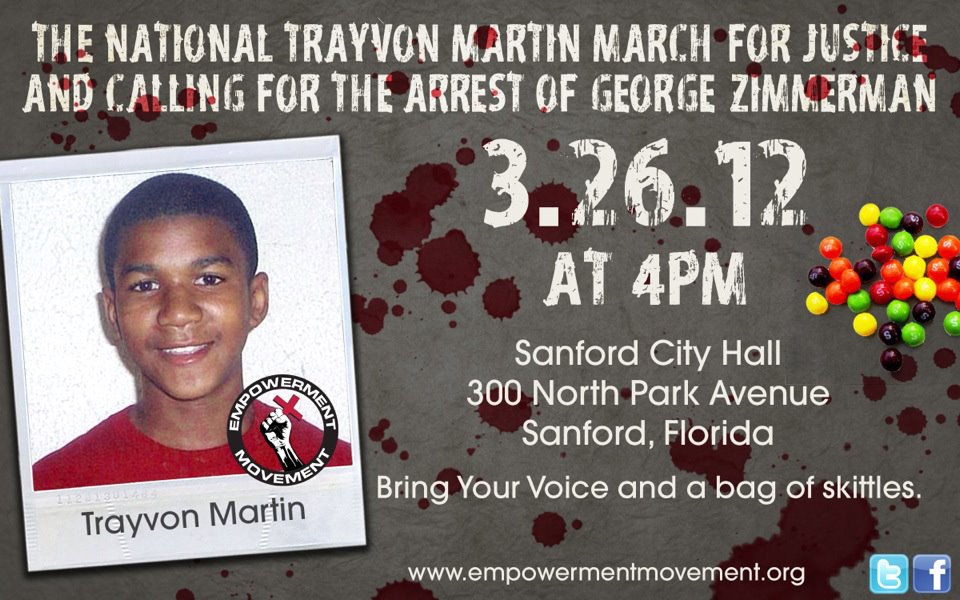
Justice for Trayvon Martin National March and Rally, March 26, 2012 4:00 pm !


march 23,

WASHINGTON — President Obama did not mention race even as he addressed it on Friday, instead letting his person and his words say it all: “If I had a son, he’d look like Trayvon.”

Weighing in for the first time on the death of Trayvon Martin, the unarmed black teenager shot and killed a month ago in Florida by a neighborhood watch volunteer, Mr. Obama in powerfully personal terms deplored the “tragedy” and, as a parent, expressed sympathy for the boy’s mother and father.

“I can only imagine what these parents are going through. And when I think about this boy, I think about my own kids,” Mr. Obama said. “Every parent in America,” he added, “should be able to understand why it is absolutely imperative that we investigate every aspect of this and that everybody pulls together — federal, state and local — to figure out exactly how this tragedy happened.”

While speaking movingly from his perspective as the father of two girls, one a teenager, Mr. Obama notably made no reference to the racial context that has made the killing of Trayvon and the gunman’s claim of self-defense a rallying point for African-Americans. Since Mr. Obama first began campaigning to be “president of all the people,” as his advisers would put it when pressed on racial issues, he has been generally reluctant to talk about race. And after his historic election as the first black president, Mr. Obama learned the hard way about the pitfalls of the chief executive opining on law enforcement matters involving civil rights.

source : New york time  read here.

This is not a case of death row, but a case of injustice and tragedy.

Trayvon Martin was killed.

In the moments before Martin was shot, he was on his cellphone talking to his girlfriend.

“He said this man was watching him, so he put his hoodie on. He said he lost the man,” the girl told ABC News. “I asked Trayvon to run, and he said he was going to walk fast. I told him to run but he said he was not going to run.”

Law enforcement officials in Sanford, Fla., investigating last month’s shooting of an unarmed black teen by self-appointed neighborhood watch leader George Zimmerman say they may have missed a possible racist remark made by Zimmerman to a 911 operator seconds before he shot 17-year-old Trayvon Martin.

read the case, video on : Huffington post

Uptade march, 22  source CNN

Sanford, Florida (CNN) — After a no-confidence vote and demands for his resignation, pressure mounted Thursday on the police chief of the Florida city where unarmed teenager Trayvon Martin was killed.

Sanford city commissioners voted 3-2 Wednesday night in favor of a nonbinding measure of no confidence against Police Chief Bill Lee. It was not immediately clear what impact, if any, that would have.

City Manager Norton Bonaparte said Thursday that he would like an independent review of police action in the wake of the shooting.

NAACP President Ben Jealous, however, was more forthright. Parents, he said, don’t feel their children will be safe with Lee heading the police department.

“He needs to go right now,’ Jealous said.

Meanwhile, the uproar over Martin’s death continued to grow with another rally planned Thursday night at a Sanford church. The Rev. Al Sharpton was slated to lead that rally before news of his mother’s death.

Martin was fatally shot February 26 while walking to the house of his father’s fiancee in Sanford after a trip to a convenience store. George Zimmerman, a neighborhood watch leader, said he shot the teen in self-defense.

Zimmerman has not been arrested. A police report describes him as a white male; his family says he is Hispanic.

Public outrage over the shooting and police response reverberted well beyond Sanford, a racially mixed Orlando suburb.

Demonstrators crowded New York’s Union Square Wednesday night, in a protest attended by Martin’s parents. Many wore hoodies and carried Skittles, the type of clothing Martin was wearing and the candy he purchased from a convenience store the night he was killed.

CNN videos about Trayvon Martin : watch here