Month: March 2012

POSSIBLE INNOCENCE: Alabama Denies DNA Testing for Man Facing Execution


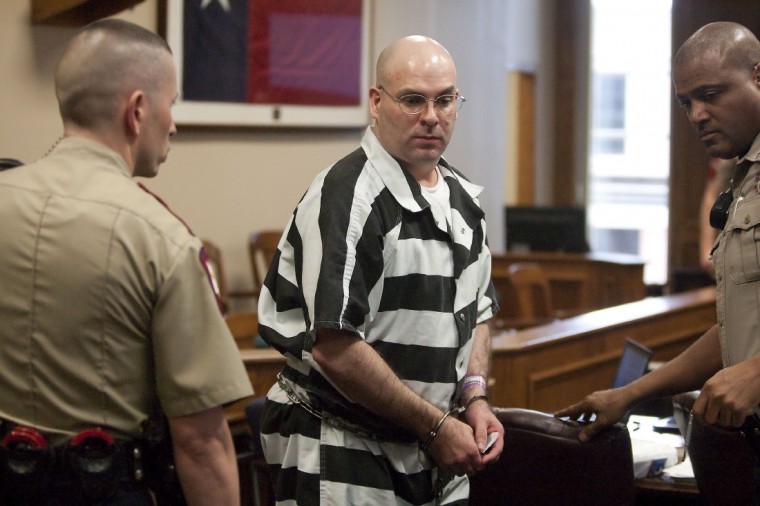
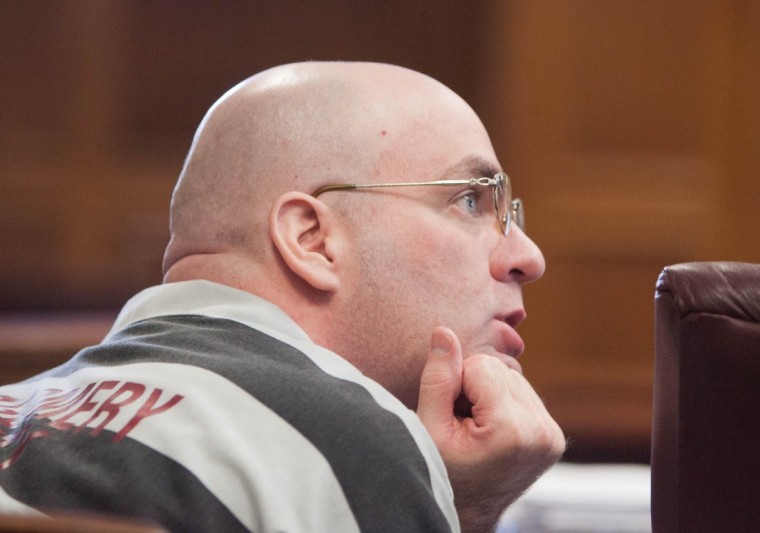
Alabama recently set an execution date for Thomas Arthur (pictured), who was convicted of a murder that took place 30 years ago. Arthur has always maintained his innocence, but has been denied access to DNA evidence that might lead to a different verdict. As Andrew Cohen pointed out in an investigative piece inThe Atlantic, Arthur is scheduled for execution on March 29, despite the confession of Bobby Ray Gilbert to the crime for which Arthur is facing execution.  There was no physical evidence that linked Arthur to the murder, and his sentence was secured almost entirely by the testimony of the victim’s wife, Judy Wicker. At first, Wicker told the authorities that Arthur was not involved in the crime, but when she was convicted for hiring someone to murder her husband, she arranged a deal with the prosecution. In exchange for a recommendation of early release from prison, she changed her original testimony and implicated Arthur. Since then, Gilbert has testified under oath to the murder. Gilbert said he had an affair with Wicker and soon agreed to kill her husband. State courts, however, have ruled that Gilbert’s confession was not credible, and have opposed DNA testing on an item recovered from the crime scene that could identify who was actually involved in the crime.  Arthur’s attorneys have agreed to pay for the DNA testing.

source : death penalty

TEXAS – Execution Keith Steven Thurmond – march 7, 2012 EXECUTED 6.22 p.m


March 7, 2012

Picture of Offender    Keith Thurmond          Sharon Thurmond

A Texas man condemned for fatally shooting his estranged wife and the neighbor who became her boyfriend denied killing them Wednesday, moments before he was put to death by lethal injection.

Strapped to the gurney inside the death chamber, Keith Thurmond declared, “I didn’t kill my wife. … I swear to God I didn’t kill her.”

His execution for the 2001 slayings near Houston came about an hour after the U.S. Supreme Court rejected arguments to halt the capital punishment, the third this year in Texas. The 52-year-old Thurmond was pronounced dead at 6:22 p.m. – 11 minutes after lethal drugs began flowing into his arms.

Thurmond’s attorneys argued that lawyers representing him in earlier appeals were “grossly deficient” and that his execution should have been postponed until justices decide on a similar case in Arizona.

With his death nearing Wednesday, Thurmond blamed the shooting deaths on another man before telling prison officials, “Go ahead and finish it off.”

As the drugs began flowing, he said, “You can taste it.” He wheezed and snored before losing consciousness.

The killings occurred after sheriff’s deputies showed up at Thurmond’s mobile home on Sept. 25, 2001, with a court order removing his 8-year-old son and putting the boy in the care of his mother

Thurmond became irate and stormed down the road to the mobile home where his 32-year-old wife, Sharon, was living with her new boyfriend, Guy Fernandes, 35, near Magnolia in Montgomery County, about 35 miles north of Houston.

Fernandes’ father, brother and sister were among those who witnessed Thurmond’s execution. They were joined by Sharon Thurmond’s brother and two nieces. All stood stoically a few feet from Thurmond and declined comment after his death.

Thurmond’s brother, Tom, was at Thurmond’s home the day of the killings, heard gunshots and looked out the door. He saw Thurmond outside standing over his wife with a gun in his hand.

At the 2002 capital murder trial, Keith and Sharon Thurmond’s son testified that he saw his father shoot his mother repeatedly in the yard behind Fernandes’ mobile home.

Thurmond surrendered to police after a two-hour standoff.

Evidence showed Sharon Thurmond had been shot seven times with a .45-caliber semiautomatic handgun that was later found in Thurmond’s home. The same gun was used to shoot Fernandez twice in the head. The gun’s firing pin was missing and pieces of it were near the body of Fernandez, who also had been beaten in the head with the weapon.

During the punishment phase of his trial, a former girlfriend testified that Thurmond stalked and raped her after she ended their relationship. She told jurors that he cut her stuffed animal’s head off and that she feared he would do the same to her.

A second woman testified that she faced similar abuse and harassment until she obtained a court order against him. Sharon Thurmond also had two court orders against him.

Prosecutors said these incidents proved Thurmond was a threat to society, an element Texas jurors must consider when deciding on the death penalty. John MacDonald, Thurmond’s lead trial attorney, said that background on Thurmond’s character very much hurt his defense.

In an appeal petition, Thurmond’s attorneys said the sentence was too harsh. They said his former appellate lawyers failed to track down any of his relatives who could have testified that he had been abused as a child and that this could have accounted for his behavior.

State lawyers opposed the petition, arguing that unlike the Arizona case, Thurmond’s earlier attorneys didn’t abandon him and that any information now from the prisoner’s relatives likely would not have altered the outcome of the trial.

Last Statement:

All I want to say is I’m innocent, I didn’t kill my wife. Jack Leary shot my wife then her dope dealer Guy Fernandez. Don’t hold it against me, Bill. I swear to God I didn’t kill her. Go ahead and finish it off. You can taste it.

DEATH PENALTY : Reasons for the total abolition of this degrading and inhuman punishment


1 – Death Penalty violates the right to life.

The Universal Declaration of Human Rights (UDHR) recognizes each person’s right to life. Article 4 of the African Charter on Human and People’s Rights (ACHPR) states that Human beings are inviolables. Every human being shall be entitled to respect for his life and the physical and moral integrity of his person. this view is reinforced by the existance of international and regional treaties providing for the abolition of the death penalty, notably the second optional protocol of the International Covenant on Civil and Political Rights, adopted by the General Assembly of the United Nations in 1989.


2 – Death Penalty is a cruel and inhuman death.

The UDHR categorically states that No one shall be subjected to torture or to cruel, inhuman or degrading treatment or punishment. All forms of execution are inhuman. No government can guarantee a dignified and painless death to condemned prisoners, who also suffer psychological pain in the period between their sentence and execution.


3 – Death Penalty has no dissuasive effect.

No scientific study has proved that the death penalty has a more dissuasive effect on crime than other punishments. The most recent investigation into the links of cause and effect between capital punishment and the murder rate, was conducted by the United Nations in 1988 and updated in 2002. It came to the following conclusion :

“…it is not prudent to accept the hypothesis that capital punishment deters murder to a marginally greater extent than does the threat and application of the supposedly lesser punishment of life imprisonment.”


4 – Death Penalty is premeditated murder, demeans the state and makes society more violent.

By executing a person, the state commits a murder and shows the same readiness to use physical violence against its victim as a criminal. Moreover, studies have shown that the murder rate increases immediately after executions. Researchers have suggested that this increase is similar to that caused by other violent public events, such as massacres and assassinations.

5 – Death Penalty is discriminatory in its application.

Throughout the world, the death penalty is dsproportionately used agianst disadvantaged people. Some condemned prisoners from the most impoverrished social classes would not have been sentenced to death if they were from wealthier sectors of society. In these cases, either the accused are less able to find their way through the maze of the judicial system (because of a lack of knowledge, confidence or financial means), or the system reflects the generally negative attitude of sociéty and the powerful towards them. It has also been proved that certain criminals run a greater risk of being condemned to death if their victims come from higher social classes.

6 – Death Penalty denies the capacity of people to mend their ways and become a better person.

Defenders of the death penalty consider that anyone sentenced to death is unable to mend their ways and could re-offend at any time if they are released. However, there are many examples of offenders who have been reintegrated and who have not re-offended. Amnesty International believes that the way to prevent re-offending is to review procedures for conditional release and the psychological monitoring of prisoners during detention, and under no circumstances to increase the number of executions. In addition, the death penalty removes any possibility for the condemned person to repent.

7 – Death Penalty cannot provide social stability nor bring peace to the victims.

An execution cannot give the victim his or her life back nor ease the suffering felt by their family. Far from reducing the pain, the length of the trial and the appeal procedure often prolong the family’s suffering.

8 – Death Penalty denies the fallibility of human institutions.

The risk of executing innocent people remains indissolubly linked to the use of the death penalty.

Since 1973, 116 people condemned to death in the United States have been released after proof of their innocence has been established. Some of them have only just escaped execution, after having passed years on death row. These repeated judicial errors have been especially due to irregularities committed by prosecution or police officers, recourse to doubtful evidence, material information or confessions, or the incompetence of defense lawyers. Other prisoners have been sent to their deaths when serious doubts existed about their guilt

9 – Death Penalty is a collective punishment.

 This punishment affects all the family, friends and those sympathizers with the condemned person. The close relatives of an executed prisoner, who generally do not have anything to do with the crime, could feel, as a result of the death penalty, the same dreadful sense of loss as the victim’s parents felt at the death of their loved one.

10 – Death Penalty goes against the religious and humanist values that are common to all humanity. Human rights are universal, indivisible and interdependent.

11. The convicted has a family.

  A mother, who commited no crime and suffers even more than the convicted man, what is her crime ? Her loving son or daughter ? Is she less of a mother than the victim’s mother ? Sometimes baby sons and daughters, or worse ; in an age where they realize what is going on…old grandmothers who die of grief, is that fair ?

12. Scientists are studying the brain of violent criminals and finding out that their brain chemistry is different, and therefore they are unable to feel regret, even facing death… So where is the punishment if he or she never regrets ? Isn’t that the goal of death penalty ?

13. Many countries condemn children to death too.

 Boys with 14 years of age or less… Children are sacred anywhere, it is scaring and inhuman enough for an adult, a child has a whole life ahead to realize his or her mistake…

14. Death penalty is expensive to the public exchequer and money spent there should not be used to killing people, but to heal them, to help those sick : whether the convicted or other citizens by public health measures.

15. A crime should not be punished with another.

The State has to give the good example.

16. In the cost/benefits balance the «against» arguments certainly are heavier !

Since it is expensive and does not achieve any of its goals : punishment/regret or crime dissuasion, besides the fact that it punishes those around the convicted sine no man is an island, and if it is, there should be understanding to him or her, sympathizing with one who has suffered much already…

17. Many of these men and women are judged for 5 minutes, 30 minutes of their liveswhere they made a mistake, their personal history is ignored and not seen with wisdom as law should do.

18. It may in fact encourage crime because you can only apply death penalty once, and so killing on, two, or ten : the price is the same, so if the murder gets caught for one he gets caught for all.

19. It also encourages crime because the family of the executed, namely sons and daughters, may increase their hate towards the State, the victims family, and may wanna do justice their way…

PLEASE PUT AN END TO DEATH PENALTY

BY Laurence Meylemans

US – 10 convicts presumed innocent after execution


Carlos De Luna
Executed in 1989

Carlosdeluna Bookingphoto

In February 1983, Wanda Lopez, was stabbed to death during her night shift at the gas station where she worked. After a brief manhunt, police found De Luna hiding under a pick-up truck. Recently released from prison, he was violating his parole by drinking in public. De Luna immediately told police that he was innocent and he offered the name of the person who he saw at the gas station. Police ignored the fact that he did not have a drop of blood on him even though the crime scene was covered in blood. De Luna was arrested too soon after the crime to clean himself up. The single eyewitness to the crime, Kevin Baker, confirmed to police that De Luna was the murderer after police told him he was the right guy.

At trial De Luna named Carlos Hernandez as the man he saw inside the gas station, across the street from the bar where De Luna had been drinking. Hernandez and DeLuna were strikingly similar in appearance but, unlike DeLuna, Hernandez had a long history of knife attacks similar to the convenience store killing and repeatedly told friends and relatives that he had committed the murder. Friends confirmed that he was romantically linked to Lopez as well. De Luna’s lawyers knew of Hernandez’s criminal past but never thoroughly investigated his previous crimes. On December 7, 1989, Texas executed 27-year old Carlos De Luna.

Executed in 1995

Larry Griffin

On June 26, 1980 in St. Louis, Missouri, 19-year-old Quintin Moss was killed in a drive-by shooting while allegedly dealing drugs on a street corner. The conviction was based largely on the testimony from Robert Fitzgerald, a white career criminal, who was at the scene at the time of the murder. He testified that he saw three black men in the car when shots were fired and that Griffin shot the victim through the window of the car with his right hand. This was Griffin’s attorney’s first murder trial and he did not challenge the testimony even though Griffin was left-handed. He also failed to bring forth an alibi witness who was with Griffin at the time of the murder.

Griffin’s fingerprints were not found on the car or the weapon – all evidence against him was circumstantial. There is evidence that suggests Fitzgerald was promised a reduce sentence in exchange for his testimony. The prosecution also failed to address that there were two other witnesses who confirmed that Griffin did not commit the murder and they were able to name the three men who did.Appeals courts upheld his conviction and death sentence. Griffin was executed by lethal injection on June 21, 1995. Griffin maintained his innocence right up to his execution. In 2005, a professor University of Michigan Law School reopened the case. His investigation concluded that Griffin was innocent.

Executed in 1993

Ruben Cantu

On the night of November 8, 1984, Ruben Cantu and his friend David Garza, broke into a vacant San Antonio house under construction and robbed two men at gunpoint. The two victims, Pedro Gomez and Juan Moreno, had been workmen sleeping on floor mattresses at a construction site, guarding against burglary. As they tried to take their cash, they were interrupted by Gomez’s attempt to retrieve a pistol hidden under his mattress. The boys shot both men killing Gomez instantly. Thinking they had killed both men, the two teens then fled the scene.

The police showed Moreno photos of suspects, which included Cantu’s picture, and he was unable to identify his attacker. On the basis of no physical evidence, no confession, and only Moreno’s subsequently recanted testimony, a jury convicted Ruben Cantu of first-decree murder. Juan Moreno now says that he had felt pressure from the police to finger Cantu. David Garza, Cantu’s codefendant, has since admitted involvement in the burglary, assault and murder. He says he did go inside the house with another boy, did participate in the robbery, and saw the murder take place, but that his accomplice was not Ruben Cantu.On August 24, 1993, Ruben Cantu at the age of 26, was executed by lethal injection. His final request was for a piece of bubble gum, which was denied.

David Spence
Executed 1997

Dspence

In 1982, David Spence was accused of the rape and murder of two 17-year-old girls and one 18-year-old boy in Waco, Texas. He received the death penalty in two trials for the murders. Muneer Deeb, a convenience store owner, hired Spence to do the murders and he was also charged and sentenced to death. He received a new trial in 1993 and was later acquitted.

The prosecution built its case against Spence around bite marks that a state expert said matched Spence’s teeth and jailhouse snitches. Two of the six jailhouse witnesses who testified at trial later recanted, saying they were given cigarettes, television and alcohol privileges, and conjugal visits for their testimonies. Spence’s post-conviction lawyers had a blind panel study in which five experts said the bite marks could not be matched to Spence’s. Even the original homicide investigator on the case said he had serious doubts about Spence’s guilt and a former Waco police detective involved in the case said he did not think Spence committed the crime. David Spence was executed by lethal injection on April 14, 1997.

executed in 1990

Jesse-Tafero

On the morning of February 20, 1976, Highway Patrol officer, Phillip Black, and Donald Irwin, approached a car parked at a rest stop for a routine check. Tafero, his partner Sonia “Sunny” Jacobs, and Walter Rhodes were found asleep inside. Black saw a gun lying on the floor inside the car so he woke the occupants and had them come out of the car. According to Rhodes, Tafero then shot both Black and Irwin with the gun, which was illegally registered to Jacobs, led the others into the police car and fled the scene. All three were arrested after being caught in a roadblock. The gun was found in Tafero’s waistband.

At their trial, Rhodes testified that Tafero and Jacobs were solely responsible for the murders. Tafero and Jacobs were convicted of capital murder and sentenced to death while Rhodes was sentenced to 3 life sentences. Rhodes was eventually released in 1994 following parole for good behavior. Because the jury had recommended a life sentence for Jacobs, the court commuted Jacobs’ sentence to life in prison, but not Tafero’s. She was later released after agreeing to a plea bargain. Prior to his release, Rhodes confessed several times to lying about his involvement in the shooting. Even Sunny Jacobs claimed that Rhodes, not Tafero, carried out the shooting as well. Rhodes was the only person on which traces of gunpowder were found. Tafero was executed by electric chair on May 4, 1990. The chair malfunctioned causing the process to take over 13 minutes.

Read more : Listverse.com

FLORIDA – William Dillon – Governor approves $1.35 million for man wrongfully convicted


TALLAHASSEE — William Dillon didn’t believe the day would come when he would be compensated for sitting in a Florida prison nearly three decades for a crime he didn’t commit. But on Thursday lawmakers approved a $1.35 million payout that was immediately signed into law by Gov. Rick Scott.

Now 52, Dillon was cleared by DNA testing in the beating death of James Dvorak on a Brevard County beach in 1981. A jailhouse informant also has since recanted his testimony against Dillon and authorities reopened the murder investigation. Dillon was freed in November 2008.

The Senate voted 38-1 Thursday to compensate Dillon for spending 27 years in prison. The House passed it on a 107-5 vote last week.

Scott apologized to Dillon on behalf of the state for the wrongful conviction. “It’s a real honor to be the governor who is signing this bill,” said Scott, who shook Dillon’s hand and wished him well.

Dillon, now lives in Chapel Hill, N.C., where he writes and performs music. “It doesn’t give me back what was taken from me, but at the same time it’s such a joy to be here because my life was gone,” Dillon said. “I can’t do anything but look forward

TEXAS : Remembrance – Dominique Green “A Saint on Death Row “


On October 26, 2004, Dominique Green, thirty, was executed by lethal injection in Huntsville, Texas. Arrested at the age of eighteen in the fatal shooting of a man during a robbery outside a Houston convenience store, Green may have taken part in the robbery but always insisted that he did not pull the trigger. The jury, which had no African Americans on it, sentenced him to death. Despite obvious errors in the legal procedures and the protests of the victims family, he spent the last twelve years of his life on Death Row.

Werner Herzog’s ‘On Death Row’ Subject Executed


Having delved into the deep end of the prison system, interviewing a man awaiting execution and the family members of his victims in his outstanding 2011 doc “Into The Abyss.” Werner Herzog is set to continue the conversation about the death penalty and those to whom it’s been given in “On Death Row,” a four-part companion series to last year’s film that premieres on the Investigation Discovery channel on March 9th at 10pm. 

In an unfortunate instance of timeliness, one of the five inmates he interviews in the series has just been executed. George Rivas, 41, was the leader of the Texas 7, a gang that escaped from a maximum-security prison and went on a crime spree that left one policeman dead, ultimately getting caught after someone spotted them on “America’s Most Wanted.” He was serving multiple life sentences for kidnapping, robbery and burglary charges at the time of the breakout. In the clip from “On Death Row” below, he tells Herzog “I had more time than all mass murderers in the prison system that I know of. They took away all hope for me. When you do that to a person, anything is possible.”

Rivas died by lethal injection on Wednesday. According to the AP, he offered a statement to the family of Aubrey Hawkins, the slain officer: “I do apologize for everything that happened. Not because I’m here, but for closure in your hearts. I really do believe you deserve that.”

The episode featuring Rivas and fellow gang member Joseph Garcia is scheduled to air March 23. Herzog doesn’t support the death penalty, but during “Into The Abyss” demonstrated his ability to highlight its ugliness and find empathy for those awaiting execution while never softening his portrayal of the crimes committed, telling Michael Perry “I don’t have to like you, but you are a human being.”

TEXAS – Larry Swearingen back in court


                                                   http://www.myfoxhouston.com/video/videoplayer.swf?dppversion=11212

Swearingen official website 

        Swearingen Legal documents (pdf)

A defense expert in the hearing of convicted killer Larry Ray Swearingen reluctantly agreed with prosecutors Thursday that histology – the study of microscopic cell tissue – isn’t an accepted method to determine the time of death in a body.

Meanwhile, defense attorney Stephen Jackson accused the state of asking a “trick question” and stressed the science is valid.

“If the (science) was not well-based, it would have been excluded by now (by state District Court Judge Fred Edwards). And that hasn’t happened,” Jackson said.

The hearing, which began Monday in Edwards’ 9th state District Court, was ordered by the Texas Court of Criminal Appeals in July 2011 to hear Swearingen’s claim of innocence.

Like the first three days, the fourth day of the hearing focused on the condition of Trotter’s body when it was found. The defense argued the condition of the body and, more important, microscopic slides of Trotter’s heart and liver, prove she could not have died 22-25 days prior to discovery.

However, during cross-examination of Galveston County Medical Examiner Stephen Pustilnik, the prosecution challenged the validity of histology in determining the postmortem interval – the time from death to when a body is found.

On more than one occasion, Special Prosecutor Lyn McClelland asked Pustilnik to examine several books on forensic pathology and see if Pustilnik could locate “any reference in any book” that connects the use of histology to determine PMI.

“They don’t exist,” Pustilnik said.

“The defense’s position is not valid science,” Assistant District Attorney Warren Diepraam said.

The hearing resumes Monday with the prosecution to present its experts.

Swearingen’s Claim

Larry Ray Swearingen, 40, was sentenced in 2000 to die by lethal injection for the murder of 19-year-old Melissa Trotter of Willis. Since then, he has received three stays from execution. He claims he couldn’t have killed Trotter because he was in jail on Dec. 11, 1998. Trotter disappeared on Dec. 8, 1998 and her body was found on Jan. 2, 1999 in the Sam Houston National Forest.

…………………………………………………………………………………………………………………………………………………………………………………….

March 9 2012

 photo by Eric S. Swist

The canopy of trees so prevalent in the Sam Houston National Forest played a role in the condition of Melissa Trotter’s body when found 25 days after her disappearance, a meteorological expert testified Thursday.

Richard Grant, a professor at Purdue University, said the temperature at tree-top level is not dissimilar to the temperature in an open field.

However, Grant, an expert on microclimate, said the solar heat is diffused as it works its way to the forest floor.

Approximately 20 percent of the solar energy reaches the bottom of the forest, he said.

Questioned by prosecutor Warren Diepraam, Grant testified the temperatures on a forest floor tend to be more consistent than in a more open environment.

“The heat transfer is lower,” Grant said. “The temperature of the (forest) can’t be the same as an open field.”

Testimony in the hearing is expected to conclude today. Edwards may issue a ruling or send all evidence and testimony to the TTCA. Either way, a determination is not expected before a couple of months.

Source : http://www.yourhoustonnews.com

————————————————————————————————————————————————————————————————————–

March 8 2012

The battle of the experts continued Wednesday at the hearing of convicted killer Larry Ray Swearingen.

Forensic Entomologist Neal Haskell testified under cross-examination that he could extract a time of death based on DNA, weather data and autopsy photographs.

Prosecutor Warren Diepraam asked Haskell if the forensic evidence he was shown Wednesday was consistent with the condition of Trotter’s body found 25 days after her disappearance.

Haskell agreed.

Later in the day, Sibyl Bucheli, of Sam Houston State University, was called to the stand to testify about the decomposition of the human body.

Bucheli said data obtained at SHSU proved to be “entirely” consistent with the decomposition of Trotter’s body, Diepraam said.

“She (Bucheli) showed (Trotter’s) internal organs didn’t turn to mush as the defense alleged,” he said.

Defense attorney Stephen Jackson challenged Bucheli’s qualifications.

“She just received a PhD in Philosophy from Ohio State,” Jackson said. “She cherry-picked a body (at SHSU) that is not consistent with 17 days of 20-degree weather when the temperature was up in the 70s. It’s apples to oranges.”

The hearing is expected to conclude today.

source : http://www.yourhoustonnews.com

March 6 2012

The former Harris County medical examiner who conducted the autopsy in the Larry Swearingen murder case testified on Tuesday that his attorney misrepresented her opinion.

Dr. Joye M. Carter said during an evidentiary hearing that she did not reverse her opinion concerning how long Melissa Trotter‘s body had been in the Sam Houston National Forest, as Swearingen’s attorneyJames Rytting claimed in a 2007 affidavit.

Swearingen received a stay of execution after Rytting cited the affidavit in an appeal. He is on death row for the strangulation and sexual assault of Trotter, 19, who went missing on Dec. 8, 1998, from Lone Star College-Montgomery. Her body was discovered 25 days later.

During the 2000 trial, Carter testified the body had been in the woods for 25 days or so, placing the time of death on Dec. 8.

But Rytting tried to get Carter to say the wording in the affidavit indicated that the body was in the woods a maximum of 14 days, placing the time of death on or after Dec. 12.

Swearingen contends he could not have killed Trotter because he was in jail on Dec. 11 on an unrelated charge.

The hearing will determine whether Swearingen should receive a new trial.

http://www.larry-swearingen.com/attachments/File/Affidavit_of_Jerald_Crow_(2007).pdf

MISSOURI – Death penalty procedures rife with problem . ABA report


An American Bar Association analysis of Missouri’s death penalty procedures finds much room for improvement.

The report, to be formally announced today, faults the state for:

* not holding on to DNA evidence for as long as a person is incarcerated;

* not having clear requirements for recording depositions;

* not providing two attorneys and an investigator for defendants in death-penalty cases and appeals;

* not paying public defenders in capital cases fairly;

* not tracking racial statistics in death-penalty cases;

* and requiring that a defendant’s mental disability be documented — as opposed to just manifested — before they reach 18.

The report, “Evaluating Fairness and Accuracy in State Death Penalty Systems: The Missouri Death Penalty Assessment Report,” was conducted by a team of eight Missouri law professors, attorneys and judges with varying views on the death penalty. It looked at a dozen key areas that affect who is executed by the state and how fairly such punishment is meted out.

“The ABA doesn’t take a position on the death penalty itself but calls for states to impose a moratorium if certain problems have not been corrected,” said Virginia Sloan, chair of the ABA Death Penalty Moratorium Project.

The Missouri report is part of a second wave of such reports that have looked at the death penalty in Alabama, Arizona, Florida, Georgia, Indiana, Kentucky, Ohio, Pennsylvania and Tennessee since 2003. Funding for all the reports came from the European Union, which strongly opposes the death penalty.

The report said the state’s “areas of strength” were its accreditation of crime labs, provision of defense services, trial instructions to jurors in capital cases, the independence of its judiciary and its treatment of “mentally retarded” offenders.

Reform, however, was called for in six areas: aggravating circumstances, at the pretrial stage, at the trial stage, at the post-trial stage, data collection and funding issues. It says that the state allows too broad of a range of aggravating circumstances to result in a penalty of death.

Legislation in Missouri was introduced at the beginning of this year by Rep. Mike Colona, D-St. Louis, to hold off on executions in Missouri until a statewide report can be completed.

Source : http://molawyersmedia.com/

U.S.A News about Death penalty


Every day, you find the latest news on the death penalty, I will group the most important news I have read in the media.