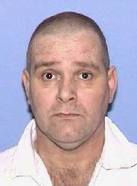
Capital punishment

Gore’s attorneys file appeal with state Supreme Court


update april 6, source : http://news.smh.com.au

Serial killer’s letters speed up execution

Serial killer David Alan Gore is set to be executed sooner than he expected, in part because he could not stop bragging about raping and murdering four teenagers and two women in Florida three decades ago.

An author published the inmate’s grotesque letters, and a newspaper columnist and editorial board brought the case to the attention of Florida Governor Rick Scott. The Republican promptly signed the death warrant, even though more than 40 other men have been on death row longer.

Gore is set to die on April 12.

“Those letters are so disturbing and so insightful into who this person is,” said Pete Earley, who recently published some of the letters in his book Serial Killer Whisperer. “Gore, actually, he talked his way into the death chamber.”

Tony Ciaglia wrote to Gore and other serial killers on a whim after suffering a severe head injury as teenager, in an effort to better understand them.

He began exchanging letters with Gore about five years ago and received about 200 pages in all. Most in the book are too graphic to quote. In one, Gore described step-by-step how he and his cousin abducted two 14-year-old friends and sexually assaulted them.

“I drug both bodies into the woods where I disposed of them. Oh and you can believe, I collected hair. It took a couple days to recover from that. It was a perfect experience,” Gore wrote.

In another letter, Gore described his uncontrollable desire to kill.

“It’s sort of along the lines as being horny. You start getting horny and it just keeps building until you have to get some relief,” Gore wrote. “That is the same with the URGE to kill. It usually starts out slow and builds and you will take whatever chances necessary to satisfy it. And believe me, you constantly think about getting caught, but the rush is worth the risk.”

Scripps Treasure Coast Newspapers columnist Russ Lemmon, who has written about the Gore case, published a column for a few Florida newspapers on the day the editorial board had an interview with the governor. They talked about the book.

The board asked Scott if he had considered signing Gore’s death warrant. The governor promised to look into it.

Meanwhile, letters poured into Scott’s office, many of them mentioning the prison correspondence.

“Pete Earley provides compelling evidence that David Gore relishes every detail of his heinous murders,” wrote Ralph Sexton, whose nephew was married to one of the women killed.

About a month after the editorial board meeting, Scott signed Gore’s death warrant.

Gore’s lawyers are now appealing, arguing in part that the governor’s decision to sign the warrant was unfairly influenced by the editorial board.

A spokeswoman for Scott said he had not read the book.

Ciaglia said Gore blamed him after the death warrant was signed. Ciaglia said he is opposed to the death penalty.

“I told him that I did not actively pursue it. That there’s a lot of people – because you did some really, really bad things – there’s a lot of people that hate you and they want to see you executed and they used these letters to get people’s attention as to the horrible crimes that you committed,” Ciaglia said.

“The only person you can blame is Gore himself,” Earley said. “His candour and his lack of compassion, empathy and remorse is stomach-churning.”

Update april 5, source : http://www.wptv.com

wptv_DAVID_ALLAN_GORE_20120228133951_JPG
If all goes as planned, Carl Elliott  and his extended family next Thursday will make a trip that has eluded them for nearly 30 years.

At 6 p.m., the 81-year-old plans to be sitting next to loved ones in a viewing area at Florida State Prison when a lethal cocktail is administered to the now 58-year-old serial killer who raped and killed Elliott’s 17-year-old daughter, Lynn, in Vero Beach in 1983. David Alan Gore, who picked up Lynn Elliott and a 14-year-old friend who were hitchhiking to the beach, later confessed to murdering five other women and received five life sentences.

“We’ve been patiently waiting for this after all these years. We miss her everyday,” Elliott said. “We’re ready to go up there and see it done.”

Whether Elliott and his family will finally see Gore die for murdering the teen now rests with the Florida Supreme Court.

And, thanks to a two-week-old U.S. Supreme Court decision, the options facing the state’s high court aren’t clear-cut. In arguments Wednesday, an attorney representing Gore urged justices not to make a snap judgment in his case.

“It effects not just Mr. Gore and not just Death Row inmates,” attorney Martin McClain said of the high court’s recent decision. It will impact hundreds of inmates who were convicted of far lesser crimes than murder, he said.

He urged the justices to stay Gore’s planned execution to give attorneys throughout the state the chance to weigh in on what one justice called a “troubling” ruling that allows inmates to return to court after their initial appeals to argue that their attorneys did a bad job. Since claims of ineffective assistance of counsel aren’t allowed until after a case goes through standard appeals, some claim the ruling could pave the way for court-appointed attorneys to represent prisoners after their initial appeals have been exhausted.

In Gore’s case, McClain argued, he had not just one bad attorney but two. Stuart attorney Robert Udell, who gained fame in Palm Beach County when he represented teacher-killer Nathaniel Brazill in 2001 and was subsequently disbarred for financial misdeeds, made numerous errors when he represented Gore in a 1992 resentencing hearing, McClain said. For instance, he failed to tell the jury about Gore’s alcohol, drug abuse and mental health problems or that chances were slim that he would ever be released if he received life in prison.

Another attorney, Andrew Graham, in 1999 argued that Udell’s incompetence caused a second jury to recommend Gore receive the death penalty instead of a life sentence. But Udell denied he was at fault. Udell blamed another attorney, Jerome Nickerson, who he claimed was the lead attorney during Gore’s resentencing. However, Graham never found Nickerson, who had moved out of state, which gave him little ammunition in the appeal that was rejected by the Florida Supreme Court in 2007.

As evidence of Graham’s incompetence, McClain said he was able to find Nickerson with a quick Google search. The discovery of Nickerson is new evidence that should, as a result of the U.S. Supreme Court decision, give Gore another basis for appeal, he said.

Justices appeared less than enamored with McClain’s efforts to use the recent decision to spare Gore.

Justice Barbara Pariente said the U.S. Supreme Court’s decision in the Arizona case involving convicted sex offender Luis Mariano Martinez is aimed at federal courts.

“It has everything to do with the nightmare that’s going to be created in the federal system,” she said of the opportunity for inmates to flood courts with appeals. “It has nothing to do with what states are forced to look at.”

Further, she said, McClain has had years to find Nickerson and lodge an appeal. McClain countered that, until the Martinez decision, he had no way to challenge Graham’s incompetence.

Justice Peggy Quince said “the language of Martinez is really troubling” and it appears the ruling is far-reaching.

Assistant Florida attorney general Celia Terenzio said there is no reason to delay Gore’s execution. Even if Udell or Graham didn’t represent Gore well, the Florida Supreme Court in 2007 said their actions didn’t spur the jury to recommend that he be sentenced to death. “There was no prejudice,” she said.

Further, she said, the Martinez decision is very narrow, applying to people whose appeals were blocked on procedural grounds. Gore has had numerous appeals since he was first sent to Death Row in 1984, including one for ineffective assistance of counsel, which was rejected. Also, she said, the high court didn’t say people have a constitutional right to be represented by an attorney in post-conviction appeals, only that in certain cases it may be necessary.

In death penalty cases, Florida always provides inmates with appellate lawyers for post-conviction appeals, she said.

Court-watchers said the decision facing the Florida Supreme Court’s is difficult.

“The Florida Supreme Court is going to have to look at this as a new ruling without any guidance for how it’s going

to be interpreted,” said attorney Michael Minerva, CEO of the Innocence Project of Florida. “The prudent thing to do would be to get additional time to figure out how it applies to Florida courts.”

Richard Dieter, executive director of the Washington, D.C.-based Death Penalty Information Center, agreed. “It wouldn’t be the first time an execution has been stayed because the Supreme Court surprises people with a decision.

Read more: click here

Update march 29  source :http://www.tcpalm.com

The state Supreme Court on Thursday granted a request by David Alan Gore to hold oral arguments Wednesday at 9 a.m. in the condemned man’s appeal of a court ruling that recently denied him a hearing.

Gore’s lawyers on Monday appealed to the Florida Supreme Court an order issued by Circuit Judge Dan L. Vaughn that denied the serial killer’s request for a hearing to present evidence related to legal claims raised in an effort to stop his April 12 execution.

Gore, 58, is under a death warrant Gov. Rick Scott signed Feb. 28 for the July 16, 1983, first-degree murder of Lynn Elliott, 17, of Vero Beach.

Gore’s legal claims center on allegations of having inadequate legal counsel during his post-conviction relief proceedings. He’s further claimed his execution should be stopped in part because the clemency process in his case was applied in an arbitrary and capricious manner in violation of his U.S. constitutional rights. Another claim alleged that because of the 28 years Gore has spent on death row, adding his execution to that punishment would constitute cruel and unusual punishment

Update march 28, source : http://www.tcpalm.c 

As gores’s execution nears, family of victim reflects on loss, changes

Mike and Nancy Byer left Florida in 1988 in search of a fresh start.

“I wanted to go where nobody knew me, and I didn’t know anybody,” Mike said.

Who could blame them?

Just five years earlier, their 14-year-old daughter, Barbara Ann, was killed by Fred Waterfield and David Alan Gore. Her friend, Angel LaVallee, also was killed.

Mike was the last person to see Barbie alive. She was standing outside a 7-Eleven in Orlando. (Mike was driving a service vehicle for his truck-repair business when he passed by the convenience store.)

Later, on the streets of Orlando, the teenage girls — who met while attending Howard Junior High School — would cross paths with Indian River County’s infamous serial killers.

“Gore and Waterfield were hunters,” Nancy said. “They went out for prey.”

Update march 21 source :http://www.tcpalm.com

Attorneys representing David Alan Gore on Wednesday filed papers with the state Supreme Court appealing a judge’s ruling denying the condemned serial killer a chance to present evidence in court in an effort to stop his execution April 12 at Florida State Prison.

Gore was condemned to death for the July 1983 shooting death of Vero Beach teenagerLynn Elliott. He also pleaded guilty in the murder of five other women in Indian River County between 1981 and 1983.

Appeal papers filed by defense attorneys John Abatecola and Linda McDermott ask the Florida Supreme Court to review Circuit Judge Dan L. Vaughn’s March 15 rulings, which rejected Gore’s request to hold an evidentiary hearing, and refused to set aside his sentence of death.

The Florida Supreme Court already has issued an expedited schedule in Gore’s case, setting a deadline of April 2 for legal briefs to be filed. Oral arguments, if required by the justices, will be held April 4 in Tallahassee.

read Gore’s case click here

Don’t revive capital punishment debate


march 21. source http://www.royalcityrecord.com

It is completely understandable that when we, as a society, are faced with a monstrous crime, we ponder capital punishment.

Paul Bernardo, Clifford Olson, Robert Pickton and now those accused of murdering young Tori Stafford – who hasn’t considered that the world would be a better place if such people were put to death ?

In our well-placed horror and anger, we forget how many innocent people have been put to death, or how many innocent people sat on death row for decades before being cleared.

Those who argue for reinstating the death penalty say that it should be reserved for only those cases where guilt is absolute and the crime merits the penalty. But that has been the justification throughout history – and, as we know, our barometer of what merits the ultimate penalty has changed over time.

Some history books say the first execution in Canada, on Jan. 19, 1649, was a 16-year-old girl found guilty of theft.

Ronald Turpin and Arthur Lucas were the last prisoners to suffer execution in Canada, in 1962.

Turpin was a small-time thief who shot a policeman while fleeing a restaurant robbery.

w was a black man convicted of killing an FBI informant despite lingering questions over his guilt and mental impairment. Both had little previous violence in their history.

Canada abolished the death penalty in 1976, and, while there have been calls to bring it back, polls suggest that many Canadians continue to believe that the death penalty is simply too “final” to leave in the hands of a fallible justice system subject to politics and prejudice.

Even the “tough-on-crime” Conservatives are reluctant to start the debate again.

And that, for once, is a good thing.

Executions scheduled april 2012


Dates are subject to change due to stays and appeals

update april 27

4/05/2012

Michael Anthony Archuleta

Utah

Stay likely


4/12/2012

Carey Dale Grayson

Alabama

         DELAYED  

4/12/2012

Garry Allen

Oklahoma

          STAY  

04.12.12

David Gore

Florida

         6:19 p.m  

4/18/2012

Mark Wiles

Ohio

        10:42 am  

4/19/2012

Daniel Greene

Georgia

       CLEMENCY  commuted

4/20/2012

Shannon Johnson

Delaware

        2:55 am  

4/26/2012

Beunka Adams

Texas

         6:25 p.m  

4/25/2012

Thomas Arnold Kemp

Arizona

        10:08 a.m  


Texas – Keith Thurmond declared, “I didn’t kill my wife. … I swear to God I didn’t kill her.”


His execution for the 2001 slayings near Houston came about an hour after the U.S. Supreme Court rejected arguments to halt the capital punishment, the third this year in Texas.

The 52-year-old Thurmond was pronounced dead at 6:22 p.m. — 11 minutes after lethal drugs began flowing into his arms.

With his death nearing Wednesday, Thurmond blamed the shooting deaths on another man before telling prison officials, “Go ahead and finish it off.”

As the drugs began flowing, he said, “You can taste it.” He wheezed and snored before losing consciousness.

Last Statement:

All I want to say is I’m innocent, I didn’t kill my wife. Jack Leary shot my wife then her dope dealer Guy Fernandez. Don’t hold it against me, Bill. I swear to God I didn’t kill her. Go ahead and finish it off. You can taste it.

TEXAS – Keith Thurmond – EXECUTED


keith Steven Thurmond was pronounced dead at 6:22 PM CST at Huntsville, Texas, executed for murdering his estranged wife, Sharon, and her boyfriend, Guy Fernandez. Strapped on the Gurney in the execution chamber, Thurmond denied killing his wife, although he murdered her in the presence of the couple’s 8-year-old son

If his loved ones are typical, they are re now rushing to the funeral parlor where his body has been sent so they may touch it while it is still warm. The custom stems from the fact that, once a prisoner enters death row, he is permitted no physical contact with is family. In Thurmond’s case, that was about a decade ago.

Suprem court of United States 

No. 11-9083      *** CAPITAL CASE ***
Title:
Keith Thurmond, Petitioner
v.
Texas
Docketed: March 5, 2012
Linked with 11A839
Lower Ct: Court of Criminal Appeals of Texas
  Case Nos.: (WR-62,425-01, and WR-62,425-02)
  Decision Date: February 29, 2012
~~~Date~~~ ~~~~~~~Proceedings  and  Orders~~~~~~~~~~~~~~~~~~~~~
Mar 5 2012 Petition for a writ of certiorari and motion for leave to proceed in forma pauperis filed. (Response due April 4, 2012)
Mar 5 2012 Application (11A839) for a stay of execution of sentence of death, submitted to Justice Scalia.
Mar 6 2012 Brief of respondent in opposition filed.
Mar 6 2012 Reply of petitioner Keith Thurmond filed.
Mar 7 2012 Application (11A839) referred to the Court.
Mar 7 2012 Petition DENIED.
Mar 7 2012 Application (11A839) denied by the Court.

Last News from execution watch : NO WORD FROM HIGH COURT ON THURMOND STAY

I just fielded a news call on whether the Supreme Court has ruled on Keith Thurmond’s request for a stay of tonight’s execution. I had to tell them, “No news yet.”

———————————————————————————————————————————————————————————————————-

The U.S. Supreme Court is considering an emergency request from Keith Thurmond to stop the State of Texas from executing him tonight.

Last-minute requests like this from Texas are routinely considered by Justice Antonin Scalia, though he has the option to poll the full court.

Thurmond, who was denied any federal appeals because his lawyer missed a deadline, is slated to be executed by lethal injection at 6 p.m. in the shooting deaths of his estranged wife and her new boyfriend a decade ago.

If the execution goes through as planned, Execution Watch will provide live coverage and commentary to inform listeners of the realities, versus the cliches, of the Texas death penalty.

The broadcast will be at 6 p.m. Central Time on nonprofit FM station KPFT 90.1 in Houston and online at http://executionwatch.org/ > Listen.

The execution will be the 480th in Texas since 1982 and the 241st since Rick Perry became governor. Perry has already presided over more than 50 percent of all Texas executions in the modern era.

source : execution watch.org

POSSIBLE INNOCENCE: Alabama Denies DNA Testing for Man Facing Execution


Alabama recently set an execution date for Thomas Arthur (pictured), who was convicted of a murder that took place 30 years ago. Arthur has always maintained his innocence, but has been denied access to DNA evidence that might lead to a different verdict. As Andrew Cohen pointed out in an investigative piece inThe Atlantic, Arthur is scheduled for execution on March 29, despite the confession of Bobby Ray Gilbert to the crime for which Arthur is facing execution.  There was no physical evidence that linked Arthur to the murder, and his sentence was secured almost entirely by the testimony of the victim’s wife, Judy Wicker. At first, Wicker told the authorities that Arthur was not involved in the crime, but when she was convicted for hiring someone to murder her husband, she arranged a deal with the prosecution. In exchange for a recommendation of early release from prison, she changed her original testimony and implicated Arthur. Since then, Gilbert has testified under oath to the murder. Gilbert said he had an affair with Wicker and soon agreed to kill her husband. State courts, however, have ruled that Gilbert’s confession was not credible, and have opposed DNA testing on an item recovered from the crime scene that could identify who was actually involved in the crime.  Arthur’s attorneys have agreed to pay for the DNA testing.

source : death penalty

TEXAS – Execution Keith Steven Thurmond – march 7, 2012 EXECUTED 6.22 p.m


March 7, 2012

Picture of Offender    Keith Thurmond          Sharon Thurmond

A Texas man condemned for fatally shooting his estranged wife and the neighbor who became her boyfriend denied killing them Wednesday, moments before he was put to death by lethal injection.

Strapped to the gurney inside the death chamber, Keith Thurmond declared, “I didn’t kill my wife. … I swear to God I didn’t kill her.”

His execution for the 2001 slayings near Houston came about an hour after the U.S. Supreme Court rejected arguments to halt the capital punishment, the third this year in Texas. The 52-year-old Thurmond was pronounced dead at 6:22 p.m. – 11 minutes after lethal drugs began flowing into his arms.

Thurmond’s attorneys argued that lawyers representing him in earlier appeals were “grossly deficient” and that his execution should have been postponed until justices decide on a similar case in Arizona.

With his death nearing Wednesday, Thurmond blamed the shooting deaths on another man before telling prison officials, “Go ahead and finish it off.”

As the drugs began flowing, he said, “You can taste it.” He wheezed and snored before losing consciousness.

The killings occurred after sheriff’s deputies showed up at Thurmond’s mobile home on Sept. 25, 2001, with a court order removing his 8-year-old son and putting the boy in the care of his mother

Thurmond became irate and stormed down the road to the mobile home where his 32-year-old wife, Sharon, was living with her new boyfriend, Guy Fernandes, 35, near Magnolia in Montgomery County, about 35 miles north of Houston.

Fernandes’ father, brother and sister were among those who witnessed Thurmond’s execution. They were joined by Sharon Thurmond’s brother and two nieces. All stood stoically a few feet from Thurmond and declined comment after his death.

Thurmond’s brother, Tom, was at Thurmond’s home the day of the killings, heard gunshots and looked out the door. He saw Thurmond outside standing over his wife with a gun in his hand.

At the 2002 capital murder trial, Keith and Sharon Thurmond’s son testified that he saw his father shoot his mother repeatedly in the yard behind Fernandes’ mobile home.

Thurmond surrendered to police after a two-hour standoff.

Evidence showed Sharon Thurmond had been shot seven times with a .45-caliber semiautomatic handgun that was later found in Thurmond’s home. The same gun was used to shoot Fernandez twice in the head. The gun’s firing pin was missing and pieces of it were near the body of Fernandez, who also had been beaten in the head with the weapon.

During the punishment phase of his trial, a former girlfriend testified that Thurmond stalked and raped her after she ended their relationship. She told jurors that he cut her stuffed animal’s head off and that she feared he would do the same to her.

A second woman testified that she faced similar abuse and harassment until she obtained a court order against him. Sharon Thurmond also had two court orders against him.

Prosecutors said these incidents proved Thurmond was a threat to society, an element Texas jurors must consider when deciding on the death penalty. John MacDonald, Thurmond’s lead trial attorney, said that background on Thurmond’s character very much hurt his defense.

In an appeal petition, Thurmond’s attorneys said the sentence was too harsh. They said his former appellate lawyers failed to track down any of his relatives who could have testified that he had been abused as a child and that this could have accounted for his behavior.

State lawyers opposed the petition, arguing that unlike the Arizona case, Thurmond’s earlier attorneys didn’t abandon him and that any information now from the prisoner’s relatives likely would not have altered the outcome of the trial.

Last Statement:

All I want to say is I’m innocent, I didn’t kill my wife. Jack Leary shot my wife then her dope dealer Guy Fernandez. Don’t hold it against me, Bill. I swear to God I didn’t kill her. Go ahead and finish it off. You can taste it.

DEATH PENALTY : Reasons for the total abolition of this degrading and inhuman punishment


1 – Death Penalty violates the right to life.

The Universal Declaration of Human Rights (UDHR) recognizes each person’s right to life. Article 4 of the African Charter on Human and People’s Rights (ACHPR) states that Human beings are inviolables. Every human being shall be entitled to respect for his life and the physical and moral integrity of his person. this view is reinforced by the existance of international and regional treaties providing for the abolition of the death penalty, notably the second optional protocol of the International Covenant on Civil and Political Rights, adopted by the General Assembly of the United Nations in 1989.


2 – Death Penalty is a cruel and inhuman death.

The UDHR categorically states that No one shall be subjected to torture or to cruel, inhuman or degrading treatment or punishment. All forms of execution are inhuman. No government can guarantee a dignified and painless death to condemned prisoners, who also suffer psychological pain in the period between their sentence and execution.


3 – Death Penalty has no dissuasive effect.

No scientific study has proved that the death penalty has a more dissuasive effect on crime than other punishments. The most recent investigation into the links of cause and effect between capital punishment and the murder rate, was conducted by the United Nations in 1988 and updated in 2002. It came to the following conclusion :

“…it is not prudent to accept the hypothesis that capital punishment deters murder to a marginally greater extent than does the threat and application of the supposedly lesser punishment of life imprisonment.”


4 – Death Penalty is premeditated murder, demeans the state and makes society more violent.

By executing a person, the state commits a murder and shows the same readiness to use physical violence against its victim as a criminal. Moreover, studies have shown that the murder rate increases immediately after executions. Researchers have suggested that this increase is similar to that caused by other violent public events, such as massacres and assassinations.

5 – Death Penalty is discriminatory in its application.

Throughout the world, the death penalty is dsproportionately used agianst disadvantaged people. Some condemned prisoners from the most impoverrished social classes would not have been sentenced to death if they were from wealthier sectors of society. In these cases, either the accused are less able to find their way through the maze of the judicial system (because of a lack of knowledge, confidence or financial means), or the system reflects the generally negative attitude of sociéty and the powerful towards them. It has also been proved that certain criminals run a greater risk of being condemned to death if their victims come from higher social classes.

6 – Death Penalty denies the capacity of people to mend their ways and become a better person.

Defenders of the death penalty consider that anyone sentenced to death is unable to mend their ways and could re-offend at any time if they are released. However, there are many examples of offenders who have been reintegrated and who have not re-offended. Amnesty International believes that the way to prevent re-offending is to review procedures for conditional release and the psychological monitoring of prisoners during detention, and under no circumstances to increase the number of executions. In addition, the death penalty removes any possibility for the condemned person to repent.

7 – Death Penalty cannot provide social stability nor bring peace to the victims.

An execution cannot give the victim his or her life back nor ease the suffering felt by their family. Far from reducing the pain, the length of the trial and the appeal procedure often prolong the family’s suffering.

8 – Death Penalty denies the fallibility of human institutions.

The risk of executing innocent people remains indissolubly linked to the use of the death penalty.

Since 1973, 116 people condemned to death in the United States have been released after proof of their innocence has been established. Some of them have only just escaped execution, after having passed years on death row. These repeated judicial errors have been especially due to irregularities committed by prosecution or police officers, recourse to doubtful evidence, material information or confessions, or the incompetence of defense lawyers. Other prisoners have been sent to their deaths when serious doubts existed about their guilt

9 – Death Penalty is a collective punishment.

 This punishment affects all the family, friends and those sympathizers with the condemned person. The close relatives of an executed prisoner, who generally do not have anything to do with the crime, could feel, as a result of the death penalty, the same dreadful sense of loss as the victim’s parents felt at the death of their loved one.

10 – Death Penalty goes against the religious and humanist values that are common to all humanity. Human rights are universal, indivisible and interdependent.

11. The convicted has a family.

  A mother, who commited no crime and suffers even more than the convicted man, what is her crime ? Her loving son or daughter ? Is she less of a mother than the victim’s mother ? Sometimes baby sons and daughters, or worse ; in an age where they realize what is going on…old grandmothers who die of grief, is that fair ?

12. Scientists are studying the brain of violent criminals and finding out that their brain chemistry is different, and therefore they are unable to feel regret, even facing death… So where is the punishment if he or she never regrets ? Isn’t that the goal of death penalty ?

13. Many countries condemn children to death too.

 Boys with 14 years of age or less… Children are sacred anywhere, it is scaring and inhuman enough for an adult, a child has a whole life ahead to realize his or her mistake…

14. Death penalty is expensive to the public exchequer and money spent there should not be used to killing people, but to heal them, to help those sick : whether the convicted or other citizens by public health measures.

15. A crime should not be punished with another.

The State has to give the good example.

16. In the cost/benefits balance the «against» arguments certainly are heavier !

Since it is expensive and does not achieve any of its goals : punishment/regret or crime dissuasion, besides the fact that it punishes those around the convicted sine no man is an island, and if it is, there should be understanding to him or her, sympathizing with one who has suffered much already…

17. Many of these men and women are judged for 5 minutes, 30 minutes of their liveswhere they made a mistake, their personal history is ignored and not seen with wisdom as law should do.

18. It may in fact encourage crime because you can only apply death penalty once, and so killing on, two, or ten : the price is the same, so if the murder gets caught for one he gets caught for all.

19. It also encourages crime because the family of the executed, namely sons and daughters, may increase their hate towards the State, the victims family, and may wanna do justice their way…

PLEASE PUT AN END TO DEATH PENALTY

BY Laurence Meylemans

US – 10 convicts presumed innocent after execution


Carlos De Luna
Executed in 1989

Carlosdeluna Bookingphoto

In February 1983, Wanda Lopez, was stabbed to death during her night shift at the gas station where she worked. After a brief manhunt, police found De Luna hiding under a pick-up truck. Recently released from prison, he was violating his parole by drinking in public. De Luna immediately told police that he was innocent and he offered the name of the person who he saw at the gas station. Police ignored the fact that he did not have a drop of blood on him even though the crime scene was covered in blood. De Luna was arrested too soon after the crime to clean himself up. The single eyewitness to the crime, Kevin Baker, confirmed to police that De Luna was the murderer after police told him he was the right guy.

At trial De Luna named Carlos Hernandez as the man he saw inside the gas station, across the street from the bar where De Luna had been drinking. Hernandez and DeLuna were strikingly similar in appearance but, unlike DeLuna, Hernandez had a long history of knife attacks similar to the convenience store killing and repeatedly told friends and relatives that he had committed the murder. Friends confirmed that he was romantically linked to Lopez as well. De Luna’s lawyers knew of Hernandez’s criminal past but never thoroughly investigated his previous crimes. On December 7, 1989, Texas executed 27-year old Carlos De Luna.

Executed in 1995

Larry Griffin

On June 26, 1980 in St. Louis, Missouri, 19-year-old Quintin Moss was killed in a drive-by shooting while allegedly dealing drugs on a street corner. The conviction was based largely on the testimony from Robert Fitzgerald, a white career criminal, who was at the scene at the time of the murder. He testified that he saw three black men in the car when shots were fired and that Griffin shot the victim through the window of the car with his right hand. This was Griffin’s attorney’s first murder trial and he did not challenge the testimony even though Griffin was left-handed. He also failed to bring forth an alibi witness who was with Griffin at the time of the murder.

Griffin’s fingerprints were not found on the car or the weapon – all evidence against him was circumstantial. There is evidence that suggests Fitzgerald was promised a reduce sentence in exchange for his testimony. The prosecution also failed to address that there were two other witnesses who confirmed that Griffin did not commit the murder and they were able to name the three men who did.Appeals courts upheld his conviction and death sentence. Griffin was executed by lethal injection on June 21, 1995. Griffin maintained his innocence right up to his execution. In 2005, a professor University of Michigan Law School reopened the case. His investigation concluded that Griffin was innocent.

Executed in 1993

Ruben Cantu

On the night of November 8, 1984, Ruben Cantu and his friend David Garza, broke into a vacant San Antonio house under construction and robbed two men at gunpoint. The two victims, Pedro Gomez and Juan Moreno, had been workmen sleeping on floor mattresses at a construction site, guarding against burglary. As they tried to take their cash, they were interrupted by Gomez’s attempt to retrieve a pistol hidden under his mattress. The boys shot both men killing Gomez instantly. Thinking they had killed both men, the two teens then fled the scene.

The police showed Moreno photos of suspects, which included Cantu’s picture, and he was unable to identify his attacker. On the basis of no physical evidence, no confession, and only Moreno’s subsequently recanted testimony, a jury convicted Ruben Cantu of first-decree murder. Juan Moreno now says that he had felt pressure from the police to finger Cantu. David Garza, Cantu’s codefendant, has since admitted involvement in the burglary, assault and murder. He says he did go inside the house with another boy, did participate in the robbery, and saw the murder take place, but that his accomplice was not Ruben Cantu.On August 24, 1993, Ruben Cantu at the age of 26, was executed by lethal injection. His final request was for a piece of bubble gum, which was denied.

David Spence
Executed 1997

Dspence

In 1982, David Spence was accused of the rape and murder of two 17-year-old girls and one 18-year-old boy in Waco, Texas. He received the death penalty in two trials for the murders. Muneer Deeb, a convenience store owner, hired Spence to do the murders and he was also charged and sentenced to death. He received a new trial in 1993 and was later acquitted.

The prosecution built its case against Spence around bite marks that a state expert said matched Spence’s teeth and jailhouse snitches. Two of the six jailhouse witnesses who testified at trial later recanted, saying they were given cigarettes, television and alcohol privileges, and conjugal visits for their testimonies. Spence’s post-conviction lawyers had a blind panel study in which five experts said the bite marks could not be matched to Spence’s. Even the original homicide investigator on the case said he had serious doubts about Spence’s guilt and a former Waco police detective involved in the case said he did not think Spence committed the crime. David Spence was executed by lethal injection on April 14, 1997.

executed in 1990

Jesse-Tafero

On the morning of February 20, 1976, Highway Patrol officer, Phillip Black, and Donald Irwin, approached a car parked at a rest stop for a routine check. Tafero, his partner Sonia “Sunny” Jacobs, and Walter Rhodes were found asleep inside. Black saw a gun lying on the floor inside the car so he woke the occupants and had them come out of the car. According to Rhodes, Tafero then shot both Black and Irwin with the gun, which was illegally registered to Jacobs, led the others into the police car and fled the scene. All three were arrested after being caught in a roadblock. The gun was found in Tafero’s waistband.

At their trial, Rhodes testified that Tafero and Jacobs were solely responsible for the murders. Tafero and Jacobs were convicted of capital murder and sentenced to death while Rhodes was sentenced to 3 life sentences. Rhodes was eventually released in 1994 following parole for good behavior. Because the jury had recommended a life sentence for Jacobs, the court commuted Jacobs’ sentence to life in prison, but not Tafero’s. She was later released after agreeing to a plea bargain. Prior to his release, Rhodes confessed several times to lying about his involvement in the shooting. Even Sunny Jacobs claimed that Rhodes, not Tafero, carried out the shooting as well. Rhodes was the only person on which traces of gunpowder were found. Tafero was executed by electric chair on May 4, 1990. The chair malfunctioned causing the process to take over 13 minutes.

Read more : Listverse.com

TEXAS : Remembrance – Dominique Green “A Saint on Death Row “


On October 26, 2004, Dominique Green, thirty, was executed by lethal injection in Huntsville, Texas. Arrested at the age of eighteen in the fatal shooting of a man during a robbery outside a Houston convenience store, Green may have taken part in the robbery but always insisted that he did not pull the trigger. The jury, which had no African Americans on it, sentenced him to death. Despite obvious errors in the legal procedures and the protests of the victims family, he spent the last twelve years of his life on Death Row.