It is estimated that 3% of U.S. executions in the period from 1890 to 2010 were botched. In the 2014 book, Gruesome Spectacles: Botched Executions and America’s Death Penalty, Austin Sarat, a professor of jurisprudence and political science at Amherst College, describes the history of flawed executions in the U.S. during that period. Sarat reports that over those 120 years, 8,776 people were executed and 276 of those executions (3.15%) went wrong in some way. Lethal injection had the highest rate of botched executions. In his book, he defines a botched execution as follows:
Botched executions occur when there is a breakdown in, or departure from, the “protocol” for a particular method of execution. The protocol can be established by the norms, expectations, and advertised virtues of each method or by the government’s officially adopted execution guidelines. Botched executions are “those involving unanticipated problems or delays that caused, at least arguably, unnecessary agony for the prisoner or that reflect gross incompetence of the executioner.” Examples of such problems include, among other things, inmates catching fire while being electrocuted, being strangled during hangings (instead of having their necks broken), and being administered the wrong dosages of specific drugs for lethal injections.
A report in the Salt Lake City Tribune takes a different view of the suggestion that there have been no botched executions by firing squad since 1890. The paper reports that in September 1951, a Utah firing squad shot Eliseo J. Mares in the hip and abdomen and that it was “several minutes” before he was declared dead. Utah’s May 16, 1879 firing-squad execution of Wallace Wilkerson also was botched. See Botched Executions in American History.
There are 59 executions or attempted executions listed: 2 by asphyxiation, 10 by electrocution, and 47 by lethal injection, including four failed executions that were halted when execution personnel were unable to set an IV line. For information on how we define “botch” and other methodological decisions, see Marian J. Borg and Michael L. Radelet, On Botched Executions, pp. 143-68 in Peter Hodgkinson and William Schabas (eds.), Capital Punishment: Strategies for Abolition. Cambridge: Cambridge University Press (2004).
1. August 10, 1982. Virginia. Frank J. Coppola. Electrocution. Although no media representatives witnessed the execution and no details were ever released by the Virginia Department of Corrections, an attorney who was present later stated that it took two 55-second jolts of electricity to kill Coppola. The second jolt produced the odor and sizzling sound of burning flesh, and Coppola’s head and leg caught on fire. Smoke filled the death chamber from floor to ceiling with a smoky haze.[1]
2. April 22, 1983. Alabama. John Evans. Electrocution. After the first jolt of electricity, sparks and flames erupted from the electrode attached to Evans’s leg. The electrode burst from the strap holding it in place and caught on fire. Smoke and sparks also came out from under the hood in the vicinity of Evans’s left temple. Two physicians entered the chamber and found a heartbeat. The electrode was reattached to his leg, and another jolt of electricity was applied. This resulted in more smoke and burning flesh. Again the doctors found a heartbeat. Ignoring the pleas of Evans’s lawyer, a third jolt of electricity was applied. The execution took 14 minutes and left Evans’s body charred and smoldering.[2]
3. September 2, 1983. Mississippi. Jimmy Lee Gray. Asphyxiation. Officials had to clear the room eight minutes after the gas was released when Gray’s desperate gasps for air repulsed witnesses. His attorney, Dennis Balske of Montgomery, Alabama, criticized state officials for clearing the room when the inmate was still alive. Said noted death penalty defense attorney David Bruck, “Jimmy Lee Gray died banging his head against a steel pole in the gas chamber while the reporters counted his moans (eleven, according to the Associated Press).”[3] Later it was revealed that the executioner, Barry Bruce, was drunk.[4]
4. December 12, 1984. Georgia. Alpha Otis Stephens. Electrocution. “The first charge of electricity … failed to kill him, and he struggled to breathe for eight minutes before a second charge carried out his death sentence.”[5] After the first two-minute power surge, there was a six-minute pause so his body could cool before physicians could examine him (and declare that another jolt was needed). During that six-minute interval, Stephens took 23 breaths. A Georgia prison official said, “Stephens was just not a conductor” of electricity.[6]
5. March 13, 1985. Texas. Stephen Peter Morin. Lethal Injection. The Associated Press reported that, because of Morin’s history of drug abuse, the execution technicians were forced to probe both of Morin’s arms and one of his legs with needles for nearly 45 minutes before they found a suitable vein.[7]
6. October 16, 1985. Indiana. William E. Vandiver. Electrocution. After the first administration of 2,300 volts, Vandiver was still breathing. The execution eventually took 17 minutes and five jolts of electricity.[8] Vandiver’s attorney, Herbert Shaps, witnessed the execution and observed smoke and the smell of burning. He called the execution “outrageous.” The Department of Corrections admitted the execution “did not go according to plan.”[9]
7. August 20, 1986. Texas. Randy Woolls. Lethal Injection. A drug addict, Woolls helped the execution technicians find a useable vein for the execution.[10]
8. June 24, 1987. Texas. Elliot Rod Johnson. Lethal Injection. Because of collapsed veins, it took nearly an hour to complete the execution.[11]
9. December 13, 1988. Texas. Raymond Landry. Lethal Injection. Pronounced dead 40 minutes after being strapped to the execution gurney and 24 minutes after the drugs first started flowing into his arms.[12] Two minutes after the drugs were administered, the syringe came out of Landry’s vein, spraying the deadly chemicals across the room toward witnesses. The curtain separating the witnesses from the inmate was then pulled, and not reopened for fourteen minutes while the execution team reinserted the catheter into the vein. Witnesses reported “at least one groan.” A spokesman for the Texas Department of Correction, Charles Brown (sic), said, “There was something of a delay in the execution because of what officials called a ‘blowout.’ The syringe came out of the vein, and the warden ordered the (execution) team to reinsert the catheter into the vein.”[13]
10. May 24, 1989. Texas. Stephen McCoy. Lethal Injection. He had such a violent physical reaction to the drugs (heaving chest, gasping, choking, back arching off the gurney, etc.) that one of the witnesses (male) fainted, crashing into and knocking over another witness. Houston attorney Karen Zellars, who represented McCoy and witnessed the execution, thought the fainting would catalyze a chain reaction. The Texas Attorney General admitted the inmate “seemed to have had a somewhat stronger reaction,” adding, “The drugs might have been administered in a heavier dose or more rapidly.”[14]
11. July 14, 1989. Alabama. Horace Franklin Dunkins, Jr. Electrocution. It took two jolts of electricity, nine minutes apart, to complete the execution. After the first jolt failed to kill the prisoner (who was mildly retarded), the captain of the prison guard opened the door to the witness room and stated “I believe we’ve got the jacks on wrong.”[15] Because the cables had been connected improperly, it was impossible to dispense sufficient current to cause death. The cables were reconnected before a second jolt was administered. Death was pronounced 19 minutes after the first electric charge. At a post-execution news conference, Alabama Prison Commissioner Morris Thigpen said, “I regret very very much what happened. [The cause] was human error.”[16]
12. May 4, 1990. Florida. Jesse Joseph Tafero. Electrocution. During the execution, six-inch flames erupted from Tafero’s head, and three jolts of power were required to stop his breathing. State officials claimed that the botched execution was caused by “inadvertent human error” — the inappropriate substitution of a synthetic sponge for a natural sponge that had been used in previous executions.[17] They attempted to support this theory by sticking a part of a synthetic sponge into a “common household toaster” and observing that it smoldered and caught fire.[18]
13. September 12, 1990. Illinois. Charles Walker. Lethal Injection. Because of equipment failure and human error, Walker suffered excruciating pain during his execution. According to Gary Sutterfield, an engineer from the Missouri State Prison who was retained by the State of Illinois to assist with Walker’s execution, a kink in the plastic tubing going into Walker’s arm stopped the deadly chemicals from reaching Walker. In addition, the intravenous needle was inserted pointing at Walker’s fingers instead of his heart, prolonging the execution.[19]
14. October 17, 1990. Virginia. Wilbert Lee Evans. Electrocution. When Evans was hit with the first burst of electricity, blood spewed from the right side of the mask on Evans’s face, drenching Evans’s shirt with blood and causing a sizzling sound as blood dripped from his lips. Evans continued to moan before a second jolt of electricity was applied. The autopsy concluded that Evans suffered a bloody nose after the voltage surge elevated his high blood pressure.[20]
15. August 22, 1991. Virginia. Derick Lynn Peterson. Electrocution. After the first cycle of electricity was applied, and again four minutes later, prison physician David Barnes inspected Peterson’s neck and checked him with a stethoscope, announcing each time “He has not expired.” Seven and one-half minutes after the first attempt to kill the inmate, a second cycle of electricity was applied. Prison officials later announced that in the future they would routinely administer two cycles before checking for a heartbeat.[21]
16. January 24, 1992. Arkansas. Rickey Ray Rector. Lethal Injection. It took medical staff more than 50 minutes to find a suitable vein in Rector’s arm. Witnesses were kept behind a drawn curtain and not permitted to view this scene, but reported hearing Rector’s eight loud moans throughout the process. During the ordeal Rector (who suffered from serious brain damage) helped the medical personnel find a vein. The administrator of State’s Department of Corrections medical programs said (paraphrased by a newspaper reporter) “the moans did come as a team of two medical people that had grown to five worked on both sides of his body to find a vein.” The administrator said “That may have contributed to his occasional outbursts.” The difficulty in finding a suitable vein was later attributed to Rector’s bulk and his regular use of antipsychotic medication.[22]
17. April 6, 1992. Arizona. Donald Eugene Harding. Asphyxiation. Death was not pronounced until 10 1/2 minutes after the cyanide tablets were dropped.[23] During the execution, Harding thrashed and struggled violently against the restraining straps. A television journalist who witnessed the execution, Cameron Harper, said that Harding’s spasms and jerks lasted 6 minutes and 37 seconds. “Obviously, this man was suffering. This was a violent death … an ugly event. We put animals to death more humanely.”[24] Another witness, newspaper reporter Carla McClain, said, “Harding’s death was extremely violent. He was in great pain. I heard him gasp and moan. I saw his body turn from red to purple.”[25] One reporter who witnessed the execution suffered from insomnia and assorted illnesses for several weeks; two others were “walking vegetables” for several days.[26]
18. March 10, 1992. Oklahoma. Robyn Lee Parks. Lethal Injection. Parks had a violent reaction to the drugs used in the lethal injection. Two minutes after the drugs were dispensed, the muscles in his jaw, neck, and abdomen began to react spasmodically for approximately 45 seconds. Parks continued to gasp and violently gag until death came, some eleven minutes after the drugs were first administered. Tulsa World reporter Wayne Greene wrote that the execution looked “painful,” “scary and ugly.” “It was overwhelming, stunning, disturbing — an intrusion into a moment so personal that reporters, taught for years that intrusion is their business, had trouble looking each other in the eyes after it was over.”[27]
19. April 23, 1992. Texas. Billy Wayne White. Lethal Injection. White was pronounced dead some 47 minutes after being strapped to the execution gurney. The delay was caused by difficulty finding a vein; White had a long history of heroin abuse. During the execution, White attempted to assist the authorities in finding a suitable vein.[28]
20. May 7, 1992. Texas. Justin Lee May. Lethal Injection. May had an unusually violent reaction to the lethal drugs. According to one reporter who witnessed the execution, May “gasped, coughed and reared against his heavy leather restraints, coughing once again before his body froze.”[29] Associated Press reporter Michael Graczyk wrote, “Compared to other recent executions in Texas, May’s reaction to the drugs was more violent. He went into a coughing spasm, groaned and gasped, lifted his head from the death chamber gurney and would have arched his back if he had not been belted down. After he stopped breathing, his eyes and mouth remained open.”[30]
21. May 10, 1994. Illinois. John Wayne Gacy. Lethal Injection. After the execution began, the lethal chemicals unexpectedly solidified, clogging the IV tube that led into Gacy’s arm, and prohibiting any further passage. Blinds covering the window through which witnesses observed the execution were drawn, and the execution team replaced the clogged tube with a new one. Ten minutes later, the blinds were then reopened and the execution process resumed. It took 18 minutes to complete.[31] Anesthesiologists blamed the problem on the inexperience of prison officials who were conducting the execution, saying that proper procedures taught in “IV 101” would have prevented the error.[32]
22. May 3, 1995. Missouri. Emmitt Foster. Lethal Injection. Seven minutes after the lethal chemicals began to flow into Foster’s arm, the execution was halted when the chemicals stopped circulating. With Foster gasping and convulsing, the blinds were drawn so the witnesses could not view the scene. Death was pronounced thirty minutes after the execution began, and three minutes later the blinds were reopened so the witnesses could view the corpse.[33] According to William “Mal” Gum, the Washington County Coroner who pronounced death, the problem was caused by the tightness of the leather straps that bound Foster to the execution gurney; it was so tight that the flow of chemicals into the veins was restricted. Foster did not die until several minutes after a prison worker finally loosened the straps. The coroner entered the death chamber twenty minutes after the execution began, diagnosed the problem, and told the officials to loosen the strap so the execution could proceed.[34] In an editorial, the St. Louis Post-Dispatch called the execution “a particularly sordid chapter in Missouri’s capital punishment experience.”[35]
23. January 23, 1996. Virginia. Richard Townes, Jr. Lethal Injection. This execution was delayed for 22 minutes while medical personnel struggled to find a vein large enough for the needle. After unsuccessful attempts to insert the needle through the arms, the needle was finally inserted through the top of Mr. Townes’s right foot.[36]
24. July 18, 1996. Indiana. Tommie J. Smith. Lethal Injection. Because of unusually small veins, it took one hour and nine minutes for Smith to be pronounced dead after the execution team began sticking needles into his body. For sixteen minutes, the execution team failed to find adequate veins, and then a physician was called.[37] Smith was given a local anesthetic and the physician twice attempted to insert the tube in Smith’s neck. When that failed, an angio-catheter was inserted in Smith’s foot. Only then were witnesses permitted to view the process. The lethal drugs were finally injected into Smith 49 minutes after the first attempts, and it took another 20 minutes before death was pronounced.[38]
25. March 25, 1997. Florida. Pedro Medina. Electrocution. A crown of foot-high flames shot from the headpiece during the execution, filling the execution chamber with a stench of thick smoke and gagging the two dozen official witnesses. An official then threw a switch to manually cut off the power and prematurely end the two-minute cycle of 2,000 volts. Medina’s chest continued to heave until the flames stopped and death came.[39] After the execution, prison officials blamed the fire on a corroded copper screen in the headpiece of the electric chair, but two experts hired by the governor later concluded that the fire was caused by the improper application of a sponge (designed to conduct electricity) to Medina’s head.
26. May 8, 1997. Oklahoma. Scott Dawn Carpenter. Lethal Injection. Carpenter was pronounced dead some 11 minutes after the lethal injection was administered. As the drugs took effect, Carpenter began to gasp and shake. “This was followed by a guttural sound, multiple spasms and gasping for air” until his body stopped moving, three minutes later.[40]
27. June 13, 1997. South Carolina. Michael Eugene Elkins. Lethal Injection. Because Elkins’s body had become swollen from liver and spleen problems, it took nearly an hour to find a suitable vein for the insertion of the catheter. Elkins tried to assist the executioners, asking “Should I lean my head down a little bit?” as they probed for a vein. After numerous failures, a usable vein was finally found in Elkins’s neck.[41]
28. April 23, 1998. Texas. Joseph Cannon. Lethal Injection. It took two attempts to complete the execution. After making his final statement, the execution process began. A vein in Cannon’s arm collapsed and the needle popped out. Seeing this, Cannon lay back, closed his eyes, and exclaimed to the witnesses, “It’s come undone.” Officials then pulled a curtain to block the view of the witnesses, reopening it fifteen minutes later when a weeping Cannon made a second final statement and the execution process resumed.[42]
29. August 26, 1998. Texas. Genaro Ruiz Camacho. Lethal Injection. The execution was delayed approximately two hours due, in part, to problems finding suitable veins in Camacho’s arms.[43]
30. October 5, 1998. Nevada. Roderick Abeyta. Lethal Injection. It took 25 minutes for the execution team to find a vein suitable for the lethal injection.[44]
31. July 8, 1999. Florida. Allen Lee Davis. Electrocution. “Before he was pronounced dead … the blood from his mouth had poured onto the collar of his white shirt, and the blood on his chest had spread to about the size of a dinner plate, even oozing through the buckle holes on the leather chest strap holding him to the chair.”[45] His execution was the first in Florida’s new electric chair, built especially so it could accommodate a man Davis’s size (approximately 350 pounds). Later, when another Florida death row inmate challenged the constitutionality of the electric chair, Florida Supreme Court Justice Leander Shaw commented that “the color photos of Davis depict a man who — for all appearances — was brutally tortured to death by the citizens of Florida.”[46] Justice Shaw also described the botched executions of Jesse Tafero and Pedro Medina (q.v.), calling the three executions “barbaric spectacles” and “acts more befitting a violent murderer than a civilized state.”[47] Justice Shaw included pictures of Davis’s dead body in his opinion.[48] The execution was witnessed by a Florida State Senator, Ginny Brown-Waite, who at first was “shocked” to see the blood, until she realized that the blood was forming the shape of a cross and that it was a message from God saying he supported the execution.[49] (See Photos taken after execution—graphic images).
32. May 3, 2000. Arkansas. Christina Marie Riggs. Lethal Injection. Riggs dropped her appeals and asked to be executed. However, the execution was delayed for 18 minutes when prison staff couldn’t find a suitable vein in her elbows. Finally, Riggs agreed to the executioners’ requests to have the needles in her wrists.[50]
33. June 8, 2000. Florida. Bennie Demps. Lethal Injection. It took execution technicians 33 minutes to find suitable veins for the execution. “They butchered me back there,” said Demps in his final statement. “I was in a lot of pain. They cut me in the groin; they cut me in the leg. I was bleeding profusely. This is not an execution, it is murder.” The executioners had no unusual problems finding one vein, but because Florida protocol requires a second alternate intravenous drip, they continued to work to insert another needle, finally abandoning the effort after their prolonged failures.[51]
34. December 7, 2000. Texas. Claude Jones. Lethal Injection. Jones was a former intravenous drug abuser. His execution was delayed 30 minutes while the execution team struggled to insert an IV into a vein. One member of the execution team commented, “They had to stick him about five times. They finally put it in his leg.” Jim Willett, the warden of the Walls Unit and the man responsible for conducting the execution, wrote: “The medical team could not find a vein. Now I was really beginning to worry. If you can’t stick a vein then a cut-down has to be performed. I have never seen one and would just as soon go through the rest of my career the same way. Just when I was really getting worried, one of the medical people hit a vein in the left leg. Inside calf to be exact. The executioner had warned me not to panic as it was going to take a while to get the fluids in the body of the inmate tonight because he was going to push the drugs through very slowly. Finally, the drug took effect and Jones took his last breath.”[52]
35. June 28, 2000. Missouri. Bert Leroy Hunter. Lethal Injection. Hunter had an unusual reaction to the lethal drugs, repeatedly coughing and gasping for air before he lapsed into unconsciousness.[53] An attorney who witnessed the execution reported that Hunter had “violent convulsions. His head and chest jerked rapidly upward as far as the gurney restraints would allow, and then he fell quickly down upon the gurney. His body convulsed back and forth like this repeatedly. … He suffered a violent and agonizing death.”[54] However, three reporters who witnessed the execution did not substantiate these observations, with two reporting that Hunter simply coughed several times and the third stating that he saw no violent reaction to the drugs. [55]
36. November 7, 2001. Georgia. Jose High. Lethal Injection. High was pronounced dead some one hour and nine minutes after the execution began. After attempting to find a useable vein for “15 to 20 minutes,” the emergency medical technicians under contract to do the execution abandoned their efforts. Eventually, one needle was stuck in High’s hand, and a physician was called in to insert a second needle between his shoulder and neck.[56]
37. May 2, 2006. Ohio. Joseph L. Clark. Lethal Injection. It took 22 minutes for the execution technicians to find a vein suitable for insertion of the catheter. But three or four minutes thereafter, as the vein collapsed and Clark’s arm began to swell, he raised his head off the gurney and said five times, “It don’t work. It don’t work.” The curtains surrounding the gurney were then closed while the technicians worked for 30 minutes to find another vein. Media witnesses later reported that they heard “moaning, crying out and guttural noises.”[57] Finally, death was pronounced almost 90 minutes after the execution began. A spokeswoman for the Ohio Department of Corrections told reporters that the execution team included paramedics, but not a physician or a nurse.[58]
38. December 13, 2006. Florida. Angel Diaz. Lethal Injection. After the first injection was administered, Mr. Diaz continued to move, and was squinting and grimacing as he tried to mouth words. A second dose was then administered, and 34 minutes passed before Mr. Diaz was declared dead. At first a spokesperson for the Florida Department of Corrections claimed that this was because Mr. Diaz had some sort of liver disease.[59] After performing an autopsy, the Medical Examiner, Dr. William Hamilton, stated that Mr. Diaz’s liver was undamaged, but that the IV catheters (which had been inserted in both arms) had gone through Mr. Diaz’s veins and out the other side, so the deadly chemicals were injected into soft tissue, rather than the vein. Two days after the execution, Governor Jeb Bush temporarily suspended all executions in the state and appointed a commission “to consider the humanity and constitutionality of lethal injections.”[60] In 2014, pictures from the autopsy of Mr. Diaz’s body, along with a long article describing his painful death, were published in The New Republic.[61]
39. May 24, 2007. Ohio. Christopher Newton. Lethal Injection. According to the Associated Press, “prison medical staff” at the Southern Ohio Correctional Facility struggled to find veins on each of Newton’s arms during the execution. Newton, who weighted 265 pounds, was declared dead almost two hours after the execution process began. The execution “team” stuck Newton at least ten times with needles before getting the shunts in place were the needles are injected.[62]
40. June 26, 2007. Georgia. John Hightower. Lethal Injection. It took approximately 40 minutes for the nurses to find a suitable vein to administer the lethal chemicals, and death was not pronounced until 7:59, 59 minutes after the execution process began.[63]
41. June 4, 2008. Georgia. Curtis Osborne. Lethal Injection. After a 55-minute delay while the U.S. Supreme Court reviewed his final appeal, prison medical staff began the execution by trying to find suitable veins in which to insert the IV. The executioners struggled for 35 minutes to find a vein, and it took 14 minutes after the fatal drugs were administered before death was pronounced by two physicians who were inside the death chamber.[64]
42. September 15, 2009. Ohio. Romell Broom (pictured, after execution attempt). Lethal Injection (failed). Efforts to find a suitable vein and to execute Mr. Broom were terminated after more than two hours when the executioners were unable to find a useable vein in Mr. Broom’s arms or legs. During the failed efforts, Mr. Broom winced and grimaced with pain. After the first hour’s lack of success, on several occasions Broom tried to help the executioners find a good vein. “At one point, he covered his face with both hands and appeared to be sobbing, his stomach heaving.[65] Finally, Ohio Governor Ted Strickland ordered the execution to stop, and announced plans to attempt the execution anew after a one-week delay so that physicians could be consulted for advice on how the man could be killed more efficiently.[66] The executioners blamed the problems on Mr. Broom’s history of intravenous drug use. Mr. Broom died in December 2020 of COVID-19 contracted on Ohio’s death row.
43. September 27, 2010. Georgia. Brandon Joseph Rhode. Lethal Injection. After the Supreme Court rejected his appeals, “Medics then tried for about 30 minutes to find a vein to inject the three-drug concoction.” It then took 14 minutes for the lethal drugs to kill him. The execution had been delayed six days because a prison guard had given Rhode a razor blade, which Rhode used to attempt suicide.[67]
44. January 16, 2014. Ohio. Dennis McGuire. Lethal Injection. McGuire gasped for air for some 25 minutes while the drugs used in the execution, hydromorphone and midazolam, slowly took effect. Witnesses reported that after the drugs were injected, McGuire was struggling, with his stomach heaving and fist clenched, making “horrible” snorting and choking sounds.[68] In a lawsuit filed after the execution, Mr. McGuire’s family alleged that the inmate experienced “repeated cycles of snorting, gurgling and arching his back, appearing to writhe in pain,” the lawsuit said. “It looked and sounded as though he was suffocating.”[69]
45. April 29, 2014. Oklahoma. Clayton D. Lockett. Lethal Injection. Despite prolonged litigation and numerous warnings from defense attorneys about the dangers of using an experimental drug protocol with the drug midazolam, Oklahoma went ahead and scheduled the executions of Clayton Lockett and Charles Warner. Plans for the execution and the drugs used were cloaked in secrecy, with the state refusing to release information about the source and efficacy of the lethal drugs, making it impossible to accurately predict the effects of the combination of drugs. Nonetheless, Oklahoma Governor Mary Fallon pressured the Courts to allow the execution, a bill was introduced in the Oklahoma House of Representatives to impeach the Justices who had voted to stay the execution, and the state Supreme Court allowed the executions to go forward.
Mr. Lockett was the first who was scheduled to die. An hour before the execution began, the governor was notified that the executioner (a “phlebotomist”) was having problems finding a usable vein, but she did not intervene. After an hour, a vein was finally found in Mr. Lockett’s “groin area,” and the execution went forward. Ten minutes after the administration of the first drug, a sedative, the physician supervising the process (whose very presence violated ethical standards of several medical organizations) announced that the inmate was unconscious, and therefore ready to receive the other two drugs that would actually kill him. Those two drugs were known to cause excruciating pain if the recipient was conscious. However, Mr. Lockett was not unconscious. Three minutes after the latter two drugs were injected, “he began breathing heavily, writhing on the gurney, clenching his teeth and straining to lift his head off the pillow.”[70] Officials then lowered the blinds to prohibit witnesses from seeing what was going on, and 15 minutes later the witnesses were ordered to leave the room.
Twenty minutes after the first drugs were administered, the Director the Oklahoma Department of Corrections halted the execution and issued a two-week stay (later extended by extensive litigation) for the execution of Mr. Warner. Mr. Lockett died 43 minutes after the execution began, of a heart attack, while still in the execution chamber.[71]
46. July 23, 2014. Arizona. Joseph R. Wood. Lethal Injection. After the chemicals (midazolam and hydromorphone) were injected, Mr. Wood repeatedly gasped for one hour and 40 minutes before death was pronounced. During the ordeal, Mr. Wood’s attorneys filed an emergency appeal to a Federal District Court and placed a phone call to Supreme Court Justice Anthony Kennedy in a failed effort to halt the botched execution. Meanwhile, a spokesperson for the Arizona Attorney General’s office claimed that Mr. Wood was asleep and was simply snoring. In the days before the execution, defense attorneys won a stay from the U.S. Court of Appeals for the Ninth Circuit on their motion to compel the state to reveal the source of the drugs and the training of the executioners. However, this stay was later overturned by the Supreme Court.[72] A reporter for the Arizona Republic who witnessed the execution, Michael Kiefer, said that he counted 640 gasps from Wood before he finally died.[73]
47. December 9, 2015. Georgia. Brian Keith Terrell. Lethal Injection. “[I]t took an hour for the nurse assigned to the execution to get IVs inserted into both of the condemned man’s arms. She eventually had to put one into Terrell’s right hand. Terrell winced several times, apparently in pain.”[74]
48. February 3, 2016. Georgia. Brandon Jones. Lethal Injection. After spending 24 minutes unsuccessfully trying to insert an IV into Jones’ left arm, the executioners spent 8 minutes trying to insert it in his right arm and, when that failed, they again attempted to insert it in his left arm. They then asked a physician to violate several codes of medical ethics for assistance, and he or she spent 13 minutes inserting and stitching the IV near Jones’ groin. Six minutes later, Jones’ eyes popped open. He was 72 years old at the time of his execution.[75]
49. December 8, 2016. Alabama. Ronald Bert Smith, Jr. Lethal Injection. Smith (a former Eagle Scout and Army reservist) was convicted of a 1994 murder of a convenience store clerk, and his jury at trial (after anti-death penalty citizens were removed) voted 7-5 to recommend a punishment of life imprisonment without parole. Alabama, however, requires neither unanimity nor a majority jury vote before the trial judge can sentence a defendant to death. Smith heaved, gasped and coughed while struggling for breath for 13 minutes after the lethal drugs were administered, and death was pronounced 34 minutes after the execution began. He also “clenched his fists and raised his head during the early part of the procedure.” Alabama used the controversial sedative midazolam (a “valium-like drug”) in the execution.[76]
50. October 19, 2017. Alabama. Torrey McNabb. Lethal Injection. It took 35 minutes for the lethal injection (midazolam) to end Mr. McNabb’s life.[77] ”McNabb’s attorney said Friday that his movements during the middle of the execution, that included moving his arm and rolling his head back and forth after a consciousness check, showed problems with the sedative used by the state. … McNabb’s family members and attorneys who witnessed the execution expressed concerns to each other that he was still conscious during the lethal injection. “He’s going to wake up,” one of his relatives whispered.”
51. November 15, 2017. Ohio. Alva Campbell. Lethal Injection (failed). “The execution team first worked on both of Alva Campbell’s arms for about 30 minutes Wednesday while he was on a gurney in the state’s death chamber and then tried to find a vein in his right leg below the knee. … About 80 minutes after the execution was scheduled to begin, the 69-year-old Campbell shook hands with two guards after it appeared the insertion was successful. About two minutes later, media witnesses were told to leave without being told what was happening. … Gary Mohr, head of the Ohio Department of Rehabilitation and Correction, … [then] called off the execution after talking with the medical team [saying] ‘It was my decision that it was not likely that we’re going to access veins.’ … Prison officials brought Campbell into the death chamber in a wheelchair and provided him a wedge pillow on the gurney, which was meant to help him breathe. Campbell has suffered from breathing problems related to a longtime smoking habit. His attorneys said he has required a walker, relied on a colostomy bag and needed breathing treatments four times a day.” [78] Less than four months later, on March 3, 2018, Campbell died on death row of his terminal medical conditions.
52. February 22, 2018. Alabama. Doyle Lee Hamm. Lethal Injection (failed). Despite several warnings from defense counsel that it would be impossible to find a vein in which to insert the catheter (Hamm suffered from advanced lymphatic cancer and carcinoma), the State went forward with the execution. For 2.5 hours, the executioners tried to find a vein, leaving Hamm with a ten-twelve puncture marks, including six in his groin and others that punctured his bladder and penetrated his femoral artery. Finally, approaching a midnight deadline that prohibited further attempts, the execution was called off. Alabama Corrections Commissioner Jeff Dunn later told reporters, “I wouldn’t necessarily characterize what we had tonight as a problem.”[79] [NOTE: On March 5, 2018, attorneys for Doyle Hamm submitted a preliminary report from an anesthesiologist who evaluated Hamm on February 25. WARNING: Report contains graphic images and descriptions.] On November 28, 2021, Mr. Hamm, still in prison, died from his lymphoma and cranial cancer.[80]
53. October 28, 2021. Oklahoma. John Marion Grant. Lethal Injection. After the first drug was administered (midazolam), Mr. Grant convulsed and vomited for several minutes, leading members of the execution team to wipe the vomit from his face and neck. Associated Press media witness Sean Murphy said that “Grant’s body shook and jerked nearly two dozen times before vomit spurted from his mouth and spilled down his neck.”[81] In addition, the autopsy report (on file with DPIC) found pulmonary edema and intramuscular hemorrhaging of the tongue (p. 2). Prior to the execution, Mr. Grant’s legal team (along with attorneys for some two-dozen other Oklahoma death row inmates) had argued that the state’s three-drug lethal injection protocol would cause unnecessary and excruciating pain. Said Robert Dunham, executive director of the Death Penalty Information Center, “Oklahoma knew full well that this was well within the realm of possible outcomes in a midazolam execution. It didn’t care … and the Supreme Court apparently didn’t either.”[82]
54. May 11, 2022. Arizona. Clarence Dixon. Lethal Injection. “Troy Hayden, a media witness from Fox News, said the execution team had trouble getting IVs into Dixon, who grimaced and appeared to be in pain while this was happening. … Hayden said execution team members took 25 minutes to insert IVs into Dixon’s body, eventually resorting to making an incision and inserting an IV into Dixon’s groin. Dixon was grimacing and appeared to be in pain while the execution team attempted to insert the IVs.”[83]
55.June 8, 2022. Arizona. Frank Atwood. Lethal Injection. Mr. Atwood had to assist his executions in finding a suitable vein for his execution. Arizona Republic reporter Jimmy Jenkins, who witnessed the execution, called it “surreal.” “I have witnessed life. And I have witnessed death. But nothing could have prepared me for the surreal spectacle I witnessed during the execution of Frank Atwood.” Atwood, age 65, had a degenerative spinal condition and had to be wheeled to the gurney in a wheelchair. ““After a few minutes and what appeared to be several attempts [to insert the needle], the execution team inserted an IV and catheter into Atwood‘s left arm. … The execution team tried and failed to get the IV into his right arm several times.” Atwood then suggested to the executioners that they try to insert the needle in his hand. That did the job. The total execution took approximately 30 minutes.[84]
56. July 28, 2022. Alabama. Joe Nathan James, Jr. Lethal Injection. Rejecting pleas from the two daughters and the brother of the homicide victim, Faith Hall, Governor Kay Ivey ordered the execution to proceed. The execution was scheduled for 6:00 p.m. Central time, but for reasons that the Alabama Department of Corrections (ADOC) failed to directly address, the execution was delayed for three hours. Prison officials asserted that the delay was a result of attempting to comply with the execution protocol without initiating a cut-down procedure and that “nothing out of the ordinary” had occurred during the delay. A private autopsy later demonstrated that ADOC’s representation was false.
The autopsy findings, described by reporter Elizabeth Bruenig in an August 15, 2022 exposé in The Atlantic, documented multiple failed attempts by the ADOC execution team to set an intravenous execution line, puncture wounds in Mr. James arm muscles that appeared to be unrelated to efforts to insert the IV, multiple unexplained incisions, and bleeding and bruising around Mr. James’ wrists where he was strapped to the gurney. Bruenig called the execution “lengthy and painful,” and a doctor who attended the autopsy said the execution team that carried it out “was unqualified for the task in a most dramatic way.”[85]
The estimated 3 to 3½ hours between the initiation of efforts to set the execution IV to the time of James’ death was the longest botched lethal-injection execution since the method came into use in the U.S. in 1982. The human rights group Reprieve, which funded the private autopsy, said it had reviewed information on 275 botched U.S. executions since 1890 and found that the interval between the start of James’ execution and his death was the longest on record involving any method of execution.[86]
While the unexplained delay was taking place, prison officials subjected two female reporters to clothing examinations, deeming the skirt one witness had worn when covering prior executions “too short” to gain admission to the prison. After the reporter found other clothing to wear, prison officials further delayed media entry into the facility by then telling her that she could not wear open-toed shoes. The same prison officials subjected a second veteran female reporter to a clothing inspection.
Reporters were subsequently left in the prison transport van for nearly 2½ hours, without any explanation for this additional delay. The media witnesses were ultimately seated in the execution viewing room at 8:57 p.m. and the curtain to the execution chamber was raised at 9:02 p.m. Multiple reporters noted that James’ eyes were closed and he lay motionless on the gurney. He was non-responsive when an execution team member read him his death warrant at 9:03 and asked him if he had any final words. At 9:04 officials began administering the execution drugs through an IV that was already in place in James’ left arm when the curtain was raised. Reporters indicated that “James blinked and his eyes fluttered briefly” after the drugs were injected. He was pronounced dead at 9:27 p.m.
The next day, ADOC’s public information officer, Kelly Betts, indicated via email that the delay had resulted from difficulties in establishing the execution IV line. Prison authorities provided no explanation for James’ non-responsiveness. On the night of the execution, Commission Hamm specifically denied that the execution team had sedated James, a representation Betts repeated to the media the next day. Asked if James had been fully conscious when the execution curtain opened, Betts stated, “I cannot confirm that.”[87]
The private autopsy found puncture wounds and bruising around James’ knuckles and wrists, which doctors said suggested that execution team members had tried and failed to insert IV lines in those locations. The autopsy also documented puncture wounds in James’ musculature that, Emory University anesthesiologist Joel Zivot said, were “not in the anatomical vicinity of a known vein.”
“It is possible that this just represents gross incompetence, or some, or one, or more of these punctures were actually intramuscular injections,” Zivot explained. “An intramuscular injection in this setting would only be used to deliver a sedating medication,” Zivot said.
On the inside of James’s left arm, the autopsy examiners found a jagged incision, which Zivot concluded was likely from a “cutdown” — a deep cut in the skin made to expose a vein. “I can’t tell if local anesthetic was first infused into the skin, as slicing deep into the skin with a sharp surgical blade in an awake person without local anesthesia would be extremely painful,” Zivot explained.
“In a medical setting, ultrasound has virtually eliminated the need for a cutdown,” Zivot said, “and the fact that a cutdown was utilized here is further evidence that the IV team was unqualified for the task in a most dramatic way.”[88]
57. September 22, 2022. Alabama. Alan Eugene Miller. Lethal Injection (failed). Mr. Miller alleged that he had designated nitrogen hypoxia, which Alabama had authorized in 2018 as an alternative to lethal injection, as the method of his execution but that Alabama Department of Corrections (ADOC) personnel had lost his designation form. During his challenge to the state’s decision to use lethal injection, state prosecutors suggested that ADOC could execute him by lethal gas. But when the federal district court gave them a firm deadline to declare if they were ready to proceed by nitrogen hypoxia, ADOC indicated that it could not do so. On September 19, 2022, the district court issued a preliminary injunction enjoining Alabama from executing Miller “by any method other than nitrogen hypoxia.” On the afternoon his scheduled execution, a divided panel of the U.S. Court of Appeals for the Eleventh Circuit denied the state’s motion to set aside the injunction. At about 9:15 p.m. Central time, the U.S. Supreme Court issued a 5-4 ruling that vacated the injunction, leaving Alabama approximately 2½ hours to carry out the execution before the warrant expired.[89]
The execution then began, but after failing to properly insert the catheter for at least 90 minutes (while puncturing Mr. Miller with a needle approximately 18 times), ADOC Commissioner John Hamm ordered the executioners to stop. Thereafter, Mr. Miller asked the federal courts to prohibit Alabama from trying again to put him to death.[90] On November 28, 2022, the State agreed that it would no longer attempt to execute Mr. Miller by lethal injection and that any future attempt to put him to death would be by means of nitrogen hypoxia.[91]
58. November 16, 2022. Stephen Barbee. Texas. Lethal Injection. Mr. Barbee’s disabled arms were unable to be straightened out so the needle with the deadly drugs could be properly inserted. Earlier Mr. Barbee’s attorney had filed motions to stop the execution because these problems were foreseeable. His death was finally pronounced approximately 90 minutes after he was strapped in the gurney.[92]
59.November 16, 2022. Arizona. Murray Hooper. Lethal Injection. “For the third time since resuming the death penalty this year, the Arizona Department of Corrections struggled to insert the intravenous needles that deliver lethal drugs during an execution. … Witnesses … reported seeing execution team members attempt and fail to insert IVs into both of Hooper’s arms before finally resorting to inserting a catheter into Hooper’s femoral vein near his groin.” [93]
60. November 17, 2022. Kenneth Eugene Smith. Alabama. Lethal Injection (failed). The execution began just after 10:00 pm, but was called off at 11:21 when prison officials determined that they did not have enough time to set a second IV line before the death warrant expired at midnight. Mr. Smith’s attorneys reported that he had been strapped to the gurney at 8:00 and was not removed until four hours later. They claimed that after two hours, “an IV team entered the execution chamber and began repeatedly jabbing Mr. Smith’s arms and hands with needles, well past the point at which the executioners should have known that it was not reasonably possible to access a vein.”[94] The Alabama Prisons Commissioner said “the people attempting to carry out the execution had tried to insert a line into ‘several locations’ without success.” Earlier on the day of the execution, an appeals court halted so his attorneys could argue that Alabama’s execution procedures could lead Mr. Smith to suffer an illegally “cruel” death. Nonetheless, the U.S. Supreme Court (with three dissenting votes) overturned that decision and ordered the execution to go forward. At trial, Mr. Smith’s jury voted 11-1 in favor of a life sentence rather than the death penalty, but the trial judge rejected this recommendation and instead imposed a death sentence.[95]
Five days after the botched (attempted) execution, Alabama Governor Kay Ivey halted all executions in the state and ordered a “top-to-bottom review” of the state’s execution procedures, although the investigation appears to be far from an objective review conducted by neutral parties. Said the governor, “I don’t buy for a second the narrative being pushed by activists that these issues are the fault of the folks at Corrections or anyone in law enforcement, for that matter. I believe that legal tactics and criminals hijacking the system are at play here.”[96]
SOURCES
ENDNOTES [1]. Deborah W. Denno, Is Electrocution an Unconstitutional Method of Execution? The Engineering of Death over the Century, 35 WILLIAM & MARY L. REV. 551, 664 – 665 (1994). [2]. For a description of the execution by Evans’s defense attorney, see Russell F. Canan, Burning at the Wire: The Execution of John Evans, in FACING THE DEATH PENALTY: ESSAYS ON A CRUEL AND UNUSUAL PUNISHMENT 60 (Michael L. Radelet ed. 1989); see also Glass v. Louisiana, 471 U.S. 1080, 1091 – 92 (1985). [3]. David Bruck, Decisions of Death, THE NEW REPUBLIC, Dec. 12, 1984, at 24 – 25. [4]. Ivan Solotaroff, The Last Face You’ll Ever See, 124 ESQUIRE 90, 95 (Aug. 1995). [5]. Two Charges Needed to Electrocute Georgia Murderer, N.Y. TIMES, Dec. 13, 1984, at 12. [6]. Editorial, N.Y. TIMES, Dec. 17, 1984, at 22. [7]. Murderer of Three Women is Executed in Texas, N.Y. TIMES, March 14, 1985, at 9. [8]. Killer’s Electrocution Takes 17 Minutes in Indiana Chair, WASH. POST, Oct. 17, 1985, at A16. [9]. Indiana Executes Inmate Who Slew Father-In-Law, N.Y. TIMES, Oct. 17, 1985, at 22. [10]. Killer Lends A Hand to Find A Vein for Execution, L.A. TIMES, Aug. 20, 1986, at 2. [11]. Addict Is Executed in Texas For Slaying of 2 in Robbery, N.Y. TIMES, June 25, 1987, at A24. [12]. Drawn-out Execution Dismays Texas Inmates, DALLAS MORNING NEWS, Dec. 15, 1988, at 29A. [13]. Landry Executed for ’82 Robbery-Slaying, DALLAS MORNING NEWS, Dec. 13, 1988, at 29A. [14]. Witness to an Execution, HOUS. CHRON., May 27, 1989, at 11. [15]. John Archibald, On Second Try, Dunkins Executed for Murder, BIRMINGHAM NEWS, July 14, 1989, at 1. [16]. Peter Applebome, 2 Jolts in Alabama Execution, N.Y. TIMES, July 15, 1989, at 6. [17]. Cynthia Barnett, Tafero Meets Grisly Fate in Chair, GAINESVILLE SUN, May 5, 1990, at 1; Cynthia Barnett, A Sterile Scene Turns Grotesque, GAINESVILLE SUN, May 5, 1990, at 1; Bruce Ritchie, Flames, Smoke Mar Execution of Murderer, FLORIDA TIMES-UNION (Jacksonville), May 5, 1990, at 1; Bruce Ritchie, Report on Flawed Execution Cites Human Error, FLORIDA TIMES-UNION (Jacksonville), May 9, 1990, at B1. [18]. Bill Moss, Chair Concerns Put Deaths on Hold, ST. PETERSBURG TIMES, July 18, 1990, at 1B. [19]. Niles Group Questions Execution Procedure, UNITED PRESS INTERNATIONAL, Nov. 8, 1992 (LEXIS/NEXUS file). [20]. Mike Allen, Groups Seek Probe of Electrocution’s Unusual Events, RICHMOND TIMES-DISPATCH, Oct. 19, 1990, at B1; Mike Allen, Minister Says Execution Was Unusual, RICHMOND TIMES-DISPATCH, Oct. 20, 1990, at B1; DeNeen L. Brown, Execution Probe Sought, WASH. POST, Oct. 21, 1990, at D1. [21]. Karen Haywood, Two Jolts Needed to Complete Execution, THE FREE-LANCE STAR (Fredericksburg, Vir.), Aug. 23, 1991, at 1; Death Penalty Opponents Angry About Latest Execution, RICHMOND TIMES-DISPATCH, Aug. 24, 1991, at 1; Virginia Alters its Procedure for Executions in Electric Chair, WASH. POST, Aug. 24, 1991, at B3. [22]. Joe Farmer, Rector, 40, Executed for Officer’s Slaying, ARKANSAS DEMOCRAT-GAZETTE, Jan. 25, 1992, at 1; Joe Farmer, Rector’s Time Came, Painfully Late, ARKANSAS DEMOCRAT GAZETTE, Jan. 26, 1992, at 1B; Sonja Clinesmith, Moans Pierced Silence During Wait, ARKANSAS DEMOCRAT GAZETTE, Jan. 26, 1992, at 1B; Marshall Frady, Death in Arkansas, THE NEW YORKER, Feb. 22, 1993, at 105. [23]. Gruesome Death in Gas Chamber Pushes Arizona Toward Injections, N.Y. TIMES, Apr. 25, 1992, at 9. [24]. Charles L. Howe, Arizona Killer Dies in Gas Chamber, S.F. CHRON., Apr. 7, 1992, at A2. [25]. Id. [26]. Abraham Kwok, Injection: The No-Fuss Executioner, ARIZONA REPUBLIC, Feb. 28, 1993, at 1. [27]. Wayne Greene, 11-Minute Execution Seemingly Took Forever, TULSA WORLD, Mar. 11, 1992, at A13. [28]. Another U.S. Execution Amid Criticism Abroad, N.Y. TIMES, Apr. 24, 1992, at B7. [29]. Robert Wernsman, Convicted Killer May Dies, ITEM (Huntsville, Tex.), May 7, 1992, at 1. [30]. Michael Graczyk, Convicted Killer Gets Lethal Injection, HERALD (Denison, Tex.), May 8, 1992. [31]. Scott Fornek and Alex Rodriguez, Gacy Lawyers Blast Method: Lethal Injections Under Fire After Equipment Malfunction, CHICAGO SUN-TIMES, May 11, 1994, at 5; Rich Chapman, Witnesses Describe Killer’s ‘Macabre’ Final Few Minutes, CHICAGO SUN-TIMES, May 11, 1994, at 5. [32]. Rob Karwath & Susan Kuczka, Gacy Execution Delay Blamed on Clogged IV Tube, CHICAGO TRIB., May 11, 1994, at 1 (Metro Lake Section). [33]. Because they could not observe the entire execution procedure through the closed blinds, two witnesses later refused to sign the standard affidavit that stated they had witnessed the execution. Witnesses to a Botched Execution, ST. LOUIS POST-DISPATCH, May 8, 1995, at 6B. [34]. Tim O’Neil, Too-Tight Strap Hampered Execution, ST. LOUIS POST-DISPATCH, May 5, 1995, at B1; Jim Slater, Execution Procedure Questioned, KANSAS CITY STAR, May 4, 1995, at C8. [35]. Witnesses to a Botched Execution, ST. LOUIS POST-DISPATCH, May 8, 1995, at 6B. [36]. Store Clerk’s Killer Executed in Virginia, N.Y. TIMES, Jan. 25, 1996, at A19. [37]. The involvement of this anonymous physician violated rules of both the American Medical Association and the Indiana State Medical Association. Sherri Edwards & Suzanne McBride, Doctor’s Aid in Injection Violated Ethics Rule: Physician Helped Insert the Lethal Tube in a Breach of AMA’s Policy Forbidding Active Role in Execution, INDIANAPOLIS STAR, July 19, 1996, at A1. [38]. Id.; Suzanne McBride, Problem With Vein Delays Execution, INDIANAPOLIS NEWS, July 18, 1996, at 1. [39]. Doug Martin, Flames Erupt from Killer’s Headpiece, GAINESVILLE SUN, March 26, 1997, at 1. Medina was executed despite a life-long history of mental illness, and the Florida Supreme Court split 4 – 3 on whether to grant an evidentiary hearing because of serious questions about his guilt. This puts to rest any conceivable argument that Medina could have been guilty “beyond a reasonable doubt.” Medina v. State, 690 So.2d 1241 (1997). The family of the victim had joined in a plea for executive clemency, in part because they believed Medina was innocent. Id., at 1252, n. 6. Even the Pope appealed for clemency. Martin, op. cit. [40]. Michael Overall & Michael Smith, 22-Year-Old Killer Gets Early Execution, TULSA WORLD, May 8, 1997, at A1. [41]. Killer Helps Officials Find A Vein At His Execution, CHATTANOOGA FREE PRESS, June 13, 1997, at A7. [42]. Cannon was executed for a crime committed when he was 17 years old. 1st Try Fails to Execute Texas Death Row Inmate, ORLANDO SENT., Apr. 23, 1998, at A16; Michael Graczyk, Texas Executes Man Who Killed San Antonio Attorney at Age 17, AUSTIN AMERICAN-STATESMAN, Apr. 23, 1998, at B5. [43]. Michael Graczyk, Reputed Marijuana Smuggler Executed for 1988 Dallas Slaying, ASSOCIATED PRESS, August 27, 1998. [44]. Sean Whaley, Nevada Executes Killer, LAS VEGAS REVIEW-JOURNAL, Oct. 5, 1998, at 1A. [45]. Davis Execution Gruesome, GAINESVILLE SUN, July 8, 1999, at 1A. [46]. Provenzano v. State, 744 So.2d 413, 440 (Fla. 1999). [47]. Id. [48]. Id. at 442 – 44. [49]. Mary Jo Melone, A Switch is Thrown, and God Speaks, ST. PETERSBURG TIMES, July 13, 1999, p. 1B. [50] Ron Moore, At Last I can be with my Babies, SCOTTISH DAILY RECORD, May 4, 2000, at 24. [51]. Rick Bragg, Florida Inmate Claims Abuse in Execution, N.Y. TIMES, June 9, 2000, at A14; Phil Long & Steve Brousquet, Execution of Slayer Goes Wrong; Delay, Bitter Tirade Precede His Death, MIAMI HERALD, June 8, 2000. [52] Sarah Rimer, Working Death Row, N.Y. TIMES, Dec. 17, 2000, at 1. [53]. David Scott, Convicted Killer Who Once Asked to Die is Executed, ASSOCIATED PRESS, June 28, 2000. [54]. Letter from attorney Cheryl Rafert to Missouri Governor Mel Carnahan, June 30, 2000. [55] Tim O’Neil, Lawyer Says Client Convulsed Violently During Execution; But Three Reporters Say It Did Not happen, St. Louis Post Dispatch, July 6, 2000. [56] Rhonda Cook, Gang Leader Executed by Injection; Death Comes 25 Years After Boy, 11, Slain, Atlanta Journal-Constitution, November 7, 2001, at 1B (MetroSection). [57] Alan Johnson, ‘It Don’t Work,’ Inmate Says During Botched Execution, Columbus (Ohio) Dispatch, May 3, 2006. [57] Adam Liptak, Trouble Finding Inmate’s Vein Slows Lethal Injection in Ohio, New York Times, May 3, 2006; John Mangels, Condemned Killer Complains Lethal Injection ‘Isn’t Working,’ Plain Dealer (Cleveland), May 3, 2006. [58] Terry Aguayo, Florida Death Row Inmate Dies Only After Second Chemical Dose, New York Times, Dec. 15, 2006. [59] Adam Liptak & Terry Aguayo, After Problem Execution, Governor Bush Suspends the Death Penalty in Florida, New York Times, Dec. 16, 2006. [60] Ben Crair, Photos from a Botched Lethal Injection, The New Republic, May 29, 2014, available at [61] Associated Press, May 24, 2007. [62] Lateef Mungin, Triple Murderer Executed After 40-minute Search for Vein, Atlanta Journal-Constitution, June 27, 2007. [63] Rhonda Cook, Executioners had Trouble Putting Murderer to Death: For 35 Minutes, They couldn’t find good Vein for Lethal Injection, Atlanta Journal-Constitution, June 4, 2008. [65] Alan Johnson, Effort to Kill Inmate Halted — 2 Hours of Needle Sticks Fail; Strickland Steps In, Columbus Dispatch, Sept. 16, 2009. [66] Bob Driehaus, Ohio Plans to Try Again as Execution Goes Wrong, New York Times, Sept. 17, 2009; Stephen Majors, Governor delays execution after problems with convict’s veins, CantonRep.com/The Repository, Sept. 16, 2009. [67] Greg Bluestein, Georgia Executes Inmate Who Had Attempted Suicide, Associated Press, Sept. 27, 2010. [68] Erica Goode, After a Prolonged Execution in Ohio, Questions over ‘Cruel and Unusual’, New York Times, Jan. 17, 2014. [69] Family Sues in Protracted Ohio Execution, Associated Press/New York Times, Jan 25, 2014. [70] Bailey Elise McBride & Sean Murphy, Oklahoma Inmate Dies after Execution is Botched, Associated Press, Apr. 29, 2014. [71] Eric Eckholm, One Execution Botched, Oklahoma Delays the Next, New York Times, Apr. 29, 2014. [72] Erik Eckholm, Arizona Takes Nearly 2 Hours to Execute Inmate, New York Times, Jul. 23, 2014. [73] Bob Ortega, Michael Kiefer, & Mariana Dale, Execution of Arizona Murderer Takes Nearly 2 Hours, The Republic, July 23, 2014. [74] Rhonda Cook, Georgia Executes Brian Keith Terrell after Struggling to Find Vein, Atlanta Journal-Constitution, Dec. 9, 2015. [75] Chris McDaniel, Georgia Executioners Struggled To Set IVs In Recent Lethal Injections: Executioners took nearly an hour set the IVs in two recent lethal injections, according to timelines obtained by BuzzFeed News through public records requests and eyewitness accounts, BuzzFeed News, Feb. 16, 2016. [76] Kent Faulk, Alabama Death Row Inmate Ronald Bert Smith Heaved, Coughed for 13 Minutes During execution, AL.com, Dec. 8, 2016. [77] Torrey McNabb’s Final Words for Alabama Before Execution: ‘I Hate You,’ Montgomery Advertiser, Oct. 20, 2007, https://www.montgomeryadvertis…; Kim Chandler, Alabama Inmate Defiant Before Execution for Killing Officer, Associated Press, Oct 20, 2017; https://www.usnews.com/news/be…;Witness – Alabama Prisoner Still Moving 20 Minutes into Execution with Controversial Drug, Death Penalty Information Center, Oct. 20, 2017, https://deathpenaltyinfo.org/n…. [78] Andrew Welsh-Huggins, Ohio Calls Off Execution after Failing to Find Inmate’s Vein, Associated Press, Nov. 15, 2017. [79] Tracy Connor, Lawyer Describes Aborted Execution Attempt for Doyle Lee Hamm as ‘Torture’, NBC News, Feb. 25, 2018; Roger Cohen, Death Penalty Madness in Alabama, New York Times, Feb. 27, 2018. [80] Sam Roberts, Doyle Hamm, Who Survived a Bungled Execution, Dies in Prison at 64, New York Times, Nov. 30, 2021. [81] Jaclyn Peiser and Christine Armario, Oklahoma Death Row Inmate Convulsed, Vomited During Lethal Injection, Witness Says, As State Resumes Executions, Washington Post, Oct. 29, 2021. [82] Id., see also Adam Liptak, After Supreme Court Lifts Stay, Oklahoma Executes Inmate, New York Times, Oct. 28, 2021. [83] Jimmy Jenkins Chelsea Curtis, Arizona Executes Clarence Dixon for 1978 Murder of Deana Bowdin, AZ Central, May 12, 2002. [84] Death Penalty Information Center, In ‘Surreal’ Event, Possibly Innocent Death-Row Prisoner Helped Arizona Executioners Find a Vein After They Failed to Set IV Line, June 15, 2022. [85] Elizabeth Bruenig, Dead to Rights, The Atlantic, August 14, 2022; Amy Yurkanin, Joe Nathan James‘suffered a long death’ in botched Alabama execution, magazine alleges, AL.com, August 14, 2022. [86] Ramon Antonio Vargas, Alabama subjected prisoner to‘three hours of pain’ during execution – report, The Guardian, August 15, 2022. [87] See Death Penalty Information Center, Alabama Execution of Joe Nathan James Marred by Failures to Set IV Line, Embarrassing Dress-Code Controversy, and Disrespect of Victim’s Family, July 29, 2022; Evan Mealins, ADOC ‘cannot confirm’ if Joe Nathan James Jr. was fully conscious before his execution, Montgomery Advertiser, August 2, 2022. [88] Elizabeth Bruenig, Dead to Rights, The Atlantic, August 14, 2022. [89] Death Penalty Information Center, Federal Court Orders Alabama to Preserve Evidence of Botched Attempted Execution of Alan Miller, September 26, 2022; Ivana Hrynkiw, Alabama not ready to use nitrogen hypoxia for Sept. 22 execution, AL.com, September 15, 2022; Kim Chandler, Alabama says its [sic] not ready to execute by nitrogen hypoxia, Associated Press, September 15, 2022.
A convicted double murderer who came within two days of sitting in Virginia’s electric chair will soon be a free man.
Joseph M. Giarratano, who won support from around the world fighting his 1979 conviction in the Norfolk slayings, was granted parole Monday.
“I’m confident there’s no other prisoner like him in the Commonwealth of Virginia,” said lawyer Stephen A. Northup, who represented Giarratano before the parole board.
Giarratano was a 21-year-old scallop boat worker when he confessed to killing his roommates, 44-year-0ld Barbara Kline and her 15-year-old daughter, Michelle. But his confessions were inconsistent with each other and with the physical evidence, which did not tie him to the crime. He later said that after waking up from a drug-induced stupor and finding the bodies, he simply assumed he was the killer.
His attempts to win freedom attracted the support of actor Jack Lemmon, singer Joan Baez and conservative newspaper columnist James J. Kilpatrick, among others. In 1991, Gov. L. Douglas Wilder granted Giarratano a commutation, changing his sentence from death to life and making him eligible for parole after serving 25 years.
n prison, the uneducated Giarratano taught himself the law and advocated for fellow prisoners. He helped secure representation for Earl Washington Jr., another death row inmate, who was eventually exonerated by DNA evidence.
Giarratano sought to have similar evidence tested in his case, but it had been destroyed by the time he was allowed to file such a request.
Adrianne L. Bennett, chairwoman of the Virginia State Parole Board, told the Richmond Times-Dispatch that the parole decision should not be read as confirming Giarratano’s innocence. While Northup is confident that his client did not commit the murders, he said he believes the Monday decision has more to do with a parole board that is more open than in the past to freeing prisoners who have behaved admirably behind bars.
Now, Northup said, Giarratano plans to move to Charlottesville and work as a paralegal with lawyer Steven D. Rosenfield. He also hopes to work with the University of Virginia Law School’s Innocence Project.
The three-drug protocol typically begins with an anesthetic or sedative, followed by pancuronium bromide to paralyze the inmate and potassium chloride to stop the inmate’s heart. The first drug used varies by state and is listed above for each execution.
The United States has once again violated international law, with its execution of Mexican citizen Ramiro Hernandez, who was denied the consular attention included in a Vienna convention, the United Nations charged today.
“Mr. Hernandez did not have consular access, established in Article 36 of the Vienna Convention for Consular Affairs,” OHCHR spokesperson Rupert Colville told the press.
Colville recalled that in 2004 at the U.N. headquarters in Geneva, the International Criminal Court (ICC) issued a resolution noting that the United States should review and reconsider the cases of 51 Mexicans sentenced to death, including the case of Hernandez, since they had not received the required assistance.
“Under international law, the violation of the right to consular notification affects due process, so, we are witnessing a new case of arbitrary deprivation of life by a signing country, since 1992, of the International Convention on Civil and Political Rights”, Colville highlighted.
The spokesperson said Wednesday’s execution, which took place in Texas was regrettable.
This is the 16th time the United States has applied the death penalty this year; the 6th in Texas. The U.N. opposes this punishment under any circumstance, but even more so in the recent case due to the aforementioned violations, Colville stressed.
Twelve years after banning the execution of the “mentally retarded,” the U.S. Supreme Court is examining the question of who qualifies as having mental retardation, for purposes of capital cases, and who does not.
In 2002, the high court ruled in Atkins v. Virginia that executing “mentally retarded” people is unconstitutionally cruel and unusual punishment. But the justices left it to the states to define mental retardation.
Now the court is focusing on what limits, if any, there are to those definitions.
The case before the court involves the brutal murder of Karol Hurst, who was 21 years old and seven months pregnant when she was kidnapped, raped, and killed by Freddie Lee Hall and an accomplice.
Hall was sentenced to death, but after the Atkins decision, his lawyers challenged the sentence. They cited multiple diagnoses of Hall as having a mental retardation and quoted the state supreme court as having previously declared that Hall had been “mentally retarded his entire life.” The state court, nonetheless, subsequently upheld Hall’s death sentence on grounds that his IQ tests averaged higher than 70.
Hall appealed to the U.S. Supreme Court, where the question Monday is whether states can establish a hard statistical cutoff in these cases.
Florida’s statute, as interpreted by the state supreme court, sets the definition of developmental disability at an IQ score of 70 or below. With anything higher, the defendant cannot put on other evidence to show he is intellectually disabled. Moreover, the state does not allow use of the standard error of measurement that is deemed inherent in IQ tests.
Hall’s various test scores added up to an average of more than 70, but no more than 75, meaning that he would qualify as having a disability if the state had used the standard five-point error of measurement. Without that statistical norm, however, Hall’s lawyers were barred from putting on any other evidence of disability — for example, school records that consistently identified Hall as being mentally retarded.
“Florida’s position is inconsistent with the views of all the mental disability organizations and professional organizations that are involved in the definition of mental retardation,” says Jim Ellis, a longtime advocate for people with mental disabilities. He has also filed a brief in the case.
Allowing states to redefine “mental retardation” in defiance of professional standards, he argues, is nothing more than a way to undo the Supreme Court’s 2002 ruling.
But the state of Florida counters that the Supreme Court did not require any particular clinical definition. Rather, the court relied on what it deemed to be a national consensus that executing mentally disabled people is cruel and unusual punishment. And Florida argues that national consensus is not necessarily the same as a clinical definition.
“The line separating ‘retarded’ from ‘not retarded’ is itself arbitrary,” says Kent Scheidegger, legal director of the Criminal Justice Legal Foundation. “It is itself a matter of convention and not science.” Scheidegger has filed a brief in support of Florida’s position.
Florida is one of only five states that have set an inflexible line for determining intellectual disability in capital cases. The others are Alabama, Kentucky, Virginia and Idaho, and the results there have been stark. Only two claims of mental retardation have been successful in those states since 2002, according to a Cornell University study. That’s about 2 percent, compared to a 28 percent success rate in the other 45 states.
Though a majority of Americans — 55 percent — support the death penalty for persons convicted of murder, more and more people in the U.S. aren’t so sure, according to a 2013 Pew Research poll. Support for the death penalty has dropped by 23 percent since 1996, and new information is leading to renewed conversations around abolition.
Earlier this month, a study from the University of Washington found that jurors were three times more likely to sentence a black defendant to death as compared to a white defendant in Washington state, according to the Associated Press.
Revelations around inequality of sentencing are not the only complications to capital punishment. AP also reported that the EU’s firm stance against the death penalty has led to European countries refusing to export execution drugs to the U.S., resulting in a shortage of drugs used for lethal injections.
As the debate about the death penalty wages on, it’s time to take a closer look at capital punishment in the United States — and separate fact from fiction:
Myth: The death penalty makes good fiscal sense. It costs less than paying for a convicted murderer to live out their natural life on the state’s dime. Truth: While the cost discrepancy varies from state to state, pursuing and issuing the death penalty is more expensive than imprisoning someone for life, according to Amnesty International. Conservative estimates by the California Commission for the Fair Administration of Justice determined that California could save $125.5 million annually by abolishing the death penalty.
Myth: Only the most heinous criminals are put to death. Truth: Almost all of the inmates on death row were not able to afford to hire private counsel, according to Amnesty International. This means that the likeliness of ending up on death row is directly related to socio-economics, not the relative brutality of the crime. Race also plays a key role. Amnesty International notes that, 77 percent of death row inmates have been executed for killing white victims. This is grossly disproportionate considering African-Americans make up roughly half of all homicide victims.
Myth: We only use the death penalty when we are absolutely certain of a criminal’s guilt. Truth: Since 1973, 143 people have been released from death row, according to the Death Penalty Information Center. Each of these 143 individuals were either acquitted of all charges, had all charges dismissed by the prosecution or were granted a complete pardon based on evidence of innocence.
Myth: Lots of countries use the death penalty. Truth: In 2012, 21 countries around the world used the death penalty, National Geographic reported. The United States ranked fifth in number of executions, coming in behind China, Iran, Iraq and Saudi Arabia, and ahead of Yemen and Sudan.
Myth: Lethal injection is the United States’ preferred method of execution because it’s humane and doesn’t cause the condemned any pain. Truth: There’s split opinion within medical and legal communities on the pain experienced by the condemned during lethal injection, and whether or not it constitutes “cruel and unusual punishment” as prohibited by the Constitution. However, recent shortages of the drugs used in the lethal injection cocktail have forced states to try new, untested drug combinations. In January, 53-year-old Dennis McGuire experienced a prolonged 15-minute execution under an experimental two-drug cocktail, as reported by the Associated Press.
Support for the death penalty continues to drop. If you find yourself on this side of the issue, here’s what you can do about it.
Educate yourself by learning more about the issue
Work with organizations working to abolish the death penalty in your state.
Make your voice heard by submitting a video or written statement to the National Coalition to Abolish the Death Penalty’s 90 Million Strong campaign.
Donate to the Innocence Project — which works to challenge old convictions with new DNA technology.
Americans have developed a nearly insatiable appetite for morbid details about crime, as any number of docudramas, Netflix series and Hollywood movies attest.
There is 1 notable exception: executions. Here, we’d just rather not know too much about current practices. Better to just think of prisoners quietly going to sleep, permanently.
The blind eye we turn to techniques of execution is giving cover to disturbing changes with lethal injection. The drugs that have traditionally been used to create the deadly “cocktail” administered to the condemned are becoming harder to get. Major manufacturers are declining to supply them for executions, and that has led states to seek other options.
That raises questions about how effective the lethal drugs will be. At least 1 execution appears to have been botched. In January, an inmate in Ohio was seen gasping for more than 10 minutes during his execution. He took 25 minutes to die. The state had infused him with a new cocktail of drugs not previously used in executions.
States have been forced to turn to relatively lightly regulated “compounding pharmacies,” companies that manufacture drugs usually for specific patient uses. And they’d rather you not ask for details. Death row inmates and their attorneys, on the other hand, are keenly interested in how an approaching execution is going to be carried out. Will it be humane and painless or cruel and unusual?
Lawyers for Herbert Smulls, a convicted murderer in Missouri, challenged the compound drug he was due to be given, but the Supreme Court overturned his stay of execution. A district court had ruled that Missouri had made it “impossible” for Smulls “to discover the information necessary to meet his burden.” In other words, he was condemned to die and there was nothing that attorneys could do because of the secrecy.
Smulls was executed Wednesday.
Missouri, which has put 3 men to death in 3 months, continues shrouding significant details about where the drugs are manufactured and tested. In December, a judge at the 8th U.S. Circuit of Appeals wrote a scathing ruling terming Missouri’s actions as “using shadow pharmacies hidden behind the hangman’s hood.”
States have long taken measures to protect the identities of guards and medical personnel directly involved with carrying out death penalty convictions. That is a sensible protection. But Missouri claims the pharmacy and the testing lab providing the drugs are also part of the unnamed “execution team.”
That’s a stretch. And the reasoning is less about protecting the firm and more about protecting the state’s death penalty from scrutiny.
The states really are in a bind. European manufacturers no longer want to be involved in the U.S. market for killing people. So they have cut off exports of their products to U.S. prisons.
First, sodium thiopental, a key to a long-used lethal injection cocktail became unavailable. Next, the anesthetic propofol was no longer available. At one point, Missouri was in a rush to use up its supply before the supply reached its expiration date.
Next, the state decided to switch to pentobarbital. So, along with many of the more than 30 states that have the death penalty, Missouri is jumping to find new drugs, chasing down new ways to manufacture them.
Information emerged that at least some of Missouri’s lethal drug supply was tested by an Oklahoma analytical lab that had approved medicine from a Massachusetts pharmacy responsible for a meningitis outbreak that killed 64 people.
For those who glibly see no problem here, remember that the U.S. Constitution protects its citizens from “cruel and unusual punishment.” But attorneys for death row inmates are finding they can’t legally test whether a new compounded drug meets that standard because key information is being withheld. Besides, we citizens have a right to know how the death penalty is carried out.
All of this adds to the growing case against the death penalty, showing it as a costly and irrational part of the criminal justice system. We know the threat of it is not a deterrent. We know it is far more costly to litigate than seeking sentences for life with no parole. We know extensive appeals are excruciating for the families of murder victims. And we know that some of society’s most unrepentant, violent killers somehow escape it.
And now we’ve got states going to extremes to find the drugs – and hide information about how they got then – just to continue the killing.
ABOUT THE WRITER Mary Sanchez is an opinion-page columnist for The Kansas City Star
Following a 1997 misconduct scandal at the FBI Laboratory, a Justice Department task force commissioned secret scientific assessments of suspect forensic work in about 250 convictions nationwide. The department never identified cases reviewed. State and federal prosecutors, who were given results, often did not share them with courts, defendants or their counsel.
A Washington Post investigation identified defendants in these 137 reviewed cases. Links at right lead to review results obtained in Freedom of Information Act requests.
Not disclosed (107)
Year
Plaintiff
Defendant
Offense
Sentence
1993
US (Navy)
Anthony Goins
Homicide
35 years
1992
TN
David S. Alexander
Burglary•
8 years
1992
MD
Hadden L. Clark
Homicide
30 years
1992
TN
Mickey Cresong
Aggravated sexual assault
25 years
1992
UT
Ronald L. Kelley
Homicide
Life
1991
FL
Robert A. Milford
Homicide, attempted murder, arson, armed robbery, grand theft auto, grand theft•
Life
1991
NH
Dwight Reynolds
Burglary•
3-1/2 to 10 years
1990
ME
Darlene J. Boutin
Homicide•
27 months
1990
DE
Peggy J. Dennard
Homicide
10 years
1990
FL
Gary L. Mills
Sexual battery
7 years
1990
FL
Augustine D. Perez
Homicide
Life
1990
FL
John W. Smith
Homicide
15 years
1990
FL
Felix Cruz Torres
Homicide
17 years
1989
MD
David T. Bryant Sr.
Sexual assault
Life
1989
ME
Woodbury Eldridge
Attempted sexual misconduct
3 years
1989
MD
Gerald M. Ranson
Bank robbery•
7 years
1989
AR
Lonnie D. Strawhacker
Sexual assault and battery
Life
1989
FL
Darold N. Tibbetts
Homicide
30 years
1988
TX
Thomas L. Gilliam
Homicide, kidnapping
Life
1988
OH
Charles Oswalt
Homicide
10 to 25 years
1988
FL
Kevin W. Thompson
Homicide
Life
1988
SD
Betty D. Wright
Arson
10 years
1987
AK
John M. Briggs
Homicide•
5 years
1987
US (DC)
Jose Del Carmen Alberto Garay
Theft
Time served
1987
CNMI
Hideki Hanada
Koichi Yoneda
Young Il Choi
aka Eeichi Kawano
Homicide
Homicide
Principal to homicide
1987
MD
Nuri T. Icgoren
Homicide
Life
1987
PA
Randy Taft
Homicide
Life
1987
DE
Jerome Waterman
Burglarly, sexual assault
70 years
1986
AK
Patrick DeAlexandro
Scot McGonegal
David Urquhart
Timothy White
Evidence tampering, misconduct with a controlled substance•
27 months
1 year
6 months
Probation
1986
NC
Jimmy D. Hudson
Homicide
Life
1986
LA
Kenneth W. Magouirk
Homicide
21 years labor
1986
TN
Sam L. Morris
Kidnapping, Sexual assault•
1 year
1986
SC
Anthony H. Stackhouse
Attempted sexual assault, burglary
50 years
1985
US (VI)
Cecil Abenego
Aggravated sexual assault
12 years 6 months
1985
MS
Roosevelt D. Armstead
Burglary
15 years
1985
CA
George Bender
Columbus Bender Jr.
Burglary
Accessory
5 years
8 months
1985
TX
Benjamin H. Boyle
Homicide
Death
1985
US (NE)
Robert Buckley
Sexual assault•
5 years probation
1985
US (MO)
Herman Carter
Homicide
30 years
1985
IL
Brian J. Dugan
Homicide
Life
1985
TN
George L. McGhee
George Washington
Homicide
Life
35 years
1985
US (DC)
Derrie A. Nelson
Homicide, related charges
20 years to life
1985
NJ
Donald C. Pittman
Sexual assault•
7 years
1985
TN
David L. Rutledge
Sexual assault, kidnapping, crime against nature, assault with intent to commit first degree murder
25 years
1984
FL
Louis S. Ammaz
Sexual battery
7 years
1984
SC
Roy D. Brooks
Homicide
Life
1984
WA
Ronald E. Giffing
Homicide
26 years
1984
SC
Allen S. Peake
Homicide
Time served
1984
US (DC)
Walter H. Terry
Reduced charges
10 to 30 years
1983
NJ
Miguel Arroyo
Helmer Valencia Hidarraga
Edwin Pantoja
Homicide•
1983
AK
George Betzner
Daniel Medwin
Peter Lindsay
Robbery
Robbery
Larceny
9 years 6 months
5 years
Probation
1983
AK
Jay Bridegan
Sexual assault
8 years
1983
SC
Clifton J. Campbell
Homicide
Life
1983
FL
Gregory F. Gunn
Joette J. Davis
Homicide
25 years to life
12 years
1983
AK
John E. Hanson Jr.
Sexual assault
10 years
1983
NM
Bryson A. Jacobs
Aggravated burglary
1983
FL
Henry K. Malone
Sexual battery
5 years
1983
FL
Joseph G. Martino
Sexual battery•
4 years probation
1983
ME
Richard S. Pallito
Homicide
35 years
1983
AK
Jeffrey C. Wilkie
Sexual assault•
8 years
1982
AK
Steven Anahonak
Sexual assault
2 years
1982
FL
Douglas Earl Cook
Aggravated battery
15 years
1982
PA
William Fenstermacher
Attempted sexual assault
5 to 10 years
1982
AK
Newton P. Lambert
Homicide
99 years
1982
FL
Thomas E. McGowan
Sexual battery, burglary•
10 years
1982
US (MN)
Donald L. McIvor
Kidnapping
Life
1982
AK
David R. O’Rear
Sexual assault•
3 years
1982
US (DC)
Darryl C. Plater Jr.
Ray R. McLamore
Thomas Smith
Terrance Hanford
Armed sexual assault, sodomy, burglary•
15 to 45 years
15 to 45 years
Unknown
25 years
1982
FL
Larry Scarborough
Sexual battery•
3 years
1982
NH
Scott Sefton
Leaving scene of an automobile accident
1982
FL
Charles Stinyard
Homicide, robbery, kidnapping
99 years
1982
US (ID)
LeBurn Stone
Lewd and lascivious behavior
15 years
1982 1983
FL
Curtis Lee Thomas
Sexual battery
Life
1981
DE
Benjamin Crump
Sexual assault, kidnapping
Life
1981
FL
Donald Faulkner
Cruelty toward child, aggravated abuse
10 years
1981
US (DC)
Donald E. Gates
Homicide, sexual assault
20 years to life
1981
AK
Jay Huf
Sexual assault, burglary
6 years
1981
MD
John N. Huffington
Homicide
Life
1981
SD
Darrel Jacox
Sexual assault•
4 years
1980
OH
Jack M. Gall
Kidnapping
7 to 25 years
1980
MS
Anthony Hyde
Sexual assault
25 years
1980
CO
Kenyon B. Tolerton
Homicide
10 years
1979
FL
Dwayne Bostic
Burglary•
5 years
1979
AK
Jimmy C. Kingosak
Sexual assault
3 years
1979
AK
Freddie A. Koutchak
Homicide
10 years
1979
US (WI)
George T. Phillips
Dennis Wieneke
Joey Clendenny
Kidnapping, interstate transportation of a stolen motor vehicle, Mann Act
Life
Life
25 years
1979
FL
Ioannis John Zografos
Conspiracy to import controlled substance
5 years probation
1972
CT
Guillermo Aillon
Homicide
75 years to life
US (MT)
Ray W. Daniels
Drug importation
7 years
US (AR)
Steve Gray
Bank robbery•
US (MD)
Eric Haaff
AK
Reuben D. Johnson
MD
Stanley Kosmas
Homicide•
20 years
NC
James A. Lewis
Sexual assault•
7 to 35 years
OR
Bradley Marca
MD
Paul K. McInturff
Homicide
Life
US (LA)
Adolph L. Minor
Sexual assault•
US (NM)
Wayne J. Morgan
Homicide
7 years
US (MT)
Harold J. No Runner
AK
Ronald T. Peltola
SC
Randy W. Poindexter
US (TN)
James R. Pulliam
SD
Jonathan Shaw
Homicide
Life
PA
Mitchell K. Smith
DE
Stephanie Ward
US (AR)
Andre Wilson
FL
Jill L. Yelton
SOURCE: Washington Post and National Whistleblowers Center analysis of records of the U.S. Department of Justice Task Force on the FBI Laboratory obtained under the Freedom of Information Act.
GRAPHIC: Spencer Hsu, Jennifer Jenkins, Aaron Carter, Ted Mellnik, Wilson Andrews – The Washington Post; Andrew Berkowitz – National Whistleblowers Center. Published April 17, 2012.
Disclosed (30)
Year
Plaintiff
Defendant
Offense
Sentence
1978
CT
Steven M. Asherman
Homicide•
7 to 14 years
1983
FL
James P. Bard
Homicide
7 years
1993
FL
Willie D. Bell
Sexual assault•
4 years 6 months
1988
RI
Carlton J. Bleau
Sexual assault
55 years
1991
FL
Brett Bogle
Homicide
Death penalty
1991
US (DC)
Anthony Bragdon
Attempted sexual assault while armed
15 years
1982
NC
Franklin Bridger
aka Graham Franklin Bridgers
Arson•
27 years
1983
FL
Timothy E. Brown
aka Timothy Williams
Homicide, burglary
32 years
1991
TX
Claude Carson
Homicide
10 years
1985
NY
Alfred DiLorenzo
Homicide
25 years to life
1990
FL
Michael J Dolan
Sexual assault•
22 years
1988
FL
Brian K. Perkins
John M. Frame
Armed robbery•
22 years
22 years
1989
FL
Isaiah Grady
Sexual battery, aggravated assault, robbery
Life
1985
TN
Billy Irick
Homicide, sexual assault
Death penalty
TN
James Jackson
Aggravated sexual assault
20 years
1986
CA
Brian M. Jones
Homicide
Death
1982-84
FL
Austin G. Jones
aka James Wilmouth
Sexual battery, sexual assault•
10 years
1993
FL
Mark Kohut
Charles Rourk
Jeff Pellett
Kidnapping, armed robbery, attempted homicide
Kidnapping, armed robbery, attempted homicide
Accessory to kidnapping, armed robbery, attempted homi
Life
Life
78 months
1983-84
FL
Robert Joe Long
Homicides, sexual assaults
Life
1984
FL
Dwayne R. McLendon
Sexual assault
33 years
MD
Tyrone Page
Jerome Page
Homicide, sexual assault•
1985
FL
Stephen M. Pate
Kidnapping, sexual assault, sexual battery•
27 years
1988
FL
Walter Pilgrim Jr.
Homicide, arson, armed robbery
Life
1988
FL
David M. Reutter
Homicide
Life
1985
FL
Clayborn Shepard
Sexual battery, kidnapping
12 years
1992
FL
David T. Sheren
Georgia R. Miller
Homicide
50 years
50 years
1986
US (CA)
Shaun Small
Peter K. Pilaski
1984
FL
Nathan R. Smith
Manslaughter
3 years
1977
AK
Rick H. Spencer
Homicide
99 years
1988
WA
Alex Sugatch
Sexual assault•
16 years
SOURCE: Washington Post and National Whistleblowers Center analysis of records of the U.S. Department of Justice Task Force on the FBI Laboratory obtained under the Freedom of Information Act.
GRAPHIC: Spencer Hsu, Jennifer Jenkins, Aaron Carter, Ted Mellnik, Wilson Andrews – The Washington Post; Andrew Berkowitz – National Whistleblowers Center. Published April 17, 2012.
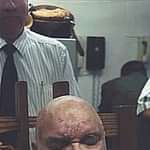
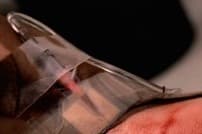
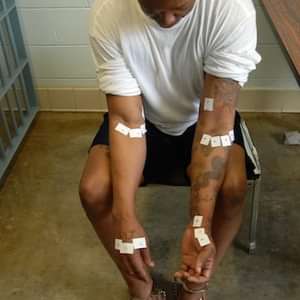
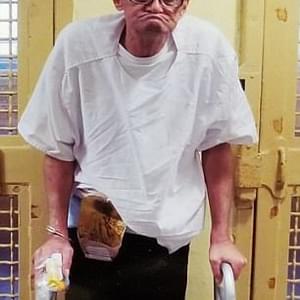


 Claim your Innocence