death row

Texas – Carl Wayne Buntion again sentenced to death


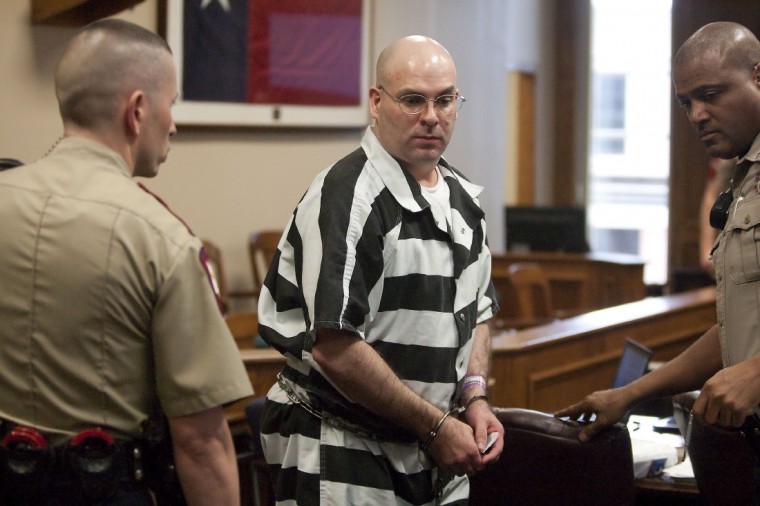
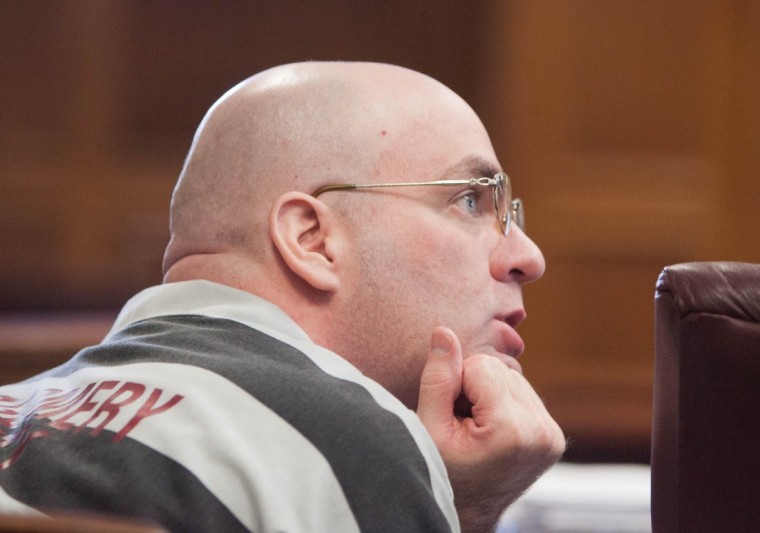
Jurors decided Tuesday to send Carl Wayne Buntion, a career criminal with 13 felony convictions, back to death row for gunning down Houston motorcycle officer James Irby during a routine traffic stop June 27, 1990.

The jury deliberated more than 10 hours since Monday afternoon.

Read more : Chron.com 

About D.R.I.V.E Movement


They are a group of prisoners that seek to unite the death row community to bring about change for everyone caged here on Texas Death Row. Due to the ever worsening deplorable environment of Texas Death Row they have no choice but to push forward and initiate change in the conditions.

Through DRIVE they have organized a group of passionate prisoner activists who have put aside all minor barriers of ethnicity, creed, color and beliefs, to focus on the injustices forced upon us by this system. By means of inner-resistance, organizing, outer petitions drives, protests and direct actions,” we will solidify our stance and remain relentless in the fight against oppression !”

Until Humanitarian conditions are implemented and Freedom and true Justice is achieved, DRIVE will continue to be an uncompromising force in the Struggle!

Read more : D.R.I.V.E movement

TEXAS – EXECUTION WATCH TO COVER THURMOND EXECUTION WED.


The busiest death chamber in the industrialized West is preparing to put the 480th notch in its belt of modern death penalty, and Execution Watch will cover the details.

Keith Thurmond’s attorney missed a filing deadline, causing Thurmond to lose his federal appeal, the last constitutionally required review before a death sentence may be carried out. Execution Watch will provide live coverage and commentary Wednesday on his execution in Huntsville, Texas.

RADIO PROGRAM PREVIEW
EXECUTION WATCH
Unless a stay is issued, we’ll broadcast on …
Wednesday, March 7, 2012, 6-7 PM CT
KPFT Houston 90.1 FM or
Online: http://executionwatch.org/ > Listen
*** Join the Execution Watch discussion on Facebook ***

Thurmond case :

The former master mechanic was convicted of shooting and killing his estranged wife and her boyfriend in Magnolia in 2001. He lost his federal appeal when his attorney missed a deadlines, essentially waiving the last constitutionally required review before his death sentence could be carried out.

Read more : Execution Watch.org

The Wrongful Conviction of David Thorne


David Thorne is serving a life sentence without the possibility of parole for allegedly hiring an acquaintance to kill the mother of his son, however, he never hired anyone nor did the acquaintance do the crime.
Sometime between the evening hours on March 31, 1999 and 12:00 p.m. on April 1, 1999, Yvonne Layne, a mother of 5, was murdered in her home with one solid and steady slit to her throat. 
David Thorne was convicted of complicity to aggravated murder/murder for hire on January 25, 2000 by a 12 person jury.
The police investigating the crime had tunnel vision throughout their investigation, narrowing in on David from the beginning. The investigators were unable to get David to confess, so instead they went after his acquaintance, Joseph Wilkes, who was barely 18 years of age and a high school dropout.  After a lengthy interrogation, during which they told Joseph that David was “next door ratting him out”, he confessed, utilizing the story that the police had fed to him to what the police were telling him happened. Joe took a plea deal and David went to trial.  Despite the lack of physical evidence of either Joe or David being at the scene and a poor police investigation, with very weak circumstantial evidence, an innocent man was convicted. (Read on – click to jump to Case Summary)

MISSISSIPPI – Larry Matthew Puckett – execution scheduled march 20


We are asking everyone to email or call Governor Phil Bryant’s office today asking him to vacate Matt’s death sentence and commute it to life without parole. You can help by expressing your feelings about Matt as a person, your belief in his innocence, bring attention to questionable material in his court dockets / flaws in his case, or if you believe the death penalty is unjust. It doesn’t have to be anything formal, just enough to get your point across and get his attention. It is very important that we get the governors attention as he will be reviewing Matt’s clemency application next week and ultimately deciding Matt’s fate. Thank you in advance for all your help and support!

Below you will find contact info for Governor Phil Bryant……..

http://www.governorbryant.com/contact/
Contact « Mississippi’s 64th Governor, Phil Bryant
www.governorbryant.com

DEATH PENALTY : Reasons for the total abolition of this degrading and inhuman punishment


1 – Death Penalty violates the right to life.

The Universal Declaration of Human Rights (UDHR) recognizes each person’s right to life. Article 4 of the African Charter on Human and People’s Rights (ACHPR) states that Human beings are inviolables. Every human being shall be entitled to respect for his life and the physical and moral integrity of his person. this view is reinforced by the existance of international and regional treaties providing for the abolition of the death penalty, notably the second optional protocol of the International Covenant on Civil and Political Rights, adopted by the General Assembly of the United Nations in 1989.


2 – Death Penalty is a cruel and inhuman death.

The UDHR categorically states that No one shall be subjected to torture or to cruel, inhuman or degrading treatment or punishment. All forms of execution are inhuman. No government can guarantee a dignified and painless death to condemned prisoners, who also suffer psychological pain in the period between their sentence and execution.


3 – Death Penalty has no dissuasive effect.

No scientific study has proved that the death penalty has a more dissuasive effect on crime than other punishments. The most recent investigation into the links of cause and effect between capital punishment and the murder rate, was conducted by the United Nations in 1988 and updated in 2002. It came to the following conclusion :

“…it is not prudent to accept the hypothesis that capital punishment deters murder to a marginally greater extent than does the threat and application of the supposedly lesser punishment of life imprisonment.”


4 – Death Penalty is premeditated murder, demeans the state and makes society more violent.

By executing a person, the state commits a murder and shows the same readiness to use physical violence against its victim as a criminal. Moreover, studies have shown that the murder rate increases immediately after executions. Researchers have suggested that this increase is similar to that caused by other violent public events, such as massacres and assassinations.

5 – Death Penalty is discriminatory in its application.

Throughout the world, the death penalty is dsproportionately used agianst disadvantaged people. Some condemned prisoners from the most impoverrished social classes would not have been sentenced to death if they were from wealthier sectors of society. In these cases, either the accused are less able to find their way through the maze of the judicial system (because of a lack of knowledge, confidence or financial means), or the system reflects the generally negative attitude of sociéty and the powerful towards them. It has also been proved that certain criminals run a greater risk of being condemned to death if their victims come from higher social classes.

6 – Death Penalty denies the capacity of people to mend their ways and become a better person.

Defenders of the death penalty consider that anyone sentenced to death is unable to mend their ways and could re-offend at any time if they are released. However, there are many examples of offenders who have been reintegrated and who have not re-offended. Amnesty International believes that the way to prevent re-offending is to review procedures for conditional release and the psychological monitoring of prisoners during detention, and under no circumstances to increase the number of executions. In addition, the death penalty removes any possibility for the condemned person to repent.

7 – Death Penalty cannot provide social stability nor bring peace to the victims.

An execution cannot give the victim his or her life back nor ease the suffering felt by their family. Far from reducing the pain, the length of the trial and the appeal procedure often prolong the family’s suffering.

8 – Death Penalty denies the fallibility of human institutions.

The risk of executing innocent people remains indissolubly linked to the use of the death penalty.

Since 1973, 116 people condemned to death in the United States have been released after proof of their innocence has been established. Some of them have only just escaped execution, after having passed years on death row. These repeated judicial errors have been especially due to irregularities committed by prosecution or police officers, recourse to doubtful evidence, material information or confessions, or the incompetence of defense lawyers. Other prisoners have been sent to their deaths when serious doubts existed about their guilt

9 – Death Penalty is a collective punishment.

 This punishment affects all the family, friends and those sympathizers with the condemned person. The close relatives of an executed prisoner, who generally do not have anything to do with the crime, could feel, as a result of the death penalty, the same dreadful sense of loss as the victim’s parents felt at the death of their loved one.

10 – Death Penalty goes against the religious and humanist values that are common to all humanity. Human rights are universal, indivisible and interdependent.

11. The convicted has a family.

  A mother, who commited no crime and suffers even more than the convicted man, what is her crime ? Her loving son or daughter ? Is she less of a mother than the victim’s mother ? Sometimes baby sons and daughters, or worse ; in an age where they realize what is going on…old grandmothers who die of grief, is that fair ?

12. Scientists are studying the brain of violent criminals and finding out that their brain chemistry is different, and therefore they are unable to feel regret, even facing death… So where is the punishment if he or she never regrets ? Isn’t that the goal of death penalty ?

13. Many countries condemn children to death too.

 Boys with 14 years of age or less… Children are sacred anywhere, it is scaring and inhuman enough for an adult, a child has a whole life ahead to realize his or her mistake…

14. Death penalty is expensive to the public exchequer and money spent there should not be used to killing people, but to heal them, to help those sick : whether the convicted or other citizens by public health measures.

15. A crime should not be punished with another.

The State has to give the good example.

16. In the cost/benefits balance the «against» arguments certainly are heavier !

Since it is expensive and does not achieve any of its goals : punishment/regret or crime dissuasion, besides the fact that it punishes those around the convicted sine no man is an island, and if it is, there should be understanding to him or her, sympathizing with one who has suffered much already…

17. Many of these men and women are judged for 5 minutes, 30 minutes of their liveswhere they made a mistake, their personal history is ignored and not seen with wisdom as law should do.

18. It may in fact encourage crime because you can only apply death penalty once, and so killing on, two, or ten : the price is the same, so if the murder gets caught for one he gets caught for all.

19. It also encourages crime because the family of the executed, namely sons and daughters, may increase their hate towards the State, the victims family, and may wanna do justice their way…

PLEASE PUT AN END TO DEATH PENALTY

BY Laurence Meylemans

Werner Herzog’s ‘On Death Row’ Subject Executed


Having delved into the deep end of the prison system, interviewing a man awaiting execution and the family members of his victims in his outstanding 2011 doc “Into The Abyss.” Werner Herzog is set to continue the conversation about the death penalty and those to whom it’s been given in “On Death Row,” a four-part companion series to last year’s film that premieres on the Investigation Discovery channel on March 9th at 10pm. 

In an unfortunate instance of timeliness, one of the five inmates he interviews in the series has just been executed. George Rivas, 41, was the leader of the Texas 7, a gang that escaped from a maximum-security prison and went on a crime spree that left one policeman dead, ultimately getting caught after someone spotted them on “America’s Most Wanted.” He was serving multiple life sentences for kidnapping, robbery and burglary charges at the time of the breakout. In the clip from “On Death Row” below, he tells Herzog “I had more time than all mass murderers in the prison system that I know of. They took away all hope for me. When you do that to a person, anything is possible.”

Rivas died by lethal injection on Wednesday. According to the AP, he offered a statement to the family of Aubrey Hawkins, the slain officer: “I do apologize for everything that happened. Not because I’m here, but for closure in your hearts. I really do believe you deserve that.”

The episode featuring Rivas and fellow gang member Joseph Garcia is scheduled to air March 23. Herzog doesn’t support the death penalty, but during “Into The Abyss” demonstrated his ability to highlight its ugliness and find empathy for those awaiting execution while never softening his portrayal of the crimes committed, telling Michael Perry “I don’t have to like you, but you are a human being.”

TEXAS – Larry Swearingen back in court


                                                   http://www.myfoxhouston.com/video/videoplayer.swf?dppversion=11212

Swearingen official website 

        Swearingen Legal documents (pdf)

A defense expert in the hearing of convicted killer Larry Ray Swearingen reluctantly agreed with prosecutors Thursday that histology – the study of microscopic cell tissue – isn’t an accepted method to determine the time of death in a body.

Meanwhile, defense attorney Stephen Jackson accused the state of asking a “trick question” and stressed the science is valid.

“If the (science) was not well-based, it would have been excluded by now (by state District Court Judge Fred Edwards). And that hasn’t happened,” Jackson said.

The hearing, which began Monday in Edwards’ 9th state District Court, was ordered by the Texas Court of Criminal Appeals in July 2011 to hear Swearingen’s claim of innocence.

Like the first three days, the fourth day of the hearing focused on the condition of Trotter’s body when it was found. The defense argued the condition of the body and, more important, microscopic slides of Trotter’s heart and liver, prove she could not have died 22-25 days prior to discovery.

However, during cross-examination of Galveston County Medical Examiner Stephen Pustilnik, the prosecution challenged the validity of histology in determining the postmortem interval – the time from death to when a body is found.

On more than one occasion, Special Prosecutor Lyn McClelland asked Pustilnik to examine several books on forensic pathology and see if Pustilnik could locate “any reference in any book” that connects the use of histology to determine PMI.

“They don’t exist,” Pustilnik said.

“The defense’s position is not valid science,” Assistant District Attorney Warren Diepraam said.

The hearing resumes Monday with the prosecution to present its experts.

Swearingen’s Claim

Larry Ray Swearingen, 40, was sentenced in 2000 to die by lethal injection for the murder of 19-year-old Melissa Trotter of Willis. Since then, he has received three stays from execution. He claims he couldn’t have killed Trotter because he was in jail on Dec. 11, 1998. Trotter disappeared on Dec. 8, 1998 and her body was found on Jan. 2, 1999 in the Sam Houston National Forest.

…………………………………………………………………………………………………………………………………………………………………………………….

March 9 2012

 photo by Eric S. Swist

The canopy of trees so prevalent in the Sam Houston National Forest played a role in the condition of Melissa Trotter’s body when found 25 days after her disappearance, a meteorological expert testified Thursday.

Richard Grant, a professor at Purdue University, said the temperature at tree-top level is not dissimilar to the temperature in an open field.

However, Grant, an expert on microclimate, said the solar heat is diffused as it works its way to the forest floor.

Approximately 20 percent of the solar energy reaches the bottom of the forest, he said.

Questioned by prosecutor Warren Diepraam, Grant testified the temperatures on a forest floor tend to be more consistent than in a more open environment.

“The heat transfer is lower,” Grant said. “The temperature of the (forest) can’t be the same as an open field.”

Testimony in the hearing is expected to conclude today. Edwards may issue a ruling or send all evidence and testimony to the TTCA. Either way, a determination is not expected before a couple of months.

Source : http://www.yourhoustonnews.com

————————————————————————————————————————————————————————————————————–

March 8 2012

The battle of the experts continued Wednesday at the hearing of convicted killer Larry Ray Swearingen.

Forensic Entomologist Neal Haskell testified under cross-examination that he could extract a time of death based on DNA, weather data and autopsy photographs.

Prosecutor Warren Diepraam asked Haskell if the forensic evidence he was shown Wednesday was consistent with the condition of Trotter’s body found 25 days after her disappearance.

Haskell agreed.

Later in the day, Sibyl Bucheli, of Sam Houston State University, was called to the stand to testify about the decomposition of the human body.

Bucheli said data obtained at SHSU proved to be “entirely” consistent with the decomposition of Trotter’s body, Diepraam said.

“She (Bucheli) showed (Trotter’s) internal organs didn’t turn to mush as the defense alleged,” he said.

Defense attorney Stephen Jackson challenged Bucheli’s qualifications.

“She just received a PhD in Philosophy from Ohio State,” Jackson said. “She cherry-picked a body (at SHSU) that is not consistent with 17 days of 20-degree weather when the temperature was up in the 70s. It’s apples to oranges.”

The hearing is expected to conclude today.

source : http://www.yourhoustonnews.com

March 6 2012

The former Harris County medical examiner who conducted the autopsy in the Larry Swearingen murder case testified on Tuesday that his attorney misrepresented her opinion.

Dr. Joye M. Carter said during an evidentiary hearing that she did not reverse her opinion concerning how long Melissa Trotter‘s body had been in the Sam Houston National Forest, as Swearingen’s attorneyJames Rytting claimed in a 2007 affidavit.

Swearingen received a stay of execution after Rytting cited the affidavit in an appeal. He is on death row for the strangulation and sexual assault of Trotter, 19, who went missing on Dec. 8, 1998, from Lone Star College-Montgomery. Her body was discovered 25 days later.

During the 2000 trial, Carter testified the body had been in the woods for 25 days or so, placing the time of death on Dec. 8.

But Rytting tried to get Carter to say the wording in the affidavit indicated that the body was in the woods a maximum of 14 days, placing the time of death on or after Dec. 12.

Swearingen contends he could not have killed Trotter because he was in jail on Dec. 11 on an unrelated charge.

The hearing will determine whether Swearingen should receive a new trial.

http://www.larry-swearingen.com/attachments/File/Affidavit_of_Jerald_Crow_(2007).pdf

U.S.A News about Death penalty


Every day, you find the latest news on the death penalty, I will group the most important news I have read in the media.

ARIZONA – Robert H. Moorman – Execution – February 29, 2012 EXECUTED 10.23 a.m


The Arizona Department of Corrections has scheduled a Feb. 29 execution for a death row inmate convicted of killing his adoptive mother while on a three-day prison release in 1984.Corrections officials announced the execution date Wednesday for 63-year-old Robert Henry Moorman at the state prison complex in Florence.Moorman recently lost an appeal in the 9th U.S. Circuit Court of Appeals, and the U.S. Supreme Court declined to consider his case.Moorman was serving a nine-year prison term for kidnapping in 1984 when the state let him out on three-day release to visit his adoptive mother at a nearby hotel.Moorman beat, stabbed and strangled the woman, then dismembered her body and threw the pieces away in various trash bins and sewers in Florence before he was captured.

Arizona inmate facing execution hospitalized over illness Arizona death-row inmate Robert Moormann, who is scheduled to be executed Feb.29, was transported to an unnamed hospital Thursday after falling ill at the state prison in Florence, his attorney confirmed.The Arizona Department of Corrections would not provide information — even to Moormann’s attorneys — about Moormann’s condition, but a department spokesman said Thursday afternoon that Moormann was still alive.Moormann, 63, was sentenced to death for the 1984 murder of his adoptive mother.He has a history of health problems and was hospitalized twice last fall, first for an appendectomy and later for a quintuple heart bypass.Arizona prison policy requires death-row inmates facing execution to be kept alive until the last minute before execution by lethal injection.The execution protocol requires that a cardiac defibrillator “be readily available on site in the event that the inmate goes into cardiac arrest at any time prior to dispensing the chemicals; trained medical staff shall make every effort to revive the inmate should this occur.”In 1984, Moormannwas already imprisoned in Florence when he was granted a “compassionate furlough” to visit with his mother at a motel near the prison. During the visit, he killed her and dismembered her, dumping her body in garbage cans.In January, his attorneys argued that Moormann’s deteriorating health had lessened his intellectual functioning to the point where he could not be legally executed.
Arizona Supreme Court asked to stay executionLawyers for death row inmate Robert Henry Moormann have asked the Arizona Supreme Court to stay his scheduled Feb. 29 execution.In a 21-page motion filed Tuesday, Moormann’s attorneys say he was diagnosed in early childhood as being mentally retarded and the state can’t execute him because of that fact.The 63-year-old Moormann was sentenced to death for the 1984 death of his adoptive mother while on a prison furlough.Moormann was serving a prison term of nine years to life for kidnapping when the state let him out on three-day “compassionate furlough” to visit his adoptive mother at a Florence motel.Authorities say Moormann beat, stabbed and suffocated the woman before meticulously dismembering her body.Moormann’s attorneys used an insanity defense, but a jury convicted him of first-degree murder.
Families, others find closure in executionAt 10:23 a.m. on Feb. 29, convicted felon Robert H. Moorman was declared dead following his execution at the Arizona State Prison – 27 years after receiving his sentence.For Tom Rankin this particular order of execution offered a different kind of closure than that for relatives of the victims. He was the police chief in Florence 28 years ago when Moorman committed one of the most heinous crimes in the town’s history.“That was my third execution to observe, but this one was a bit more personal,” Rankin, one of the witnesses, said. “It provided closure for me, not only on that case, but for my law enforcement career. It was the last case that I had pending that I was involved in.“It’s like saying, ‘You’ve done your career. It’s over with now.’”Ironically, the Blue Mist Motel is within sight from the ASP visitors’ parking area. It was at the Blue Mist where, on Jan. 13, 1984, Moorman beat, stabbed and suffocated his adoptive mother, 74-year-old Roberta Moorman, who, according to defense attorneys, sexually abused him into his adult years.Moorman then dismembered Roberta’s body, cutting off her head, legs and arms, halved her torso, and flushed her fingers down the toilet. Most of her remains were found in trash bins around town after asking various businesses if he could “dispose of spoiled meat and animal guts.”Shortly after Moorman asked a corrections employee to dispose of “dog bones,” he was captured. The incident took place during a a three-day “compassionate furlough” from ASP, where Moorman was already serving nine years to life for kidnapping and molesting an 8-year-old girl in 1972.Moorman, 63, was sentenced to death on May 7, 1985. Appeals to overturn his warrant of execution were denied in 1986, 1987 and 1992. A motion to issue a warrant of execution was filed by the attorney general on Oct. 12, 2011 and granted on Nov. 29.Moorman was served his last meal between 7 p.m. and 7:30 p.m. on Feb. 28. It consisted of one double hamburger (two quarter-pound patties prepared “medium”) with two slices of onion, three leaves of lettuce, three tomato slices and a bun; plus French fries (with four ounces of ketchup), two three-ounce beef burritos, three Royal Crown colas, and two 14-ounce containers of Rocky Road ice cream.

A light breakfast was an option, but there was no word on whether or not Moorman accepted it.

From the reporter’s notebook, here’s the sequence of events:

8 a.m. – The media witnesses are greeted and informed that no cameras, pens or outside note pads are allowed – a pencil and note pad is furnished by the prison.

8:38 a.m. – Arizona Department of Corrections Director Charles L. Ryan came to the media room and announced that there were no further stays of execution and no pending motions from the Superior Court.

9:39 a.m. – The media leaves its holding area to another room upstairs. There, a DOC employee offered a briefing on the execution itinerary.

9:45 a.m. – After the briefing, media names were drawn at random to determine the order of entering the viewing gallery. My name was drawn first.

10 a.m. – There’s a delay in the process, as Moorman is having a final meeting with his legal counsel.

10:12 a.m. – The media is led to Housing Unit No. 9, enters the gallery area, and is positioned next to a partition, separate from other witnesses.

10:19 a.m. – Approximately 22 witnesses, other than the media and DOC staff, enter the gallery. An undetermined number of witnesses are on the other side of the partition.

10:21 a.m. – The curtain opens, and Moorman is seen strapped to a gurney, wearing his orange prison apparel. He appears calm as his execution order is being read.

10:23 a.m. – Moorman is asked if he has any final words. Looking up at the ceiling with a slight smile, he responds with an apology to the families involved, adding, “I’m sorry for the pain I caused. I hope this brings closure and they can start healing now. I just hope that they can forgive me in time.”

With that, the process of execution began.

10:24 a.m. – Moorman turns his head to his right and looks at the gallery. One minute later, he begins breathing hard, short of gasping for air, as the lethal injection of pentobarbital began to take effect.

10:27 a.m. – A physician enters the execution room to administer sedation.

10:29 a.m. – Moorman’s eyes are half-closed, looking peaceful, with little, if any, movement.

10:33 a.m. – The DOC announces, “The execution is completed.” The curtain is closed.

10:34 a.m. – The witnesses are excused.

10:40 a.m. – The media gives its witness account to six television stations and various print and radio reporters who did not see the execution.

“Death is never pretty,” Rankin said. “When I was standing there, I was wondering about (Roberta Moorman’s) family and wondering if any of her family was there. I didn’t know because I’ve lost contact with most of them. I didn’t recognize any of the other witnesses.

“For the family’s sake, I hope it’s over. It’s a period I hope they’ll never have to live through again.”

Deacon Ed Sheffer of St. Thomas The Apostle Parish in Tucson, who performs ministry work on death row, has been Moorman’s spiritual advisor for the last 10 years. After the execution, Sheffer said, “At the end, Robert was at a peaceful place and for some time had come to terms with what he had done and his fate. You could hear it in his last words, his thoughts and concerns were for others, not himself.”

Sheffer said Moorman received last rites from Bishop Gerald Kicanas of Tucson on Feb. 21, and had his final communion prior to the execution at approximately 6 a.m.

“He received his communion and was very grateful for our years of working together as he found his relationship with the Lord,” Sheffer said. “He moved from shame to guilt, to asking for mercy and reconciliation.

“His soul is now in God’s hands.”

Rankin noted it was the only case from his days as police chief that resulted in the death penalty, saying, “It’s too bad about the way the death penalty is scheduled, with the long delays and the years it takes to fulfill the sentence. I understand the process, but for the family of the victim, closure should come sooner.

“As for Robert Moorman, he got what he deserved,” Rankin concluded. “There’s no need to talk about him anymore. In law enforcement, we say, ‘case closed.’”