Capital punishment

Mississippi Man Back on Death Row, Mental Evaluation Ordered


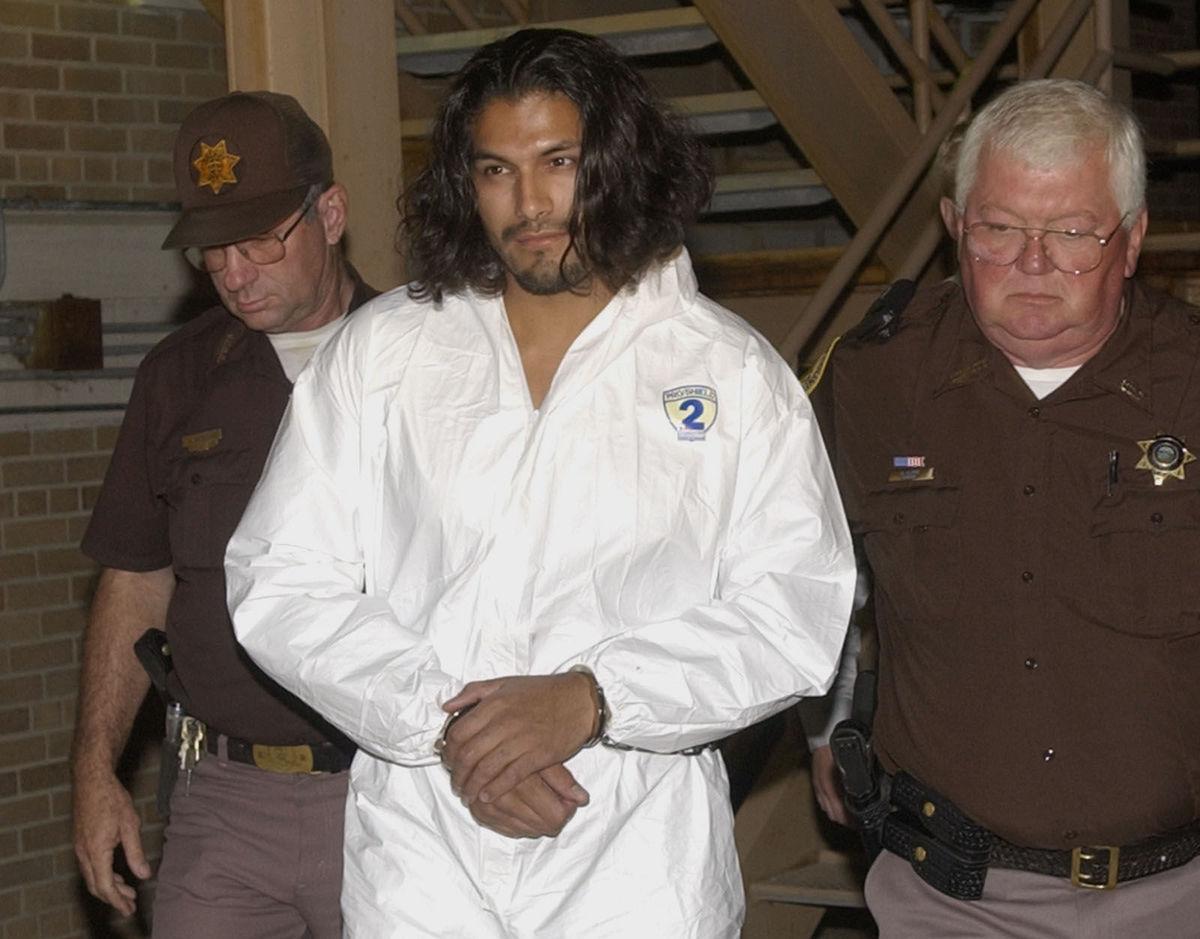
JACKSON, Miss. — The Mississippi Supreme Court on Thursday reinstated the death sentence of an inmate convicted of killing a prison guard.

Justices also ordered a state circuit court judge to hold another hearing on the mental capacity of Willie C. Russell , who came within hours of being executed more than two decades ago.

Russell, now 57, was convicted in the 1989 killing of Argentra Cotton, a guard at the Mississippi State Penitentiary at Parchman, where Russell was imprisoned for armed robbery, escape and kidnapping convictions in Hinds County.

A federal appeals court blocked the execution in January 1997 after Russell claimed he didn’t have a lawyer to appeal his death sentence. Russell later claimed he was intellectually disabled and could not be executed.

Sunflower County Circuit Judge Betty W. Sanders agreed and overturned the death sentence, and Russell remained in prison. On Thursday, justices said Sanders should have heard more testimony.

A majority of justices wrote that Russell underwent psychological testing in 2006 in an aggravated assault case, but he never underwent an assessment of intellectual disability.

In 2014, Sanders denied the state’s request for Russell to be evaluated for intellectual disability, saying the previous testing was sufficient. Five of the nine justices said Thursday that the judge conducted a “one-sided” hearing about Russell’s mental capacity before she overturned his death sentence.

However, four justices wrote a dissent, saying Russell had undergone enough psychological testing in 2006, and results of those tests could be used to determine whether he has an intellectual disability.

The U.S. Supreme Court ruled in 2002 that it is unconstitutional to execute a person who has intellectual disabilities.

Sanders is retired from the bench. A majority of justices said Thursday that an expert chosen by the state must be allowed to evaluate Russell before a circuit judge holds new hearing about his mental capacity.


Officials urging mercy for death row inmate convicted under ‘law of parties’ now include prosecutor


December 14.2017

There is no dispute over whether Jeffery Lee Wood ever killed anyone.

He did not. He didn’t pull a trigger, didn’t wield a knife, didn’t take any direct action that caused another person’s death.

But twice now, Wood, 44, has come within only a few days of being executed by the state of Texas. He was convicted under Texas’ felony murder statute, informally called the “law of parties,” after he waited outside in a truck while an accomplice robbed a Kerrville convenience store in 1996 — and ended up killing a clerk named Kriss Keeran.

A growing bipartisan chorus agrees that, while Wood was complicit in a crime, he does not belong on death row.

One of those voices belongs to the prosecutor who put him there. Last week, The Texas Tribune reported that Kerr County District Attorney Lucy Wilkehas joined a long list of Texas officials who want to see Wood’s death sentence reduced to life in prison.

In a letter co-signed by the Kerrville police chief and the district judge overseeing Wood’s appeal, Wilke — a young, relatively inexperienced prosecutor at the time of Wood’s 1998 trial — says life imprisonment is the appropriate punishment in this case.

Wilke’s change of heart is not based solely on misgivings over the law of parties used in Texas murder trials. She has also expressed concern over testimony supplied by forensic psychiatrist James Grigson — “Dr. Death” — whose methods and credentials were later called into question.

But her letter urging the Texas Board of Pardons and Paroles to recommend that Gov. Greg Abbott reduce Wood’s sentence to life in prison specifies that “the offender was not actually the person who shot the victim” as a factor in her request.Wilke’s letter reflects a fair and candid evolution of thought about appropriate use of the death penalty in Texas, an evolution she shares with many others.

Honest disagreement remains over capital punishment in this state. This editorial board has urged its discontinuance; many others believe just as strongly that it should be preserved.

But all thoughtful people can agree that the death penalty, if used, should be applied carefully, sparingly, and reserved for the “worst of the worst” offenders — a standard that Wood, while culpable, does not meet.

“At the time of the jury trial in this case, I was a newly licensed attorney with 13 months of experience … the decision to seek the death penalty was mine,” Wilke wrote. “Again, I now respectfully request that this offender’s death sentence be commuted to a capital murder life sentence.”

Unfortunately, in spite of strong bipartisan efforts, state lawmakers passedon an opportunity to reform the Texas statute regarding the law of parties’ use in capital cases during their most recent session. It’s an issue that must be revisited.

In the meantime, a growing number of voices that bridge the political spectrum is calling on Abbott to intervene in this case.

Abbott, sensitive to protecting his red-state bona fides, has not reduced a capital sentence to life since he took office in 2015. But the case of Jeff Wood would be a sensible and honorable place to start.

ACLU files lawsuit on behalf of death row inmates against Ricketts, Corrections Department


December 5, 2017

Sandoval

ACLU of Nebraska filed a lawsuit Monday on behalf of death row inmates that claims the ballot initiative that stopped the state Legislature’s 2015 repeal was illegal.

The complaint is an attempt to stop any executions, or even steps toward an execution, of the men on Nebraska’s death row.

Death row inmate Jose Sandoval said last week he intends to fight the execution. At that time, he had no ongoing legal actions or appeals in federal or state courts.

“My reaction to the notice (of lethal injection drugs) was not a surprise. I’ve been expecting it for a year now,” Sandoval said. “I intend to fight with the help of my attorneys — Amy Miller and company.”

The ACLU confirmed Sunday that Miller, its legal director, has been in contact with Sandoval, who was notified Nov. 9 of the state’s intention to execute him with four specified lethal injection drugs. The organization is preparing to announce the scope of its representation of Sandoval early this week, it said.

The four drugs in combination that would be used in Sandoval’s execution, if it takes place, have never been used to execute a person.

The complaint charged the ballot initiative violated the Nebraska Constitution’s separation of powers. It said Gov. Pete Ricketts was the driving force behind the 2016 referendum, exploiting government staff, resources and his own elected position to raise money for the ballot initiative and to persuade voters to support it.

“In Nebraska, our state Constitution … establishes a strong tradition with a clear separation of powers,” ACLU Executive Director Danielle Conrad said Sunday. “The governor can’t have it both ways and serve both as a member of the executive and legislative branches.”

The petition drive got underway in 2015 and the sponsoring group, Nebraskans for the Death Penalty, gathered 167,000 signatures, enough to stop the repeal from being in effect until a vote in November 2016.

The Legislature had voted to repeal Nebraska’s death penalty with a bill (LB268) that passed on a 32-15 vote. Ricketts vetoed the bill and then the Legislature voted to override the veto on a 30-19 vote that cut across party lines.

Shortly after that, Nebraskans for the Death Penalty was formed and raised just over $913,000, a third of it contributed by Ricketts and his father, Joe Ricketts.

The governor’s actions pose important legal questions with grave consequences, Conrad said.

She said the end result of those actions was the restoration of a “broken” death penalty that is racially biased, risks execution of innocent people and raises constitutional concerns about the Eighth Amendment’s prohibition against cruel and unusual punishments.

Ricketts’ office responded in a statement issued Sunday evening.

“The Governor’s Office holds itself to a high standard and follows state law regarding the use of taxpayer resources,” said Taylor Gage, the governor’s spokesman. “This liberal advocacy group has repeatedly worked to overturn the clear voice of the Nebraska people on the issue of capital punishment and waste taxpayer dollars with frivolous litigation. The administration remains committed to protecting public safety and creating a safe environment for our Corrections officers.”

The ACLU lawsuit — filed on behalf of death row inmates against Ricketts, Treasurer Don Stenberg, founders of Nebraskans for the Death Penalty, Attorney General Doug Peterson, the Department of Correctional Services and Director Scott Frakes — asked the court to immediately stop all preparations for executing Sandoval and the other 10 men on death row.

Peterson plans to ask the Nebraska Supreme Court for a death warrant after 60 days following the notification of drugs that would be used.

That ACLU complaint said that as the governor, Ricketts’ power over the repeal bill ended when the Legislature overrode his veto.

It claimed the subsequent ballot initiative should not stand, as it was the result of repeated, extensive and illegal abuses of the governor’s power. The state’s constitution reserves ballot initiatives as a legislative power for the people to use as a check on the legislature, and it further prohibits anyone in one branch of government from exercising powers over another branch, the ACLU said.

Ricketts encouraged or ordered members of the executive branch and his allies in the Legislature and local governments to work for the referendum campaign or to express public support for it, the complaint said.

For example, Stenberg was simultaneously a leader of the campaign in the first few months, serving as co-chairman with Sen. Beau McCoy, the ACLU charged. In the middle of the campaign, Ricketts rewarded Jessica Flanagain, the campaign manager and coordinator, with a publicly paid position in the government as special adviser to the governor for external affairs, with a salary of $130,000, the complaint alleges.

The lawsuit also noted that Nebraskans for the Death Penalty made an error that invalidated the referendum by failing to submit sworn statements from its sponsors, as required by law to assure the sponsors’ names aren’t fraudulent and assure transparency in the working of ballot campaigns.

Previous litigation more narrowly alleged the referendum petition was not legally sufficient because a list of sponsors filed with the petition did not include the name of Ricketts, who it claimed engaged in activities that established that he was a sponsor of the referendum. The district court dismissed the complaint. The Supreme Court affirmed, holding Ricketts’ alleged financial or other support of the referendum did not make him a person “sponsoring the petition.”

Death Sentence Commuted to Life For William Gregory, Double-Murderer of Flagler Beach


December 4, 2017

The murders happened on August 21, 2007, at a house on John Anderson Highway in Flagler Beach. William Gregory, 24 at the time, walked in on his ex-girlfriend Skyler Dawn Meekings, 17, and her boyfriend of two months, Daniel Arthur Dyer, 22, as they slept together, and shot them both at close range with a shotgun. A 1-year-old child Gregory had with Meekins was sleeping in a bedroom nearby.

He was tried, found guilty, and in 2011, sentenced to death in the culmination of a case that had drawn such notoriety locally that it was moved to Volusia County. It eas tried before Circuit Judge William A. Parsons.

But the jury’s recommendation for death in 2011 was by the slimmest possible margin of 7-5, back when Florida was one of just two states that still allowed death sentences to be imposed after less than a unanimous jury verdict. That changed less than two years ago, when U.S. Supreme Court and Florida Supreme Court decisions found Florida’s method of sentencing defendants to death unconstitutional.

Recommendations must now be unanimous. In Gregory’s case, the Supreme Court in August threw out his death sentence and returned the case to circuit court in Flagler County for a new sentencing phase.

That would have meant an elaborate process, similar to a trial, involving pre-trial hearings, the impaneling of a jury, the questioning of witnesses at a sentencing hearing
and jury deliberations. In other words it would have meant bringing back Meekins’s family to relive those events again.

It would have also raised other procedural issues Gregory’s attorney raised in 2016, claiming there would have been grounds for a mistrial in the original case.

William Gregory at his latest booking at the Flagler County Jail in November.

William Gregory at his latest booking at the Flagler County Jail in November.

Monday morning, Circuit Court Judge Dennis Craig commuted Gregory’s death sentence to life in prison without parole on both counts.

“We looked at the case and and consulted with the family,” Assistant State Attorney Jason lewis said. “They did not want to go through the process again.” So the prosecution agreed to a commutation in what amounted to a hearing lasting all of five minutes. Gregory had been brought in from his death row cell at the state prison near Raiford.

“We’d have to basically do a whole new penalty phase,” Lewis said, “and we take the family’s wishes very seriously. That’s what they wanted.”

The families’ positions were no mystery, as Daniel Dyer’s big sister had expressed it in her statement to the court before the 2011 sentencing: “The worst thing about Dan’s death,” she wrote, “is the way he died. He didn’t die in an accident or a health condition. He was murdered by a cowardly little twit. He was such a coward that instead of confronting Dan, like a real man, he crept in the dark into Skyler’s room, and shot them both in the head while they were asleep. The wounds were so horrible that we couldn’t even have an open casket for Dan so we could see him one last time.”

She had asked for the death penalty. “He had the right to a judge and jury,” she’d written, “but what about Dan and Skyler’s rights? They had no judge, no jury, only a 12-gauge shotgun to the head while they slept.” Using Gregory’s nickname, she went on: “And what has Billy done this entire time? He shows no remorse, no sorrow, he just sits there, so arrogant, that somehow he thought he ws smart enough to get away with it, that he had the right to play God and kill 2 innocent people. Foe what? The simple fact that Skyler had left him for a real man.”

The families of the victims were not in court this morning. But Skyler’s aunt Deborah Meekins had written the court six years ago that while she had never been much for the death penalty, “what I do know–Billy is all for it. Billy sentenced Skyler and Dan to the death penalty, right there, that night, as they slept together alone for the first time.”

Skyler’s father, Hap Meekins, had written of his daughter in 2011: “Skyler was very talented. A straight-A student with ambition. But the thing that I remember the most was her dedication toward anything she did. Being the youngest of three girls did not matter. Like the summer she spent fishing on the Pier. The three girls would spend hours fishing for King Fish. She caught a 30-lb. King Fish which didn’t go over well with her sisters. She never minded getting her hands dirty whether it was fishing, playing soccer, or helping me with the garden. She was very unselfish; she would help me [with] anything I asked.” And he’d concluded: “My memories will keep me going for the rest of my life. I love you Skyler always and forever. No one can take that away.”

Ohio Supreme Court to hear local man’s death penalty appeal


December  4,  2017


COLUMBUS, Ohio — On Tuesday, the Ohio Supreme Court is to preside over a legal debate over whether the death penalty should be executed on a young Clayton man – the second youngest on Ohio’s Death Row – for the murder of an even younger Warren County man at his home outside Waynesville in January 2014, according to the Journal-News.

Warren County Prosecutor David Fornshell will personally argue for the state to continue forward toward the execution of Austin Myers, now 22, of Clayton, although another Clayton man, Timothy Mosley – like Myers 19 years old at the time – actually stabbed to death Justin Back, 18, a 2013 Waynesville High School graduate about to enter the U.S. Navy.

“Austin Myers killed Justin. Tim was his weapon of choice,” Fornshell said last week, quoting Back’s stepfather, Mark Cates, a local prison guard.

It will be Fornshell’s first appearance before the high court on behalf of Warren County.

Lawyers appointed to appeal Myers’ death sentence have identified 18 violations of law they claim should convince the state’s high court to set aside his death sentence, including his age and the lesser sentence – life in prison without paroleMosley received in exchange for his testimony.

Three years later, Myers is still the second youngest of 140 Ohio prisoners facing the death penalty. Damantae Graham, 20, convicted of killing a Kent State University student, is the only one younger.

Myers’ lawyers also claim errors or misconduct by the judge, prosecutors and defense lawyers in the case, decided more than three years ago in Warren County Common Pleas Court, should convince the high court, including appointed Judge Cynthia Westcott Rice of Ohio’s 11th District Court of Appeals, to spare his life.

“Mr. Myers’s rights under the Constitution of the United States and the Ohio Constitution were violated and he was denied a fair trial and sentencing proceeding. Accordingly, this Court should reverse and discharge the defendant or grant a new trial. In the alternative, this Court should vacate the death sentence, remand for a resentencing hearing, and order the life sentence imposed,” lawyer Timothy McKenna said in his brief to the high court.

The appeal, pending since Oct. 27, 2014, was set for oral arguments on Oct. 20, after a second Ohio Death Row inmate was executed. These came after the postponement of scheduled executions starting in January 2014 following problems during the execution of Dennis McGuire, a Preble County man.

Rice was appointed to the high court on Nov. 6, replacing Justice Bill O’Neill, who recused himself after announcing he was running for governor.

The case

Myers and Mosley were arrested in July 2014 after Back’s mutilated body was found in Preble County, in a wooded area outside Versailles known as Crybaby Bridge. They both gave statements during interrogation at the Clayton Police Department used by investigators in reconstructing the crime, according to police and court records.

According to their statements, Mosely’s testimony and other evidence, after a day of preparation and planning, Myers and Mosley went to Back’s home in a small neighborhood along the Little Miami River, east of Waynesvile. With a garrote – fashioned by a friend who was not charged – Mosley came up behind Back and began choking him, while Myers restrained Back. When the garrote caught on Back’s chin, Mosley pulled out a knife and stabbed Back to death.

After cleaning the home and stealing Back’s iPod and wallet, as well as a gun and safe belonging to Cates, Mosley and Myers removed Back’s body, dumping it in Preble County after dousing it with chemicals to quicken decomposition. Before leaving the body, Myers shot it twice with Cates’ gun.

At trial, prosecutors convinced the jury that Myers was the mastermind of the crime and he was sentenced to die. Mosley, in exchange for his testimony, was sentenced in a plea bargain to life without parole.

The issues

Mosley was represented by Dennis Lieberman, a lawyer hired by Mosley’s family. Myers was represented by Greg Howard and John Kaspar, appointed by the court.

But Fornshell said Mosley got the deal because – unlike Myers- he offered to cooperate. Prosecutors needed one or the other to “put in the back story,” Fornshell said.

In addition, Fornshell said Mosley accepted responsibility and Myers was “exponentially more dangerous,” pointing to evidence indicating Myers handled the bulk of the planning and wanted to go back and kill Cates.

He’s a serial killer who got caught the first time,” Fornshell added.“There is absolutely no doubt in my mind.”

McKenna and co-counsel Roger Kirk did not respond to requests for interviews.

But their 110-page brief indicates they will emphasize Myers “was a 19 year-old immature adolescent with behavioral issues” who should be spared the death penalty, in part because Mosley’s sentence spared his life, although he wielded the murder weapon.

In addition, they claim prosecutors rendered Myers’ lawyers “admittedly ineffective” by withholding evidence until “on the Friday eve before the Monday trial,”as well as the fact that Mosley was to be a witness.

The appeal

The appeal is to be the first of a series of cases heard on Tuesday and Wednesday.

All arguments are streamed live online at sc.ohio.gov and broadcast live and archived on the Ohio Channel, according a release from the high court.

The court typically issues opinions within six months, but it was unclear when a decision would be issued in this case.

SCOTUS rejects case of Alabama Death Row inmate who claims racial discrimination in jury picks


December 4, 2017

Christopher Floyd

The U.S. Supreme Court, in a ruling issued today, refused to hear the appeal of Alabama Death Row inmate Christopher Anthony Floyd, who says prosecutors struck 10 of 11 blacks from the jury pool at his trial.

Floyd appealed earlier this year to the U.S. Supreme Court after a ruling by the Alabama Supreme Court last year.

The Alabama Supreme Court’s decision came despite a previous U.S. Supreme Court order that told the Alabama court to take another look at Floyd’s case in light of a similar case in Georgia – Foster v. Chatman. In the 2016 appeal of that case, SCOTUS reversed a conviction for discriminatory jury selection involving prosecutors’ striking blacks from the jury pool.

However, the Alabama Supreme Court in November 2016 concluded that the Foster case did not require a change in the outcome of Floyd’s case, and again affirmed Floyd’s conviction. Floyd then turned again to SCOTUS.

In 2005, Floyd was convicted in Houston County for the murder and robbery of Waylon Crawford. Floyd was sentenced to death.

In selecting the jury for Floyd’s case, the prosecutor and Floyd’s lawyers exercised a total of 36 peremptory challenges, according to the state supreme court order. Prosecutors used its 18 challenges to remove 10 of 11 African-American venire members and 12 of 18 female venire members. Floyd’s lawyers removed one African-American and seven female venire members. The final jury consisted of six white male jurors, six white female jurors, two alternate white male jurors and one alternate African-American female juror.

Floyd, who is white, did not object to the jury based on Batson v. Kentucky– a previous U.S. Supreme Court ruling prohibiting racial discrimination in jury selection, court records show.

In Monday’s rejection of Floyd’s appeal, SCOTUS did not render an opinion. Associate Justice Sonia Sotomayor, with which Associate Justice Stephen Breyer concurs, issued a statement.

“Although the unique context of Floyd’s case counsels against review by this Court, I find the underlying facts sufficiently troubling to note that in the ordinary course, facts like these likely would warrant a court’s intervention,” Sotomayor wrote. “During voir dire, the Houston County District Attorney’s Office exercised peremptory challenges against 10 out of 11 qualified African-American venire members, and used 12 of its 18 strikes against women. The prosecutor also marked the letter “‘B,’ as in black,” next to the name of each potential African-American juror.”

“That we have not granted certiorari should not be construed as complacence or an affirmance of all of the reasoning of the courts below,” Sotomayor wrote. “The unusual posture in which Floyd raised his Batson and J. E. B. claims warrants caution in the exercise of the Court’s review here. Yet, courts reviewing claims in circumstances like these must be steadfast in identifying, investigating, and correcting for improper bias in the jury selection process. Such discrimination “‘casts doubt on the integrity of the judicial process,’ and places the fairness of a criminal proceeding in doubt.”

Op-ed: Abolishing the death penalty is not a ‘defense’ of society’s worst criminals


November  1, 2017

A Nov. 16 op-ed addressed an October panel discussion centered around the various issues with the death penalty (“Addressing false assumptions about the death penalty”). The author claims the panel “defended the indefensible” — rapists and murderers. The panel’s purpose was not to “defend” anybody, but to address a broken system and discuss better alternatives. What is indefensible is the perpetuation of a failed policy that doesn’t keep the public safer, risks executing innocent people and costs taxpayers millions of dollars in the process.

The author claims that the death penalty acts as a deterrent and saves lives — that more executions means a lower overall murder rate. The problem with that argument, though, is that it’s false on its face. He cites that in 1960 there were 56 executions and 9,140 murders. Four years later there were 15 executions and 9,250 murders. Therefore, because there were 41 fewer executions in 1964 versus 1960, and an increase of 110 murders, the death penalty must be an effective deterrent. What he fails to factor in is the population increase in the United States from 1960 to 1964. This means the homicide rate was lower in the year with fewer executions — 5.1 murders per 100,000 in 1960 and 4.9 in 1964.

When comparing death penalty states against non-death penalty states, the lack of deterrent effect is apparent. In the last decade, death penalty states have seen an average increase in their homicide rates of 2.25 percent, from 5.31 per 100,000 people in 2007 to 5.43 in 2016. Non-death penalty states have actually seen their homicide rates decrease by 7.9 percent, from 5.28 in 2007 to 4.86 in 2016.

Additionally, of the 10 states with the lowest murder rates in 2016, eight of them were states with no death penalty. Finally, since the argument is that more executions means an overall lower murder rate, when you take the top 10 states with the highest execution numbers since the death penalty was reinstated, they have an average homicide rate of 5.78 over the last decade, roughly 17 percent higher than the national average of 4.94 during the same time.

Dozens of studies far more exhaustive than an op-ed allows have shown there is no deterrent benefit to the death penalty. The most comprehensive analysis was conducted by the renowned National Research Council, which examined over three decades of studies and concluded there is no deterrent effect by having the death penalty. The conclusion of these scientists and academics is shared by experts on the front lines of keeping our communities safe. In two separate national surveys of police chiefs, the death penalty was ranked the least effective tool to prevent violent crime.

Beyond not being an effective deterrent to crime, the death penalty is flawed in other profound ways. Since 1976, at least 160 people have been released from death rows due to evidence of their innocence (an average of one person every three months) — some within hours of their scheduled executions. Additionally, the costs are outrageous. According to Utah’s Legislative Fiscal Analysis Office, the death penalty costs us $1.6 million more than life without parole per inmate. Unavoidable mandates from the U.S. Supreme Court mean capital cases take decades from trial to conclusion (which in most cases is a legal reversal of some sort, not an execution). This lengthy process is also a nightmare for the victims’ families who are promised a punishment and then forced to wait through year after year, appeal after appeal, while the condemned becomes a celebrity.

Those of us who spoke on the panel last month did so with a desire to expose the ugly truth that our death penalty system isn’t serving our state. We are eager to cultivate a robust and honest dialogue about a punishment that has cost our state millions of dollars, provides false promises to victims, risks executing innocent people and — as experts continually attest — doesn’t make us any safer.

Death row inmate who survived his own execution really doesn’t want a do-over


November  2017

An Ohio man who became the third U.S. death row inmate in seven decades to survive his own execution filed a new appeal for mercy Tuesday, arguing that Ohio’s lethal injection protocol constitutes cruel and unusual punishment because one of its drugs may not work properly.

Alva Campbell, a 69-year-old man sentenced to death in 1998 for killing 18-year-old Charles Dial in a robbery, had his execution halted about 25 minutes after it was scheduled to start, according to the Associated Press. The execution team, it turned out, couldn’t pinpoint a vein that they could use to inject Campbell with a dosage of lethal drugs.

In court documents filed before the execution, Campbell’s lawyers warned that this was a possibility, as Campbell has a history of chronic heart and lung problems that can make finding a vein tricky. In fact, the prison was so worried that Campbell’s lungs would give out and he would stop breathing, while lying on the execution gurney, that the team gave him a wedge pillow to help him stay calm and alive until they could execute him.

Campbell’s lawyers also cited Ohio’s bad track record when it came to successfully carrying out executions. Though the first failed execution in modern U.S. history took place in 1946, when Louisiana’s attempt to execute Willie Francis using the electric chair failed, the second was much more recent: In 2009, an Ohio execution team made 18 attempts over the course of two hours to find a vein to inject Romell Broom with lethal injection drugs. Then-Gov. Ted Strickland ultimately ordered them to give up. Broom remains on death row, locked in a court battle where he argues that trying to execute him a second time would be unconstitutional.

Alva Campbell, 69 (Ohio Department of Rehabilitation and Correction )

Campbell’s new appeal to the U.S. Court of Appeals for the Sixth Circuit Court, however, technically centers around a different issue: the use of midazolam, a sedative that’s meant to render an inmate unconscious.

Midazolam has been used in several recent botched executions, including in Ohio. In 2014, the state executed convicted killer and rapist Dennis McGuire, even though McGuire reportedly gasped, snorted, and snored minutes after he should have been knocked unconscious. A judge ended up declare Ohio’s lethal injection procedure unconstitutional, leading the state to halt executions for years.

As drug manufacturers and distributors become more and more reluctant to allow their wares to be used in executions, however, states are scrambling to find drugs they can use in lethal injections. That’s led midazolam’s popularity to skyrocket.

Evidence “from recent executions demonstrates the disturbing signs that prisoners remain sensate to severe pain, aware, and conscious following injection of 500 mg. of midazolam or more are ‘the rule,’ not ‘the exception,’” Campbell’s lawyers write in his latest appeal.

Campbell’s new execution date is June 6, 2019.

Thanksgiving on Death Row


                                                            “Free Me,” a painting by Kevin Cooper. (Kevin Cooper)

Kevin Cooper was convicted of a 1983 quadruple murder in a trial in which evidence that might have exonerated him was withheld from the defense. His case was scrutinized in a June 19 New York Times column by Nicholas Kristof. Visit savekevincooper.org for more information.

DEATH ROW, SAN QUENTIN, Calif.—As I sit here in a 4½-by-11-foot cage on Thanksgiving Day, I first and foremost am thankful to be alive. On Feb. 10, 2004, I came within 3 hours and 42 minutes of being strapped down to a gurney, tortured with lethal poison and murdered by volunteer prison-guard executioners. So, yes, I am very thankful to be alive. I am also very thankful for all the people—my legal team, friends, family, supporters and activists working to end the death penalty—who have helped make my being alive possible.

I have been in a cage like this, with two feet of space between the side of the bed and the wall, for most of my adult life, for murders I did not commit. I eat prison slop for breakfast, lunch and dinner, and the guards look up my butt at least once a day to make sure I don’t have contraband when I leave this cage.

I have been on death row in the state of California for more than 32 years, having come to this place in May 1985, and I have been fighting for my life ever since. This modern-day plantation in which I am forced to live is a very dirty and inhumane place for any human being.

After my stay of execution in 2004, I went on to suffer from post-traumatic stress for years due to that sick ritual of death this prison put me through. No human being should ever have to endure what I have, not even if they are guilty of the crime they were convicted of committing.

I am innocent, and my fate now lies in the hands of Gov. Jerry Brown. On Feb. 17, 2016, Norman Hile, my pro bono attorney from the prestigious law firm of Orrick, Herrington & Sutcliffe, filed my petition for clemency in the office of Gov. Brown. I have respectfully asked the governor and others to look at my case with an open mind, outside the legal box that has me close to being killed for murders of which I am innocent. Doing this is truly important, especially now that many Americans are learning from frequent news reports the truth about America’s criminal justice system and some of the people who work within it.

People have learned that this system is dishonest, and that some of its investigators, prosecutors and judges cannot be trusted and are more concerned with winning cases or with following their political ideology than with truth or justice. This is especially true in my case.

Start with the fact that for the first time in the history of the death penalty in California, as well as within the history of the 9th Circuit Court of Appeals, 11 federal circuit court judges dissented in one death penalty case—mine.

To show their concern as to why my case should be heard on its merits before I am executed, six of the 11 stated these words of dissent in my last appeal: “Public confidence in the proper administration of the death penalty depends on the integrity of the process followed by the state. … [Twenty-four] years of flawed proceedings are as good as no proceedings at all.”

The other five judges, showing their concern about the truth not being told in my case, stated: “The state of California may be about to execute an innocent man.” (One of them, Judge William Fletcher, later said in a speech at New York University Law School: “[Kevin Cooper] is on death row because the San Bernardino Sheriff’s Department framed him.”)

A 12th judge wrote in a separate opinion: “Significant evidence bearing on Cooper’s culpability has been lost, destroyed or left unpursued, including, for example, blood-covered coveralls belonging to a potential suspect who was a convicted murderer, and a bloody t-shirt discovered alongside the road near the crime scene. … Countless other alleged problems with the handling and disclosure of evidence and the integrity of the forensic testing and investigation undermine confidence in the outcome.”

There have been many judges in other cases who have turned a blind eye to the truth and let a poor person get executed, even when there were serious doubts about that person’s guilt, but it is rare for judges to speak out against a possible execution. If these 12 judges are ignored, what will happen to me will not be my execution but my murder at the hands of the state of California.

The political ideology of many judges allows them to ignore truth and injustice. Politics—the politics of life and death—do play a very real part in this country’s criminal justice system. That is why Republicans in Washington, D.C., would not allow President Obama to replace Antonin Scalia on the Supreme Court [after his death]. This truth may never be admitted in words, but actions speak louder than words. Among these actions are the continuing oppression of people like me, who are poor and fighting for our lives from within this rotten criminal justice system.

So while finality, rather than justice, may be what certain judges are more concerned with, it is my hope that others in positions of authority—in particular the governor—will see the miscarriage of justice in my case and stand up and speak out to prevent this state from murdering me.

What makes my case unique in many ways is the fact that a dozen federal judges did just that—they stood up and spoke out against my questionable conviction—based on all the evidence and not just what the state claims after hiding, lying, destroying, tampering with, withholding and manipulating the evidence, all of which is exposed in my clemency petition to Gov. Brown.

Just because other judges in my case chose not to acknowledge the truth about it doesn’t mean I’m guilty. This can be said for all the people who have been exonerated for crimes, including murder, they did not commit. Certain judges in their cases upheld bogus convictions and then closed the cases.

I am respectfully asking you, no matter who you are, no matter your religion, your political party, your skin color or your sexual orientation, no matter what your job is, your economic class, or anything else that makes you the individual you are, to please get involved in this fight to save my life, as well as the fight for our collective humanity.

While I may indeed be murdered by the state of California in the not-too- distant future, this fight is not just about me. It is much bigger than me or any one person. It is about us as a people bringing to an end the historic and horrific crime against humanity that is only done against America’s poor people, especially its black people like me.

My legal team and I have petitioned the governor to grant me an innocence investigation so that he and everyone else can learn the truth about the law enforcement misconduct in my case, as well as DNA testing that we hope will reveal the real killer’s DNA and exonerate me.

We are asking the governor to grant me a reprieve so that if this state resumes executions, I will not be executed. The state has me marked for death and has me at the top of the execution list, in part because it did not torture and murder me in 2004, and subsequently because of the attention my case is now receiving, with many people, including several jurors who convicted me, believing in my innocence.

There is entirely too much sadness and pain and inhumanity inside these modern-day prison/plantations to go into any one essay. Just know that I am thankful on this Thanksgiving Day that my spirit has endured and is keeping me alive, when all around me is death.

No Second Chances: What to Do After a Botched Execution


November  18, 2017

The pathos and problems of America’s death penalty were vividly on display yesterday when Ohio tried and failed to execute Alva Campbell. Immediately after its failure Gov. John Kasich set June 5, 2019, as a new execution date.

This plan for a second execution reveals a glaring inadequacy in the legal standards governing botched executions in the United States.

Campbell was tried and sentenced to die for murdering 18-year-old Charles Dials during a carjacking in 1997. After Campbell exhausted his legal appeals, he was denied clemency by the state parole board and the governor.

By the time the state got around to executing Campbell, he was far from the dangerous criminal of 20 years ago. As is the case with many of America’s death-row inmates, the passage of time had inflicted its own punishments.

The inmate Ohio strapped onto the gurney was a 69-year-old man afflicted with serious ailments, including lung cancer, COPD and respiratory failure. Campbell has had prostate cancer and a hip replacement. He needs daily oxygen treatments, uses a walker and is tethered to a colostomy bag.

Ohio officials were so aware of Campbell’s breathing problems that they provided a wedge-shaped pillow to raise his head, so he could breathe more easily as it set about to end his life.

Officials had been warned about the difficulty of finding a usable vein, and the Ohio Department of Rehabilitation and Correction had problems finding Campbell’s veins during a recent exam.

Nonetheless, the state went ahead with his execution.

On Wednesday, the execution team tried four different places in Campbell’s arms and right leg to insert the needle through which to administer lethal drugs. After 30 minutesit stopped the execution and returned Campbell to death row.

Stopping an execution before it is completed is quite unusual, even if serious problems occur during the procedure. Those serious problems are not rare: Approximately 3 percent of American executions were botched during the 20th century, and 7 percent of lethal injections have been botched since its first use in 1982.

But Campbell’s was one of the very few executions to be halted since the mid-1940s.

The first of those was Louisiana’s botched electrocution of Willie Francis, in which the current of electricity was not sufficient to kill him.

The second time an execution was stopped in mid-course occurred in Ohio during the 2009 effort to put Romell Broom to death. The execution team could not find a usable vein. After two hours of repeatedly poking and stabbing Broom’s arms and legs, they gave up.

In April 2014, when Oklahoma tried to execute Clayton Lockett, officials also had problems finding a usable vein. They finally inserted the needle into a vein in his groin. When the lethal drugs were administered, Lockett struggled violently: The needle had dislodged from the vein into a muscle. Ultimately the execution was stopped before Lockett was killed. Sometime later he died of a heart attack while still strapped to the gurney.

Lockett’s death was one of the more gruesome in America’s history of botched executions, but it spared the state an ethical and legal question that faced officials in the Francis and Broom cases, and now faces Ohio officials who failed to execute Campbell. What should be done with him?

Should the state, having failed in its first execution attempt, be able to try again? Are we well served when we force the condemned to undergo the psychological torture of having to prepare to die, only to have to relive the experience of execution a second time?

The courts bent over backward to permit a second execution in the Francis and Broom cases. In the former, the United States Supreme Court ruled that the state would only be barred from going through with a second execution if it had intentionally botched the first. Even if the state were careless or negligent in its first execution attempt, the court said, it could still proceed with another. The state of Louisiana went ahead and put Francis to death.

In March 2016, the Ohio Supreme Court rejected an appeal by Broom to stop his second execution. The court reaffirmed the Francis precedent and added that since the lethal chemicals had not begun to flow when his execution was halted, his “punishment” had not really begun. The United States Supreme Court refused to hear his appeal that a second execution would constitute double jeopardy and cruel and unusual punishment. Broom awaits his execution date on Ohio’s death row.

The fine legalisms of the Francis and Broom decisions give the state too much room for error in the serious business of putting someone to death. If the state is going to kill, it should have the burden of getting it right the first time. The law should allow no second chances.

I say this not out of sympathy for those whose heinous acts bring them to the death chamber, but because how a society punishes reveals its true character. Punishment tells us who we are.

When we punish cruelly we create “a class of punishers whose lives are wasted and their characters depraved so that as citizens they become almost as undesirable as the criminals they torture.”

Those are the words of a playwright, George Bernard Shaw, and, as Ohio considers what to do with Campbell, it should heed his warning. Ohio failed to execute Alva Campbell, despite all the warning signs of the risk of failure because of his weakened physical state. Now, Ohio’s citizens and public officials should be careful, lest in their eagerness to try a second time, they “become almost as undesirable” as the murderer they seek to execute.