The U.S. Department of State oversees the first site, Info USA; and the Administrative Office of the U.S. Courts maintains the second site on behalf of the federal judiciary. InfoUSA also provides links to State resources.
We the few freedom fighters of the innocence case of Leon Benson in Indiana (U.S.A), have created this petition on his behalf, to finally compel at least one of the three renowned innocents projects (Illinois: Wrongful conviction center, Indiana & New York innocence projects) to represent him in his post-conviction relief (PCR) appeal.
Here in 2011, we & Leon have come to a cross-road in efforts to obtain his freedom. Presently he is pro se (his own lawyer) representing his PCR appeal in Marion Superior Court, Indianapolis, Indiana despite the ordinary difficulties he faces as a pro se prisoner (i.e. being held in solitary, where there limited access to the facilities law library, the phone and other tools and resources), the biggest challenge has been the psychopathic corruption of local Indiana law officials (i.e. the judge, prosecutor and attorneys sought for representation) and prison authorities (i.e. warder, guards, case managers, etc..) in undermining his righteous attempts to obtain justice & freedom by himself.
David Gore and his cousin, Freddie Waterfield, picked up fourteen-year-old Regan Martin and seventeen-year-old Lynn Elliott, who were hitchhiking to the beach on July 26, 1983. Gore and his cousin drove the girls back to his house, took them to his bedroom, handcuffed them each, and then separated them. Gorecut Regan’s clothes off her and sexually assaulted her on three separate occasions. After Gore left Regan, she heard Goretell Lynn that he would kill her if she did not shut up. Gore had told Regan to be quiet or he would kill her too. Gore then put Regan in a closet, where she heard two or three gunshots. When Gore returned, he put Regan in the attic, where she was later rescued by the police. A witness testified that a girl (Lynn) ran naked down the driveway of Gore’s home, and Gore, who was also naked, was chasing her. Gore caught Lynn and threw her to the ground, then dragged her to a tree and shot her twice in the head.
Resentenced to death on December 8, 1992.
Co-defendant information:
Regan Martin testified that she was “pretty sure” that Waterfield left Gore’s house, and she did not see or hear him after the girls arrived at Gore’s house. On July 25, 1984, Waterfield, for his involvement in the murder, was sentenced to fifteen years imprisonment on one count of manslaughter.
Born in 1951, in Florida, David Gore resembled the stereotypical Southern redneck, weighing close to 275 pounds, and such a firearms fan that he studied gunsmithing in his free time. He also studied women, but in a different fashion. He lost one job as a gas station attendant after the owner found a peephole Gore had drilled between the men’s and women’s restrooms. Born in 1952, cousin Fred Waterfield was another product of Florida’s Indian River County. He was a high school football star whose bad temper and liking for violent sex made him and David seem like brothers. In 1976, they put their heads together and decided to combine their favorite sports by hunting women.
Their first attempts were embarrasing. Following a female motorist outside Yeehaw Junction, Fredflattened her tires with a rifle , but the intended victim escaped on foot. Later, the cousins followed another woman from Vero Beach to Miami, giving up the pursuit when she parked on a busy street. Their first successful rape took place near Vero Beach, and while the victim notified police, she later dropped the charges to avoid embarrassment in court. By early 1981, Gore was working days with his father as caretaker of a citrus grove, patrolling the streets after dark as an auxiliary sheriff’s deputy. Fred had moved north to Orlando, managing an automotive shop, but he made frequent visits home to Vero Beach. Together they recognized the potential of Gore’s situation, packing a badge by night, killing time in deserted orchards by day, and Fred offered to pay cousin Dave $1,000 for each pretty girl he could find. It was an offer David could not refuse. In February 1981, David found 17-year-old Ying Hua Ling disembarking from a school bus, tricking her into his car with a flash of his badge. Driving her home, Gore“arrested” her mother and handcuffed his captives together, then phoning Waterfield in Orlando before he drove out to the orchard. Killing time while waiting for his cousin, David raped both victims, but Fred was more picky. Rejecting Mrs. Ling as too old, he tied the woman up in such a fashion that she choked herself to death while struggling against her bonds. He then raped and murdered the teenager, slipping David $400 and leaving him to get rid of the corpses alone in an orchard a mile from the Ling residence.
Five months later, on July 15, David made a trip to Round Island Park, looking for a blonde to fill his cousin’s latest order. Spotting a likely candidate in 35-year-old Judith Daley, Gore disabled her car, then played Good Samaritan, offering a lift to the nearest telephone. Once inside his pickup, Gore pulled out a pistol, cuffed his victim, and called cousin Fred on his way to the orchard. Waterfield was happier with this delivery, writing out a check for $1,500 after both men finished with their victim. Two years later,Gore would tell about Judith Daley’s fate, describing how he “fed her to the alligators” in a swamp ten miles west of Interstate Highway 95. A week later, Gore fell under suspicion when a local man reported that a deputy had stopped his teenage daughter on a rural highway, attempting to hold her “for questioning.” Stripped of his badge, Davidwas arrested days later, when officers found himcrouched in the back seat of a woman’s car outside a Vero Beach clinic armed with a pistol, handcuffs, and a police radio scanner. A jury deliberated for thirty minutes before convicting him of armed trespass, and he was sentenced to five years in prison. Turning down psychiatric treatment recommended by the court, he was paroled in March of 1983.
A short time after Gore‘s release, his cousin moved back home to Vero Beach, and they took up where they left off. On May 20, they tried to abduct an Orlando prostitute at gunpoint, but she slipped away and left them empty-handed. The next day, they picked up two 14-year-old hitchhikers — Angelica Lavallee and Barbara Byer — raping both before Gore shot the girls to death. Byer’s body was dismembered, and buried in a shallow grave, while Levallee’s was dumped in a nearby canal.
On July 26, 1983, Vero Beach authorities received an emergency report of a nude man firing shots at a naked girl on a residential street. Surrounding the suspect house, owned by relatives of Gore, officers found a car in the driveway with fresh blood dripping from its trunk. Inside, the body of 17-year-old Lynn Elliott lay dead with a bullet in her skull. Outnumbered by the police, Gore surrendered, directing officers to the attic where a naked 14-year-old girl was tied to the rafters.
As the victim told police, she had been thumbing rides with Lynn Elliott when Gore and another man picked them up, flashing a pistol and driving them to the house, where they were stripped and raped repeatedly in separate rooms.Elliott had managed to free herself, escaping on foot with Gore in pursuit, but she had not been fast enough. Gore’s companion had left in the meantime, and detectives turned to their suspect in to find out who he was.
Gore cracked while in custody, describing crimes committed with his cousin. On January 21, 1985,Fred Waterfield was convicted in the Byer-Levallee murders, receiving two consecutive life terms with a specified minimum stint of 50 years before parole. Gore received the death penalty for his part in the crimes. Both are still currently incarcerated in Florida.
TALLAHASSEE, Fla. — The Florida Supreme Court has refused to stay serial killer David Gore’s execution. He is scheduled to die by lethal injection on Thursday.
The justices on Monday unanimously rejected several arguments by Gore’s lawyers.
That includes their contention a recent U.S. Supreme Court decision dealing with ineffective counsel applies to his case.
The state justices ruled that opinion appears to apply only to federal rather than state court proceedings.
One of Gore’s lawyers, Martin McClain, says the ruling will be appealed to the U.S. Supreme Court and that other federal court options also are being considered.
Gore is to be executed for murdering a 17-year-old girl in Indian River County nearly 30 years ago. He also is serving life terms for killing five other girls or women.
Letter: Letter writer misrepresents position on Gore‘s execution
In her March 24 letter, Diane DuBose could’ve made points about David Gore and the death penalty without misquoting and blatantly distorting several points in my March 18 letter.
I stated, “Although I’m against the death penalty, the David Gore case has made a mockery of the system.” Now, please pay attention, Ms. Dubose: Since Florida has the death penalty, Gore should’ve been executed a long time ago, whether I favor the death penalty or not. His living all these years made a mockery of the system. Are we clear now?
Hopefully DuBose will be much more responsible and much less emotional with future letters, and not misrepresent other viewpoints.
Mother’s annual tribute to late daughter keeps light on serial killer
Every year, on July 26, Jeanne Elliott places a simple remembrance for her daughter in the Press Journal.
Lynn Elliott died on July 26, 1983.
She was 17.
There’s nothing to indicate how she died. Only longtime residents would know.
She was serial killer David Gore’s final victim.
Beverly Hilton explained in a letter to the editor what the name means to her.
“A memory that has stayed with me since I moved to Vero Beach in 1982 is the murder of 17-year-old Lynn Elliott,” she wrote. “A question that remains in my mind is why her killer, David Gore, is still alive. Exactly what does the death penalty mean?”
That letter to the editor appeared in the Press Journal eight years ago.
Gore, now 56, remains on Florida’s death row at the Union Correctional Institution in Raiford.
A former auxiliary deputy with the Indian River County Sheriff’s Office, Gore killed six women between February 1981 and July 1983.
Gore’s cousin, Fred Waterfield, was convicted of manslaughter in Lynn Elliott’s death. Waterfield, also at Raiford, is serving two consecutive life sentences for the murders of two teen girls, Barbara Ann Byer and Angelica LaVallee.
As longtime residents know, details of the gruesome Gore-Waterfield killings are hard to stomach. It’s almost unimaginable that something so heinous happened in the county.
Hilton has written multiple letters through the years — all but one in either late July or early August, coinciding with Jeanne Elliott’s remembrance in the Press Journal — to ask the same questions about Gore. According to our electronic library, she has written eight letters about Gore since 1999.
“It’s kind of one of my causes,” Hilton said Thursday. “I just thought it was terrible. He deprived her, and her family, of the joys of growing up, getting married and having a family. I have a daughter right around that same age, and I think, ‘If that would have been her … ’
“Why do they issue a death penalty? What does that really mean?”
Elliott said she appreciates Hilton’s letters to the editor.
“I thought about calling her several times, but I didn’t know if she would be receptive to that,” Elliott said.
Other members of the community have written similar letters to the editor.
An excerpt from Dr. James Copeland Jr.’s strongly worded letter in 2002:
“If the state doesn’t want to put him to death, then bring him back to Vero Beach for 24 hours and I am sure he will no longer be a problem.”
Contacted Thursday, Copeland, who is now retired, said he has written two letters to the editor — as well as personal letters to the last two governors, Jeb Bush and Charlie Crist — regarding Gore.
“Nothing’s happened,” Copeland said Thursday. “In my opinion, he should have been hung by his you-know-what.”
After Monday’s remembrance appeared in the Press Journal, a reader, Hank Parman, called and encouraged me to write about Gore avoiding his state-ordered execution.
“I’ve always felt bad over what happened,” he said. “That guy is still up there sucking up tax dollars. I thought he was going to be put away by now. And here we are, 27 years later.”
Jeanne Elliott, 67, wants to live long enough to see Gore executed.
“That would be the closure,” she said.
After Gore is executed, she said she will remove the words “Sail On Silver Girl” from the annual remembrance.
When asked what “Sail on Silver Girl” meant, Jeanne Elliott started crying.
It’s a line from the song “Bridge Over Troubled Water” by Simon & Garfunkel.
Do a Google search and look up the lyrics to “Bridge Over Troubled Water.”
Knowing what happened to Lynn Elliott, the “Sail on Silver Girl” part will tug at your heart.
Russ Lemmon: Aspiring film editor contemplates making documentary on Gore-Waterfield killings
It was one of those moments where you realize just how much time has passed.
When Michael Denninger told me his age (30), I did a quick calculation in my head.
“Wait a minute,” I said. “That means you were 3 years old when the last killing occurred.”
He nodded his head in agreement.
Which, from my perspective, makes what he is contemplating — a feature-length documentary about serial killers David Gore and Fred Waterfield — both fascinating and admirable.
Fascinating because he has no memory of, or any connection to, what happened. Admirable because he wants to undertake a substantial project like this.
Denninger, an aspiring film editor, has been engrossed in research since early August. The timing coincides with the columns I wrote about Jeanne Elliott’s annual memorial for her daughter, Lynn, who was the last victim.
He read “Innocent Prey” — the 1994 book by Bernie Ward — in just two days.
“I couldn’t put it down,” he said. “It’s definitely a page-turner, even 16 years after it was published.”
He also went to the Indian River County Main Library to look at old Press Journal articles from that era. He purchased a DVD of the television program “Crime Stories,” which featured the case.
He’s trying to come up with a new angle to tell the horrific story.
“Serial killers are fascinating to me as a psychology major (at Barry University) … but I can’t think of an angle to come from for the documentary,” he said. “I’m trying to think of something that would be unique and fresh.
“It is just something I’d like to do to honor the memories of the victims of these two monsters, but I can’t figure out how to do it properly. … It keeps bubbling up to the surface of my mind after I push it back down, so maybe I’ll think of some way to approach it eventually.”
As I told Denninger, I’d love to sit in on a brainstorming session. (Note: If you would be interested in participating in such an exercise, I’ll be happy to pass on your name and contact information.)
“You have to have a hook,” said Denninger, a video production specialist at Indian River State College. “You need something that people will talk about.”
Gore’s avoidance of the death penalty being carried out is one possibility.
The impact the killings had on a small community is another.
He’s also interested in the “familial aspect” — about how Waterfield supposedly manipulated his cousin, Gore.
In talking with Denninger, I described the feedback I received after the July 30 and Aug. 6 columns on the killings. I stated the obvious: The fact thatGore is still alive really sticks in the craw of this community.
Shining the light on that judicial travesty would be a winner in these parts, I told him. Whether it would have national appeal is unknown.
Denninger, a New York native, graduated from Sebastian River High School in 1998. He was in the school’s International Baccalaureate program.
The Gore-Waterfield killings meant little to him back then.
“I had heard stories about them in high school,” he said.
It was a movie during that same era — “Pulp Fiction” — that spurred his interest in becoming a film director.
“As soon as I saw that, I knew I wanted to make movies,” he said.
But his project would not resemble “Pulp Fiction” in any way.
“I wouldn’t want to fictionalize it,” he said. “I would want to do real-life interviews. It would have to be a documentary.”
Respecting the families of the victims would be of paramount importance, he said.
It’s just a matter of finding the right angle.
“He’s so meticulous, and he’s so smart,” said his wife, Heather. “Whatever he decides to do, it will be interesting.”
Old building stands as reminder to a painful part of Indian River County’s history
INDIAN RIVER COUNTY, Fla. – It’s an ugly reminder of a terrible time in Vero Beach’s history.
The auto repair shop once operated by Fred Waterfield is now an abandoned, crumbing building.
Waterfield is in prison for the rest of his life.
His cousin, David Allan Gore, is awaiting execution on Florida’s Death Row.
It’s here, at the old auto repair shop on Oslo Road near 43rd Avenue, where investigators arrested Waterfield in 1983.
The arrest of Waterfield and Gore ended the cousins’ two-year crime spree which included the rape of seven women and murder of six.
Much has changed since 1983. Oslo Road is now four lanes instead of two. A Publix stands where there used to be woods. And many people who drive by the old building probably don’t know its history.
William Smith remembers that time well. A lifelong resident of Vero Beach, he’d like to see the building demolished.
“They couldn’t find anybody more ready to knock that thing over than I, just for what it stands for,” says Smith. “Why is it even there?”
Several people have offered to tear down the building. It should be demolished soon.
On 04/19/84, Gore filed a Direct Appeal with the Florida Supreme Court, citing the following errors: errors in voir dire, failing to suppress his confession, admission of two prejudicial photographs, juror interruption of defense’s closing argument, as well as other procedural matters. Gore challenged his death sentence on a number of grounds: failing to provide a list of aggravating circumstances prior to trial, error on jury penalty phase instructions, error in restricting closing arguments, and failure to prove the existence of certain aggravating circumstances. On 08/22/85, the FSC affirmed the conviction and imposition of the death penalty.
Gore filed a petition for Writ of Certiorari with the U.S. Supreme Court on 12/18/85 that was denied on 02/24/86.
Gore filed a 3.850 Motion with the Circuit Court on 02/24/88 that was denied on 04/19/88.
Gore filed a Petition for Writ of Habeas Corpus with the Florida Supreme Court on 04/04/88 and a 3.850 Motion Appeal on 04/22/88, citing numerous issues; however, only one was commented upon by the FSC: ineffective assistance of counsel in failing to present pertinent non-statutory mitigating evidence that his cousin, Waterfield, exerted an influence over Gore that mitigated his participation in the crime. On 08/18/88, the FSC denied the Petition for Writ of Habeas Corpus and affirmed the Circuit Court’s denial of the 3.850 Motion.
Gore filed a federal Petition for Writ of Habeas Corpus with the U.S. District Court on 02/14/89 that was granted and his death sentence was vacated.Gore raised seventeen issues, but the most important issue was the failure of the trial court to consider non-statutory mitigating evidence. As a result of this, the USDC held that a fundamental error had occurred.
The State filed an appeal with the U.S. Court of Appeals on 11/12/89, and on 05/29/91, the USCA affirmed the decision of the USDC.
The State then filed a Petition for Writ of Certiorari with the U.S. Supreme Court on 10/18/91 that was denied on 01/21/92.
On 12/08/92, Gore was resentenced to death. The jury recommended a death sentence by a vote of 12-0.
On 12/15/92, Gore filed a Direct Appeal with the Florida Supreme Court, citing sixteen errors, nine of which were considered by the FSC: denial of challenges for cause in the jury selection process, misleading the jury to believe that parole was possible, improper finding of an aggravating circumstance (prior violent felony conviction), error in jury instructions, unproven aggravating circumstances (avoid arrest, HAC, CCP), admission of improper testimony from a prosecutor, improper admission of a police officer’s testimony, an unqualified judge to rule over a capital sentencing proceeding, and the resentencing violated a constitutional guarantee of a speedy trial. The FSC upheld the death sentence on 07/17/97.
On 07/14/98, Gore filed a Petition for Writ of Certiorari with the U.S. Supreme Court that was denied on 10/05/98.
Gore filed a 3.850 Motion with the Circuit Court on 09/30/99 and amended on 01/08/02 and 11/22/02. The motion was denied on 06/14/04.
Gore filed a 3.850 Motion Appeal with the Florida Supreme Court on 07/23/04, and on 07/05/07, the FSC affirmed the denial of the motion. A mandate was issued on 09/26/07.
Gore filed a Petition for Writ of Habeas Corpus with the Florida Supreme Court on 04/28/05 that was denied on 07/05/07. The FSC issued a mandate on 09/26/07.
On 10/02/07, Gore filed a Petition for Writ of Habeas Corpus in the USDC Middle District that was transferred to the Southern District on 10/09/07. This petition was denied on 04/11/08.
On 07/07/08, Gore filed a Habeas Appeal in the United States Court of Appeals that was denied on 09/12/08.
On 11/28/07, Gore filed a Petition for Writ of Certiorari with the U.S. Supreme Court that was denied on 02/19/08.
On 02/06/09, Gore filed a Petition for Writ of Certiorari with the United States Supreme Court that was denied on 05/18/09
Editorial: The time for David Gore to die for his brutal crimes is long past due
August 9, 2011
David Gore has gamed Florida’s judicial system long enough.
It’s time for the state — and Gov. Rick Scott, in particular — to bring this sordid, tragic tale to an end.
Scott should sign the death warrant for Gore. Then Gore should be executed.
Gore killed six women in Indian River County between February 1981 and July 1983, and buried their bodies in the canal banks near Oslo Road. His victims — four of them teenagers — all were denied a future. In an instant, their families lost a loved one. (In the case of Gore’s first two victims — 17-year-old Ying Ling and her mother, Hisang Ling, 48 — the family lost two loved ones.)
Thankfully, Gore was caught and arrested in 1983, and sentenced to death in 1984. As part of a plea deal, he also was given five consecutive life sentences.
Ponder that for a moment: Gore was sentenced to death in 1984. This is 2011. He has been sitting on death row for 27 years.
Is this what passes for justice in our state?
In January 1989, Gov. Bob Martinez signed a death warrant for Gore. Two weeks later, U.S. District Judge Williams Hodges ordered a stay of execution 48 hours before he was to be put to death.
This was just one of many delays throughout the years that prolonged Gore’s execution.
Gore now has exhausted all of his appeals, according to the state Attorney General’s Office, and his fate is in the hands of Scott, who signed his first death warrant June 30, for the execution of Manuel Valle. Valle is slated to be executed Sept. 1.
The families of Gore’s victims — and countless other people in Indian River County and throughout our region who’ve grieved along with them — are looking to Scott to do the right thing and put David Alan Gore to death.
There never will be closure for the families of Gore’s victims. There can, however, be justice.
The time for Gore to die for his brutal crimes is long past due.
Letters for use in Gore’s clemency hearing due this week
Serial killer David Gore can’t be executed until he receives a clemency hearing.
He’s a day closer to receiving one.
Sentenced to death 28 years ago, Gore — who killed six women in the early 1980s — has beaten the odds at the Union Correctional Institution in Raiford. The average length of stay on death row before execution is 12.91 years, according to the Florida Department of Corrections.
The State Attorney General’s office recently contacted family and friends of Gore’s victims and asked them to write a letter describing how they have been impacted by the crime.
The letters will be included in the final report given to the Clemency Board, which includes Gov. Rick Scott and Cabinet members.
They were given a Feb. 1 deadline to submit the letters.
Carl and Jeanne Elliott — whose 17-year-old daughter, Lynn, was Gore’s final victim — collaborated on a one-page letter. (They divorced in 1986, three years after Lynn was killed, but they are working together to see that Gore is executed.)
Lisa Burford, one of Lynn’s classmates, also submitted a one-page letter.
She spent the first two paragraphs talking about her friendship with Lynn and the “what-ifs” that will never be answered.
In the third paragraph, Burford, 46, urged members of the Clemency Board to consider what Lynn never got to experience in life.
“I choose to also remind you of how her death impacted HER by sharing what she was never blessed to do, and how guilty I feel that I did,” she wrote. “She never graduated from college, got married, or felt the joy of motherhood. She never had the opportunity to start a career, or two.
“She never had the pleasure of lunching with her mother and sharing that she was getting married, expecting her firstborn, or buying a house. She never had the chance to do the everyday mundane tasks that many of us complain about, because she never had the chance to live!!”
I called Burford on Monday and asked her about the heartfelt letter.
“I’m not a huge proponent of the death penalty,” she said, “but there are situations where there is no other alternative — and this is one of them.”
With Wednesday’s deadline for the victim-impact letters looming, it’s anyone’s guess when the clemency hearing will be held. I tried without success to get anyone in Tallahassee to go on the record regarding a possible timeline.
No one would say if we’re talking days, weeks or months.
“It sounds like this case may well be in the final stages,” said Richard Dieter, executive director of the Death Penalty Information Center in Washington, D.C. “Typically, clemency hearings are done only close to an execution.”
In a Jan. 17 letter to the State Attorney General’s office, a representative from the Florida Parole Commission indicated the victim-impact letters needed to be received by Feb. 6 to be included in the final report to the governor.
So, the report could be in Scott’s hands as early as next week.
Pete Earley’s new book “The Serial Killer Whisperer” has turned a spotlight of sorts on Gore. The book includes letters written by the serial killer. It was the No. 1 best-seller in nonfiction again last week at the Vero Beach Book Center. (The store reports 70 copies have been sold.)
Burford, who lives in West Palm Beach, said she wants to see the death penalty carried out because Carl and Jeanne Elliott have waited so long for justice.
“Knowing the agony they went through, and knowing how they want the outcome to be, that’s why it’s very important for me,” the former Lisa Pyle said.
Several local residents — including Rick Lane, Beverly Hilton, Charles Searcy and Kim Massung — have written letters urging the governor to sign Gore’s death warrant. Lane says he continues to do it because of the respect he has for Carl Elliott, whom he worked with at the Sheriff’s Office.
Burford and Lynn Elliott met in sixth grade at what is now Gifford Middle School.
“She was from the beach side of Vero, and I was from the country side of Vero,” she said.
They have birthdays just one day apart. (“That’s a big deal when you’re 11,” she said.) She visits Lynn’s grave every year on Lynn’s birthday.
Perhaps this year she’ll have some good news to tell her.
Gov. Rick Scott has signed the warrant for David Alan Gore to be put to death for the 1983 rape and murder of a teenage girl on the Treasure Coast.
Gore’s execution is scheduled for April 12 at 6 p.m. at Florida State Prison.
The death-row warrant is the fourth for Scott.
Earlier this year he signed the warrant for Robert Waterhouse, who was out on lifetime parole for second-degree murder in New York when he was convicted of killing of a St. Petersburg woman, Deborah Kammerer, in 1980.
Last year, Scott signed the death warrants for Oba Chandler, convicted of murdering a woman and her two daughters who were vacationing in Tampa from Ohio in 1989, and convicted cop killer Manuel Valle.
Russ Lemmon: Gore’s execution date (April 12) circled on her calendar
Lee Martin is planning to make the 7- to 8-hour drive from her Georgia home to Raiford to witness serial killer David Gore’s execution.
“I’m not going to miss it,” she said. “I want to see that man die.”
On Tuesday, Gov. Rick Scott signed Gore’s death warrant. The execution, by lethal injection, is scheduled for April 12 at the Florida State Prison.
Martin’s daughter, Regan, and Lynn Elliott were abducted by Gore and his cousin, Fred Waterfield, on July 26, 1983. Gore shot and killed Lynn, who was 17. Regan, 14, survived the ordeal.
Gore, now 58, killed six women in the early 1980s.
Lee Martin, 74, said she wants to be at the execution to show support for Jeanne Elliott, the mother of Lynn.
As of Tuesday, Regan Martin said she was undecided whether she would be attending.
“Whatever she decides is all right with me,” Lee Martin said.
Meanwhile, she described herself as “elated” over news about the governor signing Gore’s death warrant.
“I really wish I could have been there to see the look on his face when he was told April 12 was going to be his last day on earth,” Lee Martin said. “I would have given anything to see that look on his face.”
A Delaware death row inmate who has waived his right to all further appeals of his conviction and death sentence has been sentenced to die by lethal injection.
A Superior Court judge set an April 20 execution date for Shannon Johnson during a brief hearing Wednesday. Johnson waived his right to a requirement that the execution be held no sooner than 90 days from the sentencing date.
Johnson was sentenced to death for the 2006 murder of a man whom he found sitting in a car with Johnson’s former girlfriend. He later shot the former girlfriend, but she survived.
After the state Supreme Court upheld his conviction and death sentence, Johnson said he did not want to pursue any further appeals.
Execution dates were set for two Bexar County death row inmates, including one who was given a reprieve last month days before his scheduled execution, according to the Texas Department of Criminal Justice.
Anthony Bartee, 55, was scheduled to die on Feb. 28 but was granted a reprieve to allow for additional forensic testing. Bartee’s attorney, David Dow, sent a letter to the court arguing the new May 2 date should not have been set because the DNA testing has not been completed. He said neither he nor his client was told of a hearing to set a new date, the letter said.
Bartee was convicted in the August 1996 robbery-murder of his friend David Cook.
An execution date of Nov. 14 was set for Ramon Hernandez, 40. Hernandez was convicted in the 2002 rape and murder of Rosa Rosado, 37, according to TDCJ.
I started this blog February 28, 2012, when I started a lot of people pissed me off, telling me that I wanted to make money on the backs of those condemned to death, it was not a game, because I was “new”, that these people had never heard about me., and that’s the problem they did not know me ! they actuates the same way that the causes they claim to defend, they judged without knowing and without trying to know. I am perhaps more involved than they think, I am 39 years old, and for years I have read and I have corresponded with people in death row, when these people have been carried out, this hurts, and I say we have done anything for that person, especially when you live in Europe, maybe I was too young at that time. But, I thought about every day. People living in America, do not even care that innocent people may be killed in the death row, that these people behind bars were abused, beaten, that human rights are violated every day. And we can come and tell me it’s not a game. when I made a page on a case of innocence, they tell me you do not have the right, you have deleted this page.
When these same people are trying to share this case, what’s wrong with them? I removed the page but I also deleted all contacts that were relevant to this case. I’m not sad for them but for the person who is innocent in the death row. It’s been two weeks I was working on blog and more than 1,000 people came to read articles, or information on all media that I read every day, on which appeals are in progress, I wonder about some case of a possible miscarriage of justice. I should have perhaps done before, but maybe it does have a certain maturity to undertake. I thank my sister Sandra who supports me and encourages me not to let the people who criticize me, abandoned those innocents who need us, because we are their voices. So instead of wasting time was pissed off about a person, that lost time will be more useful to defend people,humans should be free, and enjoying life.
The state Supreme Court has unanimously denied an appeal from death row inmate Jeffrey Havard, moving him one step closer to execution.
Justices last week rejected the 33-year-old inmate’s appeal, writing, “There is no merit to Havard’s claim that newly discovered evidence exists that supports his innocence. This issue is procedurally barred by time.”
On Feb. 21, 2002, 6-month-old Chloe Britt died, and prosecutors say Havard sexually abused and killed her. Havard was convicted of capital murder. He admits accidentally dropping her but denies sexually abusing and killing her.
Chloe’s mother, Rebecca Britt, who is convinced of Havard’s guilt, expressed gratitude Monday. “There wasn’t any doubt in my mind that was going to happen,” she said.
One of Havard’s attorneys on appeal, Graham Carner of Jackson, said they may seek a rehearing. “We’re considering doing it,” he said.
Havard’s case is also before U.S. District Judge Keith Starrett, where Havard is challenging his conviction on constitutional grounds.
The case before Starrett was stayed, pending the final decision by the state Supreme Court.
In looking through the records of the case, Havard’s attorneys on appeal noticed a reference to a videotaped statement by Rebecca Britt.
After repeated requests, they finally obtained the tape and believed her initial statement to authorities differed in tone and substance from the testimony she gave at trial.
In her initial statement, she told authorities Havard “loved Chloe,” that Havard changed her diapers and gave her bottles, and didn’t seem surprised Havard gave her daughter a bath.
But during the trial, she testified Havard never changed Chloe’s diapers and never bathed the child.
Havard’s attorneys allege his trial counsel was ineffective because they failed to use the statement to challenge Rebecca’s credibility.
Justices disagreed, saying Havard failed to explain how the statement would support his defense. “There is no reasonable likelihood that Britt’s testimony, if false, affected the judgment of the jury,” they wrote. “Havard cannot demonstrate how he was prejudiced.”
When Chloe was brought to the emergency room at Natchez Community Hospital, she was blue, and her eyes were fixed and dilated, according to medical reports. A nurse noticed her anus was dilated to the size of a quarter, and law enforcement was contacted.
At trial, pathologist Dr. Steven Hayne, who performed the autopsy, testified the death was a homicide, consistent with shaken baby syndrome, and that an anal contusion was “consistent with penetration of the rectum with an object.”
But Hayne has since acknowledged to Havard’s attorneys the contusion was found in an area easily injured and a rectal thermometer like the one used in the emergency room to check Chloe’s temperature could cause such a contusion but that he did not think it was likely.
Hayne also said he could not exclude that possibility.
Hayne found no anal tearing and said dilated anal sphincters also may be seen on people without significant brain function and that the contusion was not sufficient to determine a sexual assault occurred. A rape kit conducted at the time found no evidence of semen.
At The Clarion-Ledger’s request, world-renowned pathologist Dr. Michael Baden examined Hayne’s autopsy report and photographs and concluded there was no evidence of sexual abuse – or even of a homicide.
The injuries described at autopsy were consistent with “the baby being accidentally dropped and striking her head on the toilet tank as the father described,” Baden said.
The anal abrasion described in the autopsy can be the result of common causes, such as constipation, diarrhea, toilet paper or even rubbing against a diaper, he said.
Justices agreed anal dilation alone does not suggest sexual abuse. “However, as the state points out, Chloe’s dilated anal sphincter was discovered while Chloe was in the emergency room and still alive.”
The high court concluded the defense argument was procedurally barred, and even if it weren’t, “the issue is without merit.”
Jennifer Luttman, 30, of Pisgah, Ala., who dated Havard in 2001, is convinced Havard is innocent. “This is not in his demeanor to do something like this,” she said.
She praised his attentiveness to her son, Ryan, then less than a year old, even getting on the floor and playing.
Since Havard’s conviction, she has decided to pursue a career as a paralegal, she said. “My main reason for studying law is to help him.
my own comment :
rigor mortis—can often cause the anus to dilate after death.
Hayne testified at Havard’s trial that bruises, scratches, and cranial bleeding indicated a case of shaken baby syndrome.
Rebecca Britt changes her version of statement.
if you read the trial, you realize that there are many contradictions
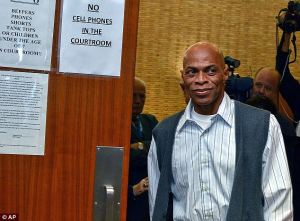
Edward Lee Elmore was released from prison in South Carolina on March 2 after agreeing to a plea arrangement in which he maintained his innocence but agreed the state could re-convict him of murder in a new trial. He had been on death row for nearly 30 years after being convicted and sentenced to death in 1982 for the sexual assault and murder of an elderly woman in Greenwood, South Carolina. The state’s case was based on evidence gathered from a questionable investigation and on testimony with glaring discrepancies. Elmore’s appellate lawyers discovered evidence pointing to Elmore’s possible innocence that prosecutors had withheld. Originally, state officials repeatedly claimed the evidence had been lost. The evidence included a hair sample collected from the crime scene. After being tested for DNA, the evidence suggested an unknown Caucasian man may have been the killer. In February 2010, Elmore was found to have intellectual disabilities and thus was ineligible for execution; he was taken off death row. In November 2011, the U.S. Court of Appeals for the Fourth Circuit granted him a new trial because of the prosecutorial misconduct in handling the evidence. The court found there was “persuasive evidence that the agents were outright dishonest,” and there was “further evidence of police ineptitude and deceit.”
Raymond Bonner, a former New York Times reporter who wrote a book about the case (“Anatomy of Injustice: A Murder Case Gone Wrong”), said Elmore’s journey through the justice system “stands out because it raises nearly all the issues that shape debate about capital punishment: race, mental retardation, a jailhouse informant, DNA testing, bad defense lawyers, prosecutorial misconduct and a strong claim of innocence.” He noted, “Once a person has been convicted, even on unimaginably shaky grounds, an almost inexorable process — one that usually ends in execution — is set in motion. On appeal, gone is the presumption of innocence; the presumption is that the defendant had a fair trial. Not even overwhelming evidence that the defendant is innocent is necessarily enough to get a new trial.”




 Claim your Innocence