Inmates on the death row

Prosecutor: Why Arizona still needs the death penalty


November 27, 2017

County attorney: As long as there are horrific murders, there will be a role for the death penalty as a just and proportionate punishment.

n a coordinated campaign, death penalty opponents submitted nearly identical op-eds in major publications across the U.S. seeking to persuade the United States Supreme Court to review the case of Arizona vs. Hidalgo and abolish the death penalty.

Understanding how a decision is made to pursue the death penalty, the facts of this case and about the death penalty in Arizona undermines their arguments.

Few murders become death penalty cases

My office follows a thorough and deliberative process for reviewing all death penalty eligible cases under tight deadlines. Arizona law requires us to make an initial decision within 60 days of the murderer’s arraignment.

During this period, we request any and all information the defense team can offer to assess whether the death penalty can be supported by the evidence and is an appropriate punishment.

If more time is needed to gather information, we regularly work with the defense to extend deadlines. After receiving input from victims, reviewing everything provided by the defense, and considering the facts and circumstances of the case, an experienced team makes a recommendation to me.

MORE: Maricopa County runs out of death penalty attorneys

I consider the recommendation carefully before making any decision. Approving the filing of a “notice of intent to seek the death penalty” is the most consequential decision I make as county attorney.

Should more information be provided later on, we regularly review it and, where appropriate, we revisit our initial decision and resolve cases accordingly.

Lastly, not all murder cases are death penalty cases. In fact, Maricopa County has averaged 203 murders each year from 2012 through 2016, and a death notice has been filed in an average of 14 cases each year – less than 8 percent of the murders.

Why Hidalgo was sentenced to die

As for the op-eds, they fail to acknowledge the extensive protections provided to capital defendants to safeguard constitutional rights and ensure a fair and just process.

In Hidalgo’s case, every constitutional right was protected. Hidalgo had a qualified capital defense team that included experienced investigators and mitigation specialists. The trial judge that presided over the case had presided over numerous death penalty cases and had represented several capital defendants before becoming a judge.

A jury unanimously imposed a death sentence on Hidalgo for good reason.

Hidalgo agreed to kill the victim on behalf of a street gang for $1,000. When Hidalgo went to kill the victim, the victim was not alone.

Hidalgo murdered this second victim to eliminate a potential witness. He shot one victim in the back of the head and the other in the forehead. Even though both victims were certainly dead, Hidalgo shot each victim an additional five times.

Before determining death was an appropriate punishment, the jurors found that Hildalgo had actually killed four people, the two Arizona victims and two Idaho women.

Like other death penalty cases in Maricopa County, the question was not who did it.  Hidalgo actually pleaded guilty to the charged offenses. The only contested issue was what the penalty should be.

A just system needs the death penalty

Next, death penalty opponents assert that the death penalty in Arizona is racially disparate. But this does not match the facts. Currently, there are 69 Caucasians, 25 Mexican Americans, 17 African Americans, four Native Americans, three Asians and two classified as “other” awaiting justice on Arizona’s death row.

Continuing complaints about the cost and time to impose the death penalty neglect the costs associated with constitutional protections and thorough appellate review caused by the very people complaining about costs and the time involved.

For Arizona, this has led to excessive litigation in the U.S. Ninth Circuit Court of Appeals and unnecessary delays averaging more than 20 years with associated costs. Other federal circuits in the United States routinely and thoroughly review death penalty appeals within 10 years. This tolerance for endless litigation is an area ripe for criminal justice reform.

Recent polls continue to reflect that a majority of Americans support the death penalty, and 31 states have determined there is a place for the death penalty in a just and proportionate system of punishment.

One year ago, voters in Nebraska reinstated the death penalty abolished the year before by their legislature. Voters in California recently rejected an initiative to abolish the death penalty and passed Proposition 66, which seeks to speed up the process for final review of capital sentences.

As long as there are horrific murders reflecting the worst of crimes, there will be a role for the death penalty as a just and proportionate punishment.

Bill Montgomery is Maricopa County attorney.

South Carolina has no drugs left to execute Death Row cop killer


Novembre  29,  2017

A death row inmate is due to die in just two days on Friday 1 December – but the state of South Carolina has none of the drugs it needs to kill him.

Bobby Wayne Stone, now 52, was sentenced to death back in 1997 after he was convicted of murder and first degree burglary. On 26 February, 1996 Stone roamed the woods while drinking beer and shooting his guns – a shotgun and a pistol. At one point, he left off gunshots outside a woman’s home and then, when Sergeant Charles Kubala responded, shot three or four more times. Kubala, who was hit once in the neck and once in the ear, died at the scene.

After many years of legal wrangling, including appeals against his murder conviction and death sentence at the Supreme Court, Stone was finally given an execution date – Friday 1 December. But then he made a choice that may have saved his life.

Texas Death Row Inmate’s Execution Postponed Over False Testimony


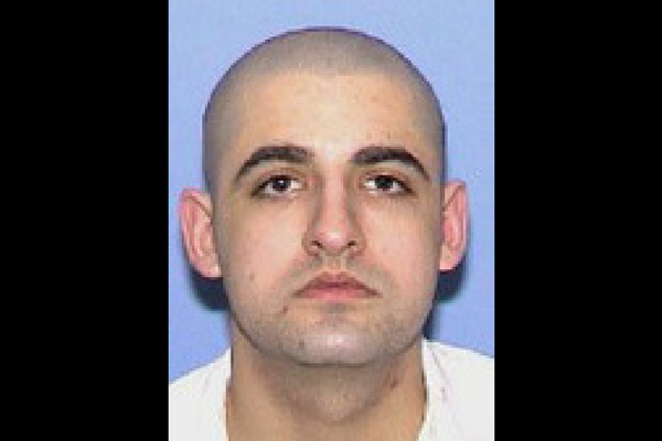
November 29,2017Juan Castillo - TEXAS DEPARTMENT OF CRIMINAL JUSTICE

Juan Castillo was scheduled to die on December 14, 2017. He was supposed to be the last prisoner on death row to be executed in Texas this year.

But on November 29, the Texas Court of Criminal Appeals delayed Castillo’s execution and sent his case back to trial court to reexamine false testimony used to convict him. 

Castillo, 36, was sentenced to death for the 2003 murder and robbery of Tommy Garcia Jr. in San Antonio. Castillo, his then-girlfriend, and two others had tried to lure Garcia with sex, and then steal his money. When 19-year-old Garcia ran away, Castillo shot him.

During his trial, Castillo’s former bunkmate at the Bexar County Jail, Gerardo Gutierrez, testified that Castillo had confessed to the crime. But in 2013, Gutierrez signed an affidavit saying he had lied about the confession.

Gutierrez’s false testimony is prompting the Texas CCA to pause the execution and further review Castillo’s case.

It’s not the first time Castillo’s execution date has been called off.

Previously, his Sept. 7, 2017 execution date was postponed at the request of the Bexar County District Attorney’s office because some of Castillo’s lawyers living in Harris County were impacted by Hurricane Harvey, according to the Texas Tribune. Castillo also had a prior execution date set back in May, but the date was postponed after Bexar County prosecutors failed to give sufficient notice to the defense, according to the Houston Chronicle

Texas has executed seven death row inmates in 2017, two of which were in Bexar County.

At least two other executions have been delayed in Texas this year because of issues over testimonies. Back in October, Anthony Shore, known as the “Tourniquet Killer,” had his execution date moved to January after he told prosecutors he had falsely planned to take responsibility for a fellow inmate’s murder.

Duane Buck, a Harris County death row inmate, had his sentence reduced to life in prison after the Supreme Court granted him the right to a retrial because a prison psychiatrist had told the jury in his 1997 trial that Buck would be more dangerous in the future because of his race.

U.S. Supreme Court rejects appeal of Alabama Death Row inmate convicted in 2007 slaying of parents


November 27,2017

Alabama Death Row inmate James Scott Largin

Alabama Death Row inmate James Scott Largin(Alabama Department of Corrections)

The U.S. Supreme Court on Monday said it won’t hear the appeal of an Alabama death row inmate who was convicted in the 2007 killings of his parents in Tuscaloosa.

James Scott Largin, 46, earlier this year had appealed to the U.S. Supreme Court a December 2015 ruling by the Alabama Court of Criminal Appeals upholding his conviction and death sentence.

On Monday the high court, without opinion, refused to review his case.

Largin was sentenced to death by a Tuscaloosa County judge in 2009 for his capital murder conviction in the deaths of his parents, Jimmy, 68, and Peggy, 56.

“Peggy and Jimmy Largin were at home on the night of March 15, 2007, when they were shot multiple times with a .22 caliber rifle and their bodies were thrown down the stairs leading to the cellar in their home. Autopsy results showed that both victims died as the result of close-range gunshot wounds to the head,” according to the Alabama Court of Criminal Appeals ruling.

“This Court has independently weighed the aggravating and the mitigating circumstances as required by (Alabama law) … We are convinced, as was the circuit court, that death was the appropriate sentence for Largin’s capital crimes,” the Alabama Court of Criminal Appeals stated in its order.

He was arrested after University of Alabama police found his parents’ car near the campus a few days after the murders, the Associated Press reported at the time.

A prosecutor at Largin’s original trial said Largin showed no remorse over the murders. The judge agreed with the jury’s recommendation that Largin be given the death penalty. His defense attorneys argued for life in prison without parole.

Death row inmate back in Newton County


Nov. 28, 2017

VINGTON, Ga. – Convicted murderer and death row inmate Rodney Renia Young was back in a Newton County courtroom Monday morning as his attorneys work to get him a new trial.

Young, 49, was convicted and sentenced to death by a Newton County jury in 2012 for the 2008 beating and stabbing death of 28-year-old Gary Lamar Jones in Jones’ Covington home.

According to media reports at the time, Young became enraged when Jones’ mother, Doris, moved to Georgia from New Jersey to live with her son after ending a seven-year relationship. She returned to the home on Benedict Drive around 11:30 p.m. March 30, 2008 and found her son bound to a chair, stabbed in the neck and bludgeoned with a hammer.

Young was arrested April 3 in Bridgeton, New Jersey by an agent from the Georgia Bureau of Investigations and an investigator from Newton County Sheriff’s Office.

During the hearing, attorneys from the Office of the Georgia Capital Defender and the American Civil Liberties Union questioned proportionality in the Georgia Supreme Court’s review of death penalty cases.

They also argued before Alcovy Judicial Circuit Judge Samuel Ozburn that Young’s constitutional rights had been violated during his 2012 trial because he wasn’t present at bench conferences that occurred during the trial and questioned the constitutionality of Georgia’s requirement that death penalty defendants prove intellectual disability beyond a reasonable doubt.

The attorneys said Young’s wearing of a “stun belt” during his trial also deprived him of the opportunity to participate in his defense and receive a fair trial.

Testifying about the “stun belt,” Young said wearing the belt made him feel uncomfortable and that he was unable to communicate with his attorneys.

“They told me I would get shocked if I moved,” he said.

Under cross-examination by Alcovy Judicial Circuit District Attorney Layla Zon, Young said he was never shocked during his trial. He also said he was never told he could not talk to his lawyers, nor did he ever communicate his discomfort with the belt during his trial.

Young was led into the courtroom at the Newton County Justice Center wearing his white Georgia Department of Corrections prison uniform and a blue jacket with a large white DOC on the back. His hands and feet were bound by handcuffs, leg shackles and a belly chain.

His lead attorney, Josh Moore of the Office of the Georgia Capital Defender, asked Ozburn to allow one of Young’s hands to be released from the handcuffs so he could take notes.

Ozburn gave Young’s attorneys 45 days to provide the law on the issue of proportionality review and the DA’s office an additional 45 days.

“It will be a few months at least before he rules on that motion and likely as well on the motion for a new trial,” Zon said. “If he grants the motion for a new trial we will have to try the case again.

“If he denies the motion then he (Young) can appeal to the Georgia Supreme Court.”

Former Virginia death row prisoner to go free – Joseph M. Giarratano


A convicted double murderer who came within two days of sitting in Virginia’s electric chair will soon be a free man.

Joseph M. Giarratano, who won support from around the world fighting his 1979 conviction in the Norfolk slayings, was granted parole Monday.

“I’m confident there’s no other prisoner like him in the Commonwealth of Virginia,” said lawyer Stephen A. Northup, who represented Giarratano before the parole board.

Giarratano was a 21-year-old scallop boat worker when he confessed to killing his roommates, 44-year-0ld Barbara Kline and her 15-year-old daughter, Michelle. But his confessions were inconsistent with each other and with the physical evidence, which did not tie him to the crime. He later said that after waking up from a drug-induced stupor and finding the bodies, he simply assumed he was the killer.

His attempts to win freedom attracted the support of actor Jack Lemmon, singer Joan Baez and conservative newspaper columnist James J. Kilpatrick, among others. In 1991, Gov. L. Douglas Wilder granted Giarratano a commutation, changing his sentence from death to life and making him eligible for parole after serving 25 years.

However, Virginia Attorney General Mary Sue Terry declined to grant Giarratano a new trial, saying she was still convinced of his guilt.

n prison, the uneducated Giarratano taught himself the law and advocated for fellow prisoners. He helped secure representation for Earl Washington Jr., another death row inmate, who was eventually exonerated by DNA evidence.

Giarratano sought to have similar evidence tested in his case, but it had been destroyed by the time he was allowed to file such a request.

Adrianne L. Bennett, chairwoman of the Virginia State Parole Board, told the Richmond Times-Dispatch that the parole decision should not be read as confirming Giarratano’s innocence. While Northup is confident that his client did not commit the murders, he said he believes the Monday decision has more to do with a parole board that is more open than in the past to freeing prisoners who have behaved admirably behind bars.

Now, Northup said, Giarratano plans to move to Charlottesville and work as a paralegal with lawyer Steven D. Rosenfield. He also hopes to work with the University of Virginia Law School’s Innocence Project.

Thanksgiving on Death Row


                                                            “Free Me,” a painting by Kevin Cooper. (Kevin Cooper)

Kevin Cooper was convicted of a 1983 quadruple murder in a trial in which evidence that might have exonerated him was withheld from the defense. His case was scrutinized in a June 19 New York Times column by Nicholas Kristof. Visit savekevincooper.org for more information.

DEATH ROW, SAN QUENTIN, Calif.—As I sit here in a 4½-by-11-foot cage on Thanksgiving Day, I first and foremost am thankful to be alive. On Feb. 10, 2004, I came within 3 hours and 42 minutes of being strapped down to a gurney, tortured with lethal poison and murdered by volunteer prison-guard executioners. So, yes, I am very thankful to be alive. I am also very thankful for all the people—my legal team, friends, family, supporters and activists working to end the death penalty—who have helped make my being alive possible.

I have been in a cage like this, with two feet of space between the side of the bed and the wall, for most of my adult life, for murders I did not commit. I eat prison slop for breakfast, lunch and dinner, and the guards look up my butt at least once a day to make sure I don’t have contraband when I leave this cage.

I have been on death row in the state of California for more than 32 years, having come to this place in May 1985, and I have been fighting for my life ever since. This modern-day plantation in which I am forced to live is a very dirty and inhumane place for any human being.

After my stay of execution in 2004, I went on to suffer from post-traumatic stress for years due to that sick ritual of death this prison put me through. No human being should ever have to endure what I have, not even if they are guilty of the crime they were convicted of committing.

I am innocent, and my fate now lies in the hands of Gov. Jerry Brown. On Feb. 17, 2016, Norman Hile, my pro bono attorney from the prestigious law firm of Orrick, Herrington & Sutcliffe, filed my petition for clemency in the office of Gov. Brown. I have respectfully asked the governor and others to look at my case with an open mind, outside the legal box that has me close to being killed for murders of which I am innocent. Doing this is truly important, especially now that many Americans are learning from frequent news reports the truth about America’s criminal justice system and some of the people who work within it.

People have learned that this system is dishonest, and that some of its investigators, prosecutors and judges cannot be trusted and are more concerned with winning cases or with following their political ideology than with truth or justice. This is especially true in my case.

Start with the fact that for the first time in the history of the death penalty in California, as well as within the history of the 9th Circuit Court of Appeals, 11 federal circuit court judges dissented in one death penalty case—mine.

To show their concern as to why my case should be heard on its merits before I am executed, six of the 11 stated these words of dissent in my last appeal: “Public confidence in the proper administration of the death penalty depends on the integrity of the process followed by the state. … [Twenty-four] years of flawed proceedings are as good as no proceedings at all.”

The other five judges, showing their concern about the truth not being told in my case, stated: “The state of California may be about to execute an innocent man.” (One of them, Judge William Fletcher, later said in a speech at New York University Law School: “[Kevin Cooper] is on death row because the San Bernardino Sheriff’s Department framed him.”)

A 12th judge wrote in a separate opinion: “Significant evidence bearing on Cooper’s culpability has been lost, destroyed or left unpursued, including, for example, blood-covered coveralls belonging to a potential suspect who was a convicted murderer, and a bloody t-shirt discovered alongside the road near the crime scene. … Countless other alleged problems with the handling and disclosure of evidence and the integrity of the forensic testing and investigation undermine confidence in the outcome.”

There have been many judges in other cases who have turned a blind eye to the truth and let a poor person get executed, even when there were serious doubts about that person’s guilt, but it is rare for judges to speak out against a possible execution. If these 12 judges are ignored, what will happen to me will not be my execution but my murder at the hands of the state of California.

The political ideology of many judges allows them to ignore truth and injustice. Politics—the politics of life and death—do play a very real part in this country’s criminal justice system. That is why Republicans in Washington, D.C., would not allow President Obama to replace Antonin Scalia on the Supreme Court [after his death]. This truth may never be admitted in words, but actions speak louder than words. Among these actions are the continuing oppression of people like me, who are poor and fighting for our lives from within this rotten criminal justice system.

So while finality, rather than justice, may be what certain judges are more concerned with, it is my hope that others in positions of authority—in particular the governor—will see the miscarriage of justice in my case and stand up and speak out to prevent this state from murdering me.

What makes my case unique in many ways is the fact that a dozen federal judges did just that—they stood up and spoke out against my questionable conviction—based on all the evidence and not just what the state claims after hiding, lying, destroying, tampering with, withholding and manipulating the evidence, all of which is exposed in my clemency petition to Gov. Brown.

Just because other judges in my case chose not to acknowledge the truth about it doesn’t mean I’m guilty. This can be said for all the people who have been exonerated for crimes, including murder, they did not commit. Certain judges in their cases upheld bogus convictions and then closed the cases.

I am respectfully asking you, no matter who you are, no matter your religion, your political party, your skin color or your sexual orientation, no matter what your job is, your economic class, or anything else that makes you the individual you are, to please get involved in this fight to save my life, as well as the fight for our collective humanity.

While I may indeed be murdered by the state of California in the not-too- distant future, this fight is not just about me. It is much bigger than me or any one person. It is about us as a people bringing to an end the historic and horrific crime against humanity that is only done against America’s poor people, especially its black people like me.

My legal team and I have petitioned the governor to grant me an innocence investigation so that he and everyone else can learn the truth about the law enforcement misconduct in my case, as well as DNA testing that we hope will reveal the real killer’s DNA and exonerate me.

We are asking the governor to grant me a reprieve so that if this state resumes executions, I will not be executed. The state has me marked for death and has me at the top of the execution list, in part because it did not torture and murder me in 2004, and subsequently because of the attention my case is now receiving, with many people, including several jurors who convicted me, believing in my innocence.

There is entirely too much sadness and pain and inhumanity inside these modern-day prison/plantations to go into any one essay. Just know that I am thankful on this Thanksgiving Day that my spirit has endured and is keeping me alive, when all around me is death.

Lawyers agree to DNA testing in Swearingen’s death row case


After years of courtroom wrangling, lawyers from both sides are finally agreeing to move forward with DNA testing in the 1998 rape and murder of Montgomery College student Melissa Trotter.

The agreement, expected to be finalized in court papers in the coming weeks, comes just days after a judge called off the pending execution of death row inmate Larry Swearingen, who was convicted in the slaying nearly two decades ago and has since repeatedly professed his innocence.

“They’re doing the right thing,” defense attorney James Rytting said Sunday, pointing to another death row inmate’s alleged plan to confess to the crime as evidence of the need for testing.

A lab would likely evaluate the rape kit, the ligature used to strangle Trotter, finger nail scrapings and hair.

FAMILY’S OUTRAGE: They want answers and an apology

“We’re still working out the details, but I’m excited that Mr. Rytting has finally agreed to allow us to test this DNA,” Montgomery County District Attorney Brett Ligon said Sunday. “I’m glad to be moving forward on this matter.”

Years-long legal battles over DNA testing have become a hallmark of Swearingen’s case, which even sparked changes to state laws regarding post-conviction DNA testing in 2015. Both sides have pushed for DNA testing at times, but always using different legal mechanisms and never in agreement.

At least twice, a trial court judge sided with Swearingen’s testing requests – but each time the state slapped down the lower court’s move, ruling that new DNA wouldn’t be enough to counter the “mountain of evidence” pointing to Swearingen’s guilt.

In 2013, prosecutors filed a failed bid for DNA testing, but the defense opposed.

Now, though, an alleged death row confession plot that could have seen another convicted killer confess to Trotter’s death has sparked new interest in testing.

“Both sides now recognize that there’s a need to test the evidence,” Rytting said.

Swearingen and Trotter were seen in the college’s library together on Dec. 8, 1998 – the day of the teen’s disappearance. Afterward, a biology teacher spotted Trotter leaving the school with a man.

Hair and fiber evidence later showed that she’d been in Swearingen’s car before she vanished.

The killer’s wife testified that she came home that evening to find the place in disarray – and in the middle of it all were a lighter and cigarettes believed to belong to Trotter. Swearingen later filed a false burglary report, claiming his home had been broken into while he was out of town.

That afternoon, Swearingen placed a call routed through a cell tower near FM 1097 in Willis – a spot he would have passed while heading from his house to the Sam Houston National Forest where Trotter’s decomposing body was found 25 days later.

Swearingen was convicted and sentenced to death in 2000, but on Friday a judge approved calling off his Nov. 16 death date – the fifth one scheduled in the case – as a result of a filing snafu.

Back in August,, the Montgomery County District Clerk sent notice of the November execution scheduling to the Office of the Attorney General’s writ office instead of to the Office of Capital and Forensic Writs. Because the law requires notice to the OCFW – which defends death row convicts – to be mailed within two days of the setting of an execution, the date had to be called off. It has not been rescheduled.

Swearingen’s attorneys first pointed out the problem in court papers on Wednesday, filing a motion to withdraw the execution in light of the mistake.

But aside from the clerical issues, Rytting also requested calling off the execution in order “to investigate newly discovered information suggesting that Anthony Shore – a convicted serial killer – has confessed to the murder of Melissa Trotter,” according to court papers.

“Mr. Swearingen will seek to depose Mr. Shore in order to preserve his testimony regarding the nature of any confessions he made, to obtain a DNA sample, and to obtain all other relevant information including documents, recordings and any other evidence concerning Mr. Shore’s connection to Ms. Trotter’s murder.”

Word of the alleged confession scheme emerged on the eve of Shore’s scheduled execution on Oct. 18.

Hours before he was scheduled to die, Shore won a 90-day stay after prosecutors said the four-time killer admitted to an abandoned plan to admit to Swearingen’s crime.

Officials first found out about the possibility of a last-minute confession attempt back in July, when a death row cell search uncovered materials relating to Trotter’s killing – including a hand-drawn map marking the supposed location of more evidence – stashed in Shore’s cell.

The day before his scheduled execution, Shore told investigators he’d only considered confessing to get his friend off, and not because he’d actually committed the additional crime. The multiple murderer also agreed to answer questions about other cases, and a judge greenlit pushing back his first scheduled execution date. He is now slated to die by lethal injection on Jan. 18.