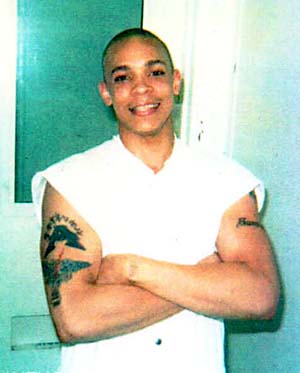
EXECUTIONS US 2012

South Dakota covers up source of death penalty drugs ahead of execution


Prison authorities in South Dakota are refusing to release information on contaminated drugs made to order for an execution tonight (30 October).

The so-called ‘DIY drugs’ – doses of the barbiturate pentobarbital produced by a compounding pharmacy for the South Dakota Department of Corrections (DOC) – were used to execute Eric Robert earlier this month, with alarming results. Robert’s eyes opened during the lethal injection process, a sign that he may not have been properly anaesthetised and the execution may have been botched.

The ingredients used to make the drugs used in Eric Robert’s execution – and set to be used this evening in that of Donald Moeller – were found to have been contaminated with fungus.

However, despite these indications that the drugs may be faulty, and therefore carrying a risk of unnecessary suffering for the prisoner, South Dakota has thus far refused to disclose any information on how they were obtained.

The drugs are known to have been made by a compounding pharmacy – a service which allows batches of drugs to be made up to order, thereby allowing customers to bypass mainstream pharmaceutical suppliers which face more comprehensive regulation. The compounding pharmacy industry has been in the spotlight lately after reports linked it to a widespread outbreak of meningitis in the US.

South Dakota DOC had previously intended to use drugs they had illegally imported from a supplier in India in the executions, but these drugs expired last month.

Maya Foa, investigator for the legal charity Reprieve said: “The use of these DIY execution drugs means that we have little idea of just what is being injected into prisoners’ veins. It is no surprise that prison authorities appear so desperate to cover up any information on where they have come from, or who made them. The South Dakota Department of Corrections must come clean: it is indefensible for the ultimate punishment to be carried out in this slipshod and unaccountable manner.”

TEXAS – A Death Row Struggle Between Advocates and Lawyers – Preston Hughes III


October 25, 2012 Texas Tribune

LIVINGSTON — Preston Hughes III, a death row inmate, is 46 but seems much older, with white hair, thick glasses and a quiet, slow voice that rises only when the subject of his lawyer comes up.

Mr. Hughes, convicted in 1989 of fatally stabbing two young people, has tried multiple times to dismiss his court-appointed lawyer, Patrick McCann. He said that Mr. McCann, who has been his lawyer for 14 years, had not raised his claims of innocence and is “helping the state cover this up.”

Mr. McCann says he cannot comment on why he will not pursue these claims, which were not introduced in Mr. Hughes’s original trial. But Texas and federal law set a high burden of proof for new claims of “actual innocence” so late in the judicial process, a bar that Mr. McCann said was “almost impossible” to meet.

Mr. Hughes, who says he did not commit the murders, is scheduled to be executed Nov. 15. He says all of his lawyers have failed him. “They just want to do things on their own,” he said recently from death row in Livingston.

While Mr. McCann is suing the state over lethal injection procedures, arguing that prison officials would be “experimenting” on his client, a handful of advocates are publicizing what they believe is new evidence of Mr. Hughes’s innocence.

The advocates, who do not have legal training, are campaigning for Mr. Hughes’s exoneration and supporting his efforts to have Mr. McCann fired.

The issue of advocates’ doubting the work of lawyers is common in death penalty cases, especially as an execution date nears.

“Once the lawyers do the spadework, a lot of people want to come in,” said Jeff Blackburn, a lawyer who runs the Innocence Project of Texas, “and they don’t understand that we’re limited with the art of the possible here.” He called Mr. McCann a “great lawyer.”

The official facts of the crime, on their face, pointed directly to Mr. Hughes. On the night of Sept. 26, 1988, Shandra Charles, 15, and her cousin Marcell Taylor, 3, were fatallystabbed in a Houston field. A police sergeant reported that before she died, Ms. Charles identified the name “Preston” and said, “He tried to rape me.”

Detectives located Mr. Hughes in a nearby apartment complex. Investigators found evidence of blood on his clothing and a knife in his apartment, as well as Ms. Charles’s eyeglasses on his couch. Mr. Hughes, who said the glasses were planted, confessed to the murder during the investigation but then denied involvement during the trial. No biological evidence tied him directly to the crime.

Convicted and sentenced to death in 1989, Mr. Hughes had multiple appeals rejected. Then, this year, several unlikely advocates became interested.

John Allen, 64, a retired engineer in California, writes a blog called The Skeptical Juror. With the help of Barbara Lunsford, an accountant in Corpus Christi, and Ward Larkin, an activist from Houston, he has spent nine months and more than 100,000 words delvinginto the forensic and legal details of Mr. Hughes’s case. None of the three are affiliated with an official organization, and while Mr. Allen has written about other convictions in the past, he said he had stopped looking at other cases for now.

After reviewing documents related to the trial, appeals and evidence, he deduced that Ms. Charles must have lost brain function within two minutes, and she could not have told the police the name of her attacker. “This is a seemingly overwhelming case” of innocence, Mr. Allen said, adding that he also believed that the victim’s glasses were planted in the apartment, based on his review of crime scene photographs.

In September, Mr. McCann said he had never heard of Mr. Allen’s investigation. This week, he said Mr. Allen “sounds like a very sincere man who is attempting to right a wrong.”

“Like in fantasy football,” he said, “I think lots of people are happy to offer thought without skin in the game.”

As for Mr. Hughes’s petitions to have him replaced, Mr. McCann said he thought they were the product of desperation. “When a person is drowning,” he said, “they sometimes try to fight the guy holding a life preserver.”

Mr. McCann agreed that Ms. Charles would have “been unconscious in a matter of seconds based on the blood loss,” and so she could not have said Mr. Hughes’s name to the police. Despite being troubled by this evidence, he is not filing a claim of innocence.

“I find myself in an odd position,” he said, “because I’m ethically bound not to advance a claim I think is false.”

Mr. Allen learned about the case while investigating the work of James Bolding, the head of blood analysis for the Houston Police Department’s crime lab at the time, who testified at Mr. Hughes’s 1989 trial. Mr. Bolding tested for blood on Mr. Hughes’s knife while he was in the courtroom. Mr. Hughes said the blood came from a rabbit he had killed months before.

Judge George Godwin said at the time that he found the “cavalier attitude and lackadaisical attitude of doing tests right while we’ve got a jury waiting to come in and hear testimony unacceptable.” He nevertheless ruled that the testimony was permissible.

Mr. Hughes said he trusted Mr. Allen more than his lawyer, Mr. McCann. In September, Mr. Hughes filed a petition to have Mr. McCann replaced, and a court rejected it.

Mr. McCann plans to follow the case to the end. In September, he sued the Texas prison system, saying that by using a single drug for the execution, as a result of a recent policy change, officials would be experimenting on his client. The Court of Criminal Appeals, Texas’ highest criminal court, has ordered the civil court overseeing the case not to stay Mr. Hughes’s execution.

Mr. McCann does not know when the court will rule. “The unfortunate timing of this is it’s before a contested election,” he said.

Murray Newman, a Houston defense lawyer, said he believed Mr. McCann was doing his best and cared about Mr. Hughes. “He works so hard on these cases. It’s like losing a family member,” Mr. Newman said.

From death row, Mr. Hughes sees it differently, as he plays basketball during his hour of recreation every day, eats food he calls “pitiful” and learns about court decisions from a small, black radio.


“We don’t like each other,” he said of Mr. McCann. “I don’t feel somebody who doesn’t like me is going to do anything for me.”


FLORIDA – mentally ill death row inmate gets stay of execution – FERGUSON


october 21,2012 http://www.globalpost.com

John Errol Ferguson will add another week to the 34 years he has been on death row in Florida. The convicted mass killer was granted a stay of execution by a federal judge on Saturday. 

Defense attorneys have argued for decades that Ferguson is mentally ill and that putting him to death would be “cruel and unusual punishment”.

He execution was originally scheduled for Tuesday

“The issues raised merit full, reflective consideration,” the court said when US. District Judge Daniel T. K. Hurley granted the motion for a stay.

Ferguson’s attorneys told AP that the court will hear three hours of arguments on his habeas corpus petition on Friday. His lawyers are arguing that Ferguson is unfairly on death row because the court used an old and outdated definition of competency.

They contend that Ferguson is insane and that a 2007 US Supreme Court ruling prohibits the state from executing him, reports AP. 

“In order for the state to execute him, Mr. Ferguson must have a rational understanding of the reason for, and effect of, his execution,” Chris Handman, an attorney for Ferguson, told AP in an emailed statement.

“A man who thinks he is the immortal Prince of God and who believes he is incarcerated because of a Communist plot quite clearly has no rational understanding of the effect of his looming execution and the reason for it.”

Ferguson was convicted of the July 1977 murders of six people during a home-invasion robbery, reports the Miami Herald.  He was convicted separately of posing as a police officer and murdering two teenagers in January 1978.

Ferguson has had a long history with mental illness and crime. In 1971, he was declared psychotic and incompetent by a court-appointed doctor years before his first murder, reports the Tampa Bay Tribune.

“He is completely paranoid. A schizophrenic,” Handman, whose law firm, Hogan Lovells, has represented Ferguson pro bono for more than 30 years, told the Miami Herald.

“When you meet him, he is deeply suspicious of your motives. He has a very tenuous grasp on reality.”


UPCOMING EXECUTIONS – NOVEMBER 2012


Dates are subject to change due to stays and appeals

Pennsylvania execution dates and stays are generally not listed because the state routinely sets execution dates before all appeals have been exhausted.

NOVEMBER 16 , 2012  

November    
11.06.12 Garry Allen Oklahoma  EXECUTED  6.10 p.m
11.08.12 Mario Swain Texas  EXECUTED  6.39 p.m
11/08.2012 Hubert Michael Pennsylvania STAY                                                                                                                      
11/13/2012 Brett Hartman Ohio EXECUTED  10.34 a.m 
11/14/2012 Ramon Hernandez Texas EXECUTED  6.38 p.m
11/15/2012 Preston hughes Texas  EXECUTED  7.52 p.m

Federal appeals court denies insanity plea for Okla. death row inmate – GARRY ALLEN THOMAS- EXECUTED 6.10 P.M


October 18, 2012

 A federal appeals court has refused to halt the execution of an Oklahoma death row inmate who claims he is insane. 

The 10th U.S. Circuit Court of Appeals handed down the ruling Thursday in the case of 56-year-old Garry Thomas Allen.

Allen is scheduled for lethal injection Nov. 6. Allen was convicted of first-degree murder and sentenced to death for the November 1986 shooting death of his fiancee, 42-year-old Lawanna Gail Titsworth, outside a children’s day care center in Oklahoma City.

Last month, a federal judge rejected Allen’s request for a hearing on his claim that he is mentally incompetent and ineligible for the death penalty. Allen’s defense attorney, Randy Bauman of the Federal Public Defender’s Office, declined to comment on the appellate court’s decision.

  • Garry T. Allen  Execution Date: February 16, 2012 – Stay Issued Until March 17, 2012 , again delayed  april 12 STAYED

BACKGROUND

I write here the summary of this case, march to april 2012 if u dont know this case 

Summary of Offense:

Allen pleaded guilty in the 1986 shooting death of his ex-girlfriend Gail Titsworth in Oklahoma County. He was convicted in 1987. Titsworth had broken off the relationship with Allen three days before the killing and had sought a protective order. She was picking up her two sons at a child-care center when Allen shot her four times. He then struggled with a police officer and was shot in the head. Allen spent months in mental hospitals after his arrest to be treated for depression and his head injury. He was deemed competent at a 1987 hearing but won a new competency hearing in 1997 after the Supreme Court ruled that Oklahoma’s competency standards were too high. In the subsequent hearing, Allen was again ruled competent.

april 11, 2012 BREAKING NEWS 

OKLAHOMA CITY (AP) – A federal judge in Oklahoma City has stayed the execution of an inmate who was diagnosed with schizophrenia but found sane by a jury that considered whether he was eligible for the death penalty.

Fifty-six-year-old Garry Allen is scheduled to die by injection on Thursday. Allen pleaded guilty to capital murder after being shot in the head during his November 1986 arrest. He killed 24-year-old Gail Titsworth, with whom he had children, outside a daycare where she had picked up her sons days after she moved away from Allen. An officer shot Allen after he tried to shoot the officer.

In 2005, the state Pardon and Parole Board voted 4-1 to commute Allen’s sentence to life in prison, but Gov. Mary Fallin had decided to allow the execution to proceed.

april 10, 2012 source http://muskogeephoenix.com

OKLAHOMA CITY (AP) – Members of an anti-death penalty group said Monday they have little hope that Gov. Mary Fallin will commute the death sentence of an Oklahoma inmate scheduled to be executed Thursday.

Three members of the Oklahoma Coalition to Abolish the Death Penalty met with Fallin’s general counsel, Steve Mullins, to urge the governor to reverse her decision to deny clemency for Garry Thomas Allen, 56.

Allen’s attorneys contend he was mentally impaired when he killed 24-year-old Lawanna Gail Titsworth, the mother of his two children, on Nov. 21, 1986, in Oklahoma City. They say he had been self-medicating for an underlying mental illness, and that his mental condition had worsened.

Coalition board member James T. Rowan said the group does not expect Fallin to change her mind about clemency. He said Mullins indicated during the meeting that Allen’s clemency request “was a close case.”

“I’m satisfied that the governor has gone through an exhausting process,” Rowan said.

A spokesman for Fallin, Alex Weintz, confirmed the group met with Mullins and discussed Allen’s case. Weintz said Fallin appreciated their input but that there was no change in the status of the case.

“The execution is still scheduled for Thursday,” Weintz said.

Fallin denied clemency for Allen on March 13, but the coalition asked her to reconsider based on the state Pardon and Parole Board’s 4-1 recommendation in 2005 that Allen’s death penalty on a first-degree murder conviction be commuted to like in prison.

“That is a very exceptional factor,” said Rex Friend, another coalition board member.

Allen was shot in the face during a struggle with police after Titsworth’s shooting death and his attorneys said he was not competent to enter a blind plea of guilty to the murder charge.

Former Gov. Brad Henry never acted on the board’s 2005 clemency recommendation for Allen because a Pittsburg County judge issued a stay of execution after a prison psychological exam determined Allen had developed mental problems on death row. The doctor’s report noted Allen had dementia caused by seizures, drug abuse and the gunshot wound.

A 12-member jury was impaneled in 2008 to determine Allen’s sanity. Jurors rejected Allen’s argument that he should not be put to death and decided he was sane enough to be executed.

Friend said Fallin went through a long and detailed process that included meetings with prosecution and defense attorneys in the case before she made her decision to deny the Pardon and Parole Board’s recommendation. Rowan said Allen’s execution could still be blocked if prison officials believe he is not mentally competent.

———————————————————————————————

April 6, 2012 source :http://www.therepublic.com

OKLAHOMA CITY — As activists prepare to argue for clemency for a man scheduled to die next week, a death penalty expert said a blind guilty plea such as Garry Allen’s is unusual in Oklahomacapital murder cases.

Allen’s attorneys have argued that he was mentally impaired when he entered a blind guilty plea to a capital murder charge. Allen was shot in the head during his 1986 arrest, and he had a history of mental illness and alcohol abuse prior to the killing.

Activists on Monday plan to ask legal counsel for Gov. Mary Fallin to consider clemency for the 56-year-old man, who is scheduled to be executed Thursday.

Considering Allen’s apparent combination of mental illness and alcohol abuse, he shouldn’t have entered a blind guilty plea — a plea done in front of a judge without a deal — especially in a state where the death penalty is popular, said defense attorney James Rowan, a death penalty expert who does not represent Allen.

Allen has testified that he pleaded guilty to spare his family and his victim’s family from the ordeal of a trial.

His lawyers had argued he was not sane and therefore shouldn’t be executed, but in 2008, a jury said he was sane enough for the death penalty.

A personality test in Allen’s court file shows his “probable diagnosis is Schizophrenic Disorder, or Anxiety Disorder in a Paranoid Personality.” Allen, who had a history of substance abuse, had also testified that before the day of the killing, he got drunk whenever he could. Two hours after the killing, Allen’s blood-alcohol level was .27— more than three times the legal limit.

Considering Allen’s apparent combination of mental illness and alcohol abuse, he shouldn’t have entered a blind guilty plea — a plea done in front of a judge without a deal — especially in a state where the death penalty is popular, said defense attorney James Rowan, a death penalty expert who does not represent Allen.

Attorney Charles Hoffman, another expert on death penalty cases, said a blind guilty plea could be the result of the defendant’s insistence, “bad or lazy lawyering” or a strategy to argue the defendant acknowledged guilt when a conviction is sure to happen.

“Although entering a blind guilty plea in a death penalty case may sound like a very dumb thing to do, it really all depends on the facts of the case,” Hoffman said.

In the 42 capital murder cases that Rowan has tried, only two defendants entered blind guilty pleas — once because Rowan was “young and didn’t know any better.” In the other case, in 1989, a man killed five people in a multi-state spree, including a woman in an Ardmore, Okla., flower shop.

Rowan knew the case would be hard to win and decided to plead to the judge.

“It would almost be malpractice now to do it,” Rowan said. “Even if the defendant wanted to enter a guilty plea, I think you’d be almost incompetent to do that.”

In 2005, the Pardon and Parole Board voted 4-1 to recommend life without parole instead of execution for Allen, but Fallin has decided to proceed with the execution.

Fallin has said she and her legal team gave Allen’s case a thorough review, and she has no plans to change her decision.

Allen shot 42-year-old Lawanna Titsworth four days after she moved out of the home where she lived with Allen and their two sons, according to court documents. Titsworth and Allen had fought in the week before the shooting and he had tried to convince her to live with him again.

An officer in the area responded to a 911 call. Allen grabbed his gun and struggled with the officer, according to court documents. Allen tried to make the officer shoot himself by squeezing the officer’s finger on the trigger, but the officer got control of the gun and shot Allen in the face.

—————————————————————————————————————-

March 14,2012

OKLAHOMA CITY

Governor Mary Fallin has denied clemency for Garry Thomas Allen, an Oklahoma death row inmate who killed the mother of his two children in 1986.

On February 9, 2012, Governor Fallin granted a stay of execution of thirty days from February 16, 2012, the date of the scheduled execution of Allen, in order for this office to thoroughly evaluate the recommendation of clemency by the Oklahoma Pardon and Parole Board.

The Governor met with the Federal Public Defender’s office, the Oklahoma Attorney General’s office and the victim’s family about this case.

The Executive Order, Fallin states, “Having thoroughly reviewed the arguments and evidence presented in this case, I have determined that clemency should be denied, and that the sentence of death shall be carried out.”

The Governor has granted an additional twenty-six day stay thereby scheduling the execution on Thursday, April 12, 2012.

Allen was convicted for killing 42-year-old Lawanna Gail Titsworth on November 21, 1986, in Oklahoma City.

Read the full Executive Order HERE.

Article 5/4/08

Death row inmate deemed sane

A Pittsburg County jury has determined that a death row inmate is sane enough to be executed, but it’s uncertain when the punishment will be carried out.

On a 9 to 3 vote, a panel of 11 men and one woman rejected Garry Thomas Allen‘s argument that he shouldn’t be put to death for the fatal shooting of Lawanna Titsworth because he had become insane while in prison.

An Oklahoma County jury convicted the 52-year-old Allen of first-degree murder for gunning down in November 1986 outside an Oklahoma City daycare center. Titsworth had moved out of the home she shared with Allen and their 2 sons 4 days before her death.

According to court documents, the 2 were arguing when Allen reached into his sock, pulled out a revolver and shot her twice in the chest.

Titsworth got to her feet and ran toward the center, but Allen shoved her down some steps and shot her in the back twice.

An Oklahoma City police officer responding to the call tussled with Allen before shooting him in the face.

Prosecutors are now considering what to do next.

Okla. court dismisses death row inmate’s appeal

A condemned Oklahoma inmate who insists he is insane lost a legal challenge Thursday when an appeals court determined there is no procedure under state law to contest a jury’s finding that he is sane enough to be executed.

The Court of Criminal Appeals handed down the decision against Garry Thomas Allen, 55, who was convicted of first-degree murder and sentenced to death for the Nov. 21, 1986, shooting death of 42-year-old Lawanna Gail Titsworth, the mother of Allen’s two children.

A district judge in Pittsburg County issued a stay one day before Allen scheduled execution in 2005 after a psychological examination at the Oklahoma State Penitentiary indicated Allen had developed mental problems while confined on death row. The U.S. Constitution forbids the execution of inmates who are insane or mentally incompetent.

According to state legal guidelines, a 12-member jury was impaneled in 2008 to determine Allen’s sanity. Jurors rejected Allen’s argument that he should not be put to death and decided he was sane enough to be executed.

Allen appealed, but in a six-page decision the appeals court concluded the appeal was not authorized by law and that there is no procedure to appeal a finding that a person facing execution is sane.

The decision, written by Vice Presiding Judge David Lewis of Lawton, says there is no federally mandated right to an appeal in Allen’s case and that the state Constitution does not mandate an appeal. In addition, the Legislature has not created a statutory appeal process for sanity proceedings, the appellate court said.

“It is, however, clear what the procedure should be when a person facing execution is found either insane or sane after a jury trial, and that procedure does not include an appeal to this court,” the ruling states.

Despite the decision, it remains unclear when Allen’s execution will be carried out. Attorney General’s Office spokeswoman Dianne Clay said attorneys plan to evaluate the decision before asking the appeals court to schedule a new execution date for Allen.

Allen’s attorney, Kristi Christopher of the Oklahoma Indigent Defense System, did not immediately return a telephone call seeking comment.

An Oklahoma County jury sentenced Allen to death for shooting Titsworth in the parking lot of the Oklahoma City daycare center. She had moved out of the home she shared with Allen and their two sons four days earlier.

Court documents indicated the two were arguing when Allen reached into his sock, pulled out a revolver and shot Titsworth twice in the chest. Titsworth ran with a center employee toward the building, but Allen pushed the worker away, shoved Titsworth down some steps and shot her twice in the back at close range, records show.

A police officer responding to a 911 call tussled with Allen before shooting him in the face, according to court documents. Allen was hospitalized for about two months for treatment of injuries to his face, left eye and brain.

Read more at the Washington Examiner: http://washingtonexaminer.com/news/2…#ixzz1fzv2kDVK

——————————————————————————————————-

The Oklahoma Court of Criminal Appeals has set a Feb. 16 execution date for a death row inmate who claims he is insane.

The court set the date Thursday for 55-year-old Garry Thomas Allen. Attorney General Scott Pruitt requested the date on Dec. 28 after a stay of execution for Allen was lifted by a Pittsburg County judge.

Allen was convicted of first-degree murder and sentenced to death for the Nov. 21, 1986, shooting death of 42-year-old Lawanna Gail Titsworth. But Allen’s 2005 execution was stayed when prison officials reported he had developed mental problems on death row.

A 12-member jury was impaneled in 2008 to determine Allen’s sanity. Jurors rejected Allen’s argument that he should not be put to death and decided he was sane enough to be executed.

http://www.therepublic.com/view/stor…oma-Execution/

Garry Allen has epilepsy, which has apparently worsened during his time on death row. He has frequent seizures and doctors have said that he is so confused for periods after these seizures that he would not understand thereality of or reason for his impending execution. In 1993, Garry Allen’s IQ was measured at 111, above average. By 1999, it had dropped to 75.Doctors have reportedly put this down to his ongoing epileptic seizures combined with head injuries.

After having been presented with such evidence at a clemency hearing on 20 April 2005, the Oklahoma Pardon and Parole Board recommended by four votes to one that Governor Brad Henry commute Garry Allen’s death sentence to life imprisonment. An Assistant Attorney General, pursuing the executionfor the state, was quoted as saying that he believed that Garry Allen was faking his mental impairments: ”It is easier to act stupider than you are. It’s impossible to act smarter than you are. This guy now knows, play up my seizures, play down my IQ.”

http://www.mail-archive.com/deathpen…/msg02623.html

Governor considering death-row inmate’s case

A death-row inmate originally scheduled to be executed Thursday night will instead be put to death March 17 if the governor’s legal team decides against commuting the man’s sentence to life in prison.

Gov. Mary Fallin issued a 30-day stay last week to give her legal team more time to consider a 2005 clemency recommendation from the state Pardon and Parole Board for 55-year-old Garry Thomas Allen.

Allen had been scheduled to die for the 1986 murder of the mother of his two children. His attorneys have argued that he was mentally impaired when he killed 42-year-old Lawanna Gail Titsworth.

Allen’s current lawyer, Randy Bauman, declined to comment on the stay Thursday. Currie Ballard, a member of the pardon and parole board, said he could not comment on death-row cases.

http://www.kswo.com/story/16952220/g…w-inmates-case

Convicted killer Garry Thomas Allen will be executed April 12 after Gov. Mary Fallin issued an additional 26-day stay on Tuesday

Allen was set to be executed Saturday after the first 30-day stay expired for his case.

On Feb. 9, Gov. Fallin granted a 30-day stay of execution from the originally scheduled date of Feb. 16, in order to evaluate the Oklahoma Pardon and Parole Board’s recommendation of clemency.

The governor met with the Federal Public Defender’s office, the Oklahoma Attorney General’s office and the victim’s family to review Allen’s case, and after examining the arguments and evidence presented, determined that clemency should be denied, and that the sentence of death shall be carried out, according to spokesman Alex Weintz.

Allen was sentenced to death for the 1986 murder of the mother of his two children, 42-year-old Lawanna Gail Titsworth.

Allen’s attorneys have argued that he was mentally impaired when he killed Titsworth in Oklahoma City. They said he had been self-medicating for an underlying mental illness, which had gotten worse. A police officer shot Allen in the face during a struggle after Allen shot his wife.

The pardon and parole board voted 4-1 in 2005 to recommend commuting Allen’s sentence to life in prison. But before then-Gov. Brad Henry had a chance to act on the recommendation, a Pittsburg County judge issued a stay after a prison psychological exam determined Allen had developed mental problems on death row. The doctor’s report noted Allen had dementia caused by seizures, drug abuse and his gunshot wound.

A 12-member jury was impaneled in 2008 to determine Allen’s sanity. Jurors rejected Allen’s argument that he should not be put to death and decided he was sane enough to be executed.

http://www.tulsaworld.com/news/artic…_0_Convic58229

TEXAS – High court stops execution of Houston cop killer Anthony Haynes


OCTOBER 18, 2012 http://abclocal.go.com

HUNTSVILLE, TX — The U.S. Supreme Court stopped the execution Thursday of a 33-year-old Texas prisoner for gunning down an off-duty Houston police sergeant 14 years ago.

Anthony Haynes had been set to die for the shooting death of Sgt. Kent Kincaid, 40, while the officer was with his wife driving in their own vehicle not far from home. Their SUV had been struck by an object from a pickup truck, cracking its windshield. When Kincaid got out to talk to the people in the truck and told them he was a police officer, he was shot in the head.

The high court ruling came about three hours before Haynes could have been taken to the death chamber.

Haynes confessed to the May 1998 slaying, was tried for capital murder the following year and sentenced to death.

His lethal injection would have been the 11th this year in Texas, the nation’s most-active death penalty state. Another is set for next week.

Evidence showed the object that hit the Kincaids’ SUV was a .25-caliber bullet from the same gun used to shoot him. Testimony at Haynes’ 1999 trial in Houston showed that same evening Haynes had committed a series of armed robberies.

Haynes’ trial lawyers showed “virtual abdication of their duty” by failing to more fully investigate and present evidence of Haynes’ good character to jurors who were deciding his punishment, his appeals attorney, A. Richard Ellis, told the high court in his appeal.

He also contended prosecutors unfairly painted Haynes, who was 19 at the time of the shooting, “as an out-of-control, violent and unpredictable individual who was subject to intermittent fits of rage.”

“This picture was totally at variance with his actual character,” Ellis said.

The appeal also faulted attorneys at earlier stages of Haynes’ appeals for not addressing the trial defense issues and contended lower court rulings and Texas appeals procedures unfairly kept Haynes from raising the claims now. Similar appeals in recent Texas death penalty cases have failed to win reprieves from the high court although at least one other did. That case, involving prisoner John Balentine, is set for conference before the justices for later this month.

The arguments center on a Supreme Court ruling favorable to an Arizona prisoner who couldn’t find a way to make an appeal under procedures in that state. Texas attorneys argued the statutes in Texas were different, did allow for appeals like the one Haynes wanted considered and that courts had determined the Arizona ruling had no effect in Texas.

State attorneys contesting Hayne’s appeal argued his previous attorneys didn’t abandon him and shouldn’t be considered ineffective because they chose issues different from those now being pursued by Ellis.

“Haynes does not now present any compelling reasons for this court to review his claims,” Jeremy Greenwell, an assistant Texas attorney general, told the justices.

Greenwell pointed out evidence of Haynes’ history of explosive temper outbursts, of police being summoned to deal with his threats against a school nurse and an ROTC instructor, that he assaulted his 3-year-old sister and tried to kill the family dog.

“He was no angel,” Mark Vinson, the Harris County district attorney who prosecuted Haynes, recalled last week.

Kincaid’s wife couldn’t describe the shooter and provided only a cursory description of the truck but said she was certain her husband identified himself as a police officer, a distinction important in that it allowed prosecutors to try Haynes for capital murder and make him death-penalty eligible. Haynes’ trial lawyers said he didn’t know the man who approached was an officer and feared for his own safety.

One of the robbery victims earlier the evening of the shooting identified a companion of Haynes as participating in the holdup, and that led detectives to Haynes. He took police to separate sites miles apart where he left the gun and ammunition clip.

TEXAS – EXECUTION TODAY- ANTHONY HAYNES – 6 p.m STAYED


October 18, 2012 

Anthony Haynes, 33, would be the 11th inmate executed this year in Texas and the 33rd in the United States, according to the Death Penalty Information Center. The execution is scheduled for after 6 p.m. (2300 GMT) in Huntsville.

Haynes fired a shot from his truck at a Jeep Cherokee carrying off-duty Houston police officer Kent Kincaid and his wife, Nancy, according to an account of the case from the Texas attorney general’s office.

The officer got out of his Jeep and approached Haynes‘ truck, telling him that he was a police officer and asking to see his driver’s license, the account said.

Nancy Kincaid said during Haynes’ trial that her husband was reaching for his badge when the driver shot him in the head, according to a Houston Chronicle account at the time.

“(The driver) pulled his hand up and I saw the flash and I heard the pop,” Nancy Kincaid testified. “That was the end. He then went down.”

Kent Kincaid was declared brain-dead at the hospital.

That same night, Haynes had committed several armed robberies, Texas officials say.

“I’m not a vicious psychopath who goes around wanting to take people’s lives,” Haynes told the Houston Chronicle in a 2001 death row interview. “There was no intent to kill a cop. He did not ID himself until a second before I shot him.”

Haynes has appealed to the U.S. Supreme Court, raising questions about whether his trial lawyers were effective.

These two men were both 19 when they were sentenced to death


Anthony Cardell Haynes

Anthony Haynes claimed he didn’t know that Kent Kincaid was a Houston police sergeant when he shot him in the head back in 1998. Kincaid was off-duty and driving his personal vehicle when Haynes drove by; something cracked Kincaid’s windshield, and he reportedly thought Haynes had thrown something at him. He followed Haynes, and when the 19-year-old stopped his car, Kincaid approached him. Kincaid said he was a police officer, but Haynes later said he didn’t know whether to believe him. When Kincaid reached behind his back, presumably for a badge, Haynes pulled out a .25-caliber gun and shot him.

Anthony Haynes

Anthony Haynes

Haynes blamed the tragedy in part on drugs and falling in with a bad crowd of people who reportedly made a game out of shooting at the windshields of passing cars and then robbing the drivers after they stopped. As it happened, the crack in Kincaid’s windshield was made by a bullet. Jurors in Haynes’ case deliberated for three days before sentencing the teen to death.

That sentence was overturned, however, after the 5th U.S. Circuit Court of Appeals agreed with Haynes’ defense that an unusual jury-selection setup in Haynes’ case had denied his right to equal protection under law. Indeed, two different judges presided over Haynes’ jury selection; one heard prosecutors interview individual jurors, and a second heard the lawyers’ arguments for striking from service the potential jurors. As it turned out, the state used its power to strike all but one of the black potential jurors, arguing that it was not their race that excluded them (which would be illegal), but their “demeanor.” But Haynes’ appeal attorney argued that the judge who allowed those strikes had not actually witnessed the jurors’ questioning and thus could not actually have seen whether their demeanor would be a basis on which to have them struck. The U.S. Supreme Court ultimately disagreed with the 5th Circuit, ruling that there was no rule that would require a judge to “personally observe” the juror questioning when deciding whether a juror is lawfully struck from service.

Haynes is scheduled for execution today, Oct. 18. STAYED

Bobby Lee Hines

Hines

Hines

Bobby Lee Hines was also just 19 when he was sentenced to death for the robbery and strangling of 26-year-old Michelle Haupt in her Dallas apartment. Now, 20 years later, he’s scheduled to die for that crime on Oct. 24. But his attorney, Lydia Brandt, argues that Hines’ execution should, once again, be stayed while the courts consider whether his lawyers have done enough to save his life.

Hines was convicted of the 1991 murder of Haupt, who was stabbed repeatedly with an ice pick and strangled with a cord inside her apartment. Hines had been staying next door with the apartment complex’s maintenance man. Police found items from Haupt’s apartment, including packs of cigarettes and a bowl of pennies, under a couch where Hines had been sleeping.

Hines’ first date with death was stayed in 2003, while the courts considered a claim that he was mentally retarded and thus ineligible for execution. Although Hines had a diagnosed learning disability and was considered emotionally disturbed, the courts ruled that he didn’t meet the criteria for relief. His execution date was reset for June 2012, but was stayed again so that further DNA testing could be performed. The DNA evidence confirmed Hines’ guilt and once again his execution was back on.

Now, Brandt is again seeking a stay, arguing that Hines’ case has been plagued by ineffective assistance of counsel. Brandt’s latest appeal, filed Oct. 10 with the Court of Criminal Appeals, argues that none of Hines’ defense attorneys ever investigated his background for mitigating evidence that could have swayed a jury to sentence him to life in prison. Hines had a “nightmarish” childhood that featured chronic abuse by his racist, alcoholic father, and later by foster parents, and was profoundly affected by his mother’s decision to abandon him as a young child. But the jury never heard anything of Hines’ troubled background. The question now before the CCA is whether the prior counsel’s failings can create an avenue for reconsidering Hines’ punishment. Brandt believes it should: “Fundamental rules of equity will not suffer a right to be without a remedy,” reads the appeal

OHIO – Inmate on death row professes innocence – BRETT HARTMANN


October 15, 2012 http://www.vindy.com

photo

COLUMBUS

An Akron man facing execution next month for the murder and dismemberment of a woman 15 years ago maintains his innocence, saying prosecutors and a jailhouse snitch lied about the crime and failed to test evidence that could exonerate him.

In an interview from death row at the Chillicothe Correctional Institution, Brett Hartmann told the Statehouse bureau of The Vindicator that phone records and hair and fingerprints taken from the scene could prove he didn’t stab 46-year-old Winda Snipes 138 times, slit her throat or cut off her hands.

The latter were never found.

“Whether people want to believe I’m innocent or not, you know, but ask why,” Hartmann said. “Why are they hiding? Why are they lying so much? … Why are they lying and hiding evidence like they do?”

Hartmann, 38, is scheduled for lethal injection Nov. 13 at the Southern Ohio Correctional Facility in Lucasville.

Twice in recent years, the state parole board has recommended against clemency in the case, with a third decision from that panel expected in coming days after another hearing earlier this week.

In documents presented to the parole board, Snipes was described as a “thoughtful and caring person” who “dressed meticulously” and was “extremely close” to her family.

One day in September 1997, she picked up her paycheck, mailed a letter and stick of gum to her grandmother and was spotted crossing the street near her Highland Square neighborhood in Akron.

Police found her mutilated body tied to a bed in her apartment that evening after receiving several 9-1-1 calls from Hartmann, who admitted having sexual relations with the victim hours before she was murdered.

Police found Hartmann’s fingerprints on a bedspread and on the leg of a chair, and investigators later matched his DNA to the victim’s body.

They also found a wristwatch that purportedly belonged to Snipes and a bloody T-shirt at Hartmann’s apartment.

They also cited incriminating comments he made to a co-worker and a cellmate. The latter said Hartmann confessed the crime.

According to documents submitted by the prosecutor’s office to the state parole board, “… The evidence at trial (as well as recent DNA evidence) clearly establish that [Hartmann] tied Winda to her bed, had vaginal and anal intercourse with her, beat her, strangled her with a cord, stabbed her 138 times, slit her throat, and cut off her hands. The jury found [Hartmann] guilty of Winda’s murder and determined unanimously that [Hartmann’s] crimes warranted death. The jury’s verdict has been affirmed many times by state and federal courts. Subsequent DNA testing also confirmed [Hartmann’s] guilt. … [His] many claims of legal error have been carefully reviewed, considered and rejected.”

Summit County Prosecutor Sherri Bevan Walsh added in a released statement Friday, “The state has provided Mr. [Hartmann] with top-notch defense attorneys to argue his claims in state and federal courts for the past 14 years. No court — state or federal — has bought any of Mr. Hartman’s claims.”

Hartmann said he and Snipes had a casual sexual relationship, “hooking up” on occasion after drinking at a bar near her apartment. He admitted to police on the night that Snipes’ body was found that he had been with her early on the morning of the crime but that she was alive when he left.

“Clearly, no matter how intoxicated I was that morning, when I left her, she was well, alive and healthy, because she was seen alive later that day,” he said.

Hartmann said he did not murder Snipes; rather, he returned to her apartment for another “hookup” and found her dead on the floor. He said he panicked, grabbed anything that connected him to the crime scene and fled. He said he didn’t think about calling the police immediately to report the crime, only doing so later from a nearby pay phone.

“I lived on the streets with bikers and meth-heads,” he said. “I grew up on Indian reservations where you don’t call the police at all. … When I found her, the first thing that went through my head was two warrants out for my arrest for traffic violations and failure to pay fines. And the first thing that went through my head was if I call the police, they’re going to run my name, see I have warrants and arrest me and I’m going to lose my job.”

Hartmann said the watch police found at his apartment was common at the time and belonged to a married woman, one of many who he had sexual relations with and who left clothes or other belongings behind. And he said it doesn’t make sense, logically, that he would leave the watch and bloody T-shirt at his apartment for police to find but manage to hide the victim’s hands and other evidence.

“… I supposedly went and hid all these so well that police have never found them and yet come back to my apartment and these two pieces of evidence are just thrown right there in the middle of everything,” he said. “If I would have done something like this, common sense would dictate that you take everything if you’re going to hide it hide it altogether. You don’t hide some of this stuff and then throw some of the most critical evidence in the middle of your floor.”

Hartmann said phone records prove he was at home at the time the murder was committed. He said police and prosecutors failed to test fingerprints, hair and other evidence found at the crime scene that could prove someone else committed the murder. And he denied making incriminating statements to a co-worker or cellmate.

Hartmann said he does not support the death penalty, calling the process for determining capital punishment “totally flawed. … It has nothing to do with justice or the law or anything. It’s almost all politics.”

He said he and others on Ohio’s Death Row are changed people.

“Most people I know back here don’t even resemble the people they were when they first came,” he said. “I know no one will ever believe me, most of the public will never believe me when I tell them I’ve met better people on Death Row than I ever met out on the street. If I’m hungry, all I have to do is say so and there’s someone there to give me some food. If there’s ever something I need, there will be someone there to help me.”

Asked what he would say to the family and friends of Winda Snipes, Hartmann replied, “My heart goes out to them. I know losing anyone, especially family, is a very traumatizing experience. I recently lost my mom and my sister. And no one in the world deserves to lose a relative or anyone the way that Winda was taken, and my heart goes out to them. But I didn’t do it.”

FLORIDA – Mentally ill death row inmate who believes he is the Prince of God WILL be executed after judge rules he is ‘sane’ – FERGUSON STAYED


October 15, 2012 http://www.dailymail.co.uk/

A convicted killer in South Florida, who claims to be the prince of god, is one step closer to being put to death.

John Errol Ferguson has been diagnosed as a paranoid schizophrenic and despite his mental illness, Circuit Judge David Allen Glant ruled on Friday that the 64-year-old is still competent to be executed next week.

Ferguson has been on death row for 34 years, after he was sentenced to death in 1978 for killing eight people.

Ferguson was found guilty in the deaths of six victims, who were killed in a drug related, execution-style mass killing in Carol City in 1977.

He was also convicted of killing two teenagers on their way to a church meeting in 1978.

But Ferguson has been diagnosed as a paranoid schizophrenic and he believes is the anointed prince of god. His lawyers appealed his death sentence on the grounds that it is ‘cruel and unusual punishment’ for him to be executed given his mental state.

The United States Supreme Court has found that while the death penalty does not qualify as ‘cruel and unusual punishment,’ prohibited in the Eighth Amendment of the Constitution, the execution of inmates that are mentally retarded is a violation of a person’s constitutional right.

But a judge ruled on Friday that despite the inmate’s history of mental illness, ‘there is no evidence that he does not understand’ that he will be put to death as a consequence for his crimes. 

Glant also observed that Ferguson’s belief that he is the ‘Prince of God’ and expectation that he will have a place at the ‘right-hand’ of God following his death, are beliefs that are not ‘significantly different than beliefs other Christians may hold.’

Glant’s ruling upheld Florida Governor Rick Scott’s finding that the execution should proceed.

Ferguson’s defense lawyer Christopher Handman has appealed Glant’s decision to the Florida Supreme Court in Tallahassee.

‘It is impossible to fathom that the State can constitutionally put to death a man who thinks he is the Prince of God and who believes he has a destiny of being the right hand of God and returning to purify earth,’ Handman, told the Miami Herald.

‘Nationally-recognized experts in neuropsychiatry and forensic psychology examined John and testified that he lacks a rational understanding of why he is being put to death,’ his lawyer added. 

As the legal proceedings play out, the Supreme Court has issued a temporary stay of execution, which is scheduled for next Thursday. 

But one of the victim’s family has said it is time for justice to be served.

‘Our tax dollars have been keeping Ferguson alive. Free food, medical care and the ability to communicate with his loved ones and lawyers,’ Michael Worley, whose sister Belinda was killed by Ferguson, said.

‘My sister was brutally killed at the age of 17. Her murder shattered our entire family. Life was never the same.’