DNA

TEXAS : Why Not Test The DNA?


May 1 Source : http://tal9000.tumblr.com

People always hold out DNA evidence as the magic bullet that will solve our criminal justice woes; though it’s not actually available in most cases, we can — when we do have it — scientifically determine the guilty from the innocent.

But not if we don’t test it.

Tomorrow, the State of Texas plans to execute Anthony Bartee for the 1996 murder of his friend David Cook in San Antonio.  Bartee has consistently maintained that although he was present at the house, he did not kill Cook.

Bartee was originally scheduled to be executed on February 28, 2012, even though DNA evidence collected at the crime scene had not been tested as ordered on at least two occasions by District Judge Mary Román. He received a reprieve on February 23, 2012 when Judge Román withdrew the execution warrant so that additional DNA testing could be conducted on strands of hair found in the hands of the victim, David Cook.  She also ordered the forensic lab to provide a detailed and comprehensive report to the court with an analysis of the results. Yet, before the testing occurred, Judge Román inexplicably set another execution date, for May 2, 2012.

According to Bartee’s attorneys, DNA testing was just conducted and indicated that hairs that were tested found in Cook’s hands belonged to Cook.  The jury never heard this evidence – and in fact wasn’t told about the hairs at all – which might have undermined the prosecution’s theory of the case that a violent struggle had ensued between Cook and his killer. Still, Judge Román entered the findings as unfavorable, opining that this evidence would not have made a difference in the outcome of the trial, had it been available to the jury. Under Article 64.05 of the Texas Code of Criminal Procedure, Bartee’s attorneys have the right to appeal the unfavorable findings. The fast-approaching execution date significantly impedes this right to due process, however.

In addition, there is still more evidence that has not been tested for DNA, including cigarette butts and at least three drinking glasses found at the crime scene. In 2010, the court ordered that all items that had not been tested be tested, but these items still have not been tested.

If the state is so certain that Bartee is guilty based on circumstantial evidence, what’s the harm in waiting a little while to finish testing all of the available DNA evidence? If the state turns out to be right, Bartee will almost certainly be executed in a couple of months; if the state turns out to be wrong, an innocent man is saved. Given those stakes, and the near-universal abhorrence of executing innocent people, it seems pretty clear what to do.

A petition is here. Please consider signing and passing it along.

South Carolina – Inmate Released After Nearly 30 Years on Death Row – Edward Lee Elmore


Edward Lee Elmore was released from prison in South Carolina on March 2 after agreeing to a plea arrangement in which he maintained his innocence but agreed the state could re-convict him of murder in a new trial.  He had been on death row for nearly 30 years after being convicted and sentenced to death in 1982 for the sexual assault and murder of an elderly woman in Greenwood, South Carolina. The state’s case was based on evidence gathered from a questionable investigation and on testimony with glaring discrepancies. Elmore’s appellate lawyers discovered evidence pointing to Elmore’s possible innocence that prosecutors had withheld. Originally, state officials repeatedly claimed the evidence had been lost. The evidence included a hair sample collected from the crime scene. After being tested for DNA, the evidence suggested an unknown Caucasian man may have been the killer.  In February 2010, Elmore was found to have intellectual disabilities and thus was ineligible for execution; he was taken off death row.  In November 2011, the U.S. Court of Appeals for the Fourth Circuit granted him a new trial because of the prosecutorial misconduct in handling the evidence. The court found there was  “persuasive evidence that the agents were outright dishonest,” and there was “further evidence of police ineptitude and deceit.”

Raymond Bonner, a former New York Times reporter who wrote a book about the case (“Anatomy of Injustice: A Murder Case Gone Wrong”), said Elmore’s journey through the justice system “stands out because it raises nearly all the issues that shape debate about capital punishment: race, mental retardation, a jailhouse informant, DNA testing, bad defense lawyers, prosecutorial misconduct and a strong claim of innocence.”  He noted, “Once a person has been convicted, even on unimaginably shaky grounds, an almost inexorable process — one that usually ends in execution — is set in motion. On appeal, gone is the presumption of innocence; the presumption is that the defendant had a fair trial. Not even overwhelming evidence that the defendant is innocent is necessarily enough to get a new trial.”

(R. Bonner, “When Innocence Isn’t Enough,” New York Times, March 2, 2012).  See Innocence and Intellectual Disabilities.

POSSIBLE INNOCENCE: Alabama Denies DNA Testing for Man Facing Execution


Alabama recently set an execution date for Thomas Arthur (pictured), who was convicted of a murder that took place 30 years ago. Arthur has always maintained his innocence, but has been denied access to DNA evidence that might lead to a different verdict. As Andrew Cohen pointed out in an investigative piece inThe Atlantic, Arthur is scheduled for execution on March 29, despite the confession of Bobby Ray Gilbert to the crime for which Arthur is facing execution.  There was no physical evidence that linked Arthur to the murder, and his sentence was secured almost entirely by the testimony of the victim’s wife, Judy Wicker. At first, Wicker told the authorities that Arthur was not involved in the crime, but when she was convicted for hiring someone to murder her husband, she arranged a deal with the prosecution. In exchange for a recommendation of early release from prison, she changed her original testimony and implicated Arthur. Since then, Gilbert has testified under oath to the murder. Gilbert said he had an affair with Wicker and soon agreed to kill her husband. State courts, however, have ruled that Gilbert’s confession was not credible, and have opposed DNA testing on an item recovered from the crime scene that could identify who was actually involved in the crime.  Arthur’s attorneys have agreed to pay for the DNA testing.

source : death penalty

US – 10 convicts presumed innocent after execution


Carlos De Luna
Executed in 1989

Carlosdeluna Bookingphoto

In February 1983, Wanda Lopez, was stabbed to death during her night shift at the gas station where she worked. After a brief manhunt, police found De Luna hiding under a pick-up truck. Recently released from prison, he was violating his parole by drinking in public. De Luna immediately told police that he was innocent and he offered the name of the person who he saw at the gas station. Police ignored the fact that he did not have a drop of blood on him even though the crime scene was covered in blood. De Luna was arrested too soon after the crime to clean himself up. The single eyewitness to the crime, Kevin Baker, confirmed to police that De Luna was the murderer after police told him he was the right guy.

At trial De Luna named Carlos Hernandez as the man he saw inside the gas station, across the street from the bar where De Luna had been drinking. Hernandez and DeLuna were strikingly similar in appearance but, unlike DeLuna, Hernandez had a long history of knife attacks similar to the convenience store killing and repeatedly told friends and relatives that he had committed the murder. Friends confirmed that he was romantically linked to Lopez as well. De Luna’s lawyers knew of Hernandez’s criminal past but never thoroughly investigated his previous crimes. On December 7, 1989, Texas executed 27-year old Carlos De Luna.

Executed in 1995

Larry Griffin

On June 26, 1980 in St. Louis, Missouri, 19-year-old Quintin Moss was killed in a drive-by shooting while allegedly dealing drugs on a street corner. The conviction was based largely on the testimony from Robert Fitzgerald, a white career criminal, who was at the scene at the time of the murder. He testified that he saw three black men in the car when shots were fired and that Griffin shot the victim through the window of the car with his right hand. This was Griffin’s attorney’s first murder trial and he did not challenge the testimony even though Griffin was left-handed. He also failed to bring forth an alibi witness who was with Griffin at the time of the murder.

Griffin’s fingerprints were not found on the car or the weapon – all evidence against him was circumstantial. There is evidence that suggests Fitzgerald was promised a reduce sentence in exchange for his testimony. The prosecution also failed to address that there were two other witnesses who confirmed that Griffin did not commit the murder and they were able to name the three men who did.Appeals courts upheld his conviction and death sentence. Griffin was executed by lethal injection on June 21, 1995. Griffin maintained his innocence right up to his execution. In 2005, a professor University of Michigan Law School reopened the case. His investigation concluded that Griffin was innocent.

Executed in 1993

Ruben Cantu

On the night of November 8, 1984, Ruben Cantu and his friend David Garza, broke into a vacant San Antonio house under construction and robbed two men at gunpoint. The two victims, Pedro Gomez and Juan Moreno, had been workmen sleeping on floor mattresses at a construction site, guarding against burglary. As they tried to take their cash, they were interrupted by Gomez’s attempt to retrieve a pistol hidden under his mattress. The boys shot both men killing Gomez instantly. Thinking they had killed both men, the two teens then fled the scene.

The police showed Moreno photos of suspects, which included Cantu’s picture, and he was unable to identify his attacker. On the basis of no physical evidence, no confession, and only Moreno’s subsequently recanted testimony, a jury convicted Ruben Cantu of first-decree murder. Juan Moreno now says that he had felt pressure from the police to finger Cantu. David Garza, Cantu’s codefendant, has since admitted involvement in the burglary, assault and murder. He says he did go inside the house with another boy, did participate in the robbery, and saw the murder take place, but that his accomplice was not Ruben Cantu.On August 24, 1993, Ruben Cantu at the age of 26, was executed by lethal injection. His final request was for a piece of bubble gum, which was denied.

David Spence
Executed 1997

Dspence

In 1982, David Spence was accused of the rape and murder of two 17-year-old girls and one 18-year-old boy in Waco, Texas. He received the death penalty in two trials for the murders. Muneer Deeb, a convenience store owner, hired Spence to do the murders and he was also charged and sentenced to death. He received a new trial in 1993 and was later acquitted.

The prosecution built its case against Spence around bite marks that a state expert said matched Spence’s teeth and jailhouse snitches. Two of the six jailhouse witnesses who testified at trial later recanted, saying they were given cigarettes, television and alcohol privileges, and conjugal visits for their testimonies. Spence’s post-conviction lawyers had a blind panel study in which five experts said the bite marks could not be matched to Spence’s. Even the original homicide investigator on the case said he had serious doubts about Spence’s guilt and a former Waco police detective involved in the case said he did not think Spence committed the crime. David Spence was executed by lethal injection on April 14, 1997.

executed in 1990

Jesse-Tafero

On the morning of February 20, 1976, Highway Patrol officer, Phillip Black, and Donald Irwin, approached a car parked at a rest stop for a routine check. Tafero, his partner Sonia “Sunny” Jacobs, and Walter Rhodes were found asleep inside. Black saw a gun lying on the floor inside the car so he woke the occupants and had them come out of the car. According to Rhodes, Tafero then shot both Black and Irwin with the gun, which was illegally registered to Jacobs, led the others into the police car and fled the scene. All three were arrested after being caught in a roadblock. The gun was found in Tafero’s waistband.

At their trial, Rhodes testified that Tafero and Jacobs were solely responsible for the murders. Tafero and Jacobs were convicted of capital murder and sentenced to death while Rhodes was sentenced to 3 life sentences. Rhodes was eventually released in 1994 following parole for good behavior. Because the jury had recommended a life sentence for Jacobs, the court commuted Jacobs’ sentence to life in prison, but not Tafero’s. She was later released after agreeing to a plea bargain. Prior to his release, Rhodes confessed several times to lying about his involvement in the shooting. Even Sunny Jacobs claimed that Rhodes, not Tafero, carried out the shooting as well. Rhodes was the only person on which traces of gunpowder were found. Tafero was executed by electric chair on May 4, 1990. The chair malfunctioned causing the process to take over 13 minutes.

Read more : Listverse.com

FLORIDA – William Dillon – Governor approves $1.35 million for man wrongfully convicted


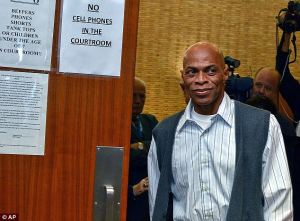
TALLAHASSEE — William Dillon didn’t believe the day would come when he would be compensated for sitting in a Florida prison nearly three decades for a crime he didn’t commit. But on Thursday lawmakers approved a $1.35 million payout that was immediately signed into law by Gov. Rick Scott.

Now 52, Dillon was cleared by DNA testing in the beating death of James Dvorak on a Brevard County beach in 1981. A jailhouse informant also has since recanted his testimony against Dillon and authorities reopened the murder investigation. Dillon was freed in November 2008.

The Senate voted 38-1 Thursday to compensate Dillon for spending 27 years in prison. The House passed it on a 107-5 vote last week.

Scott apologized to Dillon on behalf of the state for the wrongful conviction. “It’s a real honor to be the governor who is signing this bill,” said Scott, who shook Dillon’s hand and wished him well.

Dillon, now lives in Chapel Hill, N.C., where he writes and performs music. “It doesn’t give me back what was taken from me, but at the same time it’s such a joy to be here because my life was gone,” Dillon said. “I can’t do anything but look forward