Author: Claim Your Innocence

U will find on this website Death penalty news. Scheduled executions Inmates  cases (innocent or not) Books,  movies Studies  of psychology

South Carolina has no drugs left to execute Death Row cop killer


Novembre  29,  2017

A death row inmate is due to die in just two days on Friday 1 December – but the state of South Carolina has none of the drugs it needs to kill him.

Bobby Wayne Stone, now 52, was sentenced to death back in 1997 after he was convicted of murder and first degree burglary. On 26 February, 1996 Stone roamed the woods while drinking beer and shooting his guns – a shotgun and a pistol. At one point, he left off gunshots outside a woman’s home and then, when Sergeant Charles Kubala responded, shot three or four more times. Kubala, who was hit once in the neck and once in the ear, died at the scene.

After many years of legal wrangling, including appeals against his murder conviction and death sentence at the Supreme Court, Stone was finally given an execution date – Friday 1 December. But then he made a choice that may have saved his life.

Texas Death Row Inmate’s Execution Postponed Over False Testimony


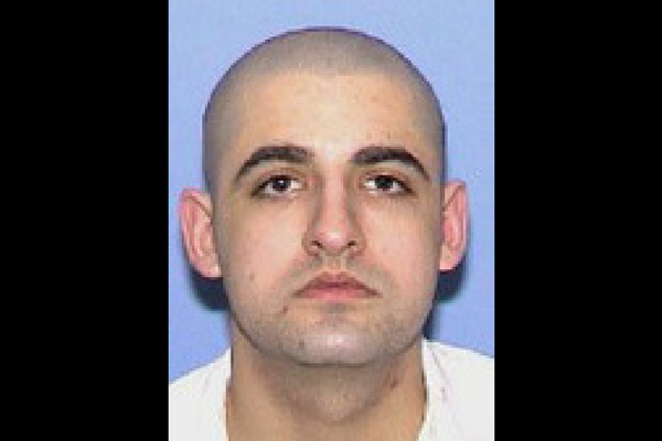
November 29,2017Juan Castillo - TEXAS DEPARTMENT OF CRIMINAL JUSTICE

Juan Castillo was scheduled to die on December 14, 2017. He was supposed to be the last prisoner on death row to be executed in Texas this year.

But on November 29, the Texas Court of Criminal Appeals delayed Castillo’s execution and sent his case back to trial court to reexamine false testimony used to convict him. 

Castillo, 36, was sentenced to death for the 2003 murder and robbery of Tommy Garcia Jr. in San Antonio. Castillo, his then-girlfriend, and two others had tried to lure Garcia with sex, and then steal his money. When 19-year-old Garcia ran away, Castillo shot him.

During his trial, Castillo’s former bunkmate at the Bexar County Jail, Gerardo Gutierrez, testified that Castillo had confessed to the crime. But in 2013, Gutierrez signed an affidavit saying he had lied about the confession.

Gutierrez’s false testimony is prompting the Texas CCA to pause the execution and further review Castillo’s case.

It’s not the first time Castillo’s execution date has been called off.

Previously, his Sept. 7, 2017 execution date was postponed at the request of the Bexar County District Attorney’s office because some of Castillo’s lawyers living in Harris County were impacted by Hurricane Harvey, according to the Texas Tribune. Castillo also had a prior execution date set back in May, but the date was postponed after Bexar County prosecutors failed to give sufficient notice to the defense, according to the Houston Chronicle

Texas has executed seven death row inmates in 2017, two of which were in Bexar County.

At least two other executions have been delayed in Texas this year because of issues over testimonies. Back in October, Anthony Shore, known as the “Tourniquet Killer,” had his execution date moved to January after he told prosecutors he had falsely planned to take responsibility for a fellow inmate’s murder.

Duane Buck, a Harris County death row inmate, had his sentence reduced to life in prison after the Supreme Court granted him the right to a retrial because a prison psychiatrist had told the jury in his 1997 trial that Buck would be more dangerous in the future because of his race.

U.S. Supreme Court rejects appeal of Alabama Death Row inmate convicted in 2007 slaying of parents


November 27,2017

Alabama Death Row inmate James Scott Largin

Alabama Death Row inmate James Scott Largin(Alabama Department of Corrections)

The U.S. Supreme Court on Monday said it won’t hear the appeal of an Alabama death row inmate who was convicted in the 2007 killings of his parents in Tuscaloosa.

James Scott Largin, 46, earlier this year had appealed to the U.S. Supreme Court a December 2015 ruling by the Alabama Court of Criminal Appeals upholding his conviction and death sentence.

On Monday the high court, without opinion, refused to review his case.

Largin was sentenced to death by a Tuscaloosa County judge in 2009 for his capital murder conviction in the deaths of his parents, Jimmy, 68, and Peggy, 56.

“Peggy and Jimmy Largin were at home on the night of March 15, 2007, when they were shot multiple times with a .22 caliber rifle and their bodies were thrown down the stairs leading to the cellar in their home. Autopsy results showed that both victims died as the result of close-range gunshot wounds to the head,” according to the Alabama Court of Criminal Appeals ruling.

“This Court has independently weighed the aggravating and the mitigating circumstances as required by (Alabama law) … We are convinced, as was the circuit court, that death was the appropriate sentence for Largin’s capital crimes,” the Alabama Court of Criminal Appeals stated in its order.

He was arrested after University of Alabama police found his parents’ car near the campus a few days after the murders, the Associated Press reported at the time.

A prosecutor at Largin’s original trial said Largin showed no remorse over the murders. The judge agreed with the jury’s recommendation that Largin be given the death penalty. His defense attorneys argued for life in prison without parole.

Death row inmate back in Newton County


Nov. 28, 2017

VINGTON, Ga. – Convicted murderer and death row inmate Rodney Renia Young was back in a Newton County courtroom Monday morning as his attorneys work to get him a new trial.

Young, 49, was convicted and sentenced to death by a Newton County jury in 2012 for the 2008 beating and stabbing death of 28-year-old Gary Lamar Jones in Jones’ Covington home.

According to media reports at the time, Young became enraged when Jones’ mother, Doris, moved to Georgia from New Jersey to live with her son after ending a seven-year relationship. She returned to the home on Benedict Drive around 11:30 p.m. March 30, 2008 and found her son bound to a chair, stabbed in the neck and bludgeoned with a hammer.

Young was arrested April 3 in Bridgeton, New Jersey by an agent from the Georgia Bureau of Investigations and an investigator from Newton County Sheriff’s Office.

During the hearing, attorneys from the Office of the Georgia Capital Defender and the American Civil Liberties Union questioned proportionality in the Georgia Supreme Court’s review of death penalty cases.

They also argued before Alcovy Judicial Circuit Judge Samuel Ozburn that Young’s constitutional rights had been violated during his 2012 trial because he wasn’t present at bench conferences that occurred during the trial and questioned the constitutionality of Georgia’s requirement that death penalty defendants prove intellectual disability beyond a reasonable doubt.

The attorneys said Young’s wearing of a “stun belt” during his trial also deprived him of the opportunity to participate in his defense and receive a fair trial.

Testifying about the “stun belt,” Young said wearing the belt made him feel uncomfortable and that he was unable to communicate with his attorneys.

“They told me I would get shocked if I moved,” he said.

Under cross-examination by Alcovy Judicial Circuit District Attorney Layla Zon, Young said he was never shocked during his trial. He also said he was never told he could not talk to his lawyers, nor did he ever communicate his discomfort with the belt during his trial.

Young was led into the courtroom at the Newton County Justice Center wearing his white Georgia Department of Corrections prison uniform and a blue jacket with a large white DOC on the back. His hands and feet were bound by handcuffs, leg shackles and a belly chain.

His lead attorney, Josh Moore of the Office of the Georgia Capital Defender, asked Ozburn to allow one of Young’s hands to be released from the handcuffs so he could take notes.

Ozburn gave Young’s attorneys 45 days to provide the law on the issue of proportionality review and the DA’s office an additional 45 days.

“It will be a few months at least before he rules on that motion and likely as well on the motion for a new trial,” Zon said. “If he grants the motion for a new trial we will have to try the case again.

“If he denies the motion then he (Young) can appeal to the Georgia Supreme Court.”

Layton lawmaker wants deeper look at Utah death penalty costs


November  27,  2017

A legislator is proposing an in-depth study of death penalty costs so the state will have unambiguous answers at hand as Utah’s capital punishment debate continues.

A bill filed by Rep. Stephen Handy, R-Layton, for the 2018 legislative session would order research of all costs associated with the prosecution and execution of a death penalty case and an expected 25 years of appeals. The data would be compared with the costs of a capital murder convict serving life without parole.

A legislative analyst in 2012 estimated a death penalty case cost $1.6 million more. But Handy said the study was very limited and did not consider all costs. Categories for the larger proposed study would include county and state prosecution and defense costs, plus court, jail and prison expenses.

The new study “doesn’t have to be pro or con death penalty,” Handy said, “but we hear in the Legislature that we should be making data-driven decisions. Let’s find out what it really costs, so when a (death penalty) bill comes up, we will be informed.”

Handy’s proposal comes as Wasatch Front counties continue to wrestle with the costs of death row appeals, such as Doug Lovell’s ongoing battle against his sentence in the 1985 murder of Joyce Yost of South Ogden.

Lovell’s court-appointed attorney for his current death penalty appeal squabbled with the Weber County Attorney’s Office over his payments, leading him to drop from the case last summer, according to previous coverage. Sam Newton was paid $71,500 by the county to represent Lovell in 2016, according to county financial records.

Newton’s replacement, Colleen Coebergh, has a contract for $100,000 to maintain Lovell’s indigent defense.

As capital appeals continue, “There is a very high emotional cost to the families and a cost to the taxpayers,” said Dave Wilson, a Weber County deputy attorney who helps coordinate public defender contracts.

The 2012 legislative study said more than two-thirds of a death penalty case’s costs are borne by the county government.

The U.S. Bureau of Justice Statistics says 33 states and the federal Bureau of Prisons held 2,881 inmates under death sentence at the end of 2015. Utah has nine inmates on death row today, said Maria Peterson, Utah Department of Corrections spokeswoman.

Handy said he realizes his request for a cost study may run against the grain in the capital punishment-friendly Utah Legislature, which reinstated the firing squad option for executions in 2015. Lawmakers also have rejected periodic bills that aimed to drop the death penalty.

Most law enforcement officials support the death penalty, Handy said, recalling an occasion when Weber County Sheriff Terry Thompson “came at me like a house afire” during a public discussion of capital punishment.

“People who are such ardent supporters, they don’t care” about the costs, Handy said.

“But I look at it also as trying to adhere to mainstream conservatism,” Handy said. “This may not be the best use of hard-earned taxpayer dollars, with the costs of education and social services growing exponentially.”

The death penalty “is certainly no deterrent,” Handy argued. He said he wonders “what purpose it has, except for payback or from a vengeance standpoint now.”

In an interview, Thompson challenged Handy’s views.

“Nobody says, ‘Gosh, I love the death penalty,’” Thompson said. “But it is important for the most egregious offenses, when lives are taken, changed forever, and people have to live without their loved ones.”

Consider Charles Manson, the sheriff said.

California prosecutors secured a death sentence against Manson, but after the California Supreme Court overturned the death penalty, the cult leader lived on in prison for the murders he masterminded in 1969.

As a “moral, ethical” matter, “It would have been appropriate to have the death penalty as part of the pending punishment,” Thompson said.

“The costs associated with following through with the death penalty, in my opinion, are irrelevant,” the sheriff said.

Utah’s abbreviated review in 2012 pegged the direct cost of an execution at the Utah State Prison at $195,000. And, it said, “For every offender executed before age 76, there is a projected $28,000 savings per year.”

“There need to be some teeth in our laws for them to be effective,” Thompson said. “I truly believe the death penalty does deter, in many cases that we’ll never know.”

Utah’s Death Row

Michael Anthony Archuleta, 55, re-sentenced Dec. 21, 1989

Douglas Stewart Carter, 62, re-sentenced Jan. 27, 1992

Taberon Dave Honie, 42, sentenced May 20, 1999

Troy Michael Kell, 49, sentenced Aug. 8, 1996

Ronald Watson Lafferty, 76, re-sentenced April 23, 1996

Floyd Eugene Maestas, 60, sentenced Feb. 1, 2008

Ralph Leroy Menzies, 59, sentenced March 23, 1988

Von Lester Taylor, 53, sentenced May 24, 1991

Douglas Lovell, 59, re-sentenced May 4, 2015

Source: Utah Department of Corrections

He’s one of Louisville’s most notorious accused killers. Now, his own life is on the line


November  24,  2017

He once boasted that he had killed 10 men.

Ricky Kelly also likened himself to Caesar, telling a fellow inmate in a secretly recorded conversation that he tried to “implement fear in people” to control them. “You do something real graphic in front of a mother f—–,” he said, “they don’t want that to happen to them.”

Former Commonwealth’s Attorney Dave Stengel called Kelly “the most frightening person I’ve come across in 30 years of law enforcement,” while former Louisville Metro Police Chief Robert White said his record shows a “total disregard for life.”

And a member of Kelly’s own crew, Tao Parker, told authorities that fellow dealers were so scared of him that he had a hard time finding anyone to sell him drugs.

Now, seven years after Louisville’s most notorious criminal was charged with complicity in eight murders, Kelly finally will go on trial for just one – allegedly shooting rival drug dealer Lajuante “Bebe” Jackson as he sat on his porch in the Sheppard Square housing project on Aug. 19, 2005.

he trial, set to begin Dec. 1 in Jefferson Circuit Court, could help close the books on a deadly time in Louisville fueled by wars over crack cocaine. It also should finally resolve a case that has taken a tortuous path through the criminal justice system and that has been marked by tragic irony.

First, after a county grand jury charged Kelly in the eight slayings – including that of federal witness Gail Duncan, who was shot dead by masked men in front of her daughter – the commonwealth dropped all charges, saying it feared for the safety of witnesses.

Kelly was then indicted in federal court, where the names of witnesses don’t have to be disclosed in advance, but only in connection with Jackson’s murder.

But the federal charges against Kelly and co-defendant Dion Dajuan Neal – who allegedly paid for the execution to protect a drug trafficking organization – were dropped after crucial eyewitness Greg Sawyers was gunned down in the street.

Now the case is back in state court, where Kelly is charged with murder for hire, though Neal is not charged at all.

Kelly’s lawyers, Mac Adams and Daniel Alvarez, say that it is illogical and that they will make the discrepancy a centerpiece of their defense.

“How can the commonwealth seek the death penalty based on the allegations that Kelly was paid when it is not prosecuting the man who allegedly paid him?” Adams asked. “What does that say about their proof – about their whole case?”

Prosecutors Elizabeth Brown Jones and Justin Janes declined comment on the evidence.

Judge Angela McCormick Bisig has ruled that it is up to the jury to decide both if Kelly committed the murder and was paid to do it. If convicted, Kelly could face the death penalty.

Kelly’s lawyers wouldn’t let him talk to a reporter. But in an unsolicited phone call last summer, the defendant, now 47 and jailed since 2015 on a $500,000 bond, professed his innocence and claimed prosecutors have intentionally delayed his trial because they know they can’t convict him.

In a motion he wrote and filed himself, he said, “The commonwealth’s case against defendant has been greatly exaggerated.”

There is no physical evidence tying him to Jackson’s murder, but the commonwealth hopes to use Kelly’s own words to convict him.

In a conversation surreptitiously recorded in 2010 by another inmate, Rico English, at the Green River Correctional Complex, Kelly described in graphic terms how he ended Jackson’s life.

“First shot hit him in the chest,” Kelly told English, who was wearing a body wire. “I dropped that mother——. Pop, pop pop. … I put 36 slugs in that n—–‘s face and stood on his head. The whole head collapsed.”

“The only way my name got involved,” Kelly added, “is that … I did it bare face.”

“Dion gave me $5,000” to kill Jackson, Kelly is heard saying on the recording made for the U.S. Secret Service and Louisville Metro Police.

Prosecutors in court papers indicate they will build their case with as many as 73 recordings made in various jails and prisons they say reveal his “consciousness of guilt” for the crime.

The commonwealth also has said it has as many as 20 “cooperators,” including witnesses such as Parker, the ex-crew member, who told investigators Kelly casually claimed Jackson’s murder, saying “Yeah, got his ass.”

The prosecutors’ star witness may be Francois Cunningham, an admitted killer placed in the federal witness protection program after he agreed to testify.

Cunningham faced capital murder charges himself but in exchange for a lesser sentence pleaded guilty to killing a couple in Fern Creek Park and burning their bodies. He told Louisville Metro Detective Denny Butler in 2011 that Kelly was a hit man who provided “muscle” for legendary drug dealer Reggie Rice, who died in 2014, and that Duncan and another government witness were among Kelly’s victims.

“He’d rather kill you than waste his time out there selling drugs,” said Cunningham, who also pleaded guilty in another killing in which the victim’s body was dumped in the Outer Loop Landfill.

But Cunningham provided no information about Jackson’s death, and Adams said the defense will try to block evidence about any of the seven other murders, to which Kelly pleaded not guilty and with which he is no longer charged.

Adams said the defense also will try to exclude any mention of the murder of Sawyers, who had told investigators he saw Kelly shoot Jackson and saw Neal pay for the hit. Sawyers was shot dead on East Broadway after surviving two previous attempts on his life.

Former prosecutors who aren’t involved in the case say evidence about the other killings would be admissible only to show motive or a “common scheme or plan” with Jackson’s murder.

Brian Butler and Kent Wicker, ex-prosecutors who are now criminal defense lawyers, also predict evidence about Sawyers’ death will be inadmissible unless the commonwealth presents substantial evidence tying Kelly to the crime. Another man was acquitted of Sawyers’ murder.

Adams and Alvarez in court papers dismiss the prison recordings as merely “jailhouse braggadocio.”

Butler said the defense will likely argue inmates often brag about violent acts – falsely – to enhance their credibility and maintain their safety, and try to show discrepancies between his account and the facts of the crime. Kelly, for example, boasted of firing 36 bullets into Jackson while an autopsy found only 22.

But Adams said he will try to show discrepancies in eyewitness accounts of the crime.

Christopher Lee Chalker, for example, told police he was at Jackson’s buying $20 of crack cocaine and described two shooters who bore no resemblance to Kelly.

The defense also will portray the prosecution’s cooperating witnesses as a rogues’ gallery of “murders, thugs and villains whose testimony was bought with sweetheart deals on their own charges,” Wicker said.

As one of Kelly’s former attorneys, Richard Kammen, put it: “They put out the word that if you pinned something on (Kelly), you’d get out of prison.”

Lajuante W. Jackson was 26, married and had one daughter when he was slain. His family did not respond to letters and other messages seeking comment for this article.

Records show Kelly was born to a 15-year-old mother, grew up in public housing in Beecher Terrace and Cotter Homes, and never met his father, who died when he was 3.

At Crosby Middle School, he was frequently absent or tardy and attended three classes for students with learning disabilities. He dropped out of Seneca High School.

Three of his cousins have been murdered and one of his brothers, Antwan “Pearl” Tolley, is serving 19 years in prison on federal weapons charges.

He told a psychologist that over the years he was shot in the arm and leg and “witnessed countless murders” of “friends that I know of. I’ve seen walkup killings that I refused to be a witness to… because you just don’t do that.”

Yet despite telling people he detested snitches, court records show he once tried to work off marijuana charges by setting up buys for police. His work produced two arrests before he quit, saying his life was threatened and he was “like scared.”Kelly was indicted for the first time as an adult in 1991, when he was 21, on drug-trafficking charges. Three years later, he was charged with attempted murder after he and one of his brothers, Terrell Gray, pulled up next to a truck at a KFC and opened fire, hitting a man inside. Charges against Gray were dismissed and Kelly, who pleaded guilty to wanton endangerment, got one year in jail.

In the prison recordings, Kelly is heard telling English that he ran his crew out of “The Spot,” a West End clubhouse furnished with a pool table and a hot tub and stocked with 40 cases of Bud, “Hennessy for myself” and a bowl full of condoms. The only women allowed were “paid strippers and prostitutes.”

But he had other uses for women. He told English he used them to lure men to be robbed or murdered, then paid them so that they wouldn’t implicate him.

“When you give a bitch money, you put blood on her hand,” he said, according to a tape transcript. “Can’t no bitch handle life” in prison.

Kelly was sentenced to 27 years in prison on an array of gun, drug, assault and persistent felon charges in 1998. After a failed parole, he was returned to custody and he served out his sentences in March, according to the Kentucky Corrections Department.

The seven other murders in which charges against Kelly were dropped remain unsolved, Metro Police spokesman Dwight Mitchell said.

If Kelly is acquitted of Jackson’s murder, he will walk out of court a free man.

KEY DATES

►Aug. 19, 2005: Lajuante W. Jackson, 26, is shot dead at 744 S. Clay St.

►July 7, 2010: Ricky Kelly, then 39, is charged with eight counts of complicity to murder for the deaths of Jackson as well as Gail Duncan on April 11, 1996; Deron Cole on July 24, 1996; John Sanders on Oct. 21, 1996; Charles Lewis on July 1, 1998; Blair Kidwell on July 3, 1998; Craig Jones on July 8, 2005; and Warren King on July 13, 2006. Kelly is also charged with trafficking in cocaine.

►November 2010: Greg Sawyers tells a federal grand jury he saw Kelly shoot Jackson and that Dion Dajuan Neal – Sawyers’ cousin – paid Kelly “10 stacks,” or $10,000, for the hit. Sawyers is released on home incarceration on a cocaine trafficking charge.

►March 25, 2011: All state charges are dropped, in part to protect witnesses, prosecutors said. Kelly and later Dion Dajuan Neal are charged with murder in aid of a drug trafficking organization under a federal anti-racketeering law. Neal is accused of paying Kelly for the hit.

►July 27, 2013. Sawyers, 34, is killed. Court records show he received a threatening letter in jail delivered by a friend of Kelly. Kelly wasn’t charged in connection with the threat or the killing. Orlando Gilmore is later acquitted in the murder.

Man on death row will get to argue for new trial


november  25. 2017

A man on death row for killing three siblings in Pennsylvania will get a chance to argue that his conviction was based on a flawed hair analysis.

The Pennsylvania Supreme Court ruled Wednesday that 62-year-old David Chmiel will have the opportunity to raise questions about the reliability of the forensic tests that led to his 2002 conviction.

A court justice wrote that Chmiel’s case warrants another look because the FBI has admitted testimony given by their hair examiners was wrong in a vast majority of cases.

Chmiel was originally convicted in 1984 and has appealed multiple times. His attorney hasn’t returned a voicemail seeking comment.

The decision sends the case back to a lower court in Lackawanna County, where Chmiel will get to ask a judge for a new trial.

Former Virginia death row prisoner to go free – Joseph M. Giarratano


A convicted double murderer who came within two days of sitting in Virginia’s electric chair will soon be a free man.

Joseph M. Giarratano, who won support from around the world fighting his 1979 conviction in the Norfolk slayings, was granted parole Monday.

“I’m confident there’s no other prisoner like him in the Commonwealth of Virginia,” said lawyer Stephen A. Northup, who represented Giarratano before the parole board.

Giarratano was a 21-year-old scallop boat worker when he confessed to killing his roommates, 44-year-0ld Barbara Kline and her 15-year-old daughter, Michelle. But his confessions were inconsistent with each other and with the physical evidence, which did not tie him to the crime. He later said that after waking up from a drug-induced stupor and finding the bodies, he simply assumed he was the killer.

His attempts to win freedom attracted the support of actor Jack Lemmon, singer Joan Baez and conservative newspaper columnist James J. Kilpatrick, among others. In 1991, Gov. L. Douglas Wilder granted Giarratano a commutation, changing his sentence from death to life and making him eligible for parole after serving 25 years.

However, Virginia Attorney General Mary Sue Terry declined to grant Giarratano a new trial, saying she was still convinced of his guilt.

n prison, the uneducated Giarratano taught himself the law and advocated for fellow prisoners. He helped secure representation for Earl Washington Jr., another death row inmate, who was eventually exonerated by DNA evidence.

Giarratano sought to have similar evidence tested in his case, but it had been destroyed by the time he was allowed to file such a request.

Adrianne L. Bennett, chairwoman of the Virginia State Parole Board, told the Richmond Times-Dispatch that the parole decision should not be read as confirming Giarratano’s innocence. While Northup is confident that his client did not commit the murders, he said he believes the Monday decision has more to do with a parole board that is more open than in the past to freeing prisoners who have behaved admirably behind bars.

Now, Northup said, Giarratano plans to move to Charlottesville and work as a paralegal with lawyer Steven D. Rosenfield. He also hopes to work with the University of Virginia Law School’s Innocence Project.