Month: December 2017

Convicted killer Bessman Okafor to get new sentencing next year


December 6, 2017

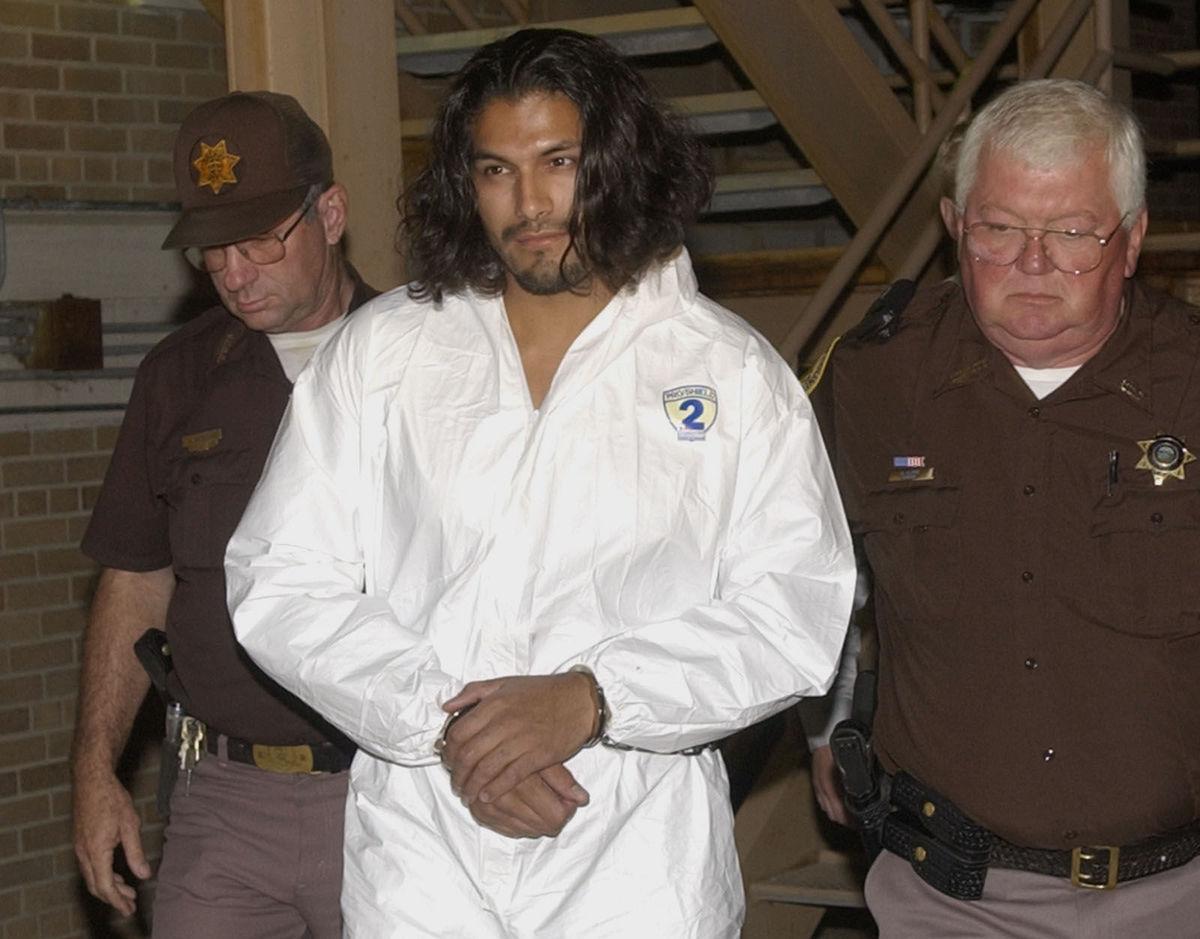
ORANGE COUNTY, Fla. – A convicted killer sentenced to death row went before a judge Wednesday as he begins the process to get a new sentence

Bessman Okafor killed Alex Zaldivar, 19, and wounded two others in 2012.

He has to be re-sentenced because the state Supreme Court ordered all death sentence decisions must be unanimous.

Read: Florida Supreme Court overturns death sentence for Bessman Okafor

Rafael Zaldivar, the victim’s father, said reopening this case is painful.

“Everybody has to relive this all over again. It’s like we never moved on. It’s a never-ending story,” he said.

The judge scheduled Okafor’s new sentencing phase for November of next year.

The sentencing should take two weeks, with the first for jury selection and the other for witness testimony.

Photos: Orange County inmates on death row

Okafor will go before an Orange County judge to get an attorney and schedule a new sentencing phase.

“It’s opening up old wounds. It’s terrible for our family,” Rafael Zaldivar aid.

Okafor was sentenced to death in November 2015 for killing Alex Zaldivar and wounding two others during an Ocoee home invasion in 2012.

The three were set to testify against Okafor in a separate home invasion before the killing.

Rafael Zaldivar said he thinks about his son every day.

“He was a good and loving son. Unfortunately, he barely passed his 18th birthday,” he said.

State law has changed since the previous jury voted 11-1 to send Okafor to death row.

Jurors must now all agree on the death penalty.

Rafael Zaldivar believes that will happen.

“I’m very confident they’re going to do it again,” he said.

Months after the Supreme Court ruling, Orange and Osceola County State Attorney Aramis Ayala announced she would not seek the death penalty during her tenure.

Read: Florida Supreme Court rules against Ayala on Scott’s reassigning of death penalty cases

Gov. Rick Scott then gave Okafor’s case, along with dozens of others, to State Attorney Brad King in Ocala.

“Out of the blue, we had to deal with Aramis Ayala, about her not applying the death penalty to our son’s case. So, it’s been difficult for us and we did not need that with everything going on,” Rafael Zaldivar said. “Thank God Gov. Rick Scott executed that order.”

Wrongly Imprisoned for Killing His Infant Daughter, a Father Could Go Free This Week


December 5,2017

The science on shaken baby syndrome, it turns out, was not actually sound and should not have been used for putting this father behind bars.

This story was originally published by The Chronicle of Social Change, a nonprofit news publication that covers issues affecting vulnerable children, youth and their families, and has been republished here with permission.

There was no doubt about the horror of the situation: A 4-month-old baby girl was dead.

The question facing the jurors was less clear-cut: Was the tiny girl’s death accidental, or had she been murdered by her own father?

On the afternoon of Nov. 24, 2001, in Sacramento, California, 18-year-old Zavion Johnson had called an ambulance. His baby daughter Nadia had been sleepy all day and then had stopped breathing.

Responding paramedics gave her CPR, pushed a breathing tube down her throat, and rushed her to the hospital. There, doctors discovered Nadia had terrible internal head injuries, including a fractured skull. Suspecting abuse, they called the police.

ohnson would later tell his family that earlier that morning, he had accidentally dropped Nadia while showering with her. The girl had hit her head on the back of the cast-iron bathtub but had seemed to recover. Questioned by police, the frightened teenager at first didn’t say anything about the accident. That impulse backfired horribly on him.

Nadia died two days later. On the day of her funeral, Johnson was arrested and charged with her murder.

At trial, Johnson’s lawyer told the court about the fall in the shower, and more than a dozen people testified that he was a gentle and loving father who had never mistreated the baby.

None of the prosecution’s witnesses said anything to the contrary. Instead, the deputy district attorney held up Johnson’s inconsistent statements as evidence of his guilt. The clincher, however, was the testimony of three medical experts, who all declared that the nature and pattern of Nadia’s injuries could not have been caused by a short fall, but only by violent shaking.

“This is a classic case of shaken baby syndrome,” Deputy District Attorney Chris Cosca told the jury. “We know that this little girl lost her life because of a brutally violent shaking, the violent acceleration-deceleration, the rotational injury, and the impact against a hard surface. That’s the only way it can be explained. And there is no way on earth that she suffered these injuries by virtue of a simple drop in the tub. No way.”

Johnson was convicted of second-degree murder and sentenced to 25 years to life. Sixteen years later, he is still in prison.

But it turns out Cosca was wrong.

In the past year, two of the key medical witnesses who supported the shaken baby diagnosis at Johnson’s trial have disavowed their testimony, and the district attorney’s office now supports Johnson’s attempt to have his conviction overturned. On Dec. 8, Johnson and his legal team are hoping to learn whether he’ll now be able to go home.

There used to something close to a medical consensus that certain patterns of injuries can only be caused by shaking. In particular, a “triad”—swelling of the brain, bleeding on the brain’s surface, and bleeding behind the retinas—was believed to be solid proof that a baby had been abused in this way. The theory was put forward in the early 1970s by doctors trying to explain the deaths of infants and children with no outward signs of abuse. The diagnosis soon became accepted as scientific fact and has since been used to convict hundreds of people of harming or killing children.

But over the past 20 years, a body of new research has shown how diseases, genetic conditions and accidents—including short falls—can produce the same constellation of injuries. As a result, faith in shaken baby syndrome is unraveling.

The American Academy of Pediatrics recommended in 2009 that doctors stop using the term. A 2015 investigation by the Washington Post found at least 16 shaken baby syndrome murder convictions that have been overturned.

Scores of other cases that collapsed before trial because of the doubts around the “triad” as evidence. One of those cases was another Sacramento County father convicted of killing his 4-month-old son.

Dr. Norman Guthkelch, a pediatric neurosurgeon who was one of the first to advance the hypothesis behind shaken baby syndrome, recently stated that it is “high time every case of a parent in [prison] for this had his or her case reviewed” because “we went badly off the rails … on this matter.”

“Our decision … was not a difficult one,” Chief Deputy District Attorney Steve Grippi wrote in an email. “Had the information currently available on the topic been available then, there is a reasonable probability that the outcome of the trial could have been different.”

That doesn’t mean Johnson goes free automatically; the DA could still ask for a retrial, though that seems unlikely. Johnson is now awaiting a judge’s order to let him go. After spending nearly half his life behind bars, he is hoping to be back with his family in time for Christmas.

There is no definitive accounting of how many people are prosecuted and incarcerated on the basis of this questionable science, but the number is certainly substantial.

database maintained by the Northwestern University’s Medill Justice Project, last updated in 2015, includes more than 3,000 shaken baby syndrome criminal cases in the United States over the past 20 years, though not all of them are still current. The Washington Post’s investigation estimated hundreds of parents and caregivers were being prosecuted each year, and tallied 1,600 convictions since 2001. At least three such convictions have landed people on death row, according to a recent New Scientist article.

The Innocence Project, a national network of advocates for prisoners who are wrongfully convicted, is reviewing about 100 cases involving shaken baby syndrome.

Some medical experts still support the use of the diagnosis, now more commonly called “abusive head trauma,” as at least one form of evidence that can help determine whether a child’s death was accidental or the result of violence. Nobody disputes that violently shaking a baby can injure or kill; the tricky part is figuring out whether that actually happened. And once someone has been convicted of lethal child abuse, convincing a court to undertake that task again is not easy.

The collateral damage for mistaking an accident for maltreatment can extend beyond a jail term. Parents accused of contributing to a child’s death can face the removal of all children from the home.

2010 study published in the journal Child Abuse and Neglect notes that “little data are available about what happens to these siblings after the victim’s death.” Using records from Oklahoma’s child fatality review, the study concluded that the presence of young siblings, previous maltreatment reports and the nature of the fatal incident were predictors of removal after a death.

In an essay published in the in the American Academy of Pediatrics News, two physicians argued that the recent controversy over shaken baby syndrome should not take away from correctly diagnosing cases of child abuse.

“Like the back-and-forth over childhood immunizations, this is a false debate,” Howard Dubowitz and Errol Alden wrote in the 2015 piece. “The truth is that child abuse, including abusive head trauma, is a real problem that terribly injures and sometimes kills children.”

From his cell in a state prison in central California, Johnson struggled for years to get judges to take another look at his case, filing appeal after appeal, to no effect. Finally, in 2014, he got in touch with the Northern California Innocence Project, where attorney Paige Kaneb took the case.

“I’d been on another shaken baby case, so I’m a bit obsessed with the issue,” she said.

Over the next couple of years, she gathered materials and got in touch with the experts whose testimony had sent Johnson to prison. In early 2017, two of them came declared they could no longer stand behind that testimony.

“I was following my training and experience, in conjunction with the consensus opinions at the time, in classifying Nadia’s death as having resulted from abuse,” wrote Dr. Gregory Reiber, the forensic pathologist who performed Nadia’s autopsy, in a letter to the court. “However … because of the significant changes in the understanding of childhood head injury that have developed since trial, my opinion about the cause of Nadia’s injuries has also changed.”

Nadia’s injuries, he now concluded, “are consistent with the accidental fall in the bathtub described by Zavion Johnson.”

University of California–Davis neuropathologist Claudia Greco also walked back her testimony, writing that the damage she focused on “does not prove that Nadia Johnson was violently shaken or that her injuries were intentionally inflicted.” A third expert who didn’t testify at trial but reviewed the case later also stated that Nadia’s injuries could have been caused by the fall Johnson described.

Kaneb and her colleagues filed a petition to have his conviction struck down. On Oct. 31, the district attorney’s office threw their support behind it.

Johnson is still in occasional touch with Nadia’s mother, but she now has two other kids and a fiancée, Johnson told me via a letter from prison. He’s gotten training as an electrician while locked up and wants to do community advocacy when he gets out.

“I’m excited and nervous, but scared of failing,” Johnson writes. “All the people that have helped me, I don’t want to disappoint anyone.”

He still thinks often about Nadia, whose picture he has tattooed on his chest.

“I can’t wait to visit her grave,” he writes. “I haven’t been able to do that yet.”

Attorneys seek to ensure Scott Dozier won’t be executed until 2018


December 5, 2017

A judge in Las Vegas kept a condemned prison inmate’s execution on hold Tuesday over concerns about a never-before-tried three-drug combination planned for use during Nevada‘s first execution in more than 11 years.

Clark County District Court Judge Jennifer Togliatti also said Tuesday that she wants to see written filings before she decides several other key issues.

With the Nevada Supreme Court expected to review the case and decide if Scott Raymond Dozier’s execution should go forward, Togliatti took no immediate action on a request by state and local prosecutors to reverse her Nov. 14 order halting the execution, which had been planned the same day.

State attorney general’s office lawyers say they’re drafting an appeal to the state high court of Togliatti’s order that the state Department of Corrections must remove a disputed paralytic, cisatracurium, as the third drug in a protocol using high doses of the sedative diazepam and the potent opioid fentanyl.

“You could have proceeded. He could be dead today,” the judge told attorney general solicitor Jordan Smith on Wednesday, noting that he said the state would appeal instead.

The judge added that she felt Supreme Court review of the three-drug cocktail will be important if the state wants to use it in future executions.

Togliatti canceled a Dec. 7 hearing, and made it clear that Dozier will have to wait at least several months for the execution he has said repeatedly he wants carried out.

She set a Jan. 17 hearing on a bid from the attorney general and Clark County district attorney’s offices to proceed using just diazepam and fentanyl. A medical expert witness called by federal public defenders challenging the case said those two drugs should be enough to kill the inmate.

She also is being asked to decide if federal public defenders should continue to represent Dozier in a review of the state’s proposed execution protocol.

Dozier, appearing by videoconference from Ely State Prison, did not say he wanted attorneys David Anthony and Lori Teicher to stop representing him.

Togliatti barely contained exasperation over what she termed “manipulation of the court process,” and asked the inmate if a flurry of filings in recent days meant he was asking for a “do-over” of the lengthy proceedings that began in July and required almost daily action in the run-up to the scheduled execution date.

Dozier called the months of hearings that made his case a topic of national interest “vital,” noted that they led to revisions of the protocol, and said he feels now “like I had to take a less-than-ideal option because that was the only option available.”

Dozier, 47, has been on death row since 2007 for convictions in separate murders in Phoenix and Las Vegas.

Jonathan VanBoskerck, a chief Clark County district attorney, has said that local prosecutors have an interest in seeing the penalty that Togliatti imposed 10 years ago carried out. He said Tuesday that other arguments are irrelevant since Dozier is not challenging his sentence or the process.

“The bottom line is it’s his choice,” VanBoskerck told the judge.


RELATED | Condemned inmate Scott Dozier complains of death penalty delay


Shreveport man freed from death row files suit in hopes ‘injustice never happens again’


December 5, 2017

SHREVEPORT — The lawsuit filed by former death row inmate Rodricus Crawford is about more than justice for Crawford; it’s about getting Caddo Parish officials to change their death-penalty-dealing ways, one of the now-freed man’s attorneys said during a recent interview.

“Rodricus seeks justice not only for himself and for all that he lost, but also for people who might – God forbid – face similar circumstances,” Crawford’s attorney David J. Utter, counsel with The Claiborne Firm in Savannah, Georgia, said during a Louisiana Record email interview. “This lawsuit provides parish and city officials do the right thing by examining what went wrong in Rodricus’ case, and instituting checks and balances to ensure such an injustice never happens again.”

Those checks and balances were severely lacking when a Caddo District Court jury handed down the capital punishment sentence the following year against the Shreveport man in the 2012 death of his 1-year-old son Roderius “Bobo” Lott, according to Crawford’s lawsuit.

“Mr. Crawford was convicted and sentenced to death based upon false evidence as a result of the failure of Defendants to conduct an unbiased autopsy based on professional standards of practice, and to properly train and supervise prosecutors in Caddo Parish,” said the lawsuit filed Nov. 16 in U.S. District Court for Louisiana’s Western District.

“Because of the lack of training and supervision and adherence to professional standards, the prosecution was illegally based upon both race and religion, and a complete indifference to the evidence. In addition, Mr. Crawford raises state law negligence and intentional infliction of emotional distress claims; but for the reckless and willful conduct of defendants, Mr. Crawford would not have been prosecuted let alone convicted of capital murder.”

In his lawsuit filed on behalf of himself and his minor daughter, Crawford claims he did not receive his constitutionally guaranteed right to a fair trial. Named defendants in the case include Caddo Parish Coroner’s Office, Caddo Parish District Attorney’s Office, Caddo Parish District Attorney James Stewart, former Caddo Parish District Attorney Dale Cox, Shreveport Fire Department and Coroner James Traylor. Crawford’s lawsuit asks for a jury trial.

The Caddo Parish District Attorney’s office did not respond to a Louisiana Record request for comment.

“Defendants knowingly participated in the investigation, arrest and capital prosecution driven by Caddo Parish, Louisiana’s well-known history of racism and the arbitrary application of the death penalty,” Crawford’s lawsuit said. “But for Defendants’ actions, no prosecution and conviction of Mr. Crawford would have occurred.”

Crawford was taken into custody after bruises and other injuries were discovered on the child’s body. Crawford reportedly told police his son had fallen in the bathroom and Crawford consistently maintained that he had never harmed his son.

His attorneys also consistently maintained that the jury relied on bad forensic science, and pointed to strong medical evidence that the child was suffering from pneumonia and died of sepsis.

“The conduct of the officials in this case, particularly the coroner Dr. Traylor and the prosecutor, were particularly egregious, outside the norm of a mistake or error,” Utter said. “There was intentional misconduct.”

By the time Crawford’s conviction was overturned by the Louisiana Supreme Court in November 2016, Caddo Parish juries were widely noted for having sentenced five people to death in six years, 38 percent of the state’s total death sentences.

The state’s highest court ordered a new trial for Crawford after finding serious issues with the case, including unconstitutional exclusion of black jurors. Louisiana prosecutors dropped charges against Crawford this past April and he was freed soon after that.

“As the result of Defendants’ unconstitutional, negligent and intentional acts, Mr. Crawford spent 4 years, 9 months, and 6 days illegally in custody,” Crawford’s lawsuit said.

Utter credited Baton Rouge lawyer Cecilia Trenticosta Kappel, his co-counsel in Crawford’s lawsuit who is active with the Capital Appeals Project and the Promise of Justice Initiative, for much of the work done to exonerate Crawford.

“Cecelia is the real hero amongst the lawyers on the case,” Utter said.

Crawford’s lawsuit is necessary to get defendants and others to do the right thing, Utter said.

“Unfortunately, many innocent people who spent time in jail or prison have to file a lawsuit before officials will do what is right,” Utter said, referring to the overturned murder conviction of Sabein Burgess in Maryland.

“Rodricus only filed because the officials responsible for this miscarriage of justice failed to apologize and offer to discuss a settlement that provided justice to him, his family and ensure something like this never happens again in Shreveport,” Utter said.

ACLU files lawsuit on behalf of death row inmates against Ricketts, Corrections Department


December 5, 2017

Sandoval

ACLU of Nebraska filed a lawsuit Monday on behalf of death row inmates that claims the ballot initiative that stopped the state Legislature’s 2015 repeal was illegal.

The complaint is an attempt to stop any executions, or even steps toward an execution, of the men on Nebraska’s death row.

Death row inmate Jose Sandoval said last week he intends to fight the execution. At that time, he had no ongoing legal actions or appeals in federal or state courts.

“My reaction to the notice (of lethal injection drugs) was not a surprise. I’ve been expecting it for a year now,” Sandoval said. “I intend to fight with the help of my attorneys — Amy Miller and company.”

The ACLU confirmed Sunday that Miller, its legal director, has been in contact with Sandoval, who was notified Nov. 9 of the state’s intention to execute him with four specified lethal injection drugs. The organization is preparing to announce the scope of its representation of Sandoval early this week, it said.

The four drugs in combination that would be used in Sandoval’s execution, if it takes place, have never been used to execute a person.

The complaint charged the ballot initiative violated the Nebraska Constitution’s separation of powers. It said Gov. Pete Ricketts was the driving force behind the 2016 referendum, exploiting government staff, resources and his own elected position to raise money for the ballot initiative and to persuade voters to support it.

“In Nebraska, our state Constitution … establishes a strong tradition with a clear separation of powers,” ACLU Executive Director Danielle Conrad said Sunday. “The governor can’t have it both ways and serve both as a member of the executive and legislative branches.”

The petition drive got underway in 2015 and the sponsoring group, Nebraskans for the Death Penalty, gathered 167,000 signatures, enough to stop the repeal from being in effect until a vote in November 2016.

The Legislature had voted to repeal Nebraska’s death penalty with a bill (LB268) that passed on a 32-15 vote. Ricketts vetoed the bill and then the Legislature voted to override the veto on a 30-19 vote that cut across party lines.

Shortly after that, Nebraskans for the Death Penalty was formed and raised just over $913,000, a third of it contributed by Ricketts and his father, Joe Ricketts.

The governor’s actions pose important legal questions with grave consequences, Conrad said.

She said the end result of those actions was the restoration of a “broken” death penalty that is racially biased, risks execution of innocent people and raises constitutional concerns about the Eighth Amendment’s prohibition against cruel and unusual punishments.

Ricketts’ office responded in a statement issued Sunday evening.

“The Governor’s Office holds itself to a high standard and follows state law regarding the use of taxpayer resources,” said Taylor Gage, the governor’s spokesman. “This liberal advocacy group has repeatedly worked to overturn the clear voice of the Nebraska people on the issue of capital punishment and waste taxpayer dollars with frivolous litigation. The administration remains committed to protecting public safety and creating a safe environment for our Corrections officers.”

The ACLU lawsuit — filed on behalf of death row inmates against Ricketts, Treasurer Don Stenberg, founders of Nebraskans for the Death Penalty, Attorney General Doug Peterson, the Department of Correctional Services and Director Scott Frakes — asked the court to immediately stop all preparations for executing Sandoval and the other 10 men on death row.

Peterson plans to ask the Nebraska Supreme Court for a death warrant after 60 days following the notification of drugs that would be used.

That ACLU complaint said that as the governor, Ricketts’ power over the repeal bill ended when the Legislature overrode his veto.

It claimed the subsequent ballot initiative should not stand, as it was the result of repeated, extensive and illegal abuses of the governor’s power. The state’s constitution reserves ballot initiatives as a legislative power for the people to use as a check on the legislature, and it further prohibits anyone in one branch of government from exercising powers over another branch, the ACLU said.

Ricketts encouraged or ordered members of the executive branch and his allies in the Legislature and local governments to work for the referendum campaign or to express public support for it, the complaint said.

For example, Stenberg was simultaneously a leader of the campaign in the first few months, serving as co-chairman with Sen. Beau McCoy, the ACLU charged. In the middle of the campaign, Ricketts rewarded Jessica Flanagain, the campaign manager and coordinator, with a publicly paid position in the government as special adviser to the governor for external affairs, with a salary of $130,000, the complaint alleges.

The lawsuit also noted that Nebraskans for the Death Penalty made an error that invalidated the referendum by failing to submit sworn statements from its sponsors, as required by law to assure the sponsors’ names aren’t fraudulent and assure transparency in the working of ballot campaigns.

Previous litigation more narrowly alleged the referendum petition was not legally sufficient because a list of sponsors filed with the petition did not include the name of Ricketts, who it claimed engaged in activities that established that he was a sponsor of the referendum. The district court dismissed the complaint. The Supreme Court affirmed, holding Ricketts’ alleged financial or other support of the referendum did not make him a person “sponsoring the petition.”

Maslon gets inmate off Texas death row


December 5, 2017

Witness by witness, statement by statement, inkling by inkling, a pro bono team at Maslon put together a habeas corpus case that got its client off death row in a Texas prison.

Douglas Tyrone Armstrong was not exonerated of a murder he says he didn’t commit, but he will get a new punishment hearing and will be removed from death row, where he has been in solitary confinement for all but 10 hours per week for 10 years. He was represented by Maslon’s pro bono committee chair Julian Zebot, Catherine Ahlin-Halverson, Michael McCarthy and Nicole Narotzky. Many others were involved in the case during the 11 years the firm worked on the case.

The Texas Court of Criminal Appeals, in a 5-4 opinion, determined that Armstrong’s defense counsel failed to conduct a constitutionally adequate investigation of mitigating evidence. The lower court also found that the defense failed to investigate, but that Armstrong was not prejudiced thereby.

The team has brought other habeas issues that are yet to be resolved, i6ncluding Armstrong’s claim of actual innocence.

“Tyrone has consistently proclaimed his innocence,” Zebot said. His trial lawyers were ineffective at the culpability phase as well as the punishment phase — “essentially he didn’t get much of a defense at all.”

He added, “We are going to fight for the client’s complete exoneration.”

The eyewitness testimony changed several times during the process, shifting in a direction unfavorable to Armstrong, he said. Additionally, the physical evidence doesn’t match up to the rest of the evidence, he said.

Wiggins standard

The Texas court relied on Wiggins v. Smith, a 2003 Supreme Court opinion where the court said that the standard of review is whether counsel’s investigation was reasonable under prevailing professional norms, including a context-dependent consideration of the challenged conduct as seen from counsel’s perspective at the time. It’s unusual for a court to grant relief under Wiggins, Zebot said.

Maslon lawyers dug deeply into Armstrong’s history and presented additional evidence of his disadvantaged background and entirely new expert testimony with respect to his mental state at the time of the offense, not evidence that was essentially more of the same character of evidence presented at trial. A Wiggins claim is not barred by the presentation of some mitigating evidence by the trial counsel, if the habeas counsel provided new evidence that demonstrated a reasonable probability that at least one juror would have held out against the death penalty, the court said.

The most compelling evidence to the Texas court appeared to be the new mental health evidence, and it relied primarily on that to conclude that there was a reasonable probability of a different outcome had that evidence been available.

But to get to that expert testimony, the lawyers needed to develop more lay testimony, mostly from Armstrong’s family. They interviewed witnesses and were assisted by a mitigation investigator. They looked for school and medical efforts but most of them had been destroyed.

“The family was so brave in sharing their stories. They were willing to offer this really traumatic history to the experts and the court,” Ahlin-Halverson said. “You’re asking people to share extraordinarily painful personal history.”

“You could hear a pin drop when the family was testifying. It was absolutely riveting,” she said.

The lawyers and investigators worked to establish trust over time, Ahlin-Halverson continued. “The first time we met with the family members we didn’t learn everything. Every time we spoke with them we got a deeper and more comprehensive understanding.

“To me, the most important thing we did was stick with them, and be where we said we would be so they could learn to trust us.”

Critical to the success of the case is the strong internal team at Maslon.

“We had so many attorneys, paralegals and staff running around in different directions, gathering affidavits. The case was going to rise or fall on the strength of the people working on it,” Zebot said.

“It demonstrates Maslon’s commitment to pro bono. We literally spent thousands of hours,” Zebot said. It was also a significant financial commitment, he added.

History of abuse

The family member’s testimony included accounts of physical abuse endured by all the children, including Armstrong. Armstrong was frequently locked in an empty room for days at a time, with no food or access to a bathroom. The parents were alcoholics and both beat the children with some kind of tool. Armstrong was beaten in the head.

His siblings also learned to physically abuse him. Armstrong and his sister were the only siblings who had the same father, and he raped the sister, resulting in a pregnancy. There were other instances of sexual abuse in the family. Additionally, the parents spent all their resources on alcohol and never bought food for the children. The family moved constantly because the parents did not pay their rent. Armstrong was introduced to alcohol by his brother at the age of five.

Neuropsych evaluation key

The experts were Dr. Phillip D. Harvey, a clinical psychologist in the field of study and diagnosis of cognitive impairment; and Dr. Robert Lee Smith, a forensic psychologist and addiction specialist.

Harvey’s neuropsychological evidence was the “linchpin” of the court’s opinion, Ahlin-Halverson said. His diagnosis was borderline intellectual functioning and acquired dementia. The dementia was likely caused by substance abuse, repeated traumatic brain injury and extreme life stress, he said. Those symptoms were fully formed by the time of the murder for which Armstrong was convicted.

Smith diagnosed Armstrong with dysthymic disorder (long-standing depression), substance dependence and personality disorder-not otherwise specified. He attributed the dysthymia to environmental factors in Armstrong’s past.

The absence of psychological evidence was prejudicial, the court determined. The court could not determine that the state’s evidence would clearly outweigh the totality of the mitigation evidence, the court concluded.

Armstrong is incredibly grateful to his lawyers, Ahlin-Halverson said. He speaks of his love for his family often, she said.

At some hearings the judge has allowed Armstrong to greet and hug (unshackled) each of his family members, including his son. “That really brings it home, what he’s been through,” Zebot said.

“You’d have to have a heart of stone not to be moved,” Ahlin-Halverson said.

After 22 years, Ernesto Martinez convicted of Blythe murder during deadly road trip


December 4, 2017

Twenty two years ago, a desperate man stepped into the Day & Nite Mini Mart in Blythe, pulled a gun, demanded money and shot the clerk behind the counter. Then he grabbed the cash and fled.

That killer, a jury said, was Ernesto Salgado Martinez.

Martinez, 42, was convicted Monday of murdering Randip Singh, a shopkeeper who was gunned down during a deadly road trip to Arizona and back in 1995. The verdict, which took three-and-a-half days to reach, brings closure to one of the longest and most convoluted prosecutions in the recent history of Riverside County. Martinez’s verdict was confirmed by John Hall, a spokesman for the District Attorney’s Office.

Martinez, who was only 19 at the time, drove from Indio to Arizona to visit his family members, then was pulled over by a highway patrol officer along the Beeline Highway. Martinez shot that officer, Bob Martin, then fled back to California, where he crossed the state line and ran out of gas in Blythe. Prosecutors say Martinez then robbed the mini-mart, shooting Singh when he refused to empty the register.

During closing arguments last week, Deputy District Attorney Chris Cook said there was “overwhelming” evidence that Martinez was fleeing from one murder and killed again to keep running.

“The thing standing between him and getting home to Indio – a place of safety, family and familiarity – was Randip,” Cook said. “He was out of options and out of gas. He had just killed a police officer, he had to get home.”

“And he had a gun.”

Martinez, who taught himself law during two decades behind bars, acted as his own attorney during a six-week trial. In his own closing arguments, he accused witnesses of changing their stories and implied that a key piece of the evidence – a bullet casing – had been planted. He told jurors the prosecution’s case had “insulted their intelligence.”

“They are not asking you to decide this case based on the evidence. They are asking you to decide this case based on prejudice,” Martinez said.Martinez was also on trial for attempted murder, accused of stabbing his cell mate, Leroy Gutierrez, 50 times in 2011. Martinez argued that the stabbing was self defense, and jury acquitted him of the attempted murder charge on Monday.

The murder case will now proceed to the sentencing phase, at which prosecutors plan to seek the death penalty. However, regardless of how Martinez is sentenced, once the decision is made he will be returned to Arizona, where he has already received the death penalty for killing Martin, the highway patrol officer. Even if Martinez is sentenced to death in California, Arizona will still get to kill him first.

After the Blythe shooting, police captured Martinez during a standoff in Indio. Martinez was prosecuted in Arizona first, where he was convicted of killing Martin in 1998. Twelve years later, in 2010, local prosecutors had Martinez pulled off of Arizona Death Row and brought to Riverside County to be tried for Singh’s death. Now back in California, Martinez fired his public defender and became his own attorney. His case then took seven years to get to trial, in part because of Martinez’s talent for filing and arguing pre-trial motions.

“He is incredibly dangerous because he is so bright,” District Attorney Mike Hestrin said of Martinez in 2015. “I would like to get him out of our system and out of our jail. And one of the ways to do that is to get this case to trial as quickly as possible.”

Miami mom is on trial a third time for the torture and murder of ‘Baby Lollipops’


December  4,2017

For the third time, a jury heard about Baby Lollipops’ short and tragic life — and the details remained just as ghastly now as they did in 1990, when his body was discovered in the bushes of a Miami Beach home.

The skeletal, malnourished 3-year-old weighed just 18 pounds. His soiled diaper was duct-taped onto his filthy body. His cheek bore a burn mark, likely from a cigarette.

Two teeth were knocked out, taking out a portion of his jaw. Blow after blow, inflicted month after month, eventually left his tiny body battered. He was unable to walk, his skull was fractured, his brain stem severed.

“His left arm was so badly injured that the muscle from the elbow to the shoulder had fused into the bone making it impossible for this young child to extend his arm,” Miami-Dade prosecutor Christine Hernandez told jurors on Monday.

Lazaro Figueroa died an unimaginably horrible death. And to blame, prosecutors allege, was his own mother, Ana Maria Cardona, who beat and abused her youngest child over months.

“This young baby was the subject of her hatred, this baby was the target of her rage,” Hernandez told jurors.

The start of the trial Monday marks the third time Cardona has faced a jury for the November 1990 murder of little Lazaro, whose corpse was discovered dumped outside a home in Miami Beach.

As detectives hunted for his killer and identity in a case that captivated South Florida, they dubbed him “Baby Lollipops” for the design on his shirt. Homicide detectives soon arrested Cardona, a cocaine addict who had lived in a Miami efficiency with her two other children and lover, Olivia Gonzalez.

Cardona’s defense team on Monday shifted the blame.

“We’re going to bring you testimony that while Olivia Gonzalez was serving time in prison, she bragged that she was the one who hit the child over the head with a baseball bat and killed him,” Miami-Dade Assistant Public Defender Manuel Alvarez said.

Jurors will not hear that twice before, Cardona was sent to Death Row after convictions for first-degree murder and aggravated child abuse.

Lazaro Figueroa died an unimaginably horrible death. And to blame, prosecutors allege, was his own mother, Ana Maria Cardona, who beat and abused her youngest child over months.

“This young baby was the subject of her hatred, this baby was the target of her rage,” Hernandez told jurors.

Death Sentence Commuted to Life For William Gregory, Double-Murderer of Flagler Beach


December 4, 2017

The murders happened on August 21, 2007, at a house on John Anderson Highway in Flagler Beach. William Gregory, 24 at the time, walked in on his ex-girlfriend Skyler Dawn Meekings, 17, and her boyfriend of two months, Daniel Arthur Dyer, 22, as they slept together, and shot them both at close range with a shotgun. A 1-year-old child Gregory had with Meekins was sleeping in a bedroom nearby.

He was tried, found guilty, and in 2011, sentenced to death in the culmination of a case that had drawn such notoriety locally that it was moved to Volusia County. It eas tried before Circuit Judge William A. Parsons.

But the jury’s recommendation for death in 2011 was by the slimmest possible margin of 7-5, back when Florida was one of just two states that still allowed death sentences to be imposed after less than a unanimous jury verdict. That changed less than two years ago, when U.S. Supreme Court and Florida Supreme Court decisions found Florida’s method of sentencing defendants to death unconstitutional.

Recommendations must now be unanimous. In Gregory’s case, the Supreme Court in August threw out his death sentence and returned the case to circuit court in Flagler County for a new sentencing phase.

That would have meant an elaborate process, similar to a trial, involving pre-trial hearings, the impaneling of a jury, the questioning of witnesses at a sentencing hearing
and jury deliberations. In other words it would have meant bringing back Meekins’s family to relive those events again.

It would have also raised other procedural issues Gregory’s attorney raised in 2016, claiming there would have been grounds for a mistrial in the original case.

William Gregory at his latest booking at the Flagler County Jail in November.

William Gregory at his latest booking at the Flagler County Jail in November.

Monday morning, Circuit Court Judge Dennis Craig commuted Gregory’s death sentence to life in prison without parole on both counts.

“We looked at the case and and consulted with the family,” Assistant State Attorney Jason lewis said. “They did not want to go through the process again.” So the prosecution agreed to a commutation in what amounted to a hearing lasting all of five minutes. Gregory had been brought in from his death row cell at the state prison near Raiford.

“We’d have to basically do a whole new penalty phase,” Lewis said, “and we take the family’s wishes very seriously. That’s what they wanted.”

The families’ positions were no mystery, as Daniel Dyer’s big sister had expressed it in her statement to the court before the 2011 sentencing: “The worst thing about Dan’s death,” she wrote, “is the way he died. He didn’t die in an accident or a health condition. He was murdered by a cowardly little twit. He was such a coward that instead of confronting Dan, like a real man, he crept in the dark into Skyler’s room, and shot them both in the head while they were asleep. The wounds were so horrible that we couldn’t even have an open casket for Dan so we could see him one last time.”

She had asked for the death penalty. “He had the right to a judge and jury,” she’d written, “but what about Dan and Skyler’s rights? They had no judge, no jury, only a 12-gauge shotgun to the head while they slept.” Using Gregory’s nickname, she went on: “And what has Billy done this entire time? He shows no remorse, no sorrow, he just sits there, so arrogant, that somehow he thought he ws smart enough to get away with it, that he had the right to play God and kill 2 innocent people. Foe what? The simple fact that Skyler had left him for a real man.”

The families of the victims were not in court this morning. But Skyler’s aunt Deborah Meekins had written the court six years ago that while she had never been much for the death penalty, “what I do know–Billy is all for it. Billy sentenced Skyler and Dan to the death penalty, right there, that night, as they slept together alone for the first time.”

Skyler’s father, Hap Meekins, had written of his daughter in 2011: “Skyler was very talented. A straight-A student with ambition. But the thing that I remember the most was her dedication toward anything she did. Being the youngest of three girls did not matter. Like the summer she spent fishing on the Pier. The three girls would spend hours fishing for King Fish. She caught a 30-lb. King Fish which didn’t go over well with her sisters. She never minded getting her hands dirty whether it was fishing, playing soccer, or helping me with the garden. She was very unselfish; she would help me [with] anything I asked.” And he’d concluded: “My memories will keep me going for the rest of my life. I love you Skyler always and forever. No one can take that away.”

Ohio Supreme Court to hear local man’s death penalty appeal


December  4,  2017


COLUMBUS, Ohio — On Tuesday, the Ohio Supreme Court is to preside over a legal debate over whether the death penalty should be executed on a young Clayton man – the second youngest on Ohio’s Death Row – for the murder of an even younger Warren County man at his home outside Waynesville in January 2014, according to the Journal-News.

Warren County Prosecutor David Fornshell will personally argue for the state to continue forward toward the execution of Austin Myers, now 22, of Clayton, although another Clayton man, Timothy Mosley – like Myers 19 years old at the time – actually stabbed to death Justin Back, 18, a 2013 Waynesville High School graduate about to enter the U.S. Navy.

“Austin Myers killed Justin. Tim was his weapon of choice,” Fornshell said last week, quoting Back’s stepfather, Mark Cates, a local prison guard.

It will be Fornshell’s first appearance before the high court on behalf of Warren County.

Lawyers appointed to appeal Myers’ death sentence have identified 18 violations of law they claim should convince the state’s high court to set aside his death sentence, including his age and the lesser sentence – life in prison without paroleMosley received in exchange for his testimony.

Three years later, Myers is still the second youngest of 140 Ohio prisoners facing the death penalty. Damantae Graham, 20, convicted of killing a Kent State University student, is the only one younger.

Myers’ lawyers also claim errors or misconduct by the judge, prosecutors and defense lawyers in the case, decided more than three years ago in Warren County Common Pleas Court, should convince the high court, including appointed Judge Cynthia Westcott Rice of Ohio’s 11th District Court of Appeals, to spare his life.

“Mr. Myers’s rights under the Constitution of the United States and the Ohio Constitution were violated and he was denied a fair trial and sentencing proceeding. Accordingly, this Court should reverse and discharge the defendant or grant a new trial. In the alternative, this Court should vacate the death sentence, remand for a resentencing hearing, and order the life sentence imposed,” lawyer Timothy McKenna said in his brief to the high court.

The appeal, pending since Oct. 27, 2014, was set for oral arguments on Oct. 20, after a second Ohio Death Row inmate was executed. These came after the postponement of scheduled executions starting in January 2014 following problems during the execution of Dennis McGuire, a Preble County man.

Rice was appointed to the high court on Nov. 6, replacing Justice Bill O’Neill, who recused himself after announcing he was running for governor.

The case

Myers and Mosley were arrested in July 2014 after Back’s mutilated body was found in Preble County, in a wooded area outside Versailles known as Crybaby Bridge. They both gave statements during interrogation at the Clayton Police Department used by investigators in reconstructing the crime, according to police and court records.

According to their statements, Mosely’s testimony and other evidence, after a day of preparation and planning, Myers and Mosley went to Back’s home in a small neighborhood along the Little Miami River, east of Waynesvile. With a garrote – fashioned by a friend who was not charged – Mosley came up behind Back and began choking him, while Myers restrained Back. When the garrote caught on Back’s chin, Mosley pulled out a knife and stabbed Back to death.

After cleaning the home and stealing Back’s iPod and wallet, as well as a gun and safe belonging to Cates, Mosley and Myers removed Back’s body, dumping it in Preble County after dousing it with chemicals to quicken decomposition. Before leaving the body, Myers shot it twice with Cates’ gun.

At trial, prosecutors convinced the jury that Myers was the mastermind of the crime and he was sentenced to die. Mosley, in exchange for his testimony, was sentenced in a plea bargain to life without parole.

The issues

Mosley was represented by Dennis Lieberman, a lawyer hired by Mosley’s family. Myers was represented by Greg Howard and John Kaspar, appointed by the court.

But Fornshell said Mosley got the deal because – unlike Myers- he offered to cooperate. Prosecutors needed one or the other to “put in the back story,” Fornshell said.

In addition, Fornshell said Mosley accepted responsibility and Myers was “exponentially more dangerous,” pointing to evidence indicating Myers handled the bulk of the planning and wanted to go back and kill Cates.

He’s a serial killer who got caught the first time,” Fornshell added.“There is absolutely no doubt in my mind.”

McKenna and co-counsel Roger Kirk did not respond to requests for interviews.

But their 110-page brief indicates they will emphasize Myers “was a 19 year-old immature adolescent with behavioral issues” who should be spared the death penalty, in part because Mosley’s sentence spared his life, although he wielded the murder weapon.

In addition, they claim prosecutors rendered Myers’ lawyers “admittedly ineffective” by withholding evidence until “on the Friday eve before the Monday trial,”as well as the fact that Mosley was to be a witness.

The appeal

The appeal is to be the first of a series of cases heard on Tuesday and Wednesday.

All arguments are streamed live online at sc.ohio.gov and broadcast live and archived on the Ohio Channel, according a release from the high court.

The court typically issues opinions within six months, but it was unclear when a decision would be issued in this case.