The death penalty carries the inherent risk of executing an innocent person. Since 1973, at least 195 people who had been wrongly convicted and sentenced to death in the U.S. have been exonerated.
Innocence Database source (deathpenaltyinfo)
Former Oregon Death Row Prisoner Freed 2 Years After Reversed Conviction, 194th Death Row Exoneration
Sep 08, 2023
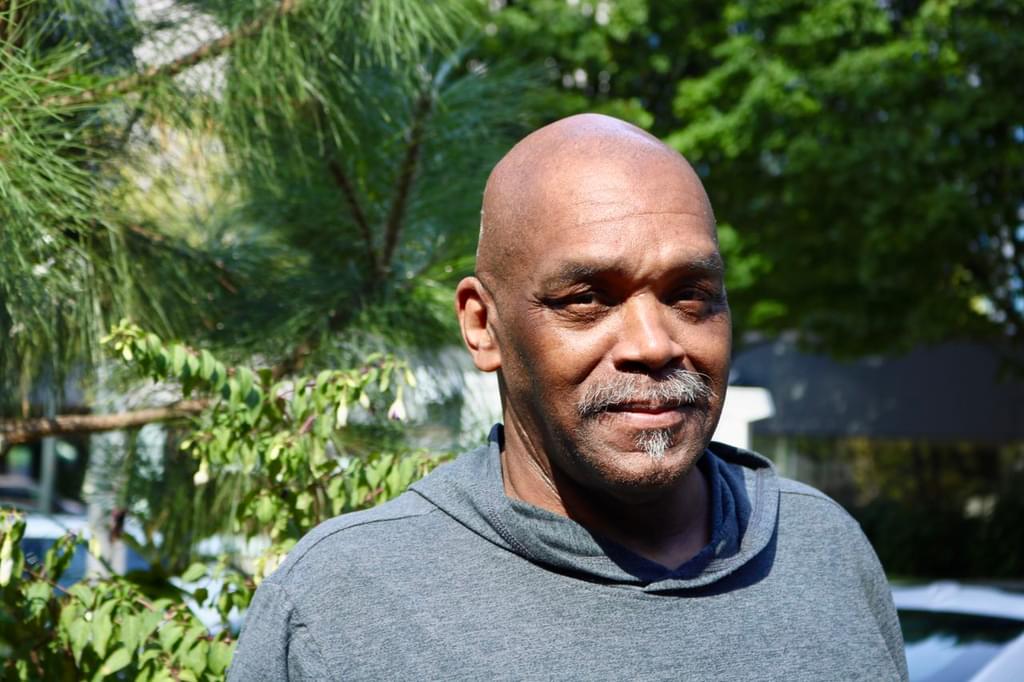
On September 5, 2023, Jesse Johnson (pictured) was released from Marion County Jail in Oregon when prosecutors formally declined to retry him for the 1998 murder of Harriet Thompson. Mr. Johnson was convicted of Ms. Thompson’s murder in 2004 and sentenced to death. In asking the Marion County Circuit Court to dismiss the case against Mr. Johnson, the county District Attorney’s office stated that “based upon the amount of time that has passed and the unavailability of critical evidence in this case, the state no longer believes that it can prove the defendant’s guilt.” Mr. Johnson was housed on death row at Oregon State Penitentiary until 2021, when the Oregon Court of Appeals overturned his case, agreeing that he had inadequate defense counsel who failed to interview a key witness. Patricia Hubbard, one of the victim’s neighbors, claims that police repeatedly “dismissed her attempts to give them information” about an alternate suspect, and also claims a detective said a black woman was murdered and black man was “going to pay for it.”
Since his arrest, Mr. Johnson has maintained his innocence and lack of involvement in Ms. Thompson’s murder, refusing to accept any plea deals during his 25 years behind bars. There was no DNA evidence directly connecting Mr. Johnson to the murder and the prosecution relied heavily on circumstantial evidence that placed him in the victim’s home. Fingerprints were found belonging to Mr. Johnson, but his attorneys note that this only proves they knew each other, which Mr. Johnson had previously admitted. Ms. Hubbard spoke with defense investigators in 2013 while they were reinvestigating the case and told them that she saw a white man flee Ms. Thompson’s apartment on the night of her murder after she heard loud arguing. Mr. Johnson’s original defense attorneys never spoke with Ms. Hubbard and made little effort to speak with additional neighbors. Prosecutors knew about Ms. Hubbard’s testimony and the additional DNA evidence pointing towards other suspects prior to the 2021 Oregon Court of Appeals decision.
The Oregon Innocence Project, which began working with Mr. Johnson on DNA testing appeals in 2014, strongly believes that racism played a role in his wrongful conviction. In a statement from Steve Wax, the organization’s legal director, he writes that “there were clear and unambiguous statements of racism by a detective involved in the case who discouraged a neighbor from sharing that she witnessed a white man running away from the scene on the night of the murder.” There have been 194 death row exonerations since 1973 in the United States. Of these 194 individuals, 105, or 54%, are black.
In Mr. Wax’s statement, he also writes that “there can be no more heinous injustice imaginable than for Mr. Johnson to have heard a sentence of death pronounced against him all those years ago in Marion County and then to waste away for years on death row.” Mr. Johnson, now 62 years old, proclaimed his joy as he walked out of Marion County Jail. “I’m happy and excited and ready for the next phase now. Been a lot of years for something I didn’t do.”
Noel Montalvo Exonerated Twenty Years After Pennsylvania Sent Him to Death Row
Dec 19, 2023

On December 18, Pennsylvania dropped all homicide charges against Noel Montalvo, twenty years after he was convicted and sentenced to death in York County. Mr. Montalvo (pictured) pled guilty to one count of tampering with evidence in exchange for release and one year on probation. The Death Penalty Information Center has determined that Mr. Montalvo meets the criteria for inclusion on our exoneration list because the charges that placed him on death row have been dismissed.
Mr. Montalvo’s brother Milton was convicted and sentenced to death in 2000 for the 1998 murders of his estranged common-law wife, Miriam Ascencio, and her new boyfriend, Nelson Lugo. A neighbor found Ms. Ascencio and Mr. Lugo stabbed to death the morning after the couple had gone out together to a local bar. DNA testing of over 70 items at the scene matched blood and hair to Milton but found no trace of Noel. Another neighbor saw Milton alone at Ms. Ascencio’s door that night and heard him shouting. Nonetheless, prosecutors later tried Noel for the murders and he was sentenced to death in 2003. Only one witness linked Noel to the crime, testifying that he had told her he murdered Ms. Ascencio, but the witness admitted on cross-examination that a detective had threatened her with jail time if she didn’t implicate Noel.
In 2019, a judge overturned Noel’s conviction and sentence based on his attorney’s ineffectiveness in several respects, including failing to present key mitigation evidence and challenge the trial judge’s error in jury instructions. That decision was upheld on appeal by the Pennsylvania Supreme Court in 2021. Milton also received relief when a court granted a new penalty phase in 2017 based on ineffective assistance of counsel, but he died in 2021 before resentencing. Instead of pursuing a new trial for Noel, the parties eventually reached the plea agreement for his release. Under the agreement, Noel admitted only to leaving the state with his brother on the night of the murders. The physical evidence has been retested multiple times over the years and experts have definitively excluded Noel.
“That he was awarded a new trial and ultimately had homicide charges dismissed is no surprise,” said Marshall Dayan, Chairman of the Board of Directors of Pennsylvanians for Alternatives to the Death Penalty and former attorney for Noel Montalvo. “The shocking reality is that he was convicted in the first place when the Commonwealth had virtually no evidence against him. His original conviction evidences the arbitrariness, if not the discrimination, inherent in our criminal legal system, and in particular in our capital criminal legal system.”
Noel maintained his innocence for his entire incarceration, and Milton himself said that his brother was not involved. Interviewed outside of York County Prison after his release, Noel said that the carceral system needed to change because “too many people are really innocent” and “proof has sustained the innocence.”
Noel Montalvo is the 196th person exonerated, and the 12th in Pennsylvania, of those sentenced to death since 1973. Pennsylvania is now tied with North Carolina and Louisiana for fourth-most exonerations from death row, after Florida (30), Illinois (22), and Texas (16). Noel Montalvo is the fourth person exonerated in 2023 after John Huffington, Jesse Johnson, and Glynn Simmons.
Mississippi Supreme Court Delays Decision on Willie Manning Execution Date, Allows Time for Appeal

On November 30, 2023, the Mississippi Supreme Court ordered that the state’s request to set an execution date for death row prisoner Willie Manning be held until the court rules on a recent petition seeking to bring new evidence of Mr. Manning’s innocence. Mr. Manning’s attorneys had filed a petition at the court on September 29, asking for an opportunity to present recantations from jailhouse informants who testified against Mr. Manning, as well as new expert analysis debunking the unscientific forensic evidence that was used against him at trial. The Federal Bureau of Investigation (FBI) has admitted that the analysis used in Mr. Manning’s trial was flawed.
Mr. Manning, who is Black, was convicted in 1994 for the murders of two white Mississippi State University students. At his trial, an FBI agent testified that hairs found in one of the victim’s vehicles came from a Black person. The prosecutor referred to that testimony in his closing argument, saying that it implicated Mr. Manning because of his race. The FBI agent also gave ballistics testimony that the FBI said in 2013 was seriously flawed. The prosecution also presented testimony from jailhouse informants who claimed that Mr. Manning had confessed to the crime. Mr. Manning’s recent petition seeks to present recantations from informants, who say they were persuaded by the sheriff’s office to testify against Mr. Manning.
The order from the Mississippi Supreme Court temporarily delays the state’s request for an execution date, which was filed on November 3. It requires the state to respond to Mr. Manning’s petition by December 29, and then allows fifteen days for his attorneys to reply. The court will not set an execution date until it has ruled on the case. “Given the allegations we’ve made and the proof we’ve submitted, we would hope the Court would either grant relief outright or grant an evidentiary hearing where we can present the evidence to a trial judge,” Mr. Manning’s attorney, David Voisin, told the Mississippi Free Press.
In 2015, Mr. Manning was exonerated of an unrelated crime, for which he had also been sentenced to death.

 Claim your Innocence