texas

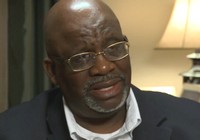
VAUGHN ROSS HAS BEEN EXECUTED BY TEXAS 6:38 pm


HUNTSVILLE, TX — A former Texas Tech graduate student convicted of a double slaying a dozen years ago has been executed.

Vaughn Ross received lethal injection Thursday evening for the January 2001 fatal shootings of an 18-year-old woman with whom he had been feuding and an associate dean at the university in Lubbock who was with her. He was pronounced dead at 6:38 p.m. CT.

Ross, from St. Louis, came to Texas Tech for graduate work in architecture. Ross was found guilty in the January 2001 fatal shootings of an 18-year-old woman with whom he had been feuding an associate dean at the university who was with her at the time. In his appeal to the high court, Ross argued his previous appeals attorneys neglected to note that his trial lawyers didn’t present evidence that may have convinced jurors to sentence him to life in prison.

A bicyclist spotted the bodies of Douglas Birdsall, 53, the associate dean of libraries at Texas Tech University, and Viola Ross McVade in a car in a gully at a Lubbock park. McVade was the sister of Ross’ girlfriend and was not related to the convicted killer.

Court documents said Birdsall had been looking for a prostitute and that a friend of McVade introduced him to her that evening. Prosecutors contend McVade was the intended target, and that Birdsall was at the wrong place at the wrong time.

Both victims were shot multiple times. Detectives said they linked Ross to the deaths after finding his and Birdsall’s DNA on part of a latex glove in the car. DNA tests on Ross’ sweatshirt also detected blood from both victims.

Ross, from St. Louis, came to Texas Tech for graduate work in architecture. When questioned by detectives, he acknowledged arguing and threatening McVade. He also acknowledged wearing latex gloves but said they were to protect his hands while he was doing some cleaning with bleach.

While in jail, Ross phoned his mother, who asked if he had any involvement in the slayings. He replied he “might have,” according to the tape-recorded call.

“I’ve always said a guy could never lie to his mama,” Matt Powell, the Lubbock County district attorney who prosecuted the case, said last week. “It was the closest thing we had to a confession.”

Authorities believed Bridsall and McVade were ambushed in an alley behind Ross’ apartment after Ross had ordered McVade’s sister to leave. Birdsall’s blood and glass from shattered windows of his car were found in the alley, as well as a shell casing matching casings inside Birdsall’s car.

Prosecutors believed the latex glove was torn when Ross moved Birdsall’s body from the front to the back seat so he could drive the car to the gully.

At least six other Texas prisoners have execution dates set for the coming months, including one later this month.

Source: AP, June 18, 2013

Texas man executed for killing during 2002 hold up- Quintanilla EXECUTED 7:32pm


July 16, 2013

Texas Execution

John Manuel Quintanilla received lethal injection for gunning down 60-year-old Victor Billings at a game room in Victoria, about 125 miles southwest of Houston. The 2002 slaying came just a few months after Quintanilla had been released from prison after serving a sentence for several burglary convictions.

Asked to make a final statement before his execution, Quintanilla told his wife he loved her.

“Thank you for all the years of happiness,” he said.

He never acknowledged his victim’s friends or relatives, including two daughters, who watched through a window.

As the lethal drug began taking effect, he snored about a half dozen times, then stopped breathing. At 7:32 p.m. CDT — 15 minutes after being given the drug — he was pronounced dead.

Quintanilla’s wife, a German national who married him by proxy while he was in prison, watched through an adjacent window and sobbed.

Quintanilla, 36, became the ninth Texas inmate to receive lethal injection this year and the 501st since the state resumed carrying out capital punishment in 1982. His was the first of two executions set for this week; the other is planned for Thursday.

Quintanilla’s punishment was carried out after the U.S. Supreme Court refused two last-day appeals.

His lawyers contended his confession was coerced by authorities threatening to also charge one of his sisters and that the statement improperly was allowed into evidence at his trial in 2004. The lawyers obtained affidavits from two jurors who said the confession was a key to their decision to convict him.

“It is clear that Quintanilla would not have been convicted of capital murder if his confession had not been admitted — a fact confirmed by two of his jurors,” appeals lawyer David Dow told the high court.

The appeal also argued Quintanilla had deficient legal help during his trial and in earlier stages of his appeals, and that his case would give justices the opportunity to define filing rules in light of recent death penalty rulings from the court.

The Texas attorney general’s office said the appeal was without merit and improperly filed, and that the juror affidavits also were improper.

“There wasn’t any coercion whatsoever,” Dexter Eaves, the former Victoria County district attorney who was lead prosecutor at the trial, recalled last week. He also said that while the robbers, who fled with about $2,000, were masked, witnesses were able to “describe very clearly who the triggerman was.”

Court records show Billings, a retired chief deputy from nearby Edna in adjacent Jackson County, was at the game center with his wife on the Sunday before Thanksgiving in 2002 when the gunmen came in through a back door. Billings approached one of them and grabbed the barrel of the gunman’s rifle “so no one else was going to be hurt and paid for it dearly,” Eaves said.

He said Billings was shot three times, the last one fired while he was on his knees.

“A very cold killing,” Eaves said.

During questioning by detectives for an unrelated robbery some two months later, Quintanilla made references to the still unsolved Billings case, then led authorities to a canal where divers recovered items used in the holdup.

“They had the mask, the guns and his statements saying who did what,” Jim Beeler, Quintanilla’s lead trial lawyer, said. “He told them everything.”

Beeler said the trial judge overruled his objections and ruled the statements proper and admissible into evidence. He also said Quintanilla signed affidavits ordering that his defense team present no mitigating evidence during the punishment phase of his trial, where jurors deciding his sentence could have considered he had virtually no parental supervision while growing up.

“You want to argue your case, completely and totally,” Beeler said. “In that situation, we’re not being allowed to present our case, based on our client.

“It’s extremely frustrating.”

Prosecutors bolstered their case for Quintanilla’s future dangerousness by presenting evidence he attacked a jailer with a homemade weapon while awaiting trial.

“He did not do himself any favors,” Eaves said.

Quintanilla’s accomplice, Jeffrey Bibb, 33, is serving 60 years for murder and 50 years for aggravated robbery.

On Thursday, another Texas inmate is set for lethal injection. Vaughn Ross, 41, is to be executed for a double slaying in Lubbock in 2001.

Texas: Rick Perry insists ‘justice system is color blind’ after Zimmerman verdict


Texas Gov. Rick Perry (R) on Sunday praised a Florida jury’s decision to find former neighborhood watchmen George Zimmerman not guilty of murdering Trayvon Martin, and insisted that the case had not been influenced by race because “the justice system is color blind.”

“A very thoughtful case was made by each side, the jurors made the decision and we will live with that,” the governor explained to CNN’s Candy Crowley.

The CNN host, however, pointed out that critics of the verdict had asserted that the justice system was innately unfair and weighted against African-Americans.

“Do you think that?” Crowley asked.

“I don’t,” Perry insisted. “I think our justice system is color blind, and I think that, you know, again, you don’t find people that always agree with the jury’s decision. But that’s the reason we have the system we have in place, and I think, by and large, it may not be full proof, people may make mistakes in the jury system. On the civil side, you have that appellate process.”

“But in this case, I will suggest that 2 extraordinarily capable teams laid out the issues and that jury made the right decision from their stand point.”

Earlier this year, a New York Times editorial ripped the Texas justice system for executing a disproportionate number of African-Americans under Perry.

“Texas’s death penalty system is notorious for its high tolerance of ineffective counsel for defendants, overly zealous prosecutors, and racial discrimination in jury selection,” the Times wrote. “In Texas as well as other states, a black person who murders a white person is more likely to receive the death penalty than when the victim is black.”

(source: The Raw Story)

Death by Numbers: The 500th Execution by the State of Texas by Gemma Puglisi


On June 26th, the state of Texas executed its 500th inmate. Kimberly McCarthy, 52, was found guilty of murdering her 71-year-old neighbor, a retired college psychology professor back in l997. McCarthy, a crack cocaine addict, robbed, beat, and stabbed Dorothy Booth, after asking for a cup of sugar. Throughout McCarthy’s trial, her former ex-husband, Black Panther Party founder Aaron Michaels, testified on her behalf. The two were separated before Booth’s murder.

All a tragic story. After reading about the case and the execution, I learned more. This has all become important to me after knowing former death row inmate Troy Anthony Davis. I became friends with Davis simply by reading about his case back in 2007. In 2011, “Troy” was executed by the state of Georgia for the murder of Police Officer Mark MacPhail. Officer MacPhail was white, and the father of two young children. Troy always maintained his innocence. There was never any evidence linking him to the crime other than witnesses who said he did it. Years later, seven of the nine recanted stating that they were coerced by the police. Despite so many unanswered questions — and support from Amnesty International, the NAACP, Desmond Tutu, former President Jimmy Carter, and literally millions of supporters, Troy was executed on Sept. 21, 2011.

Dorothy Booth’s death was horrible. She and her family deserved justice. No question. As I researched McCarthy’s case and read more about it, I learned that her attorney Maurie Levin had asked the Texas Court of Criminal Appeals to halt the execution, because black jurors were excluded from her trial by Dallas County prosecutors. The jurors in her case were all white except for one.

After Troy’s execution, I find myself talking to attorneys who have worked tirelessly to seek justice for death row inmates — and may not have had fair trials. In 2010, a call led to my meeting attorney James Rocap — who represented Teresa Lewis — the first women executed in the state of Virginia in 50 years. (Lewis’ case was controversial because of her mental capacity. Supporters said she was borderline mentally retarded. Lewis was found guilty of having her husband and stepson murdered. It was believed she was not capable of orchestrating the murders because of her mental capacity.) Despite all this, she was executed Sept. 23, 2010 — almost exactly a year before Troy.

In a statement issued following the execution of Kimberly McCarthy, attorney Levin said: “500 is 500 too many. I look forward to the day when we recognize that this pointless and barbaric practice, imposed almost exclusively on those who are poor and disproportionately on people of color, has no place in a civilized society.”

That is the tragedy of Texas’s 500th execution. That state leads the country in most executions. We are a civilized society, and the death penalty is barbaric and senseless and in so many cases. There is no question that those who kill should be accountable for their horrible actions. And prison is that punishment. There are too many cases today where there is doubt, many unanswered questions, and injustice.

Troy’s dream was that executions end. I couldn’t help but think of him when I read about this recent news.

I pulled out a letter he mailed me months before his execution. He said, “Deter prejudice, hatred and racism by ending the death penalty now. ‘An eye for an eye’ leaves the entire world blind. How can the U.S. be a beacon of freedom to the rest of the world when Justice includes the death penalty… we lose all credibility with the death penalty.”

Young Killers in Texas Await Change in Mandatory Life Sentences


NEW BOSTON, Tex. — Scottie Forcey nervously drummed his fingers behind the thick glass in the Telford Unit’s visiting room as the camera shutter snapped, capturing images of the 21-year-old convicted murderer.

“I want some pictures. I ain’t seen myself in like” — he paused to count on his fingers — “five years. I know I look different. Check it out.” He pressed his prison ID card against the glass. In the photo, a plumper, baby-faced 17-year-old stared at the camera.

Mr. Forcey was convicted in 2009 of fatally shooting Karen Burke, a 52-year-old Alvarado convenience store clerk. He is the youngest of 23 Texas Department of Criminal Justice inmates who received mandatory sentences of life without parole for committing capital murder when they were younger than 18.

Now, as legislators work to comply with a United States Supreme Court ruling, those inmates could become eligible for parole after serving 40 years.

The justices ruled last year that sentences of life without parole for 17-year-old murderers violated the constitutional ban on cruel and unusual punishment. Either the courts or Gov. Rick Perry could change such sentences in Texas. But both are waiting for legislators to decide what punishment juveniles like Mr. Forcey should face. Lawmakers, who failed to pass legislation in two sessions this year, are trying now for a third time.

In Texas, 17-year-olds have faced the same sentencing options as adults convicted of capital murder: the death penalty or life without parole. In 2005, the Supreme Court prohibited the death penalty for anyone under 18, deciding that the less-developed brains of juveniles rendered them less culpable. That left only life without parole as the punishment for 17-year-olds.

After the court’s decision last year, in Miller v. Alabama, prosecutors said they had no sentencing options for 17-year-old killers. They asked lawmakers to make them subject to the same punishment Texas law requires for 14- to 16-year-old capital murderers: life with parole eligibility after 40 years.

Lance Long, a Harris County assistant district attorney, recently told lawmakers that until they decided on a sentencing option, such murder trials were being delayed across Texas.

“None of these cases are anything but very, very, very serious,” Mr. Long said.

The Texas Senate’s Criminal Justice Committee has approved a bill that would require a sentence of life with parole eligibility after 40 years. The House, however, has indicated it wants to give juries the option to sentence 17-year-olds to life without parole if other factors — like evidence of abuse or mental illness — are considered.

In previous sessions this year, both chambers approved bills addressing the sentencing question, but time ran out before they could get final approval.

Mr. Perry has told prosecutors that when lawmakers decided on a new sentencing bill, he would consider recommending commutation for inmates like Mr. Forcey who were sentenced under the old law.

“It really only seems fair and just,” said Justin Wood, the legislative liaison for the Harris County district attorney’s office in Houston.

Mr. Forcey, meanwhile, contends that he did not pull the trigger in Ms. Burke’s murder in 2008. He said he was targeted because he ran with the wrong crowd.

Now, he said, “I wouldn’t put myself in that situation.”

Mr. Forcey has spent most of the last four years in isolation, punishment for fights he said were constant when he first arrived.

“I grew up back there,” he said.

Asked about the possibility that his sentence could be commuted, Mr. Forcey was ambivalent. Forty years, he said, is too long.

Then a wide smile spread across his face. He figures he will be out by December. Mr. Forcey spent those years in isolation researching his case, he said, and plans to file an appeal.

“My mind’s already set,” he said. “I’m going home — wherever home is.”

Texas: From America’s Busiest Death Chamber, a Catalog of Last Rants, Pleas and Apologies Texas Department of Criminal Justice


Karl Eugene Chamberlain went to his neighbor’s apartment that night in Dallas under the pretense of borrowing sugar. He returned later, forced her into a bedroom, bound her hands and feet, raped her and then used a rifle to shoot and kill her. His victim, Felecia Prechtl, 29, was a single mother with a 5-year-old son.

11 years after he was convicted of capital murder, Mr. Chamberlain, 37, was strapped to a gurney in Texas’ execution chamber at the Walls Unit prison here and was asked by a warden if he had any last words. “Thank you for being here today to honor Felecia Prechtl, whom I didn’t even know,” he told her son, parents and brother on June 11, 2008. “I am so terribly sorry. I wish I could die more than once to tell you how sorry I am.”

His words did not die with him. Texas wrote them down, kept them and posted them on the Internet.

The state with the busiest death chamber in America publishes the final statements of the inmates it has executed on a prison agency Web site, a kind of public catalog of the rantings, apologies, prayers, claims of innocence and confessions of hundreds of men and women in the minutes before their deaths.

Charles Nealy asked to be buried not to the left of his father but to the right of his mother. Domingo Cantu Jr., who dragged a 94-year-old widow across the top of a chain-link fence, sexually assaulted her and then killed her, told his wife that he loved her and would be waiting for her on the other side.

The condemned praised Allah and Jesus and Sant Ajaib Singh Ji, a Sikh master. 3 cheered for their favorite sports teams, including Jesse Hernandez, whose execution last year made headlines after he shouted, “Go Cowboys!” They spoke in English, Spanish, French, Vietnamese, Gaelic, German (“Meine schone prinzessin,” said Mr. Cantu, German for “my beautiful princess”). They quoted the Koran and the Bible, but also Todd Beamer’s phrase aboard United Airlines Flight 93.

“Sir, in honor of a true American hero, ‘Let’s roll,'” said David Ray Harris, who was dishonorably discharged from the Army and was executed in 2004 for killing a man who tried to stop him from kidnapping the man’s girlfriend.

The execution on Wednesday of Kimberly McCarthy – a 52-year-old woman convicted of robbing, beating and fatally stabbing a retired psychology professor near Dallas – was the 500th in Texas since December 1982, when the state resumed capital punishment after the Supreme Court reinstated the death penalty in 1976. In those 30 years, Texas has executed more people than Alabama, Florida, Georgia, Missouri, Oklahoma and Virginia combined.

The state’s execution record has often been criticized as a dehumanizing pursuit of eye-for-an-eye justice. But three decades of last statements by inmates reveal a glimmer of the humanity behind those anonymous numbers, as the indifferent bureaucracy of state-sanctioned death pauses for one sad, intimate and often angry moment.

“I hope that one day we can look back on the evil that we’re doing right now like the witches we burned at the stake,” said Thomas A. Barefoot, who was convicted of murdering a police officer and was executed on Oct. 30, 1984.

Among the death-penalty states, Texas and California are the only ones that make the last words of offenders available on their Web sites. But only Texas has compiled and listed each statement in what amounts to an online archive. The collection of 500 statements, which includes inmates’ verbal as well as written remarks, has been the subject of analysis, criticism and debate by lawyers, criminal justice researchers and activists who oppose the death penalty.

It has spawned at least one blog, Lost Words in the Chamber, which has regularly posted the last statements since 2011. Officials with the prison agency, the Texas Department of Criminal Justice, said there were 3 million page views of inmates’ final words last year.

“It’s kind of mesmerizing to read through these,” said Robert Perkinson, the author of “Texas Tough: The Rise of America’s Prison Empire” and a professor at the University of Hawaii at Manoa. “Most people about to be executed haven’t had a lot of success in school or life. They’re not always so skilled at articulating themselves. There are plenty of cliches, sometimes peculiar ones, like the Cowboys reference. But I think many of these individuals are also striving to say something poignant, worthy of the existential occasion.”

The last statements are not uttered in a vacuum – they are heard by lawyers, reporters and prison officials, as well as the inmates’ families and victims’ relatives. But the power of their words to change the system or even heal the hearts of those they have hurt is uncertain.

Nearly 7 years after he murdered a Houston city marshal who caught him with cash and loose change stuffed into his pockets from the bar he had just robbed, Charles William Bass refused his last meal and told the warden in 1986, “I deserve this.” “I think he was correct,” said Mr. Baker, 63, a minister at the Church of Christ in Emory, Tex., who was 29 when his father was killed. “It’s called capital punishment for a reason.”

Strapped to a gurney in a spare brick room painted dark green, the inmates nowadays speak into a microphone attached to the ceiling, their arms stretched out and buckled into a T-shaped gurney so the drugs flow easily from the IVs into their veins. With the victims’ and the inmates’ witnesses in place in 2 separate rooms, the warden asks the inmate if there is a last statement. The last words are not recorded, but transcribed by hand by staff members listening inside the warden’s office.

Jim Willett, 63, a retired Walls Unit warden, said none of the 89 statements he heard from 1998 to 2001 changed his support for the death penalty.

“You can hear it in their voices sometimes and in their delivery that they are sincerely hurting for the pain that they put their own family through,” said Mr. Willett, the director of the Texas Prison Museum in Huntsville. “I saw the strangest thing one night. You got this little wall here like this, separating those 2 witness rooms. One night I saw the daughter of the inmate and the daughter of the victim, and they were both leaning against that wall. They were that far apart and didn’t even know it.”

Jason Clark, a spokesman for the prison agency, said the last statements were posted to respond to the demand for that information by the public and journalists. But opponents of the death penalty call it a perverse tradition.

“The death penalty is a process, not an act, and posting the final words of a condemned person after a process which has usually lasted a decade or more is simply a disservice,” said Rick Halperin, director of the Embrey Human Rights Program at Southern Methodist University in Dallas. “How is one to assess the phrase of ‘Go Cowboys!’ from a man on a gurney?”

Freddie Webb said 1 word – “Peace” – but James Lee Beathard, who murdered his accomplice’s father, stepmother and half-brother, said 684 of them in December 1999, in a rambling statement that mentioned the embargoes against Iran and Cuba. He viewed his final minutes the way others had – as a fleeting moment on a stage, with a silent, watchful audience. “Couple of matters that I want to talk about,” he said, “since this is one of the few times people will listen to what I have to say.”

(source: New York Times)

Ex-Texas Warden Reflects After 140 Executions-Charles Thomas O’Reilly


June 27, 2013  AP

Charles Thomas O’Reilly supported capital punishment when he oversaw his first Texas execution. And he still supported it after his 100th.

In six years as warden of the Huntsville Unit, the prison that houses Texas’ death chamber, O’Reilly supervised about 140 executions — more than any other warden in state history.

Now retired, he reflected on his career this week as the nation’s busiest death penalty state as the state executed its 500th inmate since resuming capital punishment in 1982.

The 62-year-old said he has no regrets about a process he considered to be a relatively unemotional and small part of his job.

If you do 140 of them and then decide you can’t do them, then I think you’ve pushed it a little too far,” O’Reilly said during an interview with The Associated Press in Forney, about 175 miles away from Huntsville. “If you can’t do it, you should have made that decision after one, or maybe two.”

O’Reilly, who retired in 2010, recalled meeting condemned inmates when they arrived at Huntsville the afternoon of their executions.

“I’ll tell him that we’re going to treat him with as much dignity as he’ll allow us to,” O’Reilly said. Then at 6 p.m., he would return to the inmate’s holding cell and say two words: “It’s time.”

Texas 500th Execution Warden.JPEG

A five-man team walked each inmate to the death chamber and tied the prisoner to a gurney. Other staff members ran IV lines for the execution drugs.

Before the lethal injection began, O’Reilly would ask the inmate for any last words. He liked to give each inmate about three minutes, though he rarely cut anyone off.

Once the inmate’s final statement was complete, O’Reilly used a hand-held clicker to signal to the drug room that it was time to start. Minutes later, he would signal to a doctor to check the inmate’s pulse and declare him dead.

Relatives of the condemned inmates and victims typically watched through a window.

“There’s not a lot said,” O’Reilly said. “Everybody knows their job, knows how to do it, when to do it.”

He does not remember the name of the first inmate executed during his tenure, but a few names stand out. They include Frances Newton, the only woman executed on his watch. Condemned to death for killing her husband and two children, she was executed in 2005, becoming just the third woman put to death since Texas resumed capital punishment.

O’Reilly said he was more concerned with making sure executions were done professionally. He recalls the professionalism of the prison chaplain and the staff he hand-picked to assist with executions.

Speaking in a low Texas drawl, O’Reilly’s voice hardens when asked about his personal views on the death penalty. He said it’s the appropriate way to deal with society’s worst criminals, such as someone who rapes and kills a 7-year-old girl.

“As far as I’m concerned, that person probably got a just punishment for the crime that he committed,” O’Reilly said. “Like me or anybody else, we all have to take responsibility for our own actions. Our actions are our choice. The consequences for those actions are not our choice.”

Although the fight over the death penalty is often heated, O’Reilly said the process of an execution is quiet and simple.

“It doesn’t take long. There’s not a lot said,” O’Reilly said. “All you’re going to do there is watch a guy go to sleep.”

Kimberly McCarthy put to death in 500th Texas execution since 1982


june 26,2013

Last Statement:

I just wanted to say thanks to all who have supported me over the years: Reverend Campbell, for my spiritual guidance; Aaron, the father of Darrian, my son; and Maurie, my attorney. Thank you everybody. This is not a loss, this is a win. You know where I am going. I am going home to be with Jesus. Keep the faith. I love ya’ll. Thank you, Chaplain.

She was pronounced dead at 6:37 p.m. CDT, 20 minutes after Texas prison officials began administering a single lethal dose of pentobarbital.

Original post 2:43 p.m.:

HUNTSVILLE – Kimberly McCarthy has arrived at the Texas prison nicknamed “the Walls Unit” where she is expected to be executed tonight for the 1997 murder of Dorothy Booth in Lancaster.

Dorothy Booth

McCarthy will be the 500th person executed in Texas since the death penalty was reinstated.

McCarthy’s trip to the death chamber is being treated no differently by the prison system than the one before it or the one that will come next. But McCarthy’s execution is gaining more outside attention because of the milestone.

“We are treating this execution as we do all the others,” said John Hurt, director of public information for the Texas Department of Criminal Justice. “We realize that there will probably be more interest from the public than usual, but we expect the McCarthy execution to proceed in the same manner as any other.”

McCarthy can meet with her spiritual adviser and attorney before the execution, which is scheduled for around 6 p.m. No appeals are pending, so the execution by lethal injection is expected to take place, barring unforeseen circumstances.She will also speak to the warden about what will happen to her body and who is witnessing the execution. She can make telephone calls to say goodbye.

Kimberly McCarthy is scheduled to be executed Wednesday for the murder of her neighbor, Dorothy Booth. If the execution is carried out, she will be the 500th person executed in Texas since they death penalty was reinstated.

She has been given a new white prison uniform and can eat the same meal offered to all other inmates: pepper steak, mashed potatoes with gravy, mixed veggies and white cake with chocolate icing.

“And she will walk unrestrained into the execution chamber,” said Jason Clark, a public information officer with the prison system.

Her execution is expected to be witnessed by the family, of Booth, a retired college professor.

Texas has carried out nearly 40 percent of the more than 1,300 executions in the U.S. since the Supreme Court allowed capital punishment to resume in 1976. The state’s standing stems from its size as the nation’s second-most populous state as well as its tradition of tough justice for killers.

Ex-Virginia executioner becomes opponent of death penalty – Jerry Givens


Jerry Givens executed 62 people.
His routine and conviction never wavered. He’d shave the person’s head, lay his hand on the bald pate and ask for God’s forgiveness for the condemned. Then, he would strap the person into Virginia’s electric chair.
Givens was the state’s chief executioner for 17 years — at a time when the commonwealth put more people to death than any state besides Texas.
“If you knew going out there that raping and killing someone had the consequence of the death penalty, then why are you going to do it?” Givens asked. “I considered it suicide.”
As Virginia executed its 110th person in the modern era last month, Givens prayed for the man, but also for an end to the death penalty. Since leaving his job in 1999, Givens has become one of the state’s most visible — and unlikely — opponents of capital punishment.
Givens’s improbable journey to the death chamber and back did not come easily or quickly for the 60-year-old from Richmond. A searing murder spurred his interest in the work, but it was the innocent life he nearly took that led him to question the system. And he was changed for good when he found himself behind bars.
His evolution underscores that of Virginia itself and the nation. Although polls show that the majority of state residents still support the death penalty, Virginia has experienced a sea change on capital punishment in recent years that is part of a national trend.
Givens grew up in the Creighton Court housing complex in Richmond, where he also graduated from high school in the early 1970s. By 1974, he had gotten a job at a Philip Morris plant and then lost it after fighting with a co-worker.
He recalled someone telling him that he should apply for a job at the state penitentiary before he got sent there. Givens did just that.
After two years as a prison guard, he said, a supervisor approached him about working on death row. He would not be paid extra, but he accepted the job.

“If you knew going out there that raping and killing someone had the consequence of the death penalty, then why are you going to do it?” Givens asked. “I considered it suicide.”

As Virginia executed its 110th person in the modern era last month, Givens prayed for the man, but also for an end to the death penalty. Since leaving his job in 1999, Givens has become one of the state’s most visible — and unlikely — opponents of capital punishment.

His evolution underscores that of Virginia itself and the nation. Although polls show that the majority of state residents still support the death penalty, Virginia has experienced a sea change on capital punishment in recent years that is part of a national trend.

The state has had fewer death sentences over the past five years than any period since the 1970s. Robert Gleason, who was put to death Jan. 16, was the first execution in a year and a half. As recently as 1999, the state put 13 to death in a single year.

Nationwide, the number of death sentences was at record lows in 2011 and 2012, down 75 percent since 1996, according to the Death Penalty Information Center. Five states have outlawed capital punishment in the past five years, and Maryland Gov. Martin O’Malley (D) affirmed plans to push for a moratorium there. Gallup polls show support for capital punishment ebbing.

Givens’s improbable journey to the death chamber and back did not come easily or quickly for the 60-year-old from Richmond. A searing murder spurred his interest in the work, but it was the innocent life he nearly took that led him to question the system. And he was changed for good when he found himself behind bars.

His story helps explain how a state closely associated with the death penalty for decades has entered a new era.

“From the 62 lives I took, I learned a lot,” Givens said.

The first execution

Friends and strangers regularly ask Givens the essential question: What is it like to take another man’s life? In answering, he vividly recalls his first execution, in 1984.

A history of capital punishment in Texas


Milestones in capital punishment in Texas:

1819 — George Brown is first person executed in Texas, by hanging.

1863 — Chipita Rodriguez is first woman executed in Texas, by hanging.

1923 — Lee Nathan becomes the last of 394 people executed by hanging.

1924 — Charles Reynolds becomes first inmate to die in the electric chair in Huntsville as state takes over executions.

1963 — Joseph Johnson is the last of 361 Texas prisoners to die in the electric chair.

1972 — U.S. Supreme Court finds death penalty “cruel and unusual;” death sentences of 52 people in Texas are commuted to life in prison.

1976 — U.S. Supreme Court holds Georgia death penalty statute constitutional, setting stage for resumption of executions.

1977 — Texas adopts lethal injection method.

1982 — Texas inmate Charlie Brooks becomes first in U.S. to receive lethal injection.

1998 — Karla Tucker becomes first woman executed in Texas since Civil War.

2000 — Texas executes a record 40 prisoners in one year.

2013 — Texas schedules execution of Kimberly McCarthy, number 500 by lethal injection.

__

Sources: Texas Department of Criminal Justice, “Espy File” database compiled by historians M. Watt Espy and John Ortiz Smykla.