mississippi

MISSISSIPI – Death penalty case before Miss. court – Jason Lee Keller


October 15, 2012 http://www.sunherald.com

MISS. — The Mississippi Supreme Court is scheduled to hear an appeal Monday from death row inmate Jason Lee Keller, who wants a new trial in the 2007 robbery and shooting death of a woman in Harrison County.

Prosecutors say 41-year-old Hat Nguyen, a single mother of four, was killed at the convenience store she owned in Harrison County.

Court records show the Nguyen family lost their home to Hurricane Katrina in 2005 and lived in the back of the store.

Prosecutors say Keller, now 33, allegedly shot Nguyen shot four times. A shot to the back of her head was fatal.

Keller was convicted in Harrison County Circuit Court in 2009.

Court records show Keller told investigation that he was high on cocaine when the incident occurred.


MISSISSIPPI – GARY CARL SIMMONS, JR.- Execution – June 20, 2012 6:00 p.m EXECUTED 6:16 p.m


Last Statement

“I’ve been blessed to be loved by some good people, by some amazing people. I thank them for their support. Let’s get it on so these people can go home. That’s it,” Simmons said as he lay strapped on a gurney in the execution chamber moments before the procedure was carried out.

Gary Carl Simmons Jr.
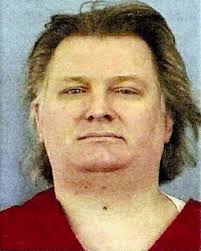
Source : Mississippi Court NO. 97-DP-01550-SCT

FACTS
In the early morning hours of August 11, 1996, Jeffery Wolfe and Charlene Brooke Leaser drove from Houston, Texas, to Jackson County, Mississippi. They had only known each other a few weeks. Wolfe asked Leaser to accompany him on a trip to the Gulf Coast to “pick up some money” from some friends that were in his debt. Leaser later learned that the debt accrued some weeks earlier from a transaction involving drugs. While on the Gulf Coast, Wolfe also planned to buy new wheel rims and tires for his vehicleand then return through New Orleans with Leaser for a short vacation. Wolfe left Houston with twelve hundred dollars in his wallet. Leaser had approximately two hundred dollars in her purse.
Upon their arrival on the Mississippi Gulf Coast, they checked into the King’s Inn Hotel. Wolfe and Leaser fell asleep. Wolfe awoke early and left Leaser at the Hotel to meet Sonny Milano, Timothy Milano’s brother, who worked at a local tire store. Apparently, they met a few weeks earlier while Wolfe was on the Coast conducting his illicit business deal. Later that afternoon, Wolfe and Sonny returned to the hotel room to pick up Leaser for dinner. Sonny Milano left to get his girlfriend and the four met in Wolfe and Leaser’s room at the hotel. They all took Wolfe’s white Honda Civic to Shoney’s where they dined together

Sonny Milano testified that during dinner, Wolfe asked if Sonny planned to go to Simmons’ house that evening. Sonny Milano, over loud protests from his girlfriend, decided to go to Simmons’ house, arriving there late that evening after dropping her off. When he arrived, Simmons and Sonny’s brother, Milano, were the only two at the house. Simmons asked Sonny if he had seen Wolfe and Sonny told him that they ate dinner together. Simmons asked Sonny to get in touch with Wolfe. Sonny contacted Wolfe at his hotel room and told Wolfe that he was at Simmons’s house. Wolfe was pleasantly surprised to hear that Sonny was there, since Sonny’s girlfriend was opposed to his going. Wolfe told Sonny that he would be there in a minute.

Sonny conveyed this information to Simmons, who less than one minute later, approached Sonny as he talked to Milano and asked him to leave the house. Sonny testified that he did not find this unusual because “that’s just Gary.” Sonny left without explanation, with Wolfe on his way.
After dinner, as the couples parted ways, Wolfe and Leaser returned to their hotel where they relaxed before leaving to meet Wolfe’s debtors. They drove out to Simmons’s house but found no one home. After leaving the house to pick up cigarettes and a beverage, Wolfe and Leaser returned to the hotel. To pass the time, the two then went to Wal-Mart, and again tried to meet Simmons at his house. Still, no one was home. By this time it was nearly 10 in the evening, August 12, 1996. Again, they returned to the hotel. Near midnight, Wolfe received a phone call while Leaser stood outside smoking a cigarette. Wolfe hung up the phone, gathered Leaser, and left the hotel headed toward Simmons’s house.

Upon arriving at the house, they found Simmons sitting on the front porch. The three began talking, and Simmons offered them some marijuana. Leaser and Simmons smoked a marijuana cigarette, but Wolfe refrained. Milano drove up as they finished the marijuana. Simmons was related to the Milanos by marriage; Simmons married their sister, Lori, but that marriage ended in divorce. Simmons offered his guests a beer, and all four adjourned to the kitchen and living room area. Simmons walked into the kitchen to get a beer while Leaser sat down at a table in the living room to roll another marijuana cigarette.

Leaser heard Wolfe and Milano chatting in the doorway separating the kitchen and living room. Wolfe mentioned the money he was owed. Apparently, Simmons and Milano owed Wolfe between twelve and twenty thousand dollars. They did not have the money, nor did they have the drugs. Simmons returned from the kitchen while Wolfe and Milano discussed this predicament. Leaser testified that she heard gunshots and saw Wolfe fall to the ground. Immediately there after, Simmons grabbed Leaser and ordered her not to look in the direction of Wolfe’s body. Leaser noticed Milano standing directly behind Wolfe holding what was later identified as State’s exhibit 29, a .22 caliber rifle.

Simmons took her to a back bedroom of the house and forced her to lie face down on the floor. He placed himself on top of her and began questioning her, asking whether she or Wolfe were law enforcement officers, whether Wolfe had any drugs with him, and who knew they were in Mississippi. She became understandably hysterical and simply responded that she did not know anything, as she and Wolfe had only become acquainted a few weeks ago. After Simmons finished questioning Leaser, he tied her hands behind her back, bound them to her feet with some rope, and locked her in a metal box with dimensions similar to a large footlocker near his bedroom, telling her he was “on a time frame” that he could not “mess up.”

Leaser managed to untie her hands and feet and began kicking the top of the box unsuccessfully trying to get out. Leaser continued kicking the top of the box until Simmons returned. He removed her from the box, stripped her nude, tied her up again and returned her to the box. Again, Leaser managed to free herself from the knotted ropes, but remained unable to get the top off of the metal box holding her. After some length of time had passed, Simmons returned to the box and took Leaser out. Simmons was undressed. He again forced her to lie face down on the floor of the bedroom. Leaser was in the middle of her menstrual cycle, so Simmons forced her to remove her tampon. He then raped her, telling her that her life depended on how well she performed sexually. Leaser testified that she thought he was holding a pistol to the back of her head during the assault.
Afterward, Simmons asked Milano if he would like to rape her as well; Milano declined. Simmons then took Leaser to the bathroom, allowed her to clean up with an athletic sock; and yet again, tied her up and locked her in the box.

While Leaser was secured in the box, Simmons and Milano went about their plan to dispose of Wolfe’s body. Simmons, by trade, was a butcher in a meat market. Simmons’s co-worker, Charles Jenkins, testified that during the preceding workweek, Simmons sharpened all of his knives and took them home from work for the weekend. Jenkins testified that this was rather unusual because everyone normally leaves their knives at work. Apparently, the only time that Jenkins could remember anyone taking their knives home was before leaving on an extended vacation or quitting the job. Simmons took those knives and began dismembering Wolfe in the bathtub. After gutting him and severing his head and limbs, Simmons, with Milano’s help, began distributing Wolfe’s remains into the bayou that ran behind Simmons’s property using a boat Simmons borrowed from neighbor Donald Taylor only hours before. Alligators were known to inhabit the area. The bayou had a running current that eventually, through tributaries, fed into the Gulf of Mexico.

Leaser, still locked in the box, again untied herself. Simmons returned to the box smoking marijuana and offered some to Leaser. She accepted. After sharing the marijuana cigarette, Simmons locked Leaser in the box with a blanket, where she fell asleep. She awoke to the sound of the telephone ringing. When no one answered it, Leaser reasoned that the house was empty. She mustered all of her energy and began banging on the top of the box. The lid popped off and Leaser managed to get out of the house. On her wayout of the door, she grabbed a bag with some of her clothes and belongings in it. She then partially dressed herself. Leaser ran to a neighbor’s house and convinced the neighbor to call the police. Upon their arrival, Leaser recounted the events of the previous twenty-four hours.

Many different law enforcement agencies were involved in investigating the scene of the crime. Leaser told police officers that Wolfe was inside, had been shot, and that she had been raped. Once the police arrived, they began to secure the area and investigate Leaser’s claims. Moss Point police officers Lee Merrill and Richard Cushman entered the house with Leaser to determine if a crime had, in fact, beencommitted and if so, whether other victims were still in the house. Once the police officers saw blood and other evidence of violent crimes, they left the house and secured a search warrant.

After obtaining a search warrant, the police called the Mississippi Crime Lab, and they entered the house to gather evidence. From inside the house, they collected portions of fingernails from a wastebasketa used condom, and two used tampons, among other things. The local police department also recovered a Marlin model # 60 .22 caliber rifle, eight empty .22 caliber shell casings, and Wolfe and Leaser’s personal items originally left in their hotel room.

Near the rear of the property, a small “jon boat” was spotted near the water. Officers Magee and Graff investigated and requested that Officer Cushman join them. Near the boat they found four five gallon white buckets, one green plastic barrel, a one gallon bottle of Clorox bleach, a brush, a knife, and a bushhook. The brush and bushhook appeared to be covered in blood. An aluminum boat paddle was covered in bloody finger prints. In the boat, the officers discovered a piece of flesh. The local coroner called Dr. Paul McGarry to help with the investigation. Outside the house, but still on or very near Simmons’s property, Dr. McGarry found the rest of Wolfe’s body. Dr. McGarry testified that he and a group of police officers floated approximately two hundred yards down the bayou over which they found various parts of the skin, muscle, chest, abdominal walls, penis and testicles, lungs, heart, intestines, liver, as well as fingers and toes from a young human white male.

Dr. McGarry testified that the body parts had been cut sharply and with precision into block like sections of tissue. Most of the bones had been separated. Of the flesh he found and examined, several pieces had bullet holes in them. One portion of the chest had five bullet holes in it while another portion revealed one bullet hole. Some of the internal organs, the heart and lungs specifically, also had bullet holes in them. The left lung had a bullet lodged in it. Dr. McGarry testified that these gunshot wounds were the cause of death.
A further search of the area revealed Wolfe’s severed head, upper chest portion, and pelvic area sans reproductive organs. Over two days of searching, they found, on the first day, eighty-five pounds of human remains the largest of which was seventeen inches in diameter. The following day, they collected forty-one pounds of similar pieces, with the largest piece measuring nineteen inches. Some pieces found later were large enough to have identifiable tatoos. All of the flesh was identified as belonging to Wolfe.
Simmons left his house after dismembering and disposing of Wolfe. He drove to Mobile, Alabama, where he made a videotape for his ex-wife and children. Throughout the video recording, Simmons spoke to his family in the most general terms about what he had done, although he never specifically admitted committing any crimes. Simmons mailed the video cassette to his wife and drove back to the Coast. Upon arriving at his house, Simmons noticed that Leaser had escaped. He immediately left again and went to see his friend Dennis Guess.
Guess testified that while they were conversing, Simmons volunteered that he had just “whacked a drug dealer,…deboned him, cut him up in little pieces, and put him in the bayou.” Simmons told Guess that he used a butcher knife and bolt cutters to accomplish the task. Simmons also told Guess that he had a girl in a box and planned to “train her” and “keep her around as a sex toy,” but confessed that she had escaped. The conversation then turned to what realistic options Simmons had left. Simmons, after further discourse with Guess on this subject, decided against fleeing the jurisdiction or committing suicide. He eventually decided to turn himself in to the authorities.

TEXAS – APPEALS COURT REJECTS CLAIM OF TEXAS DEATH ROW’S BROWN


June 12, 2012 Source : Execution Watch

NEW ORLEANS — A federal appeals panel Tuesday rejected an appeal by Texas death row prisoner Arthur Brown Jr.

The U.S. Fifth Circuit Court of Appeals rejected Brown’s assertion that his trial attorneys failed to uncover and present sufficient mitigating evidence at the punishment hearing where he was ordered put to death.

“Brown’s claims are not adequate to proceed further,” the U.S. Fifth District Court of Appeals said in denying Brown’s request for permission to continue in the appeals process.

He was convicted in a 1992 drug-related quadruple homicide in Houston.

The U.S. Fifth Circuit, one of 13 federal court districts, encompasses Texas, Louisiana and Mississippi.

Full text of the ruling is at http://www.ca5.uscourts.gov/opinions/pub/11/11-70012-CV0.wpd.pdf

MISSISSIPPI – Michael Brawner Execution – Last Hours EXECUTED 6:18 P.M


final statement, Brawner said he wished to apologize to the victims’ family, adding he could not change what he had done. “Maybe this will bring you a little peace. Thank you,” 

June 12, 2012 Execution of Jan Michael Brawner 7:00 p.m. News Briefing

Parchman, Miss. – The Mississippi Department of Corrections (MDOC) today conducted the mandated execution of state inmate Jan Michael Brawner. Inmate Brawner was pronounced dead at 6:18 p.m. at Mississippi State Penitentiary at Parchman.
MDOC Commissioner Christopher Epps said during a press conference following the execution that the evening signified the close of the Jan Michael Brawner case. Brawner was sentenced to death in April 2002 for the crimes of capital murder of Candice Paige Brawner, Barbara Faye Brawner, Martha Jane Craft and Carl Albert Craftin Tate County, Miss.“The State of Mississippi – Department of Corrections has today carried out a court order. It is our agency’s role to see that the order of the court is carried out with dignity and decorum. That, ladies and gentlemen, has been done.” said MDOC Commissioner Chris Epps. “Through the course of 11 years, death row inmate Jan Michael Brawner was afforded his day in court and in the finality, his conviction was upheld all the way to the U.S. Supreme Court.”
“I ask that you join me in prayer for the family of Candice Paige Brawner, Barbara Faye Brawner, Martha Jane Craft and Carl Albert Craft. The entire MDOC family hopes you may now embark on the process of healing. Our prayers and thoughts are with you as you continue life’s journey,” said Epps.
Epps concluded his comments by commending Deputy Commissioner of Institutions Emmitt Sparkman,
Parchman Penitentiary Superintendent Earnest Lee, Mississippi State Penitentiary security staff and the entire
staff of the Mississippi Department of Corrections for their professionalism during the process.

June 12, 2012 Scheduled Execution of Jan Michael Brawner
4:45 p.m. News Briefing
___________________________________________________________________________________
Parchman, Miss. – The Mississippi Department of Corrections (MDOC) today briefed
members of the news media of death row Inmate Jan Michael Brawner’s activities from 2:00 p.m. to approximately 4:45 p.m., including telephone calls and visits.

Inmate Brawner’s Collect Telephone Calls
 Today, Tuesday, June 12, 2012
Four phone calls to Louwlynn Williams (attorney)

Update to Inmate Brawner’s Visits
 He had no family visitors
 Attorneys David Calder and Laurence Komp visited with Inmate Brawner from 3:00p.m. until 3:25 p.m.
 His spiritual advisors, Father Marvin Edwards (MDOC Chaplain) and Father Todd Pittman (spiritual advisor), visited with the inmate from 3:15 to 4:00pm. They left Unit 17 at 4:00 p.m.

Activities of Inmate Brawner:
 Inmate Brawner ate all of his last meal except a small portion of the salad.
 Inmate Brawner does not want to take a shower.
 He has requested a sedative. (Diazepam 5 mg)
 Inmate Brawner remains under observation. Officers have observed Inmate Brawnerto be in a good mood and talkative

The United States Supreme Court has denied Jan Michael Brawner’s certiorari petition and application for stay of execution.

June 12, 2012 Scheduled Execution of Jan Michael Brawner
2:00 p.m. News Briefing
__________________________________________________________________________________
Parchman, Miss. – The Mississippi Department of Corrections (MDOC) will hold three news
briefings today related to events surrounding the Tuesday, June 12, 2012 scheduled
execution of death row Inmate Jan Michael Brawner, MDOC #R3430. The following is an
update on Inmate Brawner’s recent visits and telephone calls, activities, last meal to be
served, and the official list of execution witnesses.
Approved visitation list:
Brian Peyto (friend)
Louwlynn Williams (attorney)
David Calder (attorney)
Laurence Komp (attorney)
Father Marvin Edwards (MDOC Chaplain)
Father Todd Pittman (spiritual advisor)
Davey Hammons (MDOC chaplain)
Visits with Inmate Jan Michael Brawner

Monday, June 11, 2012
 David Calder (attorney)
 Laurence Komp (attorney)
 Davey Hammons (MDOC Chaplain)
Visits today, thus far:
 Davey Hammons (MDOC Chaplain)

Activities of Brawner
 Inmate Brawner was transferred from Unit 29 to Unit 17 on Sunday at 6:00 p.m.
 This morning, at Unit 17, Inmate Brawner was offered breakfast. He ate one serving of
grits, 1 cinnamon roll, 2 boxes of milk. He did not eat the two boiled eggs or the one cup of
coffee that were also offered.
 Inmate Brawner was offered lunch today. He ate two slices of turkey ham, squash and
tomatoes, a salad, white bread, and one 10-ounce cup of punch. He did not eat the turnip
greens or sliced peaches that were also offered.
 Inmate Brawner has access to a telephone to place unlimited collect calls to persons
on his approved telephone list. He will have access today, June 12th until 5:00 p.m.

2:00 p.m. News Briefing – Scheduled Execution of Jan Michael Brawner

June 12, 2012
Approved Telephone List
Brian Peyto (friend)
Louwlynn Williams (attorney)
Laurence Komp (attorney)
David Calder (attorney)
Linda Conn (friend)
Denise Richards (friend)
Ruby Havard (friend)
Vermell Williams (friend)
Daphne Lee (friend)
Jill Rider (friend)

Inmate Brawner’s Collect Telephone Calls

 Monday, June 11, 2012
Two phone calls to Louwlynn Williams (attorney)
One phone call to Brian Peyto (friend)
Today, June 12, 2012
Thus far today:
Two phone calls to Louwlynn Williams (attorney)
According to the MDOC correctional officers that are posted outside his cell, Inmate
Brawner is observed to be very talkative and in a good mood. He discussed the crimes that he was convicted of.Brawner’s Remains
Inmate Brawner has requested that his body be released to Mississippi Mortuary Service, in Pearl, MS.

Last Meal
Inmate Brawner requested the following as his last meal: One DiGiorno Italian Style Favorites Chicken Parmesan pizza, One DiGiorno Italian Style Favorites Meat Trio pizza, a small salad (lettuce, pickles, black olives, tomatoes, shredded cheddar cheese with Ranch dressing), small bottle Tabasco sauce, ½ gallon brewed iced sweet tea and 1 pint Breyers Blast Reese’s Peanut Butter Cup ice cream.
Execution Witnesses
Spiritual Advisor(s) for the condemned Inmate Brawner requested Father Marvin Edwards and Father Todd Pittman witness the execution.
Member(s) of the condemned’s family Inmate Brawner requested no family member witness the execution.
Attorney(s) for the condemned David Calder (attorney), and Laurence Komp (attorney)
Member(s) of the victims’ family David Wayne Craft (uncle of Candice Paige Brawner, brother of Barbara Faye Brawner, son of Martha Jane Craft and Carl Albert Craft)
Sheriffs Sheriff James Haywood, Sunflower County
Sheriff Brad Lance, Tate County
District Attorney John Champion, 17thCircuit Court District (Tate County)
Chuck Poe, Former Investigator, Tate County Hwy Patrol
Members of the Media Holbrook “Burt” Mohr Associated Press Jackson, MS
Chiyoko Nakamoto Fuji TV Network New York, NY / Japan
Daniel Cherry
MS Public Broadcasting
Jackson, MS
Candace McCowan
WREG TV 3
Memphis, TN
##

Mississippi may see most executions since 1950s


June 11, 2012 Source : http://www.timesdaily.com

With four execution so far and two scheduled this month, Mississippi is on pace to have more executions in 2012 than it has had in any year since the 1950s.

The last time Mississippi executed more than four inmates in any single year was in 1961, when five died in the gas chamber. There were eight executions in each of the years 1955 and 1956. In those days, inmates were put to death for crimes like armed robbery, rape or murder. Today, the only crime punishable by death in Mississippi is capital murder — a murder that happens during the commission of another felony.

The increase in executions comes as fewer people are being sentenced to death across the country. Some experts say the upward trend in Mississippi isn’t likely to last.

Don Cabana, a former Mississippi corrections commissioner and author of the book, “Death At Midnight: The Confessions of an Executioner,” said the increase “was absolutely predictable” and has more to do with timing and the pace of appeals than anything else.

“You have a number of people who have been sitting on death row for a long time whose cases kind of simultaneously, or in close proximity, started exhausting their appeals,” Cabana said.

Three of the men executed so far this year were convicted of crimes committed in 1995 and the other was convicted in the 1990 stabbing deaths of four children.

Jan Michael Brawner, who’s scheduled for execution on Tuesday, was convicted in the 2001 killings of his 3-year-old daughter, his ex-wife and her parents in Tate County. Gary Carl Simmons Jr., scheduled to die by injection June 20, was convicted of shooting and dismembering a man in Pascagoula over a drug debt in 1996.

“Mississippi went for a long time with no executions, or hardly any executions. It’s due to the slowness of the appellate process. But now these cases are coming to fruition,” said Richard Dieter, executive director of the Death Penalty Information Center, a nonprofit group that collects and analyzes information on the death penalty.

Jim Craig, an attorney who has worked on appeals for death row inmates, believes there’s more to it than that.

Craig said that seven out of 11 men executed in Mississippi since 2008 were represented on appeal by the Mississippi Office of Capital Post-Conviction Counsel when it was led by attorney Bob Ryan, who took over the office in 2002. Glenn S. Swartzfager took over the office in 2008.

In a 2006 affidavit obtained by The Associated Press, Ryan described a situation in which the office lacked manpower and funding and he sometimes relied on trial summaries when filing appeals in numerous cases. At one point, he was essentially “the sole counsel on 21 cases,” he wrote in the affidavit.

Craig says he’s convinced that some of those men would be alive, either still appealing their cases or having their death sentences reduced, if they had better representation. Craig said many appeals were filed based only on the court transcript, and the post-conviction office didn’t bother to interview witnesses.

“This is more than just the usual things moving at the usual speed. This is a breakdown in the system of providing lawyers to poor people when the state is trying to execute them,” he said.

The Mississippi Office of Capital Post-Conviction Counsel was created by the Legislature in 2000 to represent indigent death row inmates in appeals.

“A pace of one or two executions a year is about what Mississippi has averaged. The reason why we have had 11 since 2008, I think it has to do with the failures of the post-conviction office in those years,” Craig said.

The number of executions in Mississippi has fluctuated from year to year. There were two executions last year, three in 2010, none in 2009 and two in 2008. There also have been long gaps in executions over the years because of litigation. There were lulls between 1964 and 1983 and again from 1989 to 2002.

So far this year, Mississippi is only one execution behind Texas. Texas, however, has more executions scheduled for the remainder of the year than Mississippi. Texas has executed some 460 more people than Mississippi since 1976, but Texas has a much larger population.

There are 52 inmates on death row in Mississippi, which ranks 15th among death penalty states. Two of the inmates on Mississippi’s death row are women, though it has been decades since a woman was executed in Mississippi. California has the most death row inmates with around 723.

Richard Jordan, 66, who was first convicted in 1977, is the oldest person on Mississippi’s death row and has been there the longest, according to the Mississippi Department of Corrections. Jordan has an appeal pending in the 5th U.S. Circuit Court of Appeals.

MISSISSIPPI – Henry Curtis Jackson – Execution – June 5 Set a 6 p.m EXECUTED 6.13 PM


June 5, 2012 Source : http://www.dailymail.co.uk

Media kit (pdf) : click here 

Two women are asking Mississippi’s governor to spare their brother from execution, even though he killed four of their children, paralysed another and stabbed one of the sisters.

Henry ‘Curtis’ Jackson Jnr, 47, is scheduled to be executed today by lethal injection. 

He killed the four children, aged between two and five, during a rampage that started when he went to his mother’s home in Leflore County to take money from her safe on November 1, 1990.

His mother was at church that day, but Jackson’s adult sister, Regina Jackson, was at the home with her two daughters and four nieces and nephews.

Regina Jackson was stabbed five times. Her two daughters and two nephews were stabbed to death. Another niece was so severely injured that she was paraplegic until her recent death. 

Despite her loss and her injuries, Regina said she pleaded for her brother’s life when she met with Governor Phil Bryant yesterday.

She wrote Mr Bryant a letter last month asking for a reprieve, saying she didn’t want her brother to get out of prison and that she ‘just can’t take any more killing’.

She wrote: ‘As a mother who lost two babies, all I’m asking is that you not make me go through the killing of my brother.’

Mercy plea: Mississippi Governor Phil Bryant has been approached by Jackson’s sisters, Regina and Glenda

She said that she had forgiven her brother over the years, adding: ‘If they kill him, they’re doing the same thing that he did. The dying is going to have to stop somewhere.’

Another sister, Glenda Kuyoro, and her husband Andrew also asked Mr Bryant to spare Jackson in a letter dated May 15.

Jackson’s attorney, Robert Davis Jnr, of Tupelo, filed a clemency request with Mr Bryant’s office last week.

Cliff Johnson, a Jackson attorney helping the sisters, said yesterday that the case was unusual because the victims were asking for clemency for the attacker.

He said: ‘Much is said about the importance of respecting the rights and wishes of victims and their families. This case raises a very important question: Are we committed to honoring the wishes of victims’ families when they ask for mercy, or do we hear those voices only when they ask for vengeance?’

Jackson has appealed the case over the years but hasn’t been successful. He has said he doesn’t remember stabbing the children, but testimony from his trial describes a horrific scene.

He cut the phone line before going in the house, according to the court record. Once inside, he demanded money and attacked his sister. One of the children tried to help, but he stabbed her, too.

At some point, Regina tried to fight him off with an iron rod, but he grabbed one of the children to use as a shield.

Regina testified at trial that she was in and out of consciousness after being tied up and stabbed in the neck, but she could hear her brother dragging a safe down a hall.

The noise woke up five-year-old Dominique, one of her daughters.

Court records state: ‘Regina testified that Jackson called Dominique to him, told her that he loved her, stabbed her, and tossed her body to the floor.

‘Jackson returned to Regina, stabbing her in the neck and twisting the knife, at which point she pretended to be dead until she heard him leave.’

Jackson turned himself in to police and confessed to some details. He was convicted and sentenced to death on four counts of capital murder after a trial in September 1991.

His mother, Martha Jackson, said yesterday that she had forgiven her son and planned to visit him before the execution.

She said: ‘If I don’t forgive him, God don’t forgive me.’

Mrs Jackson said she was not sure if she would watch the lethal injection at the Mississippi State Penitentiary at Parchman.

MISSISSIPPI – Michael Brawner – Execution – June 12 2012 6.00 p.m EXECUTED 6:18 P.M.


FACTS from Mississippi Court  NO. 2004-DR-00913-SCT

The following facts were taken from this Court’s opinion on direct appeal. In December 1997, Brawner married Barbara Craft, and in March 1998, their daughter, Paige, was born. Brawner and Barbara divorced in March 2001, she was awarded custody of Paige, and they lived with Barbara’s parents, Carl and Jane Craft, at their home in Tate County. Brawner also lived with the Crafts off and on during his marriage to Barbara.
3. At the time of the murders, Brawner was living with his girlfriend June Fillyaw, in an apartment in Southaven. According to Brawner, they were having financial difficulties, and on top of that, he had also been told by Barbara that she did not want him around Paige. He testified that pressure on him was building because nothing was going right.
4. On the day before the murders, Brawner left his apartment in Southaven at 3:00 a.m. and headed toward the Crafts’ house, about an hour away. He testified that he thought he might be able to borrow money from Carl, although in a prior statement he said he had planned to rob Carl. While waiting on the Craft’s front steps from approximately 4:00 a.m. until 7:00 a.m., he took a 7-mm Ruger rifle out of Carl’s truck and emptied the bullets from it, because “he didn’t want to get shot.” A dog started barking, and Brawner hid until Carl went back inside, then ran away, thinking Carl might be getting a gun. He then drove back to his apartment.
5. Around noon the following day, April 25, 2001, Brawner again drove to the Crafts’ house, and knocked on the door, but no one was home. He then put on rubber gloves that he had purchased earlier that day, “took the slats out of the back door,” entered the house, and took a .22 rifle. He then went to Carl’s workplace and asked him if it would be OK to go out to the house to wait for Barbara and Paige so that he could see his daughter, to which Carl agreed.
6. Since Barbara and Paige did not return, Brawner decided to leave, and as he was doing so, Barbara, Paige, and Jane pulled into the drive. After a brief conversation with Jane and Barbara, Brawner became agitated and went to the truck and brought back the rifle that he had taken from the Crafts’ house earlier that day. Just as he told Barbara that she was not going to take Paige away from him, he saw Jane walking toward the bedroom and shot her with the rifle. He said he then shot Barbara as she was coming toward him, and went to where Jane had fallen and “put her out of her misery.” After this, he shot Barbara again and took Paige, who had witnessed the murders, to her bedroom and told her to watch TV. After Brawner determined that Paige would be able to identify him, and in his words, he “was just bent on killing,” he went back into the bedroom and shot his daughter twice, killing her. He then waited in the house until Carl came home from work, and when Carl walked through the door, Brawner shot and killed him.
7. Brawner stole approximately $300 from Carl’s wallet, Jane’s wedding ring, and foodstamps out of Barbara’s purse. He took Windex from the kitchen and attempted to wipe away any fingerprints he may have left. Brawner then returned to his apartment in Southaven, where he gave the stolen wedding ring to Fillyaw, asked her to marry him, and told her that he bought the ring at a pawn shop.

MISSISSIPPI – Henry Curtis Jackson – Execution – June 5, 2012 at 6.pm EXECUTED 6.13 p.m


FACTS
2. Jackson murdered four children, two of his nieces and two of his nephews, in an attempt to steal money kept in his mother’s safe in her home.On the evening of November 1, 1990,Jackson’s mother, Martha, and four of her older grandchildren went to church. Martha’s daughter, Regina Jackson, stayed home with her two daughters, five-year-old Dominique whom Jackson murdered that night, two-year-old Shunterica whom Jackson murdered, and four other of their nieces and nephews, three-year-old Antonio whom Jackson murdered and twoyear-old Andrew whom Jackson murdered, and eleven-year-old Sarah and one-year-old Andrean who were severely injured during these murders but survived.

3. While Regina and the children were at the house watching television, Jackson parked his car two blocks away, walked to the house, and cut the outside telephone line. He then knocked on the door and was allowed inside. While inside, he picked up the phone and indicated it was not working. Regina headed to a neighbor’s house to place a call to check the phone. Before going very far, Jackson told Sarah to call Regina back. Regina came back in and, followed by her daughter Shunterica, sought Jackson in the kitchen. Jackson told Regina to take Shunterica back into the television room. She did so and upon her return to the kitchen Jackson grabbed her from behind. With one hand around her neck and one around her waist, he walked her down the hall to the boys’ room. He asked for her paycheck. Regina told him she had no money. Jackson then asked for the combination to his mother’s safe. When Regina said she did not know it, he pulled out knives and shoved them into her throat and waist. Regina yelled for eleven-year old Sarah, who came running and jumped on Jackson’s back. The three
struggled, during which Jackson told him that he had to kill them. Sarah begged him to just get the safe and leave.
4. Meanwhile, the smaller children had followed Sarah down the hall, and Jackson called them into the room where they obediently remained. He then took Regina into an adjacent room and tried to open the footlocker where he believed the combination to the safe was kept. Jackson then began stabbing Sarah in the neck, then took Regina and Sarah into the boys’ room where he tried to tie them up. Regina, who had already been stabbed several times, picked up some iron rods that Jackson had brought in from the bathroom, and started hitting him with them. Jackson then went and picked up the baby, one-year old Andrea, and used her as a shield. Regina relinquished the rods and let him tie her up with a belt. He stabbed her again in the neck.While Regina watched, Jackson picked up her daughter, two-year old Shunterica, by the hair, stabbed her, killed her, and laid her on a bed.

5. While Regina and Sarah were struggling to stay alive, Jackson started dragging the safe down the hall which awakened five-year old Dominique. Dominique came down the hall calling for her mother, at which time, as Regina testified, Jackson told Dominique that he loved her,but then stabbed her, killed her and threw her on the floor. After killing Dominique, Jackson
walked over to Regina and again shoved a knife in her neck. Regina then pretended she was dead.
6. Sarah tried to comfort her baby sister, Andrea, and told three-year old Antonio to run for help. Jackson called Antonio back. Regina had fainted by this time and Jackson was trying to wake her up. He then grabbed Sarah again and began stabbing her in the neck. After the knife broke off in her neck, he ran to the kitchen, retrieved another knife, stabbed her again and threw her on a bed. Sarah, too, then pretended she was dead. She heard Antonio yelling for help and saw Jackson kneeling over him. While Sarah did not actually see Jackson stabbing him, she testified that ” I saw his hand moving when he was over him. I didn’t see but I knew he was doing something cause my little brother was hollering.” She likewise did not witness the stabbing of two-year old Andrew, but when she saw him, “[h]e was on the bottom of the bed and his eyes were bulging and his mouth was wide open.” Sarah was able to jump from the bed and escapeout the front door. She hid behind a tree across the street and watched as Jackson came outside, looked around, and went back inside.
7. Upon Jackson’s last view of the room, Regina and Andrea appeared dead, and the four children, five-year-old Dominique, three-year-old Antonio, two-year-old Shunterica and twoyear-old Andrew, were all dead.
8. Shortly after the murders, Angelo Geens, Martha Jackson’s cousin and neighbor, returned to his home at about 8:30 p.m. Sarah ran to him from where she had been hiding and told him that Regina and the others were in the house and that her uncle Jackson had killed them all. Geens carried her into his house and called the police and an ambulance. Deputy Sheriff J.B. Henry and Deputies Tindall, Berdin and Fondren arrived at the scene and discovered the bodies of the four children. Leflore County Coroner James R. Hankins  pronounced the four children dead at the scene. From the house, the bodies of Shunterica,
Dominique, Andrew, and Antonio were sent to the Deputy State Medical Examiner for forensic pathology examinations.

Source :

IN THE SUPREME COURT OF MISSISSIPPI
NO. 98-DR-00708-SCT
HENRY CURTIS JACKSON, JR.
v.
STATE OF MISSISSIPPI

Upcoming – Executions – June 2012


Update : June 20, 2012

Dates are subject to change due to stays and appeals

JUNE
05/06/2012

Henry Curtis Jackson

Mississippi EXECUTED 6:13 P.M
06.06.12

Bobby Hines

Texas STAYED
06/06/2012 Abdul Awkal Ohio Reprieve 2 weeks
12/06/2012 Jan Michael Brawner Mississippi  Executed  6:18 P.M.
12.06.12  Richard Leavitt Idaho Executed  10:25 A.M
20.06.12 Gary Carl Simmons Mississippi  Executed   6:16 p.m
27/6/2012 Samuel Villegas Lopez Arizona  


Feds want more time to weigh death penalty


april 8, 2012 source : http://www.lasvegassun.com

Prosecutors want more time to decide whether to seek the death penalty for a legally dead Mississippi man charged with a kidnapping that resulted in the death of a 12-year-old Las Vegas girl whose body was found in Louisiana.

Thomas Steven Sanders was declared dead in Mississippi in 1994. He surfaced as a suspect in the death of Lexis Roberts, whose body was found in October 2010 in Catahoula Parish, La. The body of her mother, Suellen Roberts, was found the next month in Yavapai County, Ariz.

Sanders is charged with the child’s death in U.S. District Court in Alexandria, La.

Prosecutors have asked for a 30-day extension until Aug. 1 to decide on seeking the death penalty. The motion says defense attorneys agree with the request.

U.S. District Judge Dee Drell has not yet ruled.

Authorities have said in court records that Sanders confessed to killing the mother and daughter. His attorneys, however, have filed motions to prevent that information from being presented at trial. They argue Sanders asked for a lawyer, and questioning should have stopped.

At the request of Drell, U.S. Magistrate James Kirk investigated the confession issue and in March wrote a lengthy recommendation to allow the confession at trial. Kirk’s recommendation contained some of the most graphic details to become public about the killing.

According to the judge’s recommendation and other court documents, Sanders was living at a storage facility in Las Vegas when he met Roberts. A relationship developed and they planned to take her daughter on a trip to Bearizona, a wildlife park in Arizona near the Grand Canyon, for the Labor Day weekend in 2010.

They spent the night in a hotel and played in the swimming pool, court records said. On their way back to Nevada, Sanders pulled over in the desert “ostensibly so Suellen could shoot his .22 rifle” but instead he shot her in the head, Kirk wrote in his March filing, which drew upon the confession documents.

“Sanders then loaded Lexis, who was in hysterics over seeing her mother murdered, into the car and traveled to Louisiana. He took Lexis to a wooded area and shot her in the back of the head and, when she didn’t die, he shot her twice more in the head. When she still didn’t die, he tried to shoot her through the heart. When she still didn’t die, he cut her throat, killing her,” Kirk wrote.

Sanders‘ attorneys have been trying to get the confession thrown out based on the argument that questioning continued after he asked for a lawyer. Kirk disagreed, saying that Sanders only requested a lawyer to discuss certain questions: why he killed the mother and daughter, what he had been doing while in Nevada and whether he had worked for a mattress company.

Authorities in Louisiana and Arizona have said Sanders could face state charges.

Sanders walked away from his family in Mississippi in 1987 and they didn’t hear for him for years. His parents, brother and ex-wife petitioned a Pike County, Miss., court in July 1994 to have him declared dead. Despite the death certificate, Sanders was able to move about easily and undetected even though he was arrested over the years, including for drug paraphernalia and a number of traffic and motor vehicle incidents, all in Tennessee. He was sentenced to two years in jail in Georgia for simple battery.

He’s being held without bond. His trial is scheduled for January.