Lethal injection

TEXAS- UPCOMING EXECUTION Kimberly McCarty JUNE 26, 2013 Executed


Update june 26

Update June 25

Texas’ highest criminal court has denied a request to block a Dallas County woman’s execution this week.

Kimberly McCarthy’s execution would be the 500th in Texas since the state resumed carrying out the death penalty in 1982. She contends black jurors were improperly excluded from her trial by Dallas County prosecutors and this wasn’t challenged by her lawyers.

But the Texas Court of Criminal Appeals in Austin denied McCarthy’s request on Monday. The court said it didn’t consider the merits of McCarthy’s appeal because she should have raised her claims previously.

Maurie Levin, McCarthy’s attorney, said she is “reviewing the order and considering our options.”

McCarthy, 52, also would be the first woman put to death in the U.S. since 2010 if she receives lethal injection on Wednesday.

UPDATE JUNE 20

APPEAL FILED FOR KIMBERLY McCARTHY

DALLAS – Attorneys for Kimberly McCarthy filed an appeal Wednesday designed to block her execution.

The motion was made in the 292nd District Court of Dallas County, the site of McCarthy’s original trial on a charge of murdering her neighbor.

If McCarthy does not succeed in her appeals, she is slated to be executed Wednesday..

june 19 2013 source : http://www.kwtx.com

Kimberly McCarthy (Texas prison photo)

The lawyer for former nursing home therapist Kimberly McCarthy, 52, who’s scheduled to die next week for the murder of an elderly neighbor, has filed an appeal in an effort to block the execution.

McCarthy, who’s on women’s death row in Gatesville, is scheduled to receive a lethal injection next Wednesday.

If she does, she would be the first woman put to death in the U.S. since 2010 and the 500th prisoner executed in Texas since the death penalty resumed in 1982.

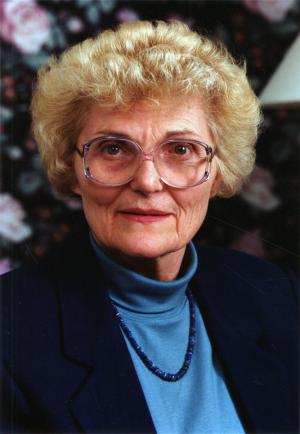
She was sentenced to die for the fatal stabbing, beating and robbery of her 71-year-old neighbor, retired college professor Dorothy Booth, in 1997.

McCarthy’s state court appeal contends black jurors were improperly excluded from her trial, and that her lawyers should have challenged the exclusions.

Lawyer Maurie Levin says the punishment should be stopped in light of a recent U.S. Supreme Court decision backing another Texas prisoner who raised similar arguments about attorney competence.

I. BACKGROUND

On July 21, 1997 McCarthy entered the home of her 71-year-old neighbor Dorothy Booth under the pretense of borrowing some sugar and then “stabbed Mrs. Booth five times, hit her in the face with a candelabrum, cut off her left ring finger in order to take her diamond ring, and nearly severed her left little finger as well.” McCarthy v. State, No. 74590, 2004 WL 3093230, at *2 (Tex. Crim. App. 2004). McCarthy then took Mrs. Booth’s purse and its contents, along with her wedding ring and fled in her car. Later, McCarthy bought drugs with the stolen money, used the stolen credit cards, and pawned the stolen wedding ring. This was the last in a series of robbery-murders that McCarthy committed against her elderly female acquaintances.

On August 18, 1997, McCarthy was charged with capital murder for causing Booth’s death in the course of committing and attempting to commit robbery. (Vol. 1, State Clerk’s Record, “CR”, at 2-3) Her first conviction and death-sentence in 1998 was reversed on direct appeal by the Texas Court of Criminal Appeals (“CCA”). See McCarthy v. State, 65 S.W.3d 47 (Tex. Crim. App. 2001) (hereinafter “McCarthy I”). She was subsequently tried and found guilty of capital murder in November of 2002, which was affirmed, see McCarthy v. State, 2004 WL 3093230 (“McCarthy II”), and her petition for a writ of certiorari was denied by the Supreme Court of the United States. McCarthy v. Texas, 545 U.S. 1117 (2005). McCarthy filed her second state habeas action on August 24, 2004, which was denied (without an evidentiary hearing in the trial court) by the CCA on September 12, 2007. Ex parte McCarthy, No. 50,360-02, 2007 WL 2660306 (Tex. Crim. App. 2007). On September 11, 2008, McCarthy filed in this court a petition for a writ of habeas corpus within the one-year limitations period.

Victim Dorothy Booth, 71.

Lawsuit has potential to stay all executions in Pennsylvania


NOVEMBER 4, 2012 http://www.pennlive.com

It’s been more than a decade since Pennsylvania executed an inmate on death row. Although another execution is scheduled for Thursday, it’s possible the execution will not happen and that the chamber at Rockview State Prison will remain empty for some time to come.

There’s a little-known 6-year-old federal class action lawsuit — Chester v Beard — that has the potential to stay all executions in Pennsylvania until it is resolved.

04michael.jpgHUBERT MICHAEL

The suit challenges the constitutionality of Pennsylvania’s execution protocol; the “class” in the action is composed of all inmates on death row, and there’s a hearing in the case Monday morning.

The immediate relevance is the pending execution of Hubert Michael, whose lawyers have asked the judge for a stay.

Michael is on death row for the July 12, 1993, murder of 16-year-old Trista Eng near Dillsburg in York County.

Michael, who was living in a boarding house in Lemoyne at the time, picked up Eng as she walked to work at the Dillsburg Hardee’s on Route 15. He drove her to a remote area of State Game Lands 242 and shot her three times with a .44 magnum — twice in the chest and once in the head.

When Michael subsequently pleaded guilty to the murder, he said he had been frustrated with women due to an unrelated rape charge in Lancaster County.

His attorneys recently asked a federal judge to reopen his appeals proceedings, citing serious mental health issues as the reason for Michael having repeatedly changed his mind on whether or not he wanted the appeal to proceed.

There’s a hearing on that later this week.

But the separate class action suit, in which his attorneys have also filed a motion for a stay, has the potential to affect all executions in Pennyslvania.

The U.S. Supreme Court ruled in 2008 that death by lethal injection is not — in and of itself — unconstitutional, but the ruling left open the possibility that individual state protocols for lethal injection could be challenged on constitutional grounds.

At issue is the fact that two of the three drugs used in the procedure can cause excruciating pain if the first drug — a fast-acting barbiturate — is an insufficient dose or improperly administered. What’s more, the second drug paralyzes the person, so he would not be able to communicate the fact he’s in excruciating pain. For this reason several states have banned use of the second drug when euthanizing animals.

In an oft-cited concurring opinion in the 2008 decision, Justice John Paul Stevens wrote, “It is unseemly — to say the least — that Kentucky may well kill [inmates] using a drug that it would not permit to be used on their pets.”

Nevertheless, the Supreme Court — including Stevens — ruled that Kentucky’s protocol passed constitutional muster.

Among the issues raised in the Pennsylvania case is the source of drugs to be used in the execution.

Certain drug manufacturers have banned the use of their product in executions, and lawyers for the prisoners argue that if black market or diluted drugs are used, the procedure could be unconstitutional.

The Department of Corrections argues that revealing the source of the drugs could result in the source refusing to sell them the drugs.

Two federal judges have ruled that the source of the drugs is pertinent and ordered DOC to reveal the information, but in doing so, both judges recognized DOC’s concern and ordered the information to be kept confidential. DOC refused.

Last week, Secretary of Corrections John Wetzel, on the advice of lawyers from the Attorney General’s office, refused to divulge the source of the drugs desipte the federal court orders.

Today’s hearing now includes a request for sanctions against Wetzel and DOC for “clear, flagrant and deliberate” violation of federal court orders.

With the parties in the case still fighting over discovery, it’s possible there might be no final resolution soon.

Experts in death penalty law say execution stays could be likely as long as the case is open.

Marc Bookman of the Atlantic Center for Capital Representation said the judge in the Pennsylvania case — Yvette Kane — “is a thorough judge who wants to do it properly.”

He noted that, “Lethal injection litigation has stayed executions in other states.”

Michael’s death warrant is the only one signed by Gov. Tom Corbett that has not been stayed for some other reason.

If Kane grants a stay, and if Chester v Beard continues its path through federal court, it could render any future death warrants moot until the case is settled.

When asked about that, Janet Kelley in the governor’s press office said, “The governor took an oath to uphold the law, and the law in Pennsylvania includes signing execution warrants.”

SOUTH DAKOTA – EXECUTION DONALD MOELLER, 10/30/2012 EXECUTED 10.24 P.M


Before being given a lethal injection at a South Dakota penitentiary, Moeller, 60, was asked if he had any last words.

‘No sir,’ he said, then added: ‘They’re my fan club?’

Donald Moeller, 60, received a lethal injection at the state penitentiary in Sioux Falls, marking South Dakota’s second execution this month in an unusual surge for a state that has carried out just two other death sentences since 1913. He was pronounced dead at 10:24 p.m.

last meal Tuesday of scrambled eggs, link sausage, tater tots and drip coffee.

OCTOBER 30,2012 http://www.chicagotribune.com

This frame grab provided by KELO-TV shows convicted killer Donald Moeller during a court appearance in Sioux Falls, S.D., Wednesday, July 18, 2012.  Ronal Moeller  Taken: Becky O'Connell was in the fourth grade when she set out to walk a few blocks from home to buy sugar to make lemonade, but never returnedBecky O’Connell

(Reuters) – A man convicted of raping and murdering a 9-year-old girl after kidnapping her from a convenience store in 1990 is scheduled to die by lethal injection on Tuesday night in South Dakota, the state’s second execution this month.

Donald Moeller, 60, who had declared his innocence and fought for two decades to prevent his execution, admitted during a court hearing in early October that he had committed the crime and stopped appeals that would further delay his death sentence from being carried out.

His execution is scheduled for 10 p.m. Central Time on Tuesday at the state prison in Sioux Falls.

According to court records, Moeller abducted Becky O’Connell from a Sioux Falls convenience store where she had gone to buy candy and repeatedly raped and stabbed her. Her body was found in a wooded area the next morning with extensive knife wounds.

Moeller was convicted of rape and murder and sentenced to death in 1992, but was granted a new trial after the state Supreme Court ruled that testimony of previous attempted sexual assaults on three other people should not have been permitted.

Moeller was convicted and sentenced to death again in 1997. He continued appeals until recent weeks but at a federal court hearing in early October he admitted the crimes.

“If the rape and murder of Rebecca O’Connell does not deserve the death penalty, then I guess nothing does,” Moeller told the judge, according to court records.

Executions have been rare in South Dakota. Before this year, the state had put to death only two inmates since 1913. On Oct 15, it executed Eric Robert on October 15 for the killing of prison guard Ron Johnson during a failed escape attempt.

If Moeller’s lethal injection is carried out on Tuesday, he will be the 34th inmate executed in the United States in 2012, according to the Death Penalty Information Center.

Y’all are killing an innocent man’: Last words of ‘mentally ill’ Texas death row inmate executed for killing 12-year-old girl


October 11, 2012 http://www.dailymail.co.uk

Last Minute Appeal Denied For Texas Death Row Inmate

An inmate on death row used his last breath to protest his innocence of the murder of a 12-year-old girl as he was executed in Texas last night despite his legal team arguing he was mentally ill.

Jonathan Green, 44, was jailed for the abduction, rape and strangling of Christina Neal, 12, whose body was found at his home a month after she was reported missing in 2000.

Several last ditch appeals were made on the basis of his mental health in an attempt to save him from the death penalty but Green was given a lethal injection after the U.S. Supreme Court rejected the arguments to spare him.

Too mentally ill: Attorneys argued that Jonathan Green should be spared execution for the murder of 12 year old Christina Leann Neal

The 11th-hour appeals delayed the punishment nearly five hours past the initial 6pm execution time and as the midnight expiration of the death warrant neared.

Asked by the warden if he had a statement from the death chamber gurney, Green shook his head and replied: ‘No’

But seconds later he changed his mind, adding: ‘I’m an innocent man. I never killed anyone. Y’all are killing an innocent man.’

He then looked down at his left arm where one of the needles carrying the lethal drug was inserted, and said: ‘I’ts me hurting bad.’

But almost immediately he began snoring loudly. The sounds stopped after about six breaths.

Green was pronounced dead 18 minutes later at 10.45pm.


Kentucky’s execution method questioned


September 26, 2012 http://www.kypost.com

FRANKFORT, Ky. – Two of the three inmates executed in Kentucky since 1976 didn’t contest their fates and went willingly to their deaths. One attorney worries that, under the state’s new proposed lethal injection rules, the inmate’s attorney won’t be notified in time to stop the process if a future volunteer has a change of heart.

Tom Griffiths, a Lexington attorney, was one of 11 people to address a public hearing Tuesday in Frankfort about Kentucky’s proposed execution method. A death row inmate could change his mind in the days or hours leading to an execution but still be put to death if not given the chance to speak to an attorney, Griffiths said.

“It doesn’t allow for any input at all,” Griffiths said.

The hearing was part of the legal process that could allow the state to resume executing inmates by the spring. The Kentucky Justice Cabinet must submit the proposed regulations to the Legislative Research Council by Oct. 15. The regulations then go to legislative committees for consideration. If there are no delays, state officials expect to appear before Franklin Circuit Judge Phillip Shepherd in February or March to ask him to lift an order barring inmates from being put to death. That order cited problems the judge found with the state’s three-drug lethal injection method.

Kentucky is trying to switch to a method similar to the one used by other states, with either a single dose of the anesthetic sodium thiopental or pentobarbital, a short-acting barbiturate. The state may use two drugs — the anti-seizure medication midazolam, better known as Versed, and hydromorphone, an analgesic known commonly as Dilaudid — if the chemicals used in a single-drug execution are not available seven days in advance.

The state estimates the cost of a single execution under the new process at $81,438. Under the three-drug method, the estimated cost to all the agencies involved was $63,516. The increase appears attributable to rising costs for the services provided by multiple agencies.

Death penalty opponents offered multiple critiques of the proposed method, ranging from access to attorneys to the two-minute time limit a condemned inmate is given to make a final statement. In the last days of a condemned inmate’s life, prison officials restrict access to the inmate, and only prison officials and prosecutors automatically receive legal updates at the prison on the day of an execution.

Public defender Tim Arnold said attorneys need access to phones as well as their clients as the execution nears to discuss legal options, particularly if the inmate opts to stop all appeals.

“We need to have some communication to the clients,” Arnold said.

Mikhail Victor Troutman, a volunteer for the Kentucky Coalition to Abolish the Death Penalty, described the two-minute time limit as unconscionably short.

“The average bowel movement lasts longer from beginning to end,” Troutman said.

Because the proposed method doesn’t call for the state to wait for a final ruling on a stay of execution, a defense attorney must have a way to notify his client of a court ruling once the process begins, public defender David Barron said.

“What if something occurs during the execution?” Barron said.

While critics dominated the comments, victim advocates and relatives called on executions to begin sooner rather than later.

“We, sir, didn’t get two minutes to say our goodbye,” said Katherine Nichols of Shelbyville, head of Kentuckians’ Voice for Crime Victims, whose brother James Carl Duckett Jr. was slain in a case that remains unsolved.

Beverly Walters of Shepherdsville, who carries a photo of her daughter Patricia Vance, who was killed by death row inmate Randy Haight, wants executions to start quickly.

“I’ll be glad to push his drugs,” Walters told The Associated Press.

OHIO – EXECUTION – DONALD PALMER 09/20/2012 10 a.m Last hours EXECUTED 10:35 a.m


“I want you to know I’ve carried you in my heart for years and years,” Palmer told six women in the room who are the widows, daughters and a niece of the men he killed. “I’m so sorry for what I took from you …I hope your pain and hurt die with me today.”

Update : Inmate calm, emotional as execution nears (9 a.m current time Ohio)

Palmer spent his last evening visiting with his son and daughter. He spent about two hours with them between 4:30 p.m. and 6:30 p.m. Wednesday.

He also visited with his ex-wife, Tammy Palmer, and his Pastor, Ernie Sanders.

A prison spokesman describes another meeting with his children at about 7:35 p.m. as “very emotional.”

For his final meal on Wednesday night, Palmer requested chipped ham, Velveeta cheese, 12 ounces of Helman’s mayonnaise, two sliced fresh tomatoes, one loaf of wheat bread, one bag of ranch Doritos, two large bags of peanut M&Ms, one quart of hazelnut ice cream, one piece of plain cheesecake and six 20 ounce bottles of Coke. He was served the meal at 8:05 p.m.

Prison officials say for the rest of the night,Palmer watched television and read, and at 11:57 p.m., he returned the two packs of M&Ms.

Palmer reportedly slept less than 30 minutes Wednesday night, spending most of his time reading, writing notes and watching television.

His last phone call was received at 4:41 a.m.

Palmer was also offered a breakfast on Thursday morning of apple juice, grits, boiled eggs, margarine, white break, milk, coffee and sugar, which he declined.

He had another visit with his kids between 6:30 a.m. and 7:30 a.m., a prison spokesperson said they read the Bible and sang together.

At 7:40 a.m. his ex-wife Tammy and Chaplain Lyle Orr began a visit. He received Communion at 7:51 a.m.

Witnesses to the 10 a.m. execution include these members of the victims families: Tiffany Nameth, the widow of Charles Sponhaltz; Tiffany Sponhaltz-Pugh, the daughter of Charles Sponhaltz; Charlene Farkas, the daughter of Charles Sponhaltz; Valerie Vargo-Jolliffe, the widow of Stephen Vargo; and Dee Roy, a friend of Valerie.

The brother of Charles Sponhaltz, Frank, was originally scheduled to witness, but will not be there. Donna Cottage, a niece of Charles Sponhaltz will attend instead.

Palmer requested that his Pastor, Ernie Sandors; his spiritual advisor, Lyle Orr; and his attorney, David Stebbins all witness the execution, as well.

september 20, 2012 http://www.news-register.net

Donald Palmer, 43, was moved from death row in Chillicothe to the single-cell death house in Lucasville for his scheduled execution by lethal injection today. His lawyer, David Stebbins of Columbus, said Wednesday he doesn’t plan to file any other appeals and expects the execution to proceed.

“He has always accepted responsibility for this and wants the families of his victims to have justice,” Stebbins, who plans to be among the witnesses, said.

TEXAS – Judge denies motions to deem death row inmate unfit for execution – Marcus Druery- STAYED


July 24, 2012 the eagle.com

Judge J.D. Langley on Monday morning denied several motions filed by attorneys of death row inmate Marcus Druery, 32, of Bryan, claiming their client is incompetent and therefore unfit to be executed next week.

Druery has been on death row since 2003 when a Brazos County jury sentenced him to death after convicting him of killing Skyyler Browne, then robbing him and setting the body on fire.

Druery’s lawyers, Kate Black and Greg Wiercioch with the Texas Defender Service, say their client is schizophrenic and doesn’t have a rational understanding of why he’s scheduled to receive lethal injection Aug. 1, which would make him ineligible for execution based on a U.S. Supreme Court decision.

They pointed to thousands of pages of medical and prison records that detail Druery’s condition and used letters written by the inmate to support their position.

Black said while her client may be able to recite when his execution date is, he lacks understanding of why he’s to receive the punishment and believes he is innocent.

Prosecutor Doug Howell did not argue that Druery is mentally ill, but did insist he meets the competency criteria for execution. Howell said Druery made comments at a June 29 hearing that he was not responsible for the murder, an indication that he understands the crime and why he is to be put to death.

In the motions filed and denied, Druery’s attorneys had asked Langley to appoint two independent psychiatrists to review the competency issue and schedule a hearing on the matter.

Black said the next step will be to appeal the decision with the Texas Criminal Court of Appeals, and if unsuccessful at that level, they will move on to the federal court system.

MISSISSIPPI – GARY CARL SIMMONS, JR.- Execution – June 20, 2012 6:00 p.m EXECUTED 6:16 p.m


Last Statement

“I’ve been blessed to be loved by some good people, by some amazing people. I thank them for their support. Let’s get it on so these people can go home. That’s it,” Simmons said as he lay strapped on a gurney in the execution chamber moments before the procedure was carried out.

Gary Carl Simmons Jr.
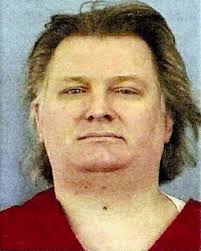
Source : Mississippi Court NO. 97-DP-01550-SCT

FACTS
In the early morning hours of August 11, 1996, Jeffery Wolfe and Charlene Brooke Leaser drove from Houston, Texas, to Jackson County, Mississippi. They had only known each other a few weeks. Wolfe asked Leaser to accompany him on a trip to the Gulf Coast to “pick up some money” from some friends that were in his debt. Leaser later learned that the debt accrued some weeks earlier from a transaction involving drugs. While on the Gulf Coast, Wolfe also planned to buy new wheel rims and tires for his vehicleand then return through New Orleans with Leaser for a short vacation. Wolfe left Houston with twelve hundred dollars in his wallet. Leaser had approximately two hundred dollars in her purse.
Upon their arrival on the Mississippi Gulf Coast, they checked into the King’s Inn Hotel. Wolfe and Leaser fell asleep. Wolfe awoke early and left Leaser at the Hotel to meet Sonny Milano, Timothy Milano’s brother, who worked at a local tire store. Apparently, they met a few weeks earlier while Wolfe was on the Coast conducting his illicit business deal. Later that afternoon, Wolfe and Sonny returned to the hotel room to pick up Leaser for dinner. Sonny Milano left to get his girlfriend and the four met in Wolfe and Leaser’s room at the hotel. They all took Wolfe’s white Honda Civic to Shoney’s where they dined together

Sonny Milano testified that during dinner, Wolfe asked if Sonny planned to go to Simmons’ house that evening. Sonny Milano, over loud protests from his girlfriend, decided to go to Simmons’ house, arriving there late that evening after dropping her off. When he arrived, Simmons and Sonny’s brother, Milano, were the only two at the house. Simmons asked Sonny if he had seen Wolfe and Sonny told him that they ate dinner together. Simmons asked Sonny to get in touch with Wolfe. Sonny contacted Wolfe at his hotel room and told Wolfe that he was at Simmons’s house. Wolfe was pleasantly surprised to hear that Sonny was there, since Sonny’s girlfriend was opposed to his going. Wolfe told Sonny that he would be there in a minute.

Sonny conveyed this information to Simmons, who less than one minute later, approached Sonny as he talked to Milano and asked him to leave the house. Sonny testified that he did not find this unusual because “that’s just Gary.” Sonny left without explanation, with Wolfe on his way.
After dinner, as the couples parted ways, Wolfe and Leaser returned to their hotel where they relaxed before leaving to meet Wolfe’s debtors. They drove out to Simmons’s house but found no one home. After leaving the house to pick up cigarettes and a beverage, Wolfe and Leaser returned to the hotel. To pass the time, the two then went to Wal-Mart, and again tried to meet Simmons at his house. Still, no one was home. By this time it was nearly 10 in the evening, August 12, 1996. Again, they returned to the hotel. Near midnight, Wolfe received a phone call while Leaser stood outside smoking a cigarette. Wolfe hung up the phone, gathered Leaser, and left the hotel headed toward Simmons’s house.

Upon arriving at the house, they found Simmons sitting on the front porch. The three began talking, and Simmons offered them some marijuana. Leaser and Simmons smoked a marijuana cigarette, but Wolfe refrained. Milano drove up as they finished the marijuana. Simmons was related to the Milanos by marriage; Simmons married their sister, Lori, but that marriage ended in divorce. Simmons offered his guests a beer, and all four adjourned to the kitchen and living room area. Simmons walked into the kitchen to get a beer while Leaser sat down at a table in the living room to roll another marijuana cigarette.

Leaser heard Wolfe and Milano chatting in the doorway separating the kitchen and living room. Wolfe mentioned the money he was owed. Apparently, Simmons and Milano owed Wolfe between twelve and twenty thousand dollars. They did not have the money, nor did they have the drugs. Simmons returned from the kitchen while Wolfe and Milano discussed this predicament. Leaser testified that she heard gunshots and saw Wolfe fall to the ground. Immediately there after, Simmons grabbed Leaser and ordered her not to look in the direction of Wolfe’s body. Leaser noticed Milano standing directly behind Wolfe holding what was later identified as State’s exhibit 29, a .22 caliber rifle.

Simmons took her to a back bedroom of the house and forced her to lie face down on the floor. He placed himself on top of her and began questioning her, asking whether she or Wolfe were law enforcement officers, whether Wolfe had any drugs with him, and who knew they were in Mississippi. She became understandably hysterical and simply responded that she did not know anything, as she and Wolfe had only become acquainted a few weeks ago. After Simmons finished questioning Leaser, he tied her hands behind her back, bound them to her feet with some rope, and locked her in a metal box with dimensions similar to a large footlocker near his bedroom, telling her he was “on a time frame” that he could not “mess up.”

Leaser managed to untie her hands and feet and began kicking the top of the box unsuccessfully trying to get out. Leaser continued kicking the top of the box until Simmons returned. He removed her from the box, stripped her nude, tied her up again and returned her to the box. Again, Leaser managed to free herself from the knotted ropes, but remained unable to get the top off of the metal box holding her. After some length of time had passed, Simmons returned to the box and took Leaser out. Simmons was undressed. He again forced her to lie face down on the floor of the bedroom. Leaser was in the middle of her menstrual cycle, so Simmons forced her to remove her tampon. He then raped her, telling her that her life depended on how well she performed sexually. Leaser testified that she thought he was holding a pistol to the back of her head during the assault.
Afterward, Simmons asked Milano if he would like to rape her as well; Milano declined. Simmons then took Leaser to the bathroom, allowed her to clean up with an athletic sock; and yet again, tied her up and locked her in the box.

While Leaser was secured in the box, Simmons and Milano went about their plan to dispose of Wolfe’s body. Simmons, by trade, was a butcher in a meat market. Simmons’s co-worker, Charles Jenkins, testified that during the preceding workweek, Simmons sharpened all of his knives and took them home from work for the weekend. Jenkins testified that this was rather unusual because everyone normally leaves their knives at work. Apparently, the only time that Jenkins could remember anyone taking their knives home was before leaving on an extended vacation or quitting the job. Simmons took those knives and began dismembering Wolfe in the bathtub. After gutting him and severing his head and limbs, Simmons, with Milano’s help, began distributing Wolfe’s remains into the bayou that ran behind Simmons’s property using a boat Simmons borrowed from neighbor Donald Taylor only hours before. Alligators were known to inhabit the area. The bayou had a running current that eventually, through tributaries, fed into the Gulf of Mexico.

Leaser, still locked in the box, again untied herself. Simmons returned to the box smoking marijuana and offered some to Leaser. She accepted. After sharing the marijuana cigarette, Simmons locked Leaser in the box with a blanket, where she fell asleep. She awoke to the sound of the telephone ringing. When no one answered it, Leaser reasoned that the house was empty. She mustered all of her energy and began banging on the top of the box. The lid popped off and Leaser managed to get out of the house. On her wayout of the door, she grabbed a bag with some of her clothes and belongings in it. She then partially dressed herself. Leaser ran to a neighbor’s house and convinced the neighbor to call the police. Upon their arrival, Leaser recounted the events of the previous twenty-four hours.

Many different law enforcement agencies were involved in investigating the scene of the crime. Leaser told police officers that Wolfe was inside, had been shot, and that she had been raped. Once the police arrived, they began to secure the area and investigate Leaser’s claims. Moss Point police officers Lee Merrill and Richard Cushman entered the house with Leaser to determine if a crime had, in fact, beencommitted and if so, whether other victims were still in the house. Once the police officers saw blood and other evidence of violent crimes, they left the house and secured a search warrant.

After obtaining a search warrant, the police called the Mississippi Crime Lab, and they entered the house to gather evidence. From inside the house, they collected portions of fingernails from a wastebasketa used condom, and two used tampons, among other things. The local police department also recovered a Marlin model # 60 .22 caliber rifle, eight empty .22 caliber shell casings, and Wolfe and Leaser’s personal items originally left in their hotel room.

Near the rear of the property, a small “jon boat” was spotted near the water. Officers Magee and Graff investigated and requested that Officer Cushman join them. Near the boat they found four five gallon white buckets, one green plastic barrel, a one gallon bottle of Clorox bleach, a brush, a knife, and a bushhook. The brush and bushhook appeared to be covered in blood. An aluminum boat paddle was covered in bloody finger prints. In the boat, the officers discovered a piece of flesh. The local coroner called Dr. Paul McGarry to help with the investigation. Outside the house, but still on or very near Simmons’s property, Dr. McGarry found the rest of Wolfe’s body. Dr. McGarry testified that he and a group of police officers floated approximately two hundred yards down the bayou over which they found various parts of the skin, muscle, chest, abdominal walls, penis and testicles, lungs, heart, intestines, liver, as well as fingers and toes from a young human white male.

Dr. McGarry testified that the body parts had been cut sharply and with precision into block like sections of tissue. Most of the bones had been separated. Of the flesh he found and examined, several pieces had bullet holes in them. One portion of the chest had five bullet holes in it while another portion revealed one bullet hole. Some of the internal organs, the heart and lungs specifically, also had bullet holes in them. The left lung had a bullet lodged in it. Dr. McGarry testified that these gunshot wounds were the cause of death.
A further search of the area revealed Wolfe’s severed head, upper chest portion, and pelvic area sans reproductive organs. Over two days of searching, they found, on the first day, eighty-five pounds of human remains the largest of which was seventeen inches in diameter. The following day, they collected forty-one pounds of similar pieces, with the largest piece measuring nineteen inches. Some pieces found later were large enough to have identifiable tatoos. All of the flesh was identified as belonging to Wolfe.
Simmons left his house after dismembering and disposing of Wolfe. He drove to Mobile, Alabama, where he made a videotape for his ex-wife and children. Throughout the video recording, Simmons spoke to his family in the most general terms about what he had done, although he never specifically admitted committing any crimes. Simmons mailed the video cassette to his wife and drove back to the Coast. Upon arriving at his house, Simmons noticed that Leaser had escaped. He immediately left again and went to see his friend Dennis Guess.
Guess testified that while they were conversing, Simmons volunteered that he had just “whacked a drug dealer,…deboned him, cut him up in little pieces, and put him in the bayou.” Simmons told Guess that he used a butcher knife and bolt cutters to accomplish the task. Simmons also told Guess that he had a girl in a box and planned to “train her” and “keep her around as a sex toy,” but confessed that she had escaped. The conversation then turned to what realistic options Simmons had left. Simmons, after further discourse with Guess on this subject, decided against fleeing the jurisdiction or committing suicide. He eventually decided to turn himself in to the authorities.

Kentucky changing its execution method


June 1, 2012 Source : http://www.wkyt.com

Executions in Kentucky could resume later this year after a move Thursday by the state’s Justice Cabinet. The death penalty has been on hold for nearly two years because of questions in part over the injection method used to execute inmates.

Dennis Briscoe has waited a long time for justice since Ralph Baze murdered his father and uncle. The convicted killer has lived on death row for nearly two decades. He’s one of several inmates who has exhausted his appeals and challenged the three-drug injection method as cruel and unusual punishment.

Claims that Kentucky’s three-drug cocktail violates the Eighth Amendment are not new. In 2007 the United States Supreme Court ruled the method constitutional. However that was before other states began using a single-drug system some consider more humane because of problems with the ingredients in the three-drug cocktail.

Debate over the competing methods was a critical factor that led a Franklin Circuit judge to temporarily halt executions across the state. Last month that judge ordered the Department of Corrections to consider a change. Now state officials say they will propose a new system by the end of July. “I’m glad to see a proactive move by the Department of Corrections in order to help fix this situation we have with the death penalty currently,” Briscoe said.

If that new system proposed allows for a single-drug execution, the judge in the case has ruled that any claims of cruel and unusual punishment by inmates will be dismissed. “I’m optimistic now that there’s going to be this recent move, this recent change,” Briscoe said, “However, I’m cautious as well because there could be a whole nother line of arguments.”

Today’s developments could lead to a new system as early as late summer.

IDAHO – Idaho Opts For 1 Drug Only In Execution Policy


May 18, source : AP 

BOISE, Idaho — Idaho’s corrections chief says the agency is switching to a one-drug lethal injection for future executions of death row inmates.
Idaho Department of Corrections Director Brent Reinke said Friday execution teams will administer a single, lethal dose of the surgical sedative pentobarbital.
That’s a change from the execution carried out by the agency last fall, when the condemned inmate was injected with three-drug mixture, which included pentobarbital.
Reinke says the change was driven by difficulties in obtaining the other two chemicals used to kill Paul Ezra Rhoades in November.
The decision makes Idaho the latest death penalty state to switch to using only pentobarbital in its lethal injection.
Reinke says the one-drug protocol will be used in the June 12 execution of convicted murderer Richard Leavitt.