february 12, 2014
UPDATE: Juan Carlos Chavez was executed at 8:17 p.m., according to the governor’s office.
Juan Carlos Chavez had no last words in death chamber, but apparently wrote out a last statement to be distributed later
UPDATE 6.30 PM
The execution of Juan Carlos Chavez, the South Miami-Dade farmhand who raped and murdered 9-year-old Jimmy Ryce in 1995, was temporarily delayed Wednesday evening because of last-minute legal wrangling.
A spokeswoman for the office of Gov. Rick Scott said the state, as of 6:30 p.m., was still awaiting a final go-ahead from the U.S. Supreme Court.
UPDATE 3.55 pm
For his last meal, Chavez requested ribeye steak; French fries; a fruit mixture of mangoes, bananas and papaya; strawberry ice cream; and mango juice. He ate and drank all of it, according to Department of Corrections spokeswoman Jessica Cary.
Chavez had no visitors Wednesday except for a Catholic spiritual adviser. Cary said his demeanor was calm.
————————————————————————–
he case haunted Miami-Dade Police Det. Pat Diaz’s career
For Pat Diaz, retracing the steps of a tragedy is not easy.
“That’s the bus stop,” Diaz says, pointing at a street corner in the area near Homestead known as the Redland.
The former Miami-Dade Police homicide detective led the search for a missing boy named Jimmy Ryce back in 1995.
“When you have a missing 9-year-old, you want to believe, you always have the hope that you’ll find the child,” Diaz said, reminiscing about the case that would haunt his career.
To this day, the street sign at the corner is a memorial to the little boy who never grew up, decorated with flowers and pictures of Jimmy. A man named Juan Carlos Chavez took Jimmy, a case that struck fear into the hearts of parents everywhere. Detective Diaz heard the details when Chavez confessed.
“He tells us he rolls down his window, points the gun at him and says get in the trunk, Jimmy crosses the street and gets in the trunk with him, and basically this is where it happened,” Diaz said, standing at the spot at which Chavez abducted the boy. “Jimmy was probably 250 yards from his house, that’s how close he was to his house.”
Volunteers passed out flyers, joined police in searching the area, and it was all too late. Chavez had already abducted, tortured, and killed Jimmy in his trailer.
“It’s the parent’s worst nightmare,” said Michael Band, a Miami attorney who, in 1995, was the prosecutor on the case.
Band won the first-degree murder conviction and a death sentence for Chavez, who is scheduled to be executed Wednesday.
But it wasn’t easy, Band says. There was tremendous pressure from the community, the trial had to be moved to Orlando to seat an impartial jury, and he had to control his own emotions.
“You don’t remove yourself, you try to be as rational as one can be but you think about things like that, you think, that could’ve been my kid, could’ve been your kid,” Band said.
Chavez was on the way to death row, but the pain only got worse for the victim’s father, Don Ryce: Over the years he lost everyone except his son, Ted Ryce. After Jimmy’s murder, the stress and depression hung over the Ryce family. A heart attack killed Don Ryce’s wife, Claudine Ryce, in 2009. His daughter committed suicide, still despondent over Jimmy’s death.
“If there was ever anyone in the world who deserved to die it’s the man who did that,” Don Ryce said last month, speaking after the governor signed the death warrant for Chavez.
“I think, sadly, the statistics are that predators are not going to be deterred because Juan Carlos Chavez gets executed,” Band said.
That doesn’t mean Band has second thoughts about asking for the death penalty. He agrees that Chavez got what he deserved. Band says the verdict was professionally satisfying, but there’s a hole in his heart when he thinks of Don Ryce.
“He still goes home without Jimmy,” Band said, and the execution won’t change that awful reality. (nbcmiami)
February 11, 2014
Juan Carlos Chavez 
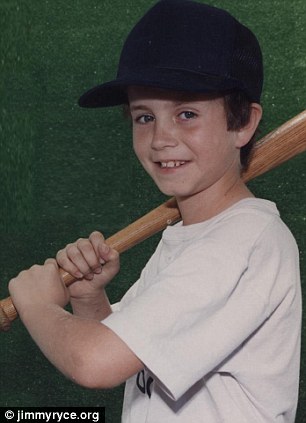 Jimmy Rice
MIAMI (CBSMiami) — “It’s been a long, long time coming,” said the father of Jimmy Ryce, upon learning that Wednesday, February 12th is the day the man who kidnapped, raped, murdered and dismembered his 9-year-old son, will be put to death.
It was September 11, 1995 when Jimmy Ryce disappeared without a trace when he got off his school bus near his home in The Redland.
Juan Carlos Chavez, 46, was convicted of the heinous crime three years later.
It was a trial that captivated South Florida and the rest of the nation.
Chavez was charged with the crime three months after Jimmy vanished. Chavez confessed but years would pass before he came to trial. The delay tormented Jimmy’s parents.
“There is no constitutional right to delay a trial until the victim’s families die of old age,” said Jimmy’s father Don Ryce in May of 1998.
Chavez did eventually go before a jury in Orlando. The trial was moved there because of intense media scrutiny. The Ryce family came to the trial every day, including Jimmy’s sister Martha.
“And I’m here to represent my family, and Jimmy, because he can’t be here,” said Martha in September of 1998.
Lead prosecutor Catherine Vogel told of Chavez confessing to snatching Jimmy Ryce from the side of the road, raping and shooting him in a remote trailer, and then using a wicked looking bush hook to dismember the boy’s body.
“He took the tool, he chopped the body into about four different pieces,” said Vogel during the 1998 trial.
Chavez sealed the remains with concrete in plastic planters.
For then prosecutor Vogel, now Monroe County’s State Attorney, they are images she will never forget.
“We had to excavate those planters, we had to dig through the concrete to find poor little Jimmy Ryce’s body that had been dismembered,” said Vogel.
Ranch owner Susan Scheinhaus testified how she found Jimmy’s book bag and homework in a travel camper that Chavez lived in which was located on her property where he worked as a farm hand. But the defense dropped a bombshell.
“The detectives were telling me what I should and should not write,” said Chavez through a translator at the trial.
Chavez recanted his confession and claimed his employer’s son killed Jimmy.
The Ryce’s watched outraged at the defense ploy.
“Their dream is to exchange high fives over Jimmy’s grave, while they set their client loose to rape and murder another child,” said an angry Don Ryce during the trial.
But former homicide detective Felix Jimenez, who is now with the Inspector General’s office, took Chavez’s confession. He said Chavez first told a series of lies including a tale of accidentally running over Jimmy and putting his body in a canal that divers searched for hours before Chavez finally came clean.
“He admitted in detail to everything that he did,” said Jimenez. “His confession was so detailed, that only the killer would know.”
For instance, police didn’t know until Chavez told them that Jimmy was killed in the filthy, falling down trailer.
“When we went there and we looked, and we found Jimmy Ryce’s blood exactly where he said he shot him, then we knew we had gotten to the truth,” said Vogel.
A gun found in Chavez’s camper was an exact ballistics match for the bullet that killed Jimmy.
The jury convicted Chavez on all counts in less than an hour.
“Had he gotten away with it, he would have killed again and again and again,” said Michael Band, the man who prosecuted Chavez. Band is now a private defense attorney.
On November 23, 1998, Chavez was sentenced to death.
Judge Marc Schumacher sentenced Chavez to die in old sparky, the electric chair. But the appeals dragged on for years.
At a hearing in January 2007, his mother said, “You know, it’s been over eleven years since Jimmy was killed, and he was only nine years old. So he’s been dead longer than he lived.” Jimmy would have been 21 years old at that hearing.
Governor Rick Scott finally signed the death warrant for Chavez in January.
Claudine Ryce didn’t live to see it. She died from coronary disease, a broken heart, in 2009.
Jimmy’s sister Martha took her own life last year at the age of 35.
When Don Ryce learned of the Chavez’s death warrant last month, he wept. His son Ted is his only remaining family.
“We’ve suffered a terrible loss,” said an emotional Don Ryce. “A loss you don’t wish on anyone.”
Monday, February 10th, Chavez was denied a stay of execution by the U.S. 11th Circuit Court of Appeals. It’s one of the final appeals left for Juan Carlos Chavez before his scheduled execution on Wednesday evening. click here opinion.pdf


 Claim your Innocence