January 11, 2024
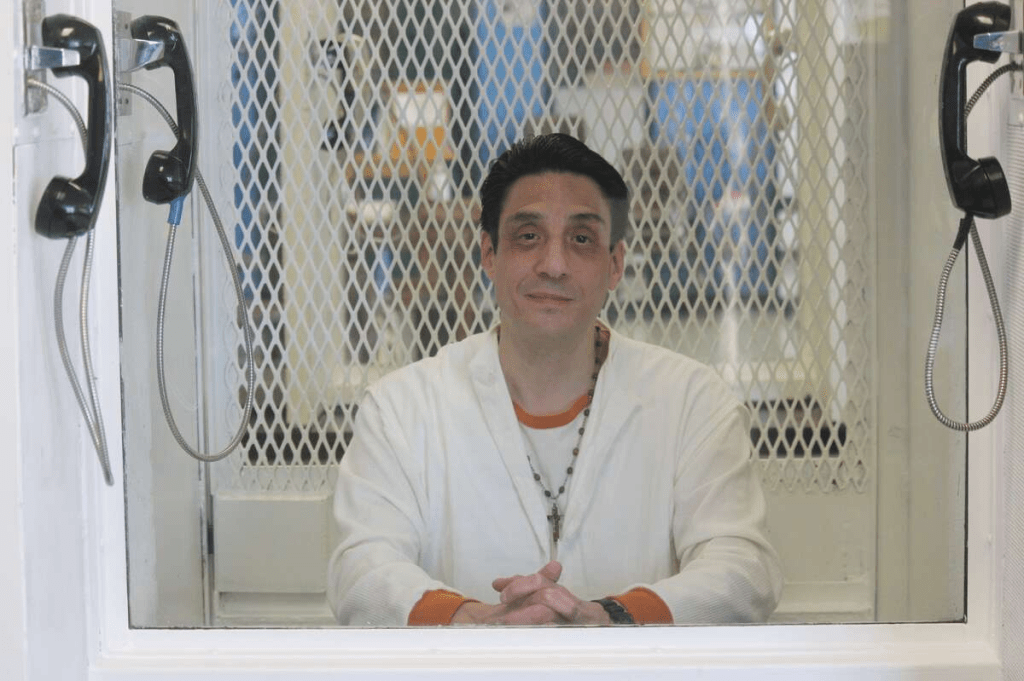
Texas death row inmate Ivan Cantu is now facing his third scheduled execution date after the Texas Criminal Court of Appeals denied him a new trial following his filing of a petition to present new evidence in his case.
Cantu has been on death row for over two decades for murdering his cousin, James Mosqueda, a known drug dealer, and his cousin’s fiance, Amy Kitchen, in 2000.
Since Cantu’s conviction in 2001, new information and holes in the state’s case raise questions of reasonable doubt, according to Matt Duff, a private investigator who has researched the case since 2019. The new developments in Cantu’s case included a trial witness recanting his testimony and a pair of jurors in his trial coming forward to express concerns about the conviction.
Duff documented his private investigation and created a lengthy, in-depth podcast titled “Cousins by Blood.” His work dives into Cantu’s case with first-hand interviews, including Cantu’s early jail tapes in 2000 and an interview with the state’s star witness that helped put him on death row.
Ivan Cantu has been given two prior execution dates, but both have been halted.
In 2022, after the DNA hearing concluded, Cantu received an execution date for April 2023. But Collin County District Judge Benjamin Smith withdrew that death warrant after Bunn filed her appeal outlining the new evidence.
Then, on August 23, a judge dismissed the new evidence for procedural reasons without considering the merit of her arguments.
This month, Bunn filed a new request with the court to reexamine the ballistic evidence in the case since Duff and other investigators have conducted their own ballistics experiments that cast more doubt on some of the police’s original conclusions.
To this day, Bunn doesn’t know if she has received everything related to Cantu’s case from the Collin County District Attorney’s Office and from the Dallas Police Department. Part of the issue is that 20 years have passed since the original trial, and many people currently working in those departments weren’t around then. Another issue was jurisdiction—Dallas police, then and now, don’t usually work with Collin County prosecutors—but the murders happened in a portion of North Dallas that extends into Collin County.
Winning post-conviction relief is extremely difficult in Texas, though not impossible: 464 people have been exonerated of various crimes here since 1989, according to the National Registry of Exonerations. About a third of those cases were overturned due to perjury or false accusations, according to the registry. Nearly one in five was due to inadequate legal defense.
Almost 70 exonerations were from Dallas County. But Cantu’s case was tried in Collin County, even though it was investigated by the Dallas Police Department. Since 1989, only four people sent to prison from Collin County have been exonerated.
The judge who presided over Cantu’s trial, Charles Sandoval, has since been heralded “the worst judge in Collin County”. Known as “Hang Them All Sandoval,” he lost his seat in 2008 after developing a reputation for cruelty and for making decisions based not on law but on courtroom favorites. One of the four recent Collin County exonerations was of former Judge Suzanne Wooten, who was convicted of bribery after successfully challenging Sandoval in a judicial campaign. That accusation came directly from Sandoval, but the charges were later overturned and discredited as a baseless vendetta.
On Valentine’s Day, Cantu will submit his paperwork to tell the prison system who he wants there on his execution day and what he wants the state to do with his body afterward. He’ll explain where he wants his few belongings and any money left in his account to go.
Sister Helen Prejean, author of the book Dead Man Walking, is acting as Cantu’s spiritual adviser. She’ll be there with Cantu during his execution if his date holds. But in the meantime, she is a fierce advocate for the date to be withdrawn.
“There’s no way I’m simply going to acquiesce, hold his hand, and pray him into eternity without doing every single thing I can to get the truth out so that Texas does not execute this man who very possibly might be innocent,” Prejean told
Prejean, along with Cantu’s other supporters, are calling on Collin County to again withdraw his death warrant. It’s one of many ongoing efforts to spare Cantu’s life—and to give him another day in court. Officials from the county did not respond to requests for comment for this story.
“If you want to execute me, that’s fine,” Cantu said over the closed-circuit phone in the Polunsky Unit. “Just give me a fair trial.”
“The criminal court of appeals deemed the claims in Ivan’s application were procedural barred, meaning it should have been included in Ivan’s 2004 habeas filing,” Duff said. “If the claims raised were based on a 2009 law (ex. Parte Chabot) and 2022 recant of a state’s star witness, that information was clearly unavailable in 2004.”
“The court’s ruling is unjust and needs to be overturned,” Duff added.
Cantu responded to the court’s decision on death row through the Texas Department of Criminal Justice email system.
“I’m disappointed with the Texas Court of Criminal Appeals for not reviewing my case on the merits,” Cantu writes. “I’m entitled to a new trial according to state law precedent and the constitution of the United States.”
“Where is State Rep. Jeff Leach?” Cantu added. “Leach advocates for other death row inmates such as Melissa Lucio and Jeffery Wood, who are not even from Collin County. Why isn’t he advocating for the injustice occurring in his own backyard?”
Texas State Rep. Jeff Leach was contacted for comment by phone and via email on Friday, Sept. 1, and again on Monday, Sept. 5, and has yet to reply as of noon on Wednesday, Sept. 6.
Cantu’s execution date is scheduled for Feb. 28, 2024.
Documentary

 Women Who Kill Men: California Courts, Gender, and the Press examines the role that gender played in the trials of women accused of murder in California between 1870-1958. The authors trace the changing views of the public towards women and how these views may have affected the outcomes of the cases. Some defendants faced the death penalty and were executed; some were spared. Often the public was deeply fascinated with all aspects of the trial and punishment. The book, written by Gordon Morris Bakken and Brenda Farrington, provides in-depth details of 18 murder trials through court records and news coverage.
 A new book by Kathleen Cairns explores the intriguing story of Barbara Graham, who was executed for murder in California in 1955, and whose case became a touchstone in the ongoing debate over capital punishment. In Proof of Guilt: Barbara Graham and the Politics of Executing Women in America, Cairns examines how different narratives portrayed Graham, with prosecutors describing her as mysterious and seductive, while some of the media emphasized Graham’s abusive and lonely childhood. The book also describes how Graham’s case became crucial to the death-penalty abolitionists of the time, as questions of guilt were used to raise awareness of the arbitrary and capricious nature of the death penalty.Cairns is a lecturer in the Department of History at California Polytechnic State University. She has also written The Enigma Woman: The Death Sentence of Nellie May Madison (Nebraska, 2007) and Hard Time at Tehachapi: California’s First Women’s Prison.
 A new international manual covering psychiatric and psychological issues arising in capital cases has been prepared by a team of forensic psychiatrists for use by attorneys, judges, and mental health officials. The Handbook of Forensic Psychiatric Practice in Capital Cases sets out model structures for psychiatric assessment and report writing for every stage of a death penalty case, from pre-trial to execution. It also discusses ethical issues, particularly with regard to an inmate’s competence to be executed. The handbook is published by
  The Michigan Committee Against Capital Punishment has published a collection of over 40 years of testimony, brochures, and other information by attorney and death-penalty expert Eugene Wanger. The collection begins with the resolution from Michigan‘s 1962 constitutional convention banning capital punishment in the state. It includes Wanger’s testimony at numerous hearings opposing bills attempting to reinstate the death penalty, as well as brochures and short articles. The bound and boxed volume provides a comprehensive overview of the history of death-penalty legislation in Michigan. Through legislation in 1846, the state became first English-speaking government to abolish the death penalty for murder and lesser crimes.
 A forthcoming book, Fighting for Their Lives: Inside the Experience of Capital Defense Attorneys by Susannah Sheffer, explores the impact of the death penalty on defense attorneys with clients on death row. Through interviews with capital defenders, the author examines how attorneys try to cope with the stress of representing clients facing execution. Sister Helen Prejean, author of Dead Man Walking, said, “This is an important book. The death penalty’s impact is so much broader than we realize, and these attorneys are affected in ways that even I had not imagined. I am grateful to Susannah Sheffer for bringing these stories to light.” Richard Burr, a prominent capital defense attorney, called the book “a beautiful, heartbreaking, and above all uplifting story that makes an essential contribution to literature on the death penalty.” The book is available through Amazon and other outlets.
 A new book by Professor Robert Bohm of the University of Central Florida examines the personal impact of capital punishment on those involved in the criminal justice system, beyond the victim and perpetrator of the crime. Bohm listened to those involved in all steps of the judicial process, including investigators, jurors, and the execution team. He has probed the effects of the death penalty on the families of both the murder victim and the offender. The book, Capital Punishment’s Collateral Damage, includes testimonials from members of each group, “allowing the participants…to describe in their own words their role in the process and, especially, its effects on them.” Bohm concludes that this “collateral damage is another good argument for rethinking the wisdom of the ultimate sanction.”
 A new book, “Where Justice and Mercy Meet: Catholic Opposition to the Death Penalty,” offers a comprehensive discussion of Catholic teaching on capital punishment. It explores a wide range of issues related to the death penalty, including racism, mental illness, and economic disparities. The book is edited by Trudy Conway and David Matzko McCarthy, both professors at Mount St. Mary’s University, and Vicki Schieber–the mother of a murder victim. It includes a foreword by Sister Helen Prejean, author of Dead Man Walking. Joseph A. Fiorenza, Archbishop Emeritus of Galveston-Houston, said the book “is a treasure trove of information on the necessity and urgency to abolish an antiquated approach to capital crimes.”
 Claim your Innocence