[February 20, 2014
[February 20, 2014
february 20, 2014 (theguardian)
The state corrections official who stands beside condemned inmates as they take their last breaths in Florida’s death chamber recently pulled back the veil on what has largely been a very secretive execution process.
The testimony was given during a 11 February hearing in a lawsuit involving Paul Howell, a death row inmate scheduled to die by lethal injection 26 February. Howell is appealing his execution; his lawyers say the first of the injected drugs, midazolam, isn’t effective at preventing the pain of the subsequent drugs.
The Florida supreme court specifically asked the circuit court in Leon County to determine the efficacy of the so called “consciousness check” given to inmates by the execution team leader.
The testimony is notable because it shows that the Department of Corrections has changed its procedures since the state started using a new cocktail of lethal injection drugs. A shortage of execution drugs around the country is becoming worse as more pharmacies conclude that supplying the lethal chemicals is not worth the bad publicity or legal and ethical risks.
Timothy Cannon, who is the assistant secretary of the Florida Department of Corrections and the team leader present at every execution, told a Leon County court that an additional inmate “consciousness check” is now given due to news media reports and other testimony stemming from the 15 October execution of William Happ.
Happ was the first inmate to receive the new lethal injection drug trio. An Associated Press reporter who had covered executions using the old drug cocktail wrote that Happ acted differently during the execution than those executed before him. It appeared Happ remained conscious longer and made more body movements after losing consciousness.
Cannon said in his testimony that during Happ’s execution and the ones that came before it, he did two “consciousness checks” based on what he learned at training at the Federal Bureau of Prisons in Indiana – a “shake and shout”, where he vigorously shakes the inmate’s shoulders and calls his name loudly, and also strokes the inmate’s eyelashes and eyelid.
After Happ’s execution, Cannon said the department decided to institute a “trapezoid pinch”, where he squeezes the muscle between an inmate’s neck and shoulder.
It was added “to ensure we were taking every precaution we could possibly do to ensure the person was, in fact, unconscious”, Cannon said. “To make sure that this process was humane and dignified”.
Lawyers for Howell say that they are concerned that the midazolam does not produce a deep enough level of unconsciousness to prevent the inmate from feeling the pain of the second and third injection and causes a death that makes the inmate feel as though he is being buried alive.
“Beyond just the fact that constitution requires a humane death, if we decided that we wanted perpetrators of crime to die in the same way that their victims did then we would rape rapists. And we don’t rape rapists,” said Sonya Rudenstine, a Gainesville attorney who represents Howell.
“We should not be engaging of the behavior that we have said to abhor. If we are going to kill people, we have to do it humanely. It’s often said the inmate doesn’t suffer nearly as much as the victim, and I believe that’s what keeps us civilized and humane.”
Corrections spokeswoman Jessica Cary said on Wednesday that the department “remains committed to doing everything it can to ensure a humane and dignified lethal injection process”.
Cannon explained in his testimony that each execution team member “has to serve in the role of the condemned during training at some point”.
“We’ve changed several aspects of just the comfort level for the inmate while lying on the gurney,” he said. “Maybe we put sponges under the hand or padding under the hands to make it more comfortable, changed the pillow, the angle of things, just to try to make it a little more comfortable, more humane and more dignified as we move along.”
He said an inmate is first injected with two syringes of midazolam and a syringe of “flush”, a saline solution to get the drug into the body. Midazolam is a sedative.
Once the three syringes have been administered from an anonymous team of pharmacists and doctors in a back room, Cannon does the consciousness checks.
Meanwhile, the team in the back room watches the inmate’s face on a screen, which is captured by a video camera in the death chamber. The inmate is also hooked up to a heart monitor, Cannon said.
There are two executioners in the back room – the ones who deploy the drugs – along with an assistant team leader, three medical professionals, an independent monitor from the Florida Department of Law Enforcement and two corrections employees who maintain an open line to the governor’s office.
If the team determines that the inmate is unconscious, the other two lethal drugs are administered.
TALLAHASSEE, Fla., Feb. 14 (UPI) — Florida Gov. Rick Scott has signed a death warrant for convicted killer Robert Lavern Henry, the day after the execution of Juan Carlos Chavez. his office said.
Chavez, convicted for the 1995 rape, dismemberment and death of Jimmy Ryce, 9, in Redland, Fla., was put to death Wednesday.
Scott announced Thursday he had signed an order for the execution of Henry, who bludgeoned and burned two Deerfield Park, Fla., coworkers in a 1987 staged robbery.
Henry’s execution is scheduled for March 20. He will become the 84th person executed in Florida since the death penalty was reinstituted in 1976, and the 14th during Scott’s tenure as governor.
Since the death penalty returned, no other Florida governor has presided over as many executions in his first term, the Miami Herald said Friday.
(Source: UPI)
february 12, 2014
UPDATE: Juan Carlos Chavez was executed at 8:17 p.m., according to the governor’s office.
UPDATE 6.30 PM
The execution of Juan Carlos Chavez, the South Miami-Dade farmhand who raped and murdered 9-year-old Jimmy Ryce in 1995, was temporarily delayed Wednesday evening because of last-minute legal wrangling.
A spokeswoman for the office of Gov. Rick Scott said the state, as of 6:30 p.m., was still awaiting a final go-ahead from the U.S. Supreme Court.
UPDATE 3.55 pm
For his last meal, Chavez requested ribeye steak; French fries; a fruit mixture of mangoes, bananas and papaya; strawberry ice cream; and mango juice. He ate and drank all of it, according to Department of Corrections spokeswoman Jessica Cary.
Chavez had no visitors Wednesday except for a Catholic spiritual adviser. Cary said his demeanor was calm.
————————————————————————–
For Pat Diaz, retracing the steps of a tragedy is not easy.
“That’s the bus stop,” Diaz says, pointing at a street corner in the area near Homestead known as the Redland.
The former Miami-Dade Police homicide detective led the search for a missing boy named Jimmy Ryce back in 1995.
“When you have a missing 9-year-old, you want to believe, you always have the hope that you’ll find the child,” Diaz said, reminiscing about the case that would haunt his career.
To this day, the street sign at the corner is a memorial to the little boy who never grew up, decorated with flowers and pictures of Jimmy. A man named Juan Carlos Chavez took Jimmy, a case that struck fear into the hearts of parents everywhere. Detective Diaz heard the details when Chavez confessed.
“He tells us he rolls down his window, points the gun at him and says get in the trunk, Jimmy crosses the street and gets in the trunk with him, and basically this is where it happened,” Diaz said, standing at the spot at which Chavez abducted the boy. “Jimmy was probably 250 yards from his house, that’s how close he was to his house.”
Volunteers passed out flyers, joined police in searching the area, and it was all too late. Chavez had already abducted, tortured, and killed Jimmy in his trailer.
“It’s the parent’s worst nightmare,” said Michael Band, a Miami attorney who, in 1995, was the prosecutor on the case.
Band won the first-degree murder conviction and a death sentence for Chavez, who is scheduled to be executed Wednesday.
But it wasn’t easy, Band says. There was tremendous pressure from the community, the trial had to be moved to Orlando to seat an impartial jury, and he had to control his own emotions.
“You don’t remove yourself, you try to be as rational as one can be but you think about things like that, you think, that could’ve been my kid, could’ve been your kid,” Band said.
Chavez was on the way to death row, but the pain only got worse for the victim’s father, Don Ryce: Over the years he lost everyone except his son, Ted Ryce. After Jimmy’s murder, the stress and depression hung over the Ryce family. A heart attack killed Don Ryce’s wife, Claudine Ryce, in 2009. His daughter committed suicide, still despondent over Jimmy’s death.
“If there was ever anyone in the world who deserved to die it’s the man who did that,” Don Ryce said last month, speaking after the governor signed the death warrant for Chavez.
“I think, sadly, the statistics are that predators are not going to be deterred because Juan Carlos Chavez gets executed,” Band said.
That doesn’t mean Band has second thoughts about asking for the death penalty. He agrees that Chavez got what he deserved. Band says the verdict was professionally satisfying, but there’s a hole in his heart when he thinks of Don Ryce.
“He still goes home without Jimmy,” Band said, and the execution won’t change that awful reality. (nbcmiami)
February 11, 2014
Juan Carlos Chavez
Jimmy Rice
MIAMI (CBSMiami) — “It’s been a long, long time coming,” said the father of Jimmy Ryce, upon learning that Wednesday, February 12th is the day the man who kidnapped, raped, murdered and dismembered his 9-year-old son, will be put to death.
It was September 11, 1995 when Jimmy Ryce disappeared without a trace when he got off his school bus near his home in The Redland.
Juan Carlos Chavez, 46, was convicted of the heinous crime three years later.
It was a trial that captivated South Florida and the rest of the nation.
Chavez was charged with the crime three months after Jimmy vanished. Chavez confessed but years would pass before he came to trial. The delay tormented Jimmy’s parents.
“There is no constitutional right to delay a trial until the victim’s families die of old age,” said Jimmy’s father Don Ryce in May of 1998.
Chavez did eventually go before a jury in Orlando. The trial was moved there because of intense media scrutiny. The Ryce family came to the trial every day, including Jimmy’s sister Martha.
“And I’m here to represent my family, and Jimmy, because he can’t be here,” said Martha in September of 1998.
Lead prosecutor Catherine Vogel told of Chavez confessing to snatching Jimmy Ryce from the side of the road, raping and shooting him in a remote trailer, and then using a wicked looking bush hook to dismember the boy’s body.
“He took the tool, he chopped the body into about four different pieces,” said Vogel during the 1998 trial.
Chavez sealed the remains with concrete in plastic planters.
For then prosecutor Vogel, now Monroe County’s State Attorney, they are images she will never forget.
“We had to excavate those planters, we had to dig through the concrete to find poor little Jimmy Ryce’s body that had been dismembered,” said Vogel.
Ranch owner Susan Scheinhaus testified how she found Jimmy’s book bag and homework in a travel camper that Chavez lived in which was located on her property where he worked as a farm hand. But the defense dropped a bombshell.
“The detectives were telling me what I should and should not write,” said Chavez through a translator at the trial.
Chavez recanted his confession and claimed his employer’s son killed Jimmy.
The Ryce’s watched outraged at the defense ploy.
“Their dream is to exchange high fives over Jimmy’s grave, while they set their client loose to rape and murder another child,” said an angry Don Ryce during the trial.
But former homicide detective Felix Jimenez, who is now with the Inspector General’s office, took Chavez’s confession. He said Chavez first told a series of lies including a tale of accidentally running over Jimmy and putting his body in a canal that divers searched for hours before Chavez finally came clean.
“He admitted in detail to everything that he did,” said Jimenez. “His confession was so detailed, that only the killer would know.”
For instance, police didn’t know until Chavez told them that Jimmy was killed in the filthy, falling down trailer.
“When we went there and we looked, and we found Jimmy Ryce’s blood exactly where he said he shot him, then we knew we had gotten to the truth,” said Vogel.
A gun found in Chavez’s camper was an exact ballistics match for the bullet that killed Jimmy.
The jury convicted Chavez on all counts in less than an hour.
“Had he gotten away with it, he would have killed again and again and again,” said Michael Band, the man who prosecuted Chavez. Band is now a private defense attorney.
On November 23, 1998, Chavez was sentenced to death.
Judge Marc Schumacher sentenced Chavez to die in old sparky, the electric chair. But the appeals dragged on for years.
At a hearing in January 2007, his mother said, “You know, it’s been over eleven years since Jimmy was killed, and he was only nine years old. So he’s been dead longer than he lived.” Jimmy would have been 21 years old at that hearing.
Governor Rick Scott finally signed the death warrant for Chavez in January.
Claudine Ryce didn’t live to see it. She died from coronary disease, a broken heart, in 2009.
Jimmy’s sister Martha took her own life last year at the age of 35.
When Don Ryce learned of the Chavez’s death warrant last month, he wept. His son Ted is his only remaining family.
“We’ve suffered a terrible loss,” said an emotional Don Ryce. “A loss you don’t wish on anyone.”
Monday, February 10th, Chavez was denied a stay of execution by the U.S. 11th Circuit Court of Appeals. It’s one of the final appeals left for Juan Carlos Chavez before his scheduled execution on Wednesday evening. click here opinion.pdf
february 8, 2014
VERO BEACH — The years have not healed Don Ryce’s pain, only prolonged it.
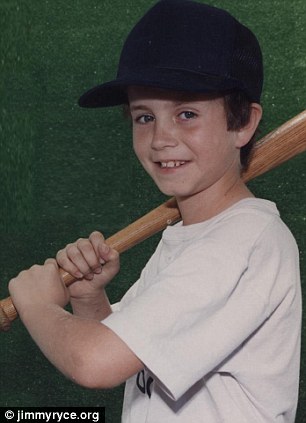
It was 1995 when his son, a gap-toothed 9-year-old named Jimmy, was snatched from a Redland school bus stop, raped and killed.
As Ryce counts the last few days until Wednesday’s scheduled execution of his son’s murderer, his anger burns as hot as it did more than 18 years ago. And his sorrow has only been compounded by two more deaths he traces back to that first, monstrous act of a pedophile named Juan Carlos Chavez: the heart attack that killed his wife, Claudine, in 2009 — a “broken heart,” he says — and the suicide last year of his daughter, Jimmy’s half-sister, Martha.
“In both cases, Jimmy’s memory, I can tell you, was very much weighing on them at the time of their death,” Ryce said, talking about the tragedy during a 90-minute interview in his Vero Beach home. “So forgive me if I don’t shed many tears for Juan Carlos Chavez.”
The losses of his wife and daughter blindsided him, just as Jimmy’s did all those years ago when it seemed as though everyone in South Florida showed up to help with the three-month search for a boy grabbed yards from his doorstep. The abduction and horrifying details that emerged later — Chavez had raped the boy, shot him when he tried to escape, dismembered the boy’s body but kept his book bag, all at a trailer less than a mile from the Ryces’ home — marked the sad beginning of a new and disquieting vigilance that reached far beyond South Florida. Parents clutched their children closer. Authorities scrambled to create better, faster ways to hunt for missing children.
And always the Ryce family was there, front and center, holding each other up, in a national crusade to protect children from predators. Eventually, their son’s legacy would include the Jimmy Ryce Center for Victims of Predatory Abduction; the Jimmy Ryce Law Enforcement Training Center; a program to raise money to give bloodhounds to police departments and the Jimmy Ryce Act, a state law legislators are pushing to toughen, designed to keep sexual predators in custody even after their sentences end if they are still deemed dangerous.
Through it all, Chavez — who sowed the seed of so much pain — has remained alive on Death Row, courtesy of Florida taxpayers. If Chavez is executed Wednesday as scheduled under the death warrant signed by Gov. Rick Scott, Ryce will be there to watch the man he characterized as “a reptilian mutant” draw his last breath.
It’s a promise he and Claudine, both lawyers, made to each other after Chavez was sentenced to death. Don Ryce was the one with health problems at the time, hypertension he developed during the trial, a hellish three weeks of graphic testimony held in Orlando after an impartial jury couldn’t be seated in Miami-Dade County. To make their case, prosecutors used Chavez’s confession in which he told police he pointed a gun at Jimmy and asked him: “Do you want to die?”
One juror burst into loud sobs after a detective displayed three plastic pots that had held Jimmy’s remains. Three others broke down after rendering the guilty verdict.
Afterward, the Ryces pledged to each other that they would witness the execution and “if one of us wasn’t going to be there, the other would, for both,” Ryce said.
If the execution is delayed — legal appeals have been filed, largely based on questions about the mix of chemicals used to render killers unconscious before the lethal injection — Ryce said it will be one more instance in which the predator is given more consideration than the victim or victim’s family.
The prospect infuriates him, he said. “Most of us would only wish we could have that painless a death, as he will have… Talk about cruel and unusual, it would have been cruel and unusual to let him try and escape and shoot him in the back and have his last memory be someone standing over him and gloating over his pain. That happened to my son.”
That last sentence comes out choked with anguish, his voice breaking on the final word.
He struggled for control, steeling himself to return to the point: He has no doubt that Chavez is guilty. Police testified in the trial that Chavez himself begged police for the death penalty, writing in a note before giving the confession led them to Jimmy’s body: “My only wish and objective is to die.”
Chavez would later take the stand to deny his own confession, pointing the finger at someone else.
But the evidence, Ryce said, is overwhelming. “No one that has an ounce of intelligence and looks at the evidence in this case can come to any other conclusion. He’s the guy. He did it. He enjoyed doing it, and he’s about to pay the price that he ought to pay for having killed my son.”
Strong words, reflective of how the Ryces faced tragedy from the start, without sparing themselves and without blaming each other. Private people at heart, they went public after Jimmy’s death, harnessing their pain for prevention work. On the family’s website, jimmyryce.org, they have posted dozens of pictures of their boy’s South Florida childhood from infancy to fifth grade — on the beach, posing by a fallen palm tree, running in shorts with the dog — while also discussing in unflinching terms what they could have done differently as parents.
In today’s world of Amber Alerts, it’s hard to remember how few parents had any real awareness of sexual predators, Ryce says. “I remember how horrified we were when we first found out what the probable motivation was for Jimmy’s abduction. We were convinced he was abducted — we knew right away that he was not a runaway — and these people were trying to break the news to us of what likely was the reason. That was rough to learn.”
It hasn’t gotten easier, not really. The pain is a part of him now, as it was for Claudine up to the day she died.
“You can’t imagine the strain you feel,” he says, his hand straying to his chest. “You hear someone died of a broken heart — and honestly, you feel something going on inside. I mean, that’s as close to a broken heart as I ever want to happen. I think finally it just got her.”
They never saw a grief counselor, serving that role for each other, “which was far more meaningful. There are very few grief counselors that can help in a situation like that.’’
The years and anguish have taken a physical toll. He uses a cane now, a remnant of complications following knee replacement surgery. His constant companion since Claudine’s death is a small white Havanese dog named Ginger who wedges in next to him on his customary chair in his living room. At 70, he is working as an arbitrator on financial cases, basing himself in the Vero Beach home he and Claudine bought in the years after Jimmy went missing, with orange, fig, lemon and pistachio trees in the back yard. At the front door, a large oil portrait of a smiling Jimmy presides. It is Ryce’s favorite portrait of his son, a gift from a Brazilian artist they didn’t even know.
“The grief is going to be there, the anger is certainly part of it, and that includes watching our criminal justice system in its ugliest form. You see people working so hard to protect the person who took away the one that you love,’’ he said. “I’m not angry with everyone who’s against the death penalty — and some of them for ethical reasons — I just respectfully disagree with them.”
He has no interest in hearing from Chavez — “none” — but he wonders whether Chavez would have killed Jimmy “if he had known that he was going to end up where he is now, because he’s fighting hard as he can to stay alive. It matters to him now. I’d love to hear an honest answer as to whether he wishes he hadn’t killed our son. He reveled in it.’’
He’ll go to the execution with his son from his first marriage, Ted, 37, who had mostly stayed in the background, but helped his father through physical rehabilitation after his knee surgery complications.
“I’m very proud of my oldest son. I keep saying, look how he turned out, and I’m sure Jimmy would have turned out well, also. Tall — a lot more active and athletic than I am, I guarantee you. I don’t know where that came from.”
Ryce hopes the execution will offer some feeling of conclusion, maybe more for the South Florida community than for him. “There was sort of a sense of relief after the trial but it will really be over when the execution takes place.”
And then he will try to go on, he says, being an ordinary person forced into circumstances no one would ever want. He’ll keep trying to raise money for the bloodhound program and has just been re-elected as chairman of the Florida Department of Law Enforcement Missing Endangered Persons Information Clearing House.
If he could ask one thing, he’d like people to think of his son — who would be 28 by now — as “just a wonderful little boy, 9 years old, wanting to live his life, and to remember him not as a victim but as a symbol of hope to kids everywhere, a reminder to everyone that if someone tries to take you we will look until we find you … People are going to forget the name Don Ryce and they may even forget the name Claudine Ryce but I don’t think they’ll forget Jimmy Ryce.”
February 7, 2014 (cbs)
The South Dade man convicted of killing Jimmy Ryce in 1995 has filed an appeal with the United States Supreme Court to stay his execution, which is currently scheduled for next Wednesday.
Juan Carlos Chavez has been on death row since his conviction in 1998.
The Ryce family declined to comment on the appeal Friday, but Don and Ted Ryce sat down for interviews with CBS4 News earlier in the week ahead of the pending execution.
“I just want it to be over. I want to get it behind us,” Don Ryce said.
Now there is a chance the day Done Ryce has waited almost 19 years for will be delayed.
“There is a reasonable possibility that the Supreme Court would consider a stay in this instance,” Miami-based appeals attorney Richard Klugh said Friday night.
Klugh is not connected to the case, but is familiar with the history and the letter of the law.
“It could take days, it could take a matter of weeks. But most likely the Supreme Court will try to move expeditiously,” he said.
Chavez was convicted in 1998 of the kidnap, rape and murder of 9-year-old Jimmy Ryce.
The farm hand told police he dismembered the boy’s body, put the parts in planters, and then filled them with concrete.
Jimmy’s family held out hope he’d be found alive. Posters with his pictured were plastered all over South Florida.
After Chavez’s arrest, confession and conviction, they waited patiently for justice to be served.
Jimmy’s mother and sister would not live to see the day.
“This person, Juan Carlos Chavez, who’s been on death row for so long, he’s outlived my mother, Claudine. He’s outlived my sister,” Jimmy’s brother Ted said. “Now… Now, it’s time.”
Chavez’s attorneys argue the lethal cocktail administered to death row inmates violates the U.S. Constitution, saying it amounts to “cruel and unusual punishment.”
It’s a punishment Don Ryce thinks is well-deserved, even though it won’t bring his little boy back.
“I hate the word closure because what it implies is that there’s an end and everything is okay,” Ryce said. “And that’ll never happen.”
If the execution moves ahead as planned on Wednesday, Don and Ted Ryce said they plan to be in the viewing gallery at the state prison in Starke.
february 7,2014
The Florida Supreme Court on Thursday ordered a review of the new drug used in the state’s lethal injection cocktail in the case of Paul Augustus Howell, a Death Row inmate scheduled for execution Feb. 26.
Justices ordered a circuit court to hold an evidentiary hearing on whether substitution of the drug midazolam violates the constitutional protections against cruel and unusual punishment by the government.
Howell’s lawyers argued in briefs filed Tuesday that midazolam, the first of the three drug-cocktail that induces unconsciousness, paralysis and cardiac arrest, is problematic because it will not anesthetize him and would leave him “unable to communicate his agony” when the other drugs are administered.
The justices rejected an appeal about the new drug in a previous case, but in a four-page order issued Thursday said that an expert’s report submitted by Howell “has raised a factual dispute, not conclusively refuted, as to whether the use of midazolam, in conjunction with his medical history and mental conditions, will subject him to a ‘substantial risk of serious harm.’ ”
The court also ordered the Department of Corrections to produce correspondence and documents from the manufacturer of midazolam concerning the drug’s use in executions, “including those addressing any safety and efficacy issues.”
The high court ordered the 2nd Judicial Circuit in Jefferson County, where Howell was originally tried and convicted of the murder of a highway patrol trooper in 1992, to hold a hearing and enter an order on the issue by 2 p.m. Wednesday.
In September, the Florida Department of Corrections substituted midazolam for the barbiturate pentobarbital as the first of the three-drug lethal injection “protocol.” Florida and other states switched to the new drug because the manufacturer of pentobarbital stopped selling it for use in executions.
The second drug, vecuronium bromide, renders muscle, including the diaphragm, unable to contract, making it impossible to breathe.
If not completely anesthetized when that drug is administered, the condemned would “experience the physical and psychological agony of suffocation,” Howell’s lawyers argued in briefs filed Tuesday.
The new drug protocol has been used four times since its adoption in September, but Howell’s lawyers argued that three of those executed were not fully anesthetized before the other drugs were administered.
The Supreme Court on Thursday also ordered the court to consider testimony from University of Miami anesthesiologist David Lubarsky regarding problems with the state’s protocol for making sure that inmates are unconscious. According to Lubarsky, the state is not waiting long enough between injections for the anesthetic to take effect. Lubarsky also testified the drug poses a significant risk for “paradoxical reactions” for Howell because he has mental health disorders and possible brain injuries.
Howell was scheduled to be executed last year but a federal appeals court issued a stay the day before he was slated to die. The stay was lifted in November, and Gov. Rick Scott rescheduled his execution for Feb. 26.
february 5, 2014 (mysuncoast.com)
SARASOTA, Fla. – The man convicted of killing 11-year-old Carlie Brucia in 2004 is appealing his death sentence to Florida’s Supreme Court.
Joseph Smith was found guilty of the 2004 kidnapping, sexual battery and murder of the young girl in Sarasota County. Smith’s attorney claims a number of errors in his trial led to his death sentence.
Florida’s Supreme Court judges will hear the argument Wednesday. Smith’s appeal requests a new trial or penalty phase.
This is the second appeal for Smith, who is currently on death row in a Tallahassee prison
Carlie Brucia
February 4, 2014 (flaglerlive.com)
A new law intended to speed up executions did little to change the status quo, an attorney representing the state told the Florida Supreme Court on Tuesday.
But a lawyer representing Death Row inmates argued that the “Timely Justice Act” is premised on a faulty list that violates the constitutionally protected separation of powers as well as inmates’ rights to due process.
More than 150 lawyers and Death Row inmates are challenging the law, signed by Gov. Rick Scott in June.
The law requires the Supreme Court clerk to give the governor a certified list of Death Row inmates whose initial state and federal appeals have been exhausted. The law orders the governor to sign death warrants for the condemned on the list within 30 days and to direct the warden to schedule their executions within 180 days — but only once the executive clemency process has been completed. Scott and his lawyers maintain that the clemency process ends when the governor signs a warrant.
In October, then-Supreme Court Clerk Tom Hall certified to Scott an initial list of 132 inmates who are at least partially “warrant ready” under the requirements of the law.
Scott has signed four death warrants since the law went into effect. Prior to that, Scott ordered nine executions since taking office in 2011.
Marty McClain, who represented the lawyers and inmates during oral arguments before the court on Tuesday morning, said the “warrant ready” list was flawed and included some Death Row convicts whose litigation was still pending.
But Assistant Attorney General Carol Dittmar told the justices that “the list is just to provide for information purposes” and did not change the process by which warrants are signed by the governor. Lawmakers who sponsored the legislation said it was intended to shorten the time between conviction and execution, which now is longer than two decades.
“It seems that the argument being made is that the Timely Justice Act was all for show and didn’t actually change anything,” McClain argued. “Certainly that was not what was expressed by the Legislature at the time. They meant to make changes.”
Some of the justices took issue with McClain’s argument that the Legislature had encroached on their power by forcing their administrator to generate the list.
Justice R. Fred Lewis said he found “difficult to understand why it’s unconstitutional for this court to give information” because that is “very natural and normal” within court operations.
Justice Barbara Pariente suggested that, although “we may not all agree that this is the best policy,” the court could add more information to the list and give lawyers representing Death Row inmates the chance to show why their clients should not be included on it before sending it to the governor.
And she pointed out that there is nothing in the new law that prohibits the court from issuing a stay once a warrant has been signed, pointing to the case of Ray Swafford, whose execution was halted by the court hours before he was scheduled to be put to death in 1990. Swafford, who was deemed “warrant ready” by Hall in October, has spent 28 years on Death Row for the abduction, rape and murder of a gas station attendant in Volusia County.
In November, the Florida high court vacated Swafford’s sentence and ordered a new trial based on new DNA evidence. But McClain said the Swafford case was a perfect example why the law is problematic.
Swafford had at least five appeals before the court ordered a new trial in the fall, McClain pointed out.
“Twenty-one years after the conviction, the information develops. He could have been executed in 1990,” McClain said.
february 3, 2014 (Ocala)
Counsel for a Marion County woman sentenced to death row argued for a sentence reversal before the Florida Supreme Court Monday morning, stating his client is less culpable in the crime than her co-defendant — who is serving life imprisonment for the same offense.
Standing before the panel in Tallahassee, Emilia Carr’s attorney, Christopher S. Quarles, argued the Supreme Court should rule on the issue instead of choosing another remedy: sending the case back to the trial court to deal with the sentence question, either in a separate hearing or through a post-conviction relief proceeding.
“I think the evidence is very clear Joshua Fulgham is more culpable,” argued Quarles, referring to Carr’s co-defendant. “He had the motive, he hatched the plan, he brought the victim to the scene of the crime, and it’s very unfair…he is serving a life sentence when she is sentenced to death.”
According to trial testimony, Fulgham, who was Carr’s lover, lured his estranged wife, Heather Strong, 26, to a trailer in Boardman, which is in north Marion County near McIntosh. There, the pair duct taped her to a chair, suffocated her and then buried the body.
The co-defendants were tried in separate trials, and the state sought the death penalty for both. They both were found guilty of first-degree murder and kidnapping.
In the first trial, a jury recommended death for Carr in a 7-5 vote in December 2010. The judge in that case followed the recommendation and put her on death row.
The jury in the second trial returned a recommendation of life imprisonment for Fulgham in April 2012. Again, the judge followed the recommendation.
“They had different judges, they had different juries, they had different legal teams,” said Quarles.
He argued that during each trial the state painted that defendant as the mastermind, even though evidence shows Fulgham had been manipulating both Strong and Carr in the time period leading up to the crime.
Justice Charles Canady pointed out that Carr, 29, has an IQ of 125, while Fulgham, 32, is intellectually challenged.
“In the actual commission of the crime Ms. Carr was heavily involved in what was going on,” countered Assistant Attorney General Sara Macks.
She pointed to several factors motivating Carr including the fact that Carr wanted to raise a family with Fulgham.
Carr gave birth to Fulgham’s child during her time inside the Marion County jail pending trial. Macks also pointed to threats Carr had made of hiring someone to kill Strong.
Justice Jorge Labarga wondered why the two trial court judges didn’t wait and sentence the co-defendants around the same time after receiving the respective jury recommendations.
As part of her explanation, Macks said Fulgham’s trial had been delayed more than one year when counsel from Miami had become involved.
She urged the high court to resolve the direct appeal before redirecting the case back to the trial court. Macks said if the issue is addressed at the trial court level during post-conviction relief, Carr’s defense would also be able to bring up any issues connected with mitigation.
“This is not a death case,” Quarles argued in rebuttal before the panel adjourned.
A ruling is expected at a later date.
Carr is currently housed at Lowell Correctional Institution with the other five women on Florida’s death row. Fulgham is currently housed at Florida State Prison in Raiford, according to state prison records.
In August, Fulgham sent a hand-written letter to the Marion County Jail through his mother intended for convicted murderer Michael Bargo. Inmates are not granted the same privacy as the general public and therefore their mail is public record except for medical records and legal correspondence.
In the letter, Fulgham offered Bargo advice about prison. “A lot of people will tell you a life sentence is the same as death row,” he wrote, adding that such advice is wrong.
“If you do end up in prison at all, it isn’t that bad,” Fulgham wrote, describing his access to an MP3 player, television and Playboy magazine.