execution

Man has witnessed all of Florida’s executions in the past 25 years


february 26, 2014

JACKSONVILLE, Fla. — John Koch has a plastic container of manila envelopes that he sorts through rarely.

Each envelope contains hand-written notes, usually a script, and a piece of audio that is mostly cassette tapes.

“Now I’m putting them on CDs, I’m getting smart now,” said Kock.

The envelopes are dated with name written on them. The names represent every Florida inmate who’s received the death penalty in almost the last 25 years, some of whom have been the subject of Oscar-winning films.

“I saw Aileen Wuornos go,” he said.

Others like Allen Lee Davis of Jacksonville become known for a lavish request.

“His last meal was a large lobster tail, fried potatoes, half a pound of shrimp. This man was a large man,” Koch said.

Koch’s also documented a notorious murderer who went down in state history.

“I watched also the first woman to be executed in the state of Florida,” he said “That was Buenoano.”

Koch landed his front row seat at the hands of a policy within the Florida Department of Corrections. It allows news reporters to serve as witnesses during an execution.

“They give you two pencils and they give you a notebook to write on,” Koch said.

Koch is a Florida native who has been on the radio in the Live Oak area since the mid-1970s. He’s as much as an institution as the Dixie Grille where he likes to grab breakfast from time to time.

Koch began witnessing executions after one of Ted Bundy’s victims was found near Suwanee River State Park.

“I was there the day Robert Leonard, then Sheriff Robert Leonard, brought out the little girl’s body,” he said. “And I broke the story.”

About a decade later when Bundy was set to be electrocuted in 1989 Koch made sure he saw the story through. “And I started fighting on my end to get in there.”

He says he vividly remembers what happened when Bundy walked into the room.

“He looked over at the chair and you could see him give up,” Koch said. “That moment, that moment, he realized he ain’t going nowhere. It’s over.”

Koch says he also realized no one had ever regularly reported on what happens when an inmate is brought in to die. “What was the process? How does it work? What’s going on?”

So, he chose to continue witnessing executions as a way to inform people about a decades-old process that’s largely private and controversial. To this day members of the Catholic Church hold signs outside the Duval County Courthouse to show their opposition to capital punishment.

“Punishment is not the answer. The answer is you get the person to change. And it doesn’t change the horror that’s gone on or the loss that’s gone on,” says a protester outside the courthouse.

Koch though refrains from opinion and tries his best to remove himself from what’s happening in front of him.

“What’s your immediate feeling after watching somebody die? Nothing really,” he said. “Because they would have no feelings for you, none whatsoever.”

Each time he just writes down what he sees.

“I’ve always watched the hands. That always tells me a lot, whether they are nervous, they’re calm,” Koch said. “You can see the communication going back and forth between the team leader and the executioner.

“It’s gory. I hate it. It’s not fun watching people die whether they deserve it or not. I can feel the soul being wrenched early before it’s time. I sense all of that, but I put that aside and I’ve got 30 seconds to tell you a very important story.”

In all Koch has reported on the death of 63 Florida inmates and he doesn’t have plans to stop. He says people tell him to turn what’s inside his manila envelopes into a book.

But for now, he wants to stick to the only job he says that gives him goose bumps.

“Yeah, yeah, see, look at the goose bumps. I still get them and that is the reason I do any of this.”

FLORIDA – EXECUTION PAUL HOWELL FEBRUARY 26 6:00 PM EXECTUTED 6:32 PM


february 26, 2014

Authorities say 48-year-old Paul Augustus Howell was pronounced dead at 6:32 p.m. Wednesday after a lethal injection at Florida State Prison

Howell’s last words “I want to thank the Fulford family,” Howell said. “They were pretty compassionate, and I’ll remember that.”

UPDATE  4:30pm

Howell’s last meal was a peanut butter and jelly sandwich, according to a Department of Corrections spokeswoman.

The DOC also says Howell had one friend visit and met with his Catholic spiritual adviser.

He is set to be executed by lethal injection.

The man who built a bomb that killed a Florida Highway Patrol trooper is scheduled to be executed by lethal injection.

Drug trafficker Paul Howell is set to die for the February 1992 murder of Trooper Jimmy Fulford at 6 p.m. Wednesday at Florida State Prison.

Howell rented a car and paid another man to deliver a gift-wrapped box to a woman in Marianna. Along the way, Fulford pulled the man over for speeding on Interstate 10 just east of Tallahassee.

The man gave Fulford a false name and birthdate and was arrested. Howell was called about the rental car and asked if Fulford had permission to be driving it and never warned the dispatcher the bomb was in the trunk.

MISSOURI – EXECUTION MICHAEL TAYLOR EXECUTED AT 12:10 AM


February 26, 2014

Michael Taylor has been executed by Missour using compounded pentobarbital

Final Meal:

Taylor did not use his right to request a specific last meal and was served potato soup and a sandwich.

Missouri has gone ahead with executing a death-row prisoner using a drug from an unspecified source. The lethal injection of pentobarbital used to kill Michael Taylor, 47, who raped and murdered a teenage girl in 1989, was presumed to have been bought by the state from a compounding pharmacy – a supply arrangement that sparked legal challenges over the potential cruelty of using an unregulated drug.

In a brief phone conversation with The Kansas City Star just hours before the execution, Taylor said he had written a letter to Ann’s parents and that a prison official assured him it would be offered to them. In the letter, Taylor said, he expressed “my sincerest apology and heartfelt remorse.”

“I hope that they’ll accept it,” Taylor said of the letter.

Taylor offered no final statement. He mouthed silent words to his parents, two clergymen and two other relatives who witnessed his death. As the process began he took two deep breaths before closing his eyes for the last time.

Taylor was pronounced dead shortly after midnight. Federal courts and the governor had refused last-minute appeals from his attorneys, who argued that execution drugs purchased from a compounding pharmacy could have caused Taylor inhuman pain and suffering.

Taylor’s victim, 15-year-old Ann Harrison, was in her driveway holding her school books, flute and purse when she was abducted by Taylor and Roderick Nunley. The men pulled her into their stolen car, took her to a home, then raped and fatally stabbed the girl as she pleaded for her life.

Nunley also was sentenced to death and is awaiting execution.

In their appeal Taylor’s attorneys questioned Missouri’s use of an unnamed compounding pharmacy to provide pentobarbital. They also cited concerns about the state executing inmates before appeals were complete and argued that Taylor’s original trial attorney was so overworked that she encouraged him to plead guilty.

The Oklahoma-based compounding pharmacy Apothecary Shoppe agreed last week that it would not supply the pentobarbital for Taylor’s execution, which left Missouri to find a new supplier. The attorney general, Chris Koster, later disclosed that a new provider had been found but refused to name the pharmacy, citing the state’s execution protocol that allows for the manufacturer to remain anonymous.

Taylor’s attorneys argued use of the drug from an unspecified source could cause an inmate pain and suffering because no one could check if the maker was legitimate and had a record of producing safe drugs.

The official makers of pentobarbital refuse to sell it for executions.

AUDIO: Bernard interview 7:40
AUDIO: Post-execution news conference 8:23

The Ghost of Herbert Smulls Haunts Missouri’s Death Penalty Plans


february 21, 2014 (theatlantic)

It has been only 21 days since Missouri began to execute convicted murderer Herbert Smulls some 13 minutes before the justices of the United States Supreme Court denied his final request for  stay. And it is fair to say that the past three weeks in the state’s history of capital punishment have been marked by an unusual degree of chaos, especially for those Missouri officials who acted so hastily in the days leading up to Smulls’ death. A state that made the choice to take the offensive on the death penalty now finds itself on the defensive in virtually every way.

Whereas state officials once rushed toward executions—three in the past three months, each of which raised serious constitutional questions—now there is grave doubt about whether an execution scheduled for next Wednesday, or the one after that for that matter, will take place at all. Whereas state officials once boasted that they had a legal right to execute men even while federal judges were contemplating their stay requests now there are humble words of contrition from state lawyers toward an awakened and angry judiciary.

Now we know that the Chief Judge of the 8th U.S. Circuit Court of Appeals, as well as the justices of the Supreme Court of the United States, are aware there are problems with how Missouri is executing these men. Now there are fresh new questions about the drug(s) to be used to accomplish this goal. Now there are concerns about the accuracy of the statements made by state officials in defending their extraordinary conduct. Herbert Smulls may be dead and gone but his case and his cause continue to hang over this state like a ghost.

The Supreme Court Wants Answers

Missouri’s problems started almost immediately after Smulls was executed on January 29. On January 30, the Associated Press published a story titled: “Lawyers: Mo. Moving Too Quickly on Executions” in which it was disclosed, for the first time to a national audience, that state officials were executing prisoners before their appeals were exhausted. On February 1, we posted a piece here at The Atlantic titled: “Missouri Executed This Man While His Appeals Was Pending in Court,” in which we published emails from Smulls’ attorneys to Missouri officials showing that the state was aware that Smulls’ appeal was pending at the Supreme Court at the very moment he was being injected with lethal drugs.

Clearly, the justices in Washington were paying close attention to what Missouri had done (killed Smulls) and not done (waited for the justices to tell them they could). On February 3, five days after Smulls’ execution, the Clerk of the Court wrote to Missouri officials directing them to file a second response to a petition for certiorari that had been filed on behalf of Smulls and several other death row inmates (who are still alive). The request demonstrated, at the least, that the Court did not consider Smulls’ final appeal to be frivolous. Here is the link to that letter. Missouri’s response is due March 5. I am curious to know whether state officials reveal any regret for the timing of the Smulls’ execution.

A Roiling Hearing

One week after Missouri received that letter from the Supreme Court, state officials appeared at a legislative hearing to discuss and defend Missouri’s execution protocols. David Hansen, a state assistant attorney general, spoke at length about the Smulls’ execution. There was no stay in effect at the time of the condemned man’s execution, Hansen told lawmakers, and the controversy over premature executions was caused not by overzealous state officials but rather by “death row attorneys” who, he said, “have developed a legitimate and very deliberate strategy to ensure that there is always a stay motion pending during the course of the [death] warrant which is a de facto repeal of the death penalty.”

Here is the link to much of Hansen’s testimony. It was confident. It was defiant. And in several material respects, it was inaccurate. For example, Hansen quoted James Liebman, the distinguished professor at Columbia Law School, for the proposition that what Missouri has been doing is also being done in other states. But Liebman did not say that and was so dismayed by the misuse of his words that he submitted a letter late Tuesday night to Missouri’s lawmakers seeking to clarify the record. Here is the link to Liebman’s letter. And here is the essence of his position on the inappropriateness of Missouri’s current execution protocol:

I pointed out that the Supreme Court has occasionally issued orders in capital cases saying it will no longer entertain papers from a particular capital prisoner, having found that previous papers filed were frivolous. I pointed out that, if Missouri believed that this same point had been reached in Mr. Smulls’ case—a conclusion that Mr. Smulls and his attorneys strongly disputed—it would not be appropriate for one adversary to resolve that matter unilaterally over the objection of the other.

Instead, Mr. Hansen’s office should have formally asked the Supreme Court to deny Mr. Smulls’ pending papers and to refuse to accept further papers from him, thus allowing the state to proceed with an execution without fear that the legal basis for that solemn and irreversible action was in doubt. Only then would the crucial contested matter of law and fact have been resolved, not unilaterally by one party to the dispute, but by the decision of a neutral court of law.

This was not the only problem with Hansen’s testimony. Joseph W. Luby, an attorney for Smulls and other death row inmates in the state, also felt compelled to write a letter to Missouri lawmakers seeking to correct the record that Hansen had created. Not only had Hansen mischaracterized the procedural posture of the three cases in which Missouri had executed inmates before their appeals were exhausted, Luby wrote, but state officials were engaged in a pattern and practice of not even responding to opposing counsel in the final hours and minutes before executions. Here is the link to Luby’s letter. He didn’t say it but I will: This is inappropriate and perhaps unethical conduct by of state lawyers.

Another Federal Judge Calls Out Missouri

Two days after that hearing, on February 12, the Chief Judge of the 8th U.S. Circuit Court of Appeals, William Jay Riley, who repeatedly had voted against Smulls, interrupted oral argument in an unrelated death penalty case to tell a lawyer for the State Attorney’s General office that the federal appeals panel did not in any event appreciate Missouri officials executing men before the courts had concluded their judicial review. Specifically, Chief Judge Riley said:

I might just tell you this. I’ll probably regret saying this later, but I think it was the execution of Nicklasson, but the State of Missouri executed somebody which they probably had the right to do, right in the middle of our petition for rehearing voting. And I just wanted you to take back the word that… some of the members of the Court did not appreciate that. That we were right in the middle of that…

And I think you have probably heard that some people have written on it. But we were moving as fast as we can and, as Chief Judge, I was pushing to get everything done in time. But I think you need to be a little more patient.

The “Nicklasson execution” to which the Chief Judge referred, took place on December 12 and it prompted from 8th U.S. Circuit Court Judge Kermit Bye a remarkable dissent. “I feel obliged to say something,’ Judge Bye wrote at the time, “because I am alarmed that Missouri proceeded with its execution of Allen Nicklasson before this court had even finished voting on Nicklasson’s request for a stay.” He continued:

In my near fourteen years on the bench, this is the first time I can recall this happening. By proceeding with Nicklasson’s execution before our court had completed voting on his petition for rehearing en banc, Missouri violated the spirit, if not the letter, of the long litany of cases warning Missouri to stay executions while federal review of an inmate’s constitutional challenge is still pending.”

Here are the links to Judge Bye’s first and second dissents in these premature execution cases.

The Drug Supplier Bags Out

Seven days after Chief Judge Riley’s admonition, this past Monday, came the next bad thing to happen to Missouri officials in their quest to expedite the implementation of the death penalty in their state.  Under legal pressure from death row inmate Michael Taylor, the compounding pharmacy that was poised to supply the drug (pentobarbital) the state wanted to use to execute him next week backed out of its commitment to provide the drug. The Apothecary Shoppe, in Tulsa, Oklahoma, announced that it would not give the Missouri Department of Corrections the pentobarbital it had compounded and that it had not previously given state officials the drug for Taylor’s execution.

Missouri immediately reacted to this unexpected news by declaring that it would be able to proceed anyway with Taylor’s execution, now scheduled for the 26th, without materially changing its lethal injection protocols. Late Wednesday, state officials informed Taylor’s lawyers that they have obtained pentobarbital from another, unidentified supplier. “There is no reason to believe that the execution will not, like previous Missouri executions using pentobarbital, be rapid and painless,” state attorneys wrote in a motion filed with a federal trial judge in Missouri opposing a stay request by Taylor. Here is the link to Missouri’s filing.

A New Challenge to Missouri’s Lethal Injection Rules

The confusion over precisely how Missouri intends to execute Taylor generated on Tuesday another big headache for state officials– a substantial new request for a stay of execution in Taylor’s case. Here is the link to that motion and here is how defense attorneys summarize their argument:

Missouri has identified no lawful means of executing Taylor next week. Any pentobarbital Missouri previously acquired is now expired. Though Missouri has indicated it has midazolam and hydromorphone, its execution protocol does not permit administration of those drugs; even if it did, Taylor would warrant a stay because those drugs have already inflicted unconstitutional pain and suffering in an execution and the states using them have thus temporarily halted executions.

In any event, switching the protocol or the pentobartibal supplier now – a week before the scheduled execution – would violate Taylor’s right to due process of law.

Taylor’s lawyers made those arguments before they learned that Missouri had reportedly acquired a new supply of pentobarbital. State lawyers would say only in their court filing Wednesday that “Missouri has now arranged with a pharmacy, that is not the pharmacy Taylor threatened and sued, to supply pentobarbital for Taylor’s execution.” In their response Thursday, the link to which may be found here, Taylor’s lawyers wrote this:

Utterly nothing is known about this pharmacy. Has it been cited for
violating federal and state laws more or less often than the previous pharmacy? Does it also send its drugs, to be tested for purity and sterility, to a laboratory that approved a batch of tainted steroids that killed over 60 people? For that matter, does the pharmacy test its drugs at all?

If Missouri has its way, it will not tell Taylor anything more about the drug officials seek to use to execute him next week. It will argue that the conduct of its officials should be presumed to be lawful, and proper, and designed to respect the constitutional rights of the condemned. A few weeks ago, we know, the federal courts were willing to accept these arguments and to allow these dubious executions to proceed. Now I’m not so sure. No matter what the trial judge decides on Taylor’s stay request, this dispute is going first to the 8th Circuit and then to the Supreme Court. Will those appellate judges be motivated to remind Missouri who gets the final say on executions in this nation?


New methods of execution would be allowed under Missouri proposal


february 19, 2014

JEFFERSON CITY, Mo.  • A Missouri state senator wants to give the Corrections Department flexibility on how it carries out executions.

Republican Sen. Kurt Schaefer introduced legislation Wednesday that would allow the department to execute inmates by any lawful means. Current law permits executions only by lethal gas or chemicals.

Schaefer, of Columbia, says legal questions over Missouri’s current use of pentobarbital shouldn’t be used to block capital punishment in the state. He says his bill would give the department the necessary flexibility to carry out death sentences.

Missouri’s next scheduled execution is Feb. 26, but its current drug supplier has said it will no longer sell compounded pentobarbital for use in lethal injections. State officials won’t say whether the state has enough of the drug to proceed with next week’s execution.

Us- Upcoming Executions march 2014


Dates are subject to change due to stays and appeals

UPDATE MARCH 20

Month State Inmate
19 OH Gregory Lott – Stayed
20 FL Robert Henry executed 6.16pm
20 OK Clayton Lockett – Stayed until April 22
26 MO Jeffrey Ferguson EXECUTED
26 MS Charles Crawford Stayed as execution date had not been affirmed by state court.
27 OK Charles Warner – Stayed until April 29
27 TX Anthony Doyle EXECUTED
27 MS Michelle Byrom Update – The Mississippi Supreme Court threw out Michelle Byrom’s murder conviction and death sentence and ordered a new trial due to numerous problems, including inadequate representation, critical evidence not presented to the jury, confessions by another defendant, and the prosecution’s lack of confidence in its own story of what actually happened.
March
19 OHIO Gregory Lott MOVED NOVEMBER 19
19 TEXAS Ray Jasper EXECUTED 6.31 PM
20 OKLAHOMA Clayton Lockett DELAYED (drug shortage)
27 OKLAHOMA Charles Warner DELAYED (drug shortage)
27 TEXAS Anthony Doyle

Fla. Gov. Scott signs death warrant for 1987 killer Robert Henry


TALLAHASSEE, Fla., Feb. 14 (UPI) — Florida Gov. Rick Scott has signed a death warrant for convicted killer Robert Lavern Henry, the day after the execution of Juan Carlos Chavez. his office said.

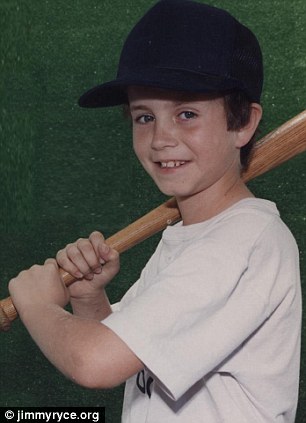
Chavez, convicted for the 1995 rape, dismemberment and death of Jimmy Ryce, 9, in Redland, Fla., was put to death Wednesday.

Scott announced Thursday he had signed an order for the execution of Henry, who bludgeoned and burned two Deerfield Park, Fla., coworkers in a 1987 staged robbery.

Henry’s execution is scheduled for March 20. He will become the 84th person executed in Florida since the death penalty was reinstituted in 1976, and the 14th during Scott’s tenure as governor.

Since the death penalty returned, no other Florida governor has presided over as many executions in his first term, the Miami Herald said Friday.

(Source: UPI)

Missouri: Judge Blocks Sale of Drug for Execution


february 13, 2014

A federal judge late Wednesday temporarily blocked an Oklahoma compounding pharmacy from selling a drug to the Missouri Department of Corrections for use in a Feb. 26 execution.

The temporary restraining order was issued in connection with a lawsuit in United States District Court in Tulsa filed by a Missouri death row inmate, Michael Taylor, whose lawyers say the state contracts with the Apothecary Shoppe in Tulsa for the drug.

The lawsuit argued that recent executions involving the drug, compounded pentobarbital, indicate it will probably cause “severe, unnecessary, lingering and ultimately inhumane pain.”

The state has not revealed the name of the pharmacy, and the Tulsa pharmacy has not said whether it is the supplier. The judge, Terence Kern, set a hearing for Tuesday.

(Source:NYT)

FLORIDA – EXECUTION JUAN CARLOS CHAVEZ , FEBRUARY 12 at 6 p.m UPDATE EXECUTED 8.17 pm


february 12, 2014

UPDATE: Juan Carlos Chavez was executed at 8:17 p.m., according to the governor’s office.

Juan Carlos Chavez had no last words in death chamber, but apparently wrote out a last statement to be distributed later

UPDATE 6.30 PM

The execution of Juan Carlos Chavez, the South Miami-Dade farmhand who raped and murdered 9-year-old Jimmy Ryce in 1995, was temporarily delayed Wednesday evening because of last-minute legal wrangling.

A spokeswoman for the office of Gov. Rick Scott said the state, as of 6:30 p.m., was still awaiting a final go-ahead from the U.S. Supreme Court.

UPDATE 3.55 pm

For his last meal, Chavez requested ribeye steak; French fries; a fruit mixture of mangoes, bananas and papaya; strawberry ice cream; and mango juice. He ate and drank all of it, according to Department of Corrections spokeswoman Jessica Cary.

Chavez had no visitors Wednesday except for a Catholic spiritual adviser. Cary said his demeanor was calm.

————————————————————————–

he case haunted Miami-Dade Police Det. Pat Diaz’s career

For Pat Diaz, retracing the steps of a tragedy is not easy.

“That’s the bus stop,” Diaz says, pointing at a street corner in the area near Homestead known as the Redland.

The former Miami-Dade Police homicide detective led the search for a missing boy named Jimmy Ryce back in 1995.

“When you have a missing 9-year-old, you want to believe, you always have the hope that you’ll find the child,” Diaz said, reminiscing about the case that would haunt his career.

To this day, the street sign at the corner is a memorial to the little boy who never grew up, decorated with flowers and pictures of Jimmy. A man named Juan Carlos Chavez took Jimmy, a case that struck fear into the hearts of parents everywhere. Detective Diaz heard the details when Chavez confessed.

“He tells us he rolls down his window, points the gun at him and says get in the trunk, Jimmy crosses the street and gets in the trunk with him, and basically this is where it happened,” Diaz said, standing at the spot at which Chavez abducted the boy. “Jimmy was probably 250 yards from his house, that’s how close he was to his house.”

Volunteers passed out flyers, joined police in searching the area, and it was all too late. Chavez had already abducted, tortured, and killed Jimmy in his trailer.

“It’s the parent’s worst nightmare,” said Michael Band, a Miami attorney who, in 1995, was the prosecutor on the case.

Band won the first-degree murder conviction and a death sentence for Chavez, who is scheduled to be executed Wednesday.

But it wasn’t easy, Band says. There was tremendous pressure from the community, the trial had to be moved to Orlando to seat an impartial jury, and he had to control his own emotions.

“You don’t remove yourself, you try to be as rational as one can be but you think about things like that, you think, that could’ve been my kid, could’ve been your kid,” Band said.

Chavez was on the way to death row, but the pain only got worse for the victim’s father, Don Ryce: Over the years he lost everyone except his son, Ted Ryce. After Jimmy’s murder, the stress and depression hung over the Ryce family. A heart attack killed Don Ryce’s wife, Claudine Ryce, in 2009. His daughter committed suicide, still despondent over Jimmy’s death.

“If there was ever anyone in the world who deserved to die it’s the man who did that,” Don Ryce said last month, speaking after the governor signed the death warrant for Chavez.

“I think, sadly, the statistics are that predators are not going to be deterred because Juan Carlos Chavez gets executed,” Band said.

That doesn’t mean Band has second thoughts about asking for the death penalty. He agrees that Chavez got what he deserved. Band says the verdict was professionally satisfying, but there’s a hole in his heart when he thinks of Don Ryce.

“He still goes home without Jimmy,” Band said, and the execution won’t change that awful reality. (nbcmiami)

February 11, 2014

  Juan Carlos Chavez                       Jimmy Rice

MIAMI (CBSMiami) — “It’s been a long, long time coming,” said the father of Jimmy Ryce, upon learning that Wednesday, February 12th is the day the man who kidnapped, raped, murdered and dismembered his 9-year-old son, will be put to death.

It was September 11, 1995 when Jimmy Ryce disappeared without a trace when he got off his school bus near his home in The Redland.

Juan Carlos Chavez, 46, was convicted of the heinous crime three years later.

It was a trial that captivated South Florida and the rest of the nation.

Chavez was charged with the crime three months after Jimmy vanished. Chavez confessed but years would pass before he came to trial. The delay tormented Jimmy’s parents.

“There is no constitutional right to delay a trial until the victim’s families die of old age,” said Jimmy’s father Don Ryce in May of 1998.

Chavez did eventually go before a jury in Orlando. The trial was moved there because of intense media scrutiny. The Ryce family came to the trial every day, including Jimmy’s sister Martha.

“And I’m here to represent my family, and Jimmy, because he can’t be here,” said Martha in September of 1998.

Lead prosecutor Catherine Vogel told of Chavez confessing to snatching Jimmy Ryce from the side of the road, raping and shooting him in a remote trailer, and then using a wicked looking bush hook to dismember the boy’s body.

“He took the tool, he chopped the body into about four different pieces,” said Vogel during the 1998 trial.

Chavez sealed the remains with concrete in plastic planters.

For then prosecutor Vogel, now Monroe County’s State Attorney, they are images she will never forget.

“We had to excavate those planters, we had to dig through the concrete to find poor little Jimmy Ryce’s body that had been dismembered,” said Vogel.

Ranch owner Susan Scheinhaus testified how she found Jimmy’s book bag and homework in a travel camper that Chavez lived in which was located on her property where he worked as a farm hand.  But the defense dropped a bombshell.

“The detectives were telling me what I should and should not write,” said Chavez through a translator at the trial.

Chavez recanted his confession and claimed his employer’s son killed Jimmy.

The Ryce’s watched outraged at the defense ploy.

“Their dream is to exchange high fives over Jimmy’s grave, while they set their client loose to rape and murder another child,” said an angry Don Ryce during the trial.

But former homicide detective Felix Jimenez, who is now with the Inspector General’s office, took Chavez’s confession. He said Chavez first told a series of lies including a tale of accidentally running over Jimmy and putting his body in a canal that divers searched for hours before Chavez finally came clean.

“He admitted in detail to everything that he did,” said Jimenez. “His confession was so detailed, that only the killer would know.”

For instance, police didn’t know until Chavez told them that Jimmy was killed in the filthy, falling down trailer.

“When we went there and we looked, and we found Jimmy Ryce’s blood exactly where he said he shot him, then we knew we had gotten to the truth,” said Vogel.

A gun found in Chavez’s camper was an exact ballistics match for the bullet that killed Jimmy.

The jury convicted Chavez on all counts in less than an hour.

“Had he gotten away with it, he would have killed again and again and again,” said Michael Band, the man who prosecuted Chavez. Band is now a private defense attorney.

On November 23, 1998, Chavez was sentenced to death.

Judge Marc Schumacher sentenced Chavez to die in old sparky, the electric chair.  But the appeals dragged on for years.

At a hearing in January 2007, his mother said, “You know, it’s been over eleven years since Jimmy was killed, and he was only nine years old.  So he’s been dead longer than he lived.” Jimmy would have been 21 years old at that hearing.

Governor Rick Scott finally signed the death warrant for Chavez in January.

Claudine Ryce didn’t live to see it. She died from coronary disease, a broken heart, in 2009.

Jimmy’s sister Martha took her own life last year at the age of 35.

When Don Ryce learned of the Chavez’s death warrant last month, he wept. His son Ted is his only remaining family.

“We’ve suffered a terrible loss,” said an emotional Don Ryce. “A loss you don’t wish on anyone.”

Monday, February 10th, Chavez was denied a stay of execution by the U.S. 11th Circuit Court of Appeals. It’s one of the final appeals left for Juan Carlos Chavez before his scheduled execution on Wednesday evening.  click here opinion.pdf