execution

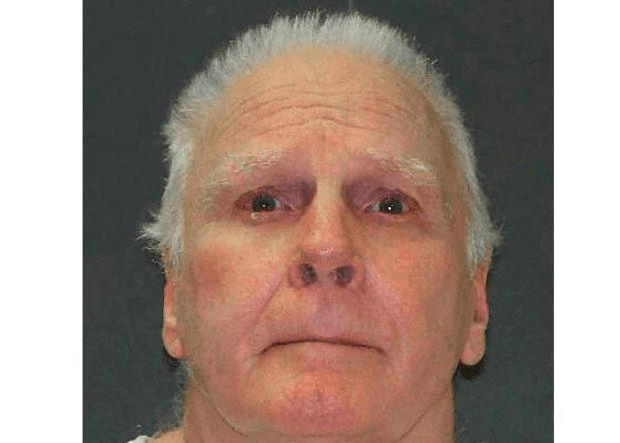
EXECUTION CARRIED OUT 2023 Texas executes Brent Brewer, who spent three decades on death row


November 9, 2023

Brewer lost a clemency appeal earlier this week, despite one of his jurors pleading that his life be spared and an expert witness’ methods put into question. The U.S. Supreme Court declined to pause Brewer’s execution Thursday afternoon to hear arguments about the “junk science” used against him.

The state of Texas executed Brent Brewer, who spent three decades on death row on Thursday evening for the 1990 murder of Robert Laminack. It was the seventh execution of 2023.

In late appeals, Brewer’s lawyers argued that his death should be delayed to consider the issue of unreliable testimony, or what his lawyers called “junk science,” but late Thursday afternoon the U.S. Supreme Court denied that request. Earlier this week, Texas’ highest criminal appeals court declined similar motions to stay Brewer’s execution.

The Texas Board of Pardons and Paroles unanimously rejected Brewer clemency appeal on Tuesday. Brewer’s legal team requested a lesser penalty for him on the grounds that one of the state’s expert witnesses used unreliable methodologies to testify and that a juror says they mistakenly sentenced Brewer to death.

At 6:23 p.m., Brewer was injected with a lethal dose of pentobarbital. He died 15 minutes later.

“I would like to tell the family of the victim that I could never figure out the words to fix what I have broken. I just want you to know that this 53-year-old is not the same reckless 19-year-old kid from 1990. I hope you find peace,” Brewer said in a final statement.

Brent Brewer was convicted of killing Laminack, who owned a business in Amarillo, according to court documents. Brewer asked Laminack for a ride to a Salvation Army with his girlfriend Kristie Nystrom. While en route, Brewer stabbed the 66-year-old Laminack and stole $140 in cash.

Brewer was sentenced to death in 1991 for the murder, but in 2007 the U.S. Supreme Court found that his jury was not given sufficient opportunity for the jury to consider a less severe punishment. Two years later, another jury also sentenced Brewer to death.

Michele Douglas was one of the 2009 jurors. After listening to the evidence, Douglas believed that Brewer didn’t intend to kill Laminack, “things simply got out of hand, with a tragic outcome,” she wrote in an Houston Chronicle opinion piece last week, requesting clemency for Brewer.

During the trial, Douglas did not want to vote in favor of capital punishment for Laminack’s murder, which she did not think was premeditated. Douglas said she misunderstood the jury instructions.

“Believing — incorrectly — that my vote was meaningless, I acquiesced in the majority’s death penalty verdict. I cried when it was read in court. I was haunted afterwards,” Douglas wrote last week.

A death sentence requires a unanimous vote from the jury in Texas. Over the years, jurors in different capital cases across the state have said the instructions are not clear and they would have voted for life sentences without the possibility of parole if they had known that was an option. Lawmakers in the Texas House have passed legislation during several sessions attempting to clarify the instructions but those bills failed to get support from the Senate.

“There’s nothing political about this — it’s about whether the awesome power of the government to take a life is given to it knowingly rather than by what amounts to trickery,” said Rep. Joe Moody, D-El Paso, in a statement about the role of misleading jury instructions in Brewer’s case ahead of Brewer’s execution. “This simply can’t continue; it’s morally wrong. I call on leaders in both parties and both chambers to pass this legislation swiftly at the next possible opportunity.”

During Brewer’s 2009 sentencing, the state called on forensic psychiatrist Dr. Richard Coons to testify about the danger Brewer posed to those in prison. Coons was a regular expert, called on by the state in dozens of death penalty cases, to forecast how defendants would behave in the future.

Coons asserted that a significant amount of crime goes unreported in prisons, and while Brewer’s record was largely clean, it was likely the defendant would commit more acts of violence.

But three years after Coons testified on Brewer’s dangerousness, the Texas Court of Criminal Appeals ruled that the psychiatrist’s techniques for predicting the risks defendants posed were unreliable.

“We see this case as a kind of an outlier, based on all of these things that have happened in this case, including the junk science that was presented,” Shawn Nolan, Brewer’s attorney, told The Texas Tribune on Monday.

But on Tuesday, the same court rejected Brewer’s motions to stay his execution, which were part of his legal team’s effort to challenge the use of Coons’ testimony in Brewer’s sentencing. Coons never evaluated Brewer yet still told the jury that the defendant would pose a risk to those in prison. The appeals court maintained that Brewer’s lawyer at the time did not sufficiently object to Coons testimony.

“His execution is the farthest thing from justice,” Nolan said in a statement after the Supreme Court declined to intervene ahead of Brewer’s execution. “Texas used the unscientific, baseless testimony of Dr. Richard Coons to claim Brent would be a future danger, although the state and the courts have admitted for years that this exact doctor’s testimony was unreliable and should not be considered by juries in capital cases.”

Nolan filed a motion with the U.S. Supreme Court on Tuesday to pause the Nov. 9 execution date to consider the issue with Coons’ testimony, according to court documents.

Last year in federal court, U.S. District Judge Matthew Kacsmaryk found that Brewer’s 2009 trial lawyers acted reasonably by not objecting to Coons’ testimony before his methodologies were ruled unreliable. Earlier this year the 5th U.S. Circuit Court of Appeals affirmed Kacsmaryk’s opinion.

Nolan said Brewer joined the religious programming available to those on death row and since then he has grown as a person of faith, which was also cited in Brewer’s clemency application.

“Worries are kind of small when you’ve taken someone’s life, you know, when someone is permanently gone like that. But I am sorry for what I did,” Brewer said in a video included in his clemency application. “Even if it doesn’t change the outcome, at least they get to hear it before I go.”

Who was Amber McLaughlin, the first transgender woman executed in the US? 04/01/2023


On Tuesday evening, 3rd January, Missouri witnessed the execution of the first transgender woman in the U.S. Amber McLaughlin, a 49-year-old openly transgender woman was executed in Missouri for a 2003 murder. This is the first-ever execution of a transgender in the U.S. Amber McLaughlin was found guilty of stalking and killing a former girlfriend before disposing of her body near the Mississippi River in St. Louis. McLaughlin’s fate was sealed earlier Tuesday when Republican Gov. Mike Parson denied the request for clemency.

McLaughlin was convicted of first-degree murder in 2006 in the killing of Beverly Guenther, and a judge sentenced her to death after the jury deadlocked on its sentencing decision. Missouri Gov. Mike Parson denied clemency Tuesday after advocates expressed concern over her sentencing.

“McLaughlin is a violent criminal,” Parson said in a statement Tuesday. “Ms Guenther’s family and loved ones deserve peace. The State of Missouri will carry out McLaughlin’s sentence according to the Court’s order and deliver justice.”

What was the 2003 case of McLaughlin?

McLaughlin was in a relationship with a woman, Beverly Guenther before her transition into a transgender woman. After they stopped dating, McLaughlin would show up at the suburban St. Louis office where the 45-year-old Guenther worked, sometimes hiding inside the building, according to court records. Guenther obtained a restraining order, and police officers occasionally escorted her to her car after work.

When Guenther did not return home on the night of 20th November 2003, her neighbours called the police. Officers went to the office building and discovered a blood trail and a broken knife handle near her car. McLaughlin led police to a location near the Mississippi River in St. Louis a day later, where the body had been dumped. Authorities claimed she was raped and repeatedly stabbed with a steak knife.

In 2006, McLaughlin was found guilty of first-degree murder. McLaughlin was sentenced to death by a judge after a jury deadlocked on the verdict. According to Komp, Missouri and Indiana are the only states where a judge can sentence someone to death.

A court in 2016 ordered a new sentencing hearing, but a federal appeals court panel reinstated the death penalty in 2021.

McLaughlin was pronounced dead at 6:51 pm. at the Eastern Reception, Diagnostic and Correctional Center in Bonne Terre, according to the Missouri Department of Corrections.

McLaughlin spoke quietly with a spiritual adviser at her side as the fatal dose of pentobarbital was injected. McLaughlin breathed heavily a couple of times, then shut her eyes. She was pronounced dead a few minutes later.

Final statement

“I am sorry for what I did,” McLaughlin said in a final, written, statement. “I am a loving and caring person.”

This morning McLaughlin was served a final meal of a cheeseburger, french fries, a strawberry milkshake and peanut M&Ms.

McLaughlin began her transition in prison about three years ago, according to a fellow inmate and friend, Jessica Hicklin. Hicklin said she rarely spoke to McLaughlin before McLaughlin’s transition, describing her fellow inmate as shy.

“Definitely a vulnerable person,” Hicklin described McLaughlin. “Definitely afraid of being assaulted or victimised, which is more common for trans folks in the Department of Corrections.”

EXECUTION CARRIED OUT 2022 – TEXAS – CARL WAYNE BUNTION – APRIL 21, 2022


Huntsville, Texas — Texas’ oldest death row inmate was executed Thursday for killing a Houston police officer during a traffic stop nearly 32 years ago.

Carl Wayne Buntion, 78, was put to death at the state penitentiary in Huntsville. He was condemned for the June 1990 fatal shooting of Houston police officer James Irby, a nearly 20-year member of the force.

The U.S. Supreme Court had declined a request by Buntion’s attorneys to stop his execution.

“I wanted the Irby family to know one thing: I do have remorse for what I did,” Buntion said while strapped to the Texas death chamber gurney. “I pray to God that they get the closure for me killing their father and Ms. Irby’s husband.

“I hope to see you in heaven some day and when you show up I will give you a big hug.”

Buntion, joined by his spiritual adviser, began praying Psalm 23, “The Lord is my Shepherd…” as the lethal dose of the powerful sedative pentobarbital began. He took a deep breath, coughed once, then took three less pronounced breaths before all movement stopped.

He was pronounced dead at 6:39 p.m., 13 minutes later.

Several dozen motorcyclists, showing support for the slain motorcycle officer, loudly revved their engines as the execution took place, the roar clearly audible in the death chamber.

Buntion had been on parole for just six weeks when he shot the 37-year-old Irby. Buntion, who had an extensive criminal record, was a passenger in the car that Irby pulled over. In 2009, an appeals court vacated Buntion’s sentence, but another jury resentenced him to death three years later.

“I feel joy,” the officer’s widow, Maura Irby, said after watching Buntion’s execution. “I’m sorry someone died. But I didn’t think of him as a person. I just thought of him as a thing, as a cancer on the face of my family.”

Before his slaying, James Irby had talked of retirement and spending more time with his two children, who at the time were 1 and 3 years old, Maura Irby, 60, said earlier.

“He was ready to fill out the paperwork and stay home and open a feed store,” she said. “He wanted to be the dad that was there to go to all the ballgames and the father daughter dances. He was a super guy, the love of my life.”

Leading up to his execution, various state and federal courts had also turned down appeals by Buntion’s lawyers to stop his death sentence. The Texas Board of Pardons and Paroles on Tuesday had rejected his clemency request.

Buntion’s attorneys said he was responsible for Irby’s death and “deserved to be punished severely for that crime.”

But they argued his execution was unconstitutional because the jury’s finding he would be a future danger to society – one of the reasons he was given a death sentence- has proven incorrect, and also his execution would serve no legitimate purpose because so much time has passed since his conviction. His attorneys described Buntion as a geriatric inmate who posed no threat as he suffered from arthritis, vertigo and needed a wheelchair.

“This delay of three decades undermines the rationale for the death penalty. … Whatever deterrent effect there is diminished by delay,” his attorneys David Dow and Jeffrey Newberry, wrote in court documents.

With his execution, Buntion became the oldest person Texas has put to death since the Supreme Court lifted its ban on capital punishment in 1976. The oldest inmate executed in the U.S. in modern times was Walter Moody Jr., who was 83 years old when he was put to death in Alabama in 2018.

Buntion was also the first inmate executed in Texas in 2022. Although Texas has been the nation’s busiest capital punishment state, it had been nearly seven months since it carried out an execution. There have been only three executions in each of the last two years, due in part to the coronavirus pandemic and delays over legal questions about Texas’ refusal to allow spiritual advisers to touch inmates and pray aloud in the death chamber.

In March, the U.S. Supreme Court said states must accommodate requests to have faith leaders pray and touch inmates during executions.

As Texas prepared to execute Buntion, officials in Tennessee canceled the execution of an inmate Thursday in what would have been the state’s first execution since the start of the pandemic. Oscar Smith, 72, was scheduled to die for the 1989 killings of his estranged wife and her teenage sons. Republican Gov. Bill Lee didn’t elaborate on what issue forced the surprise 11th-hour stop to the planned execution.

Texas prison officials agreed to Buntion’s request to allow his spiritual adviser to pray aloud and touch him while he was put to death.

The adviser, Barry Brown, placed his right hand on Buntion’s right ankle in the moments before the drugs began flowing and prayed for about five minutes. He said Buntion no longer was a “hard-headed young man” but had been “humbled by the walls and cold steel of prison.”

While the execution stirred up painful memories for her, Irby said it also reminded her of her advocacy work in public safety after her husband’s death, including helping put together legislation that allowed victim impact statements at trials.

“I still miss him, 32 years later,” she said Thursday night.

EXECUTION CARRIED OUT 2022 – OKLAHOMA GILBERT POSTELLE 02.18.2022


GILBERT POSTELLE

Gilbert Ray Postelle was pronounced dead by lethal injection at 10:14 a.m. Thursday morning. He’s the fourth death row inmate to be killed since the state resumed capital punishment in October after a six-year moratorium. He was 35.

Five media members were selected by a random draw to witness the execution: Sean Murphy (Associated Press), Nolan Clay (The Oklahoman), Wayne Stafford (KOKH), Storme Jones (KWTV) and Dylan Goforth (The Frontier).

The witnesses said the execution appeared to happen without any complications. Their accounts were largely in line with the December execution of Bigler Stouffer and the January execution of Donald Grant, but drastically different from the October execution of John Marion Grant, who convulsed two dozen times and vomited multiple times during his execution.

Postelle did not have any last words.

Swindle’s sister, Shelli Milner, made a statement following the execution.

“It’s never over for the families of the victims. Today is not a joyous day for anyone. Today did not end anyone’s suffering. Today did not put closure on anything,” Milner said. “To know that [Postelle] will never walk this earth again does give me a little more peace than I had yesterday, but I will never have peace knowing what he did to my brother Donnie, to Amy, to James and to Terry.”

There are no more executions scheduled in the state at this point. Pending the results of the upcoming trial over the constitutionality of the current lethal injection protocol later this month, the state may schedule more executions.

Death row inmate Gilbert Ray Postelle’s request for clemency was denied by the Oklahoma Pardon and Parole Board in a 4-1 vote in December 2021.

Postelle, then 19, shot and killed four people — 57-year-old James D. Alderson, 56-year-old Terry L. Smith, 49-year-old James “Donnie” Swindle Jr., and 26-year-old Amy J. Wright — in southeast Oklahoma City on Memorial Day in 2005. The assault included nearly 100 shots fired from two assault rifles.

He was convicted of the four murders and given the death sentence for two.

Three others were charged with conspiracy and four counts of first-degree murder in the slayings. His brother, David Bradford Postelle, was sentenced to life in prison and their father, Earl Bradford Postelle, was ruled incompetent to stand trial in 2006. Another man, Randal Wade Byus, agreed to cooperate with authorities and pleaded guilty to reduced charges in 2008.

Postelle and his family believed one of the victims were responsible for a 2004 motorcycle accident, which left the elder Postelle physically and mentally disabled.

Gilbert Postelle’s attorney said he suffered from years of methamphetamine abuse that began around the age of 12. In 2021, he testified that he had been using meth for days leading up to the killings and doesn’t remember much about the crimes.

Last month, attorneys for Donald Grant and Postelle argued that the state’s lethal injection protocol exposed the two men to a constitutionally unacceptable risk of severe pain, citing the October 2021 execution of John Grant, who convulsed and vomited before he died.

Oklahoma’s method of execution — lethal injection — has been criticized as painful and terrifying, with claims it induces a sense of drowning comparable to the torture tactic of waterboarding.

Oklahoma held off on lethal injections for nearly six years after two botched executions. The state resumed the practice last fall, killing John Grant in October, Bigler Stouffer in December and Donald Grant in January.

The three-drug cocktail is being reviewed for constitutionality in district court in a trial that begins on Feb. 28.

Postelle’s last meal included 20 chicken nuggets, three large fries, one crispy chicken sandwich, one large cola, and one caramel frappe.

EXECUTION CARRIED OUT 2022-ALABAMA MATTHEW REEVES 01.27.2022


Matthew Reeves

Matthew Reeves offered no final words and only few movements as his execution was carried out Thursday evening at Holman Prison in Atmore.

Reeves was pronounced dead around 9:24 p.m., according to Commissioner John Hamm. His execution began around 9:03 p.m., after a stay was lifted at 7:25 p.m. from the nation’s highest court.

Reeves had no final words, no final meal and no spiritual advisor present for his execution, which took place despite claims that he was intellectually disabled.

As the execution began, Reeves grimaced and rose his head slightly to look at the IV in his arm, before he laid his head back down. Around 9:09 p.m., he closed his eyes, though his abdomen continued moving.

Shortly after that time, a prison official performed a consciousness test which consisted of a hand wave over his face and an arm pinch.

Before 9:15 p.m., Reeves stopped moving.

After Reeves was pronounced dead, Hamm read a statement from the family of Willie Johnson to gathered media witnesses.

“After 26 years, justice has finally been served,” Hamm read from the family’s statement. “Our family can now have some closure.”

Reeves was executed for the murder of Willie Johnson, a man who picked up Reeves and other individuals on the side of the highway in Selma in November of 1996.

Execution carried out 2022- OKLAHOMA Donald Grant – JANV. 27.2022


McALESTER, Okla. — An Oklahoma man who had offered to be executed by firing squad was put to death by lethal injection Thursday morning, officials said.

Donald Anthony Grant, 46, was pronounced dead at 10:16 a.m. CT at the Oklahoma State Penitentiary, a state corrections spokesman announced.

The execution began at 10:03 a.m., and Grant was declared unconscious at 10:08 a.m. before his death at 10:16 a.m., Corrections Department Director Scott Crow said.

There were 18 witnesses, including news reporters, prosecutors, a police chief and loved ones of Grant and his victims.

Grant’s disjointed final words lasted two minutes before a prison staff member in the execution chamber stopped him and cut off the microphone.

“Grant’s last words were “yo God I got this, I got this, it’s nothing” before saying “I’ve got things to handle, no doubt, no doubt.” He also said “Brooklyn for life” among his other chants. Grant reportedly grew up in Brooklyn, New York, and was raised in and out of various foster homes.

Grant kept speaking after the microphone was turned off, looking toward his family members sitting in the front row of the witness room.

At one point, tears appeared to be rolling down his face.

Grant killed Brenda McElyea, 29, and Felicia Suzette Smith, 43, so there would be no witnesses to his robbery at the La Quinta Inn in Del City in July 2001.

LAST MEALGrant, the first person to be given the death penalty in 2022.

After requesting a very large meal, the inmate was given a lethal injection, currently the only approved method in Oklahoma. Grant’s menu included sesame chicken, six egg rolls, shrimp fried rice and a large apple fritter. If there was no dessert, Grant asked for three pints of strawberry ice cream. 

Advocates fight for Oklahoma inmate weeks before scheduled execution


October 10, 2022

Advocates continue to fight for the life of Oklahoma death row inmate Richard Fairchild.

Fairchild is scheduled to be executed on Nov. 17. He has a clemency hearing with the Oklahoma State Pardon and Parole Board Wednesday morning.

Fairchild has sat on death row for nearly 30 years. He was convicted of killing his girlfriend’s 3-year-old son in Del City in 1993.

According to his legal team, Fairchild suffers from multiple mental illnesses and is unfit to be executed.

Rev. Don Heath works with the Oklahoma Coalition to Abolish the Death Penalty. He spoke at a press conference Friday discussing the fight to save Fairchild’s life.

“Richie Fairchild has been a model prisoner and has repeatedly expressed remorse for killing Adam Broomhall,” Heath said. “He is 62 years old and suffers from brain damage. He already has served 25 years in prison for his crime and is asking to be allowed to die in prison of natural causes instead of by poisoning by the state. This case cries out for mercy and forgiveness.”

Additional petitions are scheduled to be delivered to Gov. Kevin Stitt a few days before Fairchild’s scheduled execution. If the Pardon and Parole Board recommends clemency, Gov. Stitt will have the final say.

Texas Execution today : John Henry Ramirez EXECUTED 6.41PM


10.05.2022

UPDATE 10.06.2022

In the execution chamber, his spiritual adviser, Dana Moore, placed his right hand on the inmate’s chest, and held it there for the duration. With his back to witnesses, Moore offered a brief prayer.

“Look upon John with your grace,” he prayed. “Grant him peace. Grant all of us peace.” As Moore’s prayer ended, Ramirez responded: “Amen.”

After the prayer, Ramirez addressed five of Castro’s relatives — including four of his children — as they watched through a window a few feet from him. “I have regret and remorse,” he said.” This is such a heinous act. I hope this finds you comfort. If this helps you, then I am glad.

I hope in some shape or form this helps you find closure.”

Ramirez expressed love to his wife, son and friends, concluding with: “Just know that I fought a good fight, and I am ready to go.”

As the lethal dose of pentobarbital took effect, he took several short breaths then began snoring. Within a minute, all movement stopped. Ramirez was pronounced dead 14 minutes later, at 6:41 p.m. CDT.

John Henry Ramirez, 38, was sentenced to death over the 2004 fatal stabbing of 46-year-old convenience store clerk Pablo Castro during a drug-fueled string of robberies.

His execution date was delayed last year after Ramirez claimed his religious freedom was being violated because state prison rules prevented his pastor from touching him and praying aloud during the procedure.

Ramirez’s fight ended up clarifying the role of spiritual advisers in death chambers nationwide after the US Supreme Court sided with the convicted murderer in March.

The court ruled that states must accommodate the wishes of death row inmates who want to have their religious leaders

The Texas Board of Pardons and Paroles declined on Monday to commute Ramirez’s death sentence to a lesser penalty.

Ramirez has exhausted all possible appeals and there is no final request to the Supreme Court planned, his attorney Seth Kretzer said.

Ramirez was convicted of stabbing Castro 29 times in a robbery that cops said was the culmination of a three-day binge fueled by a mix of pot, pills, booze and cocaine — and yielded him just $1.25.

He fled to Mexico immediately after but was arrested 3 1/2 years later.

If Ramirez’s execution goes ahead as planned, he would be the third inmate put to death this year in Texas and the 11th in the country.

EXECUTION LIST 2020


DateNumber Since 1976StateNameAgeRaceVictim RaceMethodDrug ProtocolYears from Sentence to Execution
1/15/201513TXJohn Gardner64W1 White femaleLethal Injection1-drug (Pentobarbital)13
1/29/201514GADonnie Lance65W1 White male, 1 White femaleLethal Injection1-drug (Pentobarbital)21
2/6/201515TXAbel Ochoa47L2 Latinx femalesLethal Injection1-drug (Pentobarbital)17
2/20/201516TNNicholas Todd Sutton58W1 White maleElectrocutionN/A34
3/5/201517ALNathaniel Woods43B3 White malesLethal Injection3-drug (Midazolam)14
5/19/201518MOWalter Barton64W1 White femaleLethal injection1-drug (Pentobarbital)26
7/8/201519TXBilly Joe Wardlow45W1 White maleLethal injection1-drug (Pentobarbital)25
7/14/201520FederalDaniel Lewis Lee47W1 White male, 2 White femaleLethal injection1-drug (Pentobarbital)21
7/16/201521FederalWesley Ira Purkey68W1 White femaleLethal injection1-drug (Pentobarbital)17
7/17/201522FederalDustin Lee Honken52W2 White males, 3 White femalesLethal injection1-drug (Pentobarbital)14
8/26/201523FederalLezmond Mitchell38NA2 Native American femalesLethal injection1-drug (Pentobarbital)17
8/28/201524FederalKeith Dwayne Nelson45W1 White femaleLethal injection1-drug (Pentobarbital)18
9/22/201525FederalWilliam Emmett LeCroy50W1 White femaleLethal injection1-drug (Pentobarbital)16
9/24/201526FederalChristopher Andre Vialva40B1 White male, 1 White femaleLethal injection1-drug (Pentobarbital)20
11/19/201527FederalOrlando Hall49B1 Black femaleLethal injection1-drug (Pentobarbital)25
12/10/201528FederalBrandon Bernard40B1 White male, 1 White femaleLethal injection1-drug (Pentobarbital)20
12/11/201529FederalAlfred Bourgeois56B1 Black femaleLethal injection1-drug (Pentobarbital)18

Questions Linger for Anthony Shore, Larry Swearingen


Update 2019.

Larry Swearingen, 48, was executed by lethal injection Wednesday evening for the December 1998 killing of Melissa Trotter. The 19-year-old was last seen leaving her community college in Conroe, and her body was found nearly a month later in a forest near Huntsville, about 70 miles north of Houston.

Swearingen was pronounced dead at 6:47 p.m. His last words were: “Lord forgive them. They don’t know what they are doing.”

Larry Swearingen, en 2009

January, 18 2018

Houston serial killer Anthony Shore faces another death date, this one Jan. 18. Shore was originally set for execution in October, but that got halted by the Harris County District Attorney’s Office amid rumors he was planning to confess to another murder: the 1998 killing of Melissa Trotter. Except Larry Swearingen had been convicted of kidnapping, raping, and strangling Trotter in 2000, and by then was preparing for his own execution in November.

Assistant District Attorney Tom Berg said his office revoked Shore’s execution warrant at the request of Montgomery County D.A. Brett Ligon, who believed Shore was colluding with Swearingen. (He says a folder was found in Shore’s cell with information relating to Trotter’s death.) Berg said the Texas Rangers have since interviewed Shore, who admitted he had “nothing to do” with Trotter’s murder. Shore alleged he and Swearingen once contemplated conspiring, but had since “parted ways.” Berg, who says his office and Ligon’s have reviewed the interview, said Shore decided not to “take the fall” for his fellow inmate. Shore has exhausted his appeals; Berg said he’s unaware of any new attempts to stay Shore’s execution, and concluded that his case will see its “inevitable end” next Thursday.

Shore’s execution is just the beginning of a busy month.

Swearingen, however, had his November execution stayed due to a filing error, and has since been granted additional DNA testing. Unlike Shore, who confessed to killing four girls between 1986 and 1995, Swearingen has maintained his innocence. His supporters, including his lawyer James Rytting, say he was in a county jail for outstanding traffic warrants at the time of Trotter’s murder. The 19-year-old was last seen on Dec. 8, 1998, with Swearingen (who wasn’t arrested until three days later), but her body wasn’t discovered until Jan. 2. Rytting said forensic evidence suggests her body could not have been dumped in the woods until “a week or 10 days” after Swearingen was arrested.

Included in the evidence sent out for testing is Trotter’s rape kit, which was never tested and could exonerate Swearingen should analysts uncover another DNA profile. Samples of hair particles found on Trot­ter’s undergarments and the alleged murder weapon (a torn pair of pantyhose) will also be tested. The evidence was shipped out in December and testing will likely take four weeks.

Rytting was alarmed that the state had reissued an execution date for Shore. “They shouldn’t be putting the guy into the ground with these questions still around,” he said. He says two witnesses, with no connection to Swearingen, told the D.A.’s Office that Shore suggested to them that he was connected to Trotter’s murder. The information, Rytting said, would “sure as hell” make Shore a suspect had it been provided prior to Swearingen’s conviction. “It’s a type of incriminating statement the prosecution seizes on all the time,” he said. “You don’t get to wiggle out of it with an ‘Aw shucks, I was kidding.'”

Shore will likely mark the first state-sanctioned killing of 2018, and his is just the beginning. William Rayford is scheduled for Jan. 30, and John Battaglia for Feb. 1.