death row

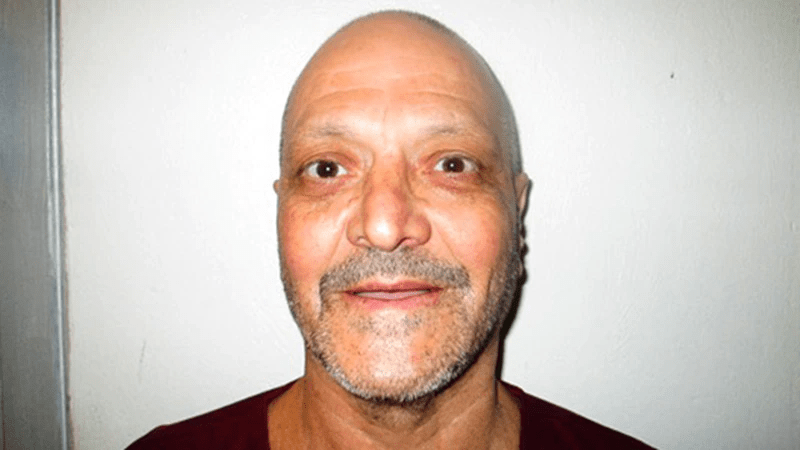
EXECUTION CARRIED OUT 2023 Texas executes Brent Brewer, who spent three decades on death row


November 9, 2023

Brewer lost a clemency appeal earlier this week, despite one of his jurors pleading that his life be spared and an expert witness’ methods put into question. The U.S. Supreme Court declined to pause Brewer’s execution Thursday afternoon to hear arguments about the “junk science” used against him.

The state of Texas executed Brent Brewer, who spent three decades on death row on Thursday evening for the 1990 murder of Robert Laminack. It was the seventh execution of 2023.

In late appeals, Brewer’s lawyers argued that his death should be delayed to consider the issue of unreliable testimony, or what his lawyers called “junk science,” but late Thursday afternoon the U.S. Supreme Court denied that request. Earlier this week, Texas’ highest criminal appeals court declined similar motions to stay Brewer’s execution.

The Texas Board of Pardons and Paroles unanimously rejected Brewer clemency appeal on Tuesday. Brewer’s legal team requested a lesser penalty for him on the grounds that one of the state’s expert witnesses used unreliable methodologies to testify and that a juror says they mistakenly sentenced Brewer to death.

At 6:23 p.m., Brewer was injected with a lethal dose of pentobarbital. He died 15 minutes later.

“I would like to tell the family of the victim that I could never figure out the words to fix what I have broken. I just want you to know that this 53-year-old is not the same reckless 19-year-old kid from 1990. I hope you find peace,” Brewer said in a final statement.

Brent Brewer was convicted of killing Laminack, who owned a business in Amarillo, according to court documents. Brewer asked Laminack for a ride to a Salvation Army with his girlfriend Kristie Nystrom. While en route, Brewer stabbed the 66-year-old Laminack and stole $140 in cash.

Brewer was sentenced to death in 1991 for the murder, but in 2007 the U.S. Supreme Court found that his jury was not given sufficient opportunity for the jury to consider a less severe punishment. Two years later, another jury also sentenced Brewer to death.

Michele Douglas was one of the 2009 jurors. After listening to the evidence, Douglas believed that Brewer didn’t intend to kill Laminack, “things simply got out of hand, with a tragic outcome,” she wrote in an Houston Chronicle opinion piece last week, requesting clemency for Brewer.

During the trial, Douglas did not want to vote in favor of capital punishment for Laminack’s murder, which she did not think was premeditated. Douglas said she misunderstood the jury instructions.

“Believing — incorrectly — that my vote was meaningless, I acquiesced in the majority’s death penalty verdict. I cried when it was read in court. I was haunted afterwards,” Douglas wrote last week.

A death sentence requires a unanimous vote from the jury in Texas. Over the years, jurors in different capital cases across the state have said the instructions are not clear and they would have voted for life sentences without the possibility of parole if they had known that was an option. Lawmakers in the Texas House have passed legislation during several sessions attempting to clarify the instructions but those bills failed to get support from the Senate.

“There’s nothing political about this — it’s about whether the awesome power of the government to take a life is given to it knowingly rather than by what amounts to trickery,” said Rep. Joe Moody, D-El Paso, in a statement about the role of misleading jury instructions in Brewer’s case ahead of Brewer’s execution. “This simply can’t continue; it’s morally wrong. I call on leaders in both parties and both chambers to pass this legislation swiftly at the next possible opportunity.”

During Brewer’s 2009 sentencing, the state called on forensic psychiatrist Dr. Richard Coons to testify about the danger Brewer posed to those in prison. Coons was a regular expert, called on by the state in dozens of death penalty cases, to forecast how defendants would behave in the future.

Coons asserted that a significant amount of crime goes unreported in prisons, and while Brewer’s record was largely clean, it was likely the defendant would commit more acts of violence.

But three years after Coons testified on Brewer’s dangerousness, the Texas Court of Criminal Appeals ruled that the psychiatrist’s techniques for predicting the risks defendants posed were unreliable.

“We see this case as a kind of an outlier, based on all of these things that have happened in this case, including the junk science that was presented,” Shawn Nolan, Brewer’s attorney, told The Texas Tribune on Monday.

But on Tuesday, the same court rejected Brewer’s motions to stay his execution, which were part of his legal team’s effort to challenge the use of Coons’ testimony in Brewer’s sentencing. Coons never evaluated Brewer yet still told the jury that the defendant would pose a risk to those in prison. The appeals court maintained that Brewer’s lawyer at the time did not sufficiently object to Coons testimony.

“His execution is the farthest thing from justice,” Nolan said in a statement after the Supreme Court declined to intervene ahead of Brewer’s execution. “Texas used the unscientific, baseless testimony of Dr. Richard Coons to claim Brent would be a future danger, although the state and the courts have admitted for years that this exact doctor’s testimony was unreliable and should not be considered by juries in capital cases.”

Nolan filed a motion with the U.S. Supreme Court on Tuesday to pause the Nov. 9 execution date to consider the issue with Coons’ testimony, according to court documents.

Last year in federal court, U.S. District Judge Matthew Kacsmaryk found that Brewer’s 2009 trial lawyers acted reasonably by not objecting to Coons’ testimony before his methodologies were ruled unreliable. Earlier this year the 5th U.S. Circuit Court of Appeals affirmed Kacsmaryk’s opinion.

Nolan said Brewer joined the religious programming available to those on death row and since then he has grown as a person of faith, which was also cited in Brewer’s clemency application.

“Worries are kind of small when you’ve taken someone’s life, you know, when someone is permanently gone like that. But I am sorry for what I did,” Brewer said in a video included in his clemency application. “Even if it doesn’t change the outcome, at least they get to hear it before I go.”

EXECUTION CARRIED OUT 2022 – OKLAHOMA GILBERT POSTELLE 02.18.2022


GILBERT POSTELLE

Gilbert Ray Postelle was pronounced dead by lethal injection at 10:14 a.m. Thursday morning. He’s the fourth death row inmate to be killed since the state resumed capital punishment in October after a six-year moratorium. He was 35.

Five media members were selected by a random draw to witness the execution: Sean Murphy (Associated Press), Nolan Clay (The Oklahoman), Wayne Stafford (KOKH), Storme Jones (KWTV) and Dylan Goforth (The Frontier).

The witnesses said the execution appeared to happen without any complications. Their accounts were largely in line with the December execution of Bigler Stouffer and the January execution of Donald Grant, but drastically different from the October execution of John Marion Grant, who convulsed two dozen times and vomited multiple times during his execution.

Postelle did not have any last words.

Swindle’s sister, Shelli Milner, made a statement following the execution.

“It’s never over for the families of the victims. Today is not a joyous day for anyone. Today did not end anyone’s suffering. Today did not put closure on anything,” Milner said. “To know that [Postelle] will never walk this earth again does give me a little more peace than I had yesterday, but I will never have peace knowing what he did to my brother Donnie, to Amy, to James and to Terry.”

There are no more executions scheduled in the state at this point. Pending the results of the upcoming trial over the constitutionality of the current lethal injection protocol later this month, the state may schedule more executions.

Death row inmate Gilbert Ray Postelle’s request for clemency was denied by the Oklahoma Pardon and Parole Board in a 4-1 vote in December 2021.

Postelle, then 19, shot and killed four people — 57-year-old James D. Alderson, 56-year-old Terry L. Smith, 49-year-old James “Donnie” Swindle Jr., and 26-year-old Amy J. Wright — in southeast Oklahoma City on Memorial Day in 2005. The assault included nearly 100 shots fired from two assault rifles.

He was convicted of the four murders and given the death sentence for two.

Three others were charged with conspiracy and four counts of first-degree murder in the slayings. His brother, David Bradford Postelle, was sentenced to life in prison and their father, Earl Bradford Postelle, was ruled incompetent to stand trial in 2006. Another man, Randal Wade Byus, agreed to cooperate with authorities and pleaded guilty to reduced charges in 2008.

Postelle and his family believed one of the victims were responsible for a 2004 motorcycle accident, which left the elder Postelle physically and mentally disabled.

Gilbert Postelle’s attorney said he suffered from years of methamphetamine abuse that began around the age of 12. In 2021, he testified that he had been using meth for days leading up to the killings and doesn’t remember much about the crimes.

Last month, attorneys for Donald Grant and Postelle argued that the state’s lethal injection protocol exposed the two men to a constitutionally unacceptable risk of severe pain, citing the October 2021 execution of John Grant, who convulsed and vomited before he died.

Oklahoma’s method of execution — lethal injection — has been criticized as painful and terrifying, with claims it induces a sense of drowning comparable to the torture tactic of waterboarding.

Oklahoma held off on lethal injections for nearly six years after two botched executions. The state resumed the practice last fall, killing John Grant in October, Bigler Stouffer in December and Donald Grant in January.

The three-drug cocktail is being reviewed for constitutionality in district court in a trial that begins on Feb. 28.

Postelle’s last meal included 20 chicken nuggets, three large fries, one crispy chicken sandwich, one large cola, and one caramel frappe.

Execution carried out 2022- OKLAHOMA Donald Grant – JANV. 27.2022


McALESTER, Okla. — An Oklahoma man who had offered to be executed by firing squad was put to death by lethal injection Thursday morning, officials said.

Donald Anthony Grant, 46, was pronounced dead at 10:16 a.m. CT at the Oklahoma State Penitentiary, a state corrections spokesman announced.

The execution began at 10:03 a.m., and Grant was declared unconscious at 10:08 a.m. before his death at 10:16 a.m., Corrections Department Director Scott Crow said.

There were 18 witnesses, including news reporters, prosecutors, a police chief and loved ones of Grant and his victims.

Grant’s disjointed final words lasted two minutes before a prison staff member in the execution chamber stopped him and cut off the microphone.

“Grant’s last words were “yo God I got this, I got this, it’s nothing” before saying “I’ve got things to handle, no doubt, no doubt.” He also said “Brooklyn for life” among his other chants. Grant reportedly grew up in Brooklyn, New York, and was raised in and out of various foster homes.

Grant kept speaking after the microphone was turned off, looking toward his family members sitting in the front row of the witness room.

At one point, tears appeared to be rolling down his face.

Grant killed Brenda McElyea, 29, and Felicia Suzette Smith, 43, so there would be no witnesses to his robbery at the La Quinta Inn in Del City in July 2001.

LAST MEALGrant, the first person to be given the death penalty in 2022.

After requesting a very large meal, the inmate was given a lethal injection, currently the only approved method in Oklahoma. Grant’s menu included sesame chicken, six egg rolls, shrimp fried rice and a large apple fritter. If there was no dessert, Grant asked for three pints of strawberry ice cream. 

Advocates fight for Oklahoma inmate weeks before scheduled execution


October 10, 2022

Advocates continue to fight for the life of Oklahoma death row inmate Richard Fairchild.

Fairchild is scheduled to be executed on Nov. 17. He has a clemency hearing with the Oklahoma State Pardon and Parole Board Wednesday morning.

Fairchild has sat on death row for nearly 30 years. He was convicted of killing his girlfriend’s 3-year-old son in Del City in 1993.

According to his legal team, Fairchild suffers from multiple mental illnesses and is unfit to be executed.

Rev. Don Heath works with the Oklahoma Coalition to Abolish the Death Penalty. He spoke at a press conference Friday discussing the fight to save Fairchild’s life.

“Richie Fairchild has been a model prisoner and has repeatedly expressed remorse for killing Adam Broomhall,” Heath said. “He is 62 years old and suffers from brain damage. He already has served 25 years in prison for his crime and is asking to be allowed to die in prison of natural causes instead of by poisoning by the state. This case cries out for mercy and forgiveness.”

Additional petitions are scheduled to be delivered to Gov. Kevin Stitt a few days before Fairchild’s scheduled execution. If the Pardon and Parole Board recommends clemency, Gov. Stitt will have the final say.

Copiah County man convicted of capital murder will remain on death row


David Dickerson was convicted for the murder of Paula Hamilton in 2012.

A Copiah County man will remain on death row.

The State Supreme Court denied the appeal of 51-year-old David Dickerson. He was convicted for the murder of his ex-girlfriend, Paula Hamilton, who was the mother of his daughter.

Mississippi justices reject latest appeal in death row case | WJTV
Dickerson was convicted in 2012 for shooting Paula Hamilton to death and setting her body on fire in Copiah County.
Paula Hamilton

Dickerson shot Hamilton to death and then burned her body. He was convicted of capital murder in 2012.

Dickerson appealed his conviction and death sentence based upon an alleged intellectual disability.

In a mental evaluation, Dickerson was ruled mentally competent to stand trial and doctors said he had no credible symptoms of mental illness according to court documents.

The doctors also said Dickerson was uncooperative and fabricated psychiatric symptoms. His appeal was denied Thursday.

Former Alabama Chief Justice, lieutenant governor back new trial for death row inmate


March 19, A group of 14 former judges and prosecutors — including a former Alabama lieutenant governor and a former Alabama Chief Justice — urged a Jefferson County judge Tuesday to set a new trial for a death row inmate convicted in 1998.

In two of seven friend-of-the-court briefs filed with the Jefferson County Circuit Court on Tuesday morning, the signatories wrote that the court should follow the guidance of Jefferson County District Attorney Danny Carr, who said the court should grant Toforest Johnson a new trial amid questions about the conduct in the first. 

“The DA’s decision to vacate Mr. Johnson’s conviction is a heavy one made after an exhaustive investigation of the surrounding circumstances and irregularities leading to his conviction; this weighty decision should be given significant deference by the Court,” said a brief signed by former Alabama Chief Justice Drayton Nabers; former Alabama Supreme Court Justice Ralph Cook; former Alabama State Bar President Bill Clark; retired Judge William Bowen and attorney Bobby Segall. “To disregard District Attorney Carr’s decision would frustrate the exact duties he was elected to perform and further undermine public confidence in our criminal justice system.”

Toforest Johnson’s conviction

A jury convicted Johnson in 1998 of the 1995 murder of William Hardy, a Jefferson County deputy sheriff. Hardy was working as a private security guard at a Birmingham hotel when he was shot and killed in the hotel’s parking lot early in the morning of July 19, 1995. Police arrested Johnson and charged him with murder a few hours later. 

No physical evidence linked Johnson to the scene, and Johnson, 48, maintains his innocence. A jury could not reach a verdict in the first trial, but a jury in a second trial convicted Johnson. After the conviction, Johnson’s attorneys learned that a witness for the prosecution named Violet Ellison received $5,000 from the state after approaching the police in response to a reward offered. 

Johnson’s attorneys filed a motion known as a Brady claim, saying prosecutors withheld evidence that could have raised questions about the witness’ credibility. State courts upheld the conviction, but the U.S. Supreme Court ordered new hearings on the Brady claim in 2017. 

Last year, Jefferson County Circuit Judge Teresa T. Pulliam denied Johnson’s Brady claim, ruling that Johnson had not established “by a preponderance of the evidence” that Ellison “either came forward or gave testimony out of a ‘hope of reward,’ or that the state had knowledge of such motivation at or before the time of the trial.” 

But in June, Carr said Johnson should get a new trial, citing issues with Ellison and other witnesses and the fact that prosecutors could not settle on a theory of the case. 

“A prosecutor’s duty is not merely to secure convictions, but to seek justice,” Carr wrote in a brief to the court.

Toforest Johnson

The electric chair could make a comeback in South Carolina


January 10, 2018

The electric chair could make a comeback in South Carolina.

S.C. state senators Wednesday discussed making it easier for the state Corrections Department to carry out death sentences by electrocution – an option that hasn’t been used in nearly a decade.

The proposal is necessary, some senators say, because the state can’t get its hands on the chemicals necessary to carry out lethal injections.

Lawmakers on Wednesday also considered a proposed “shield law” to protect the identities of pharmaceutical companies that provide chemicals for lethal injections. Those companies currently won’t sell to South Carolina, fearing legal challenges, protests and bad publicity.

Neither proposal moved forward Wednesday, but a state Senate committee plans to discuss the ideas more this spring.

South Carolina last used the electric chair in June 2008 for the execution of James Earl Reed. The 49 year old was convicted in 1996 of the execution-style murder of his ex-girlfriend’s parents.

The state hasn’t executed any death row inmates since March 2011. In part, that is because the last of the state’s lethal injection chemicals expired in 2013.

The state can’t execute any of its current 36 death row inmates – all men – unless they ask to be killed in the electric chair, Corrections Department director Bryan Stirling told senators Wednesday.

None of the death row inmates have made that request, Stirling said.

In 2008, Reed, who fired his own defense attorney and unsuccessfully represented himself, was the first S.C. inmate in four years to choose electrocution over lethal injection.

Because it cannot be carried out, South Carolina’s death penalty is ineffective, senators were told Wednesday.

“We’ve had people on death row for over two decades now,” said Stirling, who took over the prisons system in 2013.

One death row inmate is scheduled to be executed later this month but is expected to get a postponement from a federal court so his appeal can be heard, Stirling told the Senate panel. If that delay isn’t granted, the state quickly is approaching an execution it can’t carry out.

“It’s possible that can happen,” Stirling said.

Don Zelenka, an attorney in the state Attorney General’s Office, said at least one S.C. prosecutor has opted not to pursue the death sentence because the Corrections Department can’t do the job.

A proposal by state Sen. William Timmons, R-Greenville, would change that. The former assistant solicitor’s bill would allow the Corrections Department to use the electric chair when lethal injection is unavailable.

State Sen. Brad Hutto, D-Orangeburg, said he could support the proposal because it helps corrections officers do their jobs, even though he disagrees with the death penalty, which, critics say, is an ineffective deterrent more often used on minorities and the poor.

“This, to me, is a question about efficiency, not about the death penalty,” Hutto said.

Hutto and others were more skeptical of Timmons’ other proposal, the “shield law.”

Lindsey Vann, executive director of the Columbia-based Justice 360 nonprofit, which represents death-row inmates, called that proposal a “secrecy” law that would “create a state secret out of administering the death penalty.”

Shielding pharmaceutical companies’ identities would absolve them of accountability and create the potential for botched executions, Vann said. “If the government is going to exercise this power … they should do so in a transparent manner and with accountability to the citizens of this state.”

Stirling told senators the state’s electric chair, located at the Broad River Correctional Institution in Columbia, still works.

South Carolina has executed 282 inmates since 1912, including 280 men and two women. Of those executed, 208 were black and 74 were white. The youngest inmate executed was 14; the oldest was 66.

Corrections officials began using lethal injection in August 1995, two months after state lawmakers OK’d the practice.

DEATH ROW AND SC

The dates

1995: S.C. legislators approve lethal injection to execute inmates on the state’s Death Row; however, those inmates can opt for electrocution

June 2008: Late S.C. inmate electrocuted

March 2011: Last S.C. inmate executed by lethal injection

The numbers

282: Inmates S.C. has executed since 1912

280: Men executed

2: Women executed

208: African Americans executed

74: Whites executed

66: Oldest inmate executed

14: Youngest inmate executed

Should New Mexico bring back the death penalty?


Yes, bring back the death penalty 63%
No, it should remain abolished 38%
I don’t know 0% | 0 VOTES

New Mexico lawmakers will consider a bill to restore the death penalty, which was made illegal in the state nearly a decade ago. See the story in the Thursday (Jan. 11) edition of The Taos News.

Florida Death Row Inmate Gets New Sentencing Hearing


December 21, 2017

TALLAHASSEE, Fla.  — The Florida Supreme Court is ordering a new sentence for a man involved in the deadly kidnapping of a young couple from South Beach.

The court on Thursday upheld the conviction of Joel Lebron, but tossed out his death sentence. The 39-year-old man is getting a new hearing because a jury recommended the death penalty by a 9 to 3 vote.

Authorities say 17-year-old Nelson Portobanco and 18-year-old Ana Maria Angel were walking back to their car after a date in 2002 when they were forced into a pickup by Lebron and four other men.

Authorities say Lebron stabbed Portobanco and left him for dead, but the teen survived. Angel was repeatedly raped and taken to a retaining wall beside Interstate 95 where Lebron killed her with a single gunshot.

Howland woman condemned to death row asking for another appeal


COLUMBUS, Ohio – Lawyers for Ohio’s only condemned female killer have asked the U.S. Supreme Court to accept her appeal.

Death row inmate Donna Roberts was convicted of planning her ex-husband’s 2001 killing with a boyfriend in hopes of collecting insurance money.

Roberts’ death sentence was struck down in the past after the state Supreme Court said a prosecutor improperly helped prepare a sentencing motion in her case.

The court also said a judge hadn’t fully considered factors that could argue against a death sentence.

Earlier this year, the Ohio Supreme Court once again upheld the death sentence for the 73-year-old Roberts.

She was sentenced to death for the third time in 2014 but appealed that decision.

Watch: Testimony from Roberts’ appeal

Roberts was accused of planning her ex-husband’s murder with her boyfriend Nathaniel Jackson. The killing happened in the couple’s home in Howland.

Jackson was also sentenced to death.

In the past, the court said a prosecutor improperly helped prepare a sentencing motion in Roberts’ case and that a judge hadn’t fully considered factors that could argue against a death sentence.

Justice Terrence O’Donnell, writing for the majority, rejected arguments that allowing a new judge to sentence Roberts after the original judge died was unconstitutional.

Justice O’Donnell explained that Roberts helped Jackson plan Fingerhut’s murder in a series of letters and phone calls while Jackson was in prison on an unrelated charge. She actively participated with Jackson in the killing by purchasing a mask and gloves for him and allowing him into the home, evidencing prior calculation and design, O’Donnell said.

The court ruled 6-1.

The Court also pointed out that although Roberts expressed sadness for Fingerhut’s murder, she never accepted responsibility for it and denied her scheme to kill Fingerhut, “notwithstanding overwhelming evidence to the contrary.”

The Court concluded the death penalty was appropriate and proportionate to the death sentence imposed on Jackson.

The state is expected to oppose Roberts’ latest request.