death penalty

Georgia Sets March 20 Execution Date for Willie Pye Despite Strong Evidence of Intellectual Disability and Previous Finding of Ineffective Representation by Attorney with History of Racial Bias EXECUTED 11.03 PM


UDPATE march 22. 2024

he state of Georgia on Wednesday executed death row inmate Willie Pye, who was convicted and sentenced to die for the 1993 murder of Alicia Lynn Yarbrough.

The execution – Georgia’s first in more than four years – was carried out by lethal injection at 11:03 p.m. at a prison in Jackson, about 50 miles south of Atlanta, the Georgia Department of Corrections said in a news release. Pye did not make a final statement, it said.

Pye, 59, was put to death after the US Supreme Court denied his final appeals late Wednesday. In a clemency petition and various court filings, Pye and his attorneys had argued for his life to be spared, citing an intellectual disability, a troubled upbringing and ineffective assistance of counsel.

“The State of Georgia obtained Willie’s death sentence only after providing him a racist and incompetent defense attorney. And the State has insisted on standing by that death sentence in spite of his lifelong intellectual disability and the fact that he presents a danger to no one in prison,” his attorney, Nathan Potek, said after the execution.

“The people of Georgia deserve better,” he added, describing Pye as a loving son, brother and uncle who “will be dearly missed by his friends, family, and his legal team.”

March 7, 2024

The Georgia Attorney General has announced that Willie James Pye, who previously had his death sentence reversed due to his attorney’s failure to investigate his background, only to see the death sentence reinstated on appeal, is set to be executed on March 20. Mr. Pye’s court-appointed trial attorney, Johnny Mostiler, has been accused of ineffective representation or racial bias in at least four cases involving Black defendants and reportedly called one of his own clients a “little n****r.” Mr. Pye has also exhibited “undisputed” signs of intellectual disability, with an IQ of 68 and a history of learning difficulties. Georgia has not conducted an execution in over four years, and Mr. Pye is the state’s first scheduled execution date in about two years.

Mr. Pye was convicted and sentenced to death in 1996 for the kidnapping, robbery, rape, and murder of his ex-girlfriend Alicia Yarbrough. At the time, Mr. Mostiler had a lump-sum deal with Spalding County to represent the entire indigent criminal caseload, which numbered some 800 felony and five capital cases. He also had an active private civil practice. Mr. Mostiler only spent about 150 hours on Mr. Pye’s case, including the trial itself, while studies have found that thousands of hours are typically required for effective capital defense representation. He also spent less than five hours preparing the case for a life sentence, most of it on the day of the penalty phase and the day before. Due to his limited investigation, he did not uncover evidence of Mr. Pye’s traumatic upbringing and intellectual disability. Mr. Pye grew up experiencing “near-constant physical and emotional abuse, extreme parental neglect, endangerment, and abject poverty.” He battled severe depressive episodes and reported hearing voices prior to the killing. However, Mr. Mostiler relied on Mr. Pye’s sister to recruit family members as witnesses and told them only to testify to Mr. Pye’s good character, without delving into the difficulties of Mr. Pye’s childhood. He did not request an evaluation of Mr. Pye’s intellectual functioning or develop evidence regarding the claim even after the state expert tested Mr. Pye’s IQ at 68, in the impairment range. 

At least three of Mr. Mostiler’s clients have been executed, including Kenneth Fults and Curtis Osborne; Mr. Mostiler infamously slept through portions of Mr. Fults’ trial, and he told a white client that he would spend much more money on his case than on Mr. Osborne’s because “that little n****r deserves the chair.” In Frederick Whatley’s case, Mr. Mostiler allowed the prosecution to force Mr. Whatley to reenact the murder while shackled in manacles and leg irons. Justice Sonia Sotomayor later wrote that it was “hard to imagine a more prejudicial example of needless shackling.” A 2001 profile of Mr. Mostiler following his death found that he had handled “more than seven times the number of indigent cases the American Bar Association (ABA) believes is manageable…turning over one case every 100 minutes, less time than a private attorney might devote to a simple traffic violation.” The profile called him the “archetype” of “meet ’em, greet ’em, and plead ’em” lawyers. 

In 2021, the U.S. Court of Appeals for the Eleventh Circuit overturned Mr. Pye’s death sentence, unanimously finding that Mr. Mostiler failed to investigate and present a broad range of available mitigating and rebuttal evidence. The panel did not reach the merits of Mr. Pye’s intellectual disability claim, writing that the ineffective assistance claim was sufficient to require a new sentencing trial, but highlighted substantial evidence of Mr. Pye’s low cognitive functioning. However, on the state’s motion, the Eleventh Circuit reconvened en banc (with the full court) and reinstated Mr. Pye’s death sentence. The court acknowledged that Mr. Mostiler’s performance was deficient, but held that it was required under the Anti-Terrorism and Effective Death Penalty Act (AEDPA) to defer to the state court’s finding that Mr. Mostiler’s performance did not prejudice Mr. Pye. The majority interpreted AEDPA and Supreme Court precedent to conclude that even if the state court’s decision rests on clear errors, federal courts must defer to that decision if there are “additional rationales” that support it. In other words, the federal reviewing court may theorize reasons for the state court’s outcome and adopt those reasons to justify a state court decision that is otherwise wrong on the facts or the law.

Willie James Pye v. Warden, Georgia Diagnostic and Classification Prison (US COURT OF APPEALS) 2021

wo judges dissented in full, while two additional judges joined the dissent in part but concurred in the judgment. Dissenting Judge Jill Pryor wrote that the majority had directly violated Supreme Court precedent by “turning to justifications the state never even hinted at” and relying on “a half-baked textual analysis” in support. She further argued that the holding “creates a practically impossible path to relief for habeas petitioners…[i]f federal courts can bury unreasonable findings under an avalanche of new reasons the state court never gave, then unreasonable findings will virtually never be important enough to satisfy the majority’s test.” 

Judge Pryor also noted the “undisputed evidence” of Mr. Pye’s low intellectual functioning. Supreme Court jurisprudence and scientific research recognize IQ scores below 70 as a strong, often definitive indicator of intellectual disability. Georgia has one of the lowest appellate success rates of intellectual disability claims by capital defendants, with an 11% success rate compared to 82% in neighboring North Carolina. Georgia is also the only state that requires defendants to prove their intellectual disability “beyond a reasonable doubt” at trial, and a 2017 study found that only one defendant had ever been found exempt from the death penalty on these grounds in three decades. Research shows that states that significantly deviate from accepted clinical standards, including Georgia, are much less likely to exempt defendants from the death penalty based on intellectual disability.

Judge Pryor concluded that under the majority’s ruling, the “writ of habeas corpus is illusory—impossible, even, to obtain.” She wrote that as the author of the panel opinion, reading the full court’s opinion made her feel like she had “stepped through the looking glass.” However, “what happened during Alice’s time through the looking glass was a dream…This case, unfortunately, is not.”  

TEXAS – Ivan Cantu execution set for today 6PM EXECUTED 6PM47


Subscribe to continue reading

Subscribe to get access to the rest of this post and other subscriber-only content.

All 58 Louisiana death row inmates with no execution date wait as bill proposes death by nitrogen gas


Subscribe to continue reading

Subscribe to get access to the rest of this post and other subscriber-only content.

USA: Execution set despite fair trial concerns


Subscribe to continue reading

Subscribe to get access to the rest of this post and other subscriber-only content.

Man on death row for cousin killing says he was ‘framed’ as Kim Kardashian backs his case


January 28, 2024

Ivan Cantu was sentenced to death in 2001 for the murders of his cousin James Mosqueda and his cousin’s fiancée Amy Kitchen, but he has always maintained his innocence and now Kim Kardashian is fighting for his release

Kim Kardashian is fighting to save death row inmate Ivan Cantu after he was convicted for the murders of his cousin and his cousin’s fiancée.

Kim Kardashian has now become involved in the case ( Image: Getty Images)

Cantu has been on death row for more than two decades. He was sentenced to death in 2001 for the fatal shootings of James Mosqueda and Amy Kitchen, but has always maintained his innocence.

Amy and James were killed during a robbery at their home in North Dallas back in November 2000. Cantu has accused police officers of taking “witness statements and testimony at face value” and not properly investigating the claims. He alleges this led to “false and untruthful information” which culminated in his arrest.

Ivan Cantu was sentenced to death

(Image: Texas Department of Criminal Justice)

Investigators said they believed robbery was the motive for the killings. “Officers believe the crime occurred because robbery was the motive, the murders occurred during a robbery attempt, the car was taken, and some other items were also missing,” police told FOX 4 at the time.

At Cantu’s trial, prosecutors presented evidence of his fingerprints on the gun used in the murders, as well as bloody clothing seized from Cantu which had the victims’ DNA on it. However, true crime podcaster Matt Duff claims Cantu’s fiancée and the state’s star witness Amy Boettcher, who is now deceased, lied on the stand.

“Amy said Ivan had stolen James’s watch and then tossed it out the window,” Matt said during an episode of the Cousins by Blood podcast. The private investigator added: “Early in my investigation I discovered the Rolex. Although it was reported missing, it was later recovered at the house and given back to the family. So the family had that Rolex all along, but no one figured that out until 2019 when I started this case.”

Amy also claimed Cantu proposed to her using a diamond ring she alleges was taken from one of the victims. Witnesses have since come forward and said Amy and Cantu announced their engagement and shown off the ring a week before the murders.

Two jurors who originally voted to find Cantu murder have now come forward and said they don’t want him to be executed until new evidence can be reviewed. The Texas Criminal Court of Appeals could grant an evidentiary hearing, where Cantu’s lawyer could challenge the evidence presented in 2001.

The 50-year-old had been set for execution on April 26, 2023, but state District Judge Benjamin Smith in Collin County, where Cantu was convicted, withdrew the execution date and said more time was needed to review Cantu’s claims. However, his execution has now been rescheduled to February 28, 2024.

Kim Kardashian has now taken to Instagram to speak out about Cantu’s case. Posting on her Story, she wrote: “I heard about Ivan Cantu’s case from Sister Helen Prejean and was really moved by it. In 2001, Ivan was convicted of killing his cousin, James Mosqueda, and his fiancée, Amy Kitchen. Ivan has always maintained his innocence claiming that the rival drug dealer framed him for the murder.”

Explaining how her fans can help, the reality star added: “Texas now has a conviction integrity unity. The prosecutors offices are beginning to recognize that there are a lot of mistakes in convictions. They encourage you to write into their integrity units about specific cases, so I am encouraging everyone to write in about the case of Ivan Cantu. The time to act to save Ivan Cantu is now!”

‘I saw Alabama killer’s eyes bulge as he took 22 minutes to die in first nitrogen execution’, Reverend Dr, Jeff Hood witnessed


January 28, 2024

The spiritual advisor for convicted hitman Kenneth Eugene Smith accompanied him into the chamber, where he witnessed what he called ‘the most horrific thing’ he’d ever seen done to another human

Smith – who survived a botched lethal injection attempt in 2022 – was accompanied to the gas chamber by his spiritual advisor, Reverend Dr Jeff Hood. Rev Hood described how he watched the 58-year-old killer writhe around like a “fish out of water” while his eyes bulged.

Here, in the reverend’s own words, he tells of his haunting, traumatising experience as he watched Smith die after anointing his head with holy oil.

I go into the execution chamber, and one of the first things that I realize was what the oxygen meters were saying. The oxygen meters, when I went in for orientation the other day, were at 22%, which makes sense because air is like 78% nitrogen. When I was going into the chamber, it was 25.4%, which means that they were pumping extra oxygen into the chamber — so that was kind of how they managed that.

“I immediately notice that Kenny has on a mask that extended from the top of his forehead to underneath his chin. It looked like a firefighter’s mask, and it was super tight. There were sorts of straps everywhere. It felt like I was looking at Bane from Batman. That’s what it felt like — it was a super gnarly, intense mask. There were strings going from the mask to the gurney.

“There were two corrections officers and a woman by the name of Cynthia Stewart Reilly, who is in charge of male prisons in Alabama. They were all sort of nonchalant-looking when all of this was happening.

Hood stands with Smith as the two pose for a final picture together before his execution

(Image: Courtesy o Rev. Dr. Jeff Hood)

“Kenny, of course, gave his last words. I was, the whole time, going back and forth with Kenny. I put my hand over my heart to let him know that I loved him. He was talking to me, letting me know that he loved me. It was really powerful.
“At this point, the curtains were still shut, so the witnesses can’t see anything. As the curtains were opened, I was allowed to go up and make the sign of the cross on his leg. I did that, and he, again, repeatedly telling me how much he loved me and how thankful he was that I was there. Obviously, that was incredibly touching to me.
“Then, he looked at the room where his family was. He kept telling them how much he loved them. He gave his last words, and then the execution started.
“When the execution started, based on what the state said, I was expecting him to go unconscious in seconds. Well, as soon as the nitrogen hit, he began to convulse, and he didn’t stop convulsing for minutes. I know that by some accounts, it was two or three minutes.

He said the entire procedure lasted 22 minutes. That’s Lee Hedgepeth, who spoke at the press conference last night.

“It looked like a fish out of water. He kept heaving back and forth, back and forth. And the mask was tied to the gurney, and so every time he heaved forward, his face was hitting the front of the mask and pressing into the mask.

“His eyes started to bulge. He began to turn colors. He was spitting, and mucus was coming out of his mouth and his face. He kept almost hitting his face on the front of the mask.

“The mucus and saliva was hitting the front of the mask, and it was drizzling down the front of the mask. His whole body was seizing. It was absolutely, positively a horror show.

“It was so intense that the expressions of the corrections officers and Ms. Stewart Reilly dramatically changed from the nonchalant facial expressions that they had to real looks of concern.

Hood described the mask as being a tight fit, uncomfortably tight, and then said mucus and saliva from Smith coated the insides as he died

(Image: Getty Images)

“One of the reasons why I feel very comfortable calling Mr. Hamm [Alabama Department of Corrections Commissioner John Hamm] a liar, calling the attorney general [Steve Marshall] a liar, is because they know, based on the reactions in that room, that this was not a success, this was not what they thought it would be, this is not something that happened in seconds. This was something that was torture, cruel and unusual punishment, for minutes and minutes.

“Cynthia Stewart Reilly, she had on women’s dress shoes, and she kept on tapping her feet out of nervousness. It was almost as if she was tap dancing in the execution chamber. It was one of the noises that I kept hearing was her tapping her feet.

“It was just an unbelievably intense situation. I was crying my eyeballs out. I had my hand on the space behind me. The longer it went, I kept thinking in my head, ‘How long is this going to last? How long are we going to have to watch this s**t?’

“On a personal level, I felt an unbelievable sense of guilt that there was nothing I could do to stop it. I felt like I needed to tell Kenny that I was sorry that I couldn’t stop it. I think that comes from a couple of spaces, but … as an activist, I felt guilty that I couldn’t stop it beforehand. In the chamber, I felt just completely powerless.

“Witnessing a murder, a horror show like that, it’s horrible. The tears were running down my face.

“When it finally became apparent that he at least appeared to be deceased, they were waiting on a flatline from the EKG. My face went from just complete sadness and horror to absolute rage that the state of Alabama thought that it was morally appropriate to suffocate someone to death, to torture someone to death, in that manner.

“The tube that was coming out of the control center was a very thin tube. It actually looks like something that would have come out of plastic plumbing that kind of extends, except it was clear. The more he heaved, and the more he looked like a fish out of water, swinging back and forth, the more I was concerned that that tube was going to bust, or at least break, so there was that concern for my safety.

“I kept on wringing my hands. I couldn’t figure out what to do with my hands. You know when you rub your hands so hard you feel like you’re going to rub your hands off when something horrible is happening like you’re going to lose a finger at any moment? All of this happens, and I am eventually escorted out of the chamber.

“The state of Alabama does not send a doctor into the chamber to declare a time of death in front of the witnesses because they’re scared that the doctor will be revealed. In this circumstance, I was taken out of the chamber, and the reason that’s so important is nobody knows the exact time of death. We just have to trust the commissioner to come out and say the time of death.

“This is a state that says, ‘Trust us,’ but they are consistently not being honest and not telling the truth. I think it is very possible — I’m not saying this for certain — I think it is very possible that we could have left that room and Kenny [would] still be alive. We would have never known. We would have no idea.

“All we could tell was it didn’t look like he was breathing. It looked like he was unconscious. But there was no way for us to know that because there was no doctor in the space. There was no doctor who came out and declared a time of death.

Then, what happens is I am escorted down the hallway. On my right, as I was walking down the hallway, I saw the doctor, and he was very shocked and upset that I saw him because he was trying to hide. And the reason he was trying to hide is because he could lose his medical license for participating in that.

“It just shows that there are so many secrets and so many crimes and so many just horrific things that happened last night, and I hope that the state of Alabama is held accountable for the horror that they perpetuated.

“These state officials are obviously chicken hawks. They are all about executions. They’re hawks on executions, making those things happen. But they are too chicken to be present, to take any sort of responsibility, for what’s happening. They’re not in the execution chamber. They are not pushing the mechanisms.

“They’re cowards. They are all about talking about these executions and how they want them to continue and all this kind of fluster, but they are too chicken to participate in them themselves. They sit up in Montgomery, and they talk about how it was successful and this and that, but they’re never there.

They’re forcing the corrections officers to do this stuff, and there’s no doubt from what I saw last night that it has an unbelievable, detrimental effect on them.

“I was a trauma chaplain for a while, so I’ve seen people [who went through] car accidents and burn victims. I’ve seen, unfortunately, all sorts of horrific things — [including] four executions last year. This is the most horrific thing I’ve ever seen done to a human being, by far.

This was, again, a fish out of water. It was someone heaving over and over and over again, and in a viewing chamber where there were state officials, corrections officers, people who could have stopped it. And it just kept going. It wouldn’t stop.

“To say that this was successful… It’s just insane that they keep on saying that. Nobody that saw that would say that was a success, unless you consider a success to just be killing somebody.

“If a success is something that doesn’t violate the Eighth Amendment, if a success is something that’s moral — if this is a success, then they have a very different understanding of morality, any of these things.”

UPDATES : Death row inmate speaks out on untested nitrogen gas execution


January 25, 2024

Kenneth Smith lawyers continue to push for execution stay

Kenneth Eugene Smith was not provided with a full copy of the protocol for his execution by nitrogen hypoxia until November 2023, his lawyers have said, as they once again petitioned for a stay of execution.

In court documents filed on Thursday, lawyers said that Smith “did not endorse (and could not have endorsed) the procedures in the Protocol before he had seen them”.

“Mr Smith has not walked away from his allegation that nitrogen hypoxia is a feasible and available alternative method of execution to lethal injection. When he made the argument he had not seen ADOC’s Protocol for executing condemned people by nitrogen hypoxia,” the filing stated.

“He was only provided with a heavily redacted copy of the Protocol in late August, at the same time that the State informed him that he would be the first person subject to it and moved in the Alabama Supreme Court for authority to execute him under its procedures.

“Mr Smith did not receive an unredacted copy of the Protocol until late November when the district court ordered Respondents to produce it. Mr Smith did not endorse (and could not have endorsed) the procedures in the Protocol before he had seen them.”

The filing continued: “And, of course, the ‘devil is in the details’ of the Protocol, so his current challenge is to the procedures in the Protocol—specifically to the use of a mask to deliver nitrogen instead of other feasible and available alternatives, including a hood or a closed chamber—not to nitrogen hypoxia per se.

“When the State permitted condemned people in Alabama to elect nitrogen hypoxia as the method of their execution, ADOC adopted an election form that expressly provided that those condemned people so electing did not ‘waive [their] right to challenge the constitutionality of any protocol adopted for carrying out execution by nitrogen hypoxia.’

“Neither did Mr. Smith when he alleged that nitrogen hypoxia was a feasible and available alternative method of execution in the Lethal Injection Action.”

Smith execution method ‘thoroughly vetted’ says Governor

Alabama Governor Kay Ivey said that the method of execution for Kenneth Eugene Smith had been “thoroughly vetted” and she was “confident” that they were ready to proceed.

“Nitrogen hypoxia is the method previously requested by the inmate as an alternative to lethal injection,” Governor Ivey said in a statement.

“This method has been thoroughly vetted, and both the Alabama Department of Corrections and the Attorney General’s Office have indicated it is ready to go. The Legislature passed this law in 2018, and it is our job to implement it. I am confident we are ready to move forward.”

It comes amid ongoing debate about the method – which is previously untested.

Execution timeline

Kenneth Eugene Smith scheduled to be put to death with nitrogen gas on Thursday

Accordingly, Governor Ivey has set a 30-hour time frame for the execution to occur beginning at 12:00 a.m. on Thursday, January 25, 2024, and expiring at 6:00 a.m. on Friday, January 26, 2024. The execution will take place at the William C. Holman Correctional Facility (CF) in Atmore, Alabama.

The tentative start time will be 6:00 p.m. on the 25th. This, of course, may change based on the conclusion of the required legal proceedings.

Alabama death row inmate Kenneth Eugene Smith says he is not prepared to become the first person ever put to death by nitrogen gas.

Smith, 58, told The Guardian he has now been moved to the “death cell” in an Alabama Department of Corrections (ADOC) facility ahead of his Thursday execution, but that he is not ready to be executed using the untested method.

Smith’s attorneys have filed a request with the 11th US Circuit Court of Appeals to stop the execution because the nitrogen gas method carries the risk of prolonged death and suffering.

Additionally, his attorneys have asked the US Supreme Court to review whether the execution will violate the US Constitution. Officials previously tried to execute Smith in 2022 but failed after they were not able to insert IV lines into his system.

Now, his attorneys argue that the state might not have the right to try and put him to death a second time.

It is uncontroverted that ADOC inflicted actual physical and psychological pain on Smith by repeatedly trying (and failing) to establish IV access through his arms, hands, and by a central line as he was strapped to a gurney for hours,” the filing said.

“Mr Smith’s was the third consecutive execution that ADOC botched or aborted for that same reason. ADOC’s failed attempt to execute Mr Smith caused him severe physical pain and psychological torment, including posttraumatic stress disorder.”

Smith said he’s not ready to be put to death with an untested treatment, given how a botched first execution attempt went.

“I am not ready for that. Not in no kind of way. I’m just not ready, brother,” Smith told the newspaper. He admitted that he’s had a recurring nightmare since the first execution attempt of being escorted back into the death chamber.

“All I had to do was walk into the room in the dream for it to be overwhelming. I was absolutely terrified,” he said. “It kept coming up.”

Discussing his upcoming execution date, he said he has dreams that “they’re coming to get me.” He currently spends most of his days being “sick in his stomach” and frequently suffers from nausea and stress.

“They haven’t given me a chance to heal,” Smith said. “I’m still suffering from the first execution and now we’re doing this again. They won’t let me even have post-traumatic stress disorder — you know, this is ongoing stress disorder.”

The inmate then presented a scenario in which a victim of abuse was forced back into an abusive situation, explaining that that’s how the new execution attempt makes him feel.

“A person who did that would probably be seen as a monster,” he said. “But when the government does it, you know, that’s something else.”

In April 1996, Smith was convicted of capital murder for his role in the death of 45-year-old Elizabeth Sennett, a pastor’s wife in Colbert County. Officials discovered that she’d been stabbed multiple times inside her home.

Smith was part of a two-person murder-for-hire scheme, which appeared to be put together by the woman’s husband. The jury voted 11 to 1 to put Smith away for life. However, the judge presiding over the case overrode the jury’s verdict and sentenced him to death.

Speaking of the crime, he said he wishes he “had done things differently.”

He added: “One second, one moment in a man’s life and that’s been the only incident — I’ve not had any incident with officers, not a single fight with inmates, in 35 years. Violence is not who I am.

“I’ve been in prison for 35 years, how have I not been punished,” he continued. “Thirty-five years. I have not gone unpunished for 35 years. I have suffered doing this. So has my family.”

Supreme court

January 18, 2024 Application (23A664) for stay of execution of sentence of death, submitted to Justice Thomas Stay of Execution

January 22, 2024 Response to application from respondent Alabama filed. Main document

January 23, 2024 Reply of Kenneth Eugene Smith in support of application submitted. Reply

January 24, 2024 Application (23A664) referred to the Court. Application (23A664) for stay of execution of sentence of death submitted to Justice Thomas and by him referred to the Court is denied. The petition for a writ of certiorari is denied.

Independent News (video)

EXECUTION CARRIED OUT TEXAS DAVID RENTERIA 16/11/2023, 22 years after child abduction, killing


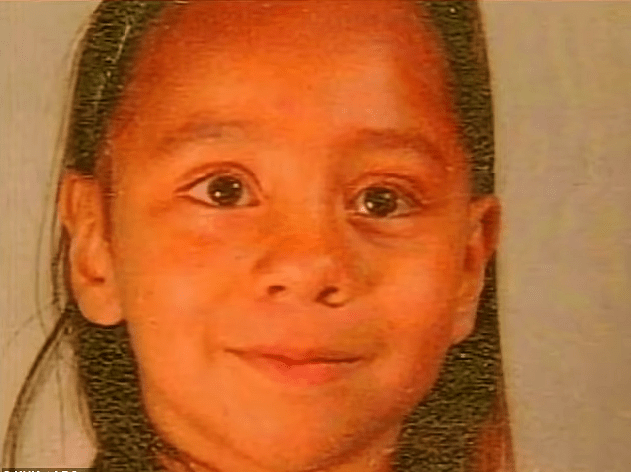
HUNTSVILLE, Texas − David Santiago Renteria spoke his last words Thursday night, strapped to a gurney at the Huntsville Unit, minutes before being executed in the 2001 abduction and killing of 5-year-old Alexandra Flores.

Renteria, 53, was injected with a lethal dose of pentobarbital Thursday, Nov. 16, on a dark, cold and rainy evening at the Texas Department of Criminal Justice’s prison. His time of death was 7:11 p.m. CST, prison officials said.

With his family and Alexandra’s family present, Renteria gave his final statements.

Killer’s final words

Renteria prayed before singing a hymn in English and another in Spanish after witnesses, including relatives of his victim, entered the death chamber and watched through a window a few feet from him during his execution.

Looking at his victim’s relatives, Renteria also said: “There is not a day that goes by that I do not think about the fateful events of that day and what transpired.

“There are no words to describe what you’re going through, and I understand that.”

He told his sister and a friend, watching through another window, that he was “good… strong”.

“I love you all, I truly do. I’ll see you in the next life,” Renteria added.

He then began reciting The Lord’s Prayer as the drugs began flowing. “Our father, who art in heaven” is as far as he got.

“I taste it,” he said of the drug, before mumbling something and all movement stopped.

The Renteria family watched the execution from a different room from Alexandra’s family. Glass windows separated the witnesses from Renteria.

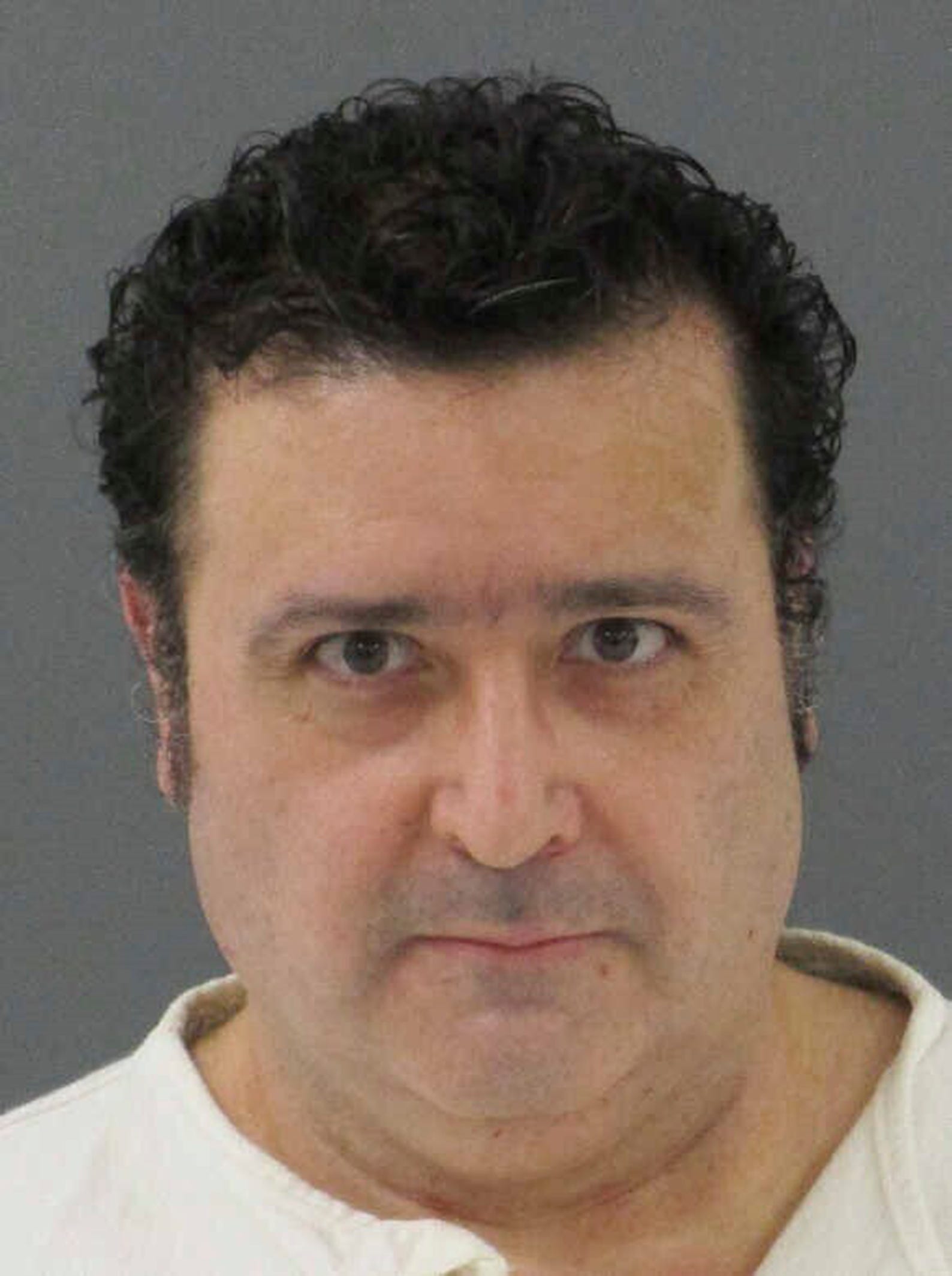
This photo released by the Texas Department of Criminal Justice shows death row inmate David Renteria. Renteria, a Texas inmate convicted of strangling a 5-year-old girl taken from an El Paso store and then burning her body nearly 22 years ago is facing execution. (Texas Department of Criminal Justice)

Alexandra’s sister, Sandra Frausto, and brother, Ignacio Frausto, attended the execution.

Renteria’s sister Cecilia Esparza and a friend also were present.

Esparza collapsed when she walked into the viewing room, and prison officials brought her a chair and she cried. Renteria told his sister through the glass, “I love you.”

Last days on Texas death row for one of El Paso’s most notorious killers

Renteria spent his final days meeting with visitors, laying in bed, watching TV through a cell door and sleeping, a Death Watch report states. The times listed below are in Central time zone.

On his execution day, starting at 12:15 a.m., he sat on his bed and began writing. The report does not state what he wrote.

He began packing up his property about 2:30 a.m., before sitting on the floor and reading a book around 4 a.m., the report states. He then continued packing up his property and cleaning the floor between 5 to 7:30 a.m.

Renteria was allowed to talk to fellow inmates at 7:30 a.m., before meeting with visitors from 8 to 11:30 a.m., the death watch states.

He was then transferred from the Texas Department of Criminal Justice’s Polunsky Unit in Livingston, Texas, to the Huntsville Unit to await his execution.

A victim of Renteria’s from a different criminal incident and her mother also attended the execution. Renteria was previously convicted and sentenced to 20 years in prison for indecency with a child in El Paso.

The execution was also attended by 14 state law enforcement and governmental officials.

Renteria grew up in the Lower Valley and was a tribal member of the Ysleta del Sur Pueblo, according to the Texas Coalition to Abolish the Death Penalty.

While in prison, he rededicated himself to his Roman Catholic faith, the coalition reported.

Renteria’s execution ends a nearly 22-year legal battle waged in what has been described as one of the most heinous crimes committed in El Paso.

“I’ve always been a supporter of the death penalty and from a law enforcement perspective, I just think some people are too dangerous to be in our society and that is certainly one individual who I think that that the death penalty is absolutely appropriate,” El Paso County Sheriff Richard Wiles said. “It’s a long time coming. I think it’s been what? Twenty-one years. I was actually the assistant (El Paso police) chief, (Carlos) Leon was the chief when that horrific crime occurred. It was really tough on everybody. I can’t even imagine what that family went through and what they’re still going through today.

“Hopefully, this will give them a little bit of relief to help them in their recovery that is going to take the rest of their lives, Wiles said. “I can’t even imagine losing my 5-year-old daughter to such a horrific crime.”

Justice served for Alexandra Flores in 2001 abduction nearly 22 years later

Renteria’s execution came two days before the 22nd anniversary of the day he kidnapped 5-year-old Alexandra Flores from an El Paso Walmart, strangled her to death and then burned her body. It also comes six days before his 54th birthday.

Renteria abducted Alexandra Nov. 18, 2001, as she was Christmas shopping with her parents at an El Paso Lower Valley Walmart.

Her parents realized she was missing and searched the store but could not find her. Alexandra was seen on store surveillance video exiting the store about 5:15 p.m. with Renteria.

Alexandra’s body was found about 7:10 a.m. the next day in an alley 16 miles (25km) away.. She was naked and partially burned in a carport near Downtown El Paso.

An autopsy revealed Alexandra was strangled to death and then set ablaze, court documents state. Investigators later revealed there were no signs of sexual assault.

A palm print on a plastic bag found over Alexandra’s head was determined to be from Renteria, court documents state.

El Paso Police Department investigators discovered that a vehicle registered to Renteria was at 9441 Alameda Ave. at the time and date of Alexandra’s disappearance. Renteria also told police he was at the location at the time and date of her disappearance, court documents state.

Renteria went to trial for the death of Alexandra in September 2003. He claimed in his trial that Barrio Azteca gang members forced him to kidnap the girl and someone else was the person who killed her, court records show.

A jury convicted him of capital murder and he was sentenced to death.

Appeals court justices heard the case in 2006 and upheld the conviction. However, the justices ordered a new sentencing phase of the trial.

The resentencing was ordered because of “exclusion of evidence showing the defendant’s remorse violated due process by preventing defendant from rebutting the State’s case when the State left jury with false impression and emphasized it,” the justices wrote in their opinion.

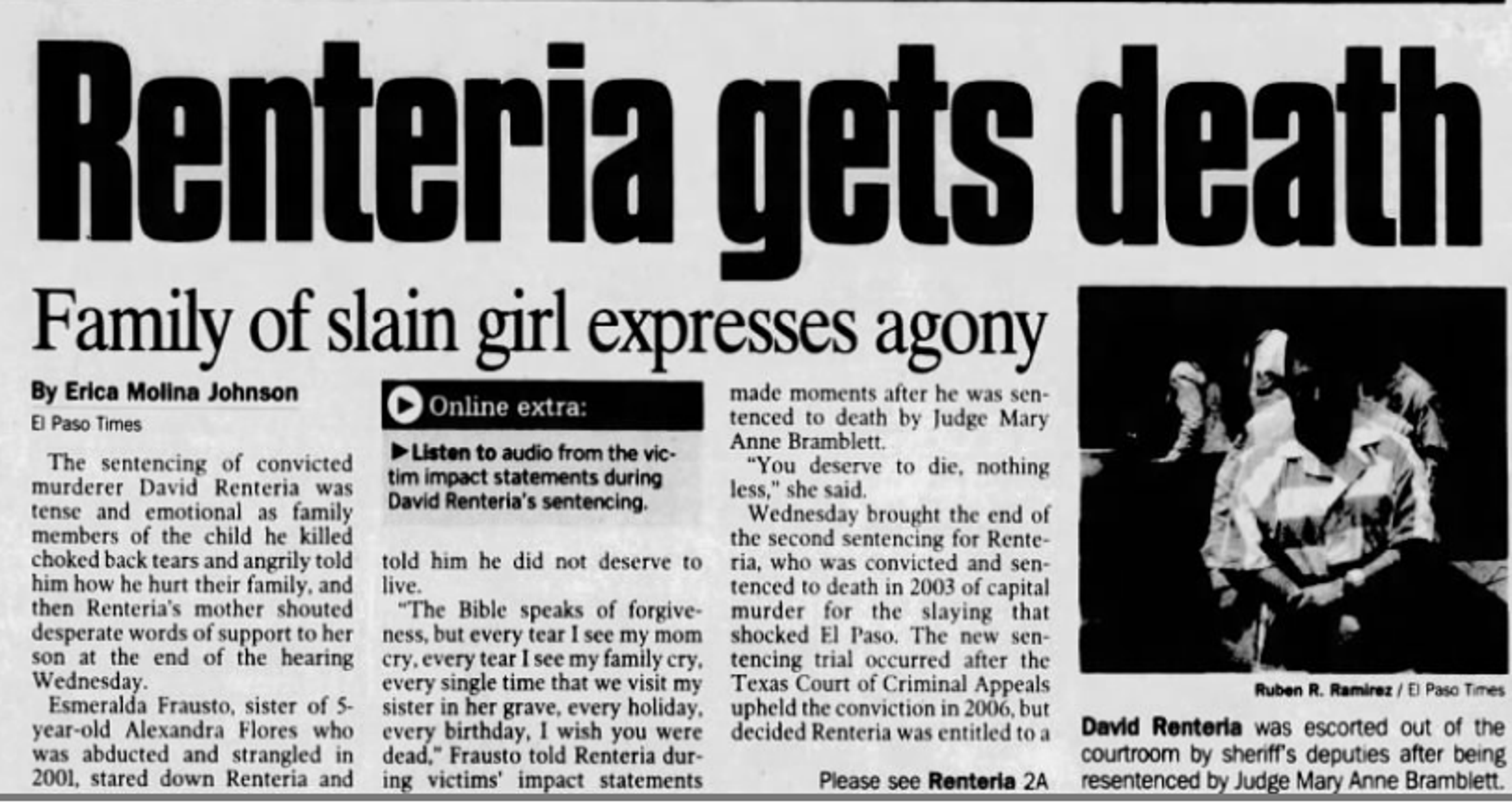
A May 15, 2008, El Paso Times article reporting David Santiago Renteria was given the death penalty during his resentencing hearing.

A May 15, 2008, El Paso Times article reporting David Santiago Renteria was given the death penalty during his resentencing hearing. 

KTSM 9 NEWS

DAVID SANTIAGO RENTERIA v. THE STATE OF TEXAS (Original)

El Paso Sheriff Deputy Peter Herrera’s family speaks after death penalty sentence

EXECUTION CARRIED OUT ALABAMA Casey McWhorte 11/16/2023


Casey A. McWhorter, sentenced for murder on May 13, 1994

Casey McWhorter (ALABAMA DEPARTMENT OF CORRECTIONS)

An Alabama man who shot and killed his friend’s father in a premeditated robbery in 1993 has been put to death, killed by lethal injection on Thursday — over 30 years after the initial crime. Before he died, however, he had a dire message for other youth who were going through a tough mental time like he was.

Casey McWhorter was convicted of first-degree murder and sentenced to death after slaughtering 34-year-old Edward Lee Williams, 34, at the age of 18. He and two other teens, Williams’ 15-year-old son, conspired to steal money from his home and kill him. He went to the home to commit the crime but didn’t have the intention of actually following through with the killing, he said in a recent interview.

But the situation escalated after the older Williams came home during the robbery and surprised the teens. He said they had been in the home grabbing various items when he came in and began fighting with his son over the gun he had. That’s when McWhorter came out of one of the back rooms. Williams immediately noticed him and started swinging at him, and so he did the only thing he could think to do — he shot the other gun that was in his hand at that point, and it hit Williams in the abdomen despite McWhorter saying he had aimed for the legs.

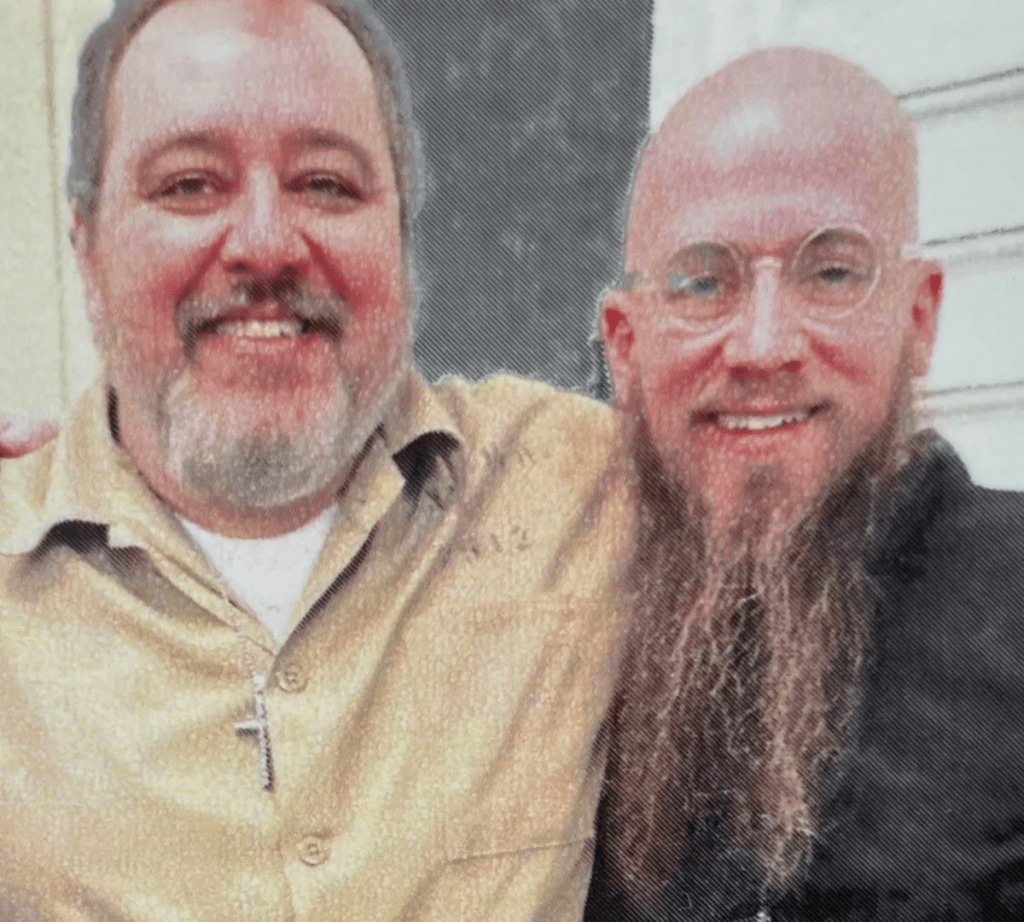
Casey A. McWhorter spent most of his adult life on Alabama’s death row. Thursday night he died there.

The state of Alabama executed McWhorter, 49, by lethal injection in the death chamber of the William C. Holman Correctional Facility in Atmore. He was convicted of capital murder in 1994 in connection with a 1993 Marshall County robbery and homicide. He went to death row when he was 19. He had been 18 three months earlier, when the murder was committed.

The drapes of the media witness room opened at 6:30 p.m. McWhorter was lying in a bed partially covered by a tightly drawn white sheet. His head and torso were slightly elevated. He was lying cruciform, with both arms facing palm up. Restraints for his body were on top of the sheet. Two IV lines came from a small window in the back wall of the death chamber. One appeared to enter his right arm near the inside of his elbow, and the other appeared to enter his left arm at the inside of his left elbow.

Warden Terry Raybon read the death warrant and governor’s order of execution. McWhorter was given the opportunity to say last words.

His final words were: “I would like to say I love my mother and family. I would like to say to the victim’s family I’m sorry. I hope you found peace.” He then also took a jab at his executioner, the prison warden, who faced many accusations of domestic violence accusations decades ago, calling him a “habitual abuser of women.””

At 6:33 p.m. McWhorter closed his eyes. A minute later he shifted his legs, clenched his fists and moved his fingers.

He was approached by his spiritual advisor.

At 6:35 p.m. he was moving his fingers. And at 6:37 p.m. he raised his head, made a yawning motion, appeared to gasp and his eyes rolled into the back of his head. At 6:39 p.m. he appeared to stop breathing.

His spiritual advisor made the sign of the cross.

A few minutes after a corrections officer inside the death chamber bent to McWhorter’s ear and loudly called his name, the officer then touched his face and pinched the inside of his right arm.

At 6:47 p.m. the drapes to the media witness room were drawn.

McWhorter’s official time of death was given as 6:56 p.m.

McWhorter’s final meal consisted of Turtles candy, and he had visits with his mother, stepdad and a spiritual advisor, a prison spokesperson said. He also spoke with his attorney and his friends by phone. His death was the second execution in Alabama this year.

After the execution, a news conference was held inside the media center.

It took two “sticks” to access McWhorter’s veins, one to his right arm and one to his left arm, said John Hamm, commissioner of the Alabama Department of Corrections. He read a lengthy letter from April Williams, the daughter of Edward Lee Williams, the victim of the homicide.

She was 16 when her father was murdered.

“My Dad was only 33 years old. He should still be here,” the letter read, in part. “He should be ready to retire.”

Gilbert “Bert” Williams, Edward Lee Williams’ brother, addressed the media.

“It took 30 years for this to occur. It’s a kind of unfortunate that we had to wait this long, but justice has been served,” he said.

Gilbert Williams compared McWhorter’s execution to “…the peaceful death to a murderous dog.”

There are three witness rooms in the death chamber, which is attached to the building that houses death row. One witness room is for the victim’s family, one is for the media and the inmate‘s witnesses, and one is for state officials. McWhorter had no witnesses.

EXECUTION CARRIED OUT 2023 Texas executes Brent Brewer, who spent three decades on death row


November 9, 2023

Brewer lost a clemency appeal earlier this week, despite one of his jurors pleading that his life be spared and an expert witness’ methods put into question. The U.S. Supreme Court declined to pause Brewer’s execution Thursday afternoon to hear arguments about the “junk science” used against him.

The state of Texas executed Brent Brewer, who spent three decades on death row on Thursday evening for the 1990 murder of Robert Laminack. It was the seventh execution of 2023.

In late appeals, Brewer’s lawyers argued that his death should be delayed to consider the issue of unreliable testimony, or what his lawyers called “junk science,” but late Thursday afternoon the U.S. Supreme Court denied that request. Earlier this week, Texas’ highest criminal appeals court declined similar motions to stay Brewer’s execution.

The Texas Board of Pardons and Paroles unanimously rejected Brewer clemency appeal on Tuesday. Brewer’s legal team requested a lesser penalty for him on the grounds that one of the state’s expert witnesses used unreliable methodologies to testify and that a juror says they mistakenly sentenced Brewer to death.

At 6:23 p.m., Brewer was injected with a lethal dose of pentobarbital. He died 15 minutes later.

“I would like to tell the family of the victim that I could never figure out the words to fix what I have broken. I just want you to know that this 53-year-old is not the same reckless 19-year-old kid from 1990. I hope you find peace,” Brewer said in a final statement.

Brent Brewer was convicted of killing Laminack, who owned a business in Amarillo, according to court documents. Brewer asked Laminack for a ride to a Salvation Army with his girlfriend Kristie Nystrom. While en route, Brewer stabbed the 66-year-old Laminack and stole $140 in cash.

Brewer was sentenced to death in 1991 for the murder, but in 2007 the U.S. Supreme Court found that his jury was not given sufficient opportunity for the jury to consider a less severe punishment. Two years later, another jury also sentenced Brewer to death.

Michele Douglas was one of the 2009 jurors. After listening to the evidence, Douglas believed that Brewer didn’t intend to kill Laminack, “things simply got out of hand, with a tragic outcome,” she wrote in an Houston Chronicle opinion piece last week, requesting clemency for Brewer.

During the trial, Douglas did not want to vote in favor of capital punishment for Laminack’s murder, which she did not think was premeditated. Douglas said she misunderstood the jury instructions.

“Believing — incorrectly — that my vote was meaningless, I acquiesced in the majority’s death penalty verdict. I cried when it was read in court. I was haunted afterwards,” Douglas wrote last week.

A death sentence requires a unanimous vote from the jury in Texas. Over the years, jurors in different capital cases across the state have said the instructions are not clear and they would have voted for life sentences without the possibility of parole if they had known that was an option. Lawmakers in the Texas House have passed legislation during several sessions attempting to clarify the instructions but those bills failed to get support from the Senate.

“There’s nothing political about this — it’s about whether the awesome power of the government to take a life is given to it knowingly rather than by what amounts to trickery,” said Rep. Joe Moody, D-El Paso, in a statement about the role of misleading jury instructions in Brewer’s case ahead of Brewer’s execution. “This simply can’t continue; it’s morally wrong. I call on leaders in both parties and both chambers to pass this legislation swiftly at the next possible opportunity.”

During Brewer’s 2009 sentencing, the state called on forensic psychiatrist Dr. Richard Coons to testify about the danger Brewer posed to those in prison. Coons was a regular expert, called on by the state in dozens of death penalty cases, to forecast how defendants would behave in the future.

Coons asserted that a significant amount of crime goes unreported in prisons, and while Brewer’s record was largely clean, it was likely the defendant would commit more acts of violence.

But three years after Coons testified on Brewer’s dangerousness, the Texas Court of Criminal Appeals ruled that the psychiatrist’s techniques for predicting the risks defendants posed were unreliable.

“We see this case as a kind of an outlier, based on all of these things that have happened in this case, including the junk science that was presented,” Shawn Nolan, Brewer’s attorney, told The Texas Tribune on Monday.

But on Tuesday, the same court rejected Brewer’s motions to stay his execution, which were part of his legal team’s effort to challenge the use of Coons’ testimony in Brewer’s sentencing. Coons never evaluated Brewer yet still told the jury that the defendant would pose a risk to those in prison. The appeals court maintained that Brewer’s lawyer at the time did not sufficiently object to Coons testimony.

“His execution is the farthest thing from justice,” Nolan said in a statement after the Supreme Court declined to intervene ahead of Brewer’s execution. “Texas used the unscientific, baseless testimony of Dr. Richard Coons to claim Brent would be a future danger, although the state and the courts have admitted for years that this exact doctor’s testimony was unreliable and should not be considered by juries in capital cases.”

Nolan filed a motion with the U.S. Supreme Court on Tuesday to pause the Nov. 9 execution date to consider the issue with Coons’ testimony, according to court documents.

Last year in federal court, U.S. District Judge Matthew Kacsmaryk found that Brewer’s 2009 trial lawyers acted reasonably by not objecting to Coons’ testimony before his methodologies were ruled unreliable. Earlier this year the 5th U.S. Circuit Court of Appeals affirmed Kacsmaryk’s opinion.

Nolan said Brewer joined the religious programming available to those on death row and since then he has grown as a person of faith, which was also cited in Brewer’s clemency application.

“Worries are kind of small when you’ve taken someone’s life, you know, when someone is permanently gone like that. But I am sorry for what I did,” Brewer said in a video included in his clemency application. “Even if it doesn’t change the outcome, at least they get to hear it before I go.”