California

CALIFORNIA – Calif. death row inmate seeks new trial – Miguel Bacigalupo


May 28, 2012 Source : http://www.mercurynews.com

SAN JOSE, Calif.—The state Supreme Court is set to hear a death row inmate’s appeal for a new trial after a judge found that prosecutors had withheld key evidence.

Miguel Bacigalupo was convicted in the 1983 slayings of two brothers, Jose Luis Guerrero and Orestes Guerrero, at their jewelry store in San Jose.

Bacigalupo, now 50, had argued that he was ordered to kill the brothers by the Colombian mafia and risked endangering his family if he did not comply. A judge three years ago found that a Santa Clara County prosecutor and her lead investigator had failed to disclose information that might have supported Bacigalupo’s claim.

The San Jose Mercury News reports (http://bit.ly/L8hK2P) that the Supreme Court will take up the case on Wednesday. It must decide whether to accept the judge’s findings.

Prosecutors have said the Colombian drug connection was deemed speculative.

CALIFORNIA- California defies order to turn over one of three drugs used in executions


May 26, 2012 Source : http://lubbockonline.com

SAN FRANCISCO (AP) — California on Friday joined other states in defying a federal government order to turn over a key execution drug.

At issue is the drug sodium thiopental, one of three drugs California and dozens of other states use in lethal injections. It puts the inmate to sleep before fatal doses of two other drugs are delivered. California and others have been purchasing the drug oversees since the United States’ sole manufacturer ceased production of the anesthetic in 2011.

U.S. District Judge Richard Leon in March ruled that the Food and Drug Administration erred in allowing the prisons to import the foreign-made drug. The judge ordered the FDA to confiscate all foreign-made sodium thiopental and to warn prisons that it was now illegal to use the drug. The FDA followed the Washington D.C.-based judge’s order and sent demand letters to prisons. But beginning with Nebraska on April 20, more than a dozen states have refused to comply with the FDA order.

On Friday, California joined the protest in a letter sent to the FDA. With 725 Death Row inmates, California has the highest number of condemned prisoners.

California Department of Corrections and Rehabilitation lawyer Benjamin Rice and the other states with foreign-bought sodium thiopental contend they aren’t bound by the ruling made by a federal judge in Washington D.C. They also argue that the judge was wrong and urged the FDA to appeal.

“The CDCR is unaware of any laws or imperative that would require it to return the thiopental in question,” Rice wrote Domenic Veneziano, director of the FDA’s import operations. Rice wrote that subjecting lethal injection drugs to the same regulations designed to prevent illegal sales of controlled substances is a “strained interpretation” of the law.

FDA spokeswoman Shelly Burgess declined comment because the lawsuit at issue is still pending. The lawsuit was filed by death row inmates in three states

Local and state officials have been striving to restart executions in California since a judge blocked them in 2006 and ordered the state to overhaul its lethal injection process to ensure inmates don’t suffer cruel and unusual harm. The state’s efforts to resume executions in 2010 failed, in part, because its supply of sodium thiopental expired before it could lethally inject rapist-murderer Albert Brown. The state then turned to England-based pharmaceutical distributor Archimedes Pharma and purchased 521 grams of sodium thiopental.

Now, Los Angeles County District Attorney Steve Cooley is trying to force the issue anew. Cooley asking a judge to order the executions of Mitchell Carleton Sims and Tiequon Aundray Cox, both of whom have been on death row for more than 25 years and have exhausted their appeals. A hearing set for Friday for a judge to hear arguments was postponed until July 13.

Cooley, who is retiring after three terms, is the first district attorney in California to make the request and his attempt comes just months before voters decide whether to abolish capital punishment.

Cooley argues that the state doesn’t need to use sodium thiopental and should scrap its three-drug cocktail. Instead, Cooley wants California to start using a single-drug method employed by other states. Gov. Jerry Brown recently ordered prison officials to explore that option.

Most single-drug states, including Texas, use pentobarbital. But last week Missouri said it would begin executing inmates with the drug propofol, the same drug that accidentally killed pop star Michael Jackson. Since adopting the one-drug protocol in 2009, Ohio has carried out 15 successful executions, according to court documents.

California has executed 13 inmates since it reinstated the death penalty in 1978.

Sims was sentenced to death in 1986 after being convicted of murdering a Glendale pizza deliveryman. Sims, 52, also faces a death sentence in South Carolina for murdering two co-workers.

Cox, 46, was a gang member who gunned down a grandmother, her daughter and two grandchildren in 1984. A 14-year-old boy hid in a closet, which authorities say saved his life.


CALIFORNIA – California Supreme Court upholds 1999 death sentence


May 7, 2012 Source : http://blog.pe.com

The California Supreme Court Monday, May 7, upheld a death penalty sentence for a Mead Valley man sentenced in 1999 for his conviction of first-degree murder during a sexual assault on an 81-year-old woman who was a neighbor and long-time family friend.

The state high court voted 7-0 to uphold the death penalty for William Alfred Jones Jr, now 55, who was convicted by jurors for the attack that left Ruth Vernice Eddings dead.

Her nude body was found June 19, 1996, on the living room floor of her mobile home along Cajalco Road. Jones had torched the building to cover up the murder, and arson investigators discovered the body.

Jones admitted to sheriff’s investigators he had been drinking heavily when he went to Eddings’ mobile home to sexually attack her.

At the time, Jones was a parolee and registered sex offender living with his parents and working as a carpenter. He had been released from prison about 1 1/2 years earlier and had befriended Eddings, who had been his parents’ neighbor for many years.

Jones’ criminal past included several attacks on women and children, starting at age 15 when he stabbed a teacher. In 1990, he raped a 16-year-old girl, went to prison and was paroled.

Among the appeal items rejected Monday by the state Supreme Court was that the trial judge erred during the penalty phase by allowing the victim impact statement of the teacher, who was attacked in 1972.

CALIFORNIA – Californians to vote on abolishing death penalty


april 24 sourcehttp://www.foxnews.com

SAN FRANCISCO –  California voters will soon get a chance to decide whether to replace the death penalty with life in prison without the possibility of parole.

A measure to abolish capital punishment in California qualified for the November ballot on Monday, Secretary of State Debra Bowen said.

If it passes, the 725 California inmates now on Death Row will have their sentences converted to life in prison without the possibility of parole. It would also make life without parole the harshest penalty prosecutors can seek.

Backers of the measure say abolishing the death penalty will save the state millions of dollars through layoffs of prosecutors and defense attorneys who handle death penalty cases, as well as savings from not having to maintain the nation’s largest death row at San Quentin State Prison.

Those savings, supporters argue, can be used to help unsolved crimes. If the measure passes, $100 million in purported savings from abolishing the death penalty would be used over three years to investigate unsolved murders and rapes.

The measure is dubbed the “Savings, Accountability, and Full Enforcement for California Act,” also known as the SAFE California Act. It’s the fifth measure to qualify for the November ballot, the secretary of state announced Monday. Supporters collected more than the 504,760 valid signatures needed to place the measure on the ballot.

“Our system is broken, expensive and it always will carry the grave risk of a mistake,” said Jeanne Woodford, the former warden of San Quentin who is now an anti-death penalty advocate and an official supporter of the measure.

The measure will also require most inmates sentenced to life without parole to find jobs within prisons. Most death row inmates do not hold prison jobs for security reasons.

Though California is one of 35 states that authorize the death penalty, the state hasn’t put anyone to death since 2006. A federal judge that year halted executions until prison officials built a new death chamber at San Quentin, developed new lethal injection protocols and made other improvements to delivering the lethal three-drug combination.

A separate state lawsuit is challenging the way the California Department of Corrections and Rehabilitation developed the new protocols. A judge in Marin County earlier this year ordered the CDCR to redraft its lethal injection protocols, further delaying executions.

Since California reinstated the death penalty in 1978, the state has executed 13 inmates. A 2009 study conducted by a senior federal judge and law school professor concluded that the state was spending about $184 million a year to maintain Death Row and the death penalty system.

Supporters of the proposition, such as the American Civil Liberties Union, are portraying it as a cost-savings measure in a time of political austerity. They count several prominent conservatives and prosecutors — including the author of the 1978 measure adopting the death penalty — as supporters and argue that too few executions have been carried out at too great a cost.

“My conclusion is that he law is totally ineffective,” said Gil Garcetti, a former Los Angeles County district attorney. “Most inmates are going to die of natural causes, not executions.”

Garcetti, who served as district attorney from 1992 to 2000, said he changed his mind after publication of the 2009 study, which was published by Judge Arthur Alarcon of the 9th U.S. Circuit Court of Appeals and law professor Paula Mitchell.

Opponents of the measure, such as former Sacramento U.S Attorney McGregor Scott, argue that lawyers filing “frivolous appeals” are the problem, not the death penalty law.

“On behalf of crime victims and their loved ones who have suffered at the hands of California’s most violent criminals, we are disappointed that the ACLU and their allies would seek to score political points in their continued efforts to override the will of the people and repeal the death penalty,” said Scott, who is chairman of the Californians for Justice and Public Safety, a coalition of law enforcement officials, crime victims and others formed to oppose the measure.

The Criminal Justice Legal Foundation, meanwhile, remains one the biggest backers of the death penalty in the state and opposes the latest attempt to abolish it in California. The foundation and its supports argue that federal judges are gumming up the process with endless delays and reversals of state Supreme Court rulings upholding individual death sentences.

The foundation on Thursday filed a lawsuit seeking the immediate resumption of executions in California. The foundation’s lawsuit, filed directly with the state Court of Appeal, argues that since the three-drug method has been the subject of so much litigation — and the source of the execution delays — a one-drug method of lethal injection like Ohio uses can be substituted immediately.

Death Row inmate who killed mother dies after illness


april 4, 2012 source : http://www.pressdemocrat.com

SACRAMENTO — A Death Row inmate has died of natural causes while awaiting execution for killing his own mother.

Lt. Sam Robinson, a spokesman for San Quentin State Prison, said Frank Manuel Abilez died in the prison’s hospital Tuesday.

Abilez, who was 53, had a long-term illness. Robinson says his death was expected but would not discuss the illness, citing privacy laws.

Abilez was on death row for sodomizing and strangling his 68-year-old mother in 1996. He was convicted by a Los Angeles County jury in 1997 and sentenced to die for killing Beatrice Abilez Loza, a mother of 10.

The state Department of Corrections and Rehabilitation says 76 condemned inmates have died of natural causes or committed suicide since California reinstated the death penalty in 1978. Fourteen have been executed.

California – Judge rejects Raymond man’s request for new trial


march, 31 sourcehttp://www.unionleader.com

BRENTWOOD — A judge rejected a Raymond man’s argument for a new trial, which was based on claims he was wrongfully convicted of raping a 41-year-old woman in 2009.

Raymond Payette, 55, a former Raymond public works employee, claimed he received ineffective assistance from his defense lawyer and that prosecutors engaged in misconduct.

He alleged prosecutors should have never allowed the victim to testify about DNA found on her underwear.

Chief Justice Tina Nadeau heard testimony from Payette’s former lawyer at a hearing in February before reaching her decision on March 22.

Payette is serving 7 to 15 years in state prison after being convicted by a jury of aggravated felonious sexual assault.

Defense lawyer Tom Gleason argued that Payette’s former attorney, Gerard LaFlamme, should have objected to testimony about DNA samples found on the woman’s underwear. The DNA did not match Payette, according to Gleason.

LaFlamme testified he made a tactical decision to not object to the woman’s testimony about the DNA as a means to question her veracity.

Nadeau agreed LaFlamme’s decision was a sound tactic to use at trial.

“Even objectionable testimony can help a defendant’s case,” Nadeau wrote in a five-page order.

During the trial, Payette even argued the sex he had with the woman was consensual, lessening the importance of the testimony, Nadeau noted.

Nadeau also rejected the contention that Payette was barred from testifying in his own defense. LaFlamme testified in February that after analyzing the evidence against his client before and toward the end the trial, he advised against Payette taking the stand, Nadeau wrote. LaFlamme was concerned that Payette was not hold up under questioning by prosecutors.

But the decision whether to testify was ultimately left up to Payette, Nadeau wrote.

The sexual assault happened on the night of July 16, 2009. Payette made his way into the woman’s home by asking to wash his hands after petting horses that were behind her home, prosecutors said.

Payette was recently completed a 1-to-2 year prison sentence on a witness tampering conviction related to the sexual assault case. He will be eligible for parole in July 2016 on the sexual assault sentence.

California – Death penalty costs – Death Penalty Can’t be Fixed, Time to Replace


march, 27, 2012   sourcehttp://www.foxandhoundsdaily.com

by Donald H. Heller, former Assistant U.S. Attorney & Ron Briggs, El Dorado County Supervisor

As two staunch conservatives, we write in response to SenJoelAndersons attempt to “fix the death penalty” with Senate Bill 1514. Together, the two of us supported California’s current death penalty law and helped enact it in 1978. Today, we agree with Sen. Anderson that the system we helped create is hopelessly broken. But far from tinkering with that system, we have both concluded the solution is to replace it with life without parole by passing the SAFECaliforniaAct on this November’s ballot.

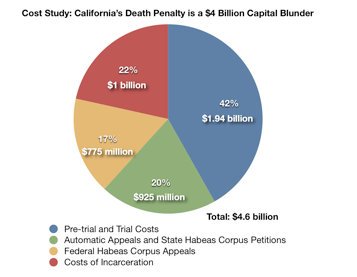
We did not come to this decision lightly, and NO, we are not soft on crime. Just the opposite. SAFE California replaces the death penalty with a sentence of life in prison with absolutely no chance of parole as the maximum punishment for murder. This means convicted killers will remain behind bars forever – but without the exorbitant price tag, terrible toll on the family members of victims, or the risk of executing an innocent person. At over 720 inmates and with a $4 billion price tag, our state runs the nation’s costliest and most populous death row. Nonetheless California has carried out just 13 executions since 1978.

We were intimately involved in writing and promoting our current death penalty law in 1978. We believe that public safety is one of the primary purposes of a government predicated on the rule of law. Justice should be swift and certain. The structure that we helped create is legally sound, having withstood multiple appeals to the U.S. Supreme Court. But, fiscallyspeaking, it has been disastrous. We never contemplated the staggering cost of implementing the death penalty: more than $4 billion to date and approximately $185 million projected per year in ongoing costs.

Source: ExecutingtheWilloftheVoters?” by Judge Arthur Alarcon and Paula Mitchell, 2011

We thought we would bring California savings and safety in dealing with convicted murderers. Instead, we contributed to a nightmarish system that coddles murderers and enriches lawyers. Like Senator Anderson, our effort was intended to bring about greater justice for murder victims. Never did we envision a multi-billion dollar industry that packs murderers onto death row for decades of extremely expensive incarceration. We thought we would empty death row, not triple its population.

Having 34 years of firsthand experiences in this matter we feel the bill proposed by Sen. Anderson will not fix these problems. First and foremost, shortcutting the appeals process means risking innocent lives. Appeals are the safety net that keeps us from executing innocent people. States that shortchange the justice process have executed innocent people, like CameronToddWillingham in Texas.

Beyond the risk of executing the innocent, SB 1514 would simply move appeals from one court to another. That doesn’t alleviate the delay or the expense, it will just move it to a different courthouse.

It won’t eliminate the $1 million each county pays per death penalty trial, or the extra housing costs on death row over the general population – on average $100,000 per inmate per year – and it won’t change the fact that 99% of death row inmates in California die of old age rather than execution. History tells us any change to the death penalty has only added life to criminals, enhanced lawyers paychecks costing taxpayers more and more while appellate dates or new trials continue to torture victims’ families and survivors.

We believe that life without parole protects victims’ families and survivors at a greater savings to taxpayers. California’s best path for safety and savings is life without the possibility of parole.

Please join us in supporting theSAFECaliforniaAct with a “YES” this November. California has another chance at real justice. We should embrace it.

Wrongfully convicted Franky Carillo free after 20 years behind bars


march 16, 2012

After 20 years in jail for a murder he dont commit. Franky Carillo is celebrating a milestone on friday : the one- year

anniversary of being a free once again .

watch the video on NBC southern California

CALIFORNIA – Supreme Court Denies Death Row Inmate’s Request for New Attorneys


Kenneth Clair

March 5, 2012

The Supreme Court ruled Monday that a California death row inmate cannot have his conviction overturned because he disagreed with the defense strategy his attorneys used.

The case appears to limit the control of defendants over their attorneys’ tactics.

The defendant was Kenneth Clair, who was convicted and sentenced to death in 1987 for burglary and murder.

He was represented by court-appointed attorneys because Clair could not afford to hire his own.

After Clair was convicted, his attorneys filed appeals and petitions of habeas corpus arguing their client should not be sentenced to death.

Clair said they should have been trying to appeal his conviction by arguing he was innocent of burglary and murder.

In 2005, he filed a petition to change federal public defenders.

A federal judge denied his request. However, the 9th U.S. Circuit Court of Appeals overturned the lower court judge’s decision.

The U.S. Supreme Court decided unanimously that the Court of Appeals was incorrect.

Justice Elena Kagan, who wrote the court’s decision, said Clair waited too long to change attorneys. The judge in his case was two weeks away from ruling on his habeas corpus petition.

Habeas corpus refers to a request for a ruling that a defendant has been wrongfully convicted.

Kagan said Clair’s petition for new attorneys should be decided under the “interests of justice” standard.

The standard uses a test that balances factors such as whether defendants might lose their liberty, livelihoods, suffer damage to their reputations and a substantial question of law is presented.

Attorneys for California said a different standard should be used. They said Clair could be granted new attorneys only if he proved he was denied adequate representation by his court-appointed attorneys.

Kagan said California’s argument was unpersuasive.

“The state acknowledges, this test comes from … well, from nowhere,” Kagan wrote. “Inventiveness is often an admirable quality, but here we think the state overdoes it.”

The dispute arose after Clair complained in a letter to the court that his attorneys were ignoring evidence found by his prosecutor that might show he was innocent.

They should have been using the evidence to appeal his conviction, he said.

Instead, they continued arguing he should not be given the death penalty.

Initially, Clair and his attorneys reached an agreement and the defendant dropped his complaint. Later, the same dispute arose, prompting Clair to write a second letter to the court saying he wanted different attorneys.

When the second request was denied, Clair appealed, eventually reaching the Supreme Court.

The court’s decision Monday said Clair waited too long.

“The court received Clair’s second letter while putting the finishing touches on its denial of his habeas petition,” Kagan wrote. “The case was all over but the deciding; counsel, whether old or new, could do nothing more in the trial court proceedings. At that point and in that forum, Clair’s conflict with his lawyers no longer mattered. … The court was not required to appoint a new lawyer just so Clair could file a futile motion.”

Although the California attorney general won on most of his arguments, the Supreme Court’s frustration with the procedures followed in the case was obvious during oral arguments.

California’s deputy attorney general, Ward Campbell, argued that the “interests of justice” standard was the wrong way to determine whether criminal defendants should be granted new attorneys.

The standard made it too easy for defendants to delay proceedings against them by filing a complaint against their attorneys, he said.

Justice Sonia Sotomayor asked whether California’s attorney general was using a different test she described as a “sort of a made-up standard.”

She also asked, “Can you point to one case in which this standard has been used by any district court or court of appeals?”

Campbell replied, “No, I cannot.”

Justice Ruth Bader Ginsburg asked, “Where did you get it from?”

Campbell replied that it was derived from Supreme Court interpretations of the Sixth Amendment’s right to representation by counsel.

source : Article © AHN