Alabama

UPDATES : Death row inmate speaks out on untested nitrogen gas execution


January 25, 2024

Kenneth Smith lawyers continue to push for execution stay

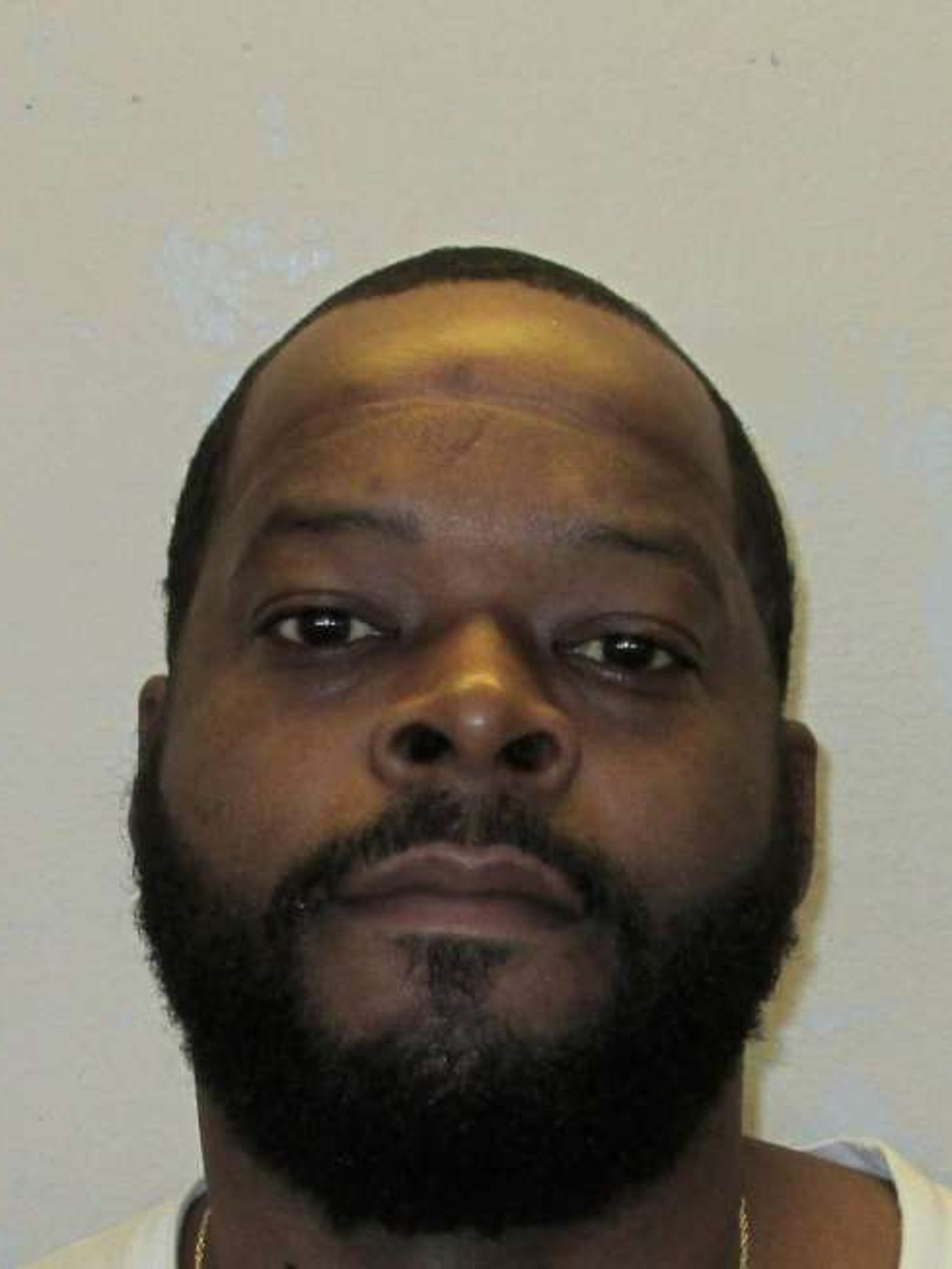
Kenneth Eugene Smith was not provided with a full copy of the protocol for his execution by nitrogen hypoxia until November 2023, his lawyers have said, as they once again petitioned for a stay of execution.

In court documents filed on Thursday, lawyers said that Smith “did not endorse (and could not have endorsed) the procedures in the Protocol before he had seen them”.

“Mr Smith has not walked away from his allegation that nitrogen hypoxia is a feasible and available alternative method of execution to lethal injection. When he made the argument he had not seen ADOC’s Protocol for executing condemned people by nitrogen hypoxia,” the filing stated.

“He was only provided with a heavily redacted copy of the Protocol in late August, at the same time that the State informed him that he would be the first person subject to it and moved in the Alabama Supreme Court for authority to execute him under its procedures.

“Mr Smith did not receive an unredacted copy of the Protocol until late November when the district court ordered Respondents to produce it. Mr Smith did not endorse (and could not have endorsed) the procedures in the Protocol before he had seen them.”

The filing continued: “And, of course, the ‘devil is in the details’ of the Protocol, so his current challenge is to the procedures in the Protocol—specifically to the use of a mask to deliver nitrogen instead of other feasible and available alternatives, including a hood or a closed chamber—not to nitrogen hypoxia per se.

“When the State permitted condemned people in Alabama to elect nitrogen hypoxia as the method of their execution, ADOC adopted an election form that expressly provided that those condemned people so electing did not ‘waive [their] right to challenge the constitutionality of any protocol adopted for carrying out execution by nitrogen hypoxia.’

“Neither did Mr. Smith when he alleged that nitrogen hypoxia was a feasible and available alternative method of execution in the Lethal Injection Action.”

Smith execution method ‘thoroughly vetted’ says Governor

Alabama Governor Kay Ivey said that the method of execution for Kenneth Eugene Smith had been “thoroughly vetted” and she was “confident” that they were ready to proceed.

“Nitrogen hypoxia is the method previously requested by the inmate as an alternative to lethal injection,” Governor Ivey said in a statement.

“This method has been thoroughly vetted, and both the Alabama Department of Corrections and the Attorney General’s Office have indicated it is ready to go. The Legislature passed this law in 2018, and it is our job to implement it. I am confident we are ready to move forward.”

It comes amid ongoing debate about the method – which is previously untested.

Execution timeline

Kenneth Eugene Smith scheduled to be put to death with nitrogen gas on Thursday

Accordingly, Governor Ivey has set a 30-hour time frame for the execution to occur beginning at 12:00 a.m. on Thursday, January 25, 2024, and expiring at 6:00 a.m. on Friday, January 26, 2024. The execution will take place at the William C. Holman Correctional Facility (CF) in Atmore, Alabama.

The tentative start time will be 6:00 p.m. on the 25th. This, of course, may change based on the conclusion of the required legal proceedings.

Alabama death row inmate Kenneth Eugene Smith says he is not prepared to become the first person ever put to death by nitrogen gas.

Smith, 58, told The Guardian he has now been moved to the “death cell” in an Alabama Department of Corrections (ADOC) facility ahead of his Thursday execution, but that he is not ready to be executed using the untested method.

Smith’s attorneys have filed a request with the 11th US Circuit Court of Appeals to stop the execution because the nitrogen gas method carries the risk of prolonged death and suffering.

Additionally, his attorneys have asked the US Supreme Court to review whether the execution will violate the US Constitution. Officials previously tried to execute Smith in 2022 but failed after they were not able to insert IV lines into his system.

Now, his attorneys argue that the state might not have the right to try and put him to death a second time.

It is uncontroverted that ADOC inflicted actual physical and psychological pain on Smith by repeatedly trying (and failing) to establish IV access through his arms, hands, and by a central line as he was strapped to a gurney for hours,” the filing said.

“Mr Smith’s was the third consecutive execution that ADOC botched or aborted for that same reason. ADOC’s failed attempt to execute Mr Smith caused him severe physical pain and psychological torment, including posttraumatic stress disorder.”

Smith said he’s not ready to be put to death with an untested treatment, given how a botched first execution attempt went.

“I am not ready for that. Not in no kind of way. I’m just not ready, brother,” Smith told the newspaper. He admitted that he’s had a recurring nightmare since the first execution attempt of being escorted back into the death chamber.

“All I had to do was walk into the room in the dream for it to be overwhelming. I was absolutely terrified,” he said. “It kept coming up.”

Discussing his upcoming execution date, he said he has dreams that “they’re coming to get me.” He currently spends most of his days being “sick in his stomach” and frequently suffers from nausea and stress.

“They haven’t given me a chance to heal,” Smith said. “I’m still suffering from the first execution and now we’re doing this again. They won’t let me even have post-traumatic stress disorder — you know, this is ongoing stress disorder.”

The inmate then presented a scenario in which a victim of abuse was forced back into an abusive situation, explaining that that’s how the new execution attempt makes him feel.

“A person who did that would probably be seen as a monster,” he said. “But when the government does it, you know, that’s something else.”

In April 1996, Smith was convicted of capital murder for his role in the death of 45-year-old Elizabeth Sennett, a pastor’s wife in Colbert County. Officials discovered that she’d been stabbed multiple times inside her home.

Smith was part of a two-person murder-for-hire scheme, which appeared to be put together by the woman’s husband. The jury voted 11 to 1 to put Smith away for life. However, the judge presiding over the case overrode the jury’s verdict and sentenced him to death.

Speaking of the crime, he said he wishes he “had done things differently.”

He added: “One second, one moment in a man’s life and that’s been the only incident — I’ve not had any incident with officers, not a single fight with inmates, in 35 years. Violence is not who I am.

“I’ve been in prison for 35 years, how have I not been punished,” he continued. “Thirty-five years. I have not gone unpunished for 35 years. I have suffered doing this. So has my family.”

Supreme court

January 18, 2024 Application (23A664) for stay of execution of sentence of death, submitted to Justice Thomas Stay of Execution

January 22, 2024 Response to application from respondent Alabama filed. Main document

January 23, 2024 Reply of Kenneth Eugene Smith in support of application submitted. Reply

January 24, 2024 Application (23A664) referred to the Court. Application (23A664) for stay of execution of sentence of death submitted to Justice Thomas and by him referred to the Court is denied. The petition for a writ of certiorari is denied.

Independent News (video)

Former Alabama Chief Justice, lieutenant governor back new trial for death row inmate


March 19, A group of 14 former judges and prosecutors — including a former Alabama lieutenant governor and a former Alabama Chief Justice — urged a Jefferson County judge Tuesday to set a new trial for a death row inmate convicted in 1998.

In two of seven friend-of-the-court briefs filed with the Jefferson County Circuit Court on Tuesday morning, the signatories wrote that the court should follow the guidance of Jefferson County District Attorney Danny Carr, who said the court should grant Toforest Johnson a new trial amid questions about the conduct in the first. 

“The DA’s decision to vacate Mr. Johnson’s conviction is a heavy one made after an exhaustive investigation of the surrounding circumstances and irregularities leading to his conviction; this weighty decision should be given significant deference by the Court,” said a brief signed by former Alabama Chief Justice Drayton Nabers; former Alabama Supreme Court Justice Ralph Cook; former Alabama State Bar President Bill Clark; retired Judge William Bowen and attorney Bobby Segall. “To disregard District Attorney Carr’s decision would frustrate the exact duties he was elected to perform and further undermine public confidence in our criminal justice system.”

Toforest Johnson’s conviction

A jury convicted Johnson in 1998 of the 1995 murder of William Hardy, a Jefferson County deputy sheriff. Hardy was working as a private security guard at a Birmingham hotel when he was shot and killed in the hotel’s parking lot early in the morning of July 19, 1995. Police arrested Johnson and charged him with murder a few hours later. 

No physical evidence linked Johnson to the scene, and Johnson, 48, maintains his innocence. A jury could not reach a verdict in the first trial, but a jury in a second trial convicted Johnson. After the conviction, Johnson’s attorneys learned that a witness for the prosecution named Violet Ellison received $5,000 from the state after approaching the police in response to a reward offered. 

Johnson’s attorneys filed a motion known as a Brady claim, saying prosecutors withheld evidence that could have raised questions about the witness’ credibility. State courts upheld the conviction, but the U.S. Supreme Court ordered new hearings on the Brady claim in 2017. 

Last year, Jefferson County Circuit Judge Teresa T. Pulliam denied Johnson’s Brady claim, ruling that Johnson had not established “by a preponderance of the evidence” that Ellison “either came forward or gave testimony out of a ‘hope of reward,’ or that the state had knowledge of such motivation at or before the time of the trial.” 

But in June, Carr said Johnson should get a new trial, citing issues with Ellison and other witnesses and the fact that prosecutors could not settle on a theory of the case. 

“A prosecutor’s duty is not merely to secure convictions, but to seek justice,” Carr wrote in a brief to the court.

Toforest Johnson

SCOTUS rejects case of Alabama Death Row inmate who claims racial discrimination in jury picks


December 4, 2017

Christopher Floyd

The U.S. Supreme Court, in a ruling issued today, refused to hear the appeal of Alabama Death Row inmate Christopher Anthony Floyd, who says prosecutors struck 10 of 11 blacks from the jury pool at his trial.

Floyd appealed earlier this year to the U.S. Supreme Court after a ruling by the Alabama Supreme Court last year.

The Alabama Supreme Court’s decision came despite a previous U.S. Supreme Court order that told the Alabama court to take another look at Floyd’s case in light of a similar case in Georgia – Foster v. Chatman. In the 2016 appeal of that case, SCOTUS reversed a conviction for discriminatory jury selection involving prosecutors’ striking blacks from the jury pool.

However, the Alabama Supreme Court in November 2016 concluded that the Foster case did not require a change in the outcome of Floyd’s case, and again affirmed Floyd’s conviction. Floyd then turned again to SCOTUS.

In 2005, Floyd was convicted in Houston County for the murder and robbery of Waylon Crawford. Floyd was sentenced to death.

In selecting the jury for Floyd’s case, the prosecutor and Floyd’s lawyers exercised a total of 36 peremptory challenges, according to the state supreme court order. Prosecutors used its 18 challenges to remove 10 of 11 African-American venire members and 12 of 18 female venire members. Floyd’s lawyers removed one African-American and seven female venire members. The final jury consisted of six white male jurors, six white female jurors, two alternate white male jurors and one alternate African-American female juror.

Floyd, who is white, did not object to the jury based on Batson v. Kentucky– a previous U.S. Supreme Court ruling prohibiting racial discrimination in jury selection, court records show.

In Monday’s rejection of Floyd’s appeal, SCOTUS did not render an opinion. Associate Justice Sonia Sotomayor, with which Associate Justice Stephen Breyer concurs, issued a statement.

“Although the unique context of Floyd’s case counsels against review by this Court, I find the underlying facts sufficiently troubling to note that in the ordinary course, facts like these likely would warrant a court’s intervention,” Sotomayor wrote. “During voir dire, the Houston County District Attorney’s Office exercised peremptory challenges against 10 out of 11 qualified African-American venire members, and used 12 of its 18 strikes against women. The prosecutor also marked the letter “‘B,’ as in black,” next to the name of each potential African-American juror.”

“That we have not granted certiorari should not be construed as complacence or an affirmance of all of the reasoning of the courts below,” Sotomayor wrote. “The unusual posture in which Floyd raised his Batson and J. E. B. claims warrants caution in the exercise of the Court’s review here. Yet, courts reviewing claims in circumstances like these must be steadfast in identifying, investigating, and correcting for improper bias in the jury selection process. Such discrimination “‘casts doubt on the integrity of the judicial process,’ and places the fairness of a criminal proceeding in doubt.”

U.S. Supreme Court rejects appeal of Alabama Death Row inmate convicted in 2007 slaying of parents


November 27,2017

Alabama Death Row inmate James Scott Largin

Alabama Death Row inmate James Scott Largin(Alabama Department of Corrections)

The U.S. Supreme Court on Monday said it won’t hear the appeal of an Alabama death row inmate who was convicted in the 2007 killings of his parents in Tuscaloosa.

James Scott Largin, 46, earlier this year had appealed to the U.S. Supreme Court a December 2015 ruling by the Alabama Court of Criminal Appeals upholding his conviction and death sentence.

On Monday the high court, without opinion, refused to review his case.

Largin was sentenced to death by a Tuscaloosa County judge in 2009 for his capital murder conviction in the deaths of his parents, Jimmy, 68, and Peggy, 56.

“Peggy and Jimmy Largin were at home on the night of March 15, 2007, when they were shot multiple times with a .22 caliber rifle and their bodies were thrown down the stairs leading to the cellar in their home. Autopsy results showed that both victims died as the result of close-range gunshot wounds to the head,” according to the Alabama Court of Criminal Appeals ruling.

“This Court has independently weighed the aggravating and the mitigating circumstances as required by (Alabama law) … We are convinced, as was the circuit court, that death was the appropriate sentence for Largin’s capital crimes,” the Alabama Court of Criminal Appeals stated in its order.

He was arrested after University of Alabama police found his parents’ car near the campus a few days after the murders, the Associated Press reported at the time.

A prosecutor at Largin’s original trial said Largin showed no remorse over the murders. The judge agreed with the jury’s recommendation that Largin be given the death penalty. His defense attorneys argued for life in prison without parole.

Disease, suicide killing Ala inmates faster than execution


August 29, 2015

IRMINGHAM, Ala. (AP) — Disease and suicide are claiming inmates on Alabama’s death row faster than the executioner.

With Alabama’s capital punishment mechanism on hold for more than two years because of legal challenges and a shortage of drugs for lethal injections, five of the state’s death row inmates have died without ever seeing the inside of the execution chamber.

John Milton Hardy, convicted of killing Clarence Nugene Terry during a robbery at a convenience store in Decatur in 1993, was the most recent death row inmate to die. Prison officials say he died of unspecified natural causes on June 15.

Convicted killer Benito Albarran, 41, hanged himself in the infirmary at Donaldson prison about two months earlier. A decade earlier, he was convicted of fatally shooting Huntsville police officer Daniel Golden outside a Mexican restaurant where he worked.

Golden’s brother, David Golden, said family members wanted to witness Albarran’s execution and felt cheated by his death.

“He took the coward’s way out,” Golden told reporters in Huntsville after Albarran killed himself.

Attorney Joseph Flood, who represented Albarran as he challenged his conviction in state court, said the inmate’s mother died a week or two before he took his own life.

“He fell into a deep depression after that,” said Flood.

In March, David Eugene Davis, 56, died of natural causes at Holman prison near Atmore after suffering from liver failure. He was convicted of killing Kenneth Douglas and John Fikes in St. Clair County in 1996.

Two more death row inmates died last year, Ricky Dale Adkins of cancer and Justin T. Hosch, who hanged himself at Holman prison. Hosch was convicted in Autauga County in the 2008 shooting death of Joey Willmore, and Adkins was condemned for killing real estate agent Billie Dean Hamilton in St. Clair County in 1988.

The last inmate put to death in Alabama was Andrew Reid Lackey, who died by lethal injection on July 25, 2013, for killingCharles Newman during a robbery in Limestone County in 2005. At the time, he was the first inmate put to death in the state since October 2011.

With 189 people currently on death row, the state is trying to resume executions, but legal challenges could be a roadblock.

The state is asking a federal judge to dismiss a lawsuit filed by death row inmate Tommy Arthur, who challenged the use of the sedative midazolam as inhumane during lethal injections. The U.S. Supreme Court has upheld the use of the drug in an Oklahoma case, but Arthur contends Alabama’s execution protocol is different from the one used there.

The state switched to midazolam after it had to halt executions because it was out of other drugs needed for lethal injections.

Alabama death row inmate maintains state is wrongly ignoring his claims of innocence


The latest Alabama inmate seeking freedom from death row maintains the state is wrongly ignoring his claims of innocence while his health fails behind bars, one of his attorneys said Monday.
Legal arguments filed by Donnis Musgrove contend the state is arguing about technicalities rather than addressing legitimate concerns about the man’s 1988 conviction and death sentence.
Musgrove’s appeal is currently in federal court, and the defense is asking the judge to rule quickly because the prisoner has lung cancer and was hospitalized last week in grave condition, said Cissy Jackson, one of his lawyers.
“We would love to get him out of prison … so he could have some peace after being wrongfully imprisoned for so many years,” said Jackson.
Out of the hospital and sent back to Donaldson prison near Birmingham, Musgrove will be treated in the prison infirmary for an indefinite period, Jackson said.
The attorney general’s office didn’t immediately return a message seeking comment on Musgrove’s legal arguments or health.
The state has argued that rules prohibit Musgrove from making new claims about being innocent and bar him from questioning evidence used in his trial, but prosecutors haven’t directly addressed his arguments about being wrongfully convicted based on bogus evidence conjured by prosecutors and police.
Musgrove, 67, was sentenced to die for the gunshot killing of Coy Eugene Barron in 1986, but his attorneys maintain the prosecution falsified every piece of evidence against him, including witness statements and a shell casing that was used to link him to the slaying.
Source: The Guardian, August 24, 2015

Life on Alabama Death Row? 45 convicted killers have served 20 or more years


It has been nearly 37 years since Willene and Carl Nelson were shot and stabbed to death in a robbery at their Blount County home in 1978. Their three children, then ages 10, 13 and 21, were critically wounded but survived, as did the children’s 85-year-old grandmother.

Arthur Lee Giles — who will turn 56 on July 15 — went to Alabama Death Row for the crime in 1979.

Giles is Alabama’s second longest serving death row inmate and one of 45 Alabama inmates who have faced execution for 20 or more years. There have been nine presidential elections since Giles first arrived on death row.

Only William Bush, sentenced in the 1981 shooting death of Montgomery convenience store clerk Larry Dominguez, has served more time on death row than Giles. According to the Alabama Department of Corrections, Bush has served 33 years, 10 months, and eight days.

Nearly two years have passed since Alabama executed an inmate, but a U.S. Supreme Court ruling this week might pave the way for more executions.

In a 5-4 decision Monday, the court ruled that one of the drugs used in lethal injections does not violate the Eighth Amendment against cruel and unusual punishment.

What does that mean for Alabama?

“The U.S. Supreme Court has spoken on the constitutionality of states’ use of lethal injections and death penalty opponents cannot continue to indefinitely delay lawful executions,” Alabama Attorney General Luther Strange stated in a press release issued Monday morning.

“Opponents of lethal injections have repeatedly used court challenges of certain lethal injection drugs as ways to delay or avoid lawful executions,” Strange stated. “The U.S. Supreme Court confirmed our belief that executions using these lethal injection drugs are not cruel and unusual punishment, and therefore are not prohibited under the Eighth Amendment of the U.S. Constitution.”

There are 189 inmates on Alabama’s death row — all but three are men, according to ADOC. The average age is 39. (The oldest inmate, 80-year-old Walter Leroy Moody, has been on death row since 1997 in the 1989 pipe bomb murder of Judge Robert Vance.)

Forty-five inmates — 24 percent of death row’s population — have faced execution since at least 1995.

That includes:

  • James Edmond McWilliams: Sentenced to death in the 1984 rape, robbery and murder of Patricia Vallery Reynolds, a 22-year-old convenience store clerk shot to death at the store where she worked in Tuscaloosa County.
  • Larry Donald George: Convicted in the 1988 killings of two former next-door neighbors. Authorities say George killed Janice Morris, 29, of Talladega, and Ralph Swann, 24, of Alpine. George’s wife, Geraldine, was shot and paralyzed.
  • Anthony Boyd and Robert Shawn Ingram: Convicted for helping take Gregory Huguley to a baseball park in Munford  in 1993, where he was taped to a bench, soaked with gasoline and burned to death because Huguley owed $200 for cocaine.
  • Steven Wayne Hall and Wayne Holleman Travis: Sentenced to death for the murder of retired school teacher Clarene Haskew, 69, in 1991. She was beaten, strangled and shot twice in the head. A pentagram had been spray painted on a cabinet and the words ”thunder struck” were painted on the floor beside her body.
  • Alonzo Burgess: Sentenced to die for the murders of Sheila Nnodimele and her two daughters, Latoria Long, 14, and Alexis Nnodimele, 8. Burgess also was convicted of attempting to murder 2-year-old Larice Long, Ms. Nnodimele’s son  in Colbert County in 1993. They were fatally beaten and strangled in their home.

How much does it cost to house — and execute — those inmates?

Since 1983, when another U.S. Supreme Court ruling allowed Alabama to execute an inmate for the first time since 1965, the average time an inmate has served on death row in Alabama is approximately 16 years, according to ADOC spokesman Bob Horton.

The cost to incarcerate a death row inmate in Alabama is $53 per day. Over the course of 16 years, that comes to roughly $309,732.

That means Alabama has spent approximately $640,742 caring for William Bush.

For Giles, who has served 32 years, five months, and 28 days, that is approximately $628,898. Giles would have been Alabama’s longest serving death row inmate, but his 1979 conviction was overturned and he was again sentenced to death upon his second conviction in the 1990s.

It’s estimated lethal injection drugs run about $100 — the Texas Department of Criminal Justice put the cost of their drug cocktails at $83 in 2011, Forbes.com reported in 2014.

A Seattle University study found that each death penalty prosecution cost an average of $1 million more than a case where the death penalty was not sought, an anti-death penalty organization reported.

Whatever the cost, opponents of the death penalty found some signs of hope in Monday’s ruling that maybe the court will one day find the death penalty cruel and unusual.

“For me what was more significant was the affirmative suggestion by some members of the Court that the constitutionality of the death penalty itself be reconsidered,” Bryan Stevenson, executive director and founder of the Montgomery-based Equal Justice Initiative stated in an email to AL.com.

“It’s unfortunate this decision won’t resolve issues surrounding lethal injection we are still litigating in Alabama, but I’m encouraged to see members of the Court warming up to the idea that we may be on the brink of a new era where capital punishment is prohibited.”

AL.com reporters Kent Faulk and Izzy Gould contributed to this report.

Read More

1st Alabama. execution since 2011 set for Thursday


July 20, 2013

This March 18, 2009 photo provided by the Alabama Dept. of Corrections shows inmate Andrew Reid Lackey. Alabama’s second execution in almost two years is scheduled for Thursday, July 25, 2013 at Holman Prison in Atmore, Ala.. Court records show that 30-year-old Andrew Lackey asked the state to set his execution date, and Alabama has not taken action to stop it. Photo: Alabama Dept. Of Corrections

MONTGOMERY, Ala.  — Alabama’s second execution in almost two years is scheduled for Thursday at Holman Prison in Atmore.

Court records show that 30-year-old Andrew Lackey asked the state to set his execution date, and has not taken action to stop it.

Lackey is scheduled to die by lethal injection at Holman Prison in Atmore for the beating and shooting death of 80-year-old Charles Newman during a 2005 Halloween night robbery at Newnan’s home in Limestone County. Lackey is to be executed by lethal injection at 6 p.m. Thursday.

Lackey would be the first inmate executed in Alabama since Christopher T. Johnson of Escambia County received a lethal injection Oct. 20, 2011. He was the sixth inmate executed in 2011.

The state’s executions have been slowed partly because of a legal dispute over the drugs used in executions.

Lackey’s execution was set after he wrote a letter to the Alabama Supreme Court saying that he had “an odd request.”

“Please set me an execution date. I do not wish to pursue any further appeals for my death sentence,” Lackey said in the letter to the justices, according to court records. Lackey said he would not file any further appeals.

Court records show Lackey has taken no action to stop the execution.

In a letter to Assistant Attorney General Richard Anderson, Lackey says, “I do not know what else I can do. Will you please help me get an execution date.”

Court records show that Newman made an emergency phone call to the Athens Police Department on Halloween night 2005 in which he could be heard saying, “Don’t do that,” ”Leave me alone” and “What do you want.”

The police operator then heard the apparent assailant repeatedly ask, “Where’s the vault?” according to the records.

Bryan Stevenson, an attorney with the Montgomery-based Equal Justice Initiative, said both the Alabama Court of Criminal Appeals and the trial court have ruled that the state can go ahead with Lackey’s execution.

Stevenson said he and other attorneys opposed to Lackey being executed and “have argued that he is mentally ill.”

“Our point is that he needs to be examined,” Stevenson said.

US – Executions Scheduled for 2013 June 18 – November


Month State Inmate
June
18 OK James DeRosa  – executed
24 FL Marshall Gore    STAYED
25 OK Brian Davis Executed
26 TX Kimberly McCarthy executed
July
10 TX Rigoberto Avila – execution moved to January1, 2014
16 TX John Quintanilla executed
18 TX Vaughn Ross executed
25 AL Andrew Lackey
31 TX Douglas Feldman
August
7 OH Billy Slagle
18-24 CO Nathan Dunlap – Stayed
September
19 TX Robert Garza
25 OH Harry Mitts
26 TX Arturo Diaz
October
9 TX Michael Yowell
November
14 OH Ronald Phillips