Uncategorized

Happy New year 2024 !

       Thank you all for your support, I wish you all a happy new year 2024
                                        Anabel
Share this:

EXECUTION CARRIED OUT 2023 Texas executes Brent Brewer, who spent three decades on death row
November 9, 2023

Brewer lost a clemency appeal earlier this week, despite one of his jurors pleading that his life be spared and an expert witness’ methods put into question. The U.S. Supreme Court declined to pause Brewer’s execution Thursday afternoon to hear arguments about the “junk science” used against him.
The state of Texas executed Brent Brewer, who spent three decades on death row on Thursday evening for the 1990 murder of Robert Laminack. It was the seventh execution of 2023.
In late appeals, Brewer’s lawyers argued that his death should be delayed to consider the issue of unreliable testimony, or what his lawyers called “junk science,” but late Thursday afternoon the U.S. Supreme Court denied that request. Earlier this week, Texas’ highest criminal appeals court declined similar motions to stay Brewer’s execution.
The Texas Board of Pardons and Paroles unanimously rejected Brewer clemency appeal on Tuesday. Brewer’s legal team requested a lesser penalty for him on the grounds that one of the state’s expert witnesses used unreliable methodologies to testify and that a juror says they mistakenly sentenced Brewer to death.
At 6:23 p.m., Brewer was injected with a lethal dose of pentobarbital. He died 15 minutes later.
“I would like to tell the family of the victim that I could never figure out the words to fix what I have broken. I just want you to know that this 53-year-old is not the same reckless 19-year-old kid from 1990. I hope you find peace,” Brewer said in a final statement.
Brent Brewer was convicted of killing Laminack, who owned a business in Amarillo, according to court documents. Brewer asked Laminack for a ride to a Salvation Army with his girlfriend Kristie Nystrom. While en route, Brewer stabbed the 66-year-old Laminack and stole $140 in cash.
Brewer was sentenced to death in 1991 for the murder, but in 2007 the U.S. Supreme Court found that his jury was not given sufficient opportunity for the jury to consider a less severe punishment. Two years later, another jury also sentenced Brewer to death.
Michele Douglas was one of the 2009 jurors. After listening to the evidence, Douglas believed that Brewer didn’t intend to kill Laminack, “things simply got out of hand, with a tragic outcome,” she wrote in an Houston Chronicle opinion piece last week, requesting clemency for Brewer.
During the trial, Douglas did not want to vote in favor of capital punishment for Laminack’s murder, which she did not think was premeditated. Douglas said she misunderstood the jury instructions.
“Believing — incorrectly — that my vote was meaningless, I acquiesced in the majority’s death penalty verdict. I cried when it was read in court. I was haunted afterwards,” Douglas wrote last week.
A death sentence requires a unanimous vote from the jury in Texas. Over the years, jurors in different capital cases across the state have said the instructions are not clear and they would have voted for life sentences without the possibility of parole if they had known that was an option. Lawmakers in the Texas House have passed legislation during several sessions attempting to clarify the instructions but those bills failed to get support from the Senate.
“There’s nothing political about this — it’s about whether the awesome power of the government to take a life is given to it knowingly rather than by what amounts to trickery,” said Rep. Joe Moody, D-El Paso, in a statement about the role of misleading jury instructions in Brewer’s case ahead of Brewer’s execution. “This simply can’t continue; it’s morally wrong. I call on leaders in both parties and both chambers to pass this legislation swiftly at the next possible opportunity.”
During Brewer’s 2009 sentencing, the state called on forensic psychiatrist Dr. Richard Coons to testify about the danger Brewer posed to those in prison. Coons was a regular expert, called on by the state in dozens of death penalty cases, to forecast how defendants would behave in the future.
Coons asserted that a significant amount of crime goes unreported in prisons, and while Brewer’s record was largely clean, it was likely the defendant would commit more acts of violence.
But three years after Coons testified on Brewer’s dangerousness, the Texas Court of Criminal Appeals ruled that the psychiatrist’s techniques for predicting the risks defendants posed were unreliable.
“We see this case as a kind of an outlier, based on all of these things that have happened in this case, including the junk science that was presented,” Shawn Nolan, Brewer’s attorney, told The Texas Tribune on Monday.
But on Tuesday, the same court rejected Brewer’s motions to stay his execution, which were part of his legal team’s effort to challenge the use of Coons’ testimony in Brewer’s sentencing. Coons never evaluated Brewer yet still told the jury that the defendant would pose a risk to those in prison. The appeals court maintained that Brewer’s lawyer at the time did not sufficiently object to Coons testimony.
“His execution is the farthest thing from justice,” Nolan said in a statement after the Supreme Court declined to intervene ahead of Brewer’s execution. “Texas used the unscientific, baseless testimony of Dr. Richard Coons to claim Brent would be a future danger, although the state and the courts have admitted for years that this exact doctor’s testimony was unreliable and should not be considered by juries in capital cases.”
Nolan filed a motion with the U.S. Supreme Court on Tuesday to pause the Nov. 9 execution date to consider the issue with Coons’ testimony, according to court documents.
Last year in federal court, U.S. District Judge Matthew Kacsmaryk found that Brewer’s 2009 trial lawyers acted reasonably by not objecting to Coons’ testimony before his methodologies were ruled unreliable. Earlier this year the 5th U.S. Circuit Court of Appeals affirmed Kacsmaryk’s opinion.
Nolan said Brewer joined the religious programming available to those on death row and since then he has grown as a person of faith, which was also cited in Brewer’s clemency application.
“Worries are kind of small when you’ve taken someone’s life, you know, when someone is permanently gone like that. But I am sorry for what I did,” Brewer said in a video included in his clemency application. “Even if it doesn’t change the outcome, at least they get to hear it before I go.”
Share this:

EXECUTION CARRIED OUT 2022 – MISSOURI- CARMAN DECK MAY 4.2022
A Missouri man who killed a couple during a robbery at their rural home more than a quarter of a century ago was put to death Tuesday, becoming just the fifth person executed in the United States this year.
Carman Deck, 56, died by injection at the state prison in Bonne Terre. He was pronounced dead at 6:10 p.m. His fate was sealed a day earlier when neither the U.S. Supreme Court nor Republican Gov. Mike Parson stepped in to halt the execution. Deck’s death sentence was overturned three times before for procedural issues.
“Mr. Deck has received due process, and three separate juries of his peers have recommended sentences of death for the brutal murders he committed,” Parson said in a statement Monday. “The State of Missouri will carry out Mr. Deck’s sentence according to the Court’s order and deliver justice.”
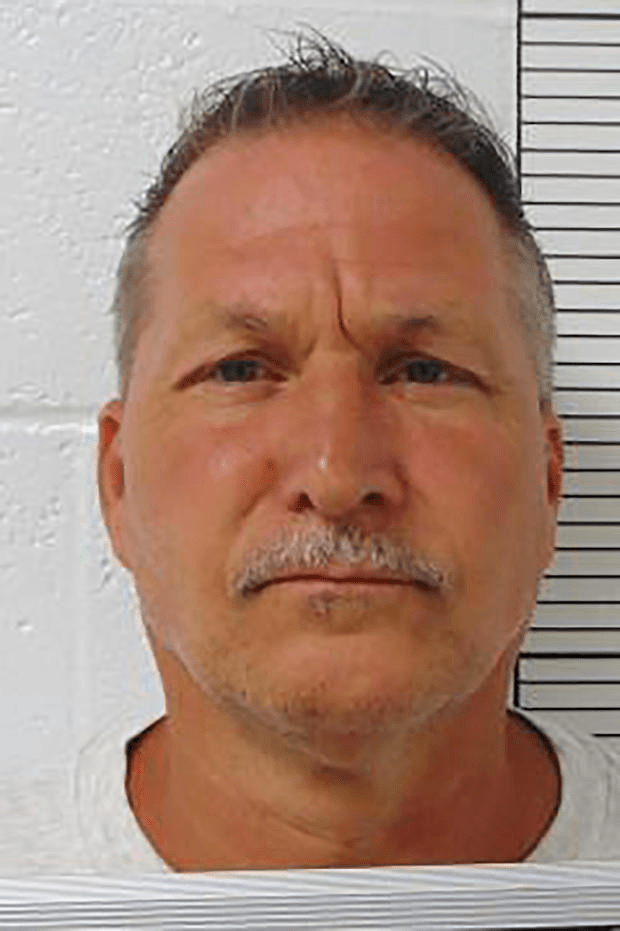
Deck mouthed a few inaudible words as the 5 grams of pentobarbital were administered, then puffed out a couple of breaths before all movement stopped, the process lasting just a few seconds.
“My hope is that one day the world will find peace and that we all will learn to be kind and loving to one another,” Deck said in a written final statement. “We all are a part of this journey through life, connected in every way. Please give love, show love, BE LOVE!”
His final meal, which was served to him around 1pm, was a ribeye steak, shrimp, asparagus, salad with Italian dressing, cottage cheese and V-8 juice
Parson, in a statement Tuesday, said the couple killed, James and Zelma Long, “were innocent victims of Carman Deck’s heinous violence. Tonight, justice was served.”

Just four other people have been executed in the U.S. in 2022 — Donald Anthony Grant and Gilbert Ray Postelle in Oklahoma, Matthew Reeves in Alabama and Carl Wayne Buntion last month in Texas. Eleven people were executed in the U.S. last year, the fewest since 1988.
Court records show that Deck, of the St. Louis area, was a friend of the grandson of the Longs, who lived in De Soto, about 45 miles (72 kilometers) southwest of St. Louis. He knew the couple, in their late 60s, kept a safe in their home.
In July 1996, Deck and his sister stopped at the home under the guise of asking directions. Deck wasn’t surprised the couple let them in.
“They’re country folks,” Deck told a detective, according to court records. “They always do.”
Once inside, Deck pulled a gun from his waistband. At Deck’s command, Zelma Long opened the safe and removed jewelry, then got $200 from her purse and more money hidden in a canister.
Deck ordered the couple to lie on their stomachs on their bed. Court records said Deck stood there for 10 minutes deciding what to do, then shot James Long twice in the head before doing the same thing to Zelma Long.
A tip alerted police to Deck, and he was arrested later that night outside his sister’s apartment building in St. Louis County. The decorative tin canister from the Long home was on the floorboard of his car.
Prosecutors said Deck later gave a full account of the killings in oral, written and audiotaped statements. He was sentenced to death in 1998, but the Missouri Supreme Court tossed the sentence due to errors by Deck’s trial lawyer.
The U.S. Supreme Court threw out his second sentence in 2005, citing the prejudice caused by Deck being shackled in front of the sentencing jury.
He was sentenced to death for a third time in 2008. Nine years later, U.S. District Judge Catherine Perry determined that “substantial” evidence arguing against the death penalty in Deck’s first two penalty phases was unavailable for the third because witnesses had died, couldn’t be found or declined to cooperate.
In October 2020, a three-judge panel of the 8th U.S. Circuit Court of Appeals restored the death penalty, ruling that Deck should have raised his concern first in state court, not federal court. Appeals of that ruling were unsuccessful.
The clemency petition on behalf of Deck cited abuse he suffered as a child, including beatings that left welts and sexual abuse. It said he and his siblings often were left alone without food. Deck’s attorney, Elizabeth Unger Carlyle, said in a statement that Deck also was raped while in prison for theft at age 19.
“This experience transformed him from a non-violent thief into the person who committed two terrible murders,” Carlyle said. She called his execution “unjust and immoral.”
The number of executions in the U.S. has declined significantly since peaking at 98 in 1998. The drop has coincided with declining support, falling from a high of 80% in 1994 to 54% in 2021, according to Gallup polls. Since the mid-1990s, opposition has risen from under 20% to around 45%.
Use of the death penalty has become concentrated mostly in a few Southern and Plains states. Last year, Texas executed three inmates, Oklahoma executed two and one each were put to death in Alabama, Mississippi and Missouri. Three federal inmates were executed in January 2021, toward the end of Donald Trump’s presidency.
On Monday, Tennessee Gov. Bill Lee paused executions in his state for the rest of the year to enable a review of lethal injection procedures after a testing oversight forced the state to call off the execution of Oscar Smith an hour before he was to die on April 21.
Share this:

EXECUTION CARRIED OUT 2022 – OKLAHOMA GILBERT POSTELLE 02.18.2022

Gilbert Ray Postelle was pronounced dead by lethal injection at 10:14 a.m. Thursday morning. He’s the fourth death row inmate to be killed since the state resumed capital punishment in October after a six-year moratorium. He was 35.
Five media members were selected by a random draw to witness the execution: Sean Murphy (Associated Press), Nolan Clay (The Oklahoman), Wayne Stafford (KOKH), Storme Jones (KWTV) and Dylan Goforth (The Frontier).
The witnesses said the execution appeared to happen without any complications. Their accounts were largely in line with the December execution of Bigler Stouffer and the January execution of Donald Grant, but drastically different from the October execution of John Marion Grant, who convulsed two dozen times and vomited multiple times during his execution.
Postelle did not have any last words.
Swindle’s sister, Shelli Milner, made a statement following the execution.
“It’s never over for the families of the victims. Today is not a joyous day for anyone. Today did not end anyone’s suffering. Today did not put closure on anything,” Milner said. “To know that [Postelle] will never walk this earth again does give me a little more peace than I had yesterday, but I will never have peace knowing what he did to my brother Donnie, to Amy, to James and to Terry.”
There are no more executions scheduled in the state at this point. Pending the results of the upcoming trial over the constitutionality of the current lethal injection protocol later this month, the state may schedule more executions.
Death row inmate Gilbert Ray Postelle’s request for clemency was denied by the Oklahoma Pardon and Parole Board in a 4-1 vote in December 2021.
Postelle, then 19, shot and killed four people — 57-year-old James D. Alderson, 56-year-old Terry L. Smith, 49-year-old James “Donnie” Swindle Jr., and 26-year-old Amy J. Wright — in southeast Oklahoma City on Memorial Day in 2005. The assault included nearly 100 shots fired from two assault rifles.
He was convicted of the four murders and given the death sentence for two.
Three others were charged with conspiracy and four counts of first-degree murder in the slayings. His brother, David Bradford Postelle, was sentenced to life in prison and their father, Earl Bradford Postelle, was ruled incompetent to stand trial in 2006. Another man, Randal Wade Byus, agreed to cooperate with authorities and pleaded guilty to reduced charges in 2008.
Postelle and his family believed one of the victims were responsible for a 2004 motorcycle accident, which left the elder Postelle physically and mentally disabled.
Gilbert Postelle’s attorney said he suffered from years of methamphetamine abuse that began around the age of 12. In 2021, he testified that he had been using meth for days leading up to the killings and doesn’t remember much about the crimes.
Last month, attorneys for Donald Grant and Postelle argued that the state’s lethal injection protocol exposed the two men to a constitutionally unacceptable risk of severe pain, citing the October 2021 execution of John Grant, who convulsed and vomited before he died.
Oklahoma’s method of execution — lethal injection — has been criticized as painful and terrifying, with claims it induces a sense of drowning comparable to the torture tactic of waterboarding.
Oklahoma held off on lethal injections for nearly six years after two botched executions. The state resumed the practice last fall, killing John Grant in October, Bigler Stouffer in December and Donald Grant in January.
The three-drug cocktail is being reviewed for constitutionality in district court in a trial that begins on Feb. 28.
Postelle’s last meal included 20 chicken nuggets, three large fries, one crispy chicken sandwich, one large cola, and one caramel frappe.
Share this:

A convicted Oklahoma killer’s death sentence was overturned because of a landmark US Supreme Court ruling
March12, 2021
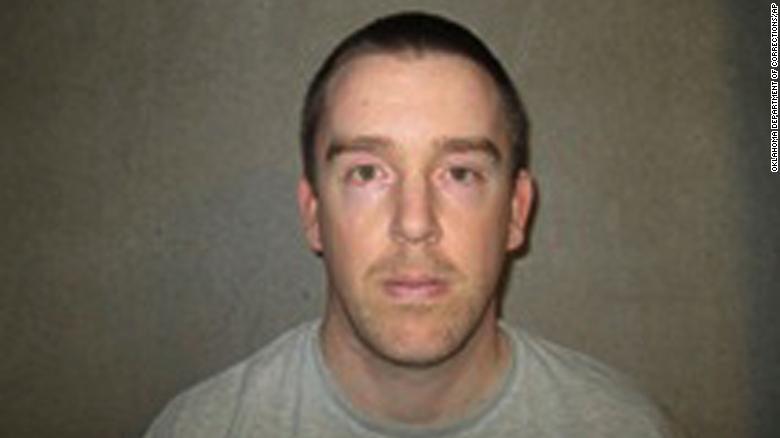
An Oklahoma death row inmate is set to receive a new trial after a court overturned his conviction based on a US Supreme Court ruling last year that determined a large part of the state is Native American territory for the purposes of federal criminal law
.The Oklahoma Court of Criminal Appeals ruled Thursday the state did not have the jurisdiction to prosecute Shaun Bosse, who was sentenced to death in 2012 for the murders of 24-year-old Katrina Griffin, her 8-year-old son and 6-year-old daughter because the victims were members of the Chickasaw Nation and the murders took place on the reservation.The appeals court cited the Supreme Court’s landmark July 2020 ruling in McGirt vs. Oklahoma, in which the justices ruled 5-4 that a broad swath of the state was Native American land for the purposes of federal criminal law. According to federal law, crimes that involve Native Americans on a reservation are subject to federal, not state, jurisdiction.CNN has reached out to an attorney for Bosse for comment.District Attorney Greg Mashburn, who prosecuted Bosse, told CNN in an interview Friday that federal prosecutors will assume jurisdiction in the case.”I’m devastated for the family (of Bosse’s victims),” Mashburn said. “They can’t heal. They’re just going to have to go through this whole process again. I’m just really upset for them and hate that they’re going to have to sit through another trial.”
Share this:

Man on death row will get to argue for new trial
november 25. 2017
A man on death row for killing three siblings in Pennsylvania will get a chance to argue that his conviction was based on a flawed hair analysis.
The Pennsylvania Supreme Court ruled Wednesday that 62-year-old David Chmiel will have the opportunity to raise questions about the reliability of the forensic tests that led to his 2002 conviction.
A court justice wrote that Chmiel’s case warrants another look because the FBI has admitted testimony given by their hair examiners was wrong in a vast majority of cases.
Chmiel was originally convicted in 1984 and has appealed multiple times. His attorney hasn’t returned a voicemail seeking comment.
The decision sends the case back to a lower court in Lackawanna County, where Chmiel will get to ask a judge for a new trial.
Share this:

Supremacist convicted of killing 3 at Kansas Jewish sites
The man who admitted killing 3 people at 2 suburban Kansas City Jewish sites gave jurors a Nazi salute Monday after they convicted him of murder and other charges for the shootings, which he said would allow him to “die a martyr.”
It took the jury of 7 men and 5 women just over 2 hours to find Frazier Glenn Miller Jr. guilty of 1 count of capital murder, 3 counts of attempted murder and assault and weapons charges.
After the verdict was announced, Miller, 74, of Aurora, Missouri, said: “The fat lady just sang” and he raised his right arm in the Nazi salute. As jurors were filing out of the courtroom later, he told them: “You probably won’t sleep tonight.”
The judge reminded Miller that the same jury will decide his sentence. He could get the death penalty. The sentencing proceedings were expected to begin Tuesday.
During the prosecution’s closing, District Attorney Steve Howe cited a “mountain of evidence” against Miller, who is charged with capital murder in the April 2014 shootings at 2 Jewish sites in Overland Park, Kansas. Although he has admitted to killing the three people, he has pleaded not guilty, saying it was his duty to stop genocide against the white race. None of the victims was Jewish.
“He wants to be the one who decides who lives and dies,” Howe said of Miller.
The Passover eve shootings killed William Corporon, 69, and Corporon’s 14-year-old grandson, Reat Griffin Underwood, at the Jewish Community Center in Overland Park, and Terri LaManno, 53, at the nearby Village Shalom retirement center.
During his closing, Miller said he had been “floating on a cloud” since the killings. Earlier, he objected when Howe alleged he wanted to kill as many people as possible. Miller interjected: “I wanted to kill Jews, not people.”
Miller, who also was known as Frazier Glenn Cross Jr., urged jurors to “show great courage” and find him not guilty.
“You have the power in your hands to inspire the world,” he said. “You can become a man or woman your forefathers will be proud of for your bravery.”
The proceedings were marked with frequent outbursts from Miller, who objected repeatedly while jurors were out of the courtroom during discussions about what instructions should guide deliberations. At one point, he said, “I object to everything on the grounds of George Washington, our founding father.”
The objections became so heated that Judge Thomas Kelly Ryan temporarily ejected Miller from the courtroom when Miller said he didn’t respect the process and used an anti-Semitic comment to criticize the court system. Ryan told Miller that if there were further outbursts, he would permanently eject him or declare a mistrial.
Miller groused before finally agreeing, “I will take it under advisement and try to improve.”
Miller is a Vietnam War veteran who founded the Carolina Knights of the Ku Klux Klan in his native North Carolina and later the White Patriot Party. He also ran for the U.S. House in 2006 and the U.S. Senate in 2010 in Missouri, each time espousing a white-power platform.
Source: Associated Press, Sept. 1, 2015
Share this:

Tennessee will keep lethal injections for death row executions, court rules
Judge rejects claim from 33 death row inmates and says they did not prove the one-drug method led to a painful and lingering death
A judge in Tennessee has upheld the state’s lethal injection process for executing inmates, hours after a federal judge in Mississippi said that state’s process may break the law.
At issue in both cases is the efficacy of the states’ execution drugs. US states have been experimenting with various combinations of lethal injection since a European-led boycott made it difficult to obtain the drugs they require to carry out executions.
Tennessee uses a single drug, pentobarbital, to execute its inmates; Mississippi relies on a three-drug mixture including a pentobarbital or midazolam, sedatives that are followed by a paralysing agent and a drug that stops an inmate’s heart.
In Tennessee, Davidson county chancery judge Claudia Bonnyman said from the bench that the plaintiffs, 33 death row inmates, did not prove that the one-drug method led to a painful and lingering death.
She also said the plaintiffs did not show during a lengthy trial that there had been problems in states where the method was used.
“Plaintiffs were not able to carry their burdens … on any of their claims,” Bonnyman said.
She also said the plaintiffs did not show during a lengthy trial that there had been problems in states where the method was used.
“Plaintiffs were not able to carry their burdens … on any of their claims,” Bonnyman said.
In Mississippi, meanwhile, US district judge Henry T Wingate said Mississippi’s plans did not appear to include a drug meeting the legal requirement for an “ultra short-acting barbiturate” that would render a person unconscious almost immediately.
Three death row prisoners sued, saying they could remain conscious during execution. During the lawsuit, Mississippi changed its procedure to say it would use midazolam as a sedative, after the US supreme court approved the drug’s use in Oklahoma.
Mississippi officials have said they struggle to buy pentobarbital because death penalty opponents had pressured manufacturers to cut off the supply.
Midazolam has been implicated in troubled executions in Arizona, Ohio and Oklahoma that went on longer than expected as inmates gasped and made other sounds.
The US supreme court ruled five to four in June that Oklahoma’s use of midazolam in executions did not violate the eighth amendment prohibition on cruel and unusual punishment.
Share this:

Gov. Pete Ricketts confident executions will happen for men on death row
LINCOLN — If Nebraska succeeds in importing the $54,400 in lethal injection drugs it ordered from India, Gov. Pete Ricketts said Thursday he’s confident he won’t need to seek a refund.
During an interview Thursday on “The Bottom Line,” The World-Herald’s Internet radio broadcast, the governor was asked what happens to the state funds if the death penalty repeal ultimately remains in effect. Death penalty supporters are collecting signatures in an effort to let voters decide the fate of capital punishment in 2016.
“Would we then be able to sell it back to the people who sold it to us?” host Mike’l Severe asked. “Would we get our money back?”
The governor, a major contributor to the petition drive, said the state will need the drugs for the 10 men on death row, regardless of the drive’s outcome.
More coverage of capital punishment in Nebraska
“The Legislature actually doesn’t have the authority to go back and change sentences that have already occurred,” he said. “We’re still working under the premise that we’re going to continue to carry out the sentences for the inmates we have.”
State Sen. Ernie Chambers of Omaha, the chief sponsor of the law, has said that while the Legislature cannot change the death sentences of those already on death row, the repeal removed the statutory means for conducting an execution. That, he has said, leaves the death row inmates with a sentence that can’t be carried out.
The state has not yet imported the drugs it bought in May from a broker in India. An official with the U.S. Food and Drug Administration has said one of the two drugs Nebraska purchased can’t legally be imported.
Ricketts said Thursday that state officials remain in discussions with the Drug Enforcement Administration to get the drugs shipped. He offered no timeline, however, on when the drugs could arrive.
A DEA official has said the agency is working in tandem with the FDA on the issue, suggesting Nebraska would not be able to use one federal agency to go around another.
The governor repeated his stance that the death penalty is a necessary policy for public safety. In particular, he said he believes it’s important to protect law enforcement and correctional officers who work with inmates serving life terms.
“That’s why I feel so strongly the folks in Nebraska should have a chance to vote on it,” he said.
The governor also was asked about a new “re-employment” program being launched by the Nebraska Department of Labor with his support. The program seeks to get unemployed people back to work as quickly as possible.
A key part of the program requires those seeking unemployment benefits to meet with a jobs coach so they can post a résumé online. That résumé could then be searched by Nebraska employers seeking to fill vacancies.
“In a state where we have a 2.6 percent unemployment rate, we’re really working hard to make sure we can do the best job possible to connect people who are looking for jobs with the companies that have them,” he said.
Ricketts, a former executive with TD Ameritrade, often discussed how he would work to make government function more like a business if he were elected. On Thursday, he said he is requiring his department heads to set goals and devise methods for measuring progress toward the goals.
For example, he mentioned the common complaints of long hold times when citizens call into AccessNebraska, the call center for public benefits. The Department of Health and Human Services, which operates the program, now keeps monthly statistics on hold times.
“If we don’t have any measurements, how can we hold people accountable?” the governor said.

 Claim your Innocence