Lethal Injection

Texas: Tracy Beatty wins stay of execution


(TYLER MORNING TELEGRAPH) – A Smith County man who killed his 62-year-old mother, buried her in the backyard and used her credit cards and drained her bank accounts was set to be executed Thursday, but received a stay of execution Tuesday afternoon.
Tracy Beatty, 54, was convicted of kiling his mother Carolyn Ruth Clark in December 2003.
Evidence showed Beatty drained his mother’s bank accounts, stole her car and used the money to buy drugs after he buried her body in the back yard.
“He had been to the penitentiary and was out at one point in time, then he brutally assaulted her, his parole was revoked, and he was sent back to the penitentiary,” Smith County Sheriff’s Major Mike Lusk said at the time. “We have some indication that was part of his motive.”
On Tuesday the Texas Court of Criminal Appeals granted the stay.
There was no indication as to why the court granted the stay.
Source: CBS19TV, August 11, 2015


TEXAS EXECUTION TODAY – Daniel Lee Lopez at 6 p.m EXECUTED 6:31 PM


HUNTSVILLE, Texas (AP) — Texas inmate Daniel Lee Lopez got his wish Wednesday when he was executed for striking and killing a police lieutenant with an SUV during a chase more than six years ago.

The lethal injection was carried out after the U.S. Supreme Court rejected appeals from his attorneys who disregarded both his desire to die and lower court rulings that Lopez was competent to make that decision.

“I hope this execution helps my family and also the victim’s family,” said Lopez, who spoke quietly and quickly. “This was never meant to be, sure beyond my power. I can only walk the path before me and make the best of it. I’m sorry for putting you all through this. I am sorry. I love you. I am ready. May we all go to heaven.”

As the drugs took effect, he took two deep breaths, then two shallower breaths. Then all movement stopped.

He was pronounced dead at 6:31 p.m. CDT — 15 minutes after the lethal dose began.

Lopez, 27, became the 10th inmate put to death this year in Texas, which carries out capital punishment more than any other state. Nationally, he was the 19th prisoner to be executed.

Lopez’s “obvious and severe mental illness” was responsible for him wanting to use the legal system for suicide, illustrating his “well-documented history of irrational behavior and suicidal tendencies,” attorney David Dow, who represented Lopez, had told the high court. Dow also argued the March 2009 crime was not a capital murder because Lopez didn’t intend to kill Corpus Christi Lt. Stuart Alexander.

The officer’s widow, Vicky Alexander, and three friends who were witnesses with her prayed in the chamber before Lopez was pronounced dead by a doctor. Some people selected by Lopez as witnesses sang “Amazing Grace” from an adjacent witness area.

Alexander, 47, was standing in a grassy area on the side of a highway where he had put spike strips when he was struck by the sport utility vehicle Lopez was fleeing in.

Lopez, who also wrote letters to a federal judge and pleaded for his execution to move forward, said last week from death row that a Supreme Court reprieve would be “disappointing.”

“I’ve accepted my fate,” he said. “I’m just ready to move on.”

Nueces County District Attorney Mark Skurka said Lopez showed “no regard for human life” when he fought with an officer during a traffic stop, then sped away, evading pursuing officers and striking Alexander, who had been on the police force for 20 years. Even when he finally was cornered by police cars, Lopez tried ramming his SUV to escape and didn’t stop until he was shot.

“He had no moral scruples, no nothing. It was always about Daniel Lopez, and it’s still about Daniel Lopez,” Skurka said Tuesday. “He’s a bad, bad guy.”

Lopez was properly examined by a psychologist, testified at a federal court hearing about his desire to drop appeals and was found to have no mental defects, state attorneys said in opposing delays to the punishment.

Deputies found a dozen packets of cocaine and a small scale in a false compartment in the console of the SUV.

Records showed Lopez was on probation at the time after pleading guilty to indecency with a child in Galveston County and was a registered sex offender. He had other arrests for assault.

Testimony at his trial showed he had at least five children by three women, and a sixth was born while he was jailed for Alexander’s death. Court records show Lopez had sex with girls as young as 14 and had a history of assaults and other trouble while in school, where he was a 10th-grade dropout.

Copyright 2015 The Associated Press.


HUNTSVILLE, Texas (AP) — Texas inmate Daniel Lee Lopez has been trying to speed up his execution since being sent to death row five years ago for striking and killing a police lieutenant with an SUV during a chase.

On Wednesday, he’s hoping to get his wish.

The 27-year-old prisoner is set to die in Huntsville after getting court approval to drop his appeals. A second inmate scheduled to be executed this week in Texas, the nation’s most active death penalty state, won a court reprieve Tuesday.

Lopez is facing lethal injection for the 2009 death of Corpus Christi Lt. Stuart Alexander. The 47-year-old officer was standing in a grassy area on the side of a highway where he had put spike strips when he was struck by the sport utility vehicle Lopez was fleeing in.

Last week from death row Lopez said: “It’s a waste of time just sitting here. I just feel I need to get over with it.”

Attorneys representing Lopez refused to accept his intentions, questioning federal court findings that Lopez was mentally competent to volunteer for execution. They appealed to the U.S. Supreme Court to halt the punishment, arguing his crime was not a capital murder because he didn’t intend to kill the officer, and that Lopez had mental disabilities and was using the state to carry out long-standing desires to commit suicide.

“It is clear Lopez has been allowed to use the legal system in another attempt to take his own life,” attorney David Dow told the high court.

Lopez, who also wrote letters to a federal judge and pleaded for his execution to move forward, said a Supreme Court reprieve would be “disappointing.”

“It’s crazy they keep appealing, appealing,” he said last week of his lawyers’ efforts. “I’ve explained it to them many times. I guess they want to get paid for appealing.”

Lopez was properly examined by a psychologist, testified at a federal court hearing about his desire to drop appeals and was found to have no mental defects, state attorneys said in opposing delays in the punishment.

Alexander had been a police officer for 20 years. His death came during a chase that began just past midnight on March 11, 2009, after Lopez was pulled over by another officer for running a stop sign in a Corpus Christi neighborhood. Authorities say Lopez was driving around 60 mph.

Lopez struggled with the officer who made the stop and then fled. He rammed several patrol cars, drove at a high speed with his lights off and hit Alexander like “a bullet and a target,” said an officer who testified at Lopez’s 2010 trial.

When finally cornered by patrol cars, Lopez used his SUV as a battering ram trying to escape and wasn’t brought under control until he was shot, officers testified.

“It’s a horrible dream,” Lopez said from death row. “I’ve replayed it in my mind many times.”

Deputies found a dozen packets of cocaine and a small scale in a false compartment in the console of the SUV.

Records show Lopez was on probation at the time after pleading guilty to indecency with a child in Galveston County and was a registered sex offender. He had other arrests for assault.

Lopez would be the 10th inmate executed this year in Texas. Nationally, 18 prisoners have been put to death this year, with Texas accounting for 50 percent of them.

On Tuesday, another death row prisoner, Tracy Beatty, 54, received a reprieve from the Texas Court of Criminal Appeals. He had been scheduled for lethal injection Thursday. He’s on death row for the 2003 slaying of his 62-year-old mother, Carolyn Click, near Tyler in East Texas.

At least seven other Texas inmates have execution dates in the coming months.

UPCOMING EXECUTIONS Texas: Daniel Lee Lopez, Tracy Beatty set to die this week


Both death row inmates claim murder was not intentional.
Although Clifton Williams narrowly avoided execution July 16, 2 Texans are scheduled for the gurney next week. Both inmates maintain that they didn’t mean for the individuals they killed to die, though their opinions about their pending fates differ.
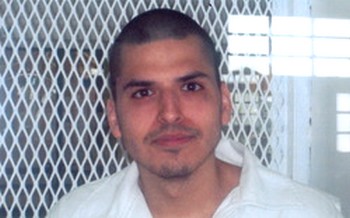
Daniel Lee Lopez
Daniel Lee Lopez
Corpus Christi native Daniel Lee Lopez is scheduled to die first; he’s currently slated to be strapped in at 6pm on Wednesday, Aug. 12. Lopez was driving 60 miles an hour through a neighborhood in March 2009 trying to evade cops and avoid arrest for outstanding warrants when he hit and killed 20-year veteran police officer Stuart Alexander as he was laying Stop Sticks near the highway. Lopez was eventually apprehended after being shot in the arm, neck, and chest. Then 21, he was indicted for 10 offenses, including the capital murder of Alexander. He initially pleaded not guilty, but later changed his stance. He was assigned to a psychologist, who reported that Lopez held an “increasingly firm” opinion that he’d rather a death sentence than live the rest of his life in prison. The state offered life in prison in exchange for a guilty plea, but Lopez pleaded not guilty and went to trial.
Central to the case was debate on whether or not Lopez intentionally ran over Lt. Alexander. At times, he told attorneys that he didn’t mean to do it, that his sight was affected by shots of pepper spray deployed by other officers. Yet, just prior to closing arguments, attorneys informed the judge that Lopez insisted on testifying that he did in fact mean to swerve and hit Alexander. The court rejected Lopez’s request, but the jury still found him guilty on all counts, including capital murder. Lopez waived his right to a state petition for habeas corpus in April 2012 and filed his federal papers that May. The brief, largely blank application asserted 1 solitary ground for relief: that the death penalty in Texas violates the Eighth Amendment prohibition of cruel and unusual punishment. He underwent a series of competency exams and hearings in 2013, and soon after received his right to waive appeal from the 5th Circuit Court of Appeals.
His attorneys – James Rytting, David Dow, and Jeffrey Newberry – maintain that he should never have been found guilty of capital murder, as his testimony concerning his actions continuously flipped from intentional to unintentional. They thus contest that the district court erred in accepting Lopez’s waiver, as Lopez does not understand that the conduct to which he admits – an unintentional murder – does not fall within the definition of capital murder. Lopez, however, remains convinced he’s made the right call. In April, he told the Corpus Christi Caller-Times that he accepts his punishment. “It wasn’t on purpose,” he said. “I killed a police officer because I tried escaping. And it was never intentional but I feel responsible.”
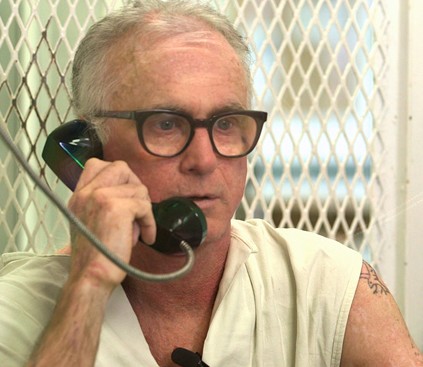
Tracy Beatty
Tracy Beatty
The 2nd individual, Tracy Beatty, goes to the gurney one day after Lopez. Beatty, 54, was arrested for the Nov. 25, 2003, murder of his mother, 62-year-old Carolyn Click. Beatty strangled, smothered, and/or suffocated Click during an argument at her home, and left her in the tub for 2 days before burying her in the ground beside her house and making off with her car and possessions. When questioned, he told authorities that a man named Junior Reynolds had actually killed his mother; that he then killed Reynolds and dumped him “in water” before returning to his mother’s house to ice her in the tub and eventually bury her by the house. But the investigation turned to Beatty. During his arrest, as he was being delivered from Henderson County to the Smith County Jail, he told authorities: “I really didn’t mean to kill her. I came in drunk. She started bitching at me, and I just started choking her. I didn’t even know she was dead until the next morning when I found her still laying on the living room floor.” He was indicted for capital murder the following May and found guilty on Aug. 9, 2004. Deemed a future threat because of 2 prior felony convictions – injury to a child in 1986 and a robbery in 1988 – he was sentenced to death on Aug. 10.
Attorney Jeff Haas argued in petitions for habeas corpus and appeals to the 5th Circuit that his client received ineffective assistance from counsel in two different forms: Trial counsel failed to discover and present mitigating evidence, and failed to properly present enough facts to prove Click’s “killing was a murder rather than capital murder.” Haas pointed to one instance in particular, unmentioned during trial, in which Click and an acquaintance had an argument that a witness indicated looked as though they would “rip each other’s heads off.” He attempted to use that testimony as evidence that Beatty had no intention to kill his mother when he showed up at her house; that a heated conversation escalated to that point. Efforts for relief, however, were denied, and in July 2014, the 5th Circuit denied his application for a certificate of appealability. The Supreme Court rejected his case in May.
Lopez is set to be the 10th Texan executed this year, with Beatty in line to be No. 11. Should both executions go through, the state will end the week having executed 529 people since reinstating the death penalty in 1976.
Source: Austin Chronicle, August 6, 2015


Nevada pursues death chamber, controversial drug


Monday, July 13, 2015

Nevada has no executions on the immediate horizon but is pushing ahead to build a new death chamber at Ely State Prison and would use a drug at the heart of a recent U.S. Supreme Court case to carry out lethal injections.
Brian Connett, deputy director at the Nevada Department of Corrections, said department lawyers were reviewing the June 29 decision over the use of midazolam in Oklahoma executions “to determine what, if any, impact it may have on Nevada.”
“Nevada would use the drugs midazolam and hydromorphone to administer a lethal injection and has an adequate supply of these drugs to carry out an execution if ordered,” he said in an email.
But death penalty watchdogs said use of the drug almost assuredly would spawn lawsuits after highly publicized incidents of botched executions.
Three Oklahoma death row inmates sued after that state first used midazolam last year in the execution of Clayton Lockett. Witnesses reported Lockett writhed, gasped and moaned. Prison officials tried to halt the execution process, but Lockett died after 43 minutes.
Midazolam, an anti-anxiety drug, is intended to put inmates in a comalike state before other drugs to bring about death are administered. Critics argue it does not guarantee unconsciousness to avoid pain from the subsequent drugs.
Similar prolonged executions using midazolam occurred in Ohio and Arizona in 2014.
LETHAL DRUG RULING
In its 5-4 decision, the Supreme Court said the use of midazolam does not violate Eighth Amendment protections against cruel and unusual punishment. The majority also noted that midazolam had been used in other executions about a dozen times without complications.
About 10 days later, Oklahoma set new execution dates in September and October for the 3 inmates who challenged the use of the drug.
A 2-drug injection of midazolam and the painkiller hydromorphone, the same combination planned for use by Nevada, was 1st used for lethal injection by Ohio in January 2014. Witnesses said that it took about 25 minutes for condemned killer Dennis McGuire to die and that during the process he made loud snorting or choking noises while his midsection convulsed.
Rob Dunham, executive director of the Death Penalty Information Center, a Washington-based nonprofit group, said the court’s decision doesn’t settle the question over midazolam’s use.
“That doesn’t mean that there will not be challenges to midazolam elsewhere,” he said.
Dunham said that while justices found the Oklahoma inmates didn’t meet their burden of proof to halt the use of the drug, “it doesn’t mean that midazolam is constitutional.”
He said a state “that is concerned about the execution process would have serious doubts about using midazolam.”
The last execution in Nevada was April 26, 2006, at the now-shuttered Nevada State Prison in Carson City. Daryl Mack was executed for the 1988 rape and murder of Betty Jane May in Reno.
Starting at least 11 years ago and up through Mack’s execution, Nevada used a combination of pentobarbital, pancuronium bromide and potassium chloride in its execution protocol. But Nevada and other states have been pressed to find alternatives after death penalty opponents pressured manufacturers not to sell them for executions.
Nevada has executed 12 inmates since the U.S. Supreme Court reinstated capital punishment in 1976. About 80 men are on Nevada’s death row.
NEW DEATH CHAMBER
Besides the issue of lethal drugs, Nevada is building a new death chamber at Ely State Prison after Nevada State Prison, where executions were conducted, closed in 2012.
Less than a week after Gov. Brian Sandoval signed a capital improvement bill on June 15 that included $860,000 to remodel a prison administrative building into a new death chamber, the state Public Works Board published a notice seeking statements of qualifications from architectural and engineering firms to perform the work.
The deadline for submitting those statements was Thursday, and it is unclear how many were submitted. The prison project was one of dozens of maintenance projects approved by state lawmakers for the next 2 years.
State lawmakers, who rejected funding for a new execution chamber in 2013, approved the expenditure this year despite reservations about the cost and lingering uncertainty over the death penalty.
San Quentin's brand new, costly - and still unused - death chamber
San Quentin’s brand new, costly – and still unused – death chamber
Critics have called the new execution chamber “an outrageous boondoggle.”
“This proposed new facility may sit unused forever, or it could require further remodeling if lethal injection is rejected in court,” Nancy Hart, president of the Nevada Coalition Against the Death Penalty, and Tod Story, executive director of the American Civil Liberties Union of Nevada, wrote in a May 27 opinion piece.
“Even if lethal injection is upheld, there are serious doubts about the availability of the lethal drugs needed for an execution,” they wrote.
Plans call for remodeling 1,900 square feet of visitation and courtroom areas of an administrative building at the Ely Prison to accommodate an execution chamber.
During legislative hearings, Chris Chimits, deputy administrator with the state Public Works Board, said the chamber would be modeled after California’s San Quentin State Prison execution facility, the construction of which was overseen by the 9th U.S. Circuit Court of Appeals.
Mary Woods, spokeswoman for the Nevada Department of Administration, said a design contract could be presented to the Board of Examiners for approval in November.
After that, the design, permitting and construction process is expected to take about a year.


“I want people to know I didn’t kill this man,” death row inmate Richard Glossip still claims innocence


Richard Glossip, 52, will be the next Oklahoma inmate to be executed under the state lethal injection protocol approved by the U.S. Supreme Court.
The Court of Criminal Appeals set Glossip’s execution date for September 15, 2016.
Glossip will be put to death for his role in the brutal murder of Barry Van Treese in 1997.
Late last year, Ali Meyer traveled to McAlester to talk with Glossip about his case, his execution and his claims of innocence.
“I’m prepared for whatever happens, but it’s not easy,” Glossip said behind a wall of thick glass and metal bars. “It’s like you’re in a tomb, just waiting to die so they can finish it off. You hardly get any contact, and the contact you have is with guards. It’s hard; harder than people think it is. People think we’ve got it easy down here. It’s not true.”
Richard Eugene Glossip has been on Oklahoma’s death row for 17 years.
“The dying part doesn’t bother me. Everybody dies, but I want people to know I didn’t kill this man (Barry Van Treese). I didn’t participate or plan or anything to do with this crime. I want people to know that it’s not just for me that I’m speaking out. It’s for other people on death row around this country who are innocent and are going to be executed for something they didn’t do. It’s not right that it’s happening. We’re in a country where that should never happen.”
Richard Glossip was convicted of murder-for-hire in the 1997 death of Barry Van Treese.
“They offered me a life sentence at my 2nd trial. I turned it down because I’m not going to stand there and admit to something that I didn’t do. Even though my attorneys said I was an idiot for turning it down because I could end up back on death row. I prefer death row than to tell somebody I committed a crime I didn’t do.” Glossip said. “I understand people want the death penalty, especially in the state of Oklahoma because of the crimes that are committed. I understand that even though I don’t believe in it. But, one thing you should be absolutely sure about is that you’re not about to kill an innocent man.”
Glossip’s co-worker, Justin Sneed, confessed to the murder of Barry Van Treese. Sneed testified against Glossip in exchange for his life. Sneed is now serving a life sentence.
“I wake up and look at these walls and think, ‘How the hell am I here?’ I think about it, try to figure out what went wrong. I just can’t figure it out. It’s a scary thing.”
The State of Oklahoma will use the controversial execution drug Midazolam to put Richard Glossip to death.
“It just really doesn’t make any sense to me what’s going on. They’re just in such a hurry to kill.”
Last year, the State of Oklahoma spent 5 months revamping the death chamber to carry out executions.
“You’re crammed in this box and every day you think about dying. You know they’re putting these cells up there to stick you in. I think that’s when it got even scarier the day they started construction because then you know they’re going through all this stuff to make sure they kill somebody. That’s a scary thing to think about.”
WHAT HAPPENED IN ROOM 102 — Oklahoma Prepares to Execute Richard Glossip 
On June 29, the very day the United States Supreme Court upheld Oklahoma’s lethal injection protocol in Glossip v. Gross, signaling to the state that it could resume executions, State Attorney General Scott Pruitt wasted no time. His office sent a request to the Oklahoma Court of Criminal Appeals asking that death warrants be signed for the next 3 men in line for the gurney – the same 3 men whose challenge had made it all the way to Washington. “The above inmates have exhausted all regular state and federal appeals,” the attorney general wrote, respectfully urging the Court to schedule their executions. On Wednesday, July 8, the Court complied, setting 3 dates for the fall.
Richard Glossip is 1st in line to die, on September 16. As the lead plaintiff in the case before the Supreme Court, his name became synonymous with the legal fight over midazolam, a drug linked to a number of botched executions, but which the Court decided is constitutional for carrying out lethal injections. Glossip, who spoke to The Intercept hours after the ruling, did not have time to dwell on the decision. Even if the Court had ruled in his favor, he pointed out, Oklahoma remained determined to execute him and has provided itself with a range of options for doing so – most recently, adding nitrogen gas to the mix. With a new execution date looming, “I’m trying to stop them from killing me by any method,” Glossip said, “because of the fact that I’m innocent.”
Glossip has always maintained his innocence, ever since he was arrested in the winter of 1997 for a grisly killing that authorities prosecuted as a murder-for-hire. It is true that he himself did not kill anyone – a 19-year-old man named Justin Sneed confessed to police that he beat the victim to death with a baseball bat – but Glossip was identified as the “mastermind” behind the crime. Sneed, who worked for Glossip, claimed his boss pressured him to carry out the murder, offering him employment opportunities and several thousand dollars in return. There was very little additional evidence to back up his claims, but Sneed nevertheless was able to secure the state’s conviction of Glossip, saving himself from death row. Today, Sneed is serving life without parole at a medium security prison in Lexington, Oklahoma. Meanwhile, Glossip faces execution, while continuing to insist he had nothing to do with the murder. Last January, he came within a day of being executed and was in the process of saying goodbye to family when the Supreme Court granted certiorari to his lethal injection challenge.
Glossip has some outspoken supporters, including family members, the longtime anti-death penalty activist Sister Helen Prejean, as well as his former defense attorney, Wayne Fournerat, who was adamant in a conversation with The Intercept that his former client is innocent. But last October a particularly unlikely figure came forward to plead that Oklahoma spare Glossip’s life: O’Ryan Justine Sneed – Justin Sneed’s grown daughter. In a letter to the Oklahoma Pardon and Parole Board, she wrote that, based on her many communications with her dad, she “strongly believe[s]” that Richard Glossip is an innocent man. “For a couple of years now, my father has been talking to me about recanting his original testimony,” she wrote. “I feel his conscious [sic] is getting to him.”
Justine Sneed’s letter never reached the board. It arrived in the mail too late for Glossip’s attorneys to submit it for consideration. To date, Sneed himself has not come forward – according to his daughter, he fears what it could mean for his plea deal. Nor has she made any further public statements since her letter was published. (The Intercept made numerous attempts to reach her for an interview.) Her claims do not prove that Sneed lied, of course. But the available records in the 18-year-old case of Richard Glossip are themselves good reason for concern. From the police interrogation of Justin Sneed in 1997 to transcripts from Glossip’s 2 trials, the picture that emerges is one of a flimsy conviction, a case based on the word of a confessed murderer with a very good incentive to lie, and very little else. As Oklahoma gets ready to restart executions using its newly sanctioned lethal injection protocol, time is running out to answer the question: Could the state be preparing to kill an innocent man?
It was sometime after 4 a.m. on January 7, 1997, that 33-year-old Richard Glossip woke up to the sound of pounding on the wall outside his apartment at the Best Budget Inn in Oklahoma City. He lived there with his girlfriend of five years, D-Anna Wood; she later described waking up to “scraping on the wall.” It was “kind of scary loud,” she said.
Glossip had lived at the motel since 1995, when he was hired by the owner, Barry Van Treese, a father of 5 who lived some 90 miles away and owned a second motel in Tulsa. Van Treese happened to be visiting Oklahoma City, but he generally relied on Glossip to run the daily operations, only dropping by a couple times a month to pay his staff and check on the property. For managing the Best Budget Inn, Glossip received a salary of $1,500 a month, as well as room and board in the apartment adjacent to the motel’s office. On Mondays, which were usually slower nights, he and Wood would lock the front door to the motel around 2 a.m. Any guest trying to check in after that hour had to ring a buzzer to get in.

Read more: http://deathpenaltynews.blogspot.com/#ixzz3fnr8JI6T

TEXAS – UPCOMING EXECUTION JULY 16 – Clifton Williams at 6 p.m EXECUTION HALTED !


JULY 16. 2015

The Texas Court of Appeals has halted the execution of a death row inmate just hours before he was set to be killed.

WASHINGTON (Sputnik) — The Texas Court of Appeals has halted the execution of death row inmate Clifton Lamar Williams on Thursday just hours before he was set to be killed.

“This is a subsequent application for a writ of habeas corpus filed pursuant to the provisions of Texas Code of Criminal Procedure Article 11.071 § 5 and a motion for a stay of execution,” the Court of Criminal Appeals of Texas order read on Thursday.

The Court of Appeals said that it approved William’s appeal application, which is now returned to a trial court for a review on its merits before a final decision is determined.

In a brief order, the court agreed to return the case to the trial court in Tyler to review an appeal from Williams’ attorneys. They want to examine whether incorrect FBI statistics regarding DNA probabilities in population estimates cited by witnesses could have affected the outcome of Williams’ trial.

“We need time to look at this,” said Seth Kretzer, one of Williams’ lawyers. “No way we can investigate this in five hours.

“It requires some time, and the CCA saw that.”


July 10, 2015

East Texan Clifton Williams heads to the gurney next Thursday, July 16, after nine years spent on death row for the murder of Cecelia Schneider.

Williams, 31, was 21 years old at the time of Schneider’s murder, July 9, 2005. Court records show that he broke into the 93-year-old’s Tyler home, stabbed, strangled, and beat her, then laid her body on her bed and set her bed on fire. He left Schneider’s house with her car and her purse, which contained $40. He argued at trial that his friend, Jamarist Paxton, forced him to break into the house with him, and coerced him into cutting his hand so as to leave his DNA on-scene. But police weren’t able to find any evidence that would substantiate Williams’ claims about accomplices, and Paxton denied involvement. In Oct. 2006, Williams was found guilty of capital murder (in addition to a number of other offenses) and sentenced to death.

Williams’ attorneys have argued in state and federal petitions for relief (as well as a petition for a Certificate of Appealability) that Williams suffers from a wide range of mental illnesses, including paranoid schizophrenia, with which he was diagnosed when he was 20. They have tried to argue that his mother suffered from mental illness, and that Williams had trouble functioning from an early age. They also claim Williams was the victim of incompetent counsel, as attorneys at trial failed both to establish Williams as the victim of mental illness and to mitigate his standing as a future danger to society. Most notably, his petitions for relief note, trial counsel erred by stating their intent to establish mental illness before Williams received a court-ordered psych exam, giving prosecutors the ability to refute counsel’s claims without any established medical standing.

Last September, attorneys Seth Kretzer and James Volberding presented Williams’ case to the U.S. Supreme Court in hopes that the Justices would hear Williams’ mental illness claims. Specifically, records note, they wanted to prove that one ruling – ex parte Briseño, which lays out three basic conditions to determine competence – blocks Williams from arguing mental retardation on the basis ofAtkins v. Virginia (which placed a categorical ban on executing the mentally ill, and was previously rejected by the Texas Court of Criminal Appeals). The Supreme Court denied that petition in early April, however, without comment or explanation. Williams’ attorneys do not plan to file any last-minute appeals.

Williams will be the 10th Texan executed this year, and 528th since the state reinstated the death penalty in 1976. However, his execution coincides with emerging reports that indicate the number of Texans being sent to death row has now significantly decreased. In fact, jurors around the state have yet to sentence anyone to death in 2015. The last person to receive such a sentence was former Kauf­man County attorney Eric Williams (no relation), who shot and killed Chief Assistant District AttorneyMark Hasse on Jan. 31, 2013, before killing County D.A. Michael McLelland and his wife Cynthia two months later. He was sentenced to death last Dec­em­ber. It’s the first time in more than 20 years that the state has made it to July without issuing a new death sentence.

Execution Watch with Ray Hill
can be heard on KPFT 90.1 FM,
in Galveston at 89.5 and Livingston at 90.3,
as well as on the net here
from 6:00 PM CT to 7:00 PM CT
on any day Texas executes a prisoner.

UPCOMING EXECUTIONS 2015, UPDATE


UPDATE JULY 10, 205


Month State Inmate
July
14 MO David Zink EXECUTED 7.41 PM
15 OH Alva Cambell, Jr. – STAYED*
15 OH Warren K. Henness – STAYED
16 TX Clifton Williams  STAYED
August
12 TX Daniel Lopez  executed
18 TN David Miller – STAYED
26 TX Bernardo Tercero
September
2 TX Joe Garza
16 OK Richard Glossip
17 OH Angelo Fears – STAYED*
17 OH William Montgomery – STAYED^
October
6 TN Abu-Ali Abdur’Rahman – STAYED
6 TX Juan Garcia
7 OK Benjamin Cole
11 TX Gilmar Guevara
14 TX Licho Escamilla
28 OK John Grant
28 TX Christopher Wilkins
November
17 OH Cleveland R. Jackson – STAYED*
17 OH Robert Van Hook – STAYED^
17 TN Nicholas Sutton – STAYED

Missouri: July 14, scheduled execution of David Zink EXECUTED 7:41 PM


Zinks last meal was a cheeseburger, french fries, cheesecake and a soft drink, official said.

In a final statement, Zink said:

“I can’t imagine the pain and anguish one experiences when they learn that someone has killed a loved one, and I offer my sincerest apology to Amanda Morton’s family and friends for my actions. I hope my execution brings them the peace and satisfaction they seek.

I also have to apologize to the second set of victims, my family and friends, that had the unfortunate circumstance of developing emotions which will now cause them pain and suffering upon my execution. I kept my promise to fight this case for their benefit, and although unsuccessful to prevent the execution, we have been successful in exposing some serious flaws that offend the basic concept of the American Justice System.

For those who remain on death row, understand that everyone is going to die. Statistically speaking, we have a much easier death than most, so I encourage you to embrace it and celebrate our true liberation before society figures it out and condemns us to life without parole and we too will die a lingering death.”

7:50 p.m.

A Missouri inmate who killed a 19-year-old woman after sexually attacking her and tying her to a cemetery tree has been executed.

Fifty-five-year-old David Zink was put to death by injection Tuesday at a state prison south of St. Louis after the U.S. Supreme Court and Gov. Jay Nixon declined to intervene.

Zink was a paroled sex offender in 2001 when he abducted Amanda Morton after hitting her car on an Interstate 44 exit ramp a mile from her home. He told investigators he feared his drunken fender-bender could violate his parole and send him back to prison.

Jurors convicted Zink in 2004 and recommended a death sentence.

Corrections Department spokesman Mike O’Connell said Zink was pronounced dead at 7:41 p.m.

———

7 p.m.

The U.S. Supreme Court is refusing to block the scheduled execution of a Missouri inmate who killed a 19-year-old woman in 2001 after sexually attacking her and tying her to a cemetery tree.

The nation’s high court on Tuesday declined 55-year-old David Zink’s request to intervene. His lethal injection is set for later Tuesday. Gov. Jay Nixon also denied Zink’s request for clemency.

Zink was a paroled sex offender in 2001 when he abducted Amanda Morton after hitting her car on an Interstate 44 exit ramp a mile from her home. He told investigators he feared his drunken fender-bender could violate his parole and send him back to prison.

Jurors convicted Zink in 2004 and recommended a death sentence.

———

6:50 p.m.

Missouri’s governor has cleared the way for the scheduled execution of an inmate who killed a 19-year-old woman in 2001 after sexually attacking her and tying her to a cemetery tree.

Gov. Jay Nixon on Tuesday denied 55-year-old David Zink’s request for clemency and refused to block the execution scheduled for later Tuesday at a prison south of St. Louis.

Zink was a paroled sex offender in 2001 when he abducted Amanda Morton after hitting her car on an Interstate 44 exit ramp a mile from her home. He told investigators he feared his drunken fender-bender could violate his parole and send him back to prison.

Jurors convicted Zink in 2004 and recommended a death sentence. Nixon called the acts “brutal and horrifying” and said his denial of clemency upholds the jury’s decision.

———

11:30 a.m.

A Missouri inmate’s hopes of avoiding a scheduled execution for a 2001 killing are now in the hands of the U.S. Supreme Court and the governor.

A three-judge panel with the 8th U.S. Circuit Court of Appeals on Tuesday declined without comment David Zink’s claims that the death penalty is unconstitutional.

The St. Louis-based court on Monday rejected Zink’s challenge of the drug process used in lethal injections.

The nation’s high court is still weighing Zink’s case, and Gov. Jay Nixon is reviewing Zink’s clemency request.

Zink is scheduled to be put to death at 6 p.m. Tuesday for the killing of a 19-year-old Amanda Morton.

12:01 a.m.

A Missouri inmate is hoping federal appellate courts or the state’s governor spare him from his scheduled execution for the 2001 killing of a 19-year-old woman he abducted.

Fifty-five-year-old David Zink has 11th-hour appeals with the St. Louis-based 8th U.S. Circuit Court of Appeals and the U.S. Supreme Court, and a clemency request also was in Gov. Jay Nixon’s hands.

The Missouri Supreme Court declined to intervene Monday.

Zink was out on parole after serving 20 years in Texas on rape, abduction and escape charges when he abducted Amanda Morton after hitting her car from behind on a freeway ramp a mile from her Strafford home.

Zink later tied her to a cemetery tree in western Missouri, then snapped her neck before severing her spinal cord.

“The horror and fear 19-year-old Amanda Morton must have felt after being kidnapped by David Zink that July night is truly unimaginable,” Attorney General Chris Koster made the following statement following the execution. “David Zink callously took a young woman’s life, and it is fitting he pay by losing his own.”

Jurors in western Missouri’s St. Clair County deliberated 90 minutes in 2004 before convicting Zink and recommending a death sentence for the killing of Amanda Morton. Authorities said Zink abducted her after hitting her car from behind on an Interstate 44 exit ramp a mile from her Strafford home. Morton was driving home after visiting a friend.

Police found Morton’s Chevrolet Cavalier abandoned on the ramp with the keys in the ignition, the engine running and the headlights and hazard lights on. Her purse, credit card and medication were found inside the vehicle.

Just months before the slaying, Zink had been released from a Texas prison after serving 20 years on rape, abduction and escape charges. Fearing that his drunken fender-bender with Morton could violate his parole and send him back to prison, Zink initially abducted Morton, taking her to a motel. That site’s manager later saw a televised news report about Morton’s disappearance, recognized her as the woman who had checked in with Zink, and gave investigators Zink’s name and license plate number from motel registration.

Zink, after being arrested at his parents’ home, led authorities to Morton’s buried body in a cemetery, confessing matter-of-factly and at times laughing on videotape that he had tied her to a tree there and told her to look up. When the bewildered Morton begrudgingly glanced skyward, Zink said, he snapped her neck.

Worried that Morton might regain consciousness, Zink admitted, he used a knife to sever her spinal cord at the neck and covered her body with leaves before retrieving from his home a shovel he used to bury her.

“If I think that you’re going to pose a threat to my freedom, it is set in my mind I want to eliminate you,” Zink says in his videotaped confession.

An autopsy later showed that Morton had eight broken ribs and 50 to 100 blunt-force injuries. Morton also had been sexually assaulted, with DNA evidence linked to Zink found on her body.

Missouri has executed five men this year and 16 since November 2013. Only Texas has executed more inmates over that span

USA: Many Basic Facts About Executions Remain Secret – Until Something Goes Wrong


June 24, 2015

As Oklahoma’s death-row inmates await word on whether the state’s execution procedure is constitutional, states – including Oklahoma – maintain strong laws protecting disclosure of information about the way they implement the death penalty.
Last year, an Oklahoma inmate sat on a gurney for 43 minutes while the drugs that were supposed to course swiftly through his body and kill him failed to do so.
Any day now, the Supreme Court is expected to issue a decision in a case on whether Oklahoma’s death penalty protocol is constitutional, a case filed in the aftermath of that botched execution, many of the details of which still remain shrouded in secrecy. How the Supreme Court will decide – how narrowly or broadly or whether they will issue an opinion at all – is unknown.
One thing is clear, however, in Oklahoma and elsewhere: The way people are executed in America is increasingly done in secret.
The identities of the actual executioners have been secret for a long time. But in recent years, states have extended that same secrecy to the very drugs used to kill people – where they’re purchased, how they’re purchased, and how they’re prepared and administered.
Death penalty lawyers argue the secrecy means they don’t find out about many of the problems until something goes wrong. But even in those cases, investigations are done by the state itself, shielding an unknown amount of that information – beyond what the state releases – from public disclosure.
Lockett’s execution took place more than a year ago, yet reporters in Oklahoma are still waiting for Gov. Mary Fallin’s office to turn over emails and records from that night. Eventually Ziva Branstetter, a journalist now with the Tulsa Frontier, had little choice but to sue for the documents in December of last year.
Fallin has attempted to delay the suit – arguing that, although her office hasn’t turned over the records, she hasn’t formally denied the request either. Fallin’s office claimed in court that absent a formal denial, the courts couldn’t weigh in.
The response from Fallin isn’t an anomaly, either. Her office has stopped responding to emails about a BuzzFeed News open records request from months ago.
In a statement, a Fallin spokesperson said the governor was committed to transparency.
“It is an extremely time-consuming process,” Alex Weintz said. “And, since our office gets many Open Records requests, it can take a while to receive documents in response to a request.”
The situation in Oklahoma isn’t unusual.
“Departments of Corrections have realized that the more information they provide, the more it reveals how little they know,” said Deborah Denno, a law professor who has followed the death penalty for decades.
“It’s always been there, but now it’s becoming more pronounced. The only time we really find out what’s going on is when something goes wrong and we have a really badly botched execution.”
The secrecy has also provided cover when things go wrong. That’s how it has played out in Georgia after state officials had to halt an impending execution after finding particles floating in the syringe.
Georgia officials said the state would put its executions on hold while it investigated what went wrong. Attorney Gerald “Bo” King, who represents the woman on death row, worried that the “self-investigation” would be biased.
“[The state] will not be merely the subject of this investigation; they will also conduct it,” King wrote in March. “And they will hide all critical aspects of their self-assessment from Ms. Gissendaner, the public, and this court.”
Those concerns have been borne out in the time since. After a short investigation, Georgia told the courts, the press, and the public that the likeliest cause of the drug’s issues is that it was stored at too low of a temperature. But state officials did not publicize the fact that the expert consulted by the state also pointed to a 2nd possible cause – problems with how the drug was made. The state then withheld the results of a test that could support or cast doubt on that assessment, refusing to turn those results over to BuzzFeed News in an open records request.
“After reflection,” – and a BuzzFeed News report detailing how the state was withholding the results – the state changed its mind and released them. The results cast doubt on their assessment that it was temperature, and not a problem with the secret pharmacist that mixed the drug, that caused the drug to go bad.
The lethal injection problems have not appeared to change the minds of those who have supported the secrecy.
“Georgia did the right thing, they didn’t use the drug. It’s not a problem,” said Kent Scheidegger of the Criminal Justice Legal Foundation, an organization that works to support the death penalty. “Oklahoma – they did have one case where the insertion wasn’t done correctly. But they’ve taken steps to fix it.”
Scheidegger and other supporters argue that the secrecy is vital. Without it, he says, people wouldn’t be willing to participate in executions or sell lethal drugs.
“I cannot think of another instance where companies would face the same criticism for participating in a government function,” Scheidegger said.
Military companies aren’t shielded from public scrutiny, and the amounts the government pays those companies are a matter of public record. When asked why this should be different, Scheidegger said, “I lived through Vietnam era and I don’t remember them doing this with military contractors.”
“As long as the drug is tested, it shouldn’t matter where it comes from,” he added.
It’s the argument that almost all other states have made when the secrecy has been challenged.
In fact, these days, Nebraska seems to be the only state fine with turning over records that illustrate how its lethal drugs are procured, even if the Food and Drug Administration has said those drugs are illegal and will be seized.
Nebraska’s lethal injection drugs are purchased from a supplier in India.


Executions on hold for at least a year as Louisiana sorts out death penalty method


June 24, 2015

Executions in Louisiana are on hold for at least a year because the state doesn’t have the drugs needed to put inmates to death, according to a court filing and a lawyer for a convicted child-killer.
Lawyers for Christopher Sepulvado and the state Department of Corrections were supposed to be in federal court Thursday to schedule a trial on the constitutionality of Louisiana’s method of execution.
Instead, a federal judge on Tuesday delayed the trial and Sepulvado’s execution – as well as 4 others on death row – until July 2016 as Louisiana tries to figure out how it can carry out the death penalty.
This is the 2nd time in a year that the state has asked to delay the trial.
States around the country have struggled to execute prisoners because of shortages of lethal injection drugs. In a few cases, it’s taken an unusually long time for inmates to die from new drug combinations.
In the motion to delay the hearing, Department of Corrections attorney James Hilburn wrote that “it would be a waste of resources and time to litigate this matter at present” because the facts in the case are changing. He wrote that he expects those issues to be “more settled” by July 2016.
Hilburn declined to elaborate on the reasons for the delay.
Louisiana’s current death-penalty protocol calls for a mix of hydromorphone and midazolam, the same drugs used last summer during an Arizona execution that took nearly 2 hours to complete. Louisiana’s last known supplies of the drugs expired earlier this year.
Mercedes Montagnes, a lawyer for Sepulvado, said the state “came to us after they were unable to locate any legal source for lethal injection drugs and asked for another year to come up with a new method of execution or source of drugs.”
Sepulvado, who was convicted of beating his stepson with a screwdriver and then submerging his body in scalding water, has delayed his execution several times in the past 2 years.
In his lawsuit, he argues that the state’s execution method violates his constitutional protection against cruel and unusual punishment.
As part of that lawsuit, Sepulvado has sought to learn the exact procedure Louisiana will use to put him to death. The state has fought such disclosures in court and in response to public-records requests filed by The Lens.
Meanwhile, Louisiana corrections officials have gotten more creative in getting their hands on execution drugs and have considered new ways to carry out the death penalty.
In January 2014, as Sepulvado’s last execution date approached, the Louisiana Department of Corrections turned to Lake Charles Memorial Hospital for one of the 2 drugs it needed to execute him.
According to a hospital spokesman, the state lied to the Lake Charles pharmacist, saying the hydromorphone was for “a medical patient” rather than a prisoner on death row.
“At no time was Memorial told the drug would be used for an execution,” spokesman Matt Felder said at the time.
The state considered getting another drug from an out-of-state compounding pharmacy not licensed in Louisiana, which would have been illegal.
In 2014, the Legislature considered reinstating electrocution. It’s been outlawed since 1991.
At the request of Department of Corrections Secretary Jimmy LeBlanc, the bill was changed to drop electrocution and instead conceal details about executions, including the source of execution drugs. It was never passed.
Other states, including Arizona, Missouri and Oklahoma, have passed such secrecy laws.
In February, Louisiana corrections officials asked legislators to allow them to use nitrogen, which has never been tried in the U.S. No bill was introduced.
Death-penalty opponents have responded to drawn-out executions around the country by calling execution methods “experimental.”
Last year, a prisoner in Oklahoma tried to rise from the gurney after his injections began. In April, the U.S. Supreme Court heard arguments on the constitutionality of that state’s execution method.
That execution used midazolam, 1 of the 2 drugs called for by Louisiana. It prompted Louisiana officials to say they would reconsider the drug.
The state has not said what method it would use instead.
“Obviously whatever plan the state comes up with will have to be evaluated by the court for its constitutionality,” Montagnes said.
Other death-row inmates who won stays of execution with Tuesday’s ruling are:
–Jesse Hoffman, who was convicted and sentenced to death in 1998 for kidnapping, raping and fatally shooting Covington resident Mary “Molly” Elliot in 1996
–Bobby Hampton, who was convicted of robbing a liquor store in Shreveport and causing the death of employee Philip Russel Coleman in 1995
–Nathaniel Code, a Shreveport man convicted of four killings between 1984 and 1987
–Kevan Brumfield, who was convicted and sentenced to death in 1995 for the 1993 murder of Baton Rouge police officer Betty Smothers
Of the 5, only Sepulvado has been given an execution date.
Lawyers are set to meet July 11, 2016, to set a new trial date in his lawsuit.
Source: The Lens, June 24, 2015