Inmates on the death row

TEXAS – Agreement on DNA testing in Skinner case, but “key” evidence missing


June 13, source : http://www.chron.com

Hank Skinner.Hank Skinner

DNA testing of evidence in the Henry Skinner triple murder case hit yet another snag this week as prosecutors admitted that a blood-stained windbreaker – termed “perhaps the key piece of evidence” by the killer’s lawyer – cannot be found.

In a motion laying out terms of a joint agreement to begin testing filed late Tuesday, the state and Skinner attorney Rob Owen identify 40 items to be submitted for testing. Among them are clippings from a victim’s fingernails, vaginal swabs, and knives found at the scene of the 1993 New Year’s Eve Pampa murder.

Skinner, 50, was convicted of fatally bludgeoning his girlfriend, Twila Busby, and stabbing to death her two adult sons. He consistently has maintained his innocence, saying that consumption of codeine and alcohol had rendered him incapable of killing the victims.

Prosecutors in Tuesday’s filing concede that the windbreaker, collected from the scene by the Pampa Police Department, has not been found.

“According to the state, every other single piece of evidence in this case has been preserved,” Owen said in an email. “It is difficult to understand how the state has managed to maintain custody of items as small as fingernail clippings while apparently losing something as large as a man’s windbreaker jacket. To date, the state has offered no explanation for its failure to safeguard evidence in this case.”

A spokesman for the Texas Attorney General’s Office declined immediate comment.

Owen said the jacket, which appears to be stained with perspiration and blood, may have been worn by the assailant. Owen said that, since the trial, a witness has identified the jacket as one worn by Busby’s uncle.

That man, now dead, reportedly was seen stalking Busby at a party shortly before her murder.

Skinner has had at least two execution dates set. Last November, the Texas Court of Criminal Appeals issued a stay to ascertain how revised laws regarding such testing may apply to his case.

Skinner has endeavored for more than a decade to obtain DNA testing of seemingly important evidence gathered at the crime scene.

Once a Gray County district court approves the proposed joint order, agencies or entities possessing items to be tested will have five days to send them to the Texas Department of Public Safety laboratory in Austin.

MISSISSIPPI – GARY CARL SIMMONS, JR.- Execution – June 20, 2012 6:00 p.m EXECUTED 6:16 p.m


Last Statement

“I’ve been blessed to be loved by some good people, by some amazing people. I thank them for their support. Let’s get it on so these people can go home. That’s it,” Simmons said as he lay strapped on a gurney in the execution chamber moments before the procedure was carried out.

Gary Carl Simmons Jr.
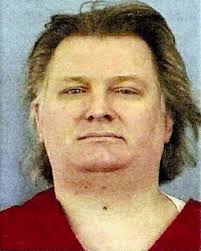
Source : Mississippi Court NO. 97-DP-01550-SCT

FACTS
In the early morning hours of August 11, 1996, Jeffery Wolfe and Charlene Brooke Leaser drove from Houston, Texas, to Jackson County, Mississippi. They had only known each other a few weeks. Wolfe asked Leaser to accompany him on a trip to the Gulf Coast to “pick up some money” from some friends that were in his debt. Leaser later learned that the debt accrued some weeks earlier from a transaction involving drugs. While on the Gulf Coast, Wolfe also planned to buy new wheel rims and tires for his vehicleand then return through New Orleans with Leaser for a short vacation. Wolfe left Houston with twelve hundred dollars in his wallet. Leaser had approximately two hundred dollars in her purse.
Upon their arrival on the Mississippi Gulf Coast, they checked into the King’s Inn Hotel. Wolfe and Leaser fell asleep. Wolfe awoke early and left Leaser at the Hotel to meet Sonny Milano, Timothy Milano’s brother, who worked at a local tire store. Apparently, they met a few weeks earlier while Wolfe was on the Coast conducting his illicit business deal. Later that afternoon, Wolfe and Sonny returned to the hotel room to pick up Leaser for dinner. Sonny Milano left to get his girlfriend and the four met in Wolfe and Leaser’s room at the hotel. They all took Wolfe’s white Honda Civic to Shoney’s where they dined together

Sonny Milano testified that during dinner, Wolfe asked if Sonny planned to go to Simmons’ house that evening. Sonny Milano, over loud protests from his girlfriend, decided to go to Simmons’ house, arriving there late that evening after dropping her off. When he arrived, Simmons and Sonny’s brother, Milano, were the only two at the house. Simmons asked Sonny if he had seen Wolfe and Sonny told him that they ate dinner together. Simmons asked Sonny to get in touch with Wolfe. Sonny contacted Wolfe at his hotel room and told Wolfe that he was at Simmons’s house. Wolfe was pleasantly surprised to hear that Sonny was there, since Sonny’s girlfriend was opposed to his going. Wolfe told Sonny that he would be there in a minute.

Sonny conveyed this information to Simmons, who less than one minute later, approached Sonny as he talked to Milano and asked him to leave the house. Sonny testified that he did not find this unusual because “that’s just Gary.” Sonny left without explanation, with Wolfe on his way.
After dinner, as the couples parted ways, Wolfe and Leaser returned to their hotel where they relaxed before leaving to meet Wolfe’s debtors. They drove out to Simmons’s house but found no one home. After leaving the house to pick up cigarettes and a beverage, Wolfe and Leaser returned to the hotel. To pass the time, the two then went to Wal-Mart, and again tried to meet Simmons at his house. Still, no one was home. By this time it was nearly 10 in the evening, August 12, 1996. Again, they returned to the hotel. Near midnight, Wolfe received a phone call while Leaser stood outside smoking a cigarette. Wolfe hung up the phone, gathered Leaser, and left the hotel headed toward Simmons’s house.

Upon arriving at the house, they found Simmons sitting on the front porch. The three began talking, and Simmons offered them some marijuana. Leaser and Simmons smoked a marijuana cigarette, but Wolfe refrained. Milano drove up as they finished the marijuana. Simmons was related to the Milanos by marriage; Simmons married their sister, Lori, but that marriage ended in divorce. Simmons offered his guests a beer, and all four adjourned to the kitchen and living room area. Simmons walked into the kitchen to get a beer while Leaser sat down at a table in the living room to roll another marijuana cigarette.

Leaser heard Wolfe and Milano chatting in the doorway separating the kitchen and living room. Wolfe mentioned the money he was owed. Apparently, Simmons and Milano owed Wolfe between twelve and twenty thousand dollars. They did not have the money, nor did they have the drugs. Simmons returned from the kitchen while Wolfe and Milano discussed this predicament. Leaser testified that she heard gunshots and saw Wolfe fall to the ground. Immediately there after, Simmons grabbed Leaser and ordered her not to look in the direction of Wolfe’s body. Leaser noticed Milano standing directly behind Wolfe holding what was later identified as State’s exhibit 29, a .22 caliber rifle.

Simmons took her to a back bedroom of the house and forced her to lie face down on the floor. He placed himself on top of her and began questioning her, asking whether she or Wolfe were law enforcement officers, whether Wolfe had any drugs with him, and who knew they were in Mississippi. She became understandably hysterical and simply responded that she did not know anything, as she and Wolfe had only become acquainted a few weeks ago. After Simmons finished questioning Leaser, he tied her hands behind her back, bound them to her feet with some rope, and locked her in a metal box with dimensions similar to a large footlocker near his bedroom, telling her he was “on a time frame” that he could not “mess up.”

Leaser managed to untie her hands and feet and began kicking the top of the box unsuccessfully trying to get out. Leaser continued kicking the top of the box until Simmons returned. He removed her from the box, stripped her nude, tied her up again and returned her to the box. Again, Leaser managed to free herself from the knotted ropes, but remained unable to get the top off of the metal box holding her. After some length of time had passed, Simmons returned to the box and took Leaser out. Simmons was undressed. He again forced her to lie face down on the floor of the bedroom. Leaser was in the middle of her menstrual cycle, so Simmons forced her to remove her tampon. He then raped her, telling her that her life depended on how well she performed sexually. Leaser testified that she thought he was holding a pistol to the back of her head during the assault.
Afterward, Simmons asked Milano if he would like to rape her as well; Milano declined. Simmons then took Leaser to the bathroom, allowed her to clean up with an athletic sock; and yet again, tied her up and locked her in the box.

While Leaser was secured in the box, Simmons and Milano went about their plan to dispose of Wolfe’s body. Simmons, by trade, was a butcher in a meat market. Simmons’s co-worker, Charles Jenkins, testified that during the preceding workweek, Simmons sharpened all of his knives and took them home from work for the weekend. Jenkins testified that this was rather unusual because everyone normally leaves their knives at work. Apparently, the only time that Jenkins could remember anyone taking their knives home was before leaving on an extended vacation or quitting the job. Simmons took those knives and began dismembering Wolfe in the bathtub. After gutting him and severing his head and limbs, Simmons, with Milano’s help, began distributing Wolfe’s remains into the bayou that ran behind Simmons’s property using a boat Simmons borrowed from neighbor Donald Taylor only hours before. Alligators were known to inhabit the area. The bayou had a running current that eventually, through tributaries, fed into the Gulf of Mexico.

Leaser, still locked in the box, again untied herself. Simmons returned to the box smoking marijuana and offered some to Leaser. She accepted. After sharing the marijuana cigarette, Simmons locked Leaser in the box with a blanket, where she fell asleep. She awoke to the sound of the telephone ringing. When no one answered it, Leaser reasoned that the house was empty. She mustered all of her energy and began banging on the top of the box. The lid popped off and Leaser managed to get out of the house. On her wayout of the door, she grabbed a bag with some of her clothes and belongings in it. She then partially dressed herself. Leaser ran to a neighbor’s house and convinced the neighbor to call the police. Upon their arrival, Leaser recounted the events of the previous twenty-four hours.

Many different law enforcement agencies were involved in investigating the scene of the crime. Leaser told police officers that Wolfe was inside, had been shot, and that she had been raped. Once the police arrived, they began to secure the area and investigate Leaser’s claims. Moss Point police officers Lee Merrill and Richard Cushman entered the house with Leaser to determine if a crime had, in fact, beencommitted and if so, whether other victims were still in the house. Once the police officers saw blood and other evidence of violent crimes, they left the house and secured a search warrant.

After obtaining a search warrant, the police called the Mississippi Crime Lab, and they entered the house to gather evidence. From inside the house, they collected portions of fingernails from a wastebasketa used condom, and two used tampons, among other things. The local police department also recovered a Marlin model # 60 .22 caliber rifle, eight empty .22 caliber shell casings, and Wolfe and Leaser’s personal items originally left in their hotel room.

Near the rear of the property, a small “jon boat” was spotted near the water. Officers Magee and Graff investigated and requested that Officer Cushman join them. Near the boat they found four five gallon white buckets, one green plastic barrel, a one gallon bottle of Clorox bleach, a brush, a knife, and a bushhook. The brush and bushhook appeared to be covered in blood. An aluminum boat paddle was covered in bloody finger prints. In the boat, the officers discovered a piece of flesh. The local coroner called Dr. Paul McGarry to help with the investigation. Outside the house, but still on or very near Simmons’s property, Dr. McGarry found the rest of Wolfe’s body. Dr. McGarry testified that he and a group of police officers floated approximately two hundred yards down the bayou over which they found various parts of the skin, muscle, chest, abdominal walls, penis and testicles, lungs, heart, intestines, liver, as well as fingers and toes from a young human white male.

Dr. McGarry testified that the body parts had been cut sharply and with precision into block like sections of tissue. Most of the bones had been separated. Of the flesh he found and examined, several pieces had bullet holes in them. One portion of the chest had five bullet holes in it while another portion revealed one bullet hole. Some of the internal organs, the heart and lungs specifically, also had bullet holes in them. The left lung had a bullet lodged in it. Dr. McGarry testified that these gunshot wounds were the cause of death.
A further search of the area revealed Wolfe’s severed head, upper chest portion, and pelvic area sans reproductive organs. Over two days of searching, they found, on the first day, eighty-five pounds of human remains the largest of which was seventeen inches in diameter. The following day, they collected forty-one pounds of similar pieces, with the largest piece measuring nineteen inches. Some pieces found later were large enough to have identifiable tatoos. All of the flesh was identified as belonging to Wolfe.
Simmons left his house after dismembering and disposing of Wolfe. He drove to Mobile, Alabama, where he made a videotape for his ex-wife and children. Throughout the video recording, Simmons spoke to his family in the most general terms about what he had done, although he never specifically admitted committing any crimes. Simmons mailed the video cassette to his wife and drove back to the Coast. Upon arriving at his house, Simmons noticed that Leaser had escaped. He immediately left again and went to see his friend Dennis Guess.
Guess testified that while they were conversing, Simmons volunteered that he had just “whacked a drug dealer,…deboned him, cut him up in little pieces, and put him in the bayou.” Simmons told Guess that he used a butcher knife and bolt cutters to accomplish the task. Simmons also told Guess that he had a girl in a box and planned to “train her” and “keep her around as a sex toy,” but confessed that she had escaped. The conversation then turned to what realistic options Simmons had left. Simmons, after further discourse with Guess on this subject, decided against fleeing the jurisdiction or committing suicide. He eventually decided to turn himself in to the authorities.

TEXAS – APPEALS COURT REJECTS CLAIM OF TEXAS DEATH ROW’S BROWN


June 12, 2012 Source : Execution Watch

NEW ORLEANS — A federal appeals panel Tuesday rejected an appeal by Texas death row prisoner Arthur Brown Jr.

The U.S. Fifth Circuit Court of Appeals rejected Brown’s assertion that his trial attorneys failed to uncover and present sufficient mitigating evidence at the punishment hearing where he was ordered put to death.

“Brown’s claims are not adequate to proceed further,” the U.S. Fifth District Court of Appeals said in denying Brown’s request for permission to continue in the appeals process.

He was convicted in a 1992 drug-related quadruple homicide in Houston.

The U.S. Fifth Circuit, one of 13 federal court districts, encompasses Texas, Louisiana and Mississippi.

Full text of the ruling is at http://www.ca5.uscourts.gov/opinions/pub/11/11-70012-CV0.wpd.pdf

Tennesse – Memphis man released after 27 years in prison


June 12, 2012  Source : http://www.commercialappeal.com

A former death row inmate who won a new trial in the 1983 murder of a Memphis grocer has pleaded guilty to second-degree murder and was sentenced to time he already has served.

Erskine Leroy Johnson, 54, was released Friday morning after serving 26 years, 11 months and five days for the shooting death of Joe Belenchia during a holdup on Oct. 2, 1983, at the Food Rite Grocery at 2803 Lamar.

“He is overjoyed at being out,” said Gerald Skahan, chief capital-case attorney in the Public Defenders Office. “He is looking forward to enjoying the rest of his life and spending it helping others.”

He said Johnson has always maintained his innocence, but entered an Alford plea, also called a best-interests plea, so he could get out of prison and avoid putting his family through a trial.

He was released Friday morning from the Shelby County Jail after entering his plea this week in Criminal Court.

Johnson was on death row from Jan. 26, 1995, to Nov. 15, 2004, but was re-sentenced to life in prison after the state Supreme Court ruled prosecutors did not give the defense a police report showing the defendant could not have fired a shot that wounded a customer in the store.

Then last December the Tennessee Court of Criminal Appeals awarded Johnson a new trial, ruling that newly discovered evidence raised by the defense may have caused the jury to reach a different verdict.

The court found that new evidence indicating close relationships among several of the state’s witnesses, if true, could have been viewed as a motive to protect other possible suspects and could have weakened the witnesses’ credibility before the jury.

Johnson said that around the time of the murder he was in St. Louis at a birthday party for his mother.

Prosecutors said Johnson’s palm print was found on the getaway car and that one witness told the jury that Johnson had confessed to “a cold-blooded” shooting in Memphis.

Deputy Dist. Atty. John Campbell said the state offered the settlement because the case was nearly 30 years old and Johnson already had served nearly 27 years in prison. A life sentence under laws in effect at the time of the murder was at least 25 years.

Campbell said prison officials had called Johnson “an exemplary prisoner” and that the state parole board had granted his release scheduled for June 11.


CALIFORNIA – Death Row suicide highlights executions’ delays


June 10, 2012 Source : http://www.mercurynews.com

SAN FRANCISCO—When James Lee Crummel hanged himself in his San Quentin Prison cell last month, he had been living on Death Row for almost eight years—and he was still years away from facing the executioner.

California’s automatic death penalty appeals take so long that the state’s 723 condemned inmates are more likely to die of old age and infirmities —or kill themselves—than be put to death.

Since capital punishment was reinstated in 1978, California has executed 13 inmates, and none since 2006. But 20 have committed suicide, including Crummel, who abducted, sexually abused and killed a 13-year-old boy on his way to school in 1979. Another 57 inmates have died of natural causes. The ponderous pace of this process has helped make the state’s death row the most populous in the nation, and it has generated critics from all quarters.

Victim rights groups say the delays amount to justice denied. Death penalty opponents say the process, like execution itself, amounts to cruel and unusual punishment.

And now the state’s voters will get an opportunity this November to vote on a measure that would abolish the death penalty, which critics deride as an inefficient and expensive system for a financially troubled state.

It took the Supreme Court four years to appoint Crummel a public defender, and it took his attorney almost that long to file his opening brief after several time extensions. Crummel’s appeal was expected to consume a few more years before the high court decided the case.

While most condemned inmates welcome legal delays, even those seeking a speedy resolution are stymied.

Scott Peterson, who was sentenced to death seven years ago for murdering his pregnant wife Laci, is attempting to get his case before the Supreme Court as soon as possible, because he says he was wrongly convicted.

Peterson’s parents hired a top-notch private appellate lawyer after sentencing, while other Death Row inmates wait an average of five years each for appointment of taxpayer-funded public defenders.

“We are moving at lightning speed compared to most automatic appeals,” said Peterson’s attorney Cliff Gardner. “He wants to establish his innocence.”

The slow wheels of death penalty appeals, and the billions of dollars spent on them over the years, are making converts of some of capital punishment’s biggest backers, including the author of a 1978 ballot measure that expanded the types of crimes eligible for capital punishment in the state.

Retired prosecutor Donald Heller, who wrote the 1978 proposition, and Ron Briggs, the initiative’s campaign manager who now serves on the El Dorado County Board of Supervisors, say they support abolition in California because the system is too costly and hardly anyone is being put to death.

“We’d thought we would bring California savings and safety in dealing with convicted murderers,” Briggs said in a statement. “Instead, we contributed to a nightmarish system that coddles murderers and enriches lawyers. ”

The current measure—known as the SAFE California Actwould convert all death sentences to life in prison without parole and redirect $100 million from the death penalty system to be spent over three years investigating unsolved murders and rapes.

Despite the growing backlog, district attorneys continue to send murderers to death row. Five new inmates have arrived this year, and several more are expected, including Los Angeles gang member 24-year-old Pedro Espinoza who was convicted of shooting to death a high school football player. A jury recommended death for Espinoza, and a judge is scheduled formally sentence him in September.

Meantime, Los Angeles County District Attorney Steve Cooley is attempting to immediately resume executions of two longtime Death Row inmates Mitchell Carleton Sims, 52, and Tiequon Aundray Cox, 46, who have exhausted all of their appeals. Sims has been on Death Row since 1987, Cox since 1986.

“It is time Sims and Cox pay for their crimes,” said Cooley, who is asking that the inmates be executed with a single drug rather than the three-drug lethal cocktail now being challenged in federal and state courts. The California District Attorneys Association is backing Cooley’s attempt to resume executions.

Cooley argues appeals rather than trials consume the lion’s share of what the state spends administering the death penalty in California. Cooley wants executions to remain on hold until after the November election. But if the death penalty is retained, he proposes a change in the law to allow the State Court of Appeal to start handling death penalty appeals rather than automatically sending every case to the Supreme Court for review.

Appealing the death penalty in California takes decades for a variety of reasons. There are too few qualified attorneys to handle too many automatic death penalty appeals, resulting in inmates waiting about five years each for a public defender. Once an inmate is represented by counsel, it still takes additional years to put together the voluminous trial record that serves at the heart of the appeal.

Those records often exceed 70,000 pages, according to Peterson’s attorney, adding that he wouldn’t be surprised if his client’s record reached 80,000 pages.

Gardner says he expects to file his appeal brief later this month, which would be a first for any inmate sentenced to death during the past 12 years.

None of the estimated 250 prisoners in that category is as far along as Peterson, according to a study of California’s death penalty published last year by 9th U.S. Circuit Court of Appeals Judge Arthur Alarcon and Loyola Law School professor Paula Mitchell.

They estimated that $4 billion has been spent on all facets of the state’s death penalty since 1978, including $925 million on appeals.

California’s death penalty, the authors said, is a “multibillion-dollar fraud on California taxpayers” that has seen “billions of taxpayer dollars have been spent to create a bloated system, in which condemned inmates languish on death row for decades before dying of natural causes and in which executions rarely take place.”

ALABAMA – Mental retardation finding may save convicted Jefferson County murderer from death sentence


June 8, 2012 Source : http://blog.al.com

BIRMINGHAM, Alabama — A Jefferson County murderer who served more than four years on Death Row then won a new trial and was reconvicted, may avoid a second death sentence after a state expert found he was mentally retarded, a hearing revealed today.

Esaw Jackson, 33, was convicted and sentenced to death in 2007 for a shooting the year earlier in Ensley that killed a woman and a teenager and wounded the mother’s two teen children.

A Jefferson County jury also convicted him of capital murder in 2011, and recommended a sentence of death in a 10-2 vote.

Pre-sentence testing ordered by Circuit Judge Stephen Wallace, the judge in the current trial, determined Jackson had an IQ of 56, well below the normal legal threshold for mental retardation, which is a 70 IQ.

The U.S. Supreme Court has banned executing mentally retarded murderers.

In today’s hearing, prosecutor Mike Anderson asked for more time to obtain and examine Jackson’s school records for evidence of mental retardation, another indicator courts use to determine if the death penalty should be barred.

Wallace set a July 13 hearing, and said he wants to set the final sentencing after Anderson reports back.

If the assessment holds that Jackson is mentally retarded, “the sentence would have to be life without parole,” said one of Jackson’s lawyer, Erskine Mathis.

Judges in capital cases are not bound by the jury’s sentencing recommendation, but in most cases Alabama judges have overridden the jury’s recommendation of life without parole and imposed death instead.

Fewer than 10 percent of the judicial overrides have resulted in the lesser capital sentence, according to the Equal Justice Initiative in Montgomery.

Jackson was 27 when he fired a rifle at least 15 times into a car stopped at a traffic light on 19th Street and Avenue V. Killed were Pamela Montgomery, 42, and Milton Poole III, 16. Montgomery’s children, Shaniece Montgomery, then 19, and Denaris Montgomery, then 17, were wounded.

The jury in Jackson’s original trial also recommended death in a 10-2 vote, and then-Circuit Judge Gloria Bahakel sentenced him to death. The Alabama Supreme Court overturned his convictionand sentence in 2011, citing improper testimony in the 2007 trial.

Four years after watching his mother and best friend die, Denaris Montgomery committed a murder himself, and now is serving a 21-year prison term.

NEBRASKA – Unsafe for execution ? The state of Nebraska hopes to execute a man with a drug that has been recalled by its manufacturer


June 7, 2012  Source : http://www.salon.com

On the farm they called him King. He was the Archangel Michael incarnate, they believed, and he spoke directly to Yahweh. In his name, they stockpiled more than $120,000 worth of stolen ammunition and prepared for the Battle of Armageddon, which their King decreed would be fought in the windswept wheat fields of Rulo, Neb. If anyone left, the King said, he would “hunt down and kill” them, and they would “burn in hell.”

The King was an unemployed truck driver named Michael Ryan — and he wasn’t bluffing. He’s been sitting on death row since 1986 for the murder and ritualistic torture – razor blades and chains, sodomization and forced bestiality – of fellow cult member James Thimm. Save for those ideologically opposed to the death penalty, few would argue he deserves anything else.

And yet Ryan survives in a prison cell today, despite the state of Nebraska’s best efforts to kill him. His execution has been sidelined by the continuing fallout from a shortage in the execution drug sodium thiopental, which began in August 2009 — a shortage that has quietly remodeled the death penalty in the United States. As states run out of sodium thiopental, they’re turning to new and questionable supplies of execution drugs. Prisoners, meanwhile, are fighting these changes at every turn: Their sentences were clear, they argue, and this wasn’t part of them.

“It has nothing to do with whether Michael Ryan or any other death row inmate deserves to die,” says Jerry Soucie, Ryan’s attorney and employee of the Nebraska Commission for Public Advocacy. “The issue is whether those people who decide they want to exercise the power to execute somebody are in compliance with the law. And if they’re not, there’s a problem. You don’t enforce the law by engaging in lawless conduct.”

In Nebraska, the effects of the shortage have been particularly acute. Nebraska has twice purchased sodium thiopental made overseas by non-FDA approved companies. (The shortage began when Hospira, the sole FDA-approved manufacturer of sodium thiopental, ceased production.) The first time, the DEA barred Nebraska from using its new thiopental for importing the drug without a proper license.

Then last November, the Nebraska Department of Correctional Services announced it had purchased another new supply of sodium thiopental from a Swiss company called NAARI AG. Immediately following the announcement, the state attorney general’s office asked the Nebraska Supreme Court to set a new execution date for Michael Ryan. But 15 days later, NAARI CEO Prithi Kochhar sent a letter to the Nebraska Supreme Court asking for the drug’s return. In his letter, Kochhar explained that the NDCS had not purchased the sodium thiopental directly from NAARI. It had, in fact, been purchased from a Calcutta, India-based middleman named Chris Harris who was not authorized to resell the drug to Nebraska.

“I knew of Chris Harris, certainly his reputation for doing business,” says Jerry Soucie, Ryan’s attorney. “No question about it, he had a shady reputation. … I was just kind of shocked the NDCS would be dealing with him.”

According to Kochhar’s letter, NAARI supplied Harris with the drug in order to have it registered in Zambia, where they hoped to extend their coverage. Instead, Harris sold all 489 grams to the NDCS for $5,411, roughly 142 times its worth.

On May 9, after discovering the breach in its supply chain, NAARI issued a voluntary recall of the drug, noting that it was illegally diverted and could therefore be potentially unsafe. Nebraska officials have chosen not to comply with the recall, and Soucie contends they are in possession of stolen goods.

“The fact that NDCS would not honor our company recall…is a little shocking to us,” says Kochhar. “It seems that NDCS is not concerned about the effect of using an unsafe drug in any operation, not least one which might be used to end someone’s life in a potentially painful way.”

And Nebraska isn’t only refusing to comply with NAARI. Last March, U.S. District Court Judge Richard Leon ruled the Food and Drug Administration was wrong to allow foreign-made sodium thiopental into the country. Furthermore, Leon ordered the FDA to notify all state correctional departments with supplies of the drug to relinquish them to the FDA. Rather than comply with that order, the Nebraska attorney general’s office asked the FDA to appeal Judge Leon’s ruling and is currently still in possession of the drug. Fourteen other states have since called for the same appeal.

“The states that are positioned better are the states looking further down the road for alternatives rather than holding on to something because they don’t want to change,” says Richard Deiter, executive director of the Death Penalty Information Center.

These states have given up on thiopental completely. As recently as May 18, Idaho announced it had switched to a lethal dose of the surgical sedative pentobarbital. Missouri recently became the first state to formally adopt the anesthetic propofol, the same drug that killed Michael Jackson. According to Deiter, Nebraska and other states resisting a change to their lethal injection protocol are only delaying the inevitable. Domestic suppliers of sodium thiopental have run dry and the drugs carry an expiration date.

“States know that as soon as they make a change, the change will be challenged in court,” Deiter says, “but not making a change is also being challenged. I think states are going to have to find a source of drugs within the United States if they’re going to carry out lethal injections in a reliable, predictable manner.”

Yet despite all of this – despite a federal ruling and company recall, despite the fact that Nebraska’s current batch of sodium thiopental was illegally imported, despite the fact that change is the only way forward – State Attorney General Jon Bruning said Ryan’s challenge is merely “a circus sideshow,” according to the Lincoln Journal Star, and Governor Dave Heineman maintains it’s simply the latest tactic employed by death penalty opponents. Both Bruning and Gov. Heineman, who continue to steer the conversation towards Ryan’s execution rather than the efficacy of the drug, declined to be interviewed.

“When the powers that be in Nebraska or wherever decide they’re going to kill someone using either stolen drugs or without the proper licensing, then why do we have a legal system at all?” Soucie says. “Why don’t we take the guy out behind the building and shoot him once in the back of the head with a 9 mm? It would be just as lawless for them to do that as it is for them to violate federal law in carrying out an execution.”

NORTH CAROLINA – North Carolina House committee votes to remove TVs for death row inmates


June 7, 2012  Source : http://www.fayobserver.com

RALEIGH – A divided House committee agreed Wednesday to prohibit North Carolina death-row prisoners from watching television despite the warning by Central Prison’s warden that removing TVs could increase violence among the condemned inmates.

The measure is a direct response to a convicted killer’s letter – printed in a newspaper in January -in which he boasted of being a “gentleman of leisure” on death row, watching color TV and taking frequent naps. He wrote, “Kill me if you can, suckers.”

Republican Rep. Tim Moore, who is shepherding the bill through the House, said Danny Hembree’s letter was galling and caused a ruckus in Gaston County, where Hembree was convicted last year of killing a 17-year-old girl and dumping her body in South Carolina. Moore told the judiciary subcommittee hearing the bill none of the 156 prisoners awaiting execution should receive the TV privilege.

“To think he’s there watching TV, that other murderers are there watching television, having that benefit, that’s just not right,” said Moore, who lives in nearby Cleveland County. “Anything we can do to make death row a less pleasant place, we should.”

Moore said he and other legislators recently visited Central Prison, a maximum-security prison for male offenders where nearly all of the state’s death-row prisoners reside. The four women are at the N.C. Correctional Institution for Women, also in Raleigh.

Hembree is segregated from other death-row prisoners and doesn’t have access to TV, the state Division of Adult Correction said.

Central Prison Warden Kenneth Lassiter told the committee that television is a management tool for prisoners and its privilege is already limited. Lassiter said the bill, if approved, would have “the potential to escalate security issues at the facility.”

“It will create an environment that violence could increase due to the fact that the inmates are idle,” he said. “It’s an isolated situation on death row, so inmates don’t have the normal movement of other inmates inside the facility.”

Death-row inmates at Central Prison share common areas in housing pods where they can watch television.

Prisoners must purchase ear buds and a small radio to listen to the television audio over a certain frequency, division spokeswoman Pamela Walker said. A Central Prison prisoner committee makes recommendations to administrators about which shows they’d like to watch on over-the-air channels. Prison officials decide which shows are appropriate.

“They’re not living the life of luxury,” Lassiter said.

Several Democratic committee members voted against it, apparently in deference to Lassiter’s concerns. Rep. Jennifer Weiss, D-Wake, said she was worried about the effect the lack of television could have on the state workers staffing the prison.

“I hear regularly about the dangers they put themselves in every day to keep all of us safe,” Weiss said, adding she wants “to make sure whatever we do here doesn’t jeopardize their safety.”

The bill’s next stop is the House, where lawmakers are expected to weigh that warning against trying to make a get-tough statement on criminals.

A judge earlier this year declared a mistrial in another murder trial involving Hembree, who was accused of strangling another woman, storing her body in the basement of his mother’s home and later dumping the body and setting it on fire to cover up evidence.

Hembree, 50, mocked in his letter how what he called the very slim chances that he would be executed in the next 20 years.

“Is the public aware that I am a gentleman of leisure, watching color TV in the A.C., reading, taking naps at will, eating three well-balanced meals a day?” Hembree asked.

Hembree’s sister said later that his brother wrote another letter to his family that talks of his despair on death row.

OHIO – Abdul Awkal gets reprieve


June 15, 2012 

UPDATE

CLEVELAND: An Ohio judge has ruled a condemned killer not mentally competent to be executed for the death of his wife and brother-in-law.

The ruling Friday by Cuyahoga County Judge Stuart Friedman on Abdul Awkal comes just a week after Gov. John Kasich ordered a last-minute reprieve hours before Awkal was set to die.

Awkal is convicted of killing his estranged wife and brother-in-law in a Cleveland courthouse in 1992 as the couple prepared to divorce.

Awkal’s attorneys had argued during several days of testimony that he is so mentally ill he believes the CIA is orchestrating his execution.

The Ohio Parole Board voted 8-1 last month against recommending mercy. Most members concluded Awkal had planned the shooting and it wasn’t because of a psychotic breakdown.

June 6, 2012 Source : http://www.marionstar.com

COLUMBUS – Ohio Gov. John Kasich has granted a condemned killer a two-week reprieve to allow a court to conduct a hearing on the inmate’s mental competency.

The reprieve Tuesday evening temporarily spared Abdul Awkal, who was facing execution today.

Kasich said he ordered the reprieve to allow Cuyahoga County Judge Stuart Friedman enough time to hold a hearing on Awkal’s mental condition. Friedman ruled Monday there was evidence to believe Awkal was not competent to be executed.

The 53-year-old Awkal was sentenced to die for killing his estranged wife from an arranged marriage and his brother-in-law in a Cuyahoga County court basement in 1992.

The man convicted in the slayings of his estranged wife and brother-in-law at a Cleveland courthouse was in good spirits Tuesday at the southern Ohio prison where he is being held.

If put to death, Abdul Awkal would be the second man Ohio executes this year since the end of an unofficial moratorium on capital punishment that lasted six months.

The Ohio Supreme Court late Tuesday afternoon rejected 5-2 Awkal’s request to delay the execution to allow a hearing about his mental competency, a request opposed by the state.

Awkal’s mental health has been the subject of court hearings for years, and a Cuyahoga County judge ruled Monday that there was enough evidence that Awkal was insane to justify a hearing about his competency.

Awkal’s attorneys said a delay was necessary to conduct a proper court hearing on Awkal’s competency before Wednesday’s execution.

The state opposed the request, and Republican Gov. John Kasich and the Ohio Parole Board rejected Awkal’s request for mercy based on his mental health allegations.

Cuyahoga County Prosecutor Bill Mason said a delay at this stage was unnecessary and the request wasn’t fair to surviving family members.

The Ohio Parole Board voted 8-1 last month against recommending mercy, with most members concluding that Awkal planned the shooting and that it wasn’t the result of a psychotic breakdown.

ARIZONA – Arizona prison system sees high number of deaths


June 2, 2012 Source : http://tucsoncitizen.com

Arizona’s prison system has two death rows.

One is made up of the 126 inmates officially sentenced to death — 123 men at the Eyman state prison in Florence and three women at Perryville. Seven convicted killers from that group have been executed over the last two years.

slideshow Arizona prison inmate deaths

The other death row, the unofficial one, reaches into every prison in Arizona’s sprawling correctional system. No judge or jury condemned anyone in this group to death. They die as victims of prison violence, neglect and mistreatment.

Over the past two years, this death row has claimed the lives of at least 37 inmates, more than five times the number executed from the official death row. Among them are mentally ill prisoners locked in solitary confinement who committed suicide, inmates who overdosed on drugs smuggled into prison, those with untreated medical conditions and inmates murdered by other inmates.

Unlike state executions, these deaths rarely draw much notice. Each receives a terse announcement by the Department of Corrections and then is largely forgotten.

But correctional officers and other staff who work with inmates say many of these deaths are needless and preventable.

Arizona will spend $1.1 billion this year to lock up its 40,000 prisoners.

But there is another cost, one measured not in dollars but in human lives.

Over four days, an Arizona Republic investigation will reveal a prison system that houses inmates under brutal conditions that can foster self-harm, allows deadly drugs to flow in from the outside, leaves inmates to die from treatable medical conditions and fails to protect inmates from prison predators.

Today, The Republic focuses on suicides in the prison system, where there have been at least 19 in the past two years. Arizona’s official prison-suicide rate during that period was 60 percent higher than the national average. But suicides in prison are likely underreported, according to critics.

More than half of the suicides involved inmates in solitary confinement, including some with serious mental illnesses.