Death Sentence

MISSOURI – Supreme Court must commute death sentence – Reginald Clemons


October 17, 2012 http://www.stlamerican.com

At the new evidentiary hearing for Missouri death row inmate Reginald Clemons held September 17-20 in St. Louis, Judge Michael Manners reluctantly accepted into evidence an affidavit by David Keys submitted by Clemons’ trial counsel. Keys is an expert on proportionality in the death sentence in Missouri, so was in effect offering a new legal opinion, rather than new evidence, which Manners had been ordered to find for the Missouri Supreme Court. “I feel the Missouri Supreme Court doesn’t need my advice on the law or the advice of Mr. Keys,” Judge Manners drily noted. “Proportionality is a question of law. The Supreme Court will give it the weight it wants to give it.”

We urge the Missouri Supreme Court to give Keys’ expert testimony a critical mass of weight. Keys’ statistical analysis of death sentence data shows that the 1993 jury that sentenced Clemons to death overlooked established racial bias in death sentencing, as well as four mitigating factors: Clemons’ youth at the time of the murders (he was 19) and the facts that he was a first-time offender, had no weapon and did not know the victims, Julie Kerry and Robin Kerry.

Based on his analysis of 591 Missouri first-degree homicide cases, an African-American offender (like Clemons) charged with the first-degree murder of a white victim (like the Kerry sisters) has a 37 percent chance of receiving the death penalty. By contrast, a white offender who killed a white victim will receive the death penalty 32.6 percent of the time, and a black-on-black murderer has a 23.8 percent chance of being sentenced to death. The variable of race should have no bearing on whether the state executes a murderer, and this established racial bias is sufficient grounds for commuting Clemons’ death sentence (and, indeed, for abolishing the death sentence).

Putting aside race, Clemons’ death sentence was disproportionate because the jury did not weigh any of the mitigating factors that data show convince jurors to forego the death penalty. Keys notes, “Out of all of the capital murder cases that I analyzed in Missouri in the 30 years from 1978 to 2008, other than Mr. Clemons, there is no case where a jury has imposed the death penalty when all four factors are present.” Further, Clemons was convicted as an accomplice. Were Clemons to be executed, Keys testified, he would be only the second defendant nationwide and the first in Missouri to receive a death sentence who was accused as an accomplice and had no prior criminal record.

It should make the Supreme Court uneasy to precede with an unprecedented execution in a case as flawed as the Clemons case. We believe the evidence is clear that Clemonsconfession (to rape, which is not a capital offence) was coerced and scripted in part. Prosecutor Nels Moss admitted on the witness stand at Clemons’ hearing to revising a police report about the murders when he was not present for the interrogation reported, and he withheld from Clemons’ 1993 trial counsel the evidence that he tampered with the police report. Moss’ star witness, Thomas Cummins, perjured himself when he claimed that he was forced to jump from the Chain of Rocks Bridge after the murders; Cummins was uninjured and his hair was even dry not long after he allegedly plummeted 90 feet to the Mississippi River. This fabrication was the basis of Moss’ closing statement in the jury trial and continues to be regurgitated as fact by the court that must now decide on Clemons’ fate.

The investigation and prosecution of Clemons were simply too flawed to proceed with an execution of a 19-year-old first-time offender convicted as an accomplice in racially disparate murders with no weapon where he did not know the victims. Whatever Reginald Clemons did on the Chain of Rocks Bridge on April 4, 1991, by no means should the State of Missouri have his blood on our hands. The court must commute his death sentence.

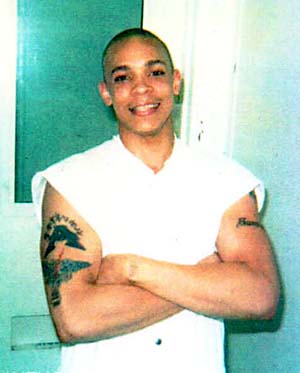
These two men were both 19 when they were sentenced to death


Anthony Cardell Haynes

Anthony Haynes claimed he didn’t know that Kent Kincaid was a Houston police sergeant when he shot him in the head back in 1998. Kincaid was off-duty and driving his personal vehicle when Haynes drove by; something cracked Kincaid’s windshield, and he reportedly thought Haynes had thrown something at him. He followed Haynes, and when the 19-year-old stopped his car, Kincaid approached him. Kincaid said he was a police officer, but Haynes later said he didn’t know whether to believe him. When Kincaid reached behind his back, presumably for a badge, Haynes pulled out a .25-caliber gun and shot him.

Anthony Haynes

Anthony Haynes

Haynes blamed the tragedy in part on drugs and falling in with a bad crowd of people who reportedly made a game out of shooting at the windshields of passing cars and then robbing the drivers after they stopped. As it happened, the crack in Kincaid’s windshield was made by a bullet. Jurors in Haynes’ case deliberated for three days before sentencing the teen to death.

That sentence was overturned, however, after the 5th U.S. Circuit Court of Appeals agreed with Haynes’ defense that an unusual jury-selection setup in Haynes’ case had denied his right to equal protection under law. Indeed, two different judges presided over Haynes’ jury selection; one heard prosecutors interview individual jurors, and a second heard the lawyers’ arguments for striking from service the potential jurors. As it turned out, the state used its power to strike all but one of the black potential jurors, arguing that it was not their race that excluded them (which would be illegal), but their “demeanor.” But Haynes’ appeal attorney argued that the judge who allowed those strikes had not actually witnessed the jurors’ questioning and thus could not actually have seen whether their demeanor would be a basis on which to have them struck. The U.S. Supreme Court ultimately disagreed with the 5th Circuit, ruling that there was no rule that would require a judge to “personally observe” the juror questioning when deciding whether a juror is lawfully struck from service.

Haynes is scheduled for execution today, Oct. 18. STAYED

Bobby Lee Hines

Hines

Hines

Bobby Lee Hines was also just 19 when he was sentenced to death for the robbery and strangling of 26-year-old Michelle Haupt in her Dallas apartment. Now, 20 years later, he’s scheduled to die for that crime on Oct. 24. But his attorney, Lydia Brandt, argues that Hines’ execution should, once again, be stayed while the courts consider whether his lawyers have done enough to save his life.

Hines was convicted of the 1991 murder of Haupt, who was stabbed repeatedly with an ice pick and strangled with a cord inside her apartment. Hines had been staying next door with the apartment complex’s maintenance man. Police found items from Haupt’s apartment, including packs of cigarettes and a bowl of pennies, under a couch where Hines had been sleeping.

Hines’ first date with death was stayed in 2003, while the courts considered a claim that he was mentally retarded and thus ineligible for execution. Although Hines had a diagnosed learning disability and was considered emotionally disturbed, the courts ruled that he didn’t meet the criteria for relief. His execution date was reset for June 2012, but was stayed again so that further DNA testing could be performed. The DNA evidence confirmed Hines’ guilt and once again his execution was back on.

Now, Brandt is again seeking a stay, arguing that Hines’ case has been plagued by ineffective assistance of counsel. Brandt’s latest appeal, filed Oct. 10 with the Court of Criminal Appeals, argues that none of Hines’ defense attorneys ever investigated his background for mitigating evidence that could have swayed a jury to sentence him to life in prison. Hines had a “nightmarish” childhood that featured chronic abuse by his racist, alcoholic father, and later by foster parents, and was profoundly affected by his mother’s decision to abandon him as a young child. But the jury never heard anything of Hines’ troubled background. The question now before the CCA is whether the prior counsel’s failings can create an avenue for reconsidering Hines’ punishment. Brandt believes it should: “Fundamental rules of equity will not suffer a right to be without a remedy,” reads the appeal

OHIO – Court to weigh DNA testing for man given death penalty in 1990 Portage County slaying – TYRONE NOLING


october 15, 2012 http://www.ohio.com/

COLUMBUS: The Ohio Supreme Court plans to hear arguments in the case of a condemned inmate whose attorneys argue DNA testing could help exonerate him.

At issue is the case of death row prisoner Tyrone Noling, convicted in 1996 of fatally shooting an elderly Portage County couple at their home.

The Supreme Court on Monday scheduled a Jan. 8 hearing for arguments from both sides.

Noling has been on death row at the Ohio State Penitentiary since his conviction in the slayings of Bearnhardt and Cora Hartig at their Atwater Township home.

The Hartigs, both 81, were shot multiple times in the chest April 5, 1990, as they sat at their kitchen table, according to the police investigation.

Lawyers for the Ohio Innocence Project want to test a cigarette butt found at the scene against DNA profiles of offenders in a national database, including a convicted killer who was executed.

The state says previous tests have excluded Noling as the smoker of the butt and says new testing would prove nothing.

A lower court judge has twice denied the request.

FLORIDA – Mentally ill death row inmate who believes he is the Prince of God WILL be executed after judge rules he is ‘sane’ – FERGUSON STAYED


October 15, 2012 http://www.dailymail.co.uk/

A convicted killer in South Florida, who claims to be the prince of god, is one step closer to being put to death.

John Errol Ferguson has been diagnosed as a paranoid schizophrenic and despite his mental illness, Circuit Judge David Allen Glant ruled on Friday that the 64-year-old is still competent to be executed next week.

Ferguson has been on death row for 34 years, after he was sentenced to death in 1978 for killing eight people.

Ferguson was found guilty in the deaths of six victims, who were killed in a drug related, execution-style mass killing in Carol City in 1977.

He was also convicted of killing two teenagers on their way to a church meeting in 1978.

But Ferguson has been diagnosed as a paranoid schizophrenic and he believes is the anointed prince of god. His lawyers appealed his death sentence on the grounds that it is ‘cruel and unusual punishment’ for him to be executed given his mental state.

The United States Supreme Court has found that while the death penalty does not qualify as ‘cruel and unusual punishment,’ prohibited in the Eighth Amendment of the Constitution, the execution of inmates that are mentally retarded is a violation of a person’s constitutional right.

But a judge ruled on Friday that despite the inmate’s history of mental illness, ‘there is no evidence that he does not understand’ that he will be put to death as a consequence for his crimes. 

Glant also observed that Ferguson’s belief that he is the ‘Prince of God’ and expectation that he will have a place at the ‘right-hand’ of God following his death, are beliefs that are not ‘significantly different than beliefs other Christians may hold.’

Glant’s ruling upheld Florida Governor Rick Scott’s finding that the execution should proceed.

Ferguson’s defense lawyer Christopher Handman has appealed Glant’s decision to the Florida Supreme Court in Tallahassee.

‘It is impossible to fathom that the State can constitutionally put to death a man who thinks he is the Prince of God and who believes he has a destiny of being the right hand of God and returning to purify earth,’ Handman, told the Miami Herald.

‘Nationally-recognized experts in neuropsychiatry and forensic psychology examined John and testified that he lacks a rational understanding of why he is being put to death,’ his lawyer added. 

As the legal proceedings play out, the Supreme Court has issued a temporary stay of execution, which is scheduled for next Thursday. 

But one of the victim’s family has said it is time for justice to be served.

‘Our tax dollars have been keeping Ferguson alive. Free food, medical care and the ability to communicate with his loved ones and lawyers,’ Michael Worley, whose sister Belinda was killed by Ferguson, said.

‘My sister was brutally killed at the age of 17. Her murder shattered our entire family. Life was never the same.’


SOUTH DAKOTA – Execution – ERIC ROBERT- Monday 10/15/2012 10 P.M EXECUTED 10.24 p.m


Eric Robert, 50, received lethal injection and was pronounced dead at the state penitentiary in Sioux Falls at 10:24 p.m. He is the first South Dakota inmate to die under the state’s new single-drug lethal injection method, and only the 17th person to be executed in the state or Dakota Territory since 1877.

Robert had no expression on his face. Asked if he had a last statement, Robert said: “In the name of justice and liberty and mercy, I authorize and forgive Warden Douglas Weber to execute me for the crimes. It is done.”


October 14, 2012 argusleader.com

October 12, 2012FOR IMMEDIATE RELEASE

CONTACT: Michael Winder, Communications & Information Manager
Execution date, time set for Inmate Eric Robert
(Pierre, S.D.)- In accordance with South Dakota Codified Law 23A-27A-17, Doug Weber, Director of Prison Operations and Warden of the South Dakota State  Penitentiary, has set the date and time for the execution of Inmate Eric Robert as Monday, October 15, 2012 at approximately 10:00 p.m. CDT.
State law allows for the judge in a capital punishment case to appoint a week for the execution to occur. The exact date and time of the execution is left to the warden’s discretion. The warden is required by state law to publicly announce the scheduled day and hour of the execution not less than forty-eight hours prior to the execution.

perp walk

Eric Robert’s life bears little resemblance to that of his peers on death row.

Most condemned killers have troubling personal stories and long criminal histories.

Donald Moeller was beaten, demeaned and made to watch his biological mother’s drug use and sexual behavior. Elijah Page, executed in 2007, moved from house to house with substance-abusing parents then bounced from foster home to foster home in several states.

Rodney Berget suffered with an alcoholic father and abuse, and was first sent to the adult prison system at age 15. His brother, Roger, was executed in 2003 in Oklahoma, eight years before Rodney Berget and Robert would commit a capital crime in the murder of Corrections Officer Ron Johnson.

Robert’s life looked nothing like Berget’s. He will be put to death at 10 p.m. Monday.

Robert was the child of a single mother who helped raise his younger sister in his home state of Wisconsin. He had a stellar academic record, put himself through college and had a successful career in wastewater treatment. He was an emergency medical technician and frequent community volunteer who once helped erect a monument to a murdered sheriff.

He grew close to his longest-term love interest through her son, whom Robert coached on a Little League team.

In 2005, before he was sentenced to 80 years in prison for a Meade County kidnapping, his sister told the judge that her brother “has done more good in his life than many people in this world.”

This week, the state of South Dakota intends to put Robert to death by lethal injection for the brutal, premeditated killing of Johnson on April 12, 2011.

The rage that fueled the killing was a measure of how far he’d fallen from the life he once had. Robert said so himself in court one year ago. He’d refused to let his lawyer mention his good deeds.

“To be honest with you, the good acts that I’ve done in my life were not mentioned here, because they are irrelevant to these proceedings,” Robert said. “That person who did good things no longer exists.” 

Last week, through his lawyer Mark Kadi, Robert reiterated his reasoning for staying quiet about his prior kind acts during sentencing for the Johnson murder “My client feels that none of the good things he’s done justify the killing of Ron Johnson,” Kadi said.

Eric Robert was born May 31, 1962, in Massachusetts. His father was gone by the time he was 6 months old. Robert, his mother and younger sister moved to Hayward, Wis., when he still was young.

His sister, Jill Stalter, declined to comment for this story but testified on her brother’s behalf in 2005.

She said then that Robert was the father figure in their house as their mother worked three jobs and studied to earn a college degree.

“My brother took care of everything. He took out the trash, he made sure dinner was on the table, he even did grocery shopping. He got me my first dog. He did everything. He even shoveled snow, and in Hayward, it’s a lot of snow,” Stalter said. “He put himself through college by working weekends and during summer breaks. He didn’t take a penny from my mother because she was putting herself through college.”

He was a good student, as well, graduating 18th in his class at Hayward High School in 1980. He returned to Hayward after earning a biology degree with a chemistry minor at the University of Wisconsin-Superior.

In 2000, he applied for a job as the wastewater treatment supervisor for the city of Superior. On his job application, released as part of a records request by the Argus Leader, Robert wrote that he hadn’t missed a day of work in 10 years.

He got along well with co-workers. Frog Prell, the city attorney, started work for the city in 2000, just a few months after Robert, whom family and friends knew as “Ranger.”

Robert used to drop by the office to joke around, quiz Prell about small towns in Wyoming, which is Prell’s home state. The short interactions left an impression on Prell, who didn’t know Robert was on death row until the records request came across desk this month.

“If you’d have asked me what I thought about Eric Robert before this, I’d have said he seemed like a pretty cool guy,” Prell said.

Dan Romans, the wastewater administrator for Superior, called Robert a “natural-born leader” who accomplished more in 18 months on the job than others had for decades.

Robert eventually lost his job in Superior, though, because he failed to comply with a city residence requirement, but he continued to consult with the city afterward.

He was living in a home in the rural community of Drummond, more than an hour southeast of Superior.

Violent toward women

It was in Hayward, almost a decade before, where he met the woman with whom he’d later build the house in Drummond.

That woman, who testified at Robert’s presentence hearing last year in Sioux Falls but declined to comment for this story, said there was an undercurrent of anger in him even then — one most people didn’t see.

“He was an aggressive, mean person who didn’t like other people and had to be in control,” she said the woman, whom the Argus Leader is not identifying because she is a victim.

She’d gone to high school with Robert but didn’t know him well at the time. They got reacquainted in 1992, when he was coaching her son’s baseball team. Robert soon was living with the woman and her two children.

“We got along fine at first,” she said, but then “he showed me his true colors.”

She recounted three specific incidents in court from their decade-long romance.

They rented an apartment in Cable, Wis., as they built their house, she said. One day, as they sat on the couch together, Robert backhanded her over an offhand remark.

She hit him back, she said, then recoiled when she realized that he was sure to retaliate.

“He punched me in the mouth so hard it pushed my bottom teeth through my lip,” she said.

Robert, who knew most of the employees in the local ER through his work as an EMT, told the doctors and nurses she’d slipped on icy steps while carrying in groceries.

He had similar explanation for her appearance at the ER with a broken foot years later. She called police on him after a separation, when he showed up at her house drunk and started a fight that ended with him pulling her around the yard by her hair.

 read full article : click here


FLORIDA -Timothy Wayne Fletcher receives death penalty for 2009 murder for the murder of Helen Googe


OCTOBER 13, 2012 http://staugustine.com

Timothy Wayne Fletcher took his time shuffling toward the bench Friday, perhaps wondering if they would be his last shackled steps before becoming a condemned man.

About 40 minutes later, his fears were confirmed.

Judge Wendy Berger cited the heinous nature of his crime before handing Fletcher, 28, a sentence of death for the murder of Helen Googe in April 2009.

“The aggravating factors far outweigh the mitigating circumstances,” Berger said.

In fact, Berger went further, saying the aggravating factor of the crime being “heinous, atrocious and cruel” by itself was enough to outweigh the 15 mitigating factors that she outlined before giving her sentencing ruling.

Describing the crime, Berger said she gave great weight to the testimony of doctors about the horrible experience of a victim being strangled to death as Googe was. She mentioned the testimony’s indication of the victim’s consciousness at the time of the strangulation. Berger made a point of the physician’s statement that the victim surely experienced a sense of impending doom.“There can be no doubt this murder was conscious and pitiless,” Berger said.

By the time Berger had given her ruling, Fletcher had been standing in front of the courtroom next to attorney Garry Wood, listening to the judge detail the horrors of the crime and then the aggravating and mitigating circumstances.

When it was finished, Fletcher’s eyes were red, and his face clearly bore the weight of the decision, but he showed no other emotion and said nothing in front of the court. The courtroom, crowded with law enforcement officers and family members, remained mostly silent, even after the sentence was announced.

Fletcher’s hearing wrapped up the two-defendant case. The co-defendant, Doni Ray Brown, accepted an offer of life in prison with no possibility for parole and entered a plea of no contest for first-degree murder.

Brown and Fletcher broke out of jail in Putnam County on April 15, 2009, stole a vehicle and then went to the home of Googe to rob her.

When she claimed not to have the large amount of cash the men were demanding, they beat her and eventually strangled her.

Fletcher and Brown fled the state but were later apprehended when they returned to Florida.

Berger noted that in interviews with investigators, Fletcher had repeatedly denied being the one who actually committed the murder, blaming it on Brown. He eventually admitted to holding Googe down while Brown finished the killing.

In no way did that absolve Fletcher from the full responsibility of the crime, the state argued.

“It is clear from the facts of this case that the defendant showed no mercy to the victim during the brutally violent robbery and murder,” State Attorney R.J. Larizza said in a statement. “It is fitting that he received no mercy from the court when he was sentenced today.”

The death penalty was sought because Fletcher was the mastermind of the escape and robbery.

The forensic evidence also implicated Fletcher in the struggle with Googe before her death.

“It was the defendant, not Doni Brown, with scratches on his arms,” Berger said. “It was the defendant who killed her.”

Before Berger started reading her decision, Wood mentioned the Brown sentencing and said that Fletcher would have accepted a similar offer if one had been offered before trial.

Berger said that she gave Brown’s sentence “great weight” in deciding Fletcher’s fate. In fact, it was the only mitigating factor that she gave more than moderate weight to.

Among the issues she considered were Fletcher’s long-term substance abuse problems, his dysfunctional family life and behavior at his original trial.

In May, a jury found Fletcher guilty on all counts as charged in the murder of Googe and the crimes related to the defendant’s jail escape in April 2009. Fletcher was found guilty of escape, a second-degree felony; grand theft motor vehicle, a third-degree felony; first-degree murder, a capital felony; home invasion robbery, a first-degree felony; and grand theft motor vehicle, a third-degree felony.

On Friday, Putnam County Circuit Judge Carlos Mendoza sentenced Brown, 26, to life in prison without the possibility of parole. Brown pleaded no contest.

Tennessee death-row inmate’s conviction overturned – Michael Dale Rimmer


October 12, 2012 http://www.usatoday.com

8:33PM EDT October 12. 2012 – A Tennessee judge on Friday overturned the conviction and death sentence of a man who has spent 14 years on death row over the killing of an ex-girlfriend whose body was never found.

A USA TODAY investigation last year showed that Memphis prosecutors responsible for the case never told the man, Michael Dale Rimmer, or his lawyers, about an eyewitness who had told the police that two different men were inside the office around the time she disappeared, and that both had blood on their hands. One of the men that the witness identified was already wanted in connection with a stabbing.

Document: Court order

Shelby County Judge James C. Beasley Jr. wrote in a 212-page order released late Friday afternoon that Rimmer’s trial lawyers repeatedly failed to unearth that evidence, a “devastating” blow to his contention that someone else committed the crime. That problem was compounded, the judge wrote, because the lead prosecutor in the case, Thomas Henderson, made “blatantly false, inappropriate and ethically questionable” statements to defense lawyers denying that the evidence existed.

The case is the latest black eye for prosecutors in Memphis, who have been faulted repeatedly for failing to disclose evidence that could be helpful to defendants. In 2008, for example, a federal appeals court blasted the office in another death penalty case for a “set of falsehoods” that was “typical of the conduct of the Memphis district attorney’s office.” At least two other cases handled by Henderson — who went on to supervise all of Memphis’ criminal prosecutions — have come under scrutiny over similar lapses.
Beasley on Friday accused Henderson of “purposefully” misleading Rimmer’s lawyers, and making “comments to counsel and the court were both intellectually dishonest and may have been designed to gain a tactical advantage.”

Still, Beasley wrote, that conduct alone wasn’t enough to overturn Rimmer’s conviction and death sentence, because his lawyers could have discovered the evidence on their own if they had looked more carefully. Instead, he said, it was the “seriously deficient” investigation by Rimmer’s “overburdened” lawyers that required him to order a new trial.

John Campbell, Shelby County’s deputy district attorney general, said Friday he had not read the entire order and could not comment on specific findings. But he said prosecutors would either appeal the decision or re-try Rimmer for Ricci Ellsworth’s murder. “I can’t imagine ever not re-prosecuting the case,” he said.
Rimmer’s new lawyer, Kelly Gleason, said she “happy and relieved that the court has set aside this unjust conviction.”

Ellsworth, Rimmer’s former girlfriend, disappeared from the office of a seedy Memphis motel where she worked as an overnight clerk in February 1997, leaving behind only an office and bathroom soaked with blood. Her body has never been located.

Rimmer, then 30, was the obvious suspect. The two had dated, but the relationship soured, and Rimmer eventually went to prison for raping her. There, other prisoners said, he repeatedly threatened to kill Ellsworth, suggesting that he could make sure she was not found. Rimmer was arrested in Indiana a month after Ellsworth disappeared; police there found blood on the back seat of the car he was driving that they later said was consistent with samples taken from the motel office and from Ellsworth’s mother.

Still, a witness who visited the motel office around the time Ellsworth disappeared told the police that he had seen two different men inside, both with blood on their hands. When FBI agents showed him photographs of possible suspects that included a photo of Rimmer, he picked out a different man, Billy Wayne Voyles, who was already wanted in connection with an unrelated stabbing.

Rimmer’s lawyers, Beasley wrote, were unaware of those facts, though they could have learned of the witness’ identification if they had reviewed the “residual” evidence in the court clerk’s vault. Instead, he wrote, they relied on Henderson’s repeated representations that no such evidence existed. As a result, he wrote, the jurors who found Rimmer guilty of the murder and sentenced him to die never heard about it.

That witness, James Darnell, told a court for the first time that he had seen one of the men carry what looked like a heavy object wrapped in a comforter out of the motel office and load it into the trunk of a car.

Y’all are killing an innocent man’: Last words of ‘mentally ill’ Texas death row inmate executed for killing 12-year-old girl


October 11, 2012 http://www.dailymail.co.uk

Last Minute Appeal Denied For Texas Death Row Inmate

An inmate on death row used his last breath to protest his innocence of the murder of a 12-year-old girl as he was executed in Texas last night despite his legal team arguing he was mentally ill.

Jonathan Green, 44, was jailed for the abduction, rape and strangling of Christina Neal, 12, whose body was found at his home a month after she was reported missing in 2000.

Several last ditch appeals were made on the basis of his mental health in an attempt to save him from the death penalty but Green was given a lethal injection after the U.S. Supreme Court rejected the arguments to spare him.

Too mentally ill: Attorneys argued that Jonathan Green should be spared execution for the murder of 12 year old Christina Leann Neal

The 11th-hour appeals delayed the punishment nearly five hours past the initial 6pm execution time and as the midnight expiration of the death warrant neared.

Asked by the warden if he had a statement from the death chamber gurney, Green shook his head and replied: ‘No’

But seconds later he changed his mind, adding: ‘I’m an innocent man. I never killed anyone. Y’all are killing an innocent man.’

He then looked down at his left arm where one of the needles carrying the lethal drug was inserted, and said: ‘I’ts me hurting bad.’

But almost immediately he began snoring loudly. The sounds stopped after about six breaths.

Green was pronounced dead 18 minutes later at 10.45pm.


South Dakota set to execute two on death row – Robert due next week; Moeller wants his lawyers dismissed


October 9, 2012 http://www.argusleader.com

State Department of Corrections officials gave media representatives a tour Tuesday of the execution chamber and holding cell where death row inmates Eric Robert and Donald Moeller will live out the last minutes of their lives later this month.

Robert, 50, has pleaded guilty to the 2011 murder of corrections officer Ron Johnson and is scheduled to die by lethal injection sometime next week. Moeller, 60, was twice convicted of rape and murder in the 1990 death of Becky O’Connell and is scheduled to be executed the week of Oct. 28-Nov. 3.

Though Moeller’s execution date has been set, U.S. District Judge Larry Piersol still has to decide on Moeller’s request to cease any further action on a constitutional challenge to the state’s execution method by injection. The judge’s decision on the matter is expected any day.

Arkansas lawyers appointed at the federal level to represent Moeller want to continue with the challenge and have asked Piersol to find that Moeller isn’t competent to make decisions in his case. On Tuesday, Moeller sent a letter to Piersol reiterating that he wants the Arkansas lawyers removed as his counsel.

Also Tuesday, media representatives shot photographs and video in what inmates call the old hospital section of the state penitentiary.

The death chamber is a square room with a table in the middle that sits on a cylindrical metal pedestal.

A white mattress rests on the table with armrests to each side. Four leather straps are draped across the mattress for now, and there are leather straps on the armrests and at the foot of the mattress.

There are two windows on each of the west and north walls with blinds closed over them Tuesday. There are four separate offices on the other sides of the windows from which witnesses will watch the execution. Red letters above each window designate them as “A,” “B,” “C” and “D.”

A one-way mirrored window on the east wall hides what prison officials call “the chemical room” on the other side. There are four digital clocks in the execution chamber — each gives the time, the date and the temperature in the room. A long, black rod hangs down from the ceiling over the mattress with a microphone attached to it.

Just east of the execution chamber are three holding cells where Robert and Moeller will be housed before their executions.

Each cell has a toilet, a sink and a bed, as well as a white cabinet with three, open shelves that sits just to the right as you enter.

State statute allows the court to set the week of a scheduled execution, then leaves it to the warden to set a specific day and time depending on the needs of the institution and execution requirements, said Corrections spokesman Michael Winder.

The last inmate to be executed in South Dakota, Elijah Page, was put to death July 11, 2007, at the state penitentiary in Sioux Falls

PENNSYLVANIA – Johnson sentenced to death in murder of wildlife conservation officer


October 9,  2012 http://www.examiner.com

An Adams County man has been sentenced to death for the murder of a law enforcement officer, Thursday, in Gettysburg, Pennsylvania.

The death penalty verdict carries an automatic appeal. Earlier in the week, Christopher L. Johnson, 29, of Carroll Valley, was found guilty of first degree murder in the Nov. 11, 2010 shooting death of Pennsylvania Wildlife Conservation Officer David L. Grove, 31, a Waynesboro native. The case against Johnson was heard by a 12-member jury composed of Lancaster County residents, who were chosen for the trial that was held in Adams County Court. The change of venire was granted due to pretrial publicity. That jury deliberated for about 30 minutes.

The penalty phase of trial began Tuesday afternoon and ended Thursday night when the jurors returned their recommendation for the death penalty. To find the death penalty was warranted, the jurors had to determine that the aggravating circumstances outweighed the mitigating circumstances. One of those circumstances was Johnson’s previous felony conviction.

Throughout the trial, which began the previous week, the prosecution painted a detailed picture of the shootout that led to Grove’s death. Officer Grove stopped a pickup truck, operated by Johnson, on Schriver Road, near Red Rock Road, in Freedom Township, Adams County. Grove was investigating a deer poaching incident., in connection with a poaching incident. Johnson had told police he fired at Grove because he did not want to go back to prison for illegally possessing a .45 caliber handgun when he was stopped.

At 10:32 p.m., that night, Officer Grove notified county dispatch that he had spotted a vehicle that was illegally using a spotlight to see deer. He also reported to county that he heard shots. Officer Grove pulled the pickup truck occupied by Johnson and another man and ordered them out of the vehicle. Grove then ordered Johnson to come to him.

Johnson was also wounded during the ensuing gun battle. On his way for treatment at York Hospital, Johnson told a state trooper who was accompanying him that he had been carrying the gun in his waistband. He said that when Officer Grove attempted to handcuff him, he drew the pistol and the shooting began. Officer Grove was shot four times.

A bullet fired by Officer Grove hit Johnson in the hip. Johnson fled the scene but was arrested and taken into custody the next day. A total of 15 shell casings fire from Johnson’s weapon were recovered at the scene. The fact that Johnson had to reload the pistol was another aggravating factor the jury considered in rendering its decision. Officer Grove fired 10 shots, from his .357-caliber Glock revolver.

The jury also found Johnson guilty of weapons offenses and game-law violations. That was another of the aggravating factors reviewed by the jury.

Grove can also appeal the conviction. Johnson has been committed to the State Correctional Institute at Rockview. Before a death sentence warrant can be signed by the governor, all of Grove’s appeals must be exhausted.