death penalty

Advocates fight for Oklahoma inmate weeks before scheduled execution


October 10, 2022

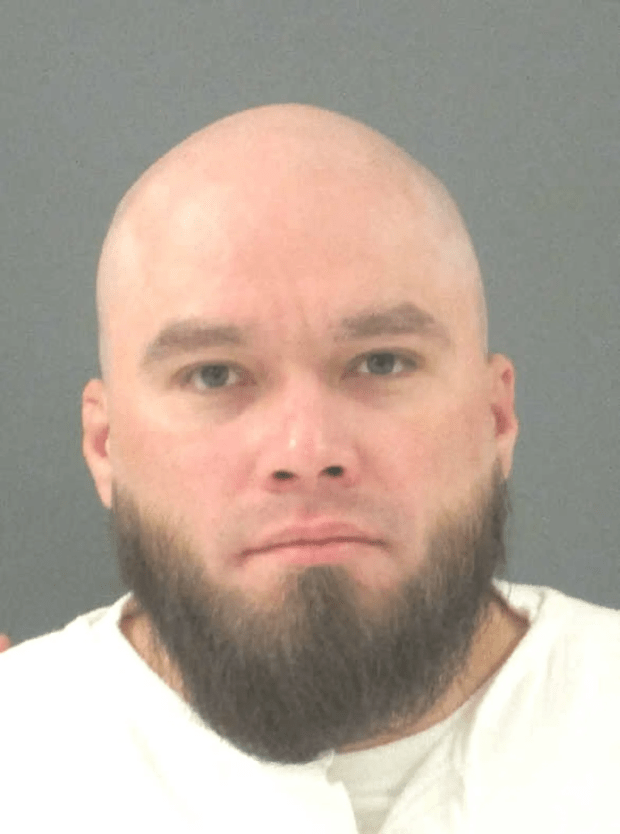
Advocates continue to fight for the life of Oklahoma death row inmate Richard Fairchild.

Fairchild is scheduled to be executed on Nov. 17. He has a clemency hearing with the Oklahoma State Pardon and Parole Board Wednesday morning.

Fairchild has sat on death row for nearly 30 years. He was convicted of killing his girlfriend’s 3-year-old son in Del City in 1993.

According to his legal team, Fairchild suffers from multiple mental illnesses and is unfit to be executed.

Rev. Don Heath works with the Oklahoma Coalition to Abolish the Death Penalty. He spoke at a press conference Friday discussing the fight to save Fairchild’s life.

“Richie Fairchild has been a model prisoner and has repeatedly expressed remorse for killing Adam Broomhall,” Heath said. “He is 62 years old and suffers from brain damage. He already has served 25 years in prison for his crime and is asking to be allowed to die in prison of natural causes instead of by poisoning by the state. This case cries out for mercy and forgiveness.”

Additional petitions are scheduled to be delivered to Gov. Kevin Stitt a few days before Fairchild’s scheduled execution. If the Pardon and Parole Board recommends clemency, Gov. Stitt will have the final say.

October 10 is the World Day Against the Death Penalty.


Which countries still have the death penalty?

Source AlJazeera & Amnesty international

The theme of this year’s World Day Against the Death Penalty is safeguarding the health and rights of women and girls.

According to Amnesty International, more than two-thirds of the world’s countries have abolished the death penalty in law or practice.

By the end of last year, 108 countries had abolished the death penalty for all crimes, eight countries had abolished the death penalty for crimes not committed during times of war and 28 countries still retained the death penalty but had not executed anyone over the past 10 years.

Fifty-five countries still retain and implement the death penalty.

On September 20, Equatorial Guinea became the latest country to abolish the death penalty when its president signed a new penal code into law. It will come into force in three months.

Executions and sentences in 2021

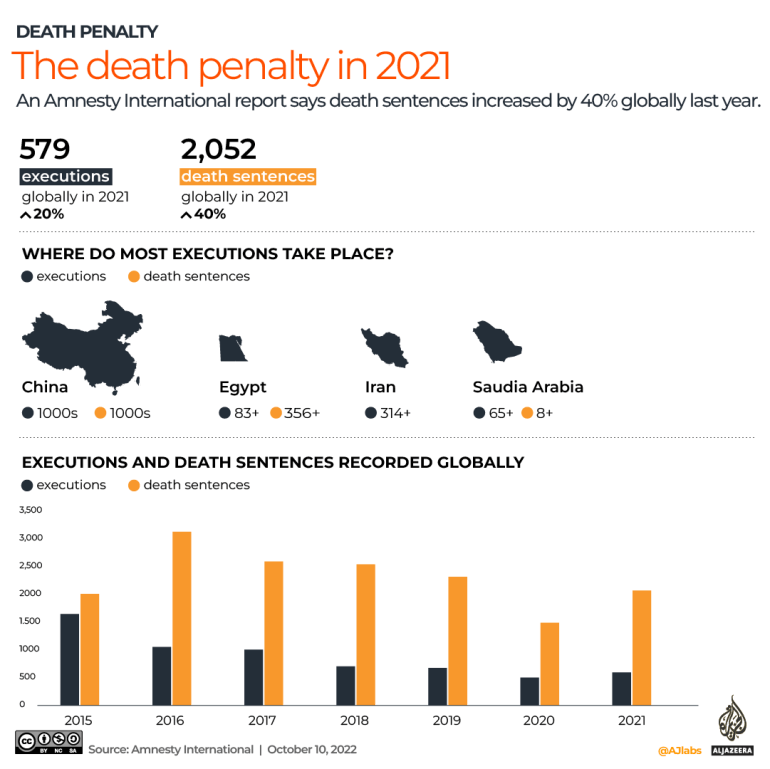
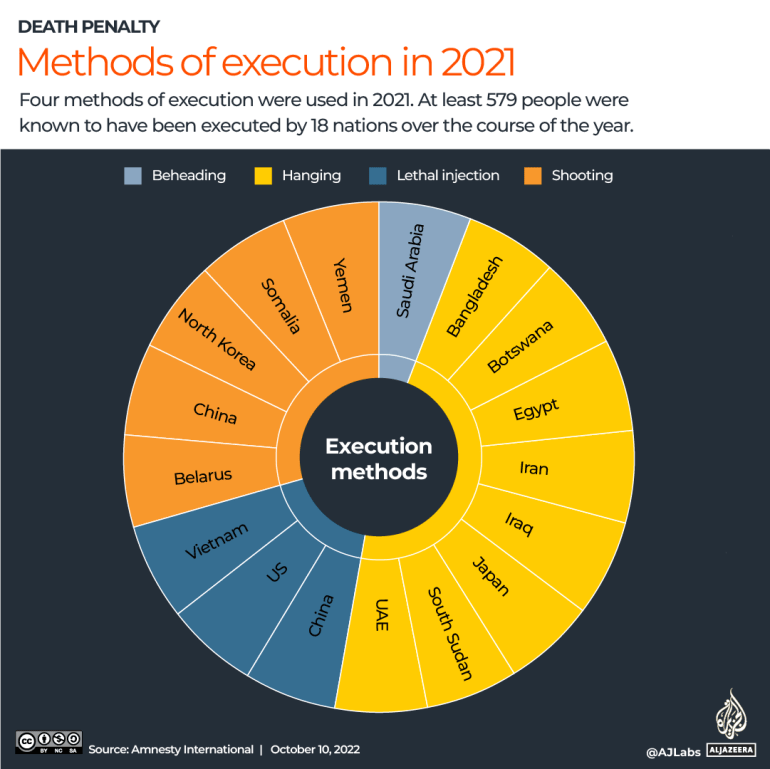
At least 579 people, including 24 women, are known to have been executed by 18 nations in 2021 – up by 20 percent from 2020.

Three countries accounted for 80 percent of all known executions in 2021: Iran (at least 314), Egypt (at least 83) and Saudi Arabia (65).

The recorded global totals do not include the thousands of executions that Amnesty International believes were carried out in China, where data on the death penalty are classified as a state secret.

The number of known death sentences also increased from 1,477 in 2020 to at least 2,052 in 2021 – an increase of nearly 40 percent.

source alJazeera & Amnesty international

Texas: Woman convicted of killing 21-year-old mother-to-be and cutting baby from her womb


Texas, 10.04.2022

Prosecutors told the court that Reagan Michelle Simmons-Hancock was beaten in the head at least five times with such force that the blows compressed her skull.

Taylor Rene Parker 

A woman is facing the death penalty after being found guilty of killing a 21-year-old and cutting her unborn baby from her womb.

Taylor Rene Parker has been convicted of the October 2020 murder of Reagan Michelle SimmonsHancock in Texas and the kidnapping of her daughter, who later died.

The 29-year-old was found to have beaten the young expectant mother in the head at least five times, before “cutting her abdomen, hip to hip” to remove her baby.

The guilty verdict came after three weeks of testimony at Bowie County in northeast Texas, where Parker’s attorneys moved to dismiss the kidnapping charge in a bid to have a capital murder charge lowered to murder.

They argued that the baby was never alive and therefore could not be abducted, but prosecutors said several medical professionals testified that she had a heartbeat when she was born.

“We have methodically laid out what she (Parker) did, why she did it, all the moving parts, and all the collateral damage,” said prosecutor Kelley Crisp.

The court heard how Parker faked being pregnant in the lead up to the killing, with the assistant district attorney Lauren Richards describing her as a “liar” and a “manipulator”.

It was no quick death’

In gruesome detail, Ms Richards recounted Parker’s attack on Ms Simmons-Hancock, saying the young woman was still alive after having her baby cut from her womb.

“She can’t leave her alive. It was no quick death. She just kept cutting her. I guess Reagan would not die fast enough for Taylor to get out of there and get on with her plans,” she said.

Parker’s sentencing, known in the US as the punishment phase, is set to begin on 12 October.

Prosecutors are seeking the death penalty, but jurors may opt for a sentence of life imprisonment without parole.

Outcomes of Death Warrants in 2022


September 30.2022 Update

Executions and Stays 2022

48 execution dates have been scheduled by 9 states for 2022.
To date, there have been 10 executions by 5 states.
10 executions have been stayed.*
No executions have been halted by commutation.
16 executions have been halted by reprieve.
1 warrant has been withdrawn/removed/vacated/rescheduled.
1 failed execution was halted when execution personnel were unable to set an IV line.
1 prisoner has died on death row while his warrant was pending.
9 death warrants are pending.^

Texas Execution today : John Henry Ramirez EXECUTED 6.41PM


10.05.2022

UPDATE 10.06.2022

In the execution chamber, his spiritual adviser, Dana Moore, placed his right hand on the inmate’s chest, and held it there for the duration. With his back to witnesses, Moore offered a brief prayer.

“Look upon John with your grace,” he prayed. “Grant him peace. Grant all of us peace.” As Moore’s prayer ended, Ramirez responded: “Amen.”

After the prayer, Ramirez addressed five of Castro’s relatives — including four of his children — as they watched through a window a few feet from him. “I have regret and remorse,” he said.” This is such a heinous act. I hope this finds you comfort. If this helps you, then I am glad.

I hope in some shape or form this helps you find closure.”

Ramirez expressed love to his wife, son and friends, concluding with: “Just know that I fought a good fight, and I am ready to go.”

As the lethal dose of pentobarbital took effect, he took several short breaths then began snoring. Within a minute, all movement stopped. Ramirez was pronounced dead 14 minutes later, at 6:41 p.m. CDT.

John Henry Ramirez, 38, was sentenced to death over the 2004 fatal stabbing of 46-year-old convenience store clerk Pablo Castro during a drug-fueled string of robberies.

His execution date was delayed last year after Ramirez claimed his religious freedom was being violated because state prison rules prevented his pastor from touching him and praying aloud during the procedure.

Ramirez’s fight ended up clarifying the role of spiritual advisers in death chambers nationwide after the US Supreme Court sided with the convicted murderer in March.

The court ruled that states must accommodate the wishes of death row inmates who want to have their religious leaders

The Texas Board of Pardons and Paroles declined on Monday to commute Ramirez’s death sentence to a lesser penalty.

Ramirez has exhausted all possible appeals and there is no final request to the Supreme Court planned, his attorney Seth Kretzer said.

Ramirez was convicted of stabbing Castro 29 times in a robbery that cops said was the culmination of a three-day binge fueled by a mix of pot, pills, booze and cocaine — and yielded him just $1.25.

He fled to Mexico immediately after but was arrested 3 1/2 years later.

If Ramirez’s execution goes ahead as planned, he would be the third inmate put to death this year in Texas and the 11th in the country.

Execution warrant sought for Nevada death row inmate Zane Floyd


As lawmakers weigh the future of capital punishment in Nevada, Clark County prosecutors plan to seek a warrant of execution for a death row inmate.

According to the Las Vegas Review-Journal, deputies from District Attorney Steve Wolfson’s appellate division could ask a judge to sign the paperwork for Zane Floyd in the coming weeks.

The 45-year-old Floyd was convicted of killing four people and wounding another inside a Las Vegas supermarket in June 1999.

The Review-Journal reports that Floyd’s federal appeals were exhausted last November. However, a bill introduced in the state Assembly would make Nevada the 24th state to abolish the death penalty and the sentences of 70 men on Death Row would be commuted to life in prison. 

Zane Floyd

Death penalty data might surprise you


April 13, 2021

For some, an “eye for an eye” is justice. To others, it makes the whole world blind.

Last month, Virginia became the 23rd state to abolish the death penalty, and first to do so in the South — where four times more people are executed than the rest of the U.S. combined. That’s a big change for a state second only to Texas in executions since 1976.

American public opinion is increasingly turning against the death penalty.

A 2020 Gallup Poll found 55 percent of Americans support the death penalty in general, down from a peak of 80 percent in 1994. And for the first time, a majority (60 percent) say life imprisonment without parole is a better punishment for murder than execution.

Seventy percent of nations have ended the practice (although 60 percent of the world’s population live in death penalty nations), according to Amnesty International.

Unlike other issues, this doesn’t fall perfectly along party lines. While Democrats are less likely to support the death penalty over a life sentence, Gallup surveys show the percentage of Republicans who feel the same increased 10 points since 2016. Reasons for opposition are complicated, spanning generational, statistical, and moral grounds.

Fewer executions. According to U.S. Bureau of Justice Statistics, between 2010 and 2020 death sentences imposed nationwide numbered fewer than half of the decade before. Some states such as California have it on the books, but rarely use it or have a moratorium now.

Generational shift. The death penalty is one of those issues with an age divide. Gallup polls indicate Americans between 18 and 34 support the death penalty at almost half the rate (24 percent) of their older peers (40 percent).

Racial justice. Young adults also tend to be more passionate about racial justice, especially when it’s so final. A 1990 U.S. Government Accountability Office study found defendants of any race who murdered white people were more likely to be sentenced to death than those who murdered Black people.

Recent studies reported in the New York Times and The Monitor Weekly came to similar conclusions. Latinos, Native Americans and the poor are also disproportionately represented on death row. (A long history of race-dissimilar treatment in the justice system for other crimes was echoed in the oft-cited book, “The New Jim Crowe.”)

Debates in the legislature noted of nearly 1,400 people Virginia executed since 1608, it wasn’t until 1997 that a white man was executed for killing a Black man.

What if they’re innocent? Justice is earnest, but fallible. An average of four people on death row each year in the U.S. are exonerated. History has uncovered others who were exonerated too late. You don’t have to be young to feel the heartbreak in that.

Life in prison is cheaper. Because of high costs associated with capital trials and statutory appeals, life incarceration costs states less than execution. Virginia expects to save $4 million per year. Capital trials may also be more taxing on victims’ families, typically lasting up to four times longer than non-capital trials.

After two Idaho death-row inmates were released from prison in one year, Idaho’s bipartisan Joint Legislative Oversight Committee studied cases between 1998 and 2013. Their 2014 report concluded Idaho death penalty trials take an average seven months longer than non-capital murder trials, and appeals took about 50 percent longer.

Of the 251 defendants charged with first-degree murder during that period, 16 percent faced the death penalty and less than 3 percent received it. Of 40 sentenced to death in Idaho since 1977, three have been executed (21 got a new sentence on appeal). The JLOC reported other states had results similar to Idaho’s.

“Pro-life” consistency. Some conservatives oppose capital punishment on religious or moral grounds. Republican legislators in red states such as Wyoming, Kansas, Kentucky, Montana, and Missouri have sponsored legislation to abolish it. Pro-life, they reason, applies to every life, not just the innocent unborn. And as death can’t be undone, life’s too precious (or constitutionally protected) to risk a mistake, they say.

Still, Republican majorities remain strongly in favor. Supporters say the death penalty is a just punishment for murder. And while life in prison can feel like a kind of hell, execution is seen as the only way to ensure the convicted will never kill again.

Is it a deterrent? Logic would presume yes, but states with death penalties don’t have lower crime rates. FBI Uniform Crime Report data culled by Deathpenaltyinfo.org indicate murder rates per population in death penalty states were consistently higher than in non-death penalty states between 1990 (4 percent higher) and 2018 (30 percent higher).

Do victims’ families want it? Numbers aside, closure and healing for victims’ families is high priority. Individual circumstances make it hard to gauge. Some ask prosecutors not to seek the death penalty — including a group of victims’ families who lobbied the Virginia Legislature to abolish it. Yet others vehemently want it, saying it’s the only way they can feel closure.

A 2012 study of 40 families by the universities of Texas and Minnesota found families in life-without-parole cases reported being able to move on sooner than those in the death-sentence cases. The death penalty case families said they felt continually retraumatized by the longer process.

Psychological and sociological research on closure suggests the legal process in general isn’t a reliable source to achieve it either way. It can feel symbolic and reassuring to seek justice, but the law doesn’t allow much room for emotion (Bandes, 2008).

This shifting trend is yet another illustration of American society’s impassioned debate with itself. Maybe we aren’t so “hopelessly divided” as we are experiencing growing pains in a rapidly shifting world.
Governor Issues Reprieve For Three Ohio Death Row Inmates


April, 9 2021

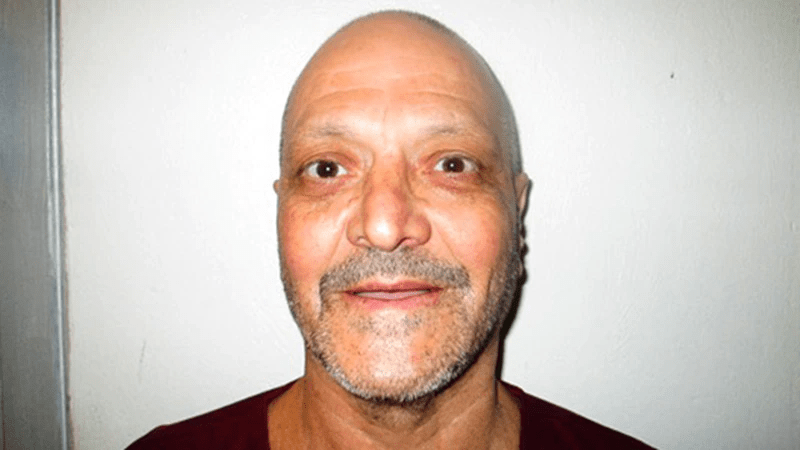
Three Ohio death row inmates will not be executed this year as planned.

Governor Mike DeWine has issued a reprieve for Timothy Hoffner, John David Stumpf and Lawrence Landrum. The three were supposed to be executed on different dates this summer and fall.

But DeWine says he’s postponing them due to ongoing problems with getting the supply of drugs used for lethal injections. The three men’s execution dates are reset for the summer and fall of 2024.

OHIO – Death penalty stays on table for Bryant


March 21, 2021

Faces trial in murder of 4-year-old boy

A judge denied a defense request that possibility of the death penalty be removed from the aggravated murder charge Kimonie D. Bryant faces in the shooting death of Rowan Sweeney, 4.

Bryant also is charged in the attempted murder of four adults.

Attorneys for Bryant, 24, of Struthers, filed a motion seeking dismissal of the death penalty and made oral arguments during a hearing before Judge Anthony D’Apolito in Mahoning County Common Pleas Court.

Bryant is accused of killing Rowan on Sept. 21, 2020, at the home Rowan shared with his mother and her boyfriend on Perry Street in Struthers. Bryant also is charged in the shootings of Rowan’s mother and three other adults who were there.

D’Apolito has been holding monthly hearings in the case and plans to continue to do so up to the Sept. 13 trial date.

He denied the defense’s request this week.

In their defense filing, attorneys for Bryant noted that this murder is “not a popular case” in that it involves the killing of a 4-year-old, which has prompted “Justice for Rowan” yard signs in Struthers and elsewhere.

“But the job of the lawyers and (judge) is the same in this and every case: to do the job effectively, objectively and without regard to personalities.”

It adds: “If someone else entered the home and did the shooting, as was testified to at the bindover hearing of Brandon Crump, then death would be an unjust penalty.”

Authorities have described Crump, 18, who is charged with aggravated robbery connected to the incidents that resulted in Rowan’s death, as a co-defendant of Bryant. He is not accused of shooting anyone.

Law enforcement officials have not specified how Crump’s alleged robbery is connected to the shootings, but Mahoning County Prosecutor Paul Gains said at the time Bryant was indicted that investigators believe about $5,000 in cash was in the home at the time of the shootings.

After Bryant is accused of fleeing from the home, the cash on the coffee table was gone, Gains said.

Judge Theresa Dellick of Mahoning County Juvenile Court has bound over Crump’s case to adult court, meaning he will be tried as an adult if a grand jury indicts him. Crump was originally charged in juvenile court because he was 17 at the time of Rowan’s death.

The filing says that when the death penalty was “reinvented” in the 1970s after being “invalidated” in most states in a 1972 U.S. Supreme Court decision, state legislatures sought to “rake in political capital that executing people yields.”

The filing called Ohio’s death penalty statute “vague and unconstitutional” and asked D’Apolito to remove the death penalty from Bryant’s indictment.

The filing argues that courts that have “rebuffed constitutional challenges to the death penalty have (strayed from) the concept of limited government ordained by the Constitution.”

Ohio’s death-penalty statute fails to genuinely narrow the class of individuals who are eligible for the death penalty, the filing states. “By failing to do so, the statute permits arbitrary and capricious imposition of the death penalty.”

#JusticeForPervisPayne: Tennessee man on death row was convicted using ‘racial stereotypes’, says Internet


March 17, 2021

Pervis Payne, who has an intellectual disability, has spent 32 years on death row in Tennessee.


                            #JusticeForPervisPayne: Tennessee man on death row was convicted using 'racial stereotypes', says Internet

On TikTok and Twitter, #JusticeForPervis has been trending in an attempt to raise awareness Pervis Payne’s innocence. Payne is scheduled to be executed on April 9 by the state of Tennessee.

Payne has been on death row for 32 years for the murder of Charisse Christopher and her two-year-old daughter in June 1987. Payne, as per the Innocence Project, a nonprofit legal organization that is committed to exonerating individuals who it claims have been wrongly convicted, has always maintained his innocence. Payne has consistently said he did not commit this crime and that he was an innocent bystander who happened to be at the crime scene and tried to help.