ARIZONA EXECUTIONS

ARIZONA – Samuel Villegas Lopez – execution – May 16 RESCHEDULED


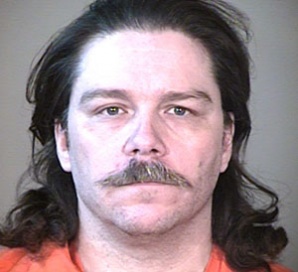
 Inmate 043833, Samuel V. Lopez

On October 29, 1986, Lopez broke into the apartment of 59-year-old Estafana Holmes. Lopez raped, beat, and stabbed Ms. Holmes. Her body was found nude from the waist down, with her pajama bottoms tied around her eyes. A lace scarf was crammed tightly into her mouth. She had been stabbed 23 times in the left breast and upper chest, three times in her lower abdomen, and her throat was cut. Lopez’ body fluids matched seminal fluids found in Ms. Holmes’ body.

PROCEEDINGS

Presiding Judge: Hon. Peter T. D’Angelo
Prosecutor:Paul Ahler
Defense Counsel: Joel Brown
Start of Trial: April 16, 1987
Verdict: April 27, 1987
Sentencing: June 25, 1987
Resentencing: August 3, 1990

Aggravating Circumstances
Especially heinous, cruel or depraved

PUBLISHED OPINIONS
State v. Lopez (Samuel V.), 163 Ariz. 108, 786 P.2d 959 (1990).
State v. Lopez (Samuel V.), 175 Ariz. 407, 857 P.2d 1261 (1993).

affidavit of Samuel villegas Lopez (us.court) pdf file

petition for post conviction relief (us court) pdf file

………………………………………………………

May 23, Source : http://www.kpho.com

The Arizona Supreme Court has denied a petition to review the case of a death row inmate set for execution next week.

Lawyers for Samuel Villegas Lopez had asked the state’s high court to review a lower court’s order dismissing his petition for post-conviction relief on March 30.

The state Supreme Court issued its ruling Wednesday without comment. There’s no immediate response from Lopez’s attorneys.

The 49-year-old Lopez is scheduled to be executed by lethal injection May 16 at the state prison in Florence in what would be the fourth execution in Arizona this year.

Lopez was convicted of raping, robbing and stabbing a 59-year-old woman to death in her Phoenix apartment on Oct. 29, 1986, after what court records described as a “terrible and prolonged struggle.”

————————————————–

PHOENIX (Reuters) – Arizona’s top court issued a stay of execution on Tuesday for death row inmate Samuel Villegas Lopez, a day before he was scheduled to die by lethal injection, to address claims that he had been denied a chance at a fair clemency hearing.

Villegas Lopez was sentenced to death for raping 59-year-old Estafana Holmes and stabbing her to death in a violent, drawn-out assault at her Phoenix apartment in 1986

The Arizona Supreme Court rescheduled his execution for June 27 so that attorneys could address claims that he was denied a fair clemency hearing because some members of the state clemency board had not received a mandated four-week training course.

“We conclude that the interests of justice are best served by staying the pending execution and forthwith issuing … a new warrant of execution, for June 27,” the court said in its ruling.

“The period between now and the new execution date will allow training of new board members and a clemency hearing to be subsequently held by the board,” it added.

He had been due to die by lethal injection at 10 a.m. on Wednesday morning, at the state prison in Florence, some 60 miles southeast of Phoenix.

—————————————————-

Update may 9, 2012 source : http://azcapitoltimes.com

The Arizona Supreme Court has denied a petition to review the case of a death row inmate set for execution next week.

Lawyers for Samuel Villegas Lopez had asked the state’s high court to review a lower court’s order dismissing his petition for post-conviction relief on March 30.

The state Supreme Court issued its ruling Wednesday without comment. There’s no immediate response from Lopez’s attorneys.

The 49-year-old Lopez is scheduled to be executed by lethal injection May 16 at the state prison in Florence in what would be the fourth execution in Arizona this year.

Lopez was convicted of raping, robbing and stabbing a 59-year-old woman to death in her Phoenix apartment on Oct. 29, 1986, after what court records described as a “terrible and prolonged struggle.”

……………………………………………………………………

Update may  7, 2012 source : http://www.azfamily.com

PHOENIX, ARIZ.– Lawyers for a death row inmate set to be executed next week will ask the courts to put a hold on the execution because of concerns about how new members were appointed to the Arizona’s Executive Clemency Board, and whether those new members have had adequate training.

Samuel Villegas Lopez is scheduled to be executed on Wednesday May 16 for the brutal rape and murder of Phoenix woman Estefana “Essie” Holmes in 1986. At his clemency hearing on Monday, his attorneys walked out, claiming the appointments of three new members to the board violated state law.

Kelley Henry, a federal public defender who has worked on Lopez’ case for more than a decade, said she believes there have been at least 16 violations of state statutes surrounding the appointments of the new members.

Among her allegations: that the state violated open meeting laws by failing to properly post information about board vacancies, that the new members have not had the four weeks of training required by statute, and that one of the board members has a clear conflict of interest voting on death penalty cases.

After Henry presented the board with her concerns, the members went into a closed-door executive session for close to an hour. When they re-opened the meeting to the public, they said they believed they could fairly continue the hearing, but Henry and her team disagreed and walked out.

“As we know it at this time, this board does not have the authority to conduct the hearing, or move forward,” Henry said.

After the meeting new board Chairman Jesse Hernandez accused Henry of “grasping at straws” and said he and the other two new members, Melvin Thomas and Brian Livingston, are “more than qualified to serve on the board.”

As for questions regarding the amount of training they’ve one, Hernandez said the training process has been started and that’s within the confines of the law.

Lopez’ attorneys plan to file a lawsuit in court Tuesday asking a judge to step in.

In the meantime, at least one board member, former Attorney General Jack LaSota, said he believed Governor Brewer should vacate the warrant for Lopez’ execution to allow time for the issues to be addressed.

“I think the man is entitled at this point to a hearing by a board that has been determined to be appropriate,” LaSota said, adding, “I think our board is appropriate.”

Matt Benson, a spokesman for the Governor, said the Executive Board of Clemency and the selection committee charged with selecting candidates for the vacant seats acted fully within the law.

Benson said the allegations were nothing more than an attempt to delay justice for the family of Lopez’ victim.

Lopez’ attorneys originally planned to argue before the board that their client’s sentence should be commuted to life without parole because of inadequate legal counsel during his trials and initial appeals.

May 3 , 2012

Us court appeals : pdf file

Update May 2, 2012  Source : http://ktar.com

PHOENIX — Lawyers for an Arizona death-row inmate are fighting his upcoming execution.

Samuel Villegas Lopez’s attorneys argued in one filing Tuesday that three newly appointed clemency board members are unprepared to consider his arguments for mercy.

In another filing Tuesday, they argued that the state Department of Corrections is violating Lopez’s constitutional rights by repeatedly violating its own execution protocol.

Lopez, 49, is scheduled to be executed by lethal injection May 16 in what would be the fourth execution in the state this year.

Lopez was convicted of raping, robbing and stabbing Estafana Holmes, 59, to death in her Phoenix apartment in October 1986, after what court records described as a “terrible and prolonged struggle.”

Petitioner – Appellant,: SAMUEL VILLEGAS LOPEZ
Respondent – Appellee,s: CHARLES L. RYAN and GEORGE HERMAN, Warden, Arizona State Prison – Eyman Complex
Case Number: 12-99001
Filed: May 1, 2012
Court: U.S. Court of Appeals, Ninth Circuit
Nature of Suit: P. Petitions – Death Penalty
Previous Case: Lopez, et al v. Stewart, et al (2:1998cv00072)

ARIZONA – Thomas Arnold Kemp – Execution -10:00 a.m – EXECUTED 10:08 am


april 25, source : various

Thomas Kemp, 63, was pronounced dead at 10:08 a.m. local time at the state prison in Florence, about 60 miles southeast of Phoenix, a state official said.

Kemp was defiant to the end.

“I regret nothing,” he said as his last words.

Then he trembled as the drugs coursed through his veins, took some deep breaths and went still.

Kemp’s last meal was cheeseburger, fries and root beer; boysenberry pie with strawberry ice cream

Thomas Arnold Kemp, 63, is scheduled to be given a lethal injection at 10 a.m. at the state prison in Florence. If it proceeds as planned, the execution will put Arizona on pace to match its busiest year for executions and make it one of the busiest death-penalty states in the nation.

He was, and remains, a hard case. At his sentencing, he saidKe his only regret was not killing an accomplice who turned him in. Kemp did admit to “a deep and abiding sense of remorse,” he said, that his friendship kept him from killing the accomplice.

But he had no remorse for killing Hector Juarez, whose naked body he left in the desert near Marana.

At his sentencing, Kemp noted that Juarez was not an American citizen and he offered up a diatribe against Mexican immigrants that made it clear he had no intention of seeking mercy for the killing, telling the court, “I spit on the law and all those who serve it.”

Kemp’s attorney at the time argued that Kemp had a personality disorder that made him perceive everyone else as dishonest and opportunistic, and therefore moved him to do anything he could to get something for himself.

He still refuses to ask for mercy. He chose not to appear before the Arizona Board of Executive Clemency earlier this month.

Kemp was sentenced to death for kidnapping Hector Soto Juarez from outside Juarez’s Tucson home on July 11, 1992, and robbing him before taking him into the desert near Marana, forcing him to undress and shooting him twice in the head.

Juarez, 25, had just left his apartment and fiancee to get food when Kemp and Jeffery Logan spotted him. They held him at gunpoint and used his debit card to withdraw $200 before driving him to the Silverbell Mine area, where Kemp killed Juarez.

The two men then went to Flagstaff, where they kidnapped a married couple traveling from California to Kansas and made them drive to Durango, Colo., where Kemp raped the man in a hotel room. Later, Kemp and Logan forced the couple to drive to Denver, where the couple escaped. Logan soon after separated from Kemp and called police about Juarez’s murder.

Logan led police to Juarez’s body, and Kemp was arrested. Logan was later sentenced to life in prison.

Kemp has argued that his conviction was unfair because then-prosecutor Kenneth Peasley repeatedly told jurors that Kemp’s homosexuality was behind Juarez’s kidnapping and murder, and that the jury hadn’t been properly vetted for their feelings about gay men.

Outside of wishing he had killed Logan when he had the chance, Kemp said at his sentencing that he had no regrets.

“I don’t show any mercy, and I am certainly not here to plead for mercy,” he said at the sentencing, a time when most defendants convicted of first-degree murder argue that they should be spared the death penalty.

“The so-called victim was not an American citizen and, therefore, was beneath my contempt,” Kemp said and then referred to Juarez using a racial slur. “If more of them ended up dead, the rest of them would soon learn to stay in Mexico where they belong.”

Kemp did not respond to a recent letter from The Associated Press asking whether he feels the same way after nearly 20 years on death row.

In a letter written March 29, Kemp said such a hearing “provides public humiliation of the prisoner without any chance that the board might actually recommend a commutation.”

The letter was provided to the AP through Kemp’s Tucson attorney, Tim Gabrielsen.

“In light of the board’s history of consistently denying requests for commutations, my impression is that a hearing in my case would be nothing short of a dog and pony show,” Kemp wrote.

Upcoming – Executions – May 2012


Dates are subject to change due to stays and appeals

May

5/1/2012

Michael Selsor

Oklahoma

       Executed  6:06 p.m

5/2/2012

Anthony Bartee

Texas

           Stay

5/9/2012

Todd Wessinger

Louisiana

           Stay

5.13.2012

Eric Robert

South Dakota

           Stay

5/16/2012

Steven Staley

Texas

STAY

5/16/2012

Samuel Villegas Lopez

Arizona

            STAY  june 27

ARIZONA – Thomas Arnold Kemp – execution – april 25


Inmate #099144

Summary of Offense:

On July 11, 1992, Kemp and Jeffrey Logan kidnapped Hector Juarez, 25. Kemp used the Juarez’s ATM card to withdraw $200. Kemp and Logan then drove Juarez to Silverbell mine northwest of Tucson, and either Kemp or Logan shot the him one or more times in the head.
Several days before this offense, Kemp had purchased a .380 semi-automatic handgun and told Logan that he needed money to pay bills, and was going to look for someone with money.

Case from court

On July 11, 1992, at approximately 11:15 p.m., Hector Juarez awoke when his fiancee, Jamie, returned from work to their residence at the Promontory Apartments in Tucson. A short time later, Juarez left to get something to eat. Jamie assumed he went to a nearby fast food restaurant. At around midnight, Jamie became concerned that Juarez had not come home and began to look forhim. She found both her car and his car in the parking lot. Her car, which Juarez had been driving, was unlocked and smelled of fast food; the insurance papers had been placed on the vehicle’s roof. After checking with Juarez’s brother and a friend, Jamie called the police. Two or three days before Juarez was abducted, Jeffery Logan, an escapee from a California honor farm, arrived in Tucson and met with Petitioner. On Friday, July 10, Logan went with Petitioner to a pawn shop and helped him buy a .380 semi-automatic handgun.Petitioner and Logan spent the next night driving around Tucson. At some time between 11:15 p.m. and midnight, Petitioner and Logan abducted Juarez from the parking area of his apartment complex

At midnight, Petitioner used Juarez’s ATM card and withdrew approximately $200. He then drove Juarez out to the Silverbell Mine area near Marana. Petitioner walked Juarez fifty to seventy feet from the truck, forced him to disrobe, and shot him in the
head twice.Petitioner then made two unsuccessful attempts to use Juarez’s ATM card in Tucson. The machine kept the card after the second attempt. Petitioner and Logan repainted Petitioner’s truck, drove to Flagstaff, and sold it. They bought another .380 semiautomatic handgun with the proceeds. While in Flagstaff, Petitioner and Logan met a man and woman who were traveling from California to Kansas. They abducted the couple and made them drive to Durango, Colorado; in a motel room there,Petitioner forced the man to disrobe and sexually assaulted him. Later, Petitioner, Logan, and the couple drove to Denver, where the couple escaped. Logan and Petitioner separated. Logan subsequently contacted the Tucson police about the murder of Juarez. He was arrested in Denver.With Logan’s help, the police located Juarez’s body.Later that day, the police arrested Petitioner at homeless shelter in Tucson. He was carrying the handgun purchased in Flagstaff and a pair of handcuffs. After having been read his Miranda rights,
Petitioner answered some questions before asking for a lawyer. He admitted that he purchased a handgun with Logan on July 10. He said that on the day of the abduction and homicide he was “cruising” through apartment complexes, possibly including the
Promontory Apartments. When confronted with the ATM photographs, he initially denied being the individual in the picture. After having been told that Logan was in custody and again having been shownthe photographs, Petitioner said, “I guess my life is over now.”

read more click here

april 9, 2012 source :http://www.abc15.com

PHOENIX – An Arizona inmate set to be executed this month for killing a Tucson college student after robbing him in 1992 has declined to seek mercy from the state’s clemency board.

Thomas Arnold Kemp, 63, is set to be executed by lethal injection at the state prison in Florence on April 25.

Daisy Kirkpatrick, an administrative assistant at the Arizona Board of Executive Clemency, told The Associated Press on Monday that Kemp recently declined to petition the board for a lighter sentence.

Kemp’s Tucson attorney, Tim Gabrielsen, did not immediately return a call for comment.

Every inmate executed in Arizona has the right to petition the Arizona Board of Executive Clemency to either reduce their sentence to life in prison or delay their execution for more legal wrangling.

No inmates in recent history have declined to seek mercy from the board.

This is not the first time Kemp has refused to argue for leniency for himself.

During his sentencing trial two decades ago, Kemp was supposed to explain to the court why he didn’t deserve the death penalty. Instead, he expressed his contempt for his victims, reporters who wrote about the story and the prosecutors on his case.

“I don’t show any mercy, and I am certainly not here to plead for mercy,” he said. “I spit on the law and all those who serve it.”

Kemp was sentenced to death for kidnapping 25-year-old Hector Soto Juarez from outside his Tucson apartment on July 11, 1992, and robbing him before taking him into a desert area, forcing him to undress and shooting him twice in the head.

Juarez had just left his apartment and fiancee to get food when Kemp and Jeffery Logan spotted him. They held him at gunpoint and used his debit card to withdraw $200 before driving him to the Silverbell Mine area near Marana, where Kemp killed Juarez.

The two men then went to Flagstaff, where they kidnapped a married couple traveling from California to Kansas and made them drive to Durango, Colo., where Kemp raped the man in a hotel room. Later, Kemp and Logan forced the couple to drive to Denver, where they escaped. Logan soon after separated from Kemp and called police about Juarez’s murder.

Logan led police to Juarez’s body, and Kemp was arrested.

Kemp has argued that his conviction was unfair because then-prosecutor Kenneth Peasley repeatedly told jurors that Kemp’s homosexuality was behind Juarez’s kidnapping and murder, and that the jury hadn’t been properly vetted for their feelings about gay men.

Kemp told the judge just before he was sentenced that he should have killed Logan when he had the chance and that he had no regrets.

“The so-called victim was not an American citizen and, therefore, was beneath my contempt,” he said and then referred to Juarez using a racial slur for Mexicans. “If more of them ended up dead, the rest of them would soon learn to stay in Mexico where they belong.”

Arizona Supreme Court approves executions of 2 more death-row inmates


march, 20 source :http://www.therepublic.com

PHOENIX — The Arizona Supreme Court on Tuesday approved the executions of two more death-row inmates, one for the brutal rape and murder of a Phoenix woman and the other for killing a Tucson college student after robbing him.

Samuel Villegas Lopez, 49, is scheduled to be executed on May 16. Thomas Arnold Kemp, 63, is set for execution on April 26. If both executions are carried out, and if the state can carry out three other executions on its radar screen, Arizona would be on pace to match its busiest year for executions in state history.

The most inmates Arizona has executed in a given year since establishing the death penalty in 1910 was seven inmates in 1999.

Arizona has executed two inmates so far this year — Robert Henry Moormann on Feb. 29 and Robert Charles Towery on March 8. It could schedule three more on top of Lopez’s and Kemp’s executions, putting the state on pace to execute seven men this year.

The state executed four inmates last year.

Lopez was convicted for raping, robbing and stabbing 59-year-old Estafana Holmes to death in her Phoenix apartment on Oct. 29, 1986, after what court records described as a “terrible and prolonged struggle.”

Police later found a half-naked Holmes with three major stab wounds to her head, one on her face, and 23 in her left breast and upper chest. The 5-foot-2-inch, 125-pound woman had been blindfolded and gagged with her own clothing, and her throat had been slit.

Semen found on her body matched Lopez’s after he was arrested in a separate rape less than a week later.

Holmes’ apartment was in complete disarray, and blood was splattered on walls in the kitchen, bathroom, and bedroom. In a 1993 ruling from the Arizona Supreme Court upholding Lopez’s death sentence, the justices wrote that the state of the apartment and Holmes’ body showed “a terrific struggle for life” and called the killing a “grisly and ultimately fatal nightmare.”

“Obviously, the victim endured great physical and mental suffering over a relatively protracted period of time while she struggled for her life,” they wrote.

Lopez argued to the court that he didn’t deserve the death penalty because he said he didn’t torture Holmes, that none of the wounds he gave her were inflicted solely to cause pain, and that he “simply continued to stab the victim until she died.”

In a later unsuccessful appeal to the 9th U.S. Circuit Court of Appeals in San Francisco, Lopez argued that he deserved a sentence of life in prison rather than the death penalty. He said that he had ineffective attorneys who failed to present during trial a psychiatric expert who had hypothesized that Lopez was suffering from “pathological intoxication” at the time of the killing.

Pathological intoxication is considered a rare condition in which a person exhibits sudden and unpredictable behavior shortly after drinking a very small amount of alcohol.

Kemp, the other inmate approved for execution, was sentenced to death for kidnapping 25-year-old Hector Soto Juarez from outside his Tucson apartment on July 11, 1992, and robbing him before taking him into a desert area, forcing him to undress and shooting him twice in the head.

Juarez had just left his apartment to get food when Kemp and Jeffery Logan spotted him. They held him at gunpoint and used his debit card to withdraw $200 before driving him to the Silverbell Mine area near Marana, where Kemp killed Juarez.

The two men then went to Flagstaff, where they kidnapped a married couple traveling from California to Kansas and made them drive to Durango, Colo., where Kemp raped the man in a hotel room. Later, Kemp and Logan forced the couple to drive to Denver, where they escaped. Logan soon after separated from Kemp and called police about Juarez’s murder.

Logan led police to Juarez’s body, and Kemp was arrested.

Kemp has argued that his conviction was unfair because then-prosecutor Kenneth Peasley repeatedly told jurors that Kemp’s homosexuality was behind Juarez’s kidnapping and murder, and that the jury hadn’t been properly vetted for their feelings about gay men.

Kemp addressed the court during his sentencing trial when he was supposed to explain why he didn’t deserve the death penalty. Instead, Kemp said Juarez was in the country illegally and was “beneath my contempt,” and expressed contempt for Juarez, Logan, Peasley and reporters who had written about his case.

“I don’t show any mercy, and I am certainly not here to plead for mercy,” he said. “I spit on the law and all those who serve it.”

___

ARIZONA – Robert Towery was executed


12 news HD live http://c.brightcove.com/services/viewer/federated_f9?isVid=1

Towery, 38, was pronounced dead at 11:26 a.m., nine minutes after the lethal-injection procedure began at the Arizona State Prison Complex-Florence.

Towery’s execution came just eight days after Arizona executed another inmate, Robert Moormann, for killing and dismembering his mother 28 years ago.

Wednesday night, Towery was served a last meal of porterhouse steak, baked potato with sour cream, asparagus, mushrooms, clam chowder, milk, Pepsi and apple pie a la mode.

The execution began at 11:17 a.m. Towery looked to his family and attorneys. In his last words, he apologized to his family and to the victims. He talked about bad choices he had made. Then he said, as he appeared to be crying, “I love my family. Potato, potato, potato.”

Read more: http://www.azcentral.com/arizonarepublic/local/articles/2012/03/08/20120308arizona-execution-robert-charles-towery.html#ixzz1ocPWqmXU

Last Meal Request

  •  Porterhouse steak
  • Sauteed mushrooms
  • Baked potato with butter and sour cream
  • Steamed asparagus
  • Clam chowder
  • Pepsi
  • Milk
  • Apple pie with vanilla ice cream

Supreme Court of United states

No. 11-9089      *** CAPITAL CASE ***
Title:
Robert Charles Towery, Petitioner
v.
Charles L. Ryan, Director, Arizona Department of Corrections, et al.
Docketed: March 6, 2012
Linked with 11A840
Lower Ct: United States Court of Appeals for the Ninth Circuit
  Case Nos.: (12-15071)
  Decision Date: February 27, 2012
  Rehearing Denied: February 29, 2012
Discretionary Court
  Decision Date: January 10, 2012
~~~Date~~~ ~~~~~~~Proceedings  and  Orders~~~~~~~~~~~~~~~~~~~~~
Mar 6 2012 Petition for a writ of certiorari and motion for leave to proceed in forma pauperis filed. (Response due April 5, 2012)
Mar 6 2012 Application (11A840) for a stay of execution of sentence of death, submitted to Justice Kennedy.
Mar 6 2012 Brief of respondent Charles L. Ryan, Director, Arizona Department of Corrections, et al. in opposition filed.
Mar 6 2012 Response to application from respondent Charles L. Ryan, Director, Arizona Department of Corrections, et al. filed.
Mar 7 2012 Reply of petitioner Robert Charles Towery filed.
Mar 7 2012 Application (11A840) referred to the Court.
Mar 7 2012 Application (11A840) denied by the Court.
Mar 7 2012 Petition DENIED.

ARIZONA – Robert H. Moorman – Execution – February 29, 2012 EXECUTED 10.23 a.m


The Arizona Department of Corrections has scheduled a Feb. 29 execution for a death row inmate convicted of killing his adoptive mother while on a three-day prison release in 1984.Corrections officials announced the execution date Wednesday for 63-year-old Robert Henry Moorman at the state prison complex in Florence.Moorman recently lost an appeal in the 9th U.S. Circuit Court of Appeals, and the U.S. Supreme Court declined to consider his case.Moorman was serving a nine-year prison term for kidnapping in 1984 when the state let him out on three-day release to visit his adoptive mother at a nearby hotel.Moorman beat, stabbed and strangled the woman, then dismembered her body and threw the pieces away in various trash bins and sewers in Florence before he was captured.

Arizona inmate facing execution hospitalized over illness Arizona death-row inmate Robert Moormann, who is scheduled to be executed Feb.29, was transported to an unnamed hospital Thursday after falling ill at the state prison in Florence, his attorney confirmed.The Arizona Department of Corrections would not provide information — even to Moormann’s attorneys — about Moormann’s condition, but a department spokesman said Thursday afternoon that Moormann was still alive.Moormann, 63, was sentenced to death for the 1984 murder of his adoptive mother.He has a history of health problems and was hospitalized twice last fall, first for an appendectomy and later for a quintuple heart bypass.Arizona prison policy requires death-row inmates facing execution to be kept alive until the last minute before execution by lethal injection.The execution protocol requires that a cardiac defibrillator “be readily available on site in the event that the inmate goes into cardiac arrest at any time prior to dispensing the chemicals; trained medical staff shall make every effort to revive the inmate should this occur.”In 1984, Moormannwas already imprisoned in Florence when he was granted a “compassionate furlough” to visit with his mother at a motel near the prison. During the visit, he killed her and dismembered her, dumping her body in garbage cans.In January, his attorneys argued that Moormann’s deteriorating health had lessened his intellectual functioning to the point where he could not be legally executed.
Arizona Supreme Court asked to stay executionLawyers for death row inmate Robert Henry Moormann have asked the Arizona Supreme Court to stay his scheduled Feb. 29 execution.In a 21-page motion filed Tuesday, Moormann’s attorneys say he was diagnosed in early childhood as being mentally retarded and the state can’t execute him because of that fact.The 63-year-old Moormann was sentenced to death for the 1984 death of his adoptive mother while on a prison furlough.Moormann was serving a prison term of nine years to life for kidnapping when the state let him out on three-day “compassionate furlough” to visit his adoptive mother at a Florence motel.Authorities say Moormann beat, stabbed and suffocated the woman before meticulously dismembering her body.Moormann’s attorneys used an insanity defense, but a jury convicted him of first-degree murder.
Families, others find closure in executionAt 10:23 a.m. on Feb. 29, convicted felon Robert H. Moorman was declared dead following his execution at the Arizona State Prison – 27 years after receiving his sentence.For Tom Rankin this particular order of execution offered a different kind of closure than that for relatives of the victims. He was the police chief in Florence 28 years ago when Moorman committed one of the most heinous crimes in the town’s history.“That was my third execution to observe, but this one was a bit more personal,” Rankin, one of the witnesses, said. “It provided closure for me, not only on that case, but for my law enforcement career. It was the last case that I had pending that I was involved in.“It’s like saying, ‘You’ve done your career. It’s over with now.’”Ironically, the Blue Mist Motel is within sight from the ASP visitors’ parking area. It was at the Blue Mist where, on Jan. 13, 1984, Moorman beat, stabbed and suffocated his adoptive mother, 74-year-old Roberta Moorman, who, according to defense attorneys, sexually abused him into his adult years.Moorman then dismembered Roberta’s body, cutting off her head, legs and arms, halved her torso, and flushed her fingers down the toilet. Most of her remains were found in trash bins around town after asking various businesses if he could “dispose of spoiled meat and animal guts.”Shortly after Moorman asked a corrections employee to dispose of “dog bones,” he was captured. The incident took place during a a three-day “compassionate furlough” from ASP, where Moorman was already serving nine years to life for kidnapping and molesting an 8-year-old girl in 1972.Moorman, 63, was sentenced to death on May 7, 1985. Appeals to overturn his warrant of execution were denied in 1986, 1987 and 1992. A motion to issue a warrant of execution was filed by the attorney general on Oct. 12, 2011 and granted on Nov. 29.Moorman was served his last meal between 7 p.m. and 7:30 p.m. on Feb. 28. It consisted of one double hamburger (two quarter-pound patties prepared “medium”) with two slices of onion, three leaves of lettuce, three tomato slices and a bun; plus French fries (with four ounces of ketchup), two three-ounce beef burritos, three Royal Crown colas, and two 14-ounce containers of Rocky Road ice cream.

A light breakfast was an option, but there was no word on whether or not Moorman accepted it.

From the reporter’s notebook, here’s the sequence of events:

8 a.m. – The media witnesses are greeted and informed that no cameras, pens or outside note pads are allowed – a pencil and note pad is furnished by the prison.

8:38 a.m. – Arizona Department of Corrections Director Charles L. Ryan came to the media room and announced that there were no further stays of execution and no pending motions from the Superior Court.

9:39 a.m. – The media leaves its holding area to another room upstairs. There, a DOC employee offered a briefing on the execution itinerary.

9:45 a.m. – After the briefing, media names were drawn at random to determine the order of entering the viewing gallery. My name was drawn first.

10 a.m. – There’s a delay in the process, as Moorman is having a final meeting with his legal counsel.

10:12 a.m. – The media is led to Housing Unit No. 9, enters the gallery area, and is positioned next to a partition, separate from other witnesses.

10:19 a.m. – Approximately 22 witnesses, other than the media and DOC staff, enter the gallery. An undetermined number of witnesses are on the other side of the partition.

10:21 a.m. – The curtain opens, and Moorman is seen strapped to a gurney, wearing his orange prison apparel. He appears calm as his execution order is being read.

10:23 a.m. – Moorman is asked if he has any final words. Looking up at the ceiling with a slight smile, he responds with an apology to the families involved, adding, “I’m sorry for the pain I caused. I hope this brings closure and they can start healing now. I just hope that they can forgive me in time.”

With that, the process of execution began.

10:24 a.m. – Moorman turns his head to his right and looks at the gallery. One minute later, he begins breathing hard, short of gasping for air, as the lethal injection of pentobarbital began to take effect.

10:27 a.m. – A physician enters the execution room to administer sedation.

10:29 a.m. – Moorman’s eyes are half-closed, looking peaceful, with little, if any, movement.

10:33 a.m. – The DOC announces, “The execution is completed.” The curtain is closed.

10:34 a.m. – The witnesses are excused.

10:40 a.m. – The media gives its witness account to six television stations and various print and radio reporters who did not see the execution.

“Death is never pretty,” Rankin said. “When I was standing there, I was wondering about (Roberta Moorman’s) family and wondering if any of her family was there. I didn’t know because I’ve lost contact with most of them. I didn’t recognize any of the other witnesses.

“For the family’s sake, I hope it’s over. It’s a period I hope they’ll never have to live through again.”

Deacon Ed Sheffer of St. Thomas The Apostle Parish in Tucson, who performs ministry work on death row, has been Moorman’s spiritual advisor for the last 10 years. After the execution, Sheffer said, “At the end, Robert was at a peaceful place and for some time had come to terms with what he had done and his fate. You could hear it in his last words, his thoughts and concerns were for others, not himself.”

Sheffer said Moorman received last rites from Bishop Gerald Kicanas of Tucson on Feb. 21, and had his final communion prior to the execution at approximately 6 a.m.

“He received his communion and was very grateful for our years of working together as he found his relationship with the Lord,” Sheffer said. “He moved from shame to guilt, to asking for mercy and reconciliation.

“His soul is now in God’s hands.”

Rankin noted it was the only case from his days as police chief that resulted in the death penalty, saying, “It’s too bad about the way the death penalty is scheduled, with the long delays and the years it takes to fulfill the sentence. I understand the process, but for the family of the victim, closure should come sooner.

“As for Robert Moorman, he got what he deserved,” Rankin concluded. “There’s no need to talk about him anymore. In law enforcement, we say, ‘case closed.’”