Author: Claim Your Innocence

U will find on this website Death penalty news. Scheduled executions Inmates  cases (innocent or not) Books,  movies Studies  of psychology

Former Alabama Chief Justice, lieutenant governor back new trial for death row inmate


March 19, A group of 14 former judges and prosecutors — including a former Alabama lieutenant governor and a former Alabama Chief Justice — urged a Jefferson County judge Tuesday to set a new trial for a death row inmate convicted in 1998.

In two of seven friend-of-the-court briefs filed with the Jefferson County Circuit Court on Tuesday morning, the signatories wrote that the court should follow the guidance of Jefferson County District Attorney Danny Carr, who said the court should grant Toforest Johnson a new trial amid questions about the conduct in the first. 

“The DA’s decision to vacate Mr. Johnson’s conviction is a heavy one made after an exhaustive investigation of the surrounding circumstances and irregularities leading to his conviction; this weighty decision should be given significant deference by the Court,” said a brief signed by former Alabama Chief Justice Drayton Nabers; former Alabama Supreme Court Justice Ralph Cook; former Alabama State Bar President Bill Clark; retired Judge William Bowen and attorney Bobby Segall. “To disregard District Attorney Carr’s decision would frustrate the exact duties he was elected to perform and further undermine public confidence in our criminal justice system.”

Toforest Johnson’s conviction

A jury convicted Johnson in 1998 of the 1995 murder of William Hardy, a Jefferson County deputy sheriff. Hardy was working as a private security guard at a Birmingham hotel when he was shot and killed in the hotel’s parking lot early in the morning of July 19, 1995. Police arrested Johnson and charged him with murder a few hours later. 

No physical evidence linked Johnson to the scene, and Johnson, 48, maintains his innocence. A jury could not reach a verdict in the first trial, but a jury in a second trial convicted Johnson. After the conviction, Johnson’s attorneys learned that a witness for the prosecution named Violet Ellison received $5,000 from the state after approaching the police in response to a reward offered. 

Johnson’s attorneys filed a motion known as a Brady claim, saying prosecutors withheld evidence that could have raised questions about the witness’ credibility. State courts upheld the conviction, but the U.S. Supreme Court ordered new hearings on the Brady claim in 2017. 

Last year, Jefferson County Circuit Judge Teresa T. Pulliam denied Johnson’s Brady claim, ruling that Johnson had not established “by a preponderance of the evidence” that Ellison “either came forward or gave testimony out of a ‘hope of reward,’ or that the state had knowledge of such motivation at or before the time of the trial.” 

But in June, Carr said Johnson should get a new trial, citing issues with Ellison and other witnesses and the fact that prosecutors could not settle on a theory of the case. 

“A prosecutor’s duty is not merely to secure convictions, but to seek justice,” Carr wrote in a brief to the court.
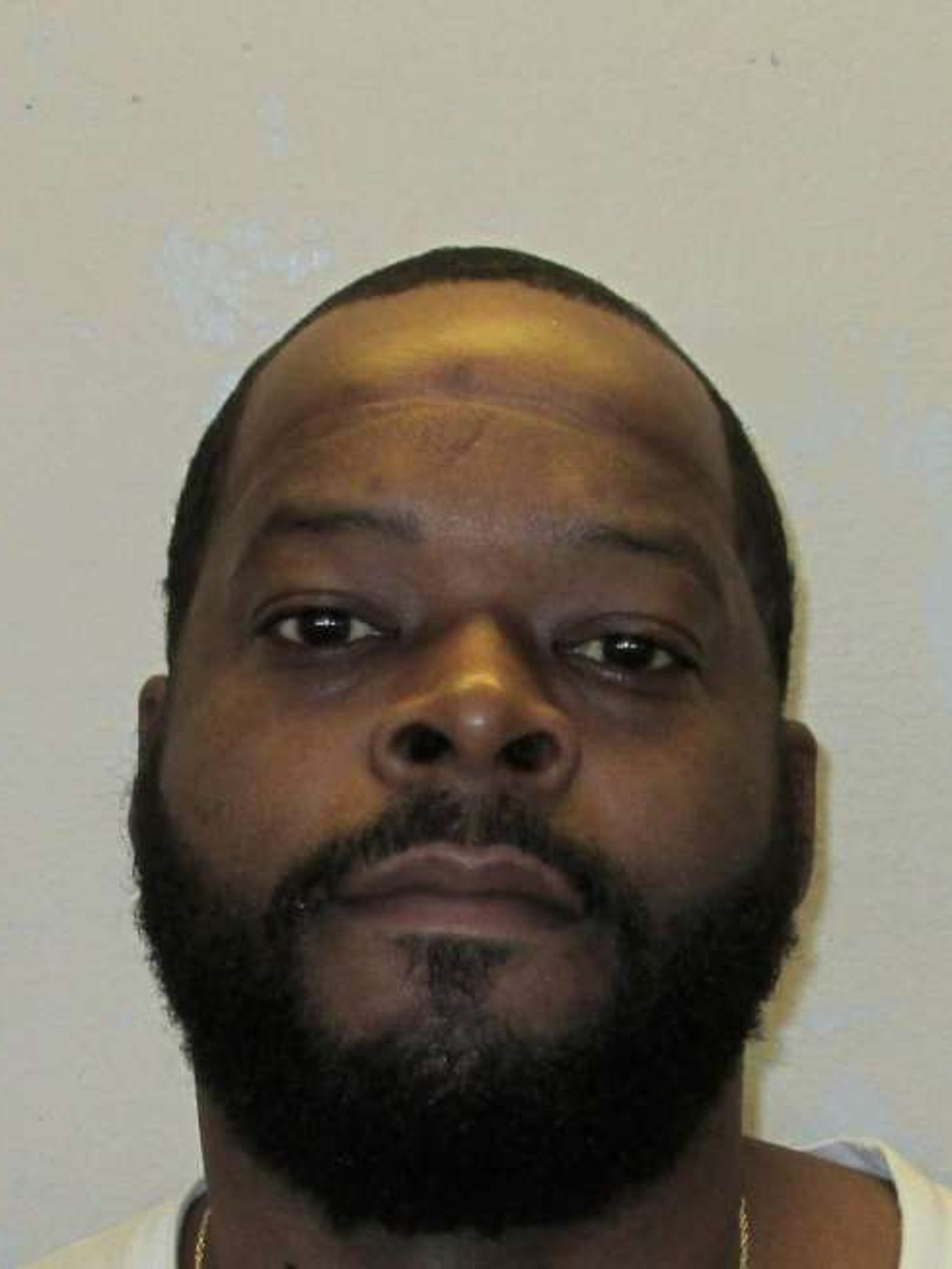
Toforest Johnson

Convicted murderer Joseph Duncan, on death row, facing aggressive brain cancer


Appellate Court Overturns Duncan's Death Penalty

March 8 – Convicted murderer and sexual predator Joseph Duncan may not see the death penalty after all because he is now facing aggressive brain cancer.

According to our partners at The Spokesman-review, Duncan has stage 4 glioblastoma and doctors are giving him six to 12 months to live.

Doctors gave the life expectancy on November 20 which puts Duncan four months into the timeframe.

Duncan was sentenced to the death penalty in 2005. He is convicted of killing Brenda Groene, her boyfriend and her 13-year-old son inside their home near Coeur d’Alene. He kidnapped Groene’s two other children Shasta, 8, and Dylan, 9.

Duncan tortured and abused the children, eventually killing Dylan.

Shasta was rescued seven weeks later when a waitress at the Coeur d’Alene Denny’s recognized the little girl and Duncan inside the restaurant.

Oklahoma panel moves toward commuting death row inmate’s sentence


March 8 – Oklahoma’s Pardon and Parole Board voted 3-1 on Monday to advance death row inmate Julius Jones’ request for a reduced sentence.

OKLAHOMA CITY — Oklahoma’s Pardon and Parole Board voted 3-1 on Monday to advance death row inmate Julius Jones’ request for a reduced sentence, setting up the possibility he could avoid lethal injection.

The board’s approval moves Jones’ commutation request to a second-stage hearing later this year in which both Jones and his supporters will be able to address the board. If approved at the second stage, the commutation request will be forwarded to Republican Gov. Kevin Stitt for a final decision.

Jones, 40, maintains he is innocent of the 1999 shooting death of Edmond businessman Paul Howell, who was shot to death in front of his family during a carjacking.

Julius Jones was convicted and sentenced to die for the 1999 shooting death of Edmond businessman Paul Howell.
JULIUS JONES

Jones’ case drew the attention of reality television star Kim Kardashian West and numerous professional athletes with Oklahoma ties after it was featured in 2018 on the ABC television documentary series “The Last Defense.”

State prosecutors say the evidence against Jones is overwhelming and have defended his death sentence, urging the board to reject his commutation request.

“To this day, Jones has not expressed an ounce of remorse for his callous actions,” District Attorney David Prater wrote in a letter to the panel. “Instead, he continues to victimize the Howell family by fueling a media circus with outright lies and by making a farce of this clemency process.”

Texas court stays execution on intellectual disability grounds


Ramiro Ibarra was sentenced to death for the 1987 sexual assault and murder of a 16-year-old girl. File Photo courtesy of the Texas Department of Criminal Justice
RAMIRO IBARRA

The Texas Court of Criminal Appeals has stayed the execution of a man who says he’s intellectually disabled and thus can’t constitutionally be put to death.

The court handed down the ruling Wednesday, ordering a lower court to review the merits of Ramiro Ibarra’s arguments.

Ibarra, 66, was sentenced to death in 1997 for the sexual assault and murder of 16-year-old Maria Zuniga a decade earlier in McLennan County. He was scheduled to be executed March 4.

Ibarra has challenged his death sentence a number of times on intellectual disability grounds, saying it violates the Eighth Amendment, which bars cruel and unusual punishment.

The court declined the stay on seven other claims presented by Ibarra’s lawyers, including that the state relied on “outdated and unreliable DNA tests” to secure his conviction, that the state presented false and misleading evidence, that the death sentence was based on false testimony, and that his execution would violate due process.

Ibarra is the third death-row inmate scheduled to be executed in Texas this year who has received a stay.

Questions Linger for Anthony Shore, Larry Swearingen


Update 2019.

Larry Swearingen, 48, was executed by lethal injection Wednesday evening for the December 1998 killing of Melissa Trotter. The 19-year-old was last seen leaving her community college in Conroe, and her body was found nearly a month later in a forest near Huntsville, about 70 miles north of Houston.

Swearingen was pronounced dead at 6:47 p.m. His last words were: “Lord forgive them. They don’t know what they are doing.”

Larry Swearingen, en 2009

January, 18 2018

Houston serial killer Anthony Shore faces another death date, this one Jan. 18. Shore was originally set for execution in October, but that got halted by the Harris County District Attorney’s Office amid rumors he was planning to confess to another murder: the 1998 killing of Melissa Trotter. Except Larry Swearingen had been convicted of kidnapping, raping, and strangling Trotter in 2000, and by then was preparing for his own execution in November.

Assistant District Attorney Tom Berg said his office revoked Shore’s execution warrant at the request of Montgomery County D.A. Brett Ligon, who believed Shore was colluding with Swearingen. (He says a folder was found in Shore’s cell with information relating to Trotter’s death.) Berg said the Texas Rangers have since interviewed Shore, who admitted he had “nothing to do” with Trotter’s murder. Shore alleged he and Swearingen once contemplated conspiring, but had since “parted ways.” Berg, who says his office and Ligon’s have reviewed the interview, said Shore decided not to “take the fall” for his fellow inmate. Shore has exhausted his appeals; Berg said he’s unaware of any new attempts to stay Shore’s execution, and concluded that his case will see its “inevitable end” next Thursday.

Shore’s execution is just the beginning of a busy month.

Swearingen, however, had his November execution stayed due to a filing error, and has since been granted additional DNA testing. Unlike Shore, who confessed to killing four girls between 1986 and 1995, Swearingen has maintained his innocence. His supporters, including his lawyer James Rytting, say he was in a county jail for outstanding traffic warrants at the time of Trotter’s murder. The 19-year-old was last seen on Dec. 8, 1998, with Swearingen (who wasn’t arrested until three days later), but her body wasn’t discovered until Jan. 2. Rytting said forensic evidence suggests her body could not have been dumped in the woods until “a week or 10 days” after Swearingen was arrested.

Included in the evidence sent out for testing is Trotter’s rape kit, which was never tested and could exonerate Swearingen should analysts uncover another DNA profile. Samples of hair particles found on Trot­ter’s undergarments and the alleged murder weapon (a torn pair of pantyhose) will also be tested. The evidence was shipped out in December and testing will likely take four weeks.

Rytting was alarmed that the state had reissued an execution date for Shore. “They shouldn’t be putting the guy into the ground with these questions still around,” he said. He says two witnesses, with no connection to Swearingen, told the D.A.’s Office that Shore suggested to them that he was connected to Trotter’s murder. The information, Rytting said, would “sure as hell” make Shore a suspect had it been provided prior to Swearingen’s conviction. “It’s a type of incriminating statement the prosecution seizes on all the time,” he said. “You don’t get to wiggle out of it with an ‘Aw shucks, I was kidding.'”

Shore will likely mark the first state-sanctioned killing of 2018, and his is just the beginning. William Rayford is scheduled for Jan. 30, and John Battaglia for Feb. 1.

EXECUTED – ‘Tourniquet Killer’ set to be executed in Texas – Anthony Shore 6:28 p.m


JAN. 18, 2018

In his final statement, Shore, 55, was apologetic and his voice cracked with emotion.

“No amount of words or apology could ever undo what I’ve done,” Shore said. “I wish I could undo the past, but it is what it is.”

He was pronounced dead at 6:28 p.m. CST.

Texas’ “Tourniquet Killer” is set for execution Thursday. It would be the first execution under Harris County District Attorney Kim Ogg, a Democrat who oversaw the first year without an execution in the county for more than 30 years.

Death row inmate Anthony Shore.


The first execution of 2018 in Texas and the nation is expected to take place Thursday evening for Houston’s “Tourniquet Killer.”

Anthony Shore, 55, is a confessed serial rapist and strangler whose murders went unsolved in the 1980s and 1990s for more than a decade. With no pending appeals, his execution is expected to be the first under Harris County District Attorney Kim Ogg, a Democrat who took office last January and has said she doesn’t see the death penalty as a deterrent to crime.

Still, she has said the punishment is appropriate for Shore, deeming him “the worst of the worst.”

“Anytime a person is subject to government’s greatest sanction, it merits thoughtful review,” Ogg said through a spokesman Wednesday. “We have proceeded as the law directs and satisfied all doubts.”

Shore wasn’t arrested in the murders until 2003, when his DNA was matched to the 1992 murder of 21-year-old Maria Del Carmen Estrada, according to court documents. His DNA had been on file since 1998, when he pleaded no-contest to charges of sexually molesting his two daughters. After his arrest, he confessed to the murders of four young women and girls, including Estrada.

Between 1986 and 1995, Shore sexually assaulted and killed 14-year-old Laurie Tremblay, Estrada, 9-year-old Diana Rebollar and 16-year-old Dana Sanchez, the court documents said. He also admitted to the rape of another 14-year-old girl, but she managed to escape after he began choking her. The murder victims’ bodies were all found in various states of undress behind buildings or in a field with rope or cord tied around their necks like tourniquets.

Though he doesn’t argue that his client is innocent or undeserving of punishment, Shore’s lawyer, Knox Nunnally, said Wednesday that he was surprised Ogg continued to pursue the death penalty for Shore based on her previous statements on capital punishment. Ogg’s first year in office also coincided with the first year Harris County didn’t carry out an execution in more than 30 years.

“Many people in the death penalty community were expecting other things from her,” Nunnally said.

Though she has said the death penalty is “pure retribution,” Ogg told the Texas Observer last year that she still believes in it. But in two major death penalty cases that made their way to the U.S. Supreme Court, Ogg opted for reduced punishments.

After the high court ruled death row inmate Duane Buck should receive a new trial because an expert witness claimed he was more likely to be a future danger to society because he was black, Ogg offered a plea agreement in October to a sentence of life in prison rather than holding a new death penalty trial. The next month, Ogg asked the Texas Court of Criminal Appeals to reduce the death sentence of Bobby Moore, whose case had earlier prompted the Supreme Court to invalidate Texas’ outdated method of determining intellectual disability in death-sentenced inmates.

But for a “true serial killer” such as Shore, Ogg said in a July statement that he was “a person deserving of the ultimate punishment.”

Shore’s execution was originally set for October, but Ogg postponed it after Montgomery County District Attorney Brett Ligon requested a delay from her and Gov. Greg Abbott. Ligon was concerned that Shore might falsely confess to the Montgomery County murder of Melissa Trotter, potentially disrupting the existing death sentence for the man already convicted in Trotter’s murder.

“We knew that was not true, but, that said, we knew that if we didn’t investigate it, it would look like we ignored potential evidence,” Ligon said.

Ligon said that after Shore talked to Texas Rangers and his office, investigators were convinced that Shore was not responsible for Trotter’s death or any other open murder cases. Nunnally said Shore never confessed to Trotter’s murder.

Now, Nunnally says he thinks he’s done everything he can for Shore. He had hoped to ask for a delay if the U.S. Supreme Court elected to hear a case out of Arizona that questions the constitutionality of the death penalty as a whole, but the justices have yet to make a decision and don’t meet again until Friday — the day after his scheduled execution.

Shore’s execution will the be the first in 2018, following a years-long trend of fewer executions in Texas and across the country. Four other executions are scheduled in Texas through March.

Exonerated death row inmate charged with sex trafficking


January 10, 2018

A man who was exonerated from Delaware’s death row has now been jailed on prostitution charges in Hawaii and on federal sex trafficking charges. 

Isaiah McCoy was arrested by Honolulu police on Jan. 3 and charged with two counts of promoting prostitution and one count of criminal contempt. He was indicted in a separate federal case on Jan. 4 and charged with sex trafficking by force.

McCoy’s federal indictment charges that between Dec. 22-26 in Hawaii, McCoy and Tawana Roberts through force and threats “recruited, enticed, harbored, transported, provided, obtained, advertised, maintained, patronized, and solicited” an adult woman into a commercial sex act.

McCoy was ordered to be held in custody pending a detention hearing, which is scheduled for Wednesday. McCoy moved to Hawaii after he was freed.

McCoy was convicted of shooting a Maryland man in 2010 and was initially sentenced to death. He spent nearly seven years in prison before being found not guilty during a second trial.

McCoy was accused of shooting 30-year-old James Munford in 2010 during a drug deal in the rear parking lot of the Rodney Village Bowling Alley. The deal supposedly was for 200 ecstasy pills and crack cocaine, but prosecutors said he pulled a gun and killed Munford.

He was found guilty in June 2012, but his conviction and death sentence were overturned by the Delaware Supreme Court.

The Court found the Superior Court erred by denying McCoy’s challenge to strike a potential juror. McCoy had struck more than a dozen white potential jurors. The judge and prosecutor believes this was a race-based decision, which is impermissible, though McCoy said it was not.

The Court also said the prosecutor made errors by improperly vouching for the credibility of a state witness and cited overall unprofessional conduct during the proceedings.

McCoy faced a retrial in January 2017, and the state offered him the opportunity to plead guilty to manslaughter and a weapons charge, which would have carried a sentence of five to 50 years in prison. McCoy refused, claiming he was innocent.

A judge found him not guilty, and McCoy went free.

“I just want to say to all those out there going through the same thing I’m going through ‘keep faith, keep fighting,” McCoy said. “Two years ago, I was on death row. At 25, I was given a death sentence – and I am today alive and well and kicking and a free man.”

McCoy brought a Delaware teen, 18-year-old Jordan Smith, to Hawaii for what he called “a fresh start.” But in September, Honolulu police arrested Smith on charges including murder in connection with a shooting outside a club in Waikiki.

Jordan, whose bail was set at $1 million, is scheduled to be tried on Feb. 12, according to Hawaii’s electronic court records.

Dontae Morris’ death sentence in Tampa murder vacated by Florida Supreme Court


January 11, 2018

The Florida Supreme Court on Thursday overturned the death sentence of Dontae Morris in the 2010 killing of Derek Anderson in Tampa.

The justices upheld Morris’ first-degree murder conviction, but in a 5-2 decision they ruled that Morris must be resentenced because of the U.S. Supreme Court ruling in Hurst vs. Florida that the state’s former death penalty sentencing system was unconstitutional because it limited the role of the jury in capital punishment cases.

In its decision Thursday, the court said: “Because the jury in this case recommended death by a vote of 10 to 2, we cannot determine that the jury unanimously found that the aggravators outweighed the mitigators … The error in Morris’ sentencing was not harmless beyond a reasonable doubt.”

Morris is also on death row for the murders of two Tampa police officers, Jeffrey Kocab and David Curtis that occurred 42 days later. Last year, the court upheld the death sentences in that case, which had a unanimous jury.

Anderson, 21, was shot in the back outside his mother’s east Tampa apartment on May 18, 2010. He had just arrived home after doing laundry at a friend’s house, carrying a load of clean clothing in a backpack.

A friend of Morris testified that he called her a few days after the murder and confessed that he shot Anderson. The friend, Ashley Price, claimed Morris told her he and Anderson had argued earlier that day because Anderson was selling marijuana on what Morris considered to be his “turf.”

Police were unable to link Morris to the crime until June 29, 2010, when he murdered Curtis and Kocab during a traffic stop. Curtis, who pulled over a car driven by Morris’ then-girlfriend, discovered that Morris had a warrant for writing bad checks. When Curtis moved to arrest him, Morris drew a gun and shot each officer once.

A Florida Department of Law Enforcement analysis of the two bullets he fired revealed they came from the same gun used to murder Anderson.

On appeal, Morris’ defense argued that his conviction should be overturned. Among other issues, they cited the notoriety of the case and the judge’s decision to keep the trial in Hillsborough County. But the high court ruled that there was no evidence that the jury knew anything about Morris’s crimes before the trial.

The Hillsborough State Attorney’s Office will have to decide whether to seek a new death sentence for Morris in the Anderson case.

He remains on death row for the police killings.

The electric chair could make a comeback in South Carolina


January 10, 2018

The electric chair could make a comeback in South Carolina.

S.C. state senators Wednesday discussed making it easier for the state Corrections Department to carry out death sentences by electrocution – an option that hasn’t been used in nearly a decade.

The proposal is necessary, some senators say, because the state can’t get its hands on the chemicals necessary to carry out lethal injections.

Lawmakers on Wednesday also considered a proposed “shield law” to protect the identities of pharmaceutical companies that provide chemicals for lethal injections. Those companies currently won’t sell to South Carolina, fearing legal challenges, protests and bad publicity.

Neither proposal moved forward Wednesday, but a state Senate committee plans to discuss the ideas more this spring.

South Carolina last used the electric chair in June 2008 for the execution of James Earl Reed. The 49 year old was convicted in 1996 of the execution-style murder of his ex-girlfriend’s parents.

The state hasn’t executed any death row inmates since March 2011. In part, that is because the last of the state’s lethal injection chemicals expired in 2013.

The state can’t execute any of its current 36 death row inmates – all men – unless they ask to be killed in the electric chair, Corrections Department director Bryan Stirling told senators Wednesday.

None of the death row inmates have made that request, Stirling said.

In 2008, Reed, who fired his own defense attorney and unsuccessfully represented himself, was the first S.C. inmate in four years to choose electrocution over lethal injection.

Because it cannot be carried out, South Carolina’s death penalty is ineffective, senators were told Wednesday.

“We’ve had people on death row for over two decades now,” said Stirling, who took over the prisons system in 2013.

One death row inmate is scheduled to be executed later this month but is expected to get a postponement from a federal court so his appeal can be heard, Stirling told the Senate panel. If that delay isn’t granted, the state quickly is approaching an execution it can’t carry out.

“It’s possible that can happen,” Stirling said.

Don Zelenka, an attorney in the state Attorney General’s Office, said at least one S.C. prosecutor has opted not to pursue the death sentence because the Corrections Department can’t do the job.

A proposal by state Sen. William Timmons, R-Greenville, would change that. The former assistant solicitor’s bill would allow the Corrections Department to use the electric chair when lethal injection is unavailable.

State Sen. Brad Hutto, D-Orangeburg, said he could support the proposal because it helps corrections officers do their jobs, even though he disagrees with the death penalty, which, critics say, is an ineffective deterrent more often used on minorities and the poor.

“This, to me, is a question about efficiency, not about the death penalty,” Hutto said.

Hutto and others were more skeptical of Timmons’ other proposal, the “shield law.”

Lindsey Vann, executive director of the Columbia-based Justice 360 nonprofit, which represents death-row inmates, called that proposal a “secrecy” law that would “create a state secret out of administering the death penalty.”

Shielding pharmaceutical companies’ identities would absolve them of accountability and create the potential for botched executions, Vann said. “If the government is going to exercise this power … they should do so in a transparent manner and with accountability to the citizens of this state.”

Stirling told senators the state’s electric chair, located at the Broad River Correctional Institution in Columbia, still works.

South Carolina has executed 282 inmates since 1912, including 280 men and two women. Of those executed, 208 were black and 74 were white. The youngest inmate executed was 14; the oldest was 66.

Corrections officials began using lethal injection in August 1995, two months after state lawmakers OK’d the practice.

DEATH ROW AND SC

The dates

1995: S.C. legislators approve lethal injection to execute inmates on the state’s Death Row; however, those inmates can opt for electrocution

June 2008: Late S.C. inmate electrocuted

March 2011: Last S.C. inmate executed by lethal injection

The numbers

282: Inmates S.C. has executed since 1912

280: Men executed

2: Women executed

208: African Americans executed

74: Whites executed

66: Oldest inmate executed

14: Youngest inmate executed

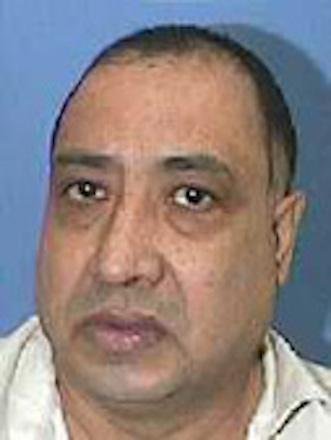
Execution date set for first Indian-origin death-row prisoner in US


JANUARY 12, 2018

The execution of the first death-row Indian prisoner, convicted of killing a baby and her Indian grandmother, has been set for February 23.

In 2014, Raghunandan Yandamuri, 32, was given the death penalty for kidnapping and killing a 61-year-old Indian woman and her 10-month-old grand-daughter.

However, he is likely to get a reprieve because of a 2015 moratorium on the death penalty by Pennsylvania Governor Tom Wolf.

Authorities alleged that the killings were part of a botched ransom plot. Yandamuri had come to the U.S. on an H-1B visa.

The local Times Herald reported that even though his execution by lethal injection is set for February 23, he might get a reprieve because a death penalty moratorium previously was put in place by Governor Tom Wolf.

“The law provides that when the governor does not sign a warrant of execution within the specified time period, the secretary of corrections has 30 days within which to issue a notice of execution,” Pennsylvania Department of Corrections said in a news release.

According to the report, Wolf imposed a moratorium on the death penalty in 2015. State officials are awaiting the results of a study conducted by the Pennsylvania Task Force and Advisory Committee on Capital Punishment, before moving forward with any executions.

Pennsylvania has not seen any executions in the last nearly 20 years. Since 1976, three persons have been executed in the States between 1995 and 1999.