Author: Claim Your Innocence

U will find on this website Death penalty news. Scheduled executions Inmates  cases (innocent or not) Books,  movies Studies  of psychology

#JusticeForPervisPayne: Tennessee man on death row was convicted using ‘racial stereotypes’, says Internet


March 17, 2021

Pervis Payne, who has an intellectual disability, has spent 32 years on death row in Tennessee.


                            #JusticeForPervisPayne: Tennessee man on death row was convicted using 'racial stereotypes', says Internet

On TikTok and Twitter, #JusticeForPervis has been trending in an attempt to raise awareness Pervis Payne’s innocence. Payne is scheduled to be executed on April 9 by the state of Tennessee.

Payne has been on death row for 32 years for the murder of Charisse Christopher and her two-year-old daughter in June 1987. Payne, as per the Innocence Project, a nonprofit legal organization that is committed to exonerating individuals who it claims have been wrongly convicted, has always maintained his innocence. Payne has consistently said he did not commit this crime and that he was an innocent bystander who happened to be at the crime scene and tried to help.

San Quentin death row inmate dies


March 17, 2021

Another condemned inmate at San Quentin has died, according to the Department of Corrections and Rehabilitation.

64-year-old Johnny Mungia passed away at a hospital on Tuesday, March 16th.

This Aug. 24, 2018, photo released by the California Department of Corrections and Rehabilitation shows Johnny Mungia, a 64-year-old death row inmate who died on March 16, 2021, at a hospital. (California Department of Corrections and Rehabilitation via AP)

Mungia’s cause of death is under investigation, but foul play is not suspected.

An official cause of death is pending the results of an autopsy by the Marin County Coroner.

On April 7, 1997, Mungia was found guilty of the first-degree murder of 73-year-old Alma Franklin by a Riverside County jury and sentenced to death on April 14, 1997.

There are currently 705 people on California’s death row.

EXECUTION LIST 2020


DateNumber Since 1976StateNameAgeRaceVictim RaceMethodDrug ProtocolYears from Sentence to Execution
1/15/201513TXJohn Gardner64W1 White femaleLethal Injection1-drug (Pentobarbital)13
1/29/201514GADonnie Lance65W1 White male, 1 White femaleLethal Injection1-drug (Pentobarbital)21
2/6/201515TXAbel Ochoa47L2 Latinx femalesLethal Injection1-drug (Pentobarbital)17
2/20/201516TNNicholas Todd Sutton58W1 White maleElectrocutionN/A34
3/5/201517ALNathaniel Woods43B3 White malesLethal Injection3-drug (Midazolam)14
5/19/201518MOWalter Barton64W1 White femaleLethal injection1-drug (Pentobarbital)26
7/8/201519TXBilly Joe Wardlow45W1 White maleLethal injection1-drug (Pentobarbital)25
7/14/201520FederalDaniel Lewis Lee47W1 White male, 2 White femaleLethal injection1-drug (Pentobarbital)21
7/16/201521FederalWesley Ira Purkey68W1 White femaleLethal injection1-drug (Pentobarbital)17
7/17/201522FederalDustin Lee Honken52W2 White males, 3 White femalesLethal injection1-drug (Pentobarbital)14
8/26/201523FederalLezmond Mitchell38NA2 Native American femalesLethal injection1-drug (Pentobarbital)17
8/28/201524FederalKeith Dwayne Nelson45W1 White femaleLethal injection1-drug (Pentobarbital)18
9/22/201525FederalWilliam Emmett LeCroy50W1 White femaleLethal injection1-drug (Pentobarbital)16
9/24/201526FederalChristopher Andre Vialva40B1 White male, 1 White femaleLethal injection1-drug (Pentobarbital)20
11/19/201527FederalOrlando Hall49B1 Black femaleLethal injection1-drug (Pentobarbital)25
12/10/201528FederalBrandon Bernard40B1 White male, 1 White femaleLethal injection1-drug (Pentobarbital)20
12/11/201529FederalAlfred Bourgeois56B1 Black femaleLethal injection1-drug (Pentobarbital)18

A convicted Oklahoma killer’s death sentence was overturned because of a landmark US Supreme Court ruling


March12, 2021

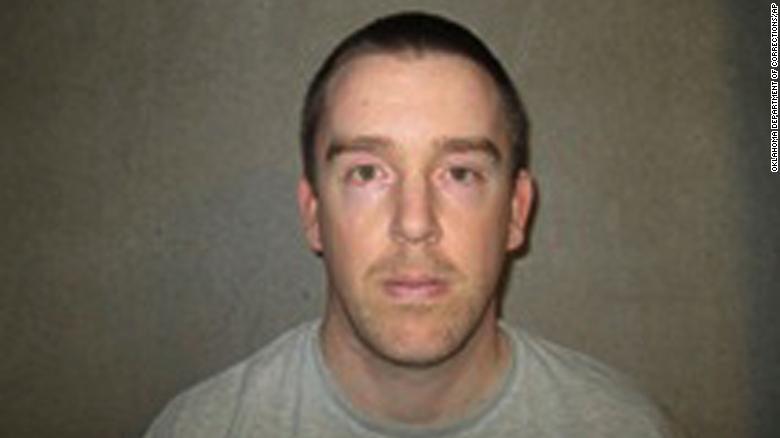
The murder convictions and death sentence of Shaun Michael Bosse, seen in this undated photo, were overturned by an Oklahoma appeals court on Thursday, March 11, 2021.
 Shaun Michael Bosse

An Oklahoma death row inmate is set to receive a new trial after a court overturned his conviction based on a US Supreme Court ruling last year that determined a large part of the state is Native American territory for the purposes of federal criminal law

.The Oklahoma Court of Criminal Appeals ruled Thursday the state did not have the jurisdiction to prosecute Shaun Bosse, who was sentenced to death in 2012 for the murders of 24-year-old Katrina Griffin, her 8-year-old son and 6-year-old daughter because the victims were members of the Chickasaw Nation and the murders took place on the reservation.The appeals court cited the Supreme Court’s landmark July 2020 ruling in McGirt vs. Oklahoma, in which the justices ruled 5-4 that a broad swath of the state was Native American land for the purposes of federal criminal law. According to federal law, crimes that involve Native Americans on a reservation are subject to federal, not state, jurisdiction.CNN has reached out to an attorney for Bosse for comment.District Attorney Greg Mashburn, who prosecuted Bosse, told CNN in an interview Friday that federal prosecutors will assume jurisdiction in the case.”I’m devastated for the family (of Bosse’s victims),” Mashburn said. “They can’t heal. They’re just going to have to go through this whole process again. I’m just really upset for them and hate that they’re going to have to sit through another trial.”

USA: UN Experts Call For President Biden To End Death Penalty


March 12, 2021

UN human rights experts* have called on President Biden to do everything in his power to end executions in the United States, at both the federal and state level.

“The death penalty is an abhorrent practice. It serves no deterrent value and cannot be reconciled with the right to life,” said the experts.

“Despite retentionist States’ pretence that capital punishment can be implemented in a ‘humane’ fashion, executions have repeatedly resulted in degrading spectacles. The death penalty is an inherently flawed form of punishment which disproportionately impacts African-Americans and people living in poverty,” they stressed.

The death penalty also continues to be imposed following violations of due process guarantees, such as lack of access to an effective legal defense, and in ignorance of essential facts.

In 2020, the US federal government resumed federal executions, killing 13 people over six months.

The experts had previously raised the case of Lisa Montgomery who was executed despite having been the victim of an extreme level of physical and sexual abuse throughout her life and having a mental health condition, two essential facts which the legal process failed to meaningfully consider.

“We call on President Biden to urgently grant clemency to the 48 individuals currently on death row for federal crimes, most of whom have been on death row for a decade or more.

“This should be only a first step. We further urge the President, as well as members of Congress, to strongly support legislative efforts to formally abolish the death penalty at federal level.

“In the meantime, President Biden should consider all other possible federal-level actions including directing the Department of Justice to stop seeking the death penalty and withdrawing notices of intent to seek the death penalty in ongoing cases.

“Action must also be taken to address death penalties handed down at the state level,” said the experts, noting President Biden committed during his campaign to work to incentivize states to eliminate the death penalty.

“The possibility of linking some forms of federal funding to alternative sentencing and a ban on the sale and transport of chemicals used in lethal injections should be explored.

“There is no time to lose with thousands of individuals on state death rows across the country and several executions scheduled at state level in 2021.”

The experts have written to the Government to express their concerns.

Sex offender found dead in suspected homicide at San Quentin State Prison


A 66-year-old inmate was found unresponsive in his cell at San Quentin State Prison early Wednesday, and state corrections officials said they are treating his death as a homicide.

John Sullivan had served half of his 10-year sentence from Placer County for failing to register as a sex offender, a second-strike.

John Sullivan is seen in this Oct. 8, 2019, photo released by the California Department of Corrections and Rehabilitation.

He was found during a head count shortly after midnight and pronounced dead less than 40 minutes later.

Officials said they suspect his 28-year-old cellmate in the death. He has not been charged, but was serving a seven-year sentence from Los Angeles County for first-degree burglary and injury to a dependent adult causing death or great bodily injury.

The Marin County coroner did not immediately provide a cause of death, and corrections officials wouldn’t give more details, citing the investigation.

The Associated Press found in a 2015 analysis that male sex offenders were being killed at a rate double their percentage in the prison population.

San Quentin, north of San Fransico, is California’s oldest prison. It houses the state’s death row, but also general population inmates.

Autopsy: California serial killer known as ‘I-5 Strangler’ was strangled himself in prison


March, 2021 A California serial killer who authorities say strangled and raped at least seven women was fatally choked himself in a state prison, officials said Wednesday.

Roger Reece Kibbe, 81, known as the “I-5 Strangler” in the 1970s and 1980s, was spotted unresponsive Sunday in his cell at Mule Creek State Prison southeast of Sacramento — his 40-year-old cellmate standing nearby.

This Aug. 1, 2013, photo provided by the California Department of Correction and Rehabilitation shows inmate Roger Reece Kibbe.

An autopsy showed Kibbe had been manually strangled, the Amador County Sheriff’s Office said, calling the death a homicide.

No charges have been filed in the death of Kibbe, a former suburban Sacramento furniture maker whose brother was a law enforcement officer.

He was initially convicted in 1991 of strangling Darcine Frackenpohl, a 17-year-old who had run away from her home in Seattle. Her nearly nude body was found west of South Lake Tahoe below Echo Summit in September 1987.

Investigators said then that they suspected him in other similar slayings.

But it wasn’t until 2009 that a San Joaquin County District Attorney’s Office investigator used new developments in evidence to connect him to six additional slayings in multiple Northern California counties, with several victims found alongside Interstate 5 or other highways in 1986. Kibbe was serving multiple life terms for the slayings when he was killed.

Authorities said they never stopped trying to prove that he was responsible for even more deaths. Investigators secretly took him on multiple field trips from prison with the hope that he would reveal the whereabouts of more victims.

They would buy him an egg McMuffin and a Coke for breakfast, another Coke and a hamburger and fries for lunch, Vito Bertocchini, a retired San Joaquin County sheriff’s detective and district attorney’s investigator, told The Sacramento Bee.

Bertocchini spent nearly two decades pursuing Kibbe and thinks he must have killed others during the 10-year gap between his first and last known slayings. Investigators have said they found other women who had been killed and dumped with Kibbe’s trademark of cutting his victims’ clothing in odd patterns.

He was finally captured after Sacramento police said a would-be victim escaped and they recovered a garrote made from a pair of dowels and parachute cord along with scissors and other items.

Investigators said they matched the cord to rope found with Frackenpohl’s body and at Kibbe’s house, all with microscopic dots of red paint. DNA eventually linked him to two other victims, and he agreed to cooperate in exchange for prosecutors taking the death penalty off the table.

Kibbe never admitted to other killings beyond those with which he was charged, but Bertocchini said he never stopped trying to elicit another confession.

Even after he retired in 2012, each year he sent Kibbe birthday and Christmas cards, asking him to speak up if he recalled anything about other victims. He and his old partner last visited Kibbe in prison in 2019, but still he wouldn’t admit to any more victims.

Now it’s too late, but Bertocchini called Kibbe’s death by strangulation “some fitting justice.”

“I don’t wish ill on anyone,” Bertocchini said. “But I hope he remembered every one of his victims while he was being killed.”

Newly discovered innocence cases show how old problems still haunt the N.C. death penalty


March 10, 2021

Last month two men were newly added to the list of innocent people who had been sentenced to death in North Carolina.

Anthony Carey was to be executed for a murder he took no part in, based entirely on the testimony of a 16-year-old who had made a deal with the police. The teen said that while he robbed and murdered a gas station attendant, Carey was a passenger in a getaway car parked blocks away. In exchange for that testimony, the prosecutor allowed the teen to plead guilty to second-degree murder while Carey went to death row.

John Thomas Alford was sent to death row for a shooting in an auto parts store, even though four people testified he’d been playing basketball with them at the time of the crime; even the co-defendant who carried out the murder said Alford wasn’t involved.

The district attorney withheld that last piece of evidence, saying he didn’t want to “confuse the jury” by showing them evidence of Alford’s innocence. Instead, he focused on a suspect lineup where four witnesses picked Alford. However, police polluted the lineup by showing witnesses Alford’s photo beforehand, a tactic that all but assured they would select him.

Both men were tried in Charlotte in the 1970s and had their convictions overturned after spending about a year on death row. Their exonerations had been lost to time until the national Death Penalty Information Center discovered them in the course of researching a new report. Nationwide, DPIC uncovered eleven new death row exonerations, bringing the total to 185 — one for every eight executions that have been carried out in the United States.

With the addition of these cases, North Carolina has sentenced 12 innocent men to death since 1973. They spent a total of 157 years in prison for crimes they didn’t commit.

Both Carey and Alford are Black men who were accused of killing white people — once again bearing out the truth that Black men are more likely to be wrongly convicted , especially in cases with white victims. Of North Carolina’s 12 exonerees, 10 are Black, one is Latino and only one is white. Seven of the cases involved white victims.

Though these exonerations happened close to 50 years ago, many of the systemic flaws they exposed play a role in current death row cases.

For instance, several people on North Carolina’s death row were implicated by unreliable witnesses or co-defendants who were seeking deals in their own cases. Others were convicted with the help of tainted eyewitness identifications, which are a frequent cause of wrongful convictions. And under North Carolina’s felony murder rule, people can still be sentenced to death for killings they did not personally carry out, or for which they were not even present.

News stories from the time also noted that Alford had an all-white jury, which discounted the testimony of four Black witnesses who provided him an alibi. “To hear those four tell it, all they did was play basketball,” one juror told the Charlotte Post. “They didn’t work. How could you believe somebody who doesn’t work?”

The exclusion of Black jurors remains a pressing problem across North Carolina. Recently, the N.C. Supreme Court ruled that almost everyone on death row should be allowed to present evidence of systemic discrimination in jury selection under the Racial Justice Act.

These cases are also a reminder that every wrongful conviction harms not just the person who receives the death sentence but their family and community.

Carey’s brother Albert was sentenced to death alongside him, as the alleged driver of the getaway car, and he was never exonerated. Instead, he was resentenced to life and spent three decades in prison because of a 16-year-old’s allegation.

According to interviews in the Charlotte Post, Alford’s mother took a second mortgage on her home to pay for his defense. His stepfather had to work a second job at night to pay it off. And hundreds of community members contributed to his legal defense fund for a second trial. His mother said she asked herself during the ordeal, “Why is this happening to us? Are we being punished? What’s the use of trying to live a good, decent life?”

A system as error-prone as the death penalty breeds distrust that can last for generations and creates harm that can never be healed, no matter how many people we exonerate.

Nevada should abolish the death penalty


March 9, Over the past few years many Nevadans have sought to pursue a better future by seriously reckoning with the state’s history of racial discrimination. Radio programs and public forums have held critical discussions surrounding the legacies of “sundown towns” in Northern Nevada and the problem of police brutality in Clark County’s recent past, alongside debates over the presence of Confederate symbols in a state once called the “Mississippi of the West.” 

Because of the efforts of scholars and activists throughout Nevada, state legislators have instituted a number of reforms to address issues of structural inequality and under representation, ranging from police reforms in 2012 and 2014, to the recent renaming of the Las Vegas airport in honor of the former Senate Majority Leader Harry Reid, as the airport’s previous namesake, “Pat McCarran,” held a documented history of bigotry and antisemitism. Though these efforts are laudable, citizens of Nevada must be honest in realizing the state still uses a practice linked to a deeply troubling era of America’s past: the death penalty.

Questions surrounding the use of the death penalty in the 21st Century continue to grip the United States, and as Nevada is one of 27 states that still allows capital punishment, it is relevant to current discourses about the state’s social and political trajectory. Many opponents of capital punishment appropriately cite its significant cost to taxpayers by arguing that it is actually more expensive to pursue a death sentence than it is to keep someone in prison in perpetuity. In doing so, they are attempting to court fiscal conservatives by using an argument rooted in economics and financial responsibility. But there is a moral argument for ending the death penalty that is just as compelling, if not more so: the practice is intimately tied to violent structures of racism that permeated the legal structures in America’s past and that remain omnipresent in the current justice system.

Researchers from the Equal Justice Initiative (EJI), the American Civil Liberties Union (ACLU) and The Marshall Project have noted the deep racial disparities in and among those who are sentenced to the death penalty, suggesting that capital punishment continues, in many ways, the legacy of lynching that plagued the United States for nearly eight decades (1870s-1950s). Lynchings were used most frequently in the Jim Crow South against Black men to spread racist terrorism and enforce a social hierarchy predicated on white supremacy. These lynchings, though often condoned by local law enforcement, were “extrajudicial” murders conducted by white vigilantes who deemed themselves judge, jury, and executioner. The nearly 4,000 Black people lynched throughout the South were never given due process — and no white person was ever convicted for involvement in the ritualized murders throughout those years.

Though this brand of terror reigned for multiple generations, lynchings waned in number by the mid-twentieth century. However, many African Americans observed that the rise of capital punishment in the country’s legal apparatus did no more than clothe extra-judicial murder within racist court processes. As historian William B. Gravely notes, Black people and their allies viewed the capital punishment system as simply a “legal lynching” — and recent discoveries do highlight some troubling comparisons. 

Though the condemned go through a form of due process, researchers from EJI found that widespread systemic racism is exposed by the disproportionate representation of Black men on death row, including inadequate counsel, lack of representation on juries, and racist stereotypes that lead to the harsher sentencing of African Americans in the criminal justice system. For many unfamiliar with these racial disparities, the legality of capital punishment provides a façade that suggests a more just approach to the state-sanctioned execution of incarcerated people, but institutional racism ensures that Black men, particularly those innocent of the crime, are over represented in death sentences.

Nevada now has a chance to join other states in challenging this disturbing legacy. Similar discussions are currently being held in Virginia, as its Legislature voted to abolish the death penalty in February, setting a course to eliminate the practice and become the first southern state to do so. Given that Virginia once held the capital city of the Confederacy and displayed the most Confederate monuments in the country as recently as 2020, this should remind progressive-minded Nevadans that change is possible. In believing structural change is achievable and enacting legislation to dismantle practices that are rooted in racism, we can set our state’s future on a better course. Abolishing the death penalty is a necessary step in this process.

Wyoming considering repeal of death penalty


The state has had only one execution in 55 years.

March 9, Wyoming may become the next state to outlaw capital punishment.

bill was introduced in the state Senate last week by Republican Sen. Brian Boner that would end the death penalty as potential punishment for a murder conviction. Boner told ABC News that the current law, in effect since 1976, is antiquated and costs taxpayers over $750,000 a year.

In the last 55 years, the state has only held one execution, back in 1992, a nonpartisan nonprofit that tracks death row inmates.

“We are dealing with a significant budget crisis, and we’re looking at old rules that don’t work,” Boner told ABC News. “It’s time to get rid of it.”

The bill passed the state Senate’s revenue committee with a 4-1 vote on March 4 and will move on to a full vote. The legislative session ends April 2.

If the bill passes and is signed into law, Wyoming would become the 24th state to abolish the death penalty since the federal government allowed it in 1973.

Robert Dunham, executive director of the Death Penalty Information Center, testified at the committee hearing. He told ABC News that Wyoming is following a similar path to one seen across the country, with fewer juries and judges giving out death penalty sentences. That decrease has garnered the attention of politicians on both sides of the aisle, Dunham added.

“We have seen an abolition in practice follow by an abolishing in the law,” Dunham said.

Dunham added that there is an increased sense of morality when it comes to executions because, on average, there has been one exoneration for every eight executions.

“It is no longer debatable that innocent people are going to be sentenced to death. It is no longer debatable that innocent people have been executed,” he said. “That’s given legislators of all political and philosophical beliefs great pause.”

Boner agreed and said that eliminating the death penalty in Wyoming would create a “more efficient criminal justice system.” Two years ago, a similar measure passed in the Wyoming House but failed in the Senate with a vote of 18-12. Boner said a lot has changed since then, particularly during the pandemic.

Wyoming Gov. Mark Gordon told legislators last summer that he was “very seriously” considering imposing a moratorium on the use of capital punishment, claiming it is “a luxury that we cannot afford.”

Dunham said that there will likely be a bigger push from advocates to repeal the law and more pressure on other states to re-examine their policies. Last month, Virginia’s Legislature passed a bill to end death penalty in the state.

“Regardless of what the outcome is,” Dunham added, “what we are seeing in Wyoming is the declining support of capital punishment across all demographic groups.”