Month: February 2014

ARIZONA: Jodi Arias Trial Sentencing Pushed Back


february 16, 2014

Jodi Arias will have her sentencing trial date pushed back from March 17 because of a prosecutor’s scheduling conflict – amid a report saying that she might have to get new lawyers after motions were filed this week.

Arias was convicted of murdering her boyfriend, Travis Alexander, at his suburban Phoenix home in 2008. A jury could not get to a verdict on her sentence.

The Arizona Republic reported that Juan Martinez, the prosecutor in question, has to handle a death penalty trial May 12, reported The Associated Press.

Maricopa County Superior Court Presiding Criminal Judge Joseph Welty this week said that the death penalty trial will go first. The suspect in that case is accused of killing a Phoenix-area police officer in 2007.

(Source: The Epoch Times)

Fla. Gov. Scott signs death warrant for 1987 killer Robert Henry


TALLAHASSEE, Fla., Feb. 14 (UPI) — Florida Gov. Rick Scott has signed a death warrant for convicted killer Robert Lavern Henry, the day after the execution of Juan Carlos Chavez. his office said.

Chavez, convicted for the 1995 rape, dismemberment and death of Jimmy Ryce, 9, in Redland, Fla., was put to death Wednesday.

Scott announced Thursday he had signed an order for the execution of Henry, who bludgeoned and burned two Deerfield Park, Fla., coworkers in a 1987 staged robbery.

Henry’s execution is scheduled for March 20. He will become the 84th person executed in Florida since the death penalty was reinstituted in 1976, and the 14th during Scott’s tenure as governor.

Since the death penalty returned, no other Florida governor has presided over as many executions in his first term, the Miami Herald said Friday.

(Source: UPI)

Missouri: Judge Blocks Sale of Drug for Execution


february 13, 2014

A federal judge late Wednesday temporarily blocked an Oklahoma compounding pharmacy from selling a drug to the Missouri Department of Corrections for use in a Feb. 26 execution.

The temporary restraining order was issued in connection with a lawsuit in United States District Court in Tulsa filed by a Missouri death row inmate, Michael Taylor, whose lawyers say the state contracts with the Apothecary Shoppe in Tulsa for the drug.

The lawsuit argued that recent executions involving the drug, compounded pentobarbital, indicate it will probably cause “severe, unnecessary, lingering and ultimately inhumane pain.”

The state has not revealed the name of the pharmacy, and the Tulsa pharmacy has not said whether it is the supplier. The judge, Terence Kern, set a hearing for Tuesday.

(Source:NYT)

Ex-governors want California death penalty reform


february 14, 2014

LOS ANGELES — Three former California governors announced a proposed ballot initiative Thursday designed to speed up the state’s lengthy death penalty process.

Former Govs. George Deukmejian, Pete Wilson and Gray Davis said they were launching a signature-gathering effort for the measure that would limit appeals available to death row inmates, remove the prisoners from special death row housing, and require them to work at prison jobs in order to pay restitution to victims.

The former governors, appearing with law enforcement officials at a news conference, made it clear they want executions to begin as soon as possible. There are more than 700 prisoners on California’s death row.

“Old age should not be the leading cause of death on death row,” former Gov. Pete Wilson said.

They agreed the death penalty system is crippled by waste and inefficiency.

“We all know the death penalty system is broken at the appellate level,” said former Los Angeles County District Attorney Steve Cooley.

His predecessor in that job, Gil Garcetti, is leading the opposition to the initiative and was a proponent of Proposition 34, the 2012 ballot measure that would have repealed the death penalty in California. The vote was 48 percent in favor and 52 percent opposed, one of the closest votes ever on a death penalty referendum.

A statement from the former governors said “Californians overwhelmingly reaffirmed their support for the death penalty” with the vote on Prop. 34.

Executions have been halted since 2006 because of lawsuits in federal and state courts over changing a three-drug lethal-injection method that had been used to carry out death sentences.

Asked about the availability of drugs to carry out executions, the governors said they could not comment and that would be an issue for the California Department of Corrections.

Two relatives of victims spoke and decried the length of time it takes to resolve a death penalty appeal. Phyllis Loya said it took four years for an attorney to be assigned to a man convicted of killing her son.

Davis said it can take 10 years before a federal application for review of a death penalty case is resolved and another 10 years to clear state appellate courts.

San Bernardino County District Attorney Michael Ramos, representing the California District Attorneys Association, said if the initiative passes there would be no frivolous appeals and the state would see enormous fiscal savings.

With the initiative, backers want to bypass automatic appeals to the California Supreme Court and instead distribute them to other appeals courts unless it is necessary for a case to be heard by the high court.

Absent from the press conference were former Gov. Arnold Schwarzenegger and current Gov. Jerry Brown. Brown is personally opposed to the death penalty but has said he would abide by the law.

He declined comment on the proposed initiative Thursday.

Garcetti called the initiative a misguided effort and predicted legal challenges would take decades to resolve.

Anna Zamora of the American Civil Liberties Union of Northern California later issued a statement saying: “This flawed proposal will only make matters worse. It will create more delays and overburden our already strained court system. Worst of all, it will greatly increase the risk that California could execute an innocent person.”

(Source: AP, Sacramento Bee)

Kentucky. high court to hear death penalty appeal – Michael Dale St. Clair


february 13, 2014

The Kentucky Supreme Court is set to hear arguments in the case of a death row inmate who has twice won a new trial.

The justices on Thursday will take up the case of 57-year-old Michael Dale St. Clair, who was convicted in the 1991 slaying of distillery worker Frank Brady in Bullitt County.

St. Clair has won three trials in the case, which has lingered for years in appeals.

St. Clair and another inmate escaped from an Oklahoma prison before going on a multistate spree that ended in Kentucky with Brady’s death. St. Clair also faces a murder charge in New Mexico for the 1991 kidnapping and slaying of paramedic Timothy Keeling.

St. Clair also received a second death sentence for capital kidnapping from the Hardin County Circuit Court.

Washington Governor Inslee’s remarks announcing a capital punishment moratorium


Feb. 11, 2014

Good morning.

I’m here today to talk to you about an important criminal justice issue.

Over the course of the past year, my staff and I have been carefully reviewing the status of capital punishment in Washington State.

We’ve spoken to people in favor and strongly opposed to this complex and emotional issue, including law enforcement officers, prosecutors, former directors of the Department of Corrections, and the family members of the homicide victims.

We thoroughly studied the cases that condemned nine men to death. I recently visited the state penitentiary in Walla Walla and I spoke to the men and women who work there. I saw death row and toured the execution chamber, where lethal injections and hangings take place.

Following this review, and in accordance with state law, I have decided to impose a moratorium on executions while I’m Governor of the state of Washington.

Equal justice under the law is the state’s primary responsibility. And in death penalty cases, I’m not convinced equal justice is being served.

The use of the death penalty in this state is unequally applied, sometimes dependent on the budget of the county where the crime occurred.

Let me acknowledge that there are many good protections built into Washington State’s death penalty law.

But there have been too many doubts raised about capital punishment. There are too many flaws in the system. And when the ultimate decision is death there is too much at stake to accept an imperfect system.

Let me say clearly that this policy decision is not about the nine men currently on death row in Walla Walla.

I don’t question their guilt or the gravity of their crimes. They get no mercy from me.

This action today does not commute their sentences or issue any pardons to any offender.

But I do not believe their horrific offenses override the problems that exist in our capital punishment system.

And that’s why I am imposing a moratorium on executions. If a death penalty case comes to my desk for action, I will issue a reprieve.

What this means is that those on death row will remain in prison for the rest of their lives. Nobody is getting out of prison — period.

I have previously supported capital punishment. And I don’t question the hard work and judgment of the county prosecutors who bring these cases or the judges who rule on them.

But my review of the law in Washington State and my responsibilities as Governor have led me to reevaluate that position.

I recognize that many people will disagree with this decision. I respect everyone’s beliefs on this and have no right to question or judge them.

With my action today I expect Washington State will join a growing national conversation about capital punishment. I welcome that and I’m confident that our citizens will engage in this very important debate.

I’d like to tell Washingtonians about what lead me to this decision.

First, the practical reality is that those convicted of capital offenses are, in fact, rarely executed. Since 1981, the year our current capital laws were put in place, 32 defendants have been sentenced to die. Of those, 19, or 60%, had their sentences overturned. One man was set free and 18 had their sentences converted to life in prison.

When the majority of death penalty sentences lead to reversal, the entire system itself must be called into question.

Second, the costs associated with prosecuting a capital case far outweigh the price of locking someone up for life without the possibility of parole.

Counties spend hundreds of thousands of dollars – and often many millions — simply to get a case to trial.

And after trial, hundreds of thousands of dollars are spent on appellate costs for decades.

Studies have shown that a death penalty case from start to finish is more expensive than keeping someone in prison for the rest of their lives – even if they live to be 100 years of age.

Third, death sentences are neither swift nor certain. Seven of the nine men on death row committed their crimes more than 15 years ago, including one from 26 years ago. While they sit on death row and pursue appeal after appeal, the families of their victims must constantly revisit their grief at the additional court proceedings.

Fourth, there is no credible evidence that the death penalty is a deterrent to murder. That’s according to work done by the National Academy of Sciences, among other groups.

And finally, our death penalty is not always applied to the most heinous offenders.

That is a system that falls short of equal justice under the law and makes it difficult for the State to justify the use of the death penalty.

In 2006, state Supreme Court Justice Charles Johnson wrote that in our state, “the death penalty is like lightening, randomly striking some defendants and not others.”

I believe that’s too much uncertainty.

Therefore, for these reasons, pursuant to RCW 10.01.120, I will use the authority given to the Office of the Governor to halt any death warrant issued in my term.

I will take your questions.

http://governor.wa.gov/news/speeches/20140211_death_penalty_moratorium.pdf

FLORIDA – EXECUTION JUAN CARLOS CHAVEZ , FEBRUARY 12 at 6 p.m UPDATE EXECUTED 8.17 pm


february 12, 2014

UPDATE: Juan Carlos Chavez was executed at 8:17 p.m., according to the governor’s office.

Juan Carlos Chavez had no last words in death chamber, but apparently wrote out a last statement to be distributed later

UPDATE 6.30 PM

The execution of Juan Carlos Chavez, the South Miami-Dade farmhand who raped and murdered 9-year-old Jimmy Ryce in 1995, was temporarily delayed Wednesday evening because of last-minute legal wrangling.

A spokeswoman for the office of Gov. Rick Scott said the state, as of 6:30 p.m., was still awaiting a final go-ahead from the U.S. Supreme Court.

UPDATE 3.55 pm

For his last meal, Chavez requested ribeye steak; French fries; a fruit mixture of mangoes, bananas and papaya; strawberry ice cream; and mango juice. He ate and drank all of it, according to Department of Corrections spokeswoman Jessica Cary.

Chavez had no visitors Wednesday except for a Catholic spiritual adviser. Cary said his demeanor was calm.

————————————————————————–

he case haunted Miami-Dade Police Det. Pat Diaz’s career

For Pat Diaz, retracing the steps of a tragedy is not easy.

“That’s the bus stop,” Diaz says, pointing at a street corner in the area near Homestead known as the Redland.

The former Miami-Dade Police homicide detective led the search for a missing boy named Jimmy Ryce back in 1995.

“When you have a missing 9-year-old, you want to believe, you always have the hope that you’ll find the child,” Diaz said, reminiscing about the case that would haunt his career.

To this day, the street sign at the corner is a memorial to the little boy who never grew up, decorated with flowers and pictures of Jimmy. A man named Juan Carlos Chavez took Jimmy, a case that struck fear into the hearts of parents everywhere. Detective Diaz heard the details when Chavez confessed.

“He tells us he rolls down his window, points the gun at him and says get in the trunk, Jimmy crosses the street and gets in the trunk with him, and basically this is where it happened,” Diaz said, standing at the spot at which Chavez abducted the boy. “Jimmy was probably 250 yards from his house, that’s how close he was to his house.”

Volunteers passed out flyers, joined police in searching the area, and it was all too late. Chavez had already abducted, tortured, and killed Jimmy in his trailer.

“It’s the parent’s worst nightmare,” said Michael Band, a Miami attorney who, in 1995, was the prosecutor on the case.

Band won the first-degree murder conviction and a death sentence for Chavez, who is scheduled to be executed Wednesday.

But it wasn’t easy, Band says. There was tremendous pressure from the community, the trial had to be moved to Orlando to seat an impartial jury, and he had to control his own emotions.

“You don’t remove yourself, you try to be as rational as one can be but you think about things like that, you think, that could’ve been my kid, could’ve been your kid,” Band said.

Chavez was on the way to death row, but the pain only got worse for the victim’s father, Don Ryce: Over the years he lost everyone except his son, Ted Ryce. After Jimmy’s murder, the stress and depression hung over the Ryce family. A heart attack killed Don Ryce’s wife, Claudine Ryce, in 2009. His daughter committed suicide, still despondent over Jimmy’s death.

“If there was ever anyone in the world who deserved to die it’s the man who did that,” Don Ryce said last month, speaking after the governor signed the death warrant for Chavez.

“I think, sadly, the statistics are that predators are not going to be deterred because Juan Carlos Chavez gets executed,” Band said.

That doesn’t mean Band has second thoughts about asking for the death penalty. He agrees that Chavez got what he deserved. Band says the verdict was professionally satisfying, but there’s a hole in his heart when he thinks of Don Ryce.

“He still goes home without Jimmy,” Band said, and the execution won’t change that awful reality. (nbcmiami)

February 11, 2014

  Juan Carlos Chavez                       Jimmy Rice

MIAMI (CBSMiami) — “It’s been a long, long time coming,” said the father of Jimmy Ryce, upon learning that Wednesday, February 12th is the day the man who kidnapped, raped, murdered and dismembered his 9-year-old son, will be put to death.

It was September 11, 1995 when Jimmy Ryce disappeared without a trace when he got off his school bus near his home in The Redland.

Juan Carlos Chavez, 46, was convicted of the heinous crime three years later.

It was a trial that captivated South Florida and the rest of the nation.

Chavez was charged with the crime three months after Jimmy vanished. Chavez confessed but years would pass before he came to trial. The delay tormented Jimmy’s parents.

“There is no constitutional right to delay a trial until the victim’s families die of old age,” said Jimmy’s father Don Ryce in May of 1998.

Chavez did eventually go before a jury in Orlando. The trial was moved there because of intense media scrutiny. The Ryce family came to the trial every day, including Jimmy’s sister Martha.

“And I’m here to represent my family, and Jimmy, because he can’t be here,” said Martha in September of 1998.

Lead prosecutor Catherine Vogel told of Chavez confessing to snatching Jimmy Ryce from the side of the road, raping and shooting him in a remote trailer, and then using a wicked looking bush hook to dismember the boy’s body.

“He took the tool, he chopped the body into about four different pieces,” said Vogel during the 1998 trial.

Chavez sealed the remains with concrete in plastic planters.

For then prosecutor Vogel, now Monroe County’s State Attorney, they are images she will never forget.

“We had to excavate those planters, we had to dig through the concrete to find poor little Jimmy Ryce’s body that had been dismembered,” said Vogel.

Ranch owner Susan Scheinhaus testified how she found Jimmy’s book bag and homework in a travel camper that Chavez lived in which was located on her property where he worked as a farm hand.  But the defense dropped a bombshell.

“The detectives were telling me what I should and should not write,” said Chavez through a translator at the trial.

Chavez recanted his confession and claimed his employer’s son killed Jimmy.

The Ryce’s watched outraged at the defense ploy.

“Their dream is to exchange high fives over Jimmy’s grave, while they set their client loose to rape and murder another child,” said an angry Don Ryce during the trial.

But former homicide detective Felix Jimenez, who is now with the Inspector General’s office, took Chavez’s confession. He said Chavez first told a series of lies including a tale of accidentally running over Jimmy and putting his body in a canal that divers searched for hours before Chavez finally came clean.

“He admitted in detail to everything that he did,” said Jimenez. “His confession was so detailed, that only the killer would know.”

For instance, police didn’t know until Chavez told them that Jimmy was killed in the filthy, falling down trailer.

“When we went there and we looked, and we found Jimmy Ryce’s blood exactly where he said he shot him, then we knew we had gotten to the truth,” said Vogel.

A gun found in Chavez’s camper was an exact ballistics match for the bullet that killed Jimmy.

The jury convicted Chavez on all counts in less than an hour.

“Had he gotten away with it, he would have killed again and again and again,” said Michael Band, the man who prosecuted Chavez. Band is now a private defense attorney.

On November 23, 1998, Chavez was sentenced to death.

Judge Marc Schumacher sentenced Chavez to die in old sparky, the electric chair.  But the appeals dragged on for years.

At a hearing in January 2007, his mother said, “You know, it’s been over eleven years since Jimmy was killed, and he was only nine years old.  So he’s been dead longer than he lived.” Jimmy would have been 21 years old at that hearing.

Governor Rick Scott finally signed the death warrant for Chavez in January.

Claudine Ryce didn’t live to see it. She died from coronary disease, a broken heart, in 2009.

Jimmy’s sister Martha took her own life last year at the age of 35.

When Don Ryce learned of the Chavez’s death warrant last month, he wept. His son Ted is his only remaining family.

“We’ve suffered a terrible loss,” said an emotional Don Ryce. “A loss you don’t wish on anyone.”

Monday, February 10th, Chavez was denied a stay of execution by the U.S. 11th Circuit Court of Appeals. It’s one of the final appeals left for Juan Carlos Chavez before his scheduled execution on Wednesday evening.  click here opinion.pdf

BREAKING: Washington governor suspends the death penalty in his state!


february 11, 2014 (AP)

Gov. Jay Inslee said Tuesday he was suspending the use of the death penalty in Washington state, announcing a move that he hopes will enable officials to “join a growing national conversation about capital punishment.”

The Democrat said he came to the decision after months of review, meetings with family members of victims, prosecutors and law enforcement.

“There have been too many doubts raised about capital punishment, there are too many flaws in this system today,” Inslee said at a news conference. “There is too much at stake to accept an imperfect system.”
Inslee said that the use of the death penalty is inconsistent and unequal. The governor’s staff briefed lawmakers about the move on Monday night and Tuesday morning.nslee’s moratorium, which will be in place for as long as he is governor, means that if a death penalty case comes to his desk, he will issue a reprieve, which isn’t a pardon and doesn’t commute the sentences of those condemned to death.

“During my term, we will not be executing people,” said Inslee, who was elected in 2012. “Nobody is getting out of prison, period.”

Last year, Maryland abolished the death penalty, the 18th state to do so and the sixth in the last six years.

Nine men await execution at the Washington State Penitentiary in Walla Walla. The state Supreme Court just last month rejected a petition for release from death row inmate Jonathan Lee Gentry, sentenced for the murder of a 12-year-old girl in 1988. Gentry could be the first execution in the state since September 2010, when Cal Coburn Brown died by lethal injection for the 1991 murder of a Seattle-area woman. A federal stay had recently been lifted in Gentry’s case, and a remaining state stay on his execution was expected to be lifted this month.

The decision by the governor comes following a recent decision by the state Department of Corrections, which is in the process of changing its execution protocol to allow witnesses to executions to see the entire process, including the insertion of intravenous catheters during a lethal injection.

The new witness protocol, currently a draft that is in its final stages of approval, includes the use of television monitors to show the inmate entering the death chamber and being strapped down, as well as the insertion of the IVs, which had both previously been shielded from public view.

Through public disclosure requests, The Associated Press had sought information about any potential changes to the execution protocols. State corrections officials spoke with the AP about the new procedures late last month.

The change is in response to a 2012 federal appeals court ruling that said all parts of an execution must be fully open to public witnesses. That ruling was sparked by a case brought by The AP and other news organizations who challenged Idaho’s policy to shield the insertion of IV catheters from public view, in spite of a 2002 ruling from the same court that said every aspect of an execution should be open to witnesses.

(Source: AP)

A father waits for justice in the notorious South Florida murder of young Jimmy Ryce – Juan Carlos Chavez


february 8, 2014

The years have not healed Don Ryce’s pain, only prolonged it.

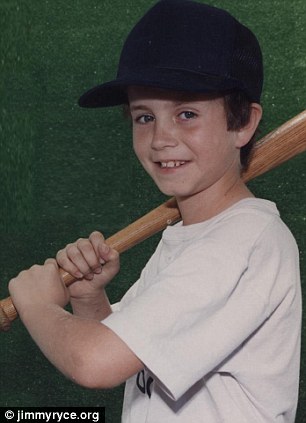
It was 1995 when his son, a gap-toothed 9-year-old named Jimmy, was snatched from a Redland school bus stop, raped and killed.

As Ryce counts the last few days until Wednesday’s scheduled execution of his son’s murderer, his anger burns as hot as it did more than 18 years ago. And his sorrow has only been compounded by two more deaths he traces back to that first, monstrous act of a pedophile named Juan Carlos Chavez: the heart attack that killed his wife, Claudine, in 2009 — a “broken heart,” he says — and the suicide last year of his daughter, Jimmy’s half-sister, Martha.

“In both cases, Jimmy’s memory, I can tell you, was very much weighing on them at the time of their death,” Ryce said, talking about the tragedy during a 90-minute interview in his Vero Beach home. “So forgive me if I don’t shed many tears for Juan Carlos Chavez.”

The losses of his wife and daughter blindsided him, just as Jimmy’s did all those years ago when it seemed as though everyone in South Florida showed up to help with the three-month search for a boy grabbed yards from his doorstep. The abduction and horrifying details that emerged later — Chavez had raped the boy, shot him when he tried to escape, dismembered the boy’s body but kept his book bag, all at a trailer less than a mile from the Ryces’ home — marked the sad beginning of a new and disquieting vigilance that reached far beyond South Florida. Parents clutched their children closer. Authorities scrambled to create better, faster ways to hunt for missing children.

And always the Ryce family was there, front and center, holding each other up, in a national crusade to protect children from predators. Eventually, their son’s legacy would include the Jimmy Ryce Center for Victims of Predatory Abduction; the Jimmy Ryce Law Enforcement Training Center; a program to raise money to give bloodhounds to police departments and the Jimmy Ryce Act, a state law legislators are pushing to toughen, designed to keep sexual predators in custody even after their sentences end if they are still deemed dangerous.

Through it all, Chavez — who sowed the seed of so much pain — has remained alive on Death Row, courtesy of Florida taxpayers. If Chavez is executed Wednesday as scheduled under the death warrant signed by Gov. Rick Scott, Ryce will be there to watch the man he characterized as “a reptilian mutant” draw his last breath.

It’s a promise he and Claudine, both lawyers, made to each other after Chavez was sentenced to death. Don Ryce was the one with health problems at the time, hypertension he developed during the trial, a hellish three weeks of graphic testimony held in Orlando after an impartial jury couldn’t be seated in Miami-Dade County. To make their case, prosecutors used Chavez’s confession in which he told police he pointed a gun at Jimmy and asked him: “Do you want to die?”

One juror burst into loud sobs after a detective displayed three plastic pots that had held Jimmy’s remains. Three others broke down after rendering the guilty verdict.

Afterward, the Ryces pledged to each other that they would witness the execution and “if one of us wasn’t going to be there, the other would, for both,” Ryce said.

If the execution is delayed — legal appeals have been filed, largely based on questions about the mix of chemicals used to render killers unconscious before the lethal injection — Ryce said it will be one more instance in which the predator is given more consideration than the victim or victim’s family.

The prospect infuriates him, he said. “Most of us would only wish we could have that painless a death, as he will have… Talk about cruel and unusual, it would have been cruel and unusual to let him try and escape and shoot him in the back and have his last memory be someone standing over him and gloating over his pain. That happened to my son.”

That last sentence comes out choked with anguish, his voice breaking on the final word.

He struggled for control, steeling himself to return to the point: He has no doubt that Chavez is guilty. Police testified in the trial that Chavez himself begged police for the death penalty, writing in a note before giving the confession led them to Jimmy’s body: “My only wish and objective is to die.”

Chavez would later take the stand to deny his own confession, pointing the finger at someone else.

But the evidence, Ryce said, is overwhelming. “No one that has an ounce of intelligence and looks at the evidence in this case can come to any other conclusion. He’s the guy. He did it. He enjoyed doing it, and he’s about to pay the price that he ought to pay for having killed my son.”

Strong words, reflective of how the Ryces faced tragedy from the start, without sparing themselves and without blaming each other. Private people at heart, they went public after Jimmy’s death, harnessing their pain for prevention work. On the family’s website, jimmyryce.org, they have posted dozens of pictures of their boy’s South Florida childhood from infancy to fifth grade — on the beach, posing by a fallen palm tree, running in shorts with the dog — while also discussing in unflinching terms what they could have done differently as parents.

In today’s world of Amber Alerts, it’s hard to remember how few parents had any real awareness of sexual predators, Ryce says. “I remember how horrified we were when we first found out what the probable motivation was for Jimmy’s abduction. We were convinced he was abducted — we knew right away that he was not a runaway — and these people were trying to break the news to us of what likely was the reason. That was rough to learn.”

It hasn’t gotten easier, not really. The pain is a part of him now, as it was for Claudine up to the day she died.

“You can’t imagine the strain you feel,” he says, his hand straying to his chest. “You hear someone died of a broken heart — and honestly, you feel something going on inside. I mean, that’s as close to a broken heart as I ever want to happen. I think finally it just got her.”

They never saw a grief counselor, serving that role for each other, “which was far more meaningful. There are very few grief counselors that can help in a situation like that.’’

The years and anguish have taken a physical toll. He uses a cane now, a remnant of complications following knee replacement surgery. His constant companion since Claudine’s death is a small white Havanese dog named Ginger who wedges in next to him on his customary chair in his living room. At 70, he is working as an arbitrator on financial cases, basing himself in the Vero Beach home he and Claudine bought in the years after Jimmy went missing, with orange, fig, lemon and pistachio trees in the back yard. At the front door, a large oil portrait of a smiling Jimmy presides. It is Ryce’s favorite portrait of his son, a gift from a Brazilian artist they didn’t even know.

“The grief is going to be there, the anger is certainly part of it, and that includes watching our criminal justice system in its ugliest form. You see people working so hard to protect the person who took away the one that you love,’’ he said. “I’m not angry with everyone who’s against the death penalty — and some of them for ethical reasons — I just respectfully disagree with them.”

He has no interest in hearing from Chavez — “none” — but he wonders whether Chavez would have killed Jimmy “if he had known that he was going to end up where he is now, because he’s fighting hard as he can to stay alive. It matters to him now. I’d love to hear an honest answer as to whether he wishes he hadn’t killed our son. He reveled in it.’’

He’ll go to the execution with his son from his first marriage, Ted, 37, who had mostly stayed in the background, but helped his father through physical rehabilitation after his knee surgery complications.

“I’m very proud of my oldest son. I keep saying, look how he turned out, and I’m sure Jimmy would have turned out well, also. Tall — a lot more active and athletic than I am, I guarantee you. I don’t know where that came from.”

Ryce hopes the execution will offer some feeling of conclusion, maybe more for the South Florida community than for him. “There was sort of a sense of relief after the trial but it will really be over when the execution takes place.”

And then he will try to go on, he says, being an ordinary person forced into circumstances no one would ever want. He’ll keep trying to raise money for the bloodhound program and has just been re-elected as chairman of the Florida Department of Law Enforcement Missing Endangered Persons Information Clearing House.

If he could ask one thing, he’d like people to think of his son — who would be 28 by now — as “just a wonderful little boy, 9 years old, wanting to live his life, and to remember him not as a victim but as a symbol of hope to kids everywhere, a reminder to everyone that if someone tries to take you we will look until we find you … People are going to forget the name Don Ryce and they may even forget the name Claudine Ryce but I don’t think they’ll forget Jimmy Ryce.”

Bid to spare Jodi Arias from death penalty rejected by Arizona judge


february 9, 2014

Phoenix – An Arizona judge rejected a bid by the lawyers of Jodi Arias, the woman convicted last year in the death of Travis Alexander, to spare her from the death penalty. As reported by Reuters, court papers related to the judge’s ruling were released on Friday.

Maricopa Superior Court Judge Sherry Stephens stated in her ruling that the claim by defense attorneys that a state law permitting a second penalty phase for Arias was unconstitutional and represented cruel and unusual punishment was wrong.

Alexander was found dead in his Phoenix home in 2008 after being stabbed and shot. Arias was convicted of murder in May 2013, but a jury deadlocked in trying to determine her sentencing. A new jury is set to reconvene on March 17 for the trial’s second penalty phase.

Stephens is quoted by Reuters as writing in part of her three-page ruling, “Defendant has not been ‘acquitted’ of the death sentence by the jury’s failure to reach a verdict, and thus there is no constitutional bar to retrying the penalty phase.”

This report is provided by Justice News Flash – Phoenix Legal News