Update June 25
Texas’ highest criminal court has denied a request to block a Dallas County woman’s execution this week.
Kimberly McCarthy’s execution would be the 500th in Texas since the state resumed carrying out the death penalty in 1982. She contends black jurors were improperly excluded from her trial by Dallas County prosecutors and this wasn’t challenged by her lawyers.
But the Texas Court of Criminal Appeals in Austin denied McCarthy’s request on Monday. The court said it didn’t consider the merits of McCarthy’s appeal because she should have raised her claims previously.
Maurie Levin, McCarthy’s attorney, said she is “reviewing the order and considering our options.”
McCarthy, 52, also would be the first woman put to death in the U.S. since 2010 if she receives lethal injection on Wednesday.
UPDATE JUNE 20
DALLAS – Attorneys for Kimberly McCarthy filed an appeal Wednesday designed to block her execution.
The motion was made in the 292nd District Court of Dallas County, the site of McCarthy’s original trial on a charge of murdering her neighbor.
If McCarthy does not succeed in her appeals, she is slated to be executed Wednesday..
june 19 2013 source : http://www.kwtx.com

The lawyer for former nursing home therapist Kimberly McCarthy, 52, who’s scheduled to die next week for the murder of an elderly neighbor, has filed an appeal in an effort to block the execution.
McCarthy, who’s on women’s death row in Gatesville, is scheduled to receive a lethal injection next Wednesday.
If she does, she would be the first woman put to death in the U.S. since 2010 and the 500th prisoner executed in Texas since the death penalty resumed in 1982.
She was sentenced to die for the fatal stabbing, beating and robbery of her 71-year-old neighbor, retired college professor Dorothy Booth, in 1997.
McCarthy’s state court appeal contends black jurors were improperly excluded from her trial, and that her lawyers should have challenged the exclusions.
Lawyer Maurie Levin says the punishment should be stopped in light of a recent U.S. Supreme Court decision backing another Texas prisoner who raised similar arguments about attorney competence.
I. BACKGROUND
On July 21, 1997 McCarthy entered the home of her 71-year-old neighbor Dorothy Booth under the pretense of borrowing some sugar and then “stabbed Mrs. Booth five times, hit her in the face with a candelabrum, cut off her left ring finger in order to take her diamond ring, and nearly severed her left little finger as well.” McCarthy v. State, No. 74590, 2004 WL 3093230, at *2 (Tex. Crim. App. 2004). McCarthy then took Mrs. Booth’s purse and its contents, along with her wedding ring and fled in her car. Later, McCarthy bought drugs with the stolen money, used the stolen credit cards, and pawned the stolen wedding ring. This was the last in a series of robbery-murders that McCarthy committed against her elderly female acquaintances.
On August 18, 1997, McCarthy was charged with capital murder for causing Booth’s death in the course of committing and attempting to commit robbery. (Vol. 1, State Clerk’s Record, “CR”, at 2-3) Her first conviction and death-sentence in 1998 was reversed on direct appeal by the Texas Court of Criminal Appeals (“CCA”). See McCarthy v. State, 65 S.W.3d 47 (Tex. Crim. App. 2001) (hereinafter “McCarthy I”). She was subsequently tried and found guilty of capital murder in November of 2002, which was affirmed, see McCarthy v. State, 2004 WL 3093230 (“McCarthy II”), and her petition for a writ of certiorari was denied by the Supreme Court of the United States. McCarthy v. Texas, 545 U.S. 1117 (2005). McCarthy filed her second state habeas action on August 24, 2004, which was denied (without an evidentiary hearing in the trial court) by the CCA on September 12, 2007. Ex parte McCarthy, No. 50,360-02, 2007 WL 2660306 (Tex. Crim. App. 2007). On September 11, 2008, McCarthy filed in this court a petition for a writ of habeas corpus within the one-year limitations period.
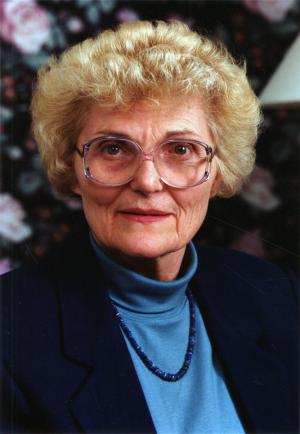 Victim Dorothy Booth, 71.

 Nancy Mullane, a reporter for KALW Radio in San Francisco, is one of the few reporters to visit California‘s death row at San Quentin Prison. In the block she visited, there were 500 inmates, in 4-by-10 foot cells, stacked five tiers high. The cells are about the size of a walk-in closet. Many of the inmates have been on death row for over 20 years. Inmates can shower every other day. One of the inmates she met with, Justin Helzer, had stabbed himself in both eyes. He later committed suicide. California has the largest death row in the country with 727 inmates. No one has been executed in 7 years.
  new animated film, The Last 40 Miles, will follow a death row inmate on his final journey from the Polunsky Unit in Livingston, Texas, to the death chamber in Huntsville. The film uses three forms of animation to tell the inmate’s story, from his tragic childhood to the moment he is being escorted to the lethal injection chamber. The script was written by freelance journalist Alex Hannaford and is based on interviews he conducted with death row inmates for news stories. Hannaford described why he used the metaphor of the trip to the death chamber: “It struck me a long time ago that this was the last thing these men see as they’re escorted from death row in Livingston to the death chamber at the Walls Unit in Huntsville. One of the last things they see is that big Texas sun rising over a vast lake. It’s quite breathtaking.” A trailer for the short film can be viewed
  The Death Penalty Information Center has introduced a new series of graphs and quotes from prominent individuals, emphasizing various death penalty issues. These infographics have been displayed on Facebook and other outlets in the past few months. We are now offering them serially in a slide show on DPIC’s website. The graphics can be individually downloaded for use in various mediums. The slide show is available
 Women Who Kill Men: California Courts, Gender, and the Press examines the role that gender played in the trials of women accused of murder in California between 1870-1958. The authors trace the changing views of the public towards women and how these views may have affected the outcomes of the cases. Some defendants faced the death penalty and were executed; some were spared. Often the public was deeply fascinated with all aspects of the trial and punishment. The book, written by Gordon Morris Bakken and Brenda Farrington, provides in-depth details of 18 murder trials through court records and news coverage.
 A new book by Kathleen Cairns explores the intriguing story of Barbara Graham, who was executed for murder in California in 1955, and whose case became a touchstone in the ongoing debate over capital punishment. In Proof of Guilt: Barbara Graham and the Politics of Executing Women in America, Cairns examines how different narratives portrayed Graham, with prosecutors describing her as mysterious and seductive, while some of the media emphasized Graham’s abusive and lonely childhood. The book also describes how Graham’s case became crucial to the death-penalty abolitionists of the time, as questions of guilt were used to raise awareness of the arbitrary and capricious nature of the death penalty.Cairns is a lecturer in the Department of History at California Polytechnic State University. She has also written The Enigma Woman: The Death Sentence of Nellie May Madison (Nebraska, 2007) and Hard Time at Tehachapi: California’s First Women’s Prison.
 A new international manual covering psychiatric and psychological issues arising in capital cases has been prepared by a team of forensic psychiatrists for use by attorneys, judges, and mental health officials. The Handbook of Forensic Psychiatric Practice in Capital Cases sets out model structures for psychiatric assessment and report writing for every stage of a death penalty case, from pre-trial to execution. It also discusses ethical issues, particularly with regard to an inmate’s competence to be executed. The handbook is published by
  The Michigan Committee Against Capital Punishment has published a collection of over 40 years of testimony, brochures, and other information by attorney and death-penalty expert Eugene Wanger. The collection begins with the resolution from Michigan‘s 1962 constitutional convention banning capital punishment in the state. It includes Wanger’s testimony at numerous hearings opposing bills attempting to reinstate the death penalty, as well as brochures and short articles. The bound and boxed volume provides a comprehensive overview of the history of death-penalty legislation in Michigan. Through legislation in 1846, the state became first English-speaking government to abolish the death penalty for murder and lesser crimes.
 A forthcoming book, Fighting for Their Lives: Inside the Experience of Capital Defense Attorneys by Susannah Sheffer, explores the impact of the death penalty on defense attorneys with clients on death row. Through interviews with capital defenders, the author examines how attorneys try to cope with the stress of representing clients facing execution. Sister Helen Prejean, author of Dead Man Walking, said, “This is an important book. The death penalty’s impact is so much broader than we realize, and these attorneys are affected in ways that even I had not imagined. I am grateful to Susannah Sheffer for bringing these stories to light.” Richard Burr, a prominent capital defense attorney, called the book “a beautiful, heartbreaking, and above all uplifting story that makes an essential contribution to literature on the death penalty.” The book is available through Amazon and other outlets.
 A new book by Professor Robert Bohm of the University of Central Florida examines the personal impact of capital punishment on those involved in the criminal justice system, beyond the victim and perpetrator of the crime. Bohm listened to those involved in all steps of the judicial process, including investigators, jurors, and the execution team. He has probed the effects of the death penalty on the families of both the murder victim and the offender. The book, Capital Punishment’s Collateral Damage, includes testimonials from members of each group, “allowing the participants…to describe in their own words their role in the process and, especially, its effects on them.” Bohm concludes that this “collateral damage is another good argument for rethinking the wisdom of the ultimate sanction.”
 A new book, “Where Justice and Mercy Meet: Catholic Opposition to the Death Penalty,” offers a comprehensive discussion of Catholic teaching on capital punishment. It explores a wide range of issues related to the death penalty, including racism, mental illness, and economic disparities. The book is edited by Trudy Conway and David Matzko McCarthy, both professors at Mount St. Mary’s University, and Vicki Schieber–the mother of a murder victim. It includes a foreword by Sister Helen Prejean, author of Dead Man Walking. Joseph A. Fiorenza, Archbishop Emeritus of Galveston-Houston, said the book “is a treasure trove of information on the necessity and urgency to abolish an antiquated approach to capital crimes.”

 Hartfield, now 57, was convicted and sentenced to death for the 1976 robbery and killing of a Southeast Texas bus station employee. The criminal appeals court overturned his murder conviction, ruling that a potential juror improperly was dismissed after expressing reservations about the death penalty.


 Claim your Innocence